

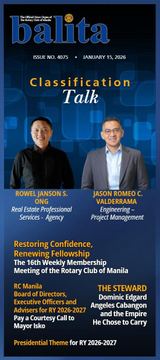
THE STEWARD: Dominic Edgard Angeles Cabangon and the Empire He Chose to Carry

He was never meant to be the heir — but when destiny called, he answered with humility, grit, and an unwavering sense of duty. From a gas station attendant in America to a steward of a business empire, Edgard Cabangon built his legacy not on spectacle, but on silence, sacrifice, and the quiet courage to do what is right.
In the quiet hours before Manila wakes, when the city’s neon lights flicker against the thinning night, Dominic Edgard “Ed” Angeles Cabangon often finds himself drawn to memory — those shadowed corners of the past where a boy walked a few paces behind a man who built an empire from the ruins of his childhood. It is in these moments, when the world is still, that he confronts the magnitude of what it means to carry a legacy shaped by hardship, discipline, and an unwavering sense of purpose.

His father, the late Ambassador Antonio “Ka Tony” Lim Cabangon Chua, was not born into privilege. He was the shoeshiner who once polished the boots of American soldiers for coins, the boy who sold magazines and pandesal to keep his family alive after war tore their home apart. From that stark beginning, he clawed his way into business — a pawnshop first, then insurance, banking, media, real estate, security, automotive, hotels — until his name became synonymous with perseverance and entrepreneurship.
The rest of the country saw him as the tycoon who defied fate.

Ed saw him as a father, a mentor, and the one man whose expectations would shape the trajectory of his life.
Growing up as his son meant learning early that the world does not hand out kindness freely. In their household, success was not celebrated with extravagance, nor was it the measure of a person’s worth. What mattered was the work — how thoroughly one did it, how consistently one showed up, how deeply one understood that every employee, every customer, every branch humming in the background was connected to a livelihood, a life, a family depending on the ALC Group’s stability. This was the school in which Ed was raised, far more than any classroom he would later enter.

During his high school years at Don Bosco Mandaluyong, while classmates looked forward to afternoons of leisure, Ed spent his time in the company of his father — walking through pawnshops, checking hotel lobbies, observing the editorial bustle inside newsrooms. The routine exposures became a kind of apprenticeship, one that didn’t declare itself but worked quietly on his character. He learned not as an heir but as an assistant, absorbing every detail of how a business lived and breathed.
Yet his father did not raise him to inherit effortlessly. He raised him to understand. He raised him to endure.

This became even clearer when, after he finished his college at De La Salle University, Ed was sent to the United States — not for comfort or prestige, but to run two gasoline stations. For four years, he worked as a gas station boy, scrubbing restrooms, stocking shelves, manning pumps, counting change at midnight. The experience stripped him of any illusion of entitlement, grounding him in the dignity of work at its most strenuous. Nothing in his future life as chairman would ever be abstract to him again — because he had lived the work from the bottom.
He returned to the Philippines with a dream of becoming a lawyer, entering the University of Santo Tomas Faculty of Civil Law. For three years he absorbed the intellectual rigor of torts, contracts, and jurisprudence — until the day his father called him back to take on greater responsibilities. Without drama, without hesitation, he stepped away from law school. The decision required sacrifice, but it also revealed the quiet resolve that had always guided him: when duty called, he answered.

For a time, he remained beside his father’s shoulder, supporting him as the conglomerate expanded across industries. And when the patriarch died in 2016, the responsibility that had long been prepared for him finally became his.
If there is a question that hangs over the life of any successor, it is this: What happens when the man who built the empire is no longer there to guide it?

Ed’s response came not in pronouncements but in action. He steadied the organization, made difficult decisions, modernized operations, preserved the culture his father built, and led with a humility that surprised many who knew only the magnitude of the empire and not the temperament of the man who now carried it.
Then came the pandemic — a global catastrophe that tested leaders to their core. Instead of closing doors and retreating into caution, Ed opened his hotels to frontliners and COVID patients, offering them free shelter at a time when fear ruled the world. Citystate Tower Hotel became a sanctuary for overworked PGH doctors and nurses. In a moment when others counted losses, he placed people first. In Congress, his actions were praised; in communities, they were quietly remembered.

This was not the flamboyance of a public hero.
It was the quiet generosity of a man shaped by his father’s life and his own lived humility.

Today, Ed stands not as a replica of the founder, but as the steward of his memory. He carries the same torch, but in his own manner — calmer, more measured, deeply compassionate. He has expanded the conglomerate without losing sight of its origins; he has stepped into the responsibilities thrust upon him while honoring the man who came before him; and he has guided thousands through uncertainty with the steadiness of someone who once stood on gas station pavements, learning the mechanics of life from the ground up.
This is not the story of a businessman.

This is the story of a life refined by responsibility, shaped by service, and bound by a legacy that began long before he was born — on a street corner where a young boy once knelt with a shoeshine box and the determination to build something better.
This story does not begin with triumph. It begins with a burden embraced — and a journey still unfolding.

The Shoeshiner’s Son
Long before the ALC Group of Companies took shape as a sprawling business empire, before its newspapers landed on breakfast tables and its hotels colored the skylines of Manila and Palawan, the story began in a place so far removed from boardrooms that it is almost difficult to reconcile with what came after.

The story began with a boy.
He lived on Leveriza Street in Malate, at a time when Manila was still recovering from the devastation of the Second World War. His father, Tomas Chua, had been executed at Fort Santiago, and his mother, Dominga Lim Cabangon, was left widowed with nothing but a fierce will to survive. Their house was gone. Their savings vanished. Their security erased in the span of a single war.

The boy, Antonio Cabangon Chua, was only eleven when he became the family’s breadwinner. He polished the boots of American soldiers for coins, sold pandesal at dawn, and hawked magazines wherever he could. What he lacked in age he compensated for in grit. There was no dramatic epiphany or inspirational mentor — just the day-today resolve of someone who understood that survival relied on effort, not hope.
This history, harsh as it was, would later become the moral spine of the next generation. And for Ed, Ka Tony’s story was not a distant tale. It was the air he breathed growing up, the context behind every instruction his father gave him, and the reason he never allowed privilege to soften him.

To understand Ed, one must first understand the narrative that molded him. He entered the world as one half of a pair — a fraternal twin, born alongside his brother Edward, just a few inches shorter but every bit as deeply woven into the fabric of their family’s identity. The twins belonged to a clan whose roots were defined by perseverance, faith, and an unyielding work ethic. Their father, Ka Tony, rose from the ashes of wartime poverty to build what would become the ALC Group of Companies, a conglomerate spanning insurance, media, real estate, security, retail, hospitality, automotive distribution, and more. Their mother, Bienvenida Angeles, anchored the home with quiet dignity and unwavering presence.
In a family as large as theirs — six boys and one sister — the twins grew up in an environment where individuality had to be earned rather than assumed. Life was not easy, nor was it meant to be. The elder Cabangon Chua was a man molded by hardship — losing his father during the war, working as a shoeshine boy and pandesal vendor to support his mother, clawing his way out of poverty through grit and God-centered diligence. He raised his children with the same uncompromising standards that had carried him through life. But beneath the strictness lay a fierce love and a desire to see his children become responsible stewards of the legacy he continued to build.

For the twins, that tutelage began early — not as a privilege but as a responsibility.
Edgard and Edward never blended into each other’s shadows. Their mother had never dressed them alike, nor encouraged them to mirror each other. From the start, they developed distinct personalities: Ed — the warm, approachable one with a ready smile — and Edward — the quieter, more serious twin, a man who preferred the comfort of home, music, and family.

Still, they were inseparable in the ways that mattered. They shared classrooms, childhood meals, whispered plans, and the unique closeness that only twins born into a bustling household could have. The two began their schooling together at Don Bosco Mandaluyong, a place whose Salesian values of discipline, kindness, and technical competence would leave a lasting imprint on them both.
Though he grew up in a family that had already begun to climb out of poverty, the echoes of his father’s early struggles remained loud in their home. Ka Tony was not the kind of man to forget where he came from. He made sure none of his children did, either.

The elder Cabangon Chua had eventually finished his studies at the University of the East, passed the CPA board exam, and founded Filipinas Pawnshop in 1958. It was not glamorous work, but it was honest, and from that pawnshop he began building what would later become a diversified empire. While the businesses expanded, his values remained unchanged. Hard work was non-negotiable. Humility was expected. Compassion was a duty.
Ed grew up watching this transformation firsthand. He saw the pawnshop expand. He saw insurance companies rise. He saw the early stirrings of media acquisitions. But what left the deepest mark on him was not the growth of the businesses, but the daily routine that his father lived by. Ka Tony left early and returned late. He visited branches himself. He negotiated with clients face-to-face. He treated employees with respect, yet demanded excellence.

There were no shortcuts. There was only work.
By the time Ed reached high school at Don Bosco Mandaluyong, he was already accustomed to accompanying his father on business rounds. The visits were not ceremonial. Ka Tony never used these trips to impress anyone. They were lessons disguised as errands, subtle instructions passed from father to son without elaborate speeches. Ed observed how his father checked inventory not through spreadsheets, but by looking into storerooms and asking questions that revealed whether staff were paying attention to details. He watched how Ka Tony listened more than he spoke, how he treated customers politely regardless of their social standing, how he reprimanded mistakes without humiliating anyone, and how he always shook hands firmly as if sealing each moment with purpose.

These small moments accumulated into something larger. They formed a foundation that no textbook could replicate.
Even then, Ka Tony sensed something different in Ed. He was not the eldest child, but he possessed a quiet steadiness that set him apart. He did not demand recognition or question instructions. He observed keenly, absorbed quickly, and carried himself with a seriousness uncommon in boys his age. Leadership — for him — was not an ambition but a responsibility, one he carried even before he fully understood it.

There were afternoons when he would sit in a corner of a pawnshop branch, watching customers negotiate loans with the same desperation his father once knew. There were mornings inside hotel lobbies when he saw staff preparing for the day with the discipline of performers before a show. There were evenings in newspaper offices where the clatter of keyboards and the urgency of editors painted a picture of a world where information had weight.
All of it seeped into him.

The Don Bosco formation provided its own kind of influence. The Salesian values of work, faith, and service blended seamlessly with the lessons he learned from his father. It was as though his schooling and his upbringing existed in harmony, reinforcing the same truths: that work was a duty, that dignity was universal, and that success meant nothing if it did not uplift others.
As the years passed, the rhythm of his life became familiar. School in the mornings, apprenticeship in the afternoons, reflection in the quiet moments in between. By the time he graduated from high school, he had seen more of the inner workings of business than most graduates in their twenties. He understood the difference between managers who cared and managers who merely complied. He recognized inefficiencies instinctively. And he had developed an empathy that would later shape his leadership.

He was being prepared for something — not with announcements, not with promises, but with immersion. His father never told him directly that he was the chosen successor. Ka Tony was not the type to declare his intentions. But he revealed them in other ways — in the trust he placed in Ed, in the responsibilities he gradually handed over, in the unspoken expectation that his son would someday carry the torch without faltering.
In hindsight, it is clear that these years — these patient, formative, hardworking years — were the first chapter of a long apprenticeship. They shaped the man Ed would become, long before he knew he was being shaped.

What he learned beside his father was not how to inherit a business.
What he learned was how to build one.

How to understand one.
How to care for one.

And more importantly, how to treat the people within it.
These were the lessons that would guide him through decisions no one could have prepared him for, through crises that would test him, and through moments when he would have to stand alone, carrying on his father’s legacy with the same humility and strength that built it from nothing.

This chapter of his life was not defined by dramatic events or sudden revelations. It was defined by consistency — the unwavering mentorship of a father, the steady presence of a son learning to walk in the footprints left before him, and the quiet realization that he was being shaped for a future larger than himself.
It was the beginning of a journey. A journey that started not in a boardroom, but in a pawnshop, a newsroom, a hotel lobby, and a father’s unspoken trust.

The Apprentice at Don Bosco
In many families, childhood ends gradually, marked by small shifts in responsibility. But in the Cabangon Chua household, childhood had a way of ending all at once. The halls of Don Bosco Mandaluyong were filled with the usual energy of teenage boys — laughter bouncing against concrete walls, friendly jostling in corridors, competitive shouts from the basketball court. But for Ed, high school life was never quite confined to those boundaries. While he blended in with classmates during school hours, the bell that signaled dismissal marked the start of a different kind of education.

To others, the two teenage boys trailing behind the Ambassador may have seemed out of place—uniformed Don Bosco students listening as adults talked numbers and operations—but to their father, they were apprentices. He believed a business dynasty was not inherited; it was learned.
Every afternoon, when most boys gathered around canteens or headed straight home, Ed stepped into a car that whisked him not toward leisure but into the moving world his father was building. He entered pawnshops filled with customers negotiating loans that meant groceries, rent, tuition. He walked into newspaper offices where editors debated headlines that would shape public opinion by morning. He watched hotel staff move with the well-practiced choreography that hospitality demands.

His father brought him everywhere — not to indulge him, but to expose him to the pulse of the business. It was an unspoken apprenticeship, one that did not begin with declarations but with repetition. Ka Tony did not sit him down to explain concepts in corporate governance or market competition. Instead, he let his son absorb it all through presence, listening, and early responsibility.
Ed watched the way his father spoke to people. Ka Tony treated a security guard with the same respect he gave to an investor. He asked questions directly, listened with full attention, and made decisions without theatrics. The quiet gravity he carried — a combination of discipline and empathy — became a model for Ed, who observed everything with the curiosity of a boy and the seriousness of a future steward.

The Don Bosco ethos complemented these lessons perfectly. The Salesians emphasized work as a calling, discipline as a form of love, humility as strength, and service as the highest expression of leadership. Those teachings were not slogans in Ed’s life; they were daily experiences. He saw them in the way his father treated employees, in the way the company supported families, and in the way business decisions were always anchored in the belief that success should uplift the Filipino.
During these early years, Ed began developing an instinct that could not be taught in textbooks. He learned to sense when a branch needed improvement, even before numbers reflected it. He noticed patterns in customer behavior. He learned to read people — how their tone shifted when nervous, how their shoulders stiffened when they feared financial uncertainty. He understood the importance of accuracy, empathy, and clear communication. These were not lessons he consciously catalogued; they became part of him through constant observation.

There were days when his father tested him without warning. Ka Tony would point to a ledger and ask him what the numbers meant. He would ask how Ed thought a manager handled a customer complaint. He would quiz him on operational lapses and ask how he would fix them. It was never done in a confrontational way. Instead, it was a quiet challenge — a way of sharpening his son’s instincts long before Ed even realized he was being prepared.
Even in those early years, Ka Tony saw something in Ed that went beyond birth order. He saw steadiness, a grounded temperament, and a willingness to work without fanfare. Ed was never one to boast. He listened before he spoke. He approached roles with seriousness. These qualities — more than age, more than titles — made his father gravitate toward him. Most young people grow into responsibility. Ed grew under its constant shadow. And yet, there was nothing burdensome about it. There was pride in being trusted. There was clarity in knowing he was learning something vital, something meaningful, something that would define the trajectory of his life long after his high school days were over.

The rhythm of his days became routine yet transformative. School shaped his mind. Business immersion shaped his character. Faith shaped his purpose. Little by little, the pieces of his identity settled into place. He learned how to speak to employees without condescension, how to examine problems from multiple angles, and how to appreciate the dignity in every kind of work. From locksmiths to tellers, from room boys to mechanics, from gravediggers to engineers, he saw the interconnectedness of the organization.
There was one afternoon he would remember years later: standing in a pawnshop branch, watching a mother pawn her jewelry to pay for her daughter’s tuition. She clutched the pawn ticket the way one holds a fragile hope. Ed understood then — perhaps more deeply than any lesson he learned in school — that businesses like theirs existed not for luxury but for need. They mattered in the lives of ordinary people who came to them in their most vulnerable moments. That realization stayed with him, shaping decisions he would make decades later.

This was the true beginning of his path — quiet, steady, deeply human. These formative years were not painted with dramatic revelations. Instead, they were marked by countless small moments that built his understanding of work, people, and purpose. They prepared him for the roles he would eventually carry, not by overwhelming him but by exposing him to the inner gears of a world he would one day lead.
By the time he graduated from Don Bosco, he carried within him a foundation forged from routine, repetition, and genuine exposure. He knew the businesses from the ground up. He knew how employees felt, how customers struggled, how operations lived and breathed. He had already walked behind his father long enough to see the difference between leadership born from authority and leadership rooted in understanding.

He might not have known it then, but these afternoons spent shadowing his father were the earliest steps toward becoming the man who would someday guide the conglomerate through crises his father never lived to see. They were the quiet beginnings of a leader shaped not by privilege, but by immersion.
The apprenticeship that began in those teenage years would follow him for the rest of his life — through law school, through his years abroad, through the challenges of succession, and through the trials that would test his resolve as chairman. These early experiences formed the lens through which he would eventually see the world: grounded, compassionate, and deeply aware of the responsibility woven into every business decision.

What began at Don Bosco did not end when he left its classrooms. It became the enduring foundation of a life lived in continuity with a legacy larger than himself.
Lessons in the Field

When Ed boarded the plane for the United States after completing his Business Administration degree, he carried no illusions about what awaited him. His father had made the purpose of the trip unmistakably clear. This was not a leisure expedition or an extended vacation. It was an assignment — one that would test discipline, humility, and endurance far more than any classroom had done.
Two Arco gasoline stations, each paired with a convenience store and located in San Gabriel and Pasadena, California, were placed under his watch—along with an eight-door apartment in West Covina, California. It sounded straightforward enough when described on paper, but the reality was far more unforgiving. From the moment he arrived, Ed understood that this was not management in the traditional sense. This was work at its most unvarnished and physical.

He became, quite literally, a gas station boy.
The job consumed every hour of his day. He stood under the California sun pumping fuel, wiping windshields, and greeting customers whose moods swung with the weather and the price of gasoline. When equipment malfunctioned, he was the one to roll up his sleeves and fix it. When the restrooms needed cleaning, he scrubbed them. When deliveries arrived, he unloaded them. When the night shift grew quiet, he restocked shelves in the convenience store, counted inventory, updated ledgers, and prepared for the next day’s rush.

There were no shortcuts. The work was repetitive, physically tiring, and often thankless. Yet it was precisely the kind of environment his father had intended for him — a place where entitlement dissolved, where leadership could only emerge from participation, and where responsibility became instinct rather than a theory.
Ed learned to read the rhythms of the businesses with the precision of someone whose livelihood depended on it. Morning crowds were predictable, lunch hours brought brief lulls, and late-night customers arrived with impatience or exhaustion. He began to anticipate problems before they arose: the sudden spike in gasoline demand before long weekends, the erratic behavior of customers who needed cash advances, the fluctuations in inventory caused by temperature changes. The stations became, in a way, living organisms whose patterns he grew to understand.

He was far from home, stripped of comforts, immersed in a world where no one cared about his surname or the businesses waiting for him in the Philippines. Customers knew him only as the Filipino attendant who worked long shifts and treated them with a consistent politeness that did not waver even when they were in a hurry or complaining about prices. His coworkers respected him not for his background, but because he shared their workload rather than delegating it.
This experience was transformative. He saw labor not from a distance but from the ground level. Hard work became something he felt in his back, his fingers, and his bones. He developed empathy for workers whose jobs demanded patience and strength. He understood operational efficiency not as a concept but as the difference between a smooth shift and a chaotic one. And he realized that businesses succeed not solely because of strategy, but because of people who wake up every day willing to do the difficult, necessary work that keeps operations running.

For four years — from 1986 to 1990 — he lived this rhythm as an overseas Filipino worker, with no cellphone to communicate easily with his family. These were the years that carved humility into him permanently. They were also the years that allowed him to see the world through the eyes of employees who had little choice but to endure difficult conditions day after day. That understanding would later shape how he treated his own personnel in the Philippines. He did not romanticize labor. He respected it.
Despite the grueling routine, Ed made time for introspection. In the quiet moments between shifts, he thought about his future. He began to dream not only of helping run the family businesses but also of equipping himself with a legal education. The American years sharpened his interest in law, exposing him to contracts, liability issues, labor rights disputes, and customer claims that occasionally escalated into more complicated confrontations. The experience revealed the power of legal knowledge in resolving or preventing problems.

By the time his American chapter was nearing its end, he felt a stirring he could no longer ignore — the desire to enter law school. When he returned to the Philippines in 1990, he enrolled in the University of Santo Tomas Faculty of Civil Law. He attended classes diligently despite already being involved in managing some of the family’s enterprises. His days were divided between academic rigor and corporate responsibility, and for a time, he balanced both worlds with determination.
He did not pursue the law for prestige. He pursued it for understanding — believing that a leader armed with legal knowledge could navigate his father’s increasingly complex conglomerate with sharper clarity and better protection for employees and clients.

But life has a way of presenting crossroads without warning. During his third year of law school, the businesses began demanding more of him. His father, recognizing the complexity and scale of the enterprises growing under the ALC Group, needed a steady hand by his side.
The decision that followed was not easy. Law school had become meaningful to him. But his father’s request carried the weight of responsibility and legacy. With quiet acceptance, he stepped away from the dream of becoming a lawyer and committed himself fully to the family businesses.

It was a sacrifice, but never a resentful one. In choosing duty, he chose the path that had always been unfolding before him, even in childhood.
Looking back, Ed never regretted the years he spent abroad. They had shaped him in ways no management course could. They taught him the dignity of every job, the value of humility, and the strength found in consistency. They prepared him for the crises he would one day face as chairman. And most importantly, they taught him that leadership grounded in lived experience carries a weight and credibility that formal titles alone can never provide.

The gas station years were not a detour.
They were preparation — unpolished, demanding, and profoundly formative. They transformed him from a potential successor into someone who truly understood what it meant to build, manage, and serve.

It was a chapter his father had orchestrated with precision, and one Ed would someday pass forward in his own way.
In the Shadow of a Titan

The death of a patriarch changes the air inside a family. Even before the final rites are completed, the world seems to rearrange itself, shifting weight toward those expected to stand where a giant once stood. For Ed, the day his father passed away in March 2016 marked the quiet turning of that weight — an inheritance not of wealth, but of responsibility.
But years before that moment arrived, Ed had already been living in the long shadow cast by Ka Tony — a man whose reputation in business and public service made him one of the Philippines’ most respected figures. Working beside him was both a privilege and a test, a daily reminder that expectations did not need to be spoken to be understood.

Ka Tony had built the ALC Group from the rough edges of adversity, carving his rise from struggle rather than comfort. To work with him meant absorbing his pace, his precision, his instincts. Ed understood early on that his father viewed business not simply as a means to profit but as a commitment to service. Each company existed because it answered a need — insurance for families, pawnshops for emergencies, real estate for stability, media for information, hotels for livelihood, automotive and banking for growth.
Understanding this philosophy required more than observation. It required immersion, patience, and years spent walking behind a man whose standards were exacting. Ed found himself learning the nuances of leadership in subtle, everyday moments: the way his father reviewed financial reports line by line, the way he insisted on visiting branches personally, the way he made decisions only after considering how they would affect the ordinary employee.

There was nothing romantic or grand about these lessons. They were often delivered in passing — during drives between meetings, while inspecting construction progress, or at the end of a long day when his father would speak more frankly about the realities of business. Ka Tony spoke of loyalty as a currency more valuable than capital, of trust as the cornerstone of every partnership, and of humility as the only defense against arrogance. He reminded his son repeatedly that power is dangerous when left unchecked, and that success must always be met with gratitude rather than pride.
For Ed, these lessons took root slowly but deeply. He developed the habit of listening more than he spoke, of assessing situations quietly before acting, of giving deference to those with more experience. This disposition made him not only dependable but calm — a trait his father valued. Ka Tony would often delegate sensitive tasks to him, the kinds that required discretion and steadiness.

The long apprenticeship was not without friction. There were moments when Ed wondered whether he should have pursued law more aggressively, finishing the degree he had begun with such conviction. But every time he entertained this thought, the demands of the businesses resurfaced, revealing how deeply he was needed. He moved through this period with a sense of quiet duty, aware that the time for him to assume greater roles was approaching more quickly than he had anticipated.
What made the experience even more challenging was the stature of the man he was learning from. Ka Tony was admired not only in business but also in public life. As a diplomat, benefactor, media advocate, and community leader, he commanded respect from all sectors of society. Walking behind a figure of that magnitude required humility and selfassurance in equal measure. It meant understanding that one’s worth did not depend on being seen, but on being ready.
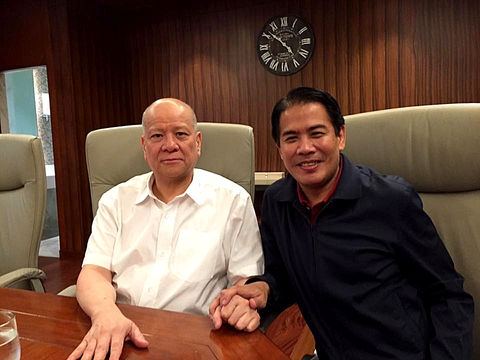
The father never announced that Ed would be his successor. He simply acted as though the fact was already decided. Responsibilities accumulated, expectations sharpened, and the gravitational pull toward leadership became unavoidable. Ed grew into the role not by formal designation but by gradual, deliberate preparation.
When Ka Tony’s health began to decline, Ed instinctively stepped forward. He found himself taking on more decisions, overseeing more divisions, coordinating more executives. The transition was not dramatic; it was steady, almost natural.

By the time the patriarch passed away, Ed was no longer simply the son of the founder. He had become the custodian of the empire.
The days that followed were filled with a surreal combination of grief and responsibility. On one hand, he mourned the loss of the man who shaped every contour of his life. On the other, he had to ensure that the conglomerate — the living embodiment of his father’s struggles and triumphs — would remain stable. There were meetings to attend, employees to reassure, and operations to review. Grief had to wait.

What many did not see was that leadership, for Ed, was deeply personal. Each company contained echoes of his father’s journey — from the pawnshop that had been Ka Tony’s first venture, to the insurance companies that promised families a measure of security, to the media outlets that upheld public discourse and defended the freedom of expression. Running the conglomerate was not just managing businesses; it was preserving the narrative that had shaped his entire identity.
To step into his father’s place meant assuming the weight of that narrative. And yet, even in the shadow of a titan, Ed did not falter. He knew that legacy is not continued by imitating the founder but by understanding the principles behind every decision. He realized that leadership is not about size, volume, or spectacle; it is about steadiness, character, and a willingness to serve.

He would later face crises his father never did, challenges shaped by a modern world moving at unprecedented speed. But he faced them with the same quiet strength instilled in him since youth. He had been prepared for this succession long before he realized he was being prepared.
This chapter of his life — working in the shadow of his father — was not merely a period of learning. It was the crucible that shaped the leader he would become, the foundation upon which his own legacy would eventually stand.

Building the Modern ALC Empire
When Ed assumed the mantle of leadership after his father’s passing, the transition did not unfold with spectacle or sweeping declarations. It was quiet — almost understated — yet unmistakably decisive. Those who worked within the ALC Group of Companies recognized the shift not through announcements but through his presence, his decisions, and the steadiness with which he moved through boardrooms and corridors once dominated by his father.

The conglomerate he inherited was vast. It stretched across industries that rarely intersected except in the hands of a leader with a panoramic sense of purpose. Insurance, media, pre-need services, real estate, hospitality, automotive distribution, banking, pawnshops, memorial care — each division had its own culture, its own rhythms, its own demands. Holding all of it together required not only managerial competence but an instinctive understanding of why these companies existed in the first place.
For Ed, the answer had always been clear. He remembered the story of a young boy from Malate who shined shoes to survive, the teenager who sold pandesal to keep his family fed, and the man who built an empire not to flaunt wealth but to give everyday Filipinos access to services that gave dignity to their lives. To run these companies was to protect that original intent. His father had built enterprises that touched people from birth to the final moments of life. Ed saw the entire conglomerate not as a portfolio but as a continuum of service.

In the early years of his chairmanship, his approach was rooted in pragmatism. He resisted the temptation to make sweeping changes simply to mark a new era. Instead, he observed, listened, and absorbed the concerns of executives who had long been part of the company’s fabric. ALC was not a corporate construct to him; it was a living legacy. And like any living organism, its survival depended on stability, not disruption.
His first months were spent visiting branches — banks, hotels, insurance offices, editorial rooms — echoing the way his father had done before him. He wanted to see operations up close, to understand employee morale, customer behavior, and market challenges. He sat in on editorial meetings at BusinessMirror, discussing the evolving media landscape. He walked floors of Eternal Gardens to understand customer service needs. He inspected rooms in the Manila Grand Opera Hotel, asking questions about occupancy trends. He met with loan officers at Citystate Savings Bank, reviewing loan portfolios and risk mitigation strategies. He immersed himself in the details without micromanaging, ensuring he grasped the pulse of each company.

This groundwork informed the decisions he made as he slowly strengthened the structures his father had built. He introduced more deliberate governance systems across divisions, expanded oversight mechanisms, and recalibrated business models to keep pace with market shifts. He did all this without fanfare — choosing precision over pomp.
Nowhere was the shift more visible than in the media arm of the ALC Group. Media had always been special to his father, who saw it not solely as a business but as a responsibility. Running DWIZ, Home Radio, Aliw Channel 23, BusinessMirror, Philippines Graphic, Cook Magazine, Pilipino Mirror, the former CNN Philippines, and other publications required balancing editorial freedom with operational realities. The landscape was changing rapidly: advertising was migrating online, consumption habits were shifting, and competition had grown fierce.

Ed responded with a sense of duty rather than fear. He invested in digital modernization for the newspaper operations, equipped newsrooms with updated technology, and ensured that DWIZ continued to uphold credibility in a time when misinformation was rampant. He made decisions grounded in public service, believing that media’s highest obligation was to the truth, not profit.
In hospitality, he modernized operations at the Citystate hotels while preserving their accessibility. He saw the hotels not as luxury brands but as reliable, serviceoriented establishments for everyday travelers, OFWs, civil servants, and local tourists. Maintaining cleanliness, affordability, and service quality remained paramount.

Real estate, automotive distribution through Isuzu Gencars, financial institutions like PlanBank and Citystate Savings Bank, pre-need services, and memorial care — each required the same consistency. Ed ensured they continued to operate with the foundational values his father instilled: empathy, integrity, and the unwavering belief that business should uplift.
In the automotive industry, Ed has been part of Isuzu Gencars since his high school days, learning the business from the ground up—its operations, dealership standards, expansions, and most recently, rolling out the Isuzu Outlet Standard across all branches. His leadership extends beyond strategy; he leads by presence, listening, observing, and collaborating closely with his team.

Yet among the milestones of Isuzu Gencars, one chapter stands out with deep meaning.
In mid-2014, Lingayen-Dagupan Archbishop Socrates “Soc” Villegas reached out with an extraordinary request: could Isuzu Gencars build the vehicle that would carry Pope Francis during his pastoral visit to the Philippines? Edgard responded with humility and devotion: “Thank you, Excellency. We will be honored and consider ourselves blessed to do it.”

It became one of the proudest moments in the company’s history.
Working with Almazora Motors, the team transformed an Isuzu D-MAX into a simple, elegant, and secure Popemobile featuring a redesigned cabin, banig-accented Italian leather seats, safety railings, a plexiglass windscreen, and recessed lighting. The unit passed rigorous Vatican inspections and was blessed by Cardinal Luis Antonio Tagle.

On January 15, 2015, Pope Francis rode the Popemobile through Manila, later telling Gencars founder Ambassador Antonio L. Cabangon Chua, “This is a beautiful car.”
Later that year, when a second Popemobile was created as a gift to Pope Francis at the Pontiff’s request, Edgard did more than lead the initiative—he personally delivered the unit to the Vatican. This marked his only workrelated trip abroad that year, a rare exception, as he normally refrains from traveling to stay and address the demands of the companies he manages. The gesture reflected not only the company’s commitment but also his own sincerity of faith and service.

Employees noticed his leadership style almost immediately. He did not enter rooms with intimidation. He spoke calmly, asked questions thoughtfully, and allowed others to explain before offering his perspective. His steadiness had a grounding effect. He made decisions after careful listening, not impulsive judgment. And he treated employees — whether executives or custodial staff — with dignity, a trait he inherited from his father.
He led through presence, not theatrics.

Yet, while he maintained stability, he also recognized the need for innovation. He strengthened digital operations across companies, supported automation where useful, and encouraged divisions to future-proof themselves without abandoning the personal touch that had always distinguished ALC brands. His vision was not to modernize for the sake of appearing progressive, but to ensure the conglomerate’s longevity in a world that changed faster than ever before.
Service Above Self

Amid all this, Ed became a quiet but impactful figure in civic life. In 2022, he joined the Rotary Club of Manila at the invitation of Past President Joaquin “Jackie” Rodriguez. He was not a regular attendee — running dozens of companies left little room for weekly meetings — but he compensated in meaningful ways. DWIZ offered free coverage for Rotary events. BusinessMirror provided full-spread features on service projects. He donated generously to fundraising activities, often as a major benefactor. And he hosted numerous membership meetings at the Citystate Tower Hotel, supporting the club’s activities without seeking attention.
He embodied Rotary’s creed — “Service Above Self” — in the same understated manner he led the conglomerate. He did not seek praise. He simply acted where he could help.

As the years progressed, the businesses remained resilient. The continuity he provided allowed employees to feel secure despite the rapid pace of global change. He strengthened institutions not through disruption, but through thoughtful stewardship. He did not see himself as the owner of the empire, but as its guardian — protecting his father’s life’s work while preparing it for the world beyond his own tenure.
This period became the defining arc of his early leadership: the transformation of the founder’s conglomerate into a modern yet grounded enterprise, guided by a man who understood not only its financial heartbeat but its moral purpose.

He maintained the soul of the ALC Group, even as he built the framework that would carry it into the future.
The Pandemic and the Rise of a Modern Hero

In early 2020, when the first murmurs of a strange virus began to surface, few could imagine how profoundly the world was about to change. For most people, the shift came gradually — news reports turning grim, airports emptying, cities slipping into silence. But for those responsible for thousands of employees, businesses, and dependents, the change felt immediate, heavy, and unmistakably urgent.
For Ed, the early days of the COVID-19 pandemic were a test of leadership unlike anything he had encountered before. The bustling offices of the ALC Group fell eerily quiet. Hotels that once held conferences, weddings, reunions, and family vacations suddenly had empty lobbies and silent hallways. Daily operations across industries — insurance, media, pawnshops, banking, real estate, security agencies, and automotive dealerships — were thrown into uncertainty.
He faced a question no business manual had prepared him for: How do you protect people — employees, communities, and the public — when the world itself has stopped moving?
From the moment the lockdowns were announced, Ed understood that his decisions over the next weeks would define not only the trajectory of the ALC Group but the well-being of thousands of families who depended on it. There was no precedent to consult, no case study to model after, and no time to hesitate. He knew instinctively that leadership in such a moment could not begin with profit; it had to begin with humanity.
The most immediate concern was how to help health workers and local government units who were scrambling for resources. Hospitals overflowed. Quarantine facilities were insufficient. Medical frontliners were sleeping in hallways, tents, and their cars out of fear of bringing the virus home. Ed could not erase the haunting contrast: empty hotel rooms on one side of the city, and exhausted doctors resting on concrete floors on the other.
He made a decision that would define this chapter of his life. He opened the doors of the ALC Group’s hotels — all of them — to frontliners and COVID patients who needed isolation facilities. There was no negotiation over cost, no hesitation about revenue loss, no question about risk. He offered the rooms for free.
In total, the ALC Group lent 10 of its hotels to local government units for more than a year at no charge: five in Manila, one in Mandaluyong, three in Pasig, and one in Puerto Princesa. They were the first to respond to the government’s call.
Citystate Quiapo, Citystate Palanca, Manila Grand Opera Tower Hotel, Vista Hotel, and Citystate Tower Hotel in Manila, as well as Daisy, Dahlia, Orchids, and Rosal in Pasig, Bermuda in Mandaluyong, and Citystate Asturias in Puerto Princesa, were opened free of charge for more than a year starting at the onset of the pandemic, providing vital support to frontliners and those in need of isolation. Local government units were suddenly able to isolate infected residents without burdening families or crowding hospitals.
In those months when fear governed public life, when even the simple act of leaving the house felt dangerous, Ed took a step toward the crisis rather than away from it. And he did so quietly, without cameras, press releases, or announcements. The rooms were made available because it was the right thing to do — not because it would look admirable.
Word of his decision eventually reached Congress during discussions of the Bayanihan Act. Lawmakers cited the ALC Group’s actions as an example of genuine corporate responsibility at a time when some companies were raising prices or shutting doors to avoid losses. Ed did not expect recognition, but the acknowledgment affirmed what his father had always believed: businesses that serve the Filipino become part of the country’s moral fabric.
Still, inside the company, the emotional toll was real. Employees who kept essential branches open — like pawnshops, banks, and media outlets — faced the daily anxiety of exposure. Ed insisted on strict health protocols, hazard support, and continuous communication to reassure staff that they were not being left alone. He kept salaries flowing even in divisions where operations were halted or severely reduced. His main concern was always the same: How do we keep our people safe, secure, and hopeful?
In media, the work never stopped. DWIZ reporters continued delivering news under dangerous circumstances, covering developments on the ground even when movement was restricted. Through his leadership, they were provided protection, resources, and the constant reminder that their work was essential. BusinessMirror and Philippines Graphic remained active, informing the public about the pandemic with responsible reporting and humancentered stories.
His decisions during this time were not dramatic gestures meant for public display. They were deliberate, compassionate actions grounded in the values he had absorbed throughout his life — from the gas station years, from his father’s relentless example, and from the belief that business should exist not for its own sake but to serve.
One small but telling detail also surfaced during this period. While many businessmen found creative ways to celebrate birthdays amid lockdowns, Ed chose not to mark his with lavish deliveries or private gatherings. Instead, he quietly made donations to churches — simple acts that reflected a personal faith guiding him through a time of profound uncertainty.
The pandemic revealed a dimension of Ed’s leadership that had always been present but often understated: his instinct for compassion. In an era of crisis, it rose to the forefront — steady, clear, and unmistakably sincere.
By the end of 2020, when restrictions began to ease, the ALC Group stood battered but intact. Many companies had collapsed during those months; others had retrenched aggressively. Ed kept his workforce whole. He steadied the organization through the worst economic storm of the modern era and emerged recognized as a “Modern Hero” by the Philippine Chamber of Commerce and Industry during the Asia’s Modern Hero Awards of 2024.
The award recognized corporate heroism during the pandemic, but to Ed, it was a reminder of something much larger: the belief that the purpose of a business cannot be separate from the welfare of people.
In the long arc of his life, the pandemic became a defining crucible. It revealed who he was as a leader when everything familiar collapsed around him. It showed the depth of his empathy, the clarity of his values, and the strength of the foundation laid by a father who had once survived war and taught his children that survival must always be paired with compassion.
The crisis had demanded courage. Ed answered not with spectacle, but with humanity — offering rooms, offering shelter, offering stability, offering hope.
In the darkest moments of the pandemic, he embodied the legacy of his father while forging a legacy of his own.
The Leader as Father, Son, and Steward
Leadership is rarely a single role. It is a composite of identities — some inherited, some chosen, some thrust upon a person by circumstance. After steering the ALC Group through the pandemic, Ed found himself standing at a crossroads where his duties as a businessman, father, son, and custodian of a legacy converged more visibly than ever before.
There was a noticeable quietness to him during this period, not of fatigue but of contemplation. The demands of the conglomerate continued as they always had — meetings, decisions, operational concerns — but there was now also a deeper internal work taking place, one shaped by everything he had endured over the last years. He had carried thousands of employees through uncertainty, opened his hotels to strangers in need, and steadied the empire his father had built from the ground up. Somewhere in all of this, he realized that leadership was no longer just about what he achieved. It had become a reflection of who he was and the values he was responsible for passing on.
At home, this transformation was quietly noticed by the two people who mattered most to him outside the company — his children, Maritoni, Giannina Eunice, Dannica Nicole, and Antonio Carlos.
They were no longer children, but young adults forming their own view of the world and their place in it. They saw their father not as the chairman of a business empire, but as a man who carried responsibility without theatrics, who treated people with respect without needing to announce it, and who took decisions that weighed on him not because they were profitable, but because they were right.
Even years after the elder Cabangon Chua’s passing, Ed would sometimes walk through a company building and be struck by the memory of how his father once inspected the same hallways. Sometimes, while reviewing company reports late at night, he would catch himself wondering how Ka Tony would have approached a particular decision. Leadership had become, in a way, a dialogue between the past and the present.
But Ed understood something vital about legacy: to honor a father’s life is not to replicate it, but to continue it in ways relevant to a new era. He had to interpret the values he inherited within the context of a modern world — one shaped by digital transformation, shifting markets, and crises his father never had to navigate. He could not lead by imitation. He had to lead by internalizing his father’s principles, then applying them in his own way.
This became especially clear in the responsibilities he faced outside the business. In 2022, when he accepted the invitation from Past President Joaquin “Jackie” Rodriguez to join the Rotary Club of Manila, he stepped into civic life in a manner that complemented his corporate duties. He was not the type who could attend weekly meetings religiously — business demanded too much of him — but he found his own way to contribute. He offered DWIZ to provide free coverage of Rotary activities. He opened the pages of BusinessMirror to highlight the club’s service projects. He donated quietly — but generously — to fundraising programs, often becoming one of the major supporters. And he hosted meetings at Citystate Tower Hotel, ensuring RCM had a reliable venue whenever needed.
He participated in the organization not through visibility, but through meaningful support. For him, service did not require spotlight; it required sincerity.
His approach to leadership — whether in business, family, or civic life — reflected a character that had been shaped not by ambition but by purpose. He did not see himself as the owner of the ALC Group, but as its steward. He did not treat employees as subordinates, but as partners. He did not make decisions to elevate himself, but to preserve the dignity of those whose lives were intertwined with the company.
This stewardship mindset influenced everything he touched. He moved with the awareness that every decision carried consequences for families he might never meet. This sense of responsibility — not financial ambition — defined his management style. It is what set him apart from many of his contemporaries. While others relied on charisma or bold gestures, Ed led with consistency, moderation, and humility.
Carrying the Flame – Legacy and the Next Generation
He reaches an age where the past and future seem to speak to each other more often. He can feel the weight of history behind him and the looming expectation of continuity ahead. In many ways, he now stands at the midpoint of a story far larger than himself — a story his father began decades before, and one that his own children might someday continue.
His four children are growing into thoughtful young adults, each carrying their own dreams while becoming increasingly aware of the legacy they are born into. Ed never pressures them to join the businesses or to follow any predetermined path. He believes, as his father believed, that leadership must come from desire, not obligation. Yet he also understands that they will eventually confront the reality of their family’s responsibilities.
He raises them with steady guidance — not through grand speeches or forced expectations, but through the example of how he lives: patiently, quietly, purposefully. They see him leave for work before sunrise and return long after the rest of the house falls silent. They watch him shoulder crises without bitterness, respond to challenges without panic, and help people without broadcasting his generosity. They live through the pandemic years with him and see how he handles fear and uncertainty, not with bravado but with compassion.
He often wonders how his children will understand this inheritance, and whether they will feel its weight or see its beauty. He does not presume to know. He does not attempt to script their futures. What he can do — and what he believes he must do — is shape the company into something they can be proud of: an institution that serves the Filipino with dignity, treats its workers with compassion, and keeps its priorities rooted in purpose rather than prestige.
He wants them to understand that the ALC Group is not merely a business empire; it is a living testament to endurance. And he hopes that, whether or not they choose to join it, they will carry forward the values that built it.
The Measure of a Man
There comes a point in every long journey when a man begins to look back — not to linger in the past, but to understand the road that has brought him to where he now stands. For Edgard Cabangon, that moment arrives quietly, without ceremony, sometime in the years after the pandemic and the gradual stabilization of the ALC Group. It does not strike him in a single event or revelation. It comes instead in small, steady realizations — moments when he finds himself pausing at the end of a long meeting, or standing alone in an elevator, or watching the city pass through the tinted windows of his car.
These are moments when he begins to see the arc of his life with a clarity that only time can provide.
He has not sought prominence, yet leadership continues to find its way to him. He was once a gas station attendant in America, pumping fuel into strangers’ cars in the heat of summer and the cold of early mornings. He once dreamed of becoming a lawyer, sitting on the University of Santo Tomas campus with thick books and a determined heart. He once believed that his path would be built slowly, on his own terms.
But life had other plans. His father asked him to take on responsibilities that could not wait. The family businesses needed guidance. Decisions had to be made. And so, he set aside law school in his third year — not out of resignation, but out of devotion to the man who trusted him more than anyone else.
Through the decades that follow, he often recalls the moment he was asked to step in. That decision — quiet, uncelebrated, almost invisible to the outside world — becomes the pivot of his life. It is the moment when he exchanges one dream for a greater duty. It is the moment when he steps into a legacy he had not chosen but embraces fully.
Looking back, he understands that this is how many legacies are passed on: not through grand declarations, but through simple acts of obedience, loyalty, and readiness to serve.
When his father died in 2016, the weight of the empire settles on his shoulders. It is a burden measured not merely in assets but in expectations, history, and the memory of a man who rose from poverty to build a conglomerate with nothing but grit and faith. Ed does not respond with ambition. He responds with stewardship. He knows that he is not being asked to surpass his father. He is being asked to preserve what has been built and prepare it for the future.
He does so quietly, year after year, bearing crises without dramatics and carrying responsibilities without complaint. He modernizes divisions, expands others, and protects the company through storms — economic downturns, digital disruption, and the pandemic that brings the world to its knees.
The employees who stay with the ALC Group through the years do so not simply because of salary or tenure, but because they feel they belong to something that matters. Government officials who seek assistance during the pandemic find in him a partner who understands urgency and compassion. Communities touched by the company’s services — those who insure their families, bury their loved ones, build their homes, or rely on ALC’s media networks for information — experience the quiet reach of his decisions without ever knowing his name.
Perhaps that is the truest measure of his leadership: the number of lives improved by actions carried out without fanfare.
There is a particular kind of strength found in leaders who do not seek to be remembered. They build without needing applause. They serve without needing acknowledgment. They continue the work because they understand that legacy is not a monument but a responsibility.
As Ed looks toward the future — toward the years that will eventually belong to the next generation — he feels no need to define how he should be remembered. He has long since stopped thinking in terms of recognition or public image. If anything, he hopes only that those who come after him will continue the work with integrity, compassion, and courage.
He hopes that his children will inherit the values, not the pressure; the principles, not the burdens.
He hopes, above all, that the flame lit by his father decades ago will continue to burn — not because of a name or an empire, but because of the countless people whose lives depend on that light.
In truth, the life of Dominic Edgard A. Cabangon reflects a truth often overlooked in stories of leadership: greatness does not always appear in bold strokes or sweeping gestures. Sometimes, it lives in the quiet hours, the unseen decisions, the loyalty to a promise made long ago.
His journey — shaped by sacrifice, grounded in values, and guided by a steady moral compass — stands as a reminder that legacy is not about rising above others, but about lifting others with you. It is about carrying forward the best of those who came before, while shaping a path for those who will come after.
And so, he stands today, not at the end of a story, but in the steady continuation of one — a son honoring a father, a leader protecting a people, and a steward preparing an inheritance of integrity for the generation still waiting to take its place.
 Editorial
 President’s Message