
Spend Some Time with Your Family Today
A Public Health, Nutrition and Child Care column on family structures and family values in the Philippines, written for Valentine’s Day.

Inside the washroom of Café Mary Grace at the airport terminal 3 is a wooden poster that says: “Life takes you to unexpected places. Love brings you home.” I took a picture of the poster with the thinking that I might be able to make use of the quote. When everybody writes about sweethearts and girlfriends on Valentine’s Day, I find it very timely to write about family – the institution where LOVE resides from womb to tomb.
Modern family structures
Family structure in the Philippines has changed dramatically from the late 1990s. This is perhaps because of overseas employment, female empowerment, the ‘coming out of the closet’ of Filipinos with gender preferences, and maybe perhaps the worsening economic situations in some sectors of Philippine society, have created variations on the traditional Filipino family. The traditional “Pilipinong mag-anak” or Filipino family has slowly been evolving up to the point of embracing western family structures.
According to mental health professional, Michelle Blessing, there exist multiple categories of family structures that have appeared in the last 50 years, namely:
1. Nuclear family. This is the traditional family. This family is made up of two parents and children. This is by far the ideal family institution to raise children. This type of family is long held in esteem by society. According to U.S. census, a high 80 percent of children live in a nuclear unit.
2. Single parent family. This type is wherein one parent is raising one or more children on his own. More common in this type is a single mother, although there are single fathers as well. This is the biggest change in family structure, as far as Filipino family, in my own opinion. In this type, household chores are divided among members and they find ways to be closer to each other by working things out to solve family problems. This limits income opportunities, compared to nuclear family structure.
3. Extended family. Two or more adults are related, either by blood or marriage. This family includes many relatives living together towards a common goal, such as raising children. Extended family includes grandparents, uncles, aunts, cousins, etc. Many extended families are formed due to financial difficulties.
Other types include: Childless family, Stepfamily, Grandparent family, Adoptive/Foster family, Never-Married family, and Same-Sex parent family.
The family values are still the same. Put them in action.
Although family dynamics may differ from one type of family to another, family values as far as Filipino families are concerned remain the same. Important family values include: Show love everyday, Respect for elders, Save money for the future, Learning from mistakes and failures, Work hard for success, Celebration of successes, Spend time together, Follow the guidelines of religion, honesty, patience, Avoid vices, Always do your best at work, Study well and continue to learn, Make education a priority, and generosity and extending help to family members, relatives, and friends.
The common denominator is still LOVE inside the family.
HAPPY VALENTINE’S DAY!

 Presidential Timeline
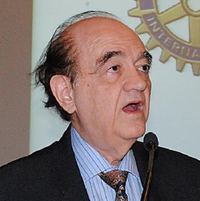
 Guest of Honor and Speaker’s Profile: Jose Ma. A. Concepcion III
 The Week That Was