

STAR Rtn. Teodoro “Teddy” Kalaw, IV: Continuing the Family Legacy
STAR Rtn. Teddy Kalaw, an arbitrator, mediator, corporate governance counsellor and sustainability specialist, talks about his profession, his grandfather's Rotary legacy and his hobbies.
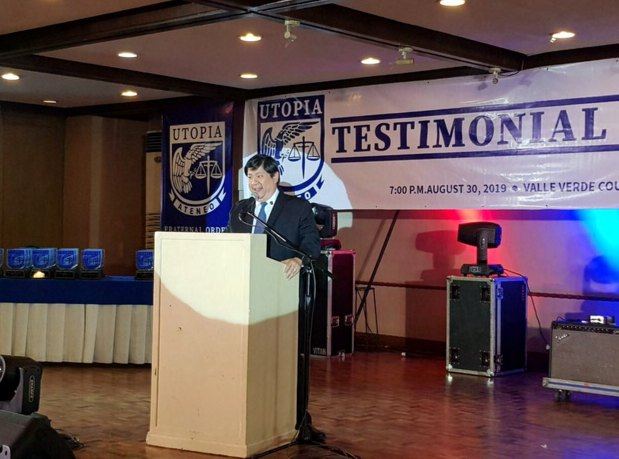
When heroic DNA runs in your blood, it becomes natural to do something for the good of the country. STAR Rtn. Teodoro "Teddy" Kalaw, IV may not be doing ‘remarkable heroic acts’ like his ancestors, but the importance of his contributions cannot be understated. A lawyer with three practice niches, he raises the bar on his profession. STAR Rtn. Teddy is a professional arbitrator and mediator, a corporate governance advocate and counsellor, and a sustainability specialist. STAR Rtn. Teddy’s sense of achievement and his desire to be a pioneer in areas which he believes are crucial to our country’s development are part of his DNA.
Read on to find out how his Lolo Ted (Teodoro Kalaw, Jr., a pioneer in many professions and a long-time Rotary Club of Manila member) influenced his career, and how much he looks up to his Lola Eva (Eva Estrada Kalaw) and Lolo Doroy (Teodoro M. Kalaw). Discover how this man of accomplishments got to where he is now and how he provides value in his professional practice. On a lighter note, he also shares his interests and hobbies, and suggests the one new book you should not miss this year.

Rhea Vitto Tabora (RVT): Please describe your profession and how you got to being in it today?
Teodoro Kalaw, IV (TK IV): I provide what some would call an interdisciplinary professional practice founded on three related clusters of services. The first – which presently constitutes just over half of my working time – is being a professional neutral, primarily either as an arbitrator deciding disputes for others or a mediator helping others reconcile their differences. In the former, I usually handle commercial and construction disputes generally as a chair of 3-person tribunals or as sole arbitrator. I was fortunate this past decade in being appointed to address domestic arbitrations with what were then the largest claims made here in the country. I am happy to see that as the local legal community has gotten comfortable with arbitration as a process, claims referred for arbitration have only gotten even larger. Some of these disputes I have resolved also involved significant political factors or major economic players, which, to me, signifies that we will see a growing trend towards the process so that it may no longer be seen as an alternative mode of dispute resolution in the near future.

In my role as a mediator, my special niche is conflicts involving business families with ongoing operations. Often, in my second practice as a governance counselor, I am also asked to help conciliate families in business seeking to resolve disagreements and close emotional baggage from the past. I have mediated clans with over 50 family members in this regard.
My second professional practice has developed from my long-standing involvement with the Institute of Corporate Directors of the Philippines. Just last month, I was elected as their youngest ever Life Fellow in recognition for completing not only three full terms (almost a decade) as a trustee but also for serving for nearly a decade and a half as their faculty member handling the most number of specialized courses. In addition to our core program in family business governance which I introduced and which I have provided in the ASEAN region through the International Finance Corporation, I also developed and launched the Institute’s special courses on sustainability strategy and reporting, business integrity, and corporate governance for newly organized boards and start-ups, among others. I am also often called to teach their other courses on strategy execution, corporate secretarial practice, and their flagship Professional Directors Program from time to time. Needless to state, I often am requested to provide such training for other service providers, which in turn creates a virtuous circle of queries leading to counseling and coaching engagements. Between a quarter to a third of my working time is invested in these areas.

RVT: How did your core discipline of law influence where you are now?
TK IV: I think being a lawyer who reads a lot has allowed me to see opportunities that others with similar professional training do not, primarily because I always try to predict where the fields I am interested are headed toward. I first picked up on the opportunities that commercial arbitration offered while taking up negotiation courses to complete my Master of Laws at Harvard Law School. Precisely because no one locally was really promoting it two decades ago, I sought professional training and became only the third Filipino Fellow of the world’s leading learned society in the discipline – the Chartered Institute of Arbitrators (CIArb) of the United Kingdom. That in turn led to me co-founding, together with the two other pioneering Filipino CIArb Fellows, the Philippine Institute of Arbitrators (PIArb), which is the only learned society of its kind in this country and which I was made a President Emeritus a few years back.

The rest of what I do professionally is currently focused on developing a third practice niche. Since 2012, I have been observing the rise of the concept of sustainability as a management perspective and became the first Filipino to obtain a graduate degree specifically in sustainability leadership from the University of Cambridge in the middle of the last decade. My master’s dissertation concentrated on the sustainability practices of Philippine publicly-listed firms (PLCs) recognized for pioneering in this field, and I subsequently became the first Filipino to be certified as a sustainability professional by the leading international reporting standards body, the Global Reporting Initiative (GRI). Given the recent requirement by the Securities and Exchange Commission that all PLCs must come up with sustainability reports, I now also coach firms not just on how to go about producing such reports but also on integrating the concept as part of their competitive strategy.
I can say the same for my other two specialties. My legal background often made me the go-to faculty initially for regulatory topics when I was starting out in ICD, and that led me to branch out to other areas of governance particularly after I got my MBA and MPA degrees respectively from Kellogg and the University of the Philippines. I count myself fortunate in being able to use my first discipline to pioneer in areas which I think are crucial to our country’s development definitely into the next two decades, and I can’t really imagine how I could be in any of these three fields were it not for the fact that I started out in the law.
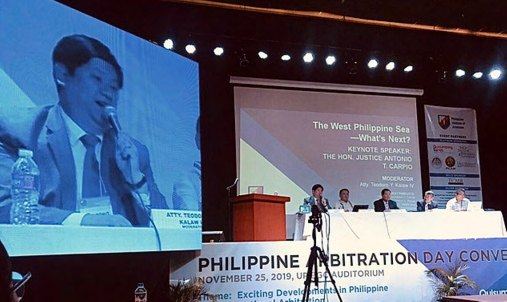
RVT: What do you like most about your work as a dispute resolver?
TK IV: Depends on whether I am acting either as an arbitrator or mediator. As an arbitrator, I most enjoy the opportunity to definitely resolve a matter I have been appointed to cost-effectively, in a set timeframe often much shorter than traditional litigation, and in a manner that is within the expectations of the parties. Arbitration being a zero-sum game, sometimes not every party walks away happy. I make it a point to make sure that every party that engages me at least concludes the arbitration process content, that they have been fully heard and fairly treated, even though they might have to live with the ultimate result. Being a mediator, on the other hand, often allows me to really dig into deeply ingrained frustrations and interests that would not otherwise be fully brought out in arbitrations. While I don’t always end up with a conclusion that settles the dispute of the parties, I almost always leave such engagements having provided the parties with a much better understanding of why they are in conflict and what options are open to them if they are in good faith.

RVT: If you had to pick one skill that is most important for a dispute resolver to have, what would you say it is?
TK IV: Whether as an arbitrator or mediator, hands down I would say it is the ability to impartially listen and accurately confirm the narratives a party wants to provide me. Easy to describe but really challenging to apply in practice. A lack of such skill is the reason why not many judges can be mediators (because they often tune out the emotional context of disputes) and why many mediators are not natural arbitrators (because they are too grounded on developing empathy when in their professional role).
RVT: How can you say you create value in your professional practice?
TK IV: If I achieve a measurable result that satisfies a party or client engaging me. With arbitration, that is providing an award in the most timely, cost-effective, and competent fashion. With mediation, that is guiding parties in exploring all avenues for settlement in a systematic manner. In corporate governance, that is creating a working corporate board that can demonstrate how it contributes to the sustainability of a firm. In sustainability, it is not just empowering a business to make its products and services, value chain, and stakeholder engagements more sustainable, but also how to demonstrate such through a credible sustainability report.

RVT: What do you consider your greatest accomplishment?
TK IV: First and foremost, raising a daughter with the Love of my Life in this volatile, uncertain, complex, and ambiguous times. After that, being a pioneer in my three practice niches, and thus contributing in my own quiet way to nation-building.

RVT: What ignited your interest in joining the Rotary Club of Manila?
TK IV: As a natural joiner, I always was attracted to Rotary because of its promotion of its four-way test as well as leadership through service in the community. I just never got around to joining a Rotary club because of my schedule. When Rotarian Albert Alday casually highlighted to me earlier this year that my Lolo Ted’s club was RCM, that pretty much sealed the deal for me and made me commit to becoming a member.

RVT: How do you and your family specifically view your late grandfather’s (Teodoro Kalaw, Jr.) long-time membership in the Rotary Club of Manila?
TK IV: My late father (Olympic Shooter Teodoro Kalaw, III) passed away before I was 2 years old. My two grandfathers – and, especially, Lolo Ted – were effectively my father figures as I grew up. In fact, I could say I modeled my own career on my Lolo Ted, who was a lawyer, CPA, Realtor, electronic and communications engineer, industrial engineer, and champion shooter, in addition to founding the realty appraisal profession and Toastmasters program in the Philippines, amongst others. It says a lot to me that he chose to commit to being a long-time member of RCM and I am happy to continue this part of his legacy.

RVT: Please share something about yourself that your fellow Rotarians around you might not readily know.
TK IV: Due to a major arbitration I chaired involving a sister Rotary Club (not RCM), I felt it prudent to let a few years pass before considering applying just so no one could accuse me of bias or partiality precisely because that club was a party to that arbitration. Because arbitrations are inherently confidential in nature, however, I cannot recount how that rather interesting matter concluded.

RVT: How do you see your clan in the context of our Filipino Nation?
TK IV: Honored that we have produced the two kinds of leaders our country needs but often lacks: Heroic leaders like my Lola Eva, who must respond assertively to substantial governance challenges, but just as much quiet leaders like my Lolo Doroy (Teodoro M. Kalaw), who sought to create value where they felt was necessary (like establishing the national library and heading the secretariat of the Philippine independence mission to the United States, amongst others, in the case of Lolo Doroy). Really touched that RCM’s very own, Lolo Ted, was both. Not only was he a pioneer in many professions, he was also awarded the silver star for gallantry and became a Death March survivor in World War II. If I can create one-tenth the value of what they produced during my life, I would mark mine as one well-lived professionally.

RVT: What are your interests and hobbies? What do you do when you are not at work?
TK IV: Other than my see-food diet (I eat what I see), my one real passion is reading. Activities-wise because of my extremely high handicap (29 last time I got one a few years back), I am the favorite of golfers who want to get treated for winning a round. Seriously though, when I turned 42, I started to race (not run) marathons. I completed my second one (the Singapore Sundown) with a personal record time for me of 7 hours and 58 minutes a few years back and am scheduled to virtually complete the Boston Marathon on the Manila Polo Club grounds later this year. Same race, same finisher’s medal, but raced from here to avoid flying on my part to the US due to the current pandemic.

RVT: What’s the last book you read that you couldn’t put down?
TK IV: “Noise: A Flaw in Human Judgment”. If you are a fan of Daniel Kahneman’s “Thinking, Fast and Slow” and Cass Sunstein’s “Nudge”, this for me is the one new book you should not miss this year. Its prescriptions on improving your judgment alone are well worth the time spent on it.

 President’s Corner
 The Week That Was