

Mobility’s Future Promise
A From Distant Shores column on integrated public transport abroad and emerging autonomous, connected and electric mobility technologies.

Like a hangover from our previous column on cable cars, a persistent curiosity overcame me, prodding me to check what goes on at the cutting edge of mobility and transportation. To recall, we postulated that cable cars could indeed be an out-of-the-box solution to the country’s mass transportation and traffic woes, but only if, and this is a big if, they are integrated with other mass transportation platforms, thereby seamlessly providing the riding masses with a reliable, safe, convenient, and relatively affordable transportation service. Only then could motorists be enticed to keep their cars and motorbikes at home and use public transportation instead. Anything short of this simply will not do.
That seamless service is what exactly other countries have – built on the back of a massive transportation infrastructure that was incrementally improved over decades, and supported by continued investment in innovation and development. Take for instance Japan’s bus, subway, train, and bullet train system. It is so well integrated and reliable that one can plan a journey with the published arrival and departure times. Or London’s bus, underground, train, and ferryboat system which a passenger can access with a contactless ATM or debit card. There is no need to carry cash and buy tickets for each type of transport, just tap your card and the exact fare will be debited from your bank account.

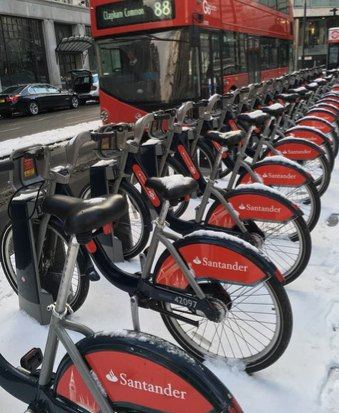
Europe’s bus, tram, boat and metro systems and interconnected railways are another thing to aspire for. With a reliable and efficient public transport service, driving a car is more of a choice than a necessity in these parts. In fact, one of the current trends in the aforementioned places is the provision of app-based first and last mile services. In urban areas, e-bikes and electric scooters can be rented from hubs and roadsides using an app. An important requirement after use is to leave the equipment in an accessible space so that other users may in turn rent it. Failure to do so would result in fines directly debited from one’s account and big enough to ensure compliance.
In suburban areas and even in villages far from a city’s outskirts, app-based car clubs are the norm. One only has to log in and check the availability of any club car parked at designated lots in the vicinity, which one can then access using the same app. In these two scenarios, one will not feel compelled to buy a car because the option is not a long wait for a jampacked bus but rather a pay-as-you-use vehicle that would bring the rider to the nearest train, tram or subway station.
Other countries are going even further by investing in semi-autonomous and fully autonomous vehicles. Europe’s first full-sized self-driving urban electric bus started its trial run in Malaga, Spain in March 2021. The 60-seater, 12-meter self-driving bus plies the eight-kilometer route from the city center to the port six times a day. Back in 2020, China’s dominant ride-hailing platform Didi Chuxing launched a fleet of robotaxis in a limited six-kilometer route in suburban Shanghai. Even earlier, then-Prime Minister Shinzo Abe announced in 2018 that Japan will introduce autonomous buses in rural areas by 2020 to ensure mobility for Japan’s elderly population. Of course, these pilot areas are still in sanitized pockets that do not reflect the real traffic situation in big cities, and in most cases, somebody remains in the driver’s seat just in case.
But while the possibility of putting driverless buses and taxis in Manhattan still seems remote, McKinsey & Company forecasts increased use of autonomous vehicles – be it for human transport or haulage of goods – as legal and policy frameworks adapt in many pioneering states. The UK, for example, in its new roadmap to deploying self-driving cars by 2025, has taken the stance that the manufacturer of an automated vehicle, not the driver, will incur liability for any accident that might occur when the car is in self-driving mode.

In the McKinsey Technology Trends Outlook 2022 published a couple of weeks ago, mobility is seen to be “undergoing its second great inflection point”, the first having occurred over a hundred years ago when the shift from horses and steam to the internal combustion engine happened, combined with the introduction of the Model T Ford that made individual car ownership attainable. The second inflection point, according to McKinsey, will be a shift towards the ACES – autonomous, connected, electric, and smart technologies.
The report suggests that the combination of AI, HD mapping and object detection technologies will push the boundaries of autonomous vehicles; vehicle-to-infrastructure (v2i) connectivity and infotainment solutions will be as commonplace as rear-view mirrors in future vehicles; advances that would take the industry beyond the Lithium-ion battery will drive the shift from fossil fuel to electricity; and transportation demand management solutions will incentivize the transition to more efficient and sustainable modes of commuting. Adjacent technologies include the invention of more lightweight materials and advanced composites. Adjacent policy trends include the greening of the value chain by reducing the carbon footprint and increased materials circularity through reuse and refurbishment. These technologies and policy directions will enable new alternatives to muscle cars or delivery vans, such as robotaxis, vertical take-off and landing air taxis, autonomous trucks and street-side delivery robots, and freight or delivery drones.

These may seem the stuff of fantasy for now, but actual people are hard at work trying to bring these into reality sooner than later. As to when these novel technologies and solutions will reach our shores is another matter, but leapfrogging to the next inflection point and bypassing outdated mass transport models may be key to an early enjoyment of these benefits in our islands. More interestingly, it may be the smaller cities which could become the pilot implementation areas for these cutting-edge systems on account of scale and feasibility.
Libre naman daw ang mangarap.

 President's Diary
 Editor's Note