

Rebirth Through Bamboo: The Legacy of the “Kawayanihan para sa Kalikasan, Kabuhayan, at Kinabukasan” Project
A multi-district Rotary effort spearheaded by RCM brought bamboo planting to Albay from September 5 to 7, 2024.

IN the shadow of Mayon Volcano, where nature's beauty is entwined with its peril, a profound and noble initiative unfolded from September 5 to 7, 2024. The "Kawayanihan para sa Kalikasan, Kabuhayan, at Kinabukasan" (KKKK) project, a heartening testament to human resolve and environmental stewardship, brought together a diverse coalition dedicated to healing the land and uplifting the lives of its people. This multi-district Rotary endeavor, spearheaded by the Rotary Club of Manila and its partners, embodied the spirit of solidarity and hope against the backdrop of Bicol's rolling hills and volcanic vistas.
The project commenced with the arrival of delegates, including six distinguished members from the Rotary Club of Manila: Rotary Club of Manila President Jujut Enriquez; Director-in-Charge for Environmental and Climate Protection, Nagi Zeitouni, Committee Chairman for the Environment, PP Herminio “Hermie” Esguerra; Project Chief of Mission Director Albert Alday; Past Vice-President Reggie Yu; and Rotarian Ferdinand “Inov” Talusan. Each brought a unique blend of expertise, passion, and commitment to a mission deeply rooted in environmental restoration and community support.
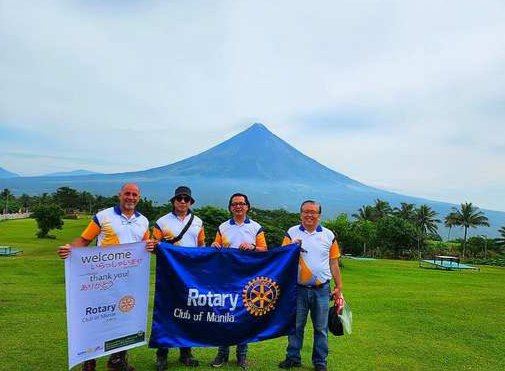
A Background of Resilience
The KKKK project emerged as a response to the severe environmental and livelihood challenges facing the Province of Legazpi. Bicol’s iconic Mayon Volcano, a UNESCO Biosphere Reserve, had suffered significant ecological damage due to volcanic sand mining and frequent natural disasters. The catastrophic Super Typhoon Reming in 2006 had left a trail of devastation, with lahar flows claiming numerous lives and ravaging the land. In the wake of such disasters, communities grappled with eroded landscapes, destroyed livelihoods, and heightened vulnerability to future calamities.

Against this backdrop, bamboo planting emerged as a symbol of hope. Bamboo’s fast growth and robust root system provide effective erosion control, while its versatility offers a sustainable alternative for livelihoods. The KKKK project aimed to address these dual challenges by planting 30,000 bamboo propagules to restore ecological balance and support local communities economically.
The project was initially conceived by Fr. Efren “Momoy” Borromeo and brought to fruition by the husband-and-wife team, Past Presidents Willie and May Masangkay of the Rotary Club of Manila Premier. In collaboration with Rotary International District 3810 Governor Joyce Ambray and Past District Governor Edna Sutter of District 3830, who serves as The Rotary Foundation’s Major Gift Initiative Adviser (MGIA) for Environmental Protection, they facilitated the donation of over 30,000 bamboo propagules. These propagules were transported in two batches to Bicol, under the supervision of Fr. Momoy Borromeo and coordinated by the Ugnayan ng Barangay at Simbahan (UBAS). Recognizing the scale of the project, PDG Joyce recommended a multi-stakeholder approach to ensure its sustainability. This is where the Rotary Club of Manila, along with other Rotary Clubs, became actively involved.
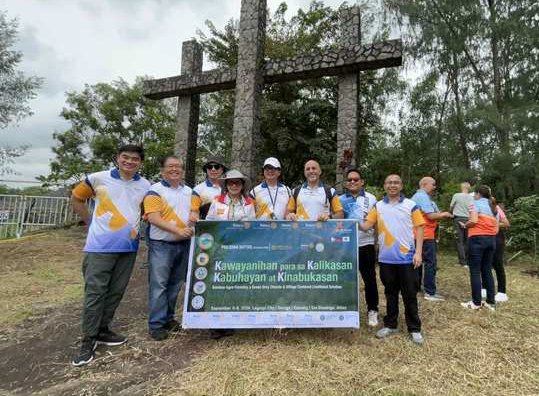
A Coalition for Change
The success of the KKKK project was built upon the concerted efforts of a broad coalition of organizations and individuals, each contributing their expertise and resources to this noble cause. The initiative was spearheaded by the Rotary Club of Manila, with significant involvement from both local and international Rotary clubs. The participating clubs included the Rotary Club of Ichihara-Chuo and the Rotary Club of Tokyo-Global from Japan, along with Rotary Club of Manila Premier, Manuel Roxas Boulevard, Binondo Prime, Remedios Circle, and Pasay Libertad from the Philippines. The Rotary Club of Legazpi Central, serving as a crucial local partner, played a pivotal role in the project’s execution.

In addition to the Rotary clubs, Inner Wheel Clubs also joined the effort, with members from the Inner Wheel Club of Legazpi and Inner Wheel Club of Manila 101 lending their support and resources. This diverse coalition reflected a shared commitment to environmental restoration and community upliftment, transcending borders and local affiliations.
A Journey of Reflection and Action
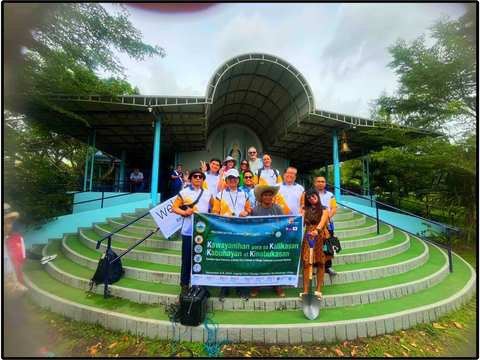
Day One dawned with a poignant ceremony at Laudato Si Farm, also known as Mary’s Healing Sanctuary. Here, amidst the serene landscape, Father Efren “Momoy” Borromeo led a mass honoring over 400 victims of the Super Typhoon Reming’s devastating lahar flows. The service, imbued with solemn remembrance, set the tone for the days that followed — a reflective yet proactive response to the disaster's lingering scars.
As the sun rose higher, the delegates, alongside local dignitaries, engaged in a series of activities that marked the beginning of a tangible transformation. Rotary Club of Legazpi Central President Leonil “Neil” Andal of the Rotary Club of Legazpi Central, Project Chief Advocate and Chairman, Rotary Club of Legazpi Central Vice-President Martin Reynoso, and Barangay Captain Harold Bembenuto of Barangay Padang welcomed the participants with messages of hope and resilience. The event progressed with the turnover of essential farm implements and tools to the Barangay Agriculturist, symbolizing a collective commitment to nurturing the land that had once been marred by disaster.
The day’s agenda included a seminar on bamboo propagation — an essential component of the KKKK project. Bamboo, with its rapid growth and extensive root system, was not merely a plant but a symbol of renewal and strength. This knowledge transfer was a pivotal moment, emphasizing bamboo’s role in restoring the environment and providing sustainable livelihoods.
Planting the Seeds of Recovery
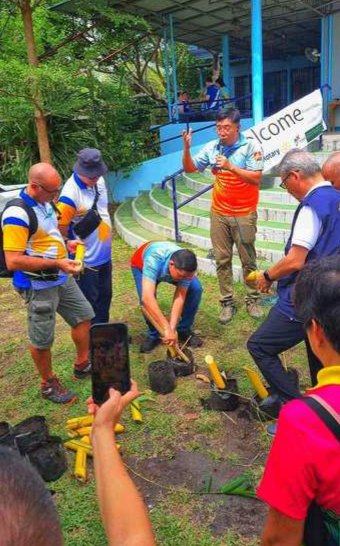
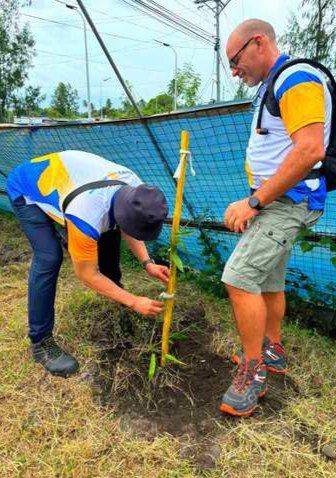
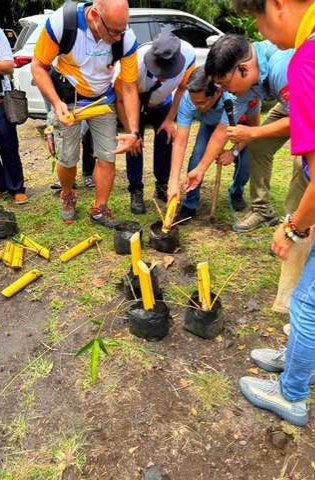
The true essence of the KKKK project unfolded as the delegates participated in various bamboo planting activities. At Barangay Padang Memorial Triple Cross, they planted bamboo to honor the victims of the lahar flows, turning a site of mourning into one of regeneration. The model quarry restoration site showcased a commitment to transforming environmental scars into green spaces, with bamboo serving as a tool for slope stabilization and aesthetic enhancement.
The tour of illegal quarry sites in the Municipality of Sto. Domingo underscored the project's urgency. Here, the delegates witnessed the adverse effects of rampant quarrying and saw firsthand the potential of bamboo to restore and revitalize damaged landscapes. The establishment of a bamboo nursery in collaboration with the Farmers Association illustrated a practical approach to countering the effects of illegal quarrying, offering a sustainable livelihood to approximately 200 families. By expanding the bamboo nursery and planting bamboo with the Farmers Association, the project sought to address both environmental degradation and economic hardship.

Lunch at Mary’s Healing Sanctuary provided not just sustenance but a celebration of local culture and resilience. The rich flavors of Bicolano cuisine, including Kurobota black pig lechon and Bicol Express, were a testament to the region’s vibrant heritage and the communal spirit that binds its people.
An Evening of Celebration and Reflection
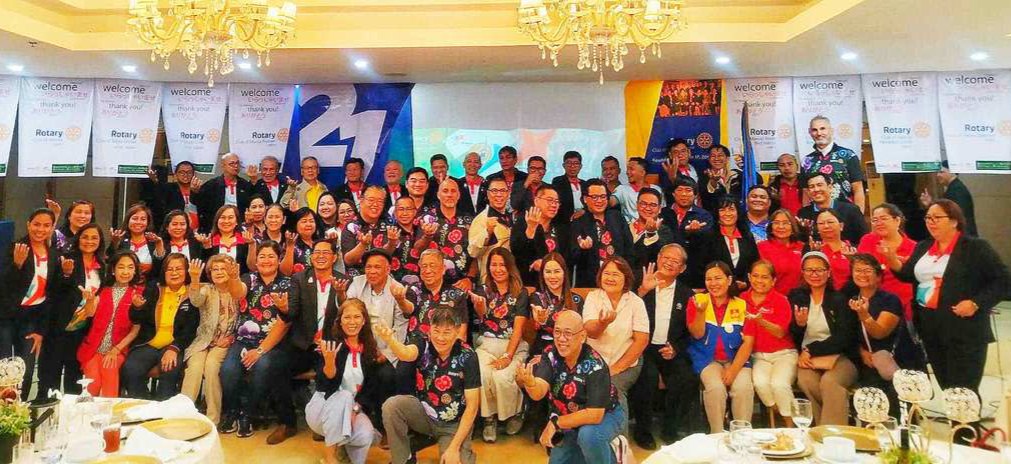
The evening of September 6 marked a joyous occasion — the 21st Charter Anniversary of the Rotary Club of Legazpi Central. The welcome ceremony and dinner at Concourse Hall, Wei Due Building, was more than a festivity; it was a celebration of the Rotary’s enduring impact and the collaborative spirit that had driven the KKK project. As the project drew to a close on September 7, the delegates continued their bamboo planting efforts in Camalig and Daraga, furthering the mission of ecological restoration. The journey concluded with an invitation to explore the stunning vistas of Albay, leaving participants with a deep sense of fulfillment and connection to the land and its people.
A Legacy of Hope

The KKK project was more than an environmental initiative; it was a beacon of hope and a manifestation of collective human spirit. It illustrated how dedicated individuals and organizations could come together to mend the Earth and uplift communities affected by natural calamities. The Rotary Club of Manila and its partners demonstrated that through shared vision and unwavering commitment, the scars of the past could be healed, and the seeds of a more resilient and sustainable future could be sown. In the lush groves where bamboo now takes root, the story of the KKK project will live on — a narrative of renewal, resilience, and the enduring bond between humanity and nature.
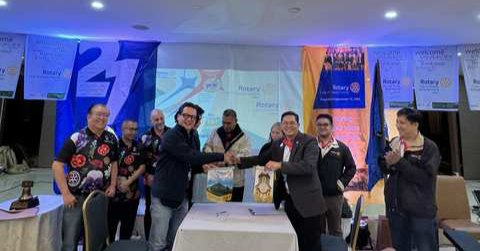
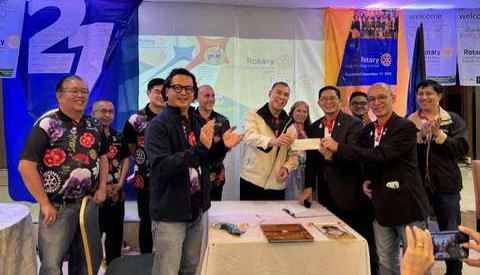
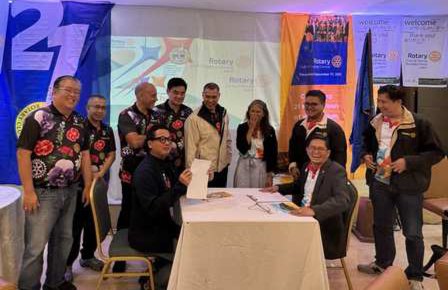
On September 6, 2024, at the Concourse Hall in Legazpi City, RCM, represented by President Jujut Enriquez, and RC Legazpi Central, represented by President Neil Andal, formalized a sisterhood agreement. This agreement signifies a mutual commitment between the two clubs to support each other.
 Wendell Adrian Tamayo
 7th WMM Recap: Empowering Change: A Glimpse of the Future with Innovation and Inspiration