

Hope and Renewal: The Rotary Club of Manila’s 11th Weekly Membership Meeting
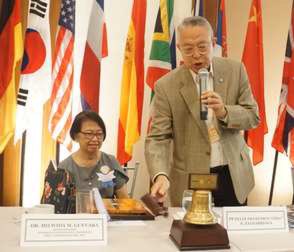
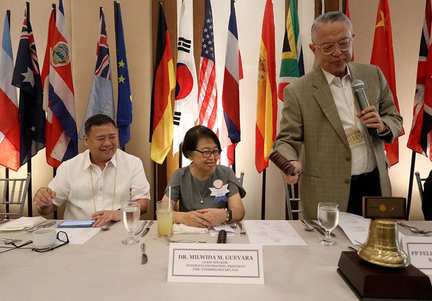
RCM held its 11th Weekly Membership Meeting on October 3, 2024 at the Manila Polo Club, with Synergeia Foundation President Dr. Milwida M. Guevara as guest of honor and speaker.
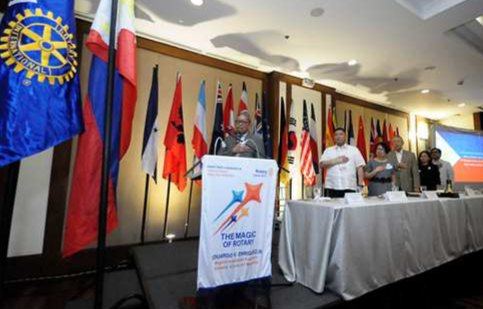
On the sun-dappled afternoon of October 3rd, 2024, the members of the Rotary Club of Manila assembled at the distinguished Manila Polo Club for their 11th Weekly Membership Meeting of the Rotary Year 2024-2025. It was a day that embodied the Rotary spirit — a blend of camaraderie, a shared commitment to service, and a reflection on the deeper issues facing the nation. The meeting began with familiar formality, but quickly unfolded into a discourse rich with insights, punctuated by a message of hope and empowerment.
Setting the Stage: Reflections, Introductions, and Celebrations
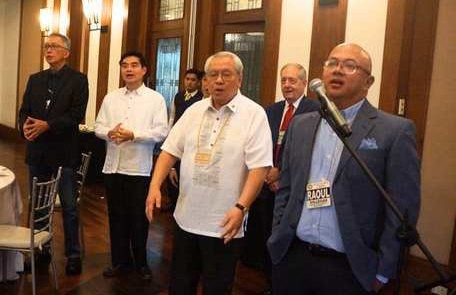
The event opened promptly at 12:30 PM with Past President Felix Francisco "Chito" S. Zaldarriaga stepping in for President Jujut Enriquez, who was in Taiwan representing the club at the 76th Charter Anniversary of the Rotary Club of Taipei. Despite the absence of their current president, the members of the Rotary Club of Manila carried on with a palpable sense of pride and duty, mirroring the leadership values they cherish.
The Invocation, led by Past Treasurer Karlo Eugene Josef "Karlo" M. Castro, set a solemn tone, invoking a reflection on the Rotary’s core values of fellowship, ethics, and service to others. As the members rose for the Philippine National Anthem, the room was filled with the dignified voices of the RCM World-Famous Music Chorale, who then followed with the Rotary Club of Manila Hymn — both performances capturing the essence of unity and shared purpose.

As tradition dictates, Rotarian Romeo "Romy" C. Nones took the floor to recite The Four-Way Test, a guiding ethos for all Rotarians: "Is it the truth? Is it fair to all concerned? Will it build goodwill and better friendships? Will it be beneficial to all concerned?" These timeless principles set the foundation for the meeting, emphasizing the ethical lens through which Rotarians view their endeavors. Vice President-Elect Ricardo "Ricky" S.B. Guevara followed, acknowledging the guests, after which the chorale delivered a heartwarming Welcome Song, energizing the atmosphere with the spirit of fellowship.
The first half of the meeting was formal and familiar, but the second part delved into broader topics of national and global relevance, with the introduction of the newly chartered Rotary Club of Manila Expats, led by Charter President Ria Januszczak. This moment was a proud milestone for the Rotary Club of Manila, exemplifying the organization's growth and the expanding network of Rotarians committed to service beyond the borders of the Philippines.

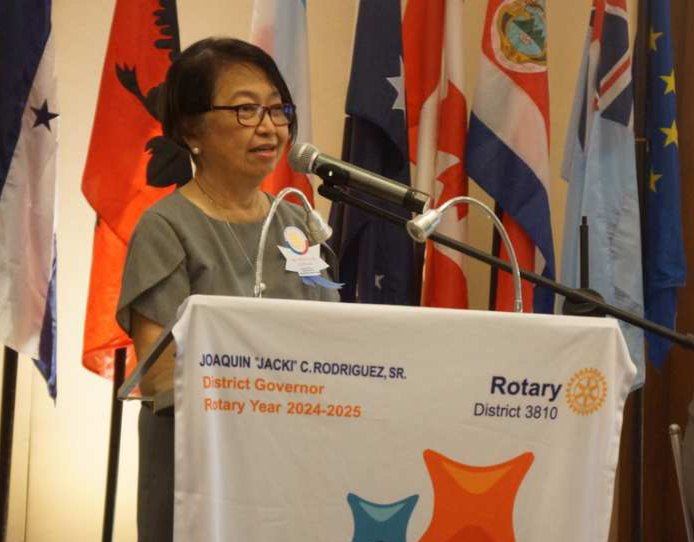
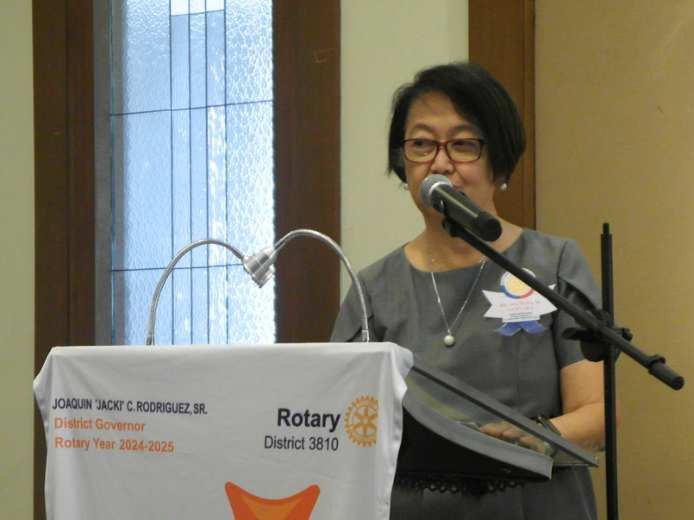
However, the highlight of the afternoon arrived when the Guest of Honor and Speaker, Dr. Milwida M. Guevara, took the podium. Dr. Guevara, President of Synergeia Foundation and former Undersecretary of the Department of Finance, captivated the audience with her thought-provoking address, masterfully weaving humor, wit, and sharp insights into her analysis of the state of the nation. The topic — public finance — may have initially seemed dense to some, but Dr. Guevara's delivery was anything but.
She began her speech with a lighthearted anecdote, reflecting on the way people often pigeonhole her as a finance expert, owing to her years as Undersecretary of the Department of Finance. Yet, with a playful grin, she assured the audience that she had been "rehabilitated" from the stereotype and now found herself working in the “real world.” This opening drew warm laughter from the audience, but it was clear from her tone that Dr. Guevara's message would go far beyond finance.
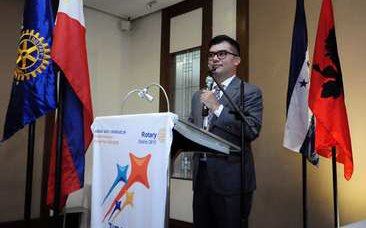
Her voice took on a more serious timbre as she shifted to the "real-life drama" of the Philippine government, comparing it to a Filipino action movie with characters like Max Alvarado and Paquito Diaz — villains from classic films — prowling the halls of the Senate and the Lower House. The audience chuckled, but the underlying message was grave: corruption still haunts the country, with figures like Alice Guo exploiting weaknesses in oversight to operate clandestinely and siphon billions through illegal POGOs.
She voiced her frustration at the culture of impunity and how the national discourse, dominated by scandal and deceit, often left citizens feeling powerless and despondent. At this point, she made a striking confession: even she had found herself caught in the negativity, often using her own Facebook page to vent about the absurdity of what was happening in the government. Her posts, once humorous, had turned darker, contributing to a growing sense of despair among her followers, particularly younger Filipinos who increasingly expressed their desire to emigrate. “I have been disturbed,” Dr. Guevara admitted, “by comments from my younger friends that they are losing hope and would like to immigrate.” It was a sobering moment. Her pause allowed the weight of this statement to settle over the room. It was not just the political drama or the corruption that troubled her, but the emotional toll it was taking on the nation’s youth — the next generation of leaders, who felt their best option was to leave the country rather than to stay and fight for its future.
Pockets of Hope
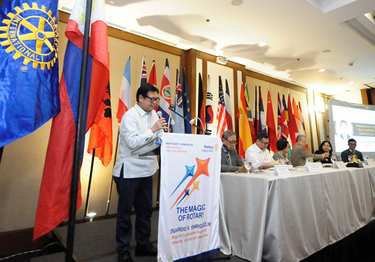
In response to this pervasive despair, Dr. Guevara made a personal commitment: to shift her focus away from simply criticizing what was wrong with the Philippines and instead highlight the positive developments, the "pockets of hope," as she called them, that could serve as a foundation for national progress. Without hope, she argued, there can be no inspiration, no joy, and certainly no will to make things better. “We must pull ourselves up instead of down,” she said, her voice resolute. “There is much good happening in the country if we only choose to see it.”

She then began to enumerate the signs of progress. First, she pointed to the declining incidence of poverty. The percentage of families living below the poverty threshold of ₱13,873 per month had dropped from 12.1% in 2018 to 10.9% in 2023. While this still accounted for millions of impoverished families, the downward trend was a significant indicator of improvement. “This means more people have access to livelihood,” Dr. Guevara noted, “which means they can afford basic necessities and send their children to school.”
The nation’s economic growth was also cause for cautious optimism. The GDP, which had grown by 5.5% in 2023, had risen further to 6.3% in the second quarter of 2024. With more products being made, more income generated, and more remittances coming in from Filipinos abroad, the economic outlook was undeniably better than it had been in previous years. But Dr. Guevara didn’t stop at statistics. She connected the numbers to real-life impacts, making it clear that these gains, while modest, were paving the way for more Filipinos to lift themselves out of poverty.

She also lauded the government’s evolving policies, which represented a significant shift from the previous administration. Under President Marcos Jr., she observed, there had been a decisive change in the handling of the West Philippine Sea, with the President asserting the Philippines' territorial rights more confidently than before. “This is in marked contrast to the past administration's 'accommodative policy' toward China’s aggressive actions,” she remarked, drawing nods from the crowd. It was a small but meaningful victory for national sovereignty.
Another key change she highlighted was the transformation of the government’s war on drugs. No longer centered on violent crackdowns and extrajudicial methods, the current administration had adopted a more holistic and humane approach, focusing on rehabilitation, reintegration, and preventive strategies. “We can all sigh in relief from fear of being falsely accused and arrested,” she said, acknowledging the climate of fear that had gripped the nation during the previous administration’s war on drugs.

One of the more controversial actions of the current administration — the decision to ban POGOs (Philippine Offshore Gaming Operators) associated with money laundering and human trafficking — was, to Dr. Guevara, a step in the right direction. She criticized the previous government’s blind eye to the evils POGOs brought, under the pretext that they generated employment and revenue. “But what a trade-off!” she exclaimed. In her view, the harm caused by POGOs far outweighed any economic benefit, and she praised the current leadership for making the difficult but necessary decision to shut them down.
Yet, amid the positive changes at the national level, Dr. Guevara was most heartened by the "brighter spots" she saw in the Filipino people themselves. She mentioned Senator Risa Hontiveros, who had courageously taken on issues such as illegal gambling and fought for women's rights, despite being the lone genuine minority in the Senate. “She shows us how to turn a disadvantage into an opportunity to work for the common good,” Dr. Guevara said, emphasizing that true leadership often comes from those who face the greatest obstacles.
Senator Win Gatchalian was another beacon of hope in her eyes. His reliance on data and research, rather than rhetoric, had made him an effective force in uncovering the truth in legislative hearings. His incisive questions and evidence-based approach set him apart from his peers, offering a model of what governance could be when driven by facts rather than political grandstanding.
Dr. Guevara also drew attention to bright spots in the Lower House, particularly the emerging leadership of female congressmen like Congresswoman Gerville Luistro, whose intelligent questions and sharp summations had inspired many. “She shows us how women can be probing, objective, and deep,” Dr. Guevara noted, adding that a healthy opposition, led by capable leaders like Luistro, was essential to maintaining checks and balances in government.
Perhaps most inspiring, however, was her faith in local governance. Dr. Guevara spoke at length about how local government units (LGUs) represented the "islands of good governance" that could serve as exemplars for the national government. She shared stories of success from cities like Valenzuela, where programs like "Education 360 Degrees" had transformed public education through community consultations, teacher training, and systemic reforms. She also highlighted the late Mayor Jesse Robredo's legacy of participatory governance, where citizens played an active role in decision-making and development planning.
Her closing message was both sobering and hopeful: while the country faced deep-seated issues like social inequity, poor educational outcomes, and entrenched corruption, Filipinos could not afford to focus solely on what was wrong. Instead, they must amplify the pockets of hope — supporting good leaders, fostering partnerships with LGUs, and influencing citizens to vote wisely. “The call is not for big-bang projects,” she said. “But small, doable steps. Every little step matters. Small steps bring about big, lasting changes.”

As Dr. Guevara stepped away from the podium, her words hung in the air — a challenge, a call to action, and a reminder that change, no matter how incremental, is always within reach. It was a speech that left the Rotarians with much to ponder, and perhaps more importantly, much to do.
Engaging the Future
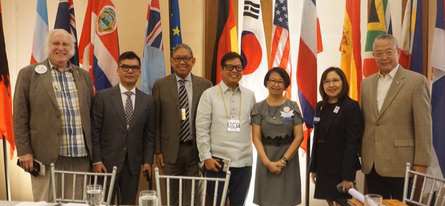
The open forum that followed allowed members to engage directly with Dr. Guevara, further deepening the conversation on the country’s future. As the clock struck 2:00 PM, Past President Zaldarriaga brought the meeting to a close, but the words of the guest speaker lingered. The Rotary Club of Manila members left the Manila Polo Club not only enriched by the fellowship they experienced but also invigorated by the call to action they had heard.
This 11th Weekly Membership Meeting was not just a gathering — it was a reaffirmation of the Rotary’s mission, a celebration of its achievements, and a renewal of its commitment to making a tangible difference. In the words of Dr. Guevara, “Small steps bring about big, lasting changes,” and the Rotary Club of Manila, as ever, remains dedicated to taking those steps — one meeting, one project, one community at a time.
 Nestor V. Tan