

Luceat Lux: The Quiet Radiance of Purpose
The Gentle Power of Phillip Lipoco Ong and a Life Anchored in Service

To speak of Phillip Ong is to speak not only of achievements — though they are many, and monumental — but of intention. For his is a life led with clarity of calling, honed early in the schoolyards of Kuang Chi, now known as Xavier School, where the seeds of excellence were sown not for recognition, but in the service of something greater.
Even as a boy, those around him sensed that he was built of a different mold. He was valedictorian of Class ’69, but more than that, he was a figure of quiet awe: the student who could ace exams with ease, lead the student council with integrity, serve the Church devoutly, and carry all these roles with a calm, deliberate grace. "Is he even human?" his classmates once wondered.
But the real question was not whether Phillip Ong was superhuman. It was whether we were ready to recognize that his secret was purpose — a profound, unwavering commitment to make his gifts count, to give what he had so others might have more.
The Making of a Man-For-Others

Phillip’s brilliance did not wane beyond the walls of Xavier School. At Ateneo de Manila University, he earned a degree in Management Engineering in 1973 and collected accolades as easily as others collected notebooks. But something in him was always reaching beyond. He did not pursue leadership for glory; he sought it for its capacity to uplift. He did not chase success for personal gain, but to test whether business could serve the greater good.
That philosophy would later define his path — not only as a pioneering entrepreneur, but also as a Rotarian par excellence.
Joining the Rotary Club of Manila in 1996, he did not make noise. He made impact. As Director of the Club from 2001 to 2002, he led with a steady hand and a servant’s heart. It was during this period that he chaired the prestigious TOWER Awards, recognizing exceptional educators — a fitting role for someone who believed in transformation through knowledge.
But it was in the Club’s quietest corners, in its oft-overlooked committees, that Phillip found his greatest calling.

Compassion In Action: Hospicio, Asilo, And the Art of Dignity
While some may have passed by the gates of Hospicio de San Jose or Asilo de San Vicente de Paul without a second glance, Past Director Phillip saw in these institutions not relics of the past, but gardens of hope waiting to be nurtured. He served as Chairman of the Sagip Kabataan Committee, anchoring efforts to support orphans and vulnerable youth at Asilo. Later, he would also accept the call to chair the Committee for Special Children and Senior Citizens — a task that most would deem thankless, and few would choose voluntarily. But choose it he did.
"I met an armless patient who yearned to express herself through art,” he recalled of his time at Hospicio. “She could barely hold a brush with her toes, yet she painted with her soul.”
That encounter became a turning point. Through his connections, including a fellow Rotarian at Philippine Women’s University, he ensured that the young girl received specialized art training. She would go on to sell her artwork and support her community — proof that even those with nothing can give everything when dignity is restored.

Such was the genesis of his support for the Angels of Rendu Art Club (ARAC), an initiative born during RCM’s Centennial that has since expanded into a vibrant platform for children with disabilities to discover their talents and shape their future. With 22 students now attending classes weekly, the ARAC program has not only unlocked creativity but raised funds, awareness, and new models of inclusive empowerment.
“This is what Rotary can do,” he shares. “It gives voice to the voiceless, canvas to the colorless, and hope to those the world has forgotten.”
The Quiet Revolution in Aquaculture
Yet, if his work in Rotary reveals his heart, it is his work in aquaculture that reveals his vision.

In 1990, at a time when few saw promise in the sea beyond what could be caught by nets and sold at market, Phillip Ong dared to dream differently. He founded Santeh Feeds Corporation, not to exploit the ocean — but to renew it.
“Traditional fishing methods were depleting our environment,” he explains. “We needed to farm the sea — not just harvest from it.”
Shrimp farming, once a niche experiment, gained traction under his leadership. When the export boom collapsed in the early ’90s, Santeh did not fold. It pivoted, building protocols for inland fish farming and transforming entire coastal communities into self-sustaining aquaculture hubs.
Today, Santeh Feeds is the country’s leading aquafeed company, with its flagship brand Tateh supporting thousands of fisherfolk in raising tilapia, bangus, catfish, and more. From remote lakes in Mindanao to river communities in Luzon, Santeh’s work has shifted the Philippine seafood industry from dependence on wild catch to aquaculture, which now provides 50% of our seafood supply. Globally, we are now the 7th largest aquaculture producer, thanks in large part to this visionary trailblazer.

But beyond statistics lies a story of transformation — of remote barangays where children now go to school because their parents can finally afford tuition. Of lakes once barren, now teeming with managed, sustainable life. Of small-scale fishers turned micro-entrepreneurs, because one man believed in the ripple effect of a single good idea.
He built the ecosystem of aquaculture: hatcheries, feed mills, farmer training, R&D, and even water engineering. Through it all, he remained anchored on two principles: sustainability and service.
"Innovation doesn’t mean cutting corners,” he insists. “It means making things better — for the environment, for communities, and for the future.”
And better it has become. Through Santeh’s investments in research and education, productivity has soared, and environmental impact has been mitigated. As the field matures, Santeh continues to lead in fish genetics, biochemistry, and climate-resilient aquaculture, unlocking solutions that many believed were decades away.

As he puts it, “We are just at the adolescent stage of aquaculture development. The best is yet to come.”
The Light of Innovation: Agrifoodhub, Social Entrepreneurship, And A Nation Fed by Its Own
In the thick of the pandemic, as the world descended into confusion and fear, social media began flooding with haunting images — mountains of rotting vegetables in Benguet, tomatoes dumped on roadsides, unsold crops abandoned by farmers in Nueva Vizcaya. The virus had halted the flow of commerce, and with it, the fragile lifeline connecting the country’s smallholder farmers to their only means of livelihood.
While many watched in helpless dismay, Phillip Ong responded with instinctive clarity. He launched what would become one of his most quietly revolutionary initiatives — the AgriFoodHub.

Born from his vision, leadership, and funding from the Santeh Foundation, the AgriFoodHub was a digital platform that aimed not to profit but to empower. It gave farmers free access to institutional buyers, streamlined logistics, and tools to assess quality and demand. The platform simplified the agricultural supply chain — long criticized for its opacity and inefficiency — and opened direct communication between those who grew the food and those who bought it.
By the time the program was sunset in 2023, it had established 1,916 verified buyer-to-seller relationships and helped more than 52,000 farmers grouped under 648 seller associations. It even collaborated with trading platforms like Mayani and food security groups like Tanging Yaman to ensure that oversupply found homes in feeding programs rather than in landfills.
It was, in effect, an emergency lifeboat that became a blueprint for reform.
“We didn’t partner with Cropital, but we did employ its founder, Ruel Amparo,” Phillip shares. “He helped build the tech. We focused on connecting anticipated harvests with confirmed demand. That simple match made all the difference.”

Though the platform was eventually dissolved to give way to normal market functions, it left behind a deeper shift in consciousness — that technology and empathy, when fused with strategy, can change lives at scale.
Incubating The Future: The Enterprise Hatchery Program
Years before the AgriFoodHub, Phillip had been quietly building a different kind of solution to an age-old problem: how to make agriculture attractive to the youth.
In 2010, during a trip to San Jose, California, he saw something unsettling. Billions in venture capital were pouring into entertainment apps, social media platforms, and digital currencies. Yet the fields that fed humanity — agriculture and fisheries — remained neglected, underfunded, and underimagined.

Around the same time, back in the Philippines, agriculture and fisheries schools were seeing historic lows in enrollment. For Phillip, this was not just an academic concern; it was an existential one.
“If no one wants to farm, who will feed us?” he asked.
Thus, the Enterprise Hatchery Program was born — an ambitious initiative to fund 100 social enterprises in 10 years, with a focus on agriculture innovation. It was not a contest of ideas, but of impact. Participants, often fresh graduates from agri-fisheries schools, were encouraged to develop business models that could create both income and transformation.
Initial success was elusive. University-originated startups proved difficult to sustain. But Phillip’s response was not to retreat — it was to refocus. He turned the program’s energy toward strengthening cooperatives and grassroots entrepreneurs.

In 2016, the Hatchery partnered with SEDP Simbag Multi-Purpose Cooperative in Bicol, mentoring and co-developing agricultural production and processing ventures that have since evolved into serious regional players.
“After 15 years,” he shares, “we’re finally seeing pre-unicorns emerge in Bicol and Panay.”
For Phillip Ong, the real return on investment isn’t monetary. It’s when a young farmer reinvents a local value chain. When a fishpond operator begins to dream beyond survival. When a simple idea, planted in fertile ground, grows into an enterprise that feeds, employs, and inspires.
The School of Purpose

It is tempting to believe that such wisdom and resolve come from experience alone. But those who know Phillip Ong best would say that his compass was fixed from the beginning.
It began in the modest classrooms of Xavier School, when it was still called Kuang Chi, nestled in the heart of Echague. There, in a community where values were not only taught but modeled, Phillip emerged as a leader, scholar, and believer. He prayed daily, led boldly, and thought deeply. He was not trying to impress anyone. He simply understood, even then, that to be gifted was to be called — to use one’s gifts for something beyond oneself.
The same ethos followed him to Ateneo de Manila University, where his Management Engineering degree became more than a ticket to the corporate world. It became a framework for impact, a tool for systems thinking, and a language for service. He did not separate his faith from his work. He fused them. And from that fusion came a lifetime of purpose.
"I’m proud to be both a Xaverian and an Atenean,” he reflects. “I believe my values were largely formed by these institutions.”

Those values — of compassion, integrity, and justice — are no longer abstract ideals. They have taken the shape of foundations, feeding programs, cooperatives, hatcheries, and digital platforms. They have flowed through seaweed farms in Zamboanga, milkfish cages in Pangasinan, and tomato fields in Ifugao. They have entered the hearts of children at Asilo and Hospicio. They have created movements where there were once only needs.
Building A Nation, One Farmer at A Time
When asked about the role of business in nation-building, Phillip Ong does not speak in grand terms. He speaks with quiet conviction.
“It is very rewarding that I have been involved in both food production and providing means for farmers to be self-driven entrepreneurs,” he says. “I firmly believe that small profitable farm enterprises are the foundation of a strong nation.”

It is a belief borne out of three decades of watching transformation take root where hope once struggled. He has seen communities lifted — not by handouts — but by opportunities made tangible. His companies have not only fed the nation; they have empowered it. From Santeh Feeds to Fishta Seafoods, from Pet One to Propmech and Floatech, his portfolio reflects a rare harmony of enterprise and empathy.
He is a champion of the invisible — the smallholder farmer, the disabled child, the rural innovator. He believes in building systems, not just solutions. In cultivating dignity, not just yield.
And through it all, he has remained grounded, humble, and faithful to his mission. He does not raise his voice, but when he speaks, people listen. Because in a world enamored with disruption, Phillip Ong offers something far more radical: continuity. A life lived for others, from the first day of school to the last boardroom meeting.
The Measure of a Rotarian

It is easy to measure the success of a business — through revenues, reach, and market share. But how does one measure the success of a Rotarian?
For Phillip Ong, the answer lies not in fanfare, but in lasting change. In seeing an armless child become an artist. In helping a forgotten orphanage fund its mission sustainably. In building a legacy of service so deeply embedded in the work, it continues to thrive long after the applause fades.
Through three decades in Rotary Club of Manila, Phillip has always gravitated to projects that serve those most overlooked — those without clout or capital, yet deserving of dignity. Whether at Asilo de San Vicente de Paul or Hospicio de San Jose, whether through feeding programs or art exhibits, he sought not recognition, but relevance. He chose committees that others might pass over — the ones without glamour, but with great potential for impact.
His proudest contributions, he says, are not those etched in stone or in awards, but those that live on in the people helped and the systems changed.

“Through my 30-year Rotary journey, I have discovered the true meaning of Rotary — it is the ability to make significant change,” he says. “Rotary is about working together to serve with bigger impact.”
He envisions Rotary not merely as a gathering of well-meaning individuals, but as a platform with the stature and stability to tackle the enduring challenges of our nation — child health, environmental resilience, and community economic development.
It is this belief that prompted him to mentor younger Rotarians, encouraging them to see Rotary not as an obligation, but as an invitation to serve meaningfully. “I hope to share the joys of involvement with many more young Rotarians,” he adds.
The Honors of a Life Well Lived

Though Phillip has never chased honors, they have found him — quietly and inevitably.
In 2021, the Federation of Ateneo Management Engineers (FAME) inducted him into its Hall of FAME, a recognition reserved for alumni who have made substantive contributions to their profession and to the common good. It was not just a nod to his business success, but to his capacity to translate that success into sustained, systemic impact.
A year later, in 2022, he received the Xavier-Kuangchi Exemplary Alumni Award, the highest honor bestowed by Xavier School. In that moment, he became not just a beacon to his classmates, but a symbol of what it means to be truly formed by one’s education. He had lived the school’s motto — Luceat Lux, “let your light shine” — not as a boast, but as a promise.
He has continued to lend his hand, voice, and resources to various foundations — from Gawad Kalinga to ARK, from Iskaparate.com to Hospicio — and in each, he remains consistent: principled, purposeful, and present.

“His could be summed up in the Jesuit mantra of being a ‘man for others,’” one classmate noted. “He started in Kindergarten with a sense of purpose — and he marked his every endeavor throughout his life within that same sense of purpose.”
The Legacy of Purpose
Legacy is often misunderstood. It is not the sum of accomplishments, nor the list of titles held. It is the invisible current one sets in motion — rippling through people, communities, and generations.
The legacy of Phillip Ong is one of quiet revolutions — in aquaculture, in agriculture, in inclusive education, and in compassionate service. It is the transformation of wild-catch dependence into a robust aquaculture industry. It is the reimagining of farmers as entrepreneurs. It is the empowerment of children once cast aside. It is the belief that business must not only profit, but serve. That success must not only be pursued, but shared.

If there is a thread that runs through every chapter of his story, it is the consistency of purpose. From the student council podium at Xavier to the boardrooms of Santeh, from the feeding banks of Pangasinan to the art walls of Hospicio, Phillip has lived out one quiet mantra: “To whom much is given, much is expected.”
His is a life that reminds us that greatness does not always announce itself. Sometimes, it comes in the form of steadfast service, humble leadership, and a long, unbroken fidelity to the work of making others’ lives better.
A Light Still Shining
Today, as he continues to serve as president of Fishta Seafoods, CEO of Propmech Corporation, and chairman of multiple ventures, Phillip Ong remains what he has always been — not just a business leader, but a steward. Not just a success story, but a source of hope.
He remains the same man who once received Holy Communion daily in grade school, the same student who made time for service even as he topped his classes, the same Rotarian who quietly shows up at Hospicio and Asilo — not for photographs, but for impact.
In a time when noise often drowns out meaning, his life is a clarion call back to clarity, purpose, and grace. He is proof that one man, led by conviction and anchored in faith, can help feed a nation, uplift the poor, mentor the young, and shine a light for all to follow.
He is, in every sense of the word, a Rotarian — and more than that, a Man-for-Others.
 Editorial
 President’s Message
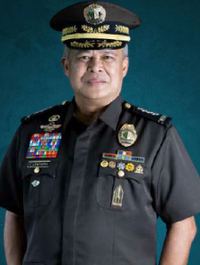 Gen. Gregorio Pio P. Catapang Jr.