

Beyond Relief: Rotary Manila’s Call to Resilience
At the 5th Weekly Membership Meeting on August 14, 2025, OCD and PDRF speakers urged Rotarians to see disaster resilience as more than relief.

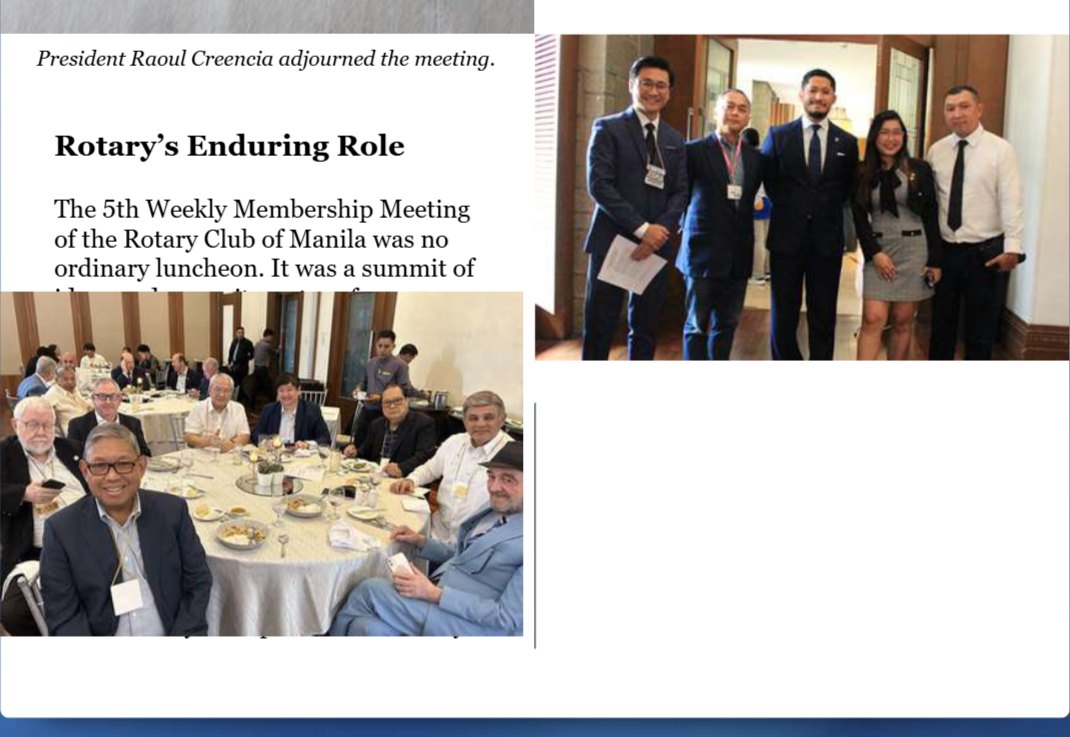
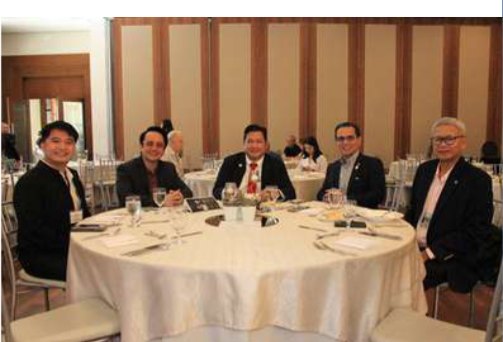
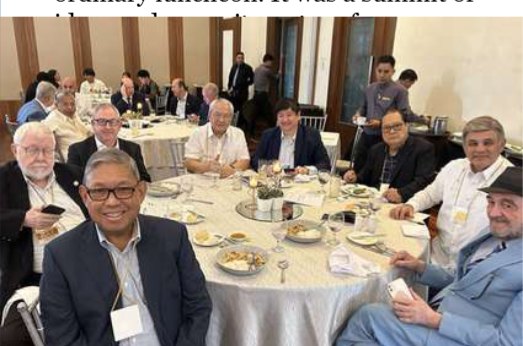
ON a bright Thursday afternoon, August 14, 2025, the Manila Polo Club once again became the hallowed stage for the Rotary Club of Manila’s 5th Weekly Membership Meeting. More than a gathering, it was a convergence of minds, institutions, and values—each thread woven into a narrative of unity and resilience in the face of the nation’s most pressing vulnerabilities.
Opening Rituals of Fellowship

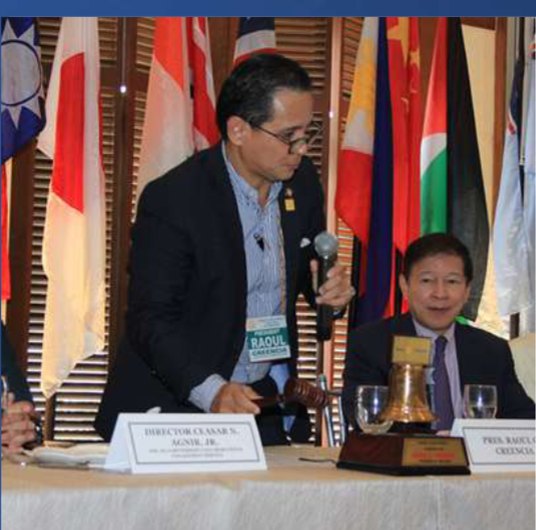
At precisely 12:30 PM, the meeting was called to order by President Atty. Raoul C. Creencia, his voice carrying the assurance of both tradition and purpose. Rotarian Miguel “Mico” Mendoza invoked the Divine presence in prayer, offering words that reminded members that service without faith is hollow. The Philippine National Anthem then resounded through the hall, accompanied by a stirring audio-visual presentation, followed by the Rotary Club of Manila Hymn, rendered with passion by the RCM World Famous Chorale.
The ethical backbone of every Rotarian was recalled in the Four-Way Test, led with solemn authority by Atty. Joaquin Pablo “Jop” A. Esquivias, challenging each member once again to measure words and actions against the timeless queries of truth, fairness, goodwill, and benefit.

The day’s Moderator, PAT Joshua Rueben “Josh” Aragon, gracefully welcomed distinguished guests before turning the spotlight toward service in action. RCMFI Chairman and Past District Governor Alexander “Alex” Cureg delivered a heartfelt report on the club’s PETA Animal Welfare Project, affirming RCM’s long tradition of lending voice and protection to the voiceless.
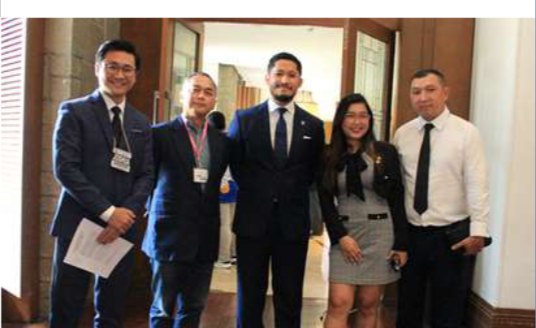
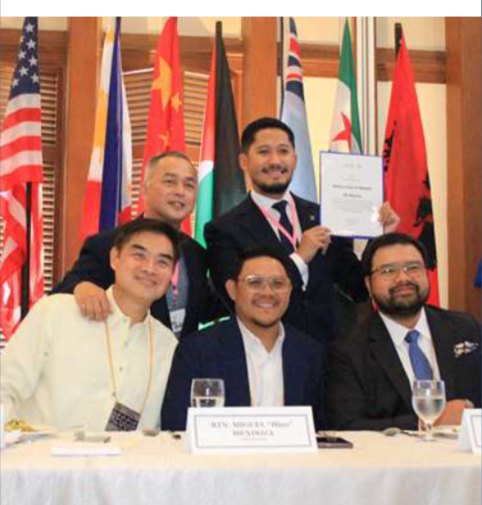
A landmark moment followed — the signing of a co-partnership agreement that bound together the Rotary Club of Manila, the Philippine Disaster Resilience Foundation (PDRF), the Rotaract Club of Manila, the Philippine Red Cross, JCI Manila, Business Network, Inc., and AIESEC Philippines. In that signing, what began as ceremonial ink strokes carried the weight of future collaboration in safeguarding lives and livelihoods.

Confronting the Forces of Nature
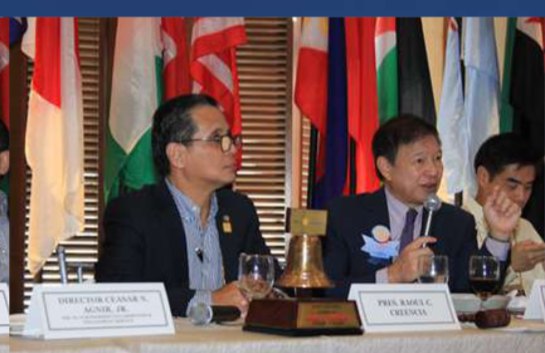
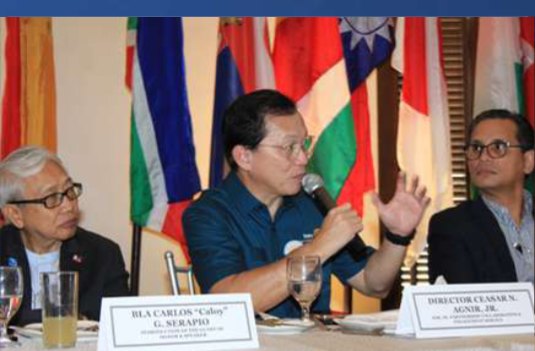
President Creencia opened the second part of the meeting with his customary reflections before inviting Atty. Carlos “Caloy” G. Serapio, Board Legal Adviser, to introduce the first Guest of Honor.

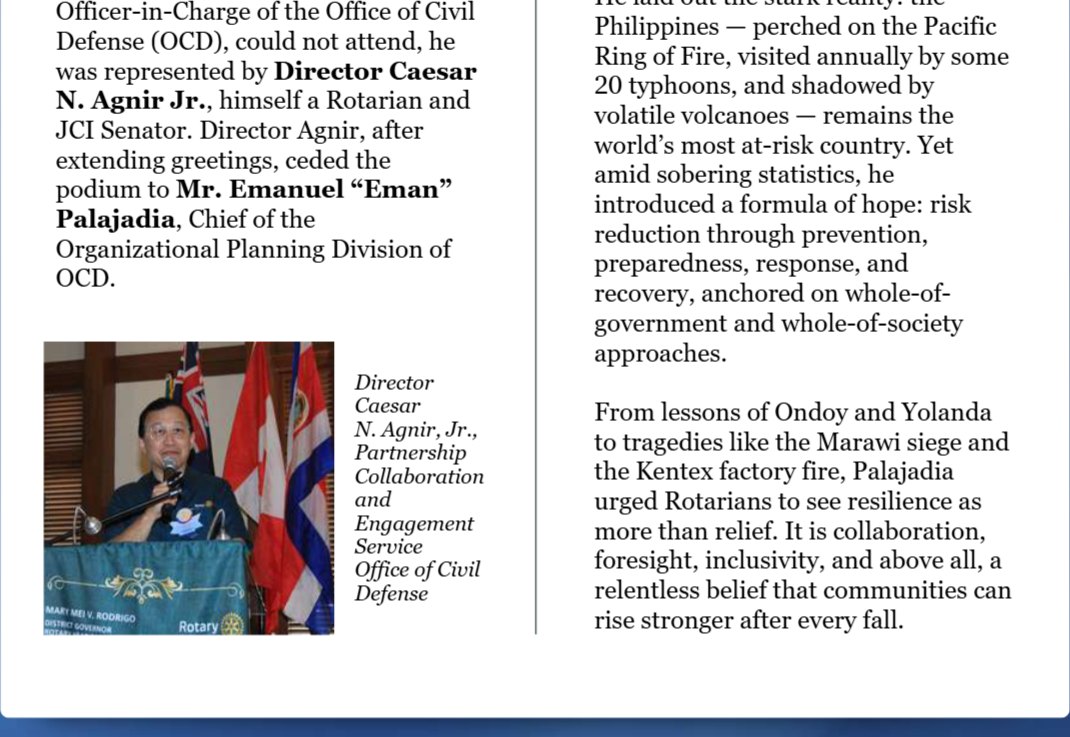
Though Assistant Secretary Bernardo Rafaelito “Raffy” R. Alejandro IV, Officer-in-Charge of the Office of Civil Defense (OCD), could not attend, he was represented by Director Caesar N. Agnir Jr., himself a Rotarian and JCI Senator. Director Agnir, after extending greetings, ceded the podium to Mr. Emanuel “Eman” Palajadia, Chief of the Organizational Planning Division of OCD.
A Scientific and Humanistic View of Disaster

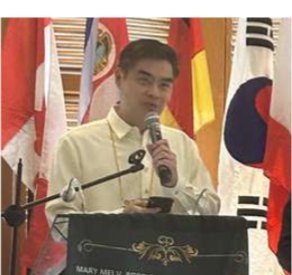
With the cadence of both teacher and servant-leader, Palajadia presented an exhaustive overview of disaster resilience. He challenged the long-held misconception of “natural disasters,” clarifying that disasters are not natural but occur when hazards meet vulnerability and inadequate coping capacity.
He laid out the stark reality: the Philippines — perched on the Pacific Ring of Fire, visited annually by some 20 typhoons, and shadowed by volatile volcanoes — remains the world’s most at-risk country. Yet amid sobering statistics, he introduced a formula of hope: risk reduction through prevention, preparedness, response, and recovery, anchored on whole-of-government and whole-of-society approaches.

From lessons of Ondoy and Yolanda to tragedies like the Marawi siege and the Kentex factory fire, Palajadia urged Rotarians to see resilience as more than relief. It is collaboration, foresight, inclusivity, and above all, a relentless belief that communities can rise stronger after every fall.
Second Guest of Honor: The Private Sector as First Responder

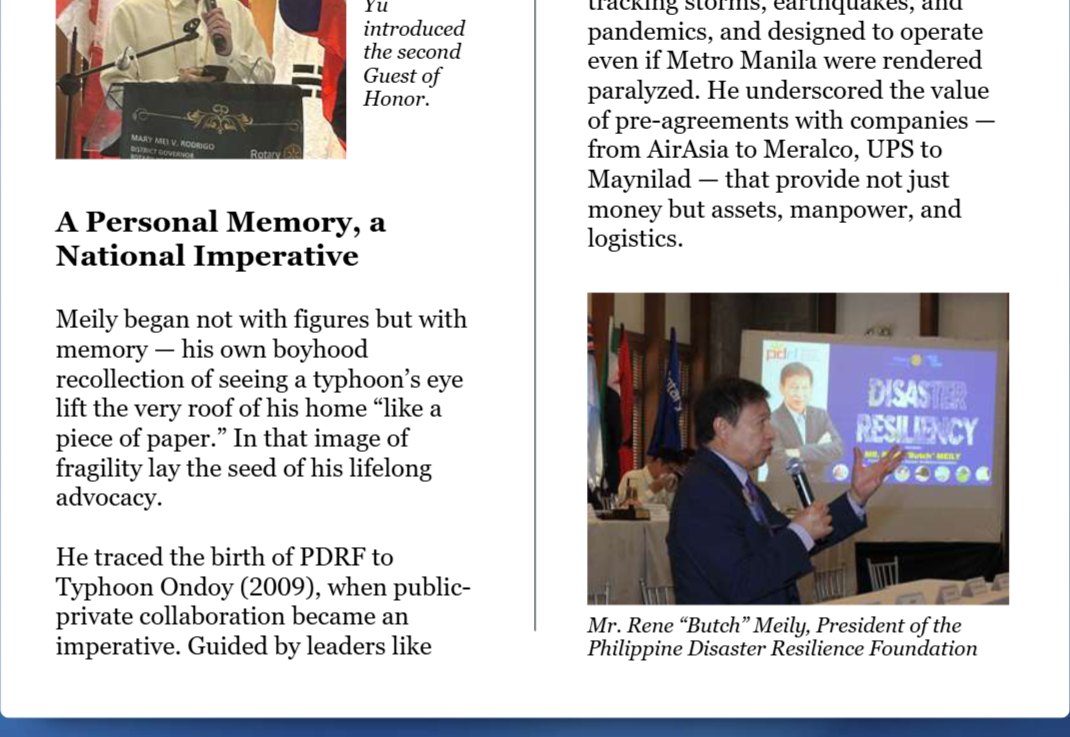
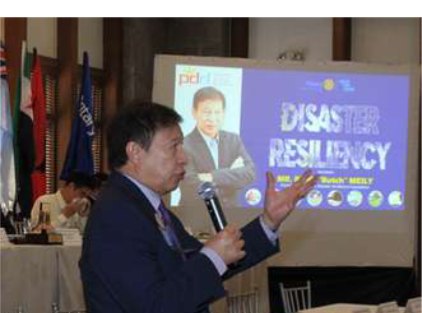
The second Guest of Honor, Mr. Rene “Butch” Meily, President of the Philippine Disaster Resilience Foundation (PDRF), was introduced by Rotarian Reginald “Reggie” T. Yu.
A Personal Memory, a National Imperative

Meily began not with figures but with memory — his own boyhood recollection of seeing a typhoon’s eye lift the very roof of his home “like a piece of paper.” In that image of fragility lay the seed of his lifelong advocacy.
He traced the birth of PDRF to Typhoon Ondoy (2009), when public-private collaboration became an imperative. Guided by leaders like Manny V. Pangilinan, Jaime Augusto Zobel de Ayala, and Cardinal Luis Antonio Tagle, PDRF has since pioneered a model where rival corporations unite in disaster response.

Innovation in the Service of Humanity
Meily showcased PDRF’s pride: the world’s first private sector–run National Emergency Operations Center in Clark — a facility capable of tracking storms, earthquakes, and pandemics, and designed to operate even if Metro Manila were rendered paralyzed.

He underscored the value of pre-agreements with companies — from AirAsia to Meralco, UPS to Maynilad — that provide not just money but assets, manpower, and logistics.
Stories of recovery, from sari-sari store women empowered with goods and courage, to Maranao weavers reviving their crafts, painted a picture of resilience grounded in dignity. Tree planting, MSME training, airport readiness programs, and water resilience projects in partnership with governments abroad demonstrated the PDRF ethos: stronger together.

Above all, Meily emphasized that resilience cannot be achieved by one sector alone. “We cannot do this on our own,” he declared, calling Rotary to become an active partner in preparedness, relief, and recovery.
Dialogue and Fellowship

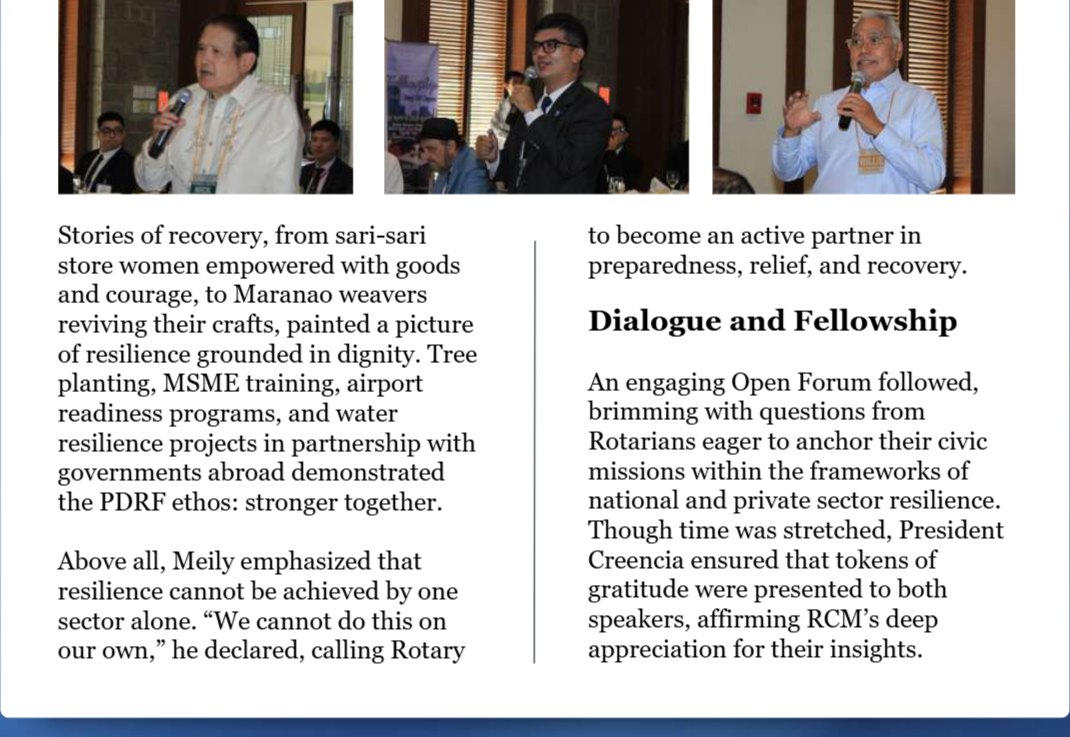
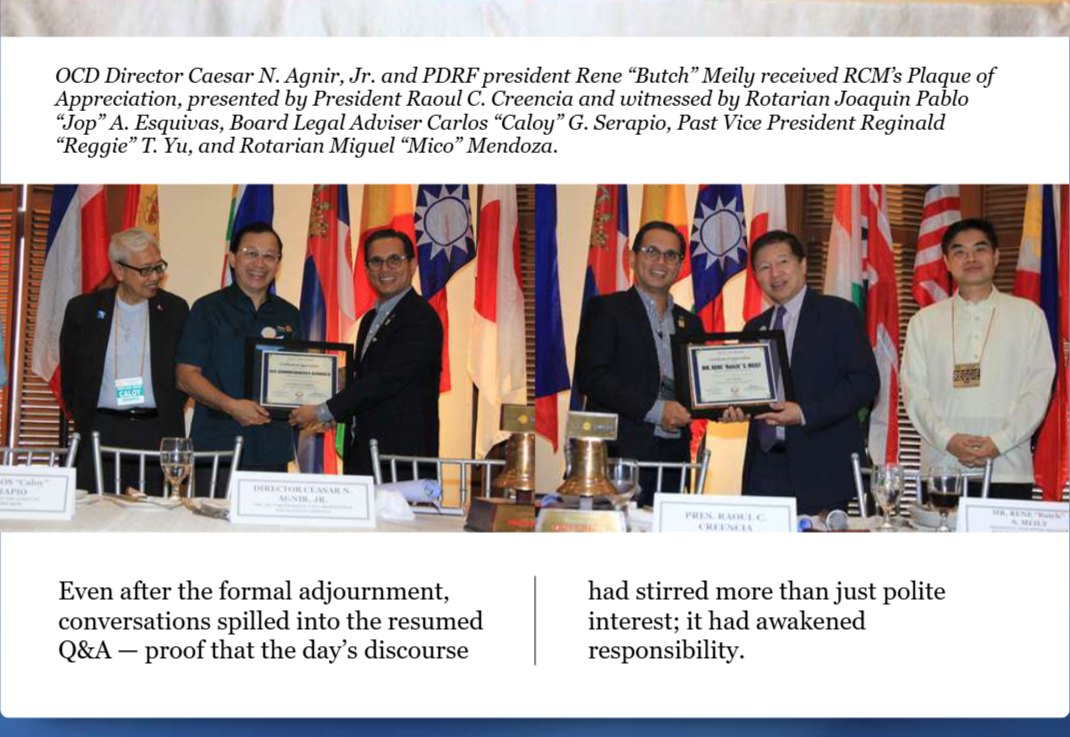
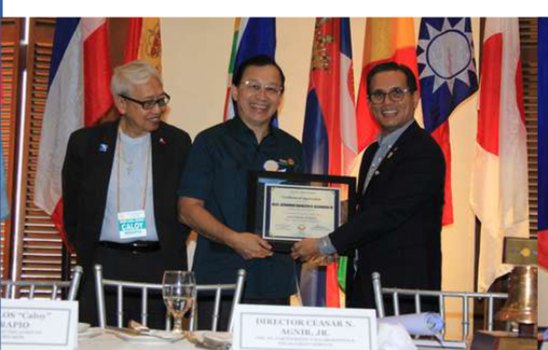
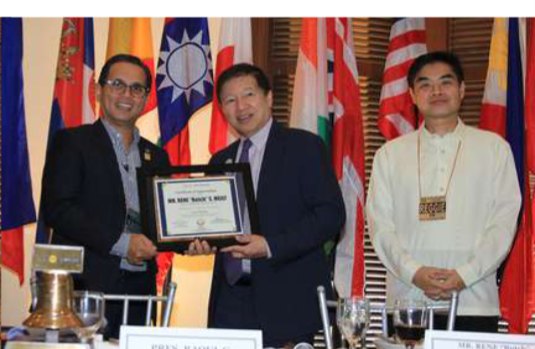
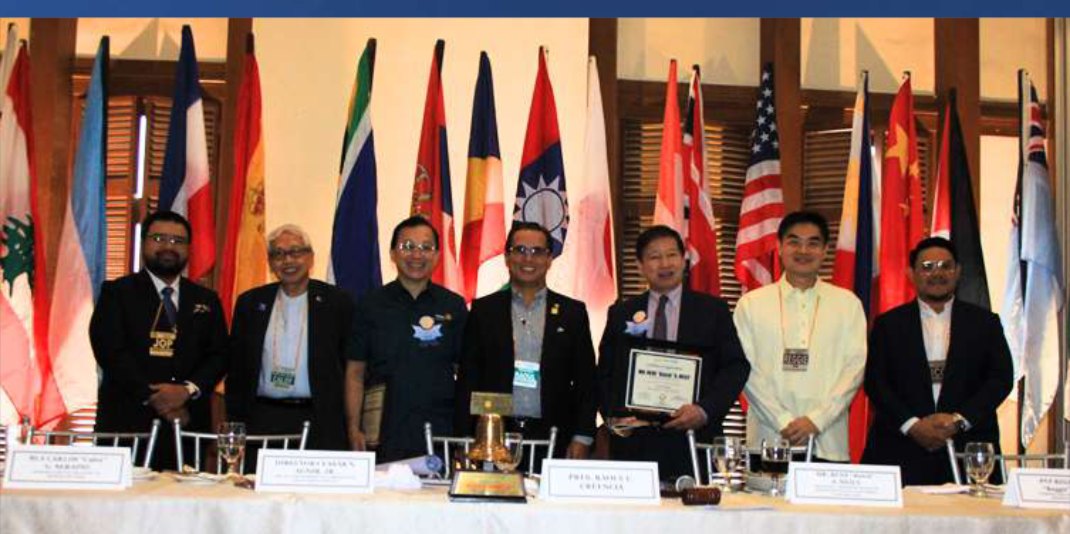
An engaging Open Forum followed, brimming with questions from Rotarians eager to anchor their civic missions within the frameworks of national and private sector resilience. Though time was stretched, President Creencia ensured that tokens of gratitude were presented to both speakers, affirming RCM’s deep appreciation for their insights.
Even after the formal adjournment, conversations spilled into the resumed Q&A — proof that the day’s discourse had stirred more than just polite interest; it had awakened responsibility.

Rotary’s Enduring Role
The 5th Weekly Membership Meeting of the Rotary Club of Manila was no ordinary luncheon. It was a summit of ideas and commitments, a forum where science, government, business, and civil society braided their efforts for a common cause.

As the members left the Manila Polo Club, they carried with them not only the fellowship that defines Rotary but also a renewed sense of mission — that in this archipelago where hazards are part of life’s landscape, resilience is not merely an aspiration but a duty.

 Editorial
 President’s Message
 Mini-Workshop on Disaster Resiliency