
President’s Message
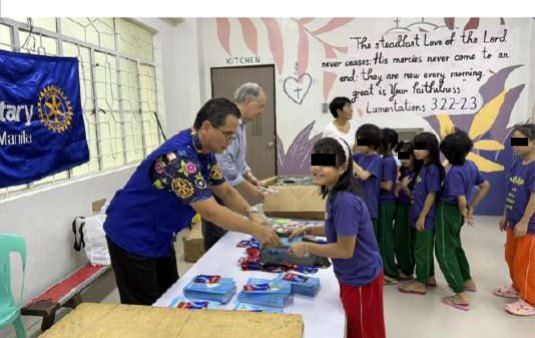
President Raoul C. Creencia reflects on the Club’s oral health care program after joining a kit distribution at the Boys Town Complex in Marikina.

ON September 10, I had the chance to join the Club’s hardworking Oral Health Committee Chairman John Cutter in the second batch of distribution of oral care kits. The beneficiaries were more than 200 teenagers at the Boys Town Complex in Marikina City. Several subsequent distribution dates have been set so many more will be benefiting from this laudable project.
I believe that oral health care is more than just having a bright smile -- it is an essential part of overall well-being. Healthy teeth and gums contribute to proper nutrition, clear speech, self-confidence, and the prevention of many diseases. Yet, despite its importance, oral health care remains one of the most overlooked aspects of public health.
In fact, Dr. Cutter always underscores that the Philippines is ruefully among those with high incidents of tooth decay. This is especially because many communities, especially those in rural and underserved areas, continue to face barriers in accessing proper dental services.
Community oral health care emerges as a crucial approach in bridging this gap, ensuring that every individual has the opportunity to enjoy not just good oral health, but also a better quality of life.
At its core, community oral health care goes beyond the traditional dentist’s clinic. It emphasizes prevention, education, and accessibility. Instead of focusing only on treatment, it seeks to empower individuals with knowledge and habits that can prevent oral diseases before they arise. This is the focus of the program of the Rotary Club of Manila.
To be sure, programs such as school-based toothbrushing campaigns, fluoride application, and regular dental check-ups for children can dramatically reduce cases of cavities and gum disease. By instilling these practices early, communities build healthier generations who value oral hygiene as part of their daily lives.

Equity is another vital principle in community oral health care. Socioeconomic conditions often determine whether people can access dental services. High costs, lack of nearby clinics, and limited awareness prevent many families from seeking care. Community-based programs, however, bring oral health services closer to the people. Mobile dental clinics, free dental missions, and barangay-level oral health campaigns ensure that even those in remote areas receive proper attention. Such initiatives highlight the idea that oral health is a right, not a privilege.
Community oral health care also relies heavily on partnerships, and civic organizations such as Rotary clubs can indeed play a crucial role in advancing oral health.
Ultimately, the success of community oral health care lies in prevention, accessibility, and collaboration. When communities invest in oral health, they prevent not only cavities and tooth loss, but also other health issues such as infections, malnutrition, and even heart disease. A healthy mouth leads to a healthy body, and a healthy body leads to a thriving community.
Community oral health care is a project that our Club must continuously and assiduously pursue.

 Editorial
 The Nation’s Advocate: Lessons of Service from Solicitor General Berberabe
 Membership Committee Meeting