

The Quiet Flame: How Vicente Jacinto Carlos Lived with Honor, Led with Grace, and Served with Faith
A profile of PDG Vicente “Vince” Carlos, lawyer, Rotary Club of Manila president, District Governor, Tourism Secretary under President Fidel V. Ramos, and honorary consul of Côte d’Ivoire.
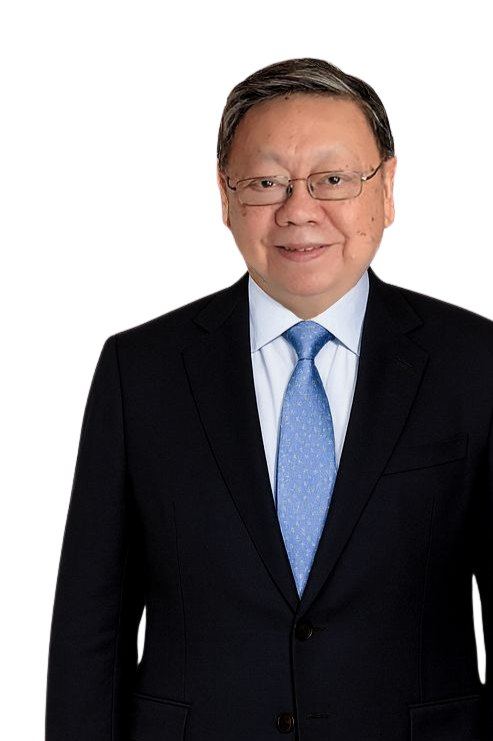
HISTORY often remembers the loud — the firebrands who thunder from podiums, the politicians who stride across the public stage with blinding confidence. But every so often, history bends to acknowledge another kind of leader — one whose greatness whispers rather than shouts, whose legacy is not carved in the monuments of power but in the quiet grace of integrity.
Vicente “Vince” Jacinto Carlos belongs to that vanishing breed. His life reads less like a tale of conquest and more like a chronicle of constancy — of a man who moved through the worlds of law, Rotary, government, and diplomacy with the calm assurance of someone who never mistook visibility for virtue.

He was born into privilege yet lived with discipline. Schooled by Jesuits, refined by circumstance, and tested by fate, he learned early that titles mean little if character is absent. From the polished corridors of the Ateneo de Manila to the stormy chambers of Malacañang, from Rotary’s fellowship halls to the gilded salons of international diplomacy, Vince Carlos embodied a rare paradox — a man of affluence who prized simplicity, a lawyer who valued fairness over fame, and a public servant who regarded decency as the truest form of patriotism.
The arc of his life — spanning over eight decades — mirrors the transformation of the Philippines itself: from a postwar nation learning democracy’s fragile rhythms, through the turbulence of Martial Law, to an era of global reawakening where service once again became the measure of citizenship. He has been, at different times, a top-ranking lawyer, a Rotary Club president, a district governor hailed by Rotary International as the world’s best, a cabinet secretary under President Fidel V. Ramos, and a diplomat entrusted with the honor of representing Côte d’Ivoire. Yet through all those roles, one thread runs unbroken — his fidelity to the Rotary creed: Service Above Self.
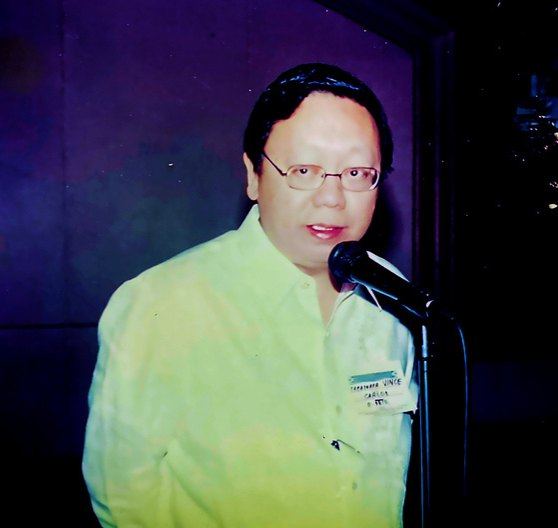
To describe him merely as a lawyer or public official is to miss the quiet revolution of his example. He is part of that rare lineage of Filipino gentlemen — like the statesmen of the Commonwealth and the civic titans of old Manila — who believed that leadership is not about commanding applause, but earning trust. Those who have known him personally speak not of his wealth or titles, but of his word: a promise made, a task fulfilled, a principle never compromised. Those who have served under him recall his punctuality, his courtesy, and his unwavering sense of fairness — qualities that, in their simplicity, reveal a deeper truth about leadership: that moral precision is as important as intellectual brilliance.
In the fullness of time, as generations of Rotarians and public servants look back on the figures who shaped their institutions, they will find in Vicente Jacinto Carlos not just a name on a roster, but a moral compass. His life is a quiet argument — that decency still matters, that humility and competence can coexist, and that the most enduring kind of power is the kind that never needs to announce itself. It is a story that unfolds not in fanfare but in faith.
A story of duty without vanity, of public service without scandal, of a man who served not for gain but for grace. This is the life of Vicente “Vince” Jacinto Carlos — a gentleman lawyer, Rotarian, cabinet secretary, and diplomat — whose journey reminds us that in a world too easily enamored with noise, there remains extraordinary strength in silence.
Roots of Privilege and the Education of Character

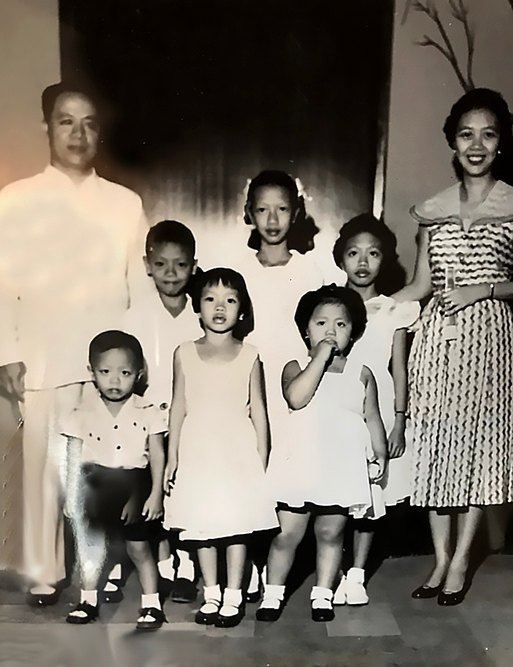
Vince Carlos was born into comfort, but his parents ensured he grew with conscience. His father, a civil engineer and founder of a construction company, embodied discipline and industriousness; his mother, born into privilege, carried refinement and warmth. His lineage was remarkable — both grandfathers were physicians, men of science and stature. His paternal grandfather, Dr. Juan Carlos, once oversaw the medical services of the national railways and later became governor of Bulacan. His maternal grandfather, Dr. Nicanor Jacinto Sr., was a pioneering surgeon who went on to found Doctor’s Hospital and, with his cousins the Rufinos, Security Bank and Trust Company.
Yet within this lineage of affluence was a foundation of work ethic and humility. “If you want something,” his parents often reminded him, “you have to work for it. Nothing will come to you on a silver platter.” It was a lesson he would carry long after the trappings of comfort had faded into the background of a purposeful life.
His early years unfolded within the disciplined embrace of the Ateneo de Manila University, then located on Padre Faura Street. His nanny and driver would bring him to school each day — an arrangement that puzzled his young mind, for he wondered why his classmates took public transportation while he did not. Those small observations of contrast, of privilege juxtaposed against simplicity, began to form in him a consciousness of class and empathy that would later define his civic temperament.
When Ateneo transferred to Loyola Heights, he was accelerated to Grade 5 — an early sign of both his intellect and ambition. By the time he reached high school, he had been placed in the honor section, where the Jesuit system imposed not only academic rigor but also moral formation. Latin was mandatory for four years. “Masses were still said in Latin then,” he would later recall. “Learning it gave me discipline — and it taught me that language, like faith, is the root of civilization.”

His education was not confined to classrooms. Each summer, his parents would take the family on long travels abroad — to Europe and the United States — sowing in young Vince a lifelong fascination with travel, culture, and the wider world. In the Jesuit halls, he also learned leadership in miniature. As class beadle, he was tasked with reporting absences and tardiness — a modest duty, but one that gave him early exposure to responsibility and fairness. By the time he reached law school, those instincts would find a larger stage.
The Law as Discipline, the Accident as Turning Point

From an early age, Vince dreamed of becoming a lawyer. Yet, after college, practicality — and a restless curiosity — led him first to business. He enrolled in the Wharton School of Finance for an MBA, aspiring to build a corporate career. Life, however, had other plans.
During a summer vacation in Manila, while attending his cousin RJ Jacinto’s birthday celebration, he met tragedy on the road: a car accident that resulted in the death of two individuals. Charged with Double Homicide through Reckless Imprudence, he found himself trapped in legal limbo — unable to return to Wharton as the case dragged on. It was a crucible that would shape his destiny. “I found out that criminal law was offered in first-year law school,” he recalled. “So, I decided to enroll in Ateneo Law School. Before I knew it, I had already graduated.”

Law school became both refuge and revelation. His classmates — mostly a year younger due to his late entry — elected him class president, then student council representative, and eventually president of the Ateneo Law Student Council. Leadership, it seemed, was his natural language. When he entered, he had considered joining Aquila Legis, one of the law fraternities. But his friend Ricardo “Dong” V. Puno Jr. warned him against it — “You’re marked,” Puno said, “you’d end up in the hospital or worse.” Instead, Vince joined Utopia, the Jesuit-founded honor society that emphasized ethics and scholarship over bravado. His mentors would leave deep impressions. Among them, Justice Pompeo Diaz, his class adviser, became a father figure. “He taught me not just how to think like a lawyer,” Vince would say, “but how to live like a gentleman.”
By the time he took the 1970 Bar Examinations, he was prepared not merely by intellect but by endurance. Four consecutive Sundays of exams drained him physically, but when the results came, he discovered he had earned an 82.8% average, placing him among the top of the list — the topnotcher having scored only 87.1%. The achievement cemented his confidence. Passing the Bar, however, was only the beginning of his education in human nature.

The Young Lawyer and the Lessons of Justice
Vince began his career at the law firm of Valdez and Caunan, led by his uncle, Carlos Ibarra Valdez, in Escolta — then the legal hub of Manila’s business elite. Both his uncles, Gil Carlos and Rodolfo Valdez, were Rotarians, and one had even served as President of the Rotary Club of Manila (RCM). The environment exposed him to corporate and civil law, but his wanderlust drew him toward aviation jurisprudence, a niche few dared to explore. “I loved to travel,” he explained. “So, I immersed myself in aviation law and began handling clients like Air France and Philippine Airlines.” In that specialization, he combined two lifelong fascinations — law and flight — crafting a reputation as one of the earliest Filipino lawyers conversant in international air transport regulations and the Five Freedoms of Aviation.
His courtroom experience, meanwhile, taught him the dissonance between idealism and reality. “After many years,” he once remarked dryly, “I learned that in our country, knowing the judge was often better than knowing the law.” It was a disillusionment that would later inform his incorruptible posture as a public official.
Later, family enterprise beckoned. The Carlos family had acquired Norton and Harrison Co. Inc., then the second-largest construction materials company in the country. Vince was asked to manage operations, shifting from law to sales and business administration. His classification in Rotary would later be recorded as “Construction Materials Distributing.” Yet the law remained his first love. While on a trip to San Francisco, he met his old friend Dong Puno, who invited him to join the Puno Law Firm. There, under the mentorship of Justice Ricardo Puno Sr., former Minister of Justice, Vince rediscovered his passion for legal writing and strategic reasoning. “Justice Puno taught me wisdom,” he said. “He taught me precision — the art of saying what must be said, and nothing more.”
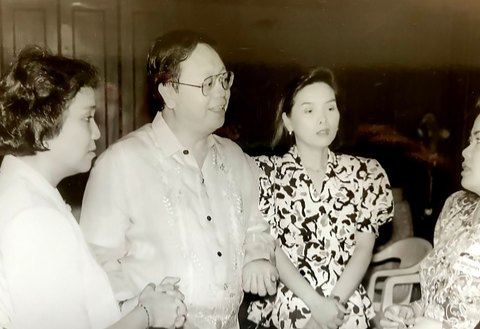
Eventually, Vince founded his own practice, Carlos and Dulay Law Office, with his former classmate Atty. Cesar Dulay — who would later become Commissioner of the Bureau of Internal Revenue under President Rodrigo Duterte. For five decades, the firm would serve clients in civil, corporate, and aviation sectors until Vince’s quiet retirement from the practice in 2020, when age and grace finally persuaded him to slow down.
In 1973, at just twenty-seven years old, Vince was elected to the Board of Directors of Security Bank and Trust Company — the youngest ever to serve on its board. The following year, the bank acquired the Philippine franchise of Diners Club, one of the world’s earliest credit cards, alongside American Express. Visa and MasterCard had yet to exist. Vince was then appointed Chairman and President of Diners Club Philippines, an early milestone that showcased his capacity for innovation and leadership in the burgeoning world of finance.

For nearly two decades, he also served as Director and Corporate Secretary of Centro Escolar University, where his father, Juan Carlos, was then Chairman of the Board. The Carlos family would later sell their shares to Don Emilio T. Yap, marking the end of an era in their stewardship of the institution. At one point, Vince simultaneously held the role of Corporate Secretary in fourteen different corporations — a testament to both his legal expertise and trusted reputation in corporate governance.
Public service, it seemed, ran in the family. His father, Engr. Juan Carlos, served as the 36th President of the Rotary Club of Manila, while Vince himself became its 63rd. His uncle, Gil Carlos, also once held the same distinction — making the Carlos family one of the few lineages to have produced three Presidents of Asia’s first Rotary club.
The Awakening of Civic Consciousness
Beyond law, another vocation called him — one that appealed to his innate sense of fairness and duty. In 1972, newly married and professionally secure, he joined the Makati Jaycees at the invitation of Cesar Yatco, his real estate broker. The Philippines was then under Martial Law — a period of repression and uncertainty — and civic participation had acquired moral significance. “The country was in turmoil,” he recalled. “I felt that my involvement in the Jaycees was of prime importance.”

For Vince, JCI became both training ground and moral compass. He rose swiftly through the ranks — director in 1974, vice president in 1975, and president in 1976. His leadership was marked by creativity and compassion: he organized mass weddings through the “Kasalang Bayan” project at the Folk Arts Theater, where 492 couples were united in matrimony — an event that garnered national media coverage and won the Most Outstanding Public Relations Award at the JCI National Convention. His chapter also launched “Brotherhood Vine”, a grape-planting initiative reflecting his belief that civic work should nurture both community and environment. Under his presidency, Makati Jaycees embodied the youthful optimism of a generation that refused to be subdued by political darkness. His service earned him the JCI Senatorship, a lifetime honor conferred upon those who exemplified leadership and fellowship. Yet by then, another civic circle was already pulling him toward a larger stage — Rotary.
The Legacy of a Rotarian Father
Vince’s connection to Rotary was almost hereditary. His father had been a proud member of the Rotary Club of Manila, the first in Asia. As a child, Vince would watch him leave every Thursday and return home with a copy of The Balita. “Every December,” he fondly remembered, “Rotary held a Christmas party for the members’ children — it was the happiest event of the year.” At ten, he accompanied his father — then President-Elect of RCM — to the District Assembly in Zamboanga City, a trip that marked his earliest exposure to the movement. The memory of that journey, of camaraderie and compassion, would stay with him for life.
When he himself became a professional, it was only natural to follow the same path. In 1975, while shopping at a mall, his friend Victor Puyat asked if he was a Rotarian and invited him to join the Rotary Club of Makati West. Vince agreed. But fate intervened two days later. He went to buy a car from his classmate Edward Yu, then head of Carmasters Inc. Edward, who was also a Rotarian, asked him to dinner the following Thursday. “I can’t,” Vince replied, “I’m scheduled for Rotary orientation.” When Edward learned which club, he protested: “If you’re joining Rotary, join ours — the Rotary Club of Manila, your father’s club and your grandfather’s club.” Vince reconsidered, phoned Victor Puyat, and informed him of his change of heart. That decision would define his Rotary destiny.

His Rotary information briefing was held at the home of Rey Reyes, then IBM president, and led by Mr. Rotary himself, Past District Governor Marianito Lichauco, along with Iquing Angeles, father of Ting Angeles. Among his co-applicants were names that would later echo through Rotary history — Pacquito Ortigas, Fr. Frank Reyes, Romulo del Rosario, and A.U. Valencia, father of Serge Valencia. Of the ten attendees, four would become Rotary club presidents, and two, district governors. Vince was inducted by President Chester Babst at the Manila Hilton, then RCM’s regular venue while Manila Hotel was still closed.
Leadership by Example: The President of RCM

From the outset, Vince’s competence did not go unnoticed. In 1976, President Bienvenido “Benny” Antuaco appointed him Club Treasurer, placing him in the inner circle of decision-making. The young lawyer absorbed the dynamics of leadership like a sponge — observing the gravitas, humor, and politics that animated Asia’s first Rotary club. By the early 1980s, he had ascended to Vice President, and eventually, President of the Rotary Club of Manila (1982–1983) — its 63rd leader. It was, he later recalled, “the height of greatness for RCM.” The club had more than 400 members, most of them titans of industry and diplomacy. His presidential theme, “Leadership by Example,” encapsulated his belief that moral authority begins with personal conduct.
His term was distinguished not only by social prestige but by tangible impact. Upon the invitation of then Justice Minister Ricardo “Dick” Puno, the RCM Board visited the National Penitentiary in Muntinlupa to inspect living conditions. What they found was deplorable — broken toilets, barefoot inmates, squalid quarters. Vince acted immediately. He called Raul Boncan, head of the Philippine Standards Company, who agreed to donate new toilets. He then called Tony Yang of Rubberworld, who contributed 5,000 pairs of slippers. Contractors were hired, facilities repaired, and lives quietly uplifted. “I still remember the happy faces of the inmates after we completed the renovation,” he said.

Another of his creative fundraisers was a fashion show by Jose “Pitoy” Moreno, with young Rotarians and beauty queens as models — a sparkling evening that raised funds for drug rehabilitation and captured Manila society’s imagination. Under his presidency, RCM also chartered a new club, the Rotary Club of San Miguel, expanding Rotary’s reach into the nation’s heartland.
In every project, Vince’s method was consistent: identify need, act swiftly, involve people, and lead by quiet persuasion. He neither sought headlines nor courted applause. “Service,” he would later write, “is its own reward.”
Governor of Governors
Leadership, for Vince Carlos, was never a pursuit of title but a consequence of diligence. Having proven himself in the Rotary Club of Manila, it was only natural that his peers looked to him to guide the larger movement. When the district’s nominating committee — chaired by PDG Tony Rufino — invited him to be considered for District Governor of 3810, Vince sought his board’s counsel. Their response was unanimous: he must run. Out of five candidates, he was chosen. The others, unwilling to concede, challenged the decision, nominating PP Johnny Aruego to oppose him. Yet in the subsequent election, Johnny could not even muster enough votes to match those of the Manila club alone. “I was elected governor,” Vince later said, “not because I campaigned hardest, but because people knew I would serve clean.”

His year as District Governor (1990–1991) opened with both promise and peril. Barely had he begun when a massive earthquake devastated Northern Luzon, leveling Baguio and scattering lives. While others debated logistics, Vince acted. He cabled friends abroad, calling for aid — not for himself but for strangers he would never meet. Donations poured in from Rotary clubs across Asia, especially Thailand. With prudence, he split the funds: half to the governor of District 3770, half to 3790. When neither submitted accountability reports, he was dismayed but undeterred. More funds arrived, and this time he resolved to see the work through himself. Together with Thai Rotary leader and Rotary International President Bhichai Rattakul, he flew to Isabela to inaugurate a new multipurpose building built from those donations — a tangible symbol of transnational goodwill rising from the rubble of disaster.
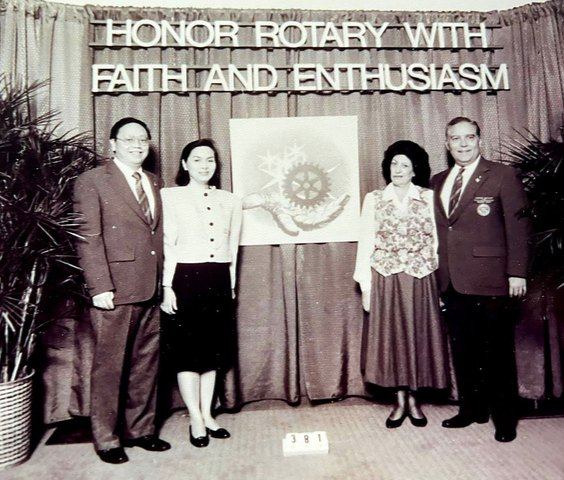
His tenure would be remembered for its combination of urgency and integrity. He raised over US $200,000 for the Rotary Foundation, earning the Citation for Meritorious Service and later the Distinguished Service Award — a rare double distinction. At the Rotary International Convention in Mexico City, RI President Paulo Costa called him “the champion, the best district governor in the world.” And just as his term had begun with an earthquake, it ended with another eruption — literally. During his last official visit, attending the handover ceremonies of the Rotary Club of Dasmariñas, Mt. Pinatubo exploded. Ash fell over the highways of Cavite as he drove back to Manila, the sky dim with cinder. “My term started and ended with a bang,” he would later say with the wry humor of a man who had survived storms both natural and political.
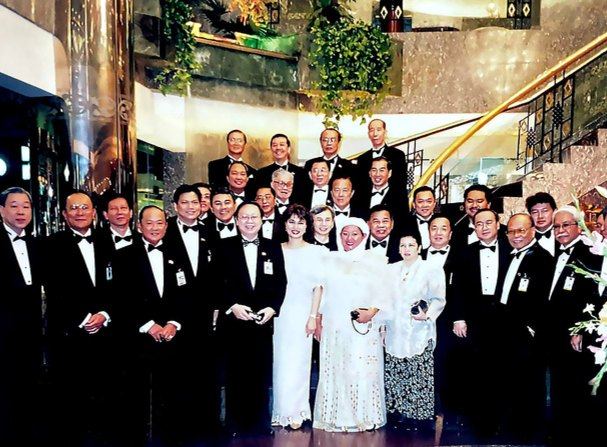
For these efforts and the moral clarity with which he led, Rotary International conferred upon him in 2002 its highest individual distinction — the Service Above Self Award — a recognition reserved for those whose lives incarnate the very motto.
A Call from Malacañang
In the intricate weave of Philippine public life, civic and state often intersect. One Thursday morning in the late 1970s, a new member joined the Rotary Club of Manila — then General Fidel V. Ramos, head of the Metropolitan Command. The general’s crisp demeanor and soldierly punctuality impressed Vince, who reciprocated with the warmth of a lawyer and gentleman. Their friendship deepened over years of shared causes and mutual respect.
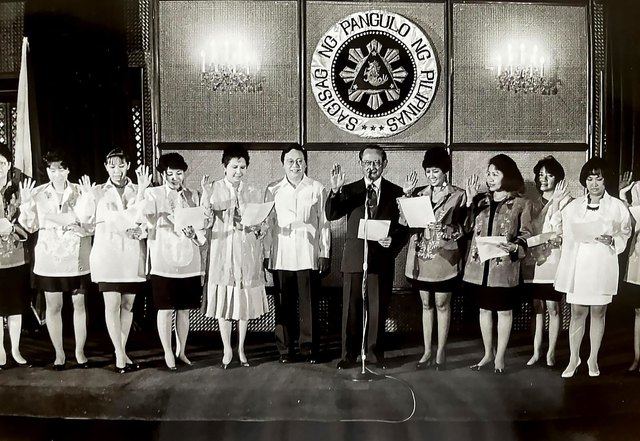
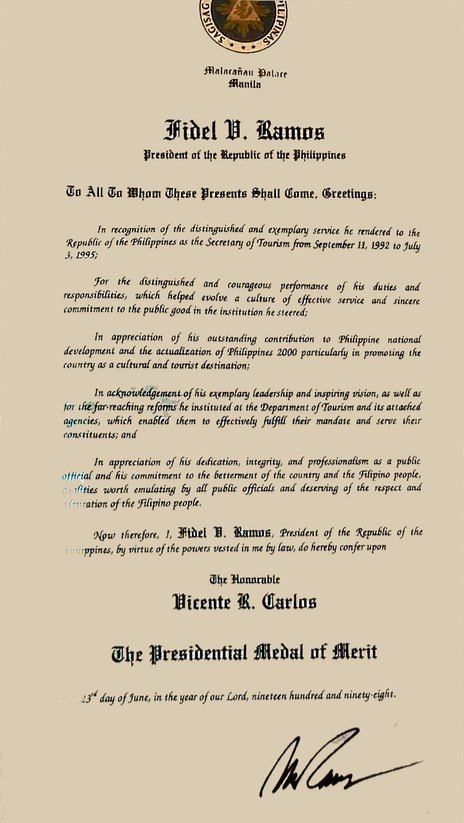
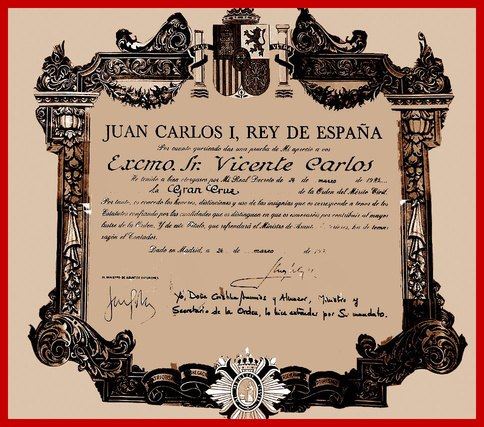
When Ramos ran for the presidency in 1992, Vince supported him quietly, choosing duty over convenience. He delayed his family’s annual trip to California just so he could cast his vote. He flew out the same day after voting, content in the belief that civic responsibility was its own reward. Ramos won. Weeks later, as Rotary prepared to welcome Rotary International President Cliff Doctermann, Vince attended the breakfast reception in Malacañang. There, the newly sworn President greeted him with characteristic directness: “Vince, I want you to join my team.” Thinking the invitation referred to a bank directorship, Vince asked, “Which bank, Mr. President?” Ramos chuckled. “No — I want you full-time. I still have no Secretary of Tourism.”
Shocked, Vince rushed to find a telephone at the nearby Milky Way Café to tell his wife. Tina objected; she worried about politics. His mother, too, counseled against it. But his father, ever the patriot, said softly: “Only a few are given the chance to serve their countrymen. Follow your heart.” With that blessing, Vince Carlos accepted the call.
The Secretary of Tourism: Restoring Faith in the Fiesta

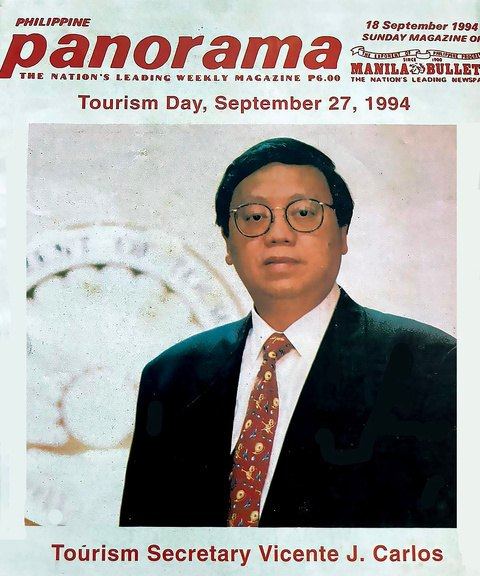
When Vince assumed office, Philippine tourism was in shambles. Visitor arrivals hovered around one million a year; airports were outdated, roads crumbling, and the country’s image dimmed by security concerns. “We were at the bottom of the barrel,” he would recall. “People were afraid to visit.”
He approached the challenge as a lawyer and a Rotarian — an exercise in systems, trust, and truth. He prioritized safety and infrastructure: working with the DOTC to rehabilitate airports, with the DPWH to improve roads, and with the PNP to secure tourist zones. To revive national pride, he crafted a new campaign that would become legendary: “Fiesta Island Philippines.” “Every town had a fiesta,” he explained. “Why not make it our identity? Let the world see that joy is our greatest export.” Colorful, rhythmic, unabashedly Filipino, the campaign reframed the archipelago not as a perilous destination but as a celebration of life. It worked. Arrivals jumped from 1.15 million in 1992 to 1.4 million in 1993, and revenues surged to US $1.7 billion.

He pushed further. In 1994, his department launched “Bring Home a Friend,” encouraging overseas Filipinos to invite foreigners to experience the country. It was marketing rooted in community — and it sparked results. Yet the most spectacular moment of his tenure came that same year when he successfully brought the Miss Universe Pageant back to Manila.
The Universe on His Shoulders

The idea arrived unannounced. In January 1994, representatives of the Miss Universe Organization visited his office, asking if the Philippines would host the global competition. Vince consulted media analysts, who confirmed that the event’s broadcast reach was unmatched. He flew to the Miss USA Pageant in Texas to observe the production, then returned convinced: this was the exposure the country needed.
President Ramos agreed. Vince signed the hosting contract, and the whirlwind began. Eighty-six candidates from around the world arrived in Manila. He persuaded Don Emilio Yap to accommodate them at the Manila Hotel, transforming the historic property into a glittering global stage. Challenges multiplied: Senate hearings questioned the use of funds; critics balked at government involvement; budgets ran thin. But sponsors stepped in, media frenzy exploded, and for one radiant month the Philippines danced again under the world’s gaze.

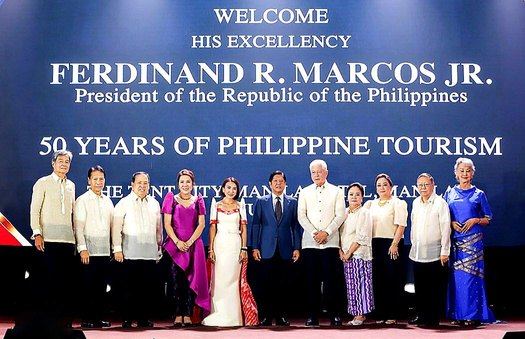
Then, when the crown was placed upon Sushmita Sen of India, and Charlene Gonzales charmed audiences worldwide with her now-iconic “high tide or low tide” wit, Vince Carlos knew he had achieved more than a spectacle. He had restored faith in Filipino hospitality and artistry. Tourist arrivals soared by more than 20 percent, and, for the first time in decades, the Philippines re-entered the consciousness of global travelers — not as a cautionary tale but as a dream.
Bridges Across Nations
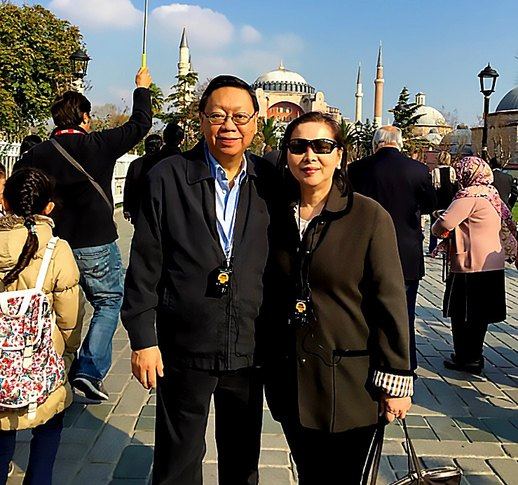
A lawyer’s instinct for detail and a traveler’s passion for connectivity led Vince to prioritize aviation ties. He noticed that arrivals from Europe lagged behind those from Asia and the Americas. Leveraging his earlier professional relationships, he negotiated a Memorandum of Understanding with Air France, securing promotional partnerships and preferential fares for Manila-bound passengers. He also established a DOT office in Paris, planting a permanent bridge between France and the Philippines. These initiatives were not mere bureaucratic achievements; they reflected a worldview forged in both privilege and empathy — that exposure breeds understanding, and understanding breeds peace.
His administrative philosophy was simple: elevate morale, reward merit, and insist on integrity. He reinvigorated the Department of Tourism’s workforce with incentives and recognition, proving that public servants could be as professional as their private-sector counterparts. Perhaps his quietest yet most consequential victory came in convincing President Ramos to retain the Department of Tourism at a time when technocrats wanted it abolished. “Tourism is not a luxury,” he told the Cabinet. “It is the face of a nation.”
From the Cabinet to the Consulate
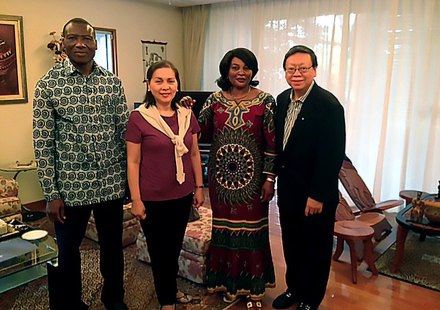
After leaving government, Vince returned briefly to private practice, but destiny had another public calling. In 1997, his friend Ambassador Victor Garcia, then Chief of Protocol, introduced him to the Ambassador of Côte d’Ivoire (Ivory Coast), who was seeking an Honorary Consul in the Philippines. Over lunch at the Makati Shangri-La, the envoy was impressed by Vince’s refinement and sincerity. Within two months, an official commission arrived: Vicente Jacinto Carlos, Honorary Consul of Côte d’Ivoire to the Philippines.
For Vince, diplomacy was not new; it was simply Rotary on a global scale. He approached the role with humility and empathy, assisting Ivorian nationals and representing their interests with courtesy. His diligence earned notice. In 2004, he was promoted to Honorary Consul General, and that same year, his peers elected him Dean of the Consular Corps of the Philippines — the first Filipino Rotarian to hold the post. Two years later, the Ivorian government conferred upon him the Chevalier of the Republic, its equivalent of knighthood. The medal, pinned on his lapel by the Minister of Foreign Affairs of Côte d’Ivoire, symbolized not prestige but gratitude. “It was their way of showing appreciation for the time, talent, and treasure I had shared,” he said quietly.
He continued to serve through the 2010s, assisting travelers, liaising with Philippine agencies, and fostering cross-cultural understanding between two nations oceans apart but linked by goodwill. When he finally retired from law in 2020, he devoted his remaining energy entirely to his consular work.
The Private Man
Behind the public figure stands the man who never forgot where contentment truly lay. He met Cristina “Tina” Torres on a blind date arranged by friends. At first there were no sparks; she seemed too young. But months later, at her senior prom, Tina asked him to be her escort — “because she couldn’t choose among her suitors,” he liked to joke — and this time the chemistry was undeniable.
After graduating from law school, Vince wished to marry immediately, but his father advised him to wait until after the bar exams. True to discipline, he waited. A week after passing, on December 5, 1970, he and Tina wed — a union that has endured over five decades. Their marriage, rooted in patience and faith, survived the seasons of his service. When Rotary consumed his time, Tina understood; when government demanded his presence, she kept home steady. “She was always supportive,” he said. “She couldn’t join most of my trips because of her motion sickness, but she was my quiet strength.” Together, they raised children who mirrored their parents’ values — faith, integrity, honesty, and punctuality. “None of them smoked or took drugs,” Vince said with fatherly pride. “They’re all successful — and as a father, that makes me happiest.”
The Golden Rule and the Final Lesson
Even after decades in the limelight, Vince Carlos remains disarmingly simple in his moral compass. His motto has never changed: Do unto others what you would like them to do unto you. Asked how he resisted the temptations of public office, he answered matter-of-factly: “I was offered money — large sums — to favor certain entities, or a percentage of released funds. I refused them all. In fact, I never even withdrew my salary as Secretary until I left office.” In a land too accustomed to compromise, such candor is revolutionary. It is why, when he finally retired, not a single case was filed against him by the Ombudsman — a clean ledger in both law and conscience.
Now in his eighties, he looks back without bitterness. “All my best friends have gone ahead,” he said recently, “so perhaps the Lord still has a mission for me. I just pray that the rest of my life becomes the best of my life.”
Epilogue: The Quiet Flame
To tell the story of Vicente Jacinto Carlos is to trace the arc of service as a lifelong discipline rather than a series of positions. From the Latin lessons of his Jesuit youth to the bar exams of 1970, from Rotary halls to Malacañang’s cabinet table, from the courtroom to the consular desk, his journey has been guided by a constant light — that integrity is not an achievement; it is a habit.
He is not the type to romanticize his own story. He speaks in measured tones, smiles sparingly, and prefers precision to praise. Yet behind that restraint lies a man who embodied the Rotarian creed: Service Above Self. In an age when leadership too often confuses noise for meaning, Vince Carlos reminds us that true greatness is quiet. It is the calm voice that says no when others yield, the steady hand that rebuilds when earthquakes strike, and the humble heart that keeps serving long after applause has faded.
And so, as he steps into the twilight of a well-lived life — lawyer, Rotarian, tourism visionary, and diplomat — the story of Vicente Jacinto Carlos endures not as a chronicle of titles, but as a gentle testament to character. He was, and remains, one of those rare Filipinos for whom public service was never a career but a calling — and whose legacy will forever speak for itself, res ipsa loquitur.

 Benjamin E. Diokno
 President’s Message