

Editorial
The editorial looks at PEZA Director General Tereso Panga’s effort to reimagine economic zones around sustainability, innovation and jobs.
IN the story of the Philippine economy, special economic zones have long stood as experiments in controlled ambition — spaces where order and opportunity were meant to coexist. Conceived as islands of efficiency in a sea of bureaucracy, they have weathered political transitions and shifting tides of global capital.
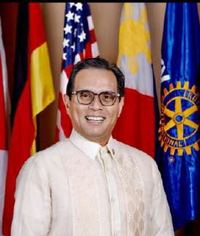
At the helm of this enduring enterprise is Tereso “Theo” O. Panga, Director-General of the Philippine Economic Zone Authority (PEZA), a man tasked with redefining an institution that has outgrown its old vocabulary. Panga’s challenge is not merely to attract investors; it is to reimagine what a “zone” means in a world that now measures progress in sustainability, not smokestacks.
Under Panga’s leadership, PEZA has begun to stir. Investment approvals have more than doubled since last year, reaching nearly ₱91 billion by mid-2025 — a sign that confidence, once fractured, is slowly being restored. Two hundred new and expansion projects now promise tens of thousands of jobs across the country.
But numbers, however promising, are only the surface of the story. Growth sustained by incentives can be as fragile as it is impressive. The real test is whether PEZA can convert these gains into structural strength: better jobs, stronger linkages, and a deeper local economy that does not depend solely on tax holidays and cheap labor.
Panga’s blueprint departs from the old industrial template. His “smart, green, and inclusive zones” are designed not as enclaves but as ecosystems — where manufacturing coexists with research, digital infrastructure, and renewable energy. From Pampanga’s reclassified agro-industrial park to Cebu’s envisioned “aerotropolis,” the direction is clear: PEZA is moving toward mixed-use, future-ready zones that mirror the needs of a diversified economy. It is a vision aligned with the global pivot toward cleaner, smarter, more human-scaled industrial landscapes.
Yet ambition must meet asphalt. Connectivity, energy reliability, and digital access remain the silent determinants of success. A zone may be beautifully planned on paper, but without infrastructure, it is a map without roads.
The obstacles are familiar. Infrastructure gaps, bureaucratic delays, and the fragile equilibrium between incentives and revenue discipline all persist. PEZA’s famed “one-stop shop” remains vulnerable to the slow gears of coordination across agencies.
Still, Panga’s style is pragmatic rather than rhetorical. He knows that the hardest reforms are not legislative but cultural — persuading institutions to move faster, think longer, and measure success by outcomes, not paperwork. His brief resignation earlier this year, and the groundswell of support that reversed it, revealed both his credibility and the volatility of technocratic leadership in a politicized bureaucracy. Even good policy, in the Philippines, is only as stable as the politics that surround it.
If Panga’s agenda succeeds, PEZA will cease to be a mere promoter of industrial enclaves and become an architect of national competitiveness. The idea is simple but transformative: to move from counting investors to cultivating industries; from hosting factories to building innovation corridors. This will demand partnerships — with universities for talent, with LGUs for community linkages, with agencies for green infrastructure. It will also require courage to phase out dependency on fiscal incentives and to shift toward productivity, transparency, and performance.
What makes Panga’s work compelling is its quiet audacity. In a time of fatigue and distrust, he represents the fading belief that bureaucracy, done right, can still build nations. His optimism is not naive; it is methodical, shaped by decades inside an institution that still delivers when much of government stumbles.
If PEZA can transform its zones into sustainable engines of innovation and employment, it will not simply add numbers to the GDP. It will redefine the geography of hope — creating bridges between local communities and the global economy, between growth and dignity. Theo Panga’s task is immense, but so is the promise. For now, the map of ambition he draws for the Philippines remains unfinished — but at last, it points in the right direction.

 Tereso O. Panga
 President’s Message
 Reclaiming Fiscal Integrity: Benjamin Diokno’s Ten Commandments for the Nation’s Purse