

“No Red Tape, Only a Red Carpet”: PEZA’s Tereso O. Panga Maps a High-Confidence Future at RCM’s 11th Weekly Meeting
PEZA Director General Tereso O. Panga was guest of honor and speaker at the Rotary Club of Manila’s weekly membership meeting, where the club also signed a sister club agreement with RC Jinju Jeil.

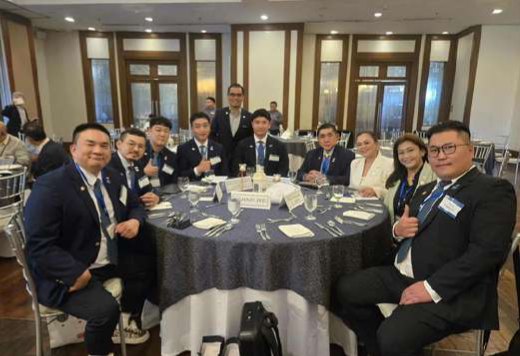
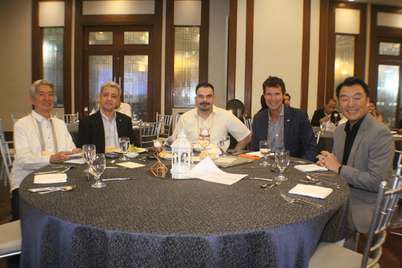
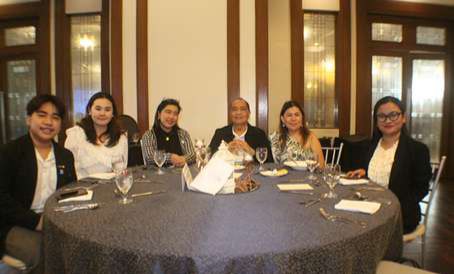
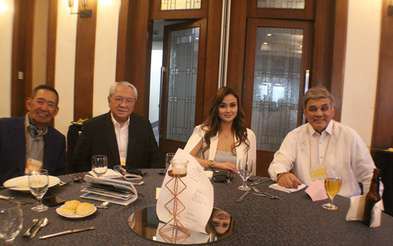
THE Manila Polo Club filled with familiar handshakes and purposeful chatter as Rotarians filed in for the Rotary Club of Manila’s 11th Weekly Membership Meeting — an afternoon that began with tradition and ended with a challenge to help “ecozone” the Philippines for inclusive, sustainable growth.
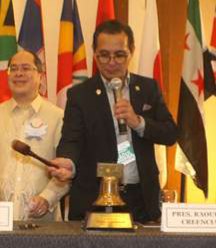
At 12:30 PM, Call to Order, President Atty. Raoul C. Creencia struck the gavel, and the club’s well-oiled ritual moved like clockwork. Rotarian Abdulgani “Gani” Macatoman led the Invocation, followed by the National Anthem (AVP) and the RCM Hymn rendered by the RCM WF Music Chorale. Past Director Phillip “Phil” Ong guided the assembly through the Four-Way Test, while Past Director Amado “Amading” Valdez acknowledged guests, adding the convivial pulse that has long defined Asia’s first Rotary club. The World-Famous Music Chorale’s “Welcome Song” warmed the room, before members celebrated October–November birthday celebrants with “Maligayang Bati.”
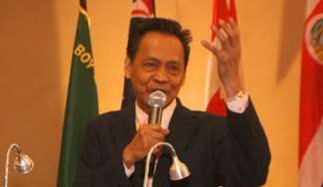
Then, a rite of passage. President Creencia inducted Jason Romeo C. Valderrama, President & CEO of JCV & Associates, into the fold — an oath not only to fellowship but to service at scale. The Korean and Philippine national anthems were beautifully sung by our Korean Rotarian visitors together with Filipino Rotarians and guests.
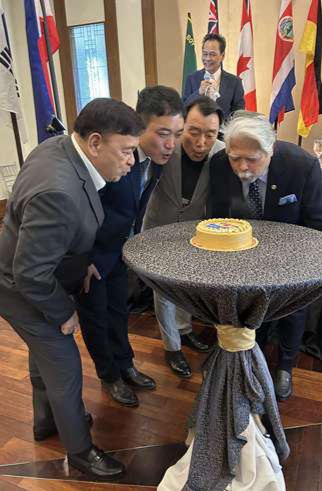
In President’s Time, the club formalized a global handshake: the Sister Club Agreement with the Rotary Club of Jinju Jeil — a bridge across seas and seasons for shared projects and people-to-people ties.

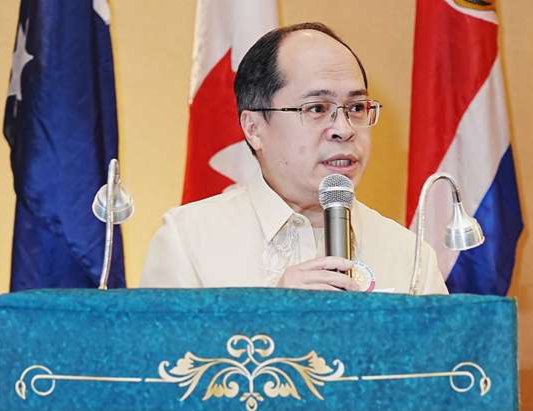
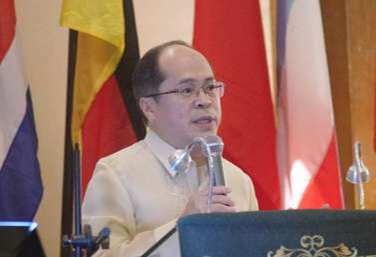
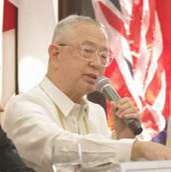
When PP Felix Francisco “Chito” Zaldarriaga rose to introduce the Guest of Honor and Speaker, the room leaned forward. The Honorable Tereso O. Panga, Director General of the Philippine Economic Zone Authority (PEZA), took the lectern with the composed urgency of a career technocrat who has watched the country’s investment story through booms, busts, and reinvention.
The Case for Confidence— Despite the Noise
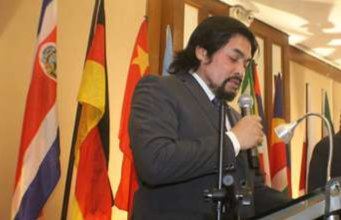
Panga began with an assertion that seemed almost contrarian in a world of disruptions: confidence in the Philippine economy remains steady. Citing mainstream projections, he noted GDP growth tracks of around 5.6 percent in 2025 and 5.7 percent in 2026 — below the government’s 6-to-7 percent ambition, but robust enough, he argued, to power investor appetite. In PEZA’s line of work, those tenths of a percent matter; high growth begets capital formation, and capital formation, if well-channeled, becomes factories, R&D labs, and paychecks.
A quick regional scan underscored his point. The Philippines, once “the laggard in ASEAN-6,” is climbing back: No. 4 in FDI inflows with a declared bold ambition to reach No. 2 by 2028; No. 2 in digital and sustainable trade facilitation (behind Singapore); and consistently expansionary in the Purchasing Managers’ Index (PMI) — a signal that local manufacturing remains on the front foot rather than retreat.

PEZA’s Scorecard: From Macro Numbers to Factory Floors
If GDP headlines draw attention, PEZA’s numbers close the sale. Panga framed PEZA as an ecosystem builder: contributing roughly 13 percent to national GDP and over half of the country’s annual goods exports through its locators. A recent US$1-billion Samsung “big-ticket” investment — inked with the President present — was emblematic: the first to unlock CREATE MORE’s most generous incentives for billion-dollar bets.

The approvals pipeline, he reported, is not a blip but a trend. January–October approvals reached ₱175 billion, up 42 percent year-on-year, and PEZA is targeting ₱250 to ₱300 billion to return to its “heydays” reminiscent of 2011–2015. The investor mix tells a longer story: Japan remains “ichiban,” with the US, the Netherlands, the UK, and South Korea close behind — Korea poised to surge under the new FTA. On sectors, electronics leads (34 percent), with ICT-BPO, transport, tourism, and a rising wave in industrial and consumer electronics, pharma, and renewables.
The Export Powerhouses You Don’t See — but Always Use

Panga’s most arresting passages were the ones that collapsed statistics into the everyday. The Philippines, he reminded, is No. 1 in canned pineapple, consistently top-tier in banana and coconut products, and No. 9 in global chips exports. The country sits as the world’s No. 4 shipbuilder, and with Hyundai reanimating the Hanjin yard in Subic, No. 3 is within reach. Then there are the unheralded industrial marvels: servo bulbs for aircraft navigation — made only in the Philippines by a long-time PEZA locator in Baguio — quietly enabling airplanes to land and lift off across the planet. Even tennis balls, mass-produced out of Mindanao, carry the imprint of Filipino precision.
433 Ecozones — and a Map of Shared Prosperity

Under Panga’s watch, 433 operating ecozones span Luzon, Visayas, and Mindanao — still Luzon-heavy, but with an intentional push southward. Here, Panga was explicit: LGUs hosting more ecozones tend to climb faster on per-capita GDP and investment metrics. The causal lines, while always complex, are strong enough to guide policy; the obstacle is procedural. Today, proclaiming new zones requires Presidential Proclamation — a time tax he wants to end by amending the PEZA law to let the PEZA Board declare ecozones. “Low-hanging fruit,” he implied, if the aim is to accelerate countryside development.
“One Government” and the Red-Carpet Doctrine

What, then, differentiates PEZA? Panga distilled it to a service brand sharpened over three decades: “No red tape, only red-carpet treatment.” It’s not a slogan, he argued, but an operating system — a true one-stop shop for permits and, just as critically, a “non-stop shop” with 24/7 teams smoothing the flow of cargo from ports to plants. Automation is the other pillar: cashless since 2019, about 70 percent digitized on the way to full automation, down to virtual building inspections and PEZA visas in one to two days, beating ARTA benchmarks. He likes comparisons: project approvals in three days versus two weeks in Singapore; building permits in seven days versus a year in Germany. The boast comes wrapped in accountability: ARTA Gold Awards, CSC PRIME HRM accreditation, and repeated nods from the US State Department, ASEAN-UNCTAD, IFC–World Bank, and Bloomberg for regulatory transparency.
Incentives as Equalizer, People as the Edge

Panga did not sidestep the country’s structural frictions; he argued instead that smart incentives compensate for inefficiencies while the state races to fix them. Under CREATE and its enhancements, the Philippines now offers the region’s longest incentive runways — up to 14 to 40 years for billion-dollar projects — paired with outright VAT zero-rating (instead of VAT-then-refund) and 99-year land leases, a cash-flow lifeline that frees capital for factories rather than land.
But the decisive edge will be talent. On November 17, PEZA will launch its AI Tech Academy in Cebu, a two-track (IT-BPM and advanced manufacturing) engine to produce thousands of AI-literate workers who can build, run, and secure the next generation of smart factories. In Laguna, PEZA’s Small Technology Support Center — a ₱35-million facility, co-funded by the Korean government (US$8 million), with DOST and the Philippine Die & Mold Association — will train CNC and die-and-mold specialists, staunching the talent poaching that has hollowed local shop floors and ensuring auto, electronics, and precision-parts makers can scale here, not elsewhere.

New Frontiers: Aerotropolis, Aquamarine, Pharma, and a Mega-Zone
The ecozone of the future looks different. Aerotropolis projects wrap advanced logistics around airports; aquamarine zones pursue green hydrogen at sea; the Pharma Park re-courts global names like Takeda and AstraZeneca (which recently committed ₱6–7 billion) after years away. On the horizon: a mega-zone in Palawan — planned end-to-end for low-carbon, circular, energy-efficient operations, not retrofit compromises.

Sustainability, Panga stressed, is no longer “nice to have” but a pre-condition for high-value FDI. That is why PEZA is aligning ecozones to IFC–World Bank Eco-Industrial Park standards, rolling out Global Reporting Initiative frameworks with Swiss support, and adopting ZeroBoard, a Japanese carbon platform, to help locators quantify and cut emissions.
Some of the cleverest gains came from regulatory sandboxes inside zones: the first thermal-oxidation waste-to-energy, the first anaerobic wastewater-to-power, and an American “solar dish” concentrator of Expo-grade potential. Panga’s favorite anecdote involved a Danish nanofiltration solution: when tested at Samsung, wastewater treatment costs fell from ₱7 to ₱1 — the kind of step-change that compounds across a zone, then an industry.

And lest one unanswered doubt linger — the price of power — Panga argued that embedded generation inside ecozones narrows the gap with ASEAN’s subsidized tariffs. “Outside the zones” may still feel the pinch; inside, he said, rates are significantly lower, and that difference shapes location decisions. A short AVP stitched locator testimonials to the data; the narrative stood on its own.
Open Forum: The Rotary Habit of Asking “What’s Next?”
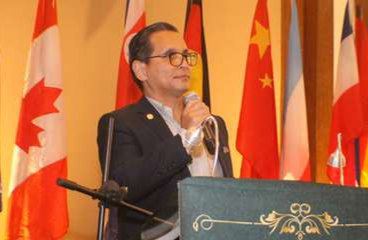
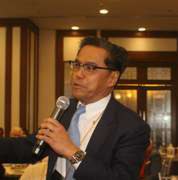
In the Q&A, members pressed the edges: timelines for law amendments, the replicability of Cebu’s AI Academy in Calabarzon and Central Visayas, the path from pilot sandboxes to grid-scale change, the interplay of FDI ambitions with MSME supplier development, and how ecozones can anchor Mindanao’s long-awaited industrial bloom. Panga’s answers returned to first principles: predictability, speed, and skills — the tripod that keeps investors from drifting to the next port.
Closing the Circle

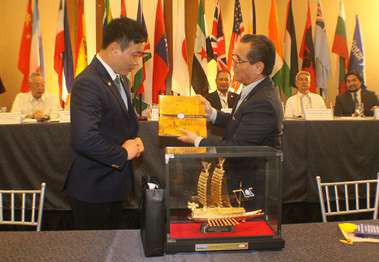
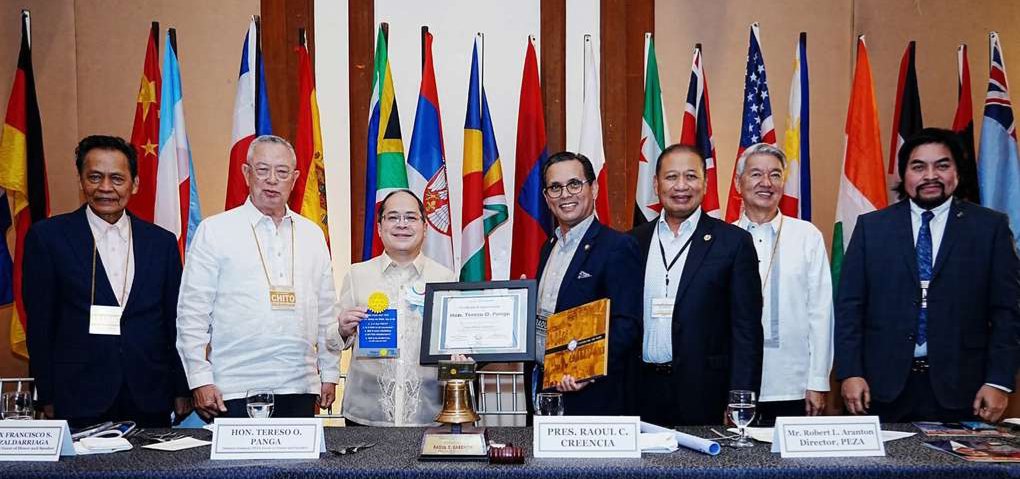
President Creencia presented the Certificate of Appreciation, a parchment acknowledgement of a larger compact: government that is fast, transparent, and practical; industry that invests, trains, and stays; civic leaders who convene, question, and connect. The gavel’s final tap adjourned the meeting, but the directive lingered like a refrain: “Unite for Good,” and — if PEZA has its way — unite around ecozones that turn growth forecasts into factories, and forecasts into futures.
In the end, Panga’s cover-story line was not the billions approved, the rankings regained, or even the 433 dots on the national map. It was a service ethic condensed to seven words: “No red tape — only red-carpet treatment.” That is how you turn confidence into capital, and capital into consequence.




 Senator Bam Aquino
 President’s Message