

Transparency, Classrooms, and CADENA: How Senator Bam Aquino Turned RCM’s 12th Weekly Meeting into a Call for National Reform
More than 120 Rotarians and Rotaractors attended the joint 12th Weekly Membership Meeting with Senator Bam Aquino as Guest of Honor and Speaker.

THE 12th Weekly Membership Meeting of the Rotary Club of Manila will long be remembered as an afternoon when Rotary fellowship intersected with the hard realities of governance, education, and national reform. Jointly hosted with three other clubs and attended by more than 120 Rotarians and Rotaractors, it was not merely another entry in the weekly calendar of the Philippines’ premier Rotary club. It became, in many ways, a civic briefing from inside the Senate itself.
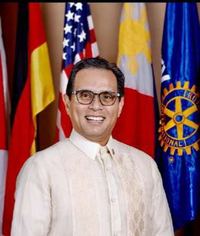
At the heart of that gathering was the Guest of Honor and Speaker, Senator Paolo Benigno “Bam” Aquino IV —returning to a room filled with old friends, mentors, and fellow workers in public life.
A Rare Gathering of Four Clubs

The afternoon began with the familiar dignity of Rotary ritual. Rotary Club of Manila President Raoul Creencia called the meeting to order, setting the tone for a special joint gathering. In partnership with the Rotary Club of Makati, the Rotary Club of Makati West, and the Rotary Club of Muntinlupa Central, RCM welcomed members and guests into a hall that crackled with energy and expectation.
The invocation by RCM President-elect Reggie Yu invited everyone to align their hearts with the higher purpose of service. The Philippine National Anthem followed, sung with quiet pride, then the Rotary Hymn, evoking the global fellowship that binds Rotarians from Manila to the rest of the world. The Four-Way Test, recited in unison, carried a particular weight that day. Its questions—Is it the truth? Is it fair to all concerned? Will it build goodwill and better friendships? Will it be beneficial to all concerned?—hung in the air like a moral frame for what was to come.
Roll call and the acknowledgment of visiting Rotarians gave a sense of the breadth of representation in the room. Tables were filled with business leaders, former and current government officials, senior Rotarians, Rotaractors, and friends of the clubs. The presidents of the co-hosting clubs —President Dino Dumatol of Makati West, President Eddie Galvez of Makati, and President Ana Lorena Oliva of Muntinlupa Central —were recognized, underscoring the collaborative spirit of the gathering.

Among the distinguished guests were some of the most familiar names in public service: past District Governors Peps Benzon, Vince Carlos, Obet Pagdanganan, and former Senator Joey Lina ; Past Rotary International Director Guilier Tumangan ; District Secretary and PDG Louie Aceoche ; and PDG Tony Quila.
From the world of government and business came DepEd Assistant Secretary AP Bartolome ; former Department of Transportation Secretary and now award-winning airline executive Jimmy Bautista ; former DOTr Undersecretary Bobby Lim ; and former Education Secretary Jesli Lapus.
Business and civic leaders such as George Barcelon and Architect Felino “Jun” Palafox Jr. added further depth to the audience.

Rotaractors—representing the next generation of Rotary—were also present in strong numbers, their presence a quiet assurance that the torch of service was far from dimming.
It was a room seasoned by experience and animated by concern for the country. Into this setting the guest speaker was introduced.
A Personal Introduction and a Familiar Face

The task of presenting the Guest of Honor fell to someone who knew him not only as a public figure but as family: former Education Secretary Jesli Aquino-Lapus, uncle of Senator Bam Aquino. His introduction blended institutional respect with personal affection, tracing the Senator’s journey from youth leader and social entrepreneur to lawmaker and now Chair of the Senate Committee on Basic Education.
He spoke of a young man shaped by the tumult of Philippine politics and the demands of nationhood, and of a senator who has chosen to focus on education, governance, and the future of Filipino children. By the time he concluded, the room was primed not just to listen to a politician, but to hear from a fellow Filipino who had grown up within sight of many of those seated before him.
“That has to be one of the best introductions I’ve had,” Senator Aquino began, smiling as he took the podium. “Of course, it comes from my uncle.”

Laughter rippled through the hall, softening the edges of formality. Then he began to speak in earnest.
A Room of Friends and a Nation Under Strain
Before plunging into his main message, Senator Aquino took time to greet those present—Rotarians, former cabinet secretaries, business leaders, and Rotaractors—many of whom he had known since he was a young boy accompanying his elders to functions much like this one. He acknowledged the presidents of the four co-hosting Rotary clubs and the many past presidents and directors in the audience. He recognized colleagues and former colleagues in government, from education and transportation to the private sector. He waved to Rotaractors and reminded them that he had been there at their induction.

These opening greetings were more than polite formalities. They anchored his message in relationships and continuity. Here was a senator speaking not to strangers, but to peers, mentors, and partners in service—people who understood both the promise and the frustrations of trying to move a country forward.
Then he shifted tone. The warmth of the opening gave way to a sobering picture of where the Philippines stands today, particularly in the realm of education.
The Classroom Crisis: “Twenty-Two”

As Chair of the Committee on Basic Education, Senator Aquino began with a simple, almost naïve question that he had asked during a budget hearing with the Department of Public Works and Highways (DPWH): “Ilan na ba ang classroom na nagawa ng DPWH sa taong ito?” — How many classrooms has DPWH built this year? It was not a trick question. It was the kind of straightforward query that any concerned citizen might ask, expecting a substantial answer given the chronic shortage of school facilities all over the country. The DPWH Secretary, new to the post, consulted his aide and read from a cue card. The figure he gave stunned the Senator and, as he shared it, stunned the Rotarians in the room as well. As of October 2025, only 22 classrooms had been completed.
Not 22,000. Not 2,200. Only twenty-two.
The number seemed almost absurdly small in a nation of over 110 million people, with millions of schoolchildren. Senator Aquino contrasted this with the work of a private NGO, Agap, which, under the leadership of Sir Eddie, had managed to construct more than 1,400 classrooms over the last decade. If a modest non-government initiative could achieve that, how could the national government’s output be barely a couple dozen in a year?

He went on to explain that the government’s own target for that year was 1,700 classrooms — already far below the total national classroom gap of 165,000. Even if the target were fully achieved, it would still represent only a drop in the bucket. Worse, projections showed that if current trends continued — if more classrooms continued to be condemned for disrepair and more were destroyed by increasingly powerful typhoons — the gap could reach 200,000 by 2028.
The Senator noted that even just in the past week, thousands of classrooms had been damaged or destroyed by natural calamities. Against this backdrop, the number 22 did not merely seem inadequate; it felt almost like a national moral failure.
This was the first major thread of his message: that the crisis in Philippine education is not some abstract issue debated in conference rooms. It is painfully concrete. It begins with the simplest things—like whether children have a classroom at all.

Building a 10-Year Education Plan
From this starting point, Senator Aquino turned to the work being done through the Education Commission (EDCOM), a joint body composed of members of both the Senate and the House of Representatives, along with agency heads and experts. He described how EDCOM was in the process of finalizing a 10-year education plan, scheduled for completion in the coming month.
In this plan, the issues were as fundamental as they were urgent.

First came classrooms—building, repairing, and protecting them as the physical foundation of the learning environment. Then textbooks, ensuring that learning materials were actually printed, delivered, and used on time. He pointed to the imperative of bringing internet connectivity into schools, recognizing that to educate a Filipino child today is also to prepare them for a digital world. Nutrition was another essential pillar; children cannot be expected to absorb their lessons if they arrive at school hungry. Finally, he mentioned teachers’ tools: laptops, tablets, and other basic devices that many educators still had to provide out of their own pockets.
The Senator drew a picture of an education system that, in many ways, was still struggling with the basics— classrooms, books, food, and teacher support. These needs were not glamorous, but they were foundational. It was here, at the ground level, that the future of Filipino youth was being decided.
Yet, as he was careful to emphasize, addressing these needs requires more than good intentions. It requires money—and more importantly, the right priorities.

Budgets and Priorities: Classrooms vs. Flood Control
Having laid out the shortfall in classrooms and the elements of the 10-year education plan, Senator Aquino turned to the arithmetic of governance. To close the classroom gap within six years, he explained, the Philippines would need to invest approximately 90 billion pesos per year in classroom construction and rehabilitation. Over six years, that would amount to about 540 billion pesos.
To many, these numbers might seem overwhelming. But the Senator quickly provided a comparison that made the supposed impossibility of the task look more like a question of political will.

For the 2026 national budget, before the flood-control controversy erupted, an allocation of around 260 billion pesos had originally been slated for flood control alone—almost half of the entire six-year requirement to close the classroom gap, compressed into a single year and a single program.
Placed side by side, the contrast was jarring. On the one hand, the country supposedly could not afford to build enough classrooms. On the other, it seemed prepared to pour hundreds of billions into a single category of infrastructure spending—not over a decade, but in one fiscal cycle.
The conclusion he drew was sharp and familiar: “Kung gusto, may paraan. Kung ayaw, maraming dahilan.”

When there is genuine will, a way can and will be found. When there is none, excuses multiply.
In other words, the classroom crisis was not only about capacity. It was about choices.
A Historic Education Budget —If It Is Protected

Despite this sobering analysis, Senator Aquino did not leave the audience in despair. He brought a piece of genuinely encouraging news. For the first time in the country’s history, the proposed 2026 national budget would allocate more than one trillion pesos to education. This would represent roughly 20 percent of the total budget and bring education spending to about 4.5 percent of GDP—the lower end of the 4 to 6 percent range recommended by the United Nations.
He called it an “education budget” in the truest sense, a long-awaited alignment of rhetoric and resource allocation. For decades, the Philippines had heard speeches about education being the “great equalizer,” yet actual funding often told another story. Now, at least on paper, the government was taking a major step towards giving education the share of the budget it deserved.
But this, he cautioned, is only half the battle. What good is a trillion-peso education budget if the money does not reach the schools, the teachers, and the children for whom it was intended? If corruption, inefficiency, and misallocation continue, even the largest budget will be swallowed by the system before it hits the ground. This is where the Senator’s message pivoted from education to governance —from how much we spend to how honestly and transparently we do it.

From Outrage to Reform: “Ikulong, Ibalik, Baguhin”
The country, Senator Aquino noted, is living through one of the most serious corruption scandals in recent years. Massive allegations of misuse of public funds, particularly in the area of flood control, have shaken public confidence. Yet, in the nationwide protests and rallies that followed, he hears not only anger but also a more mature call to reform.
He summarized the dominant battle cry in three demands: First, “Ikulong ang sangkot” —jail those responsible.

Second, “Ibalik ang pera” —return the stolen funds.
And third, increasingly voiced by the youth, “Baguhin ang sistema” — change the system itself.
The first two, he admitted, are not new. For decades, generations of Filipinos had marched under those slogans. What is new, and deeply significant, is the insistence on systemic change. It is no longer enough to simply replace one set of officials with another; people want reforms that alter the way power is exercised and money is managed.

From this point, Senator Aquino moved to the centerpiece of his speech: a legislative proposal designed to transform how government spends and reports the people’s money.
The CADENA Act: “Blockchain the Budget”
Just the day before his Rotary speech, Senator Aquino had filed a bill in the Senate known informally as the “Blockchain the Budget Bill.” Its official name is the CADENA Act, short for Citizens Access for Disclosure of Expenditures for National Accountability.

The core idea of CADENA is disarmingly simple: make the national budget and related government financial transactions radically transparent by requiring the disclosure of key documents and placing them on a secure, tamper-resistant technological platform.
Under CADENA, all national government agencies would be mandated to publicly disclose:
Budget documents;

Procurement documents;
Contracts, including those for big-ticket projects like DPWH infrastructure;
Supporting details such as lists of contractors, bidders, and bills of materials.

These documents would have to be posted within seven days on a platform that is machine-readable, verifiable, open-source, and inter-operable. A failure to disclose within that period would carry administrative penalties for the responsible officials— from reprimand to suspension or even dismissal. If the failure extends to 30 days, the offense becomes criminal in nature.
The Senator emphasized that this is not just another version of a Freedom of Information (FOI) bill, which for years has failed to become law. In a sense, it is FOI evolved: from a right to request information, to a requirement for proactive, real-time government disclosure; from isolated documents, to an integrated, technology-backed system.
From Files to Data to Citizens’ Phones

The Senator then painted a vivid picture of what this would look like in practice.
Because CADENA requires that data be machine-readable and interoperable, ordinary citizens— armed only with a smartphone and an AI assistant like ChatGPT—would be able to query the budget in natural language.
A citizen could, for example, ask: “How many classrooms are set to be built in Quezon City this year, and what is the budget for them?” Another might want to know how much is being spent on flood control in a particular province, or which contractor is handling a specific road project.

Public infrastructure projects would also carry QR codes on their signboards. Anyone passing by could point their phone at the code and immediately see who the contractor is, what the total project cost is, and even the unit prices of materials like cement. They could see whether the project is completed or delayed, and check this against the contract.
Over 250 volunteers—from tech companies, start-ups, universities, watchdog groups, and government agencies—had already engaged with the proposal during committee hearings. They argued that with modern tools, it would be relatively straightforward to build user-friendly applications that sit on top of the government’s open data. These apps could alert watchdogs, NGOs, even Rotary clubs every time funding is released for projects in the areas they are monitoring.
In practical terms, this means an architect like Jun Palafox could receive automatic notifications every time a new flood control project is approved in a given city, and check it against urban planning principles. A Rotary club concerned about local school facilities could track all classroom-related spending in its city. What was once buried in dense and incomprehensible budget books could become searchable, understandable, and actionable for ordinary citizens.

Three Phases and a Crucial Window
Senator Aquino explained that the CADENA Act is designed to be implemented in phases.
In the first nine months from the law’s effectivity, the focus would be on disclosure: getting agencies to publish documents and enforcing penalties for non-compliance. This, he said, is the most critical window. It is when resistance will be strongest, and when the public and civic organizations will need to be most vigilant and vocal in demanding, “Ipakita ninyo kung saan napunta ang pera ng bayan.”

In the second and third years, the technological components would be fully built out and refined. This is where blockchain and other technical solutions would be fully integrated, ensuring the permanence and integrity of the data and enabling sophisticated tools to be developed on top of it.
But the Senator was clear: without the first phase, the rest will not matter. The culture of secrecy must be broken before technology can work its magic.
A Personal Journey: From Yale to the Senate Floor

In one of the speech’s most personal passages, Senator Aquino shared that in 2023, when he was temporarily out of public office, he had joined a fellowship program at Yale University in the United States. Each fellow was required to choose an area of study. His choice: AI and blockchain for government transactions.
It was there, in an academic setting far from the hurly-burly of Philippine politics, that he began to imagine what it might mean to place a national budget on blockchain—to turn public finance into something that citizens could actually see, interrogate, and understand.
At the time, he thought it was a long shot. The idea of forcing government to expose so much information, and in such a permanent and transparent way, seemed nearly impossible to sell in a political culture accustomed to opacity.

Yet here he was, just two years later, addressing Rotarians about a bill that had already drawn strong support—eight co-authors and co-sponsors in the Senate and several congressmen who had filed companion measures in the House.
Even the Speaker had reportedly expressed keen interest.
The Senator made the point that crises, while painful, can create openings for breakthroughs that would otherwise be politically impossible. The scandals of recent months, as destructive as they have been to public trust, have also generated momentum for reform.

Without them, CADENA might never have advanced beyond a concept paper. Now, it stands on the brink of becoming law.
The Power of Public Attention—and Rotary’s Role
Throughout his remarks, Senator Aquino returned to a single, candid insight: politicians are more likely to do the right thing when citizens are paying attention.

He admitted, as a politician himself, that public scrutiny motivates better behavior. When people watch closely —when they demand explanations, when they follow the budget debates, when they ask hard questions—laws are passed more carefully, budgets are shaped more responsibly, and abuses become riskier.
The problem, he noted, is that the country’s collective attention span is short. Outrage flares, then fades. Crises come and go, but the structures that allowed them often remain.
The challenge, then, is to sustain attention—not just in the heat of scandal, but in the quieter months of implementation and oversight. This is where organizations like Rotary can play a vital role.

Rotary clubs are not social clubs in the ordinary sense. They are networks of professionals and leaders committed to service and ethical standards. They have the credibility, the expertise, and the local presence to help communities understand and use tools like CADENA. They can partner with universities and tech groups to develop apps that monitor local projects. They can conduct public forums that teach citizens how to read budget data and why it matters. They can incorporate public finance literacy into their own advocacy and service programs.
In short, Senator Aquino suggested— implicitly and explicitly—that Rotary can be more than a donor of classrooms and hospital equipment. It can help guard the public purse itself.
Hopeful Realism: Emerging Stronger from Crisis

Despite the grave subject matter— corruption scandals, classroom deficits, decades of underfunding— Senator Aquino ended on a note of guarded hope.
He spoke of the coming 2026 budget as possibly one of the best the country has seen in many years: unprogrammed appropriations reduced to limit hidden insertions, flood control slashed dramatically with much of the freed-up funds redirected to education and social services, and significant additional resources allocated to DepEd, CHED, DOH, and government hospitals.
There was even a serious attempt at implementing zero-balance billing in public hospitals so that the poor do not leave medical facilities with crushing debts.
Why was this happening, he asked?
Because the public was watching.
Because people were no longer willing to look away. Because, in his own words, “kung nakatutok po yung taong bayan, people will behave better.”
He acknowledged that the investigations rocking the political system today are painful and destabilizing. Yet he argued that they are necessary. Without them, the country might have continued down a darker path, with abuses growing ever more brazen and entrenched.
Now, however, there is a chance—a window—to do better by the Filipino people. There is an opportunity to create systems that reduce the room for corruption and increase the incentives for integrity.
He shared that, in his first term as senator, he had been only 36 years old, still learning the full reach and responsibility of the office. Now, older and more seasoned, he feels better equipped to use the Senate’s power to help engineer meaningful change. And he believes that CADENA, if passed and implemented well, could be one of the most significant transparency measures in Philippine history.
He ended with an invitation, not just to hope, but to walk alongside him and his colleagues in the years ahead. “We need your help,” he told the Rotarians. “We need your attention. We need your intention. And I hope we can work together for our country.”
Applause filled the hall. It was not the perfunctory kind that merely signals the end of a speech. It carried the weight of recognition: that the people in that room had just been given both information and responsibility.
Open Forum, Response, and Closing Moments
The open forum that followed drew thoughtful questions from the audience. Rotarians asked about the feasibility of implementing CADENA in agencies historically resistant to transparency, about the protection of sensitive data while honoring the principle of openness, and about specific ways civic organizations like Rotary might plug into the system once it is in place.
Senator Aquino responded point by point, reiterating that the strongest provisions of CADENA lie in its penalties and in the people’s capacity to demand compliance. He stressed that while technology can help secure data and increase access, the success of the law will ultimately rest on whether citizens—organized, informed, and persistent—choose to use it.
After the forum, one of the club leaders delivered a formal response, thanking the Senator for his candor, clarity, and courage. He drew a direct line between the principles embodied in CADENA and the ethical framework of Rotary’s Four-Way Test.
A token of appreciation, symbolic yet heartfelt, was then presented to the Guest of Honor and Speaker.
Photographs were taken—Senator Aquino flanked by the presidents of the co-hosting clubs, past district governors, and key officers of the Rotary Club of Manila and its partner clubs. The images captured not just faces, but an unspoken compact between public office and civic society.
The meeting closed with announcements of upcoming service projects and activities, and finally, the adjournment of what was unquestionably one of the most substantive weekly membership meetings of the Rotary Club of Manila this Rotary year.
An Afternoon That Redefined a Weekly Meeting
As the more than 120 participants began to filter out into the late afternoon, many carried with them more than just the memory of a well-attended joint meeting. They carried a renewed understanding of how deeply intertwined their work as Rotarians is with the work of governance.
The story of that day could be told simply: four clubs met, a senator spoke, a token was given, and the meeting was adjourned. But a deeper reading reveals more.
It was an afternoon when the number “22” forced everyone in the room to confront the state of Philippine classrooms. When a trillion-peso education budget was both celebrated and scrutinized. When the cries of “Ikulong, ibalik, baguhin” were translated into the concrete architecture of a legislative proposal. When blockchain, AI, and public accountability stopped being buzzwords and became instruments in a real plan for reform.
Above all, it was a day when the Rotary Club of Manila and its partner clubs were implicitly invited to move beyond project-based generosity and into a more demanding, more transformative role: not only as builders of classrooms, but as vigilant stewards of the public trust.
In that sense, the 12th Weekly Membership Meeting was not just a highlight of the Rotary year. It was a reminder that, in the long struggle for a better Philippines, civic organizations like Rotary remain indispensable partners—watchful, engaged, and ready to help turn bold ideas, like CADENA, into lasting change.

 General Hermogenes Cendaña Esperon Jr., AFP (Ret.)
 Rotary Quill