

Country Above Self: The Officer and the Gentleman - The Life and Legacy of Rafael Moreno Alunan III

Editor’s Note: Writing about Rafael M. Alunan III is less the task of biography than of bearing witness. His story is not simply one of power attained or history shaped; it is a meditation on what it means to remain good in a world that rewards everything but goodness. He belongs to that rare generation who believed that public service is a sacred trust — who measured progress not by applause but by conscience. His moral clarity came not from privilege but from pilgrimage: from the crucible of duty, the classroom of faith, and the quiet courage of love.
This piece closes not with finality but with continuity — because his mission, like the Republic’s, remains unfinished. Somewhere, perhaps even now, he is drafting another column, delivering another lecture, consoling another widow of a soldier, or advising a young mayor tempted by shortcuts. And when he speaks, the cadence is unchanged: calm, precise, resolute — a man who has mastered not only command, but compassion.
In the end, Raffy Alunan’s life reminds us that greatness is not the absence of failure, but the refusal to surrender virtue in its aftermath. His journey affirms that faith and reason, leadership and humility, courage and tenderness — all can coexist in one heart devoted wholly to God and country. May this work stand not as monument but as mirror — reflecting the best of what we can still become if we, too, choose to serve above self.
The gunfire began long before dawn. In the cold stillness of December 1989, as rebel forces rushed the financial heart of Makati and armed factions clashed across the nation’s capital, Raffy Alunan found himself standing once again in the uncertain space between order and collapse.

Earlier that day, as part of a SAF company deployed to capture an NPA base camp, he had flown under the radar — literally — to make it home in time for his daughter’s birthday. But celebrations would soon be overtaken by the growing specter of political fracture. By nightfall, Manila was under siege.
Rebel troops had overrun the business district. Civilians and foreign guests were trapped inside Makati’s hotels. The city’s lifeline was suspended between panic and paralysis. And into that crucible, Raffy Alunan — then serving as a key member of the Aquino administration — was tasked with a mission that would become emblematic of his entire public career: Negotiate the safe release of innocent lives in the middle of an armed rebellion.
He moved quickly. He sought the cooperation of the Scout Rangers, appealed to their instincts as protectors, and asked for one thing: “Let us retrieve the civilians before the shooting consumes them.” In the face-to-face talks at the Manila Intercontinental Hotel, he worked with PMA Superintendent Major-General Arturo Enrile and coordinated the delicate exchanges that allowed government teams to extract trapped tourists and Filipinos from active conflict zones.
It was a moment that distilled the essence of the path he had chosen — or perhaps, the path that had chosen him.

Not power.
Not politics.
But stewardship.
Crisis management.

And the unyielding conviction that in moments of national fracture, one must stand where the lives are most at risk. By the time the coup attempt was quelled, dozens of civilians had been pulled to safety. The Republic had survived another tremor in its fragile democratic rebuilding. And Raffy Alunan had cemented a reputation he never sought but consistently proved worthy of — the steady hand in chaos, the quiet soldier-statesman whose duty was always to save, not to shine.
This was but one episode in a long arc of service marked by danger, discipline, and moral resolve.
But it captures, in a single frame, the truth of the man:
When the Republic was threatened, he stepped forward.

When lives hung in the balance, he negotiated for peace. When crisis erupted, he moved toward the fire — never away.
This is the story of Rafael Moreno Alunan III.
Not as myth.
Not as crafted legend. But as he lived it — a life of stewardship, service, and fidelity to the moral values he believed could build a better Philippines.

The Boy from Bacolod
Long before Raffy would find himself negotiating with rebels in a besieged Manila hotel, or working beside presidents during some of the nation’s most precarious years, his story had already been set in motion by the weight — and quiet dignity — of a name he inherited.
That name belonged first to Rafael Rivas Alunan Sr., a man born in 1885 in Talisay, Negros Occidental, who came of age in the uncertain dawn between Spanish rule and the burgeoning American administration. The elder Alunan was a scholar of the old mold — educated at the Colegio de Bacolod de los Recoletos, then at the Ateneo de Manila, graduating in business at seventeen and later reading law. He was not simply a participant in the nation-in-the-making; he was one of its architects.
As a young legislator representing Negros Occidental’s 2nd District, he would serve three consecutive terms in the Philippine Assembly beginning in 1912, later becoming floor leader of the House. He would go on to hold posts that placed him at the crossroads of the country’s economic transformation — Secretary of Agriculture and Natural Resources, Secretary of Finance, Acting Secretary of Public Works, and, at the onset of the Pacific War, Secretary of the Interior. He was a prominent force in the sugar industry, heading the Bacolod-Murcia Milling Company and the Philippine Sugar Association at a time when sugar was one of the pillars of Philippine economic power.

History, however, had harsher tests in store.
When Japanese forces occupied the Philippines, Alunan Sr. held cabinet posts under duress. After the liberation, many officials of the wartime Philippine Republic faced accusations of treason. In February 1947, after a long legal ordeal, the charges against him were dismissed — there was no evidence that he had cooperated with the enemy beyond performing the duties required of him under occupation. He died that same year, his name cleared, leaving behind seven children and a legacy marked by service, controversy, vindication, and public purpose.
It was into this lineage that Rafael de la Rama Alunan Jr. and Rosario Moreno welcomed their son on May 17, 1948. The boy would grow up hearing stories of his grandfather’s courage and trials, his devotion to duty, and the burden of public office in the hardest years of the nation. Though Raffy was too young to know him, he grew up under the shadow of what his grandfather represented — a reminder that service to one’s country was never abstract, never easy, and never without cost.
But the greatest influence on the young Raffy was not the public servant etched into political history books. It was the quiet, everyday presence of the two people he would later describe as the most influential in his life: his parents.

His father, Rafael Jr., carried his own brand of prudence and circumspection — values he passed on not through speeches, but through the example of how he carried himself through success, difficulty, and the long rhythms of family life. His mother, Rosario, shaped him with a firmness wrapped in gentleness. She introduced him to a spiritual and moral compass that would stay with him through decades of service, adversity, and public pressure.
If the grandfather provided the name, it was the parents who gave the meaning.
Raffy spent his childhood in Bacolod, surrounded by kin whose histories formed a tapestry of Philippine society through the decades: the Alunans, the Morenos, the Jalbuena, Lizares, Ramas, and other families whose ties stretched from Negros to Pampanga, from Baguio to Manila, and even — through the Puigs — to Catalonia in Spain. His was a lineage shaped by teachers, politicians, planters, and public servants. But within the family, the message was simple: heritage was never a medal; it was an obligation to live well and serve honorably.
He studied at La Salle College–Bacolod until age sixteen. His youth was spent in the way many boys of his generation grew up: walking the streets with friends, watching movies, playing in the rain, and getting into harmless scrapes and fistfights that marked the rites of adolescence. They had little money but much camaraderie. Their bonds were forged in sports, long conversations, and shared adventures that filled the in-between hours of study and growing up.

Vacations alternated between Bacolod, Manila, and Baguio — the latter a place Raffy would remember vividly for its cool air, pine-lined roads, and the fact that it was where his mother spent much of her youth. These were the years that shaped his sense of belonging to a family anchored in love and guided by strong values.
His mother, Rosario, had a way of teaching that stayed with him long after childhood. She did not believe in boasting or drawing attention to achievements. She urged him to lead quietly, to act without fanfare, to be consistent and magnanimous. She emphasized thinking before speaking, choosing peace over conflict when possible, and standing firm when duty required it. These weren’t mere instructions — they became lifelong habits.
By his teens, the world around him had grown larger, more complex. Manila — where he transferred at age sixteen — beckoned with its promise of opportunity and its storms of political change. But even then, Raffy already carried within him a compass his grandfather and parents had collectively forged: a belief in service, a respect for discipline, and a sense of duty that would one day define the man.
But Raffy’s teenage years would also collide with the geopolitical currents of the 1960s. Southeast Asia was deep in the throes of the Cold War, and the Vietnam conflict was escalating. He found himself drawn to the discipline of the military early — from Boy Scouts in grade school to PMT in high school, then ROTC in college. The capture of the Philippine Military Academy’s imagination by U.S. Special Forces, the Green Berets, and PHILCAG’s missions abroad left a lasting impression. He seriously considered West Point or the PMA, even mulling over the idea as early as his high school years. Fate charted a different course, but the longing for structured service, for uniformed duty, remained quietly intact.

Those youthful dreams did not fade but evolved, taking root in a deeper truth: that defending the country was not merely about the battlefield, but about moral courage — the courage to lead, to reform, to protect civilians, to uphold the law even when the law was unpopular.
This moral framework — learned from Christian Brothers, reinforced by his parents, and inspired by the legacy of his grandfather — formed a conscience that would later guide him under fire, whether negotiating during a coup or dismantling private armies under Oplan Paglalansag.
Even as a student, he gravitated toward ideas of stewardship. His degrees in Political Science, History, and Business Administration at De La Salle University were not accidents of convenience; they reflected a mind keenly attuned to understanding power, the human condition, and the forces that shape nations.
It is from this crucible of childhood joys, parental wisdom, La Sallian discipline, and the looming silhouette of national vulnerability that Raffy Alunan III emerged — a young man ready to walk into decades of service he did not seek, but which the times would demand of him.
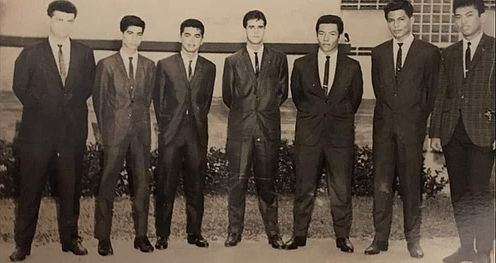
Roots of Faith and Formation
History has a way of calling certain people forward long before they realize they are being summoned. For Raffy, the calling did not arrive as a single dramatic moment, but through a series of quiet awakenings — small realizations accumulated across youth, education, and early adulthood that would prepare him for crises he had not yet imagined.
He did not grow up dreaming of cabinet posts or political prominence. The life he envisioned was more private, grounded in the domestic hopes of a young man who wanted to marry early, build a family, and carve out a modest but meaningful path. Yet the world he inherited was not a quiet one, and the country he loved demanded more than private aspirations.
The year was 1965, and the boy from Bacolod stepped off the ship in Manila with the wide-eyed certainty of youth and the silent discipline of his parents’ teaching. The capital smelled of gasoline, rain, and ambition. Jeepneys roared past vendors calling out the price of roasted corn; students in barong and mini-skirts swarmed the sidewalks of Taft Avenue. In this new rhythm, Raffy felt both small and boundless. He had come to De La Salle College, carrying a suitcase, a scholarship, and the invisible weight of a name already etched in public service.

La Salle, then a bastion of Catholic rigor, believed that education was the art of forming conscience. Morning prayers blended with lectures on economics; Latin mottos on marble walls reminded the students that intellect without virtue was arrogance in uniform. Raffy thrived. He studied Political Science and Business Administration, believing that good governance demanded both morality and management. “They taught us to think in systems and to act in faith,” he would later write, “to balance heart and head, reason and compassion.”
But the classroom was only half his teacher. Manila itself — uneasy under Marcos’s rising power, simmering with protest and poverty — became his moral proving ground. On weekends he visited slum areas with his classmates, bringing food and conversation rather than charity. The sight of barefoot children memorizing prayers beside open drains disturbed him far more than any textbook on social theory. “I began to understand that leadership was not about command,” he recalled. “It was about stewardship — about standing guard over the dignity of others.”
Faith and the Forging of Conscience
The Christian Brothers at La Salle hammered discipline into him: punctuality, precision, personal accountability. When he later pursued the MBA Senior Executive Program at the Ateneo Graduate School of Business, the Jesuits added something subtler — the art of discernment. They urged reflection before decision, conscience before convenience. “Faith and reason are not adversaries,” one professor told him. “They are the two wings of leadership.”

Those dual influences fused into his personal creed. “Faith must translate into work; work must uplift others,” Raffy would summarize decades later. He learned that success unattached to service was spiritual bankruptcy.
In college, Raffy stood at the crossroads of history and identity. The Cold War’s shadows had lengthened across Southeast Asia, and as the Vietnam conflict escalated, the question of national defense — how a small archipelagic nation could protect itself — weighed heavily on the minds of many young Filipinos. Raffy felt this weight personally.
If he ever imagined a future in uniform, it was framed not by ambition but by the desire to help secure a country increasingly buffeted by external pressures and internal unrest. But another force was shaping him in equal measure — love.
Love Enters the Frame

One evening in 1967, a classmate invited him to a debut at the Vera-Perez mansion in Quezon City. The chandeliers glowed; the orchestra played Sinatra; and across the room stood a young woman whose poise quieted the noise around her. Elizabeth Jalbuena — Assumption College student, reserved yet radiant. “It was love at first sight,” Raffy said. “She had an elegance that disarmed me and a shyness that made me want to protect her.”
He was eighteen; she was seventeen. He courted her the old-fashioned way: handwritten letters, long drives in a weather-beaten car that she treated like a Rolls-Royce, gentle humor to break her guarded silence. “When we first held hands,” she later told friends, “life was never the same again.”
After two and a half years, he proposed — but only after securing employment. When he asked her father, the dignified Louie P. Jalbuena, for her hand, the older man studied him with the calm severity of a patriarch. “Do you have work?” he asked. Raffy answered yes. “Then take care of her,” Louie said, his tone half-blessing, half-command.
They were married on May 16, 1970, at St. Andrew’s Church, a day before Raffy’s twenty-first birthday. The newlyweds laughed when Louie quipped, “The first fifty years are the hardest.” Time would prove him right.

The Apprenticeship of Marriage
Those early years were a laboratory of humility. Manila was expensive, salaries modest, dreams large. Elizabeth, whom he affectionately called Sweetheart or Mama, managed the household with precision. “She ran the house like a corporation — with kindness as capital and patience as profit,” Raffy liked to joke.
He worked in executive positions for large corporations, absorbing the discipline of numbers and the politics of people. Boardrooms taught him about ambition; Elizabeth reminded him about compassion. “Each time I came home full of self-importance,” he admitted, “she’d hand me the baby and say, ‘Here’s your real work.’”
They were blessed with five children — Katrina, Barni, Rafa, Christina, and Alexi — and later twelve grandchildren. Each name represented a chapter in his moral education. Dinner was sacred: everyone at the table, no gadgets, grace before meals. Stories flowed more than lectures. “Storytelling was my way of shaping conscience,” he said. “I’d tell them about courage under fire, about honesty when nobody’s watching, about helping a stranger without asking why.”

The 1970s: Awakening
The martial-law years darkened the nation but illuminated Raffy’s convictions. The decade that followed his graduation was tumultuous. The First Quarter Storm exploded, martial law followed, insurgencies grew, and political repression deepened. The Philippines had entered one of its most perilous eras. He watched classmates seek comfort in complicity while others disappeared into detention. “Fear is contagious,” he reflected, “but so is courage.” He kept his head down professionally yet lent quiet support to reformists and academics who spoke for justice. That moral tension — between safety and service — would define his choices later when the country regained its freedom.
During these years, Raffy built a civilian career in the private sector. He worked for multinational companies, became exposed to management frameworks and corporate discipline, and learned the mechanics of organizational leadership — skills that would later serve him in unexpected, high-pressure roles in government.
But while he was working in the private sphere, the country around him was unraveling.

Rebellions simmered. Crime and corruption metastasized. Institutions weakened. The military strained under heavy expectations while the nation teetered between repression and upheaval. For someone like Raffy Alunan — whose conscience was molded by Christian Brothers, whose lineage carried the weight of public duty, and whose instincts leaned toward service — it was impossible not to feel the pull of a greater responsibility.
At work, he began to see how institutions mirrored the people who ran them. Corruption in business, like in government, thrived on silence. He learned to speak up diplomatically, to correct without humiliating, to insist on transparency even when it slowed profit. “That period was my moral apprenticeship,” he said. “I was learning how to fight wrong without losing grace.”
Faith at the Center
Despite the political gloom, faith remained his compass. Sunday Mass was non-negotiable; so were nightly prayers with Elizabeth and the children. He joined community groups that bridged business with civic duty. One Jesuit retreat left an indelible mark: “If you want peace, work for justice.” Those words would echo when he later faced insurgents and terrorists as Interior Secretary.

He also deepened his ties with the military reserve program, undergoing ROTC and later training with the PC-Special Action Force, finding in discipline a spiritual metaphor. “Drill and prayer are cousins,” he mused. “Both are about surrendering ego to a higher order.”
Elizabeth, the Quiet General
As the family grew, Elizabeth became his steadfast partner in leadership. She instilled manners, routine, and compassion in their children, ran earthquake drills, taught first aid, and managed household crises with calm authority. Raffy often said, half in jest, “I was the speaker of the house; she was the loudspeaker.”
When disagreements flared, forgiveness became their diplomacy. “Forgiveness is essential,” he wrote. “Forgetting takes longer — but love is the memory that outlasts the quarrel.”

Their marriage was more than companionship; it was his moral gymnasium. Through her, he learned patience in frustration, humor in exhaustion, tenderness in command. “Elizabeth reminded me that leadership begins at home,” he said. “If you cannot lead a family with empathy, you cannot lead a nation with justice.”
The Birth of a Philosophy
By the early 1980s, Raffy had become a seasoned executive with a growing unease about complacency. The Philippines, still under dictatorship, suffered brain drain, cronyism, and cynicism. He began writing essays and giving talks about ethical leadership, arguing that development without discipline was decay in disguise.
He would later condense his worldview into a triad: God, Country, Family — in that order. “That hierarchy keeps me upright,” he explained. “It prevents idolatry of wealth or power. If I ever reverse it, I lose my soul.”

Friends recall how he could shift from corporate language to moral reasoning effortlessly. Over lunch he might discuss market share; by dessert he’d quote Scripture on stewardship. He spoke softly, but his conviction carried weight. Those who dismissed him as idealistic learned that he was, in fact, relentless.
The Unexpected Turn
He did not seek government. Government sought him.
His moral restlessness soon found purpose. In the mid-1980s, as the Marcos regime weakened and the opposition gained momentum, Raffy found himself increasingly connected with civic groups calling for democratic change. He became a trustee of Manindigan, an organization of professionals, entrepreneurs, and academics who openly opposed dictatorship and advocated for a return to democratic governance.

At this time, Raffy stood at the crossroads between comfort and calling. He had already built a solid career in the corporate world — an executive in large firms, respected for his discipline and strategic mind. Yet something inside him felt unquiet. “I was earning well, but I wasn’t serving enough,” he would later admit. “The country was unraveling, and I could no longer stand watching from the sidelines.”
The Marcos dictatorship was in its twilight. The air was thick with dissent, fear, and fatigue. Reformists, intellectuals, and professionals were beginning to converge under one banner: Manindigan — a movement whose name literally meant “to stand one’s ground.” It was a brotherhood of conscience, gathering lawyers, professors, entrepreneurs, priests, and journalists who believed that silence had become complicity. Raffy joined as a trustee. Inside candle-lit rooms in Quezon City, he and his peers debated freedom, ethics, and the price of integrity. Some were later jailed; others, exiled. For Raffy, the risk was personal. He had five young children and a wife whose steady faith never wavered.
When the People Power Revolution unfolded in 1986, many of Manindigan’s members — and the broader middle-class movement it represented — transitioned into the rebuilding effort under President Corazon C. Aquino, the widow who became the nation’s moral compass. It was in this atmosphere of national renewal that Raffy Alunan was invited to join the government. For Raffy, it felt like destiny knocking.
He did not see this as personal elevation. In his own account, public service — when done right — was nothing more than stewardship. In the face of crises, it meant stepping into spaces where one could help save lives, protect civilians, or restore order. It was never about power, and certainly not about fame. It was about responsibility.

And so, after much discernment, Raffy accepted what he believed was a summons to serve the times.
The Making of a Statesman
In early 1991, President Aquino invited him to serve as Secretary of Tourism. The country was still healing from years of repression and chaos. Tourism had collapsed; infrastructure lay in ruins; and the nation’s image abroad was tainted by coups, kidnappings, and political instability.
The role of Tourism Secretary was not one he imagined for himself. He inherited corruption in the ranks, decaying public assets, threats against tourists, and challenges that required firmness and moral clarity. Yet the moment he entered office, he realized how deeply its responsibilities were tied to safety, good governance, and national image. He brought with him a corporate manager’s precision and a public servant’s passion. His first order of business was to rebuild the industry’s credibility — both domestically and internationally. He met with airline executives, hotel owners, and travel associations, often working late into the night crafting policy that emphasized safety, sustainability, and service.

He removed Pagsanjan Falls from the preferred destination list due to rampant moral decadence and crime against visitors — a bold move that sent a clear message: public safety and moral decency were non-negotiable. He oversaw Camp John Hay, helped preserve its natural state, and completed the reconstruction of Corregidor, transforming it into a national shrine of wartime heroism.
But more critical were the emergencies. During the devastating 1989 earthquake, he organized search-and-rescue operations in Baguio. During the coup attempt that same year, rebel forces occupied Makati’s financial district, trapping civilians and foreign tourists in its hotels. Raffy was tasked to negotiate for their safe release — which he accomplished by working with Scout Rangers to protect lives and avoid further bloodshed.
This coup-night episode — later recounted in vivid detail in his own writing — would become one of the defining moments of his early service.
It was here, under overwhelming uncertainty, that Raffy Alunan began earning a reputation that followed him throughout his public life:

A calm mind in chaos.
A steward of lives.
A servant of the Republic at its most fragile moments.
He launched the “Rediscover the Philippines” campaign, not as a mere slogan but as a movement of national renewal. He believed that tourism could become a mirror of the nation’s soul. Under his leadership, the DOT began restoring heritage sites, training local guides, and promoting lesser-known regions to disperse economic growth beyond Metro Manila.

But more than marketing, Raffy focused on ethics. He insisted that tourism projects uphold environmental responsibility and community inclusion — principles rare at the time.
The Moral Machinery of Governance
Inside Malacañang, he earned a reputation for integrity. Staffers noted his punctuality, his refusal to cut corners, and his ability to balance firmness with courtesy. “He didn’t raise his voice,” one aide said. “He raised standards.”
President Aquino valued his independence of mind. During Cabinet meetings, when debates grew heated, she would sometimes turn to him and ask, “What do you think, Raffy?” He would answer with disarming calm: “Madam President, I think the right thing is rarely the easiest thing.” That line would become a quiet mantra of his governance style.

He approached bureaucracy as both system and soul. He streamlined processes, championed decentralization, and mentored young civil servants to think beyond compliance. “Rules are useless if they don’t uplift lives,” he told them. “We are not paper-pushers — we are nation-builders.”
Yet, reform always provokes resistance. Entrenched interests fought him subtly — through bureaucratic delay, whisper campaigns, and political sabotage. “I learned early that corruption doesn’t always wear a villain’s face,” he wrote. “Sometimes it smiles, shakes your hand, and invites you to lunch.” Through every trial, his moral compass pointed unwaveringly to service. “I entered government with clean hands and intended to leave the same way,” he told colleagues. “No title is worth my soul.”
A New Chapter of Duty
Raffy’s performance under the Aquino administration did not go unnoticed.

When Fidel V. Ramos — a soldierstatesman and fellow believer in disciplined, values-driven governance — became president in 1992, he looked to Raffy Alunan to join his Cabinet.
This would become the longest, most intense, and most consequential chapter of his public service.
It was here that Raffy stepped not only into crisis after crisis, but into roles that demanded moral courage, strategic clarity, and an unshakeable commitment to what he later described as the essence of his service: “A life of stewardship and service characterized by crisis management, saving lives, and fidelity to our moral values for a better Philippines.”
This was no longer the young man dreaming of West Point.

Nor the corporate executive.
Nor the newly married father hoping to build a quiet life.
This was Raffy Alunan — called into the center of a nation in upheaval, becoming the man the times required.
A Nation at the Brink

Leadership, when stripped of ceremony and rhetoric, is measured not by speeches or symbols but by what one chooses to confront. When Raffy accepted President Ramos’ invitation to lead the Department of the Interior and Local Government, he was not stepping into an office — he was stepping into the Republic’s crucible.
The early 1990s were dangerous years.
The Cold War had just ended, leaving behind scattered insurgencies, banditry, radicalized factions, and heavily armed political clans. Ethnic tensions flared in the south. Kidnapping syndicates grew bold. The wounds left by Marcos-era authoritarianism had not yet healed, and institutions were fragile It was during this precarious period that Ramos called. “Raffy,” he said, “I need you at the Department of the Interior and Local Government.” The offer was not a promotion; it was a crucible. The DILG was a labyrinth of politics, policing, and local governance — a post where idealists often burned out or broke down.
Raffy hesitated. His family had already endured years of his long absences and constant stress. Elizabeth worried quietly but never protested.

He brought no fanfare.
No political machinery.
No personal army of patronage.
Just the values learned from Christian Brothers, sharpened by corporate discipline, and anchored by a lifelong belief that public office is not a prize, but a stewardship. And stewardship during crisis meant confronting the darkest corners of power.
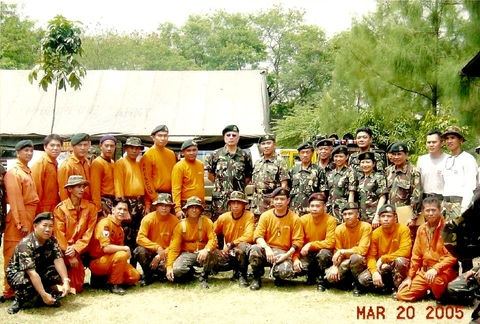
The Alunan Doctrine
When he assumed the DILG portfolio in July 1992, he brought with him not just credentials but conviction. His reputation as an incorruptible manager preceded him. Soldiers, mayors, and governors soon learned that he was both compassionate and uncompromising. He demanded efficiency, transparency, and loyalty — not to him, but to the Republic.
The first crisis confronting him was one the public had long feared but few had dared to address: the proliferation of warlordism and private armies across the country. These armed groups — funded by political clans, criminal networks, and extremist elements — were destabilizing communities, terrorizing civilians, and weakening the rule of law.
Alunan’s response was direct, disciplined, and historic.

He launched Oplan Paglalansag, a nationwide effort to dismantle private armed groups through coordinated police and military operations combined with clear legal parameters. It was the first major campaign in the post-dictatorship era to draw a firm line between legitimate security and political violence.
A key policy emerged from this campaign — one that would later bear his name: The Alunan Doctrine: Any elected official keeping more than two armed bodyguards would be presumed to maintain a private army — and the group could be disbanded under law.
It was a simple rule, but its message was thunderous: Political power must never be protected by private firepower. The Republic has only one legitimate armed force. And it must serve only the people.
Thousands of unauthorized weapons were seized. Private armies were dismantled. Local warlords were stripped of their monopoly on violence. It was a reform both bold and dangerous. The threats were real. Some were overt, others whispered. But for Raffy Alunan, stewardship required moral clarity — and moral courage.

Local Governance and National Stability
Beyond armed groups, the DILG is responsible for local government supervision — a complex ecosystem of governors, mayors, barangay officials, and local councils, each with distinct challenges and political dynamics. Under Alunan, this labyrinth was transformed through a combination of discipline, capacity building, and values-based leadership.
He championed programs that strengthened local autonomy while ensuring accountability. He helped professionalize LGUs and supported initiatives that encouraged transparency, disaster preparedness, coordinated law enforcement, and social development.
He believed deeply that peace was not merely the absence of conflict — it was the presence of functional, honest governance.

That sustainable development required order. That public safety was the ground zero of social progress. This framework — peace leading to development, development reinforcing peace — would guide his entire DILG tenure.
The Burden of Order
The early Ramos years were defined by crisis. And crisis did not arrive as isolated events; it came in waves.
Bombings.

Kidnappings.
Communist and separatist insurgencies.
Localized armed conflicts.
Warlord politics.

In every case, Raffy stepped into the fray not as a politician, but as a crisis manager whose primary mission was, as he would later summarize his entire career: “Saving lives and remaining faithful to our moral values for a better Philippines.”
He worked closely with the Philippine National Police, the military, and local government officials, often placing himself at the heart of volatile situations where a single misstep could cost lives. In those moments, he negotiated tense stand-offs, defused explosive confrontations, and held firm to the principle that protecting civilians was not merely a priority but a moral obligation. Task forces were formed under his direction, rescue operations were coordinated with precision, and every action taken was guided by the belief that human life must remain paramount.
His approach to crisis management was both disciplined and deliberate. He began by gathering intelligence to fully understand the situation on the ground. He ensured seamless coordination among agencies, believing that unity of effort was essential to effectiveness. He moved quickly but never recklessly, balancing urgency with careful judgment. Communication lines were kept open to avoid confusion and prevent escalation. And always, his goal was clear: to restore order without resorting to unnecessary force.
He never viewed a crisis as an arena for displaying authority. Instead, he saw it as a solemn responsibility to protect the public — to keep the peace, save lives, and uphold the values of a nation that depended on leaders who could stay steady in the face of danger.

A Soldier’s Heart, A Statesman’s Hand
Though a civilian by background, Raffy carried the spirit of a soldier — a calling that had first gripped him in childhood and matured through years in the Army Reserve. During his DILG years, this inclination deepened.
He trained with the Special Action Force, the First Scout Ranger Regiment, and the Special Forces Regiment (Airborne).
He would go on to earn the rank of Colonel in the AFP Reserve Command, eventually commanding entire Infantry Reserve Divisions.

In many ways, his dual identity — soldier and public administrator — allowed him to serve at DILG with a unique blend of courage and prudence. He understood the language of field commanders, the urgency of tactical decisions, and the delicate balance between force and negotiation.
President Ramos — himself a military man and democratic reformer — saw in Raffy a fellow steward, a leader who could uphold discipline without sacrificing conscience.
Together, they forged a period of relative stability during a time when the nation desperately needed anchors.
The Philosophy of Security

For Raffy, national security was not just about borders and bullets. It was about people — about human and ecological safety, social justice, and moral order. “Security,” he wrote, “is freedom from fear and want — and both require good governance.”
He visited conflict areas not as a spectator but as a messenger of peace: Basilan, Cotabato, Samar, the Cordilleras. Often, he went without cameras, speaking to rebels, priests, and farmers alike. He believed that listening was the first act of leadership.
He survived near-crashes in military aircraft, sea mishaps in Mindanao, and threats from groups that saw reform as ruin. “You don’t measure courage by the absence of fear,” he said. “You measure it by walking anyway.”
His military background deepened during this period. As a Colonel in the AFP Reserve, and an adopted member of the PMA Marangal Class of 1974, he commanded two infantry reserve divisions — the 131 and later the 9th. These experiences convinced him that citizen-soldiers and public officials share the same oath: to defend not power, but principle.

The President and the Public Servant
Those who witnessed the Ramos-Alunan partnership remember their chemistry. Ramos, ever the tactician, valued data and deadlines; Alunan valued discipline and decency.
Cabinet meetings often began with FVR’s brisk “Let’s do it!” and ended with Raffy’s measured reminders about ethics. They balanced each other — one the engineer, the other the conscience.
Ramos once told him privately, “You’re one of the few who tell me what I need to hear, not what I want to hear.” Raffy took that as the highest compliment. “FVR had moral courage,” he said. “He knew that loyalty is not silence; it’s honesty delivered with respect.”

Under their watch, the DILG became an incubator of reform. Local autonomy was strengthened; barangay justice systems were modernized; police professionalism was revived through merit-based promotions. Raffy’s motto was simple: “Unity, Sincerity, Cooperation, Collaboration.” He repeated it so often that subordinates called it “the four-fold creed.”
He explained it plainly: “Unity for purpose, sincerity in intention, cooperation in effort, and collaboration in execution — that’s how nations rise.”
The Man Within the Mission
Behind the authority, Raffy remained introspective. He still attended Mass whenever possible, sometimes in makeshift chapels inside army camps. He carried a small Bible in his briefcase — a habit he kept for decades.

At home, Elizabeth remained his emotional anchor. Their long phone calls became nightly rituals, her voice grounding him after days of policy battles. “When you’re surrounded by power,” she told him, “never forget who you are when you come home.” There were nights when exhaustion turned to doubt. “I asked God why public service demanded so much pain,” he later confessed. “The answer came softly: because love is proven by sacrifice.”
He lost friends to violence, witnessed betrayal within institutions he had trusted, and felt the loneliness of moral consistency in a field addicted to compromise. Yet he refused cynicism. “You cannot lead if you stop believing that people can change,” he wrote in his journal. “You must keep faith even when faith hurts.”
The Cost of Service
Behind the achievements, however, lay a cost the public rarely saw. Government service consumed him in ways that left little space for rest or family. The hours were unforgiving, the dangers constant, the scrutiny unrelenting. Weekends and holidays faded into a blur of briefings, field operations, emergency travel, and late-night decisions that could not wait for sunrise. His family saw him less and less as the demands of national security grew heavier.

Through all this, his wife Elizabeth — unwavering in loyalty and quiet strength — carried the burden of raising their children with grace and courage. While he confronted crises that often placed him in harm’s way, she kept their home intact, steadying the family he longed to protect but could seldom be present for.
He never glorified these sacrifices. In fact, he spoke of them with humility, even with a measure of regret, fully aware that public service, for all its nobility, can strain the very relationships one seeks to honor. It is here, in this tension between duty and home, that the most human side of his DILG years comes into sharpest relief.
He did not pursue recognition. He did not chase power. What he sought was far simpler and far more difficult: to do what was right, even when it came at personal cost. That fidelity to moral values — steady, uncompromising, and sincere — became the enduring trademark of his public life.
Leaving Office, Keeping the Mission

By 1996, after nearly four years in office, the cost of service had become visible. His hair had grayed; his children were growing up without him. He decided to step down, not in defeat but in peace.
He left the DILG poorer in possessions but richer in conviction. Upon his farewell, President Ramos said, “You served with integrity, and that’s the rarest currency in government.”
The press hailed him as “the Cabinet’s moral compass.” His colleagues called him “the Man who Walked the Talk.”
Back in private life, he returned to business and civic engagements, but the public still sought his voice on matters of governance and national security. He chaired the Philippine Council for Foreign Relations, lectured at universities, and wrote columns dissecting the moral anatomy of statecraft. Yet he never glamorized his years in power. “Government didn’t make me important,” he said. “It made me accountable.”

Harvard and the Renewal of Vision
For the first time in many years, Raffy Alunan awoke to a day without an urgent briefing to study, a crisis demanding his presence, or a convoy idling at the gate. The quiet was almost unsettling, a sharp contrast to the relentless cadence that had defined his life for so long. After years at the helm of the Department of the Interior and Local Government — years spent confronting private armies, insurgency, political violence, crime syndicates, and the slow erosion of institutions — he stepped into a setting that seemed impossibly distant from the intensity of Philippine public life: the serene, tree-lined avenues of Harvard University’s John F. Kennedy School of Government.
It was 1996.
He was fifty years old.

And though he could not yet see it, this single year — set between duty and rest, between service and self — would become the hinge on which his inner and outer worlds would turn.
Arrival in Cambridge
When he and his family arrived in Boston that autumn, the air carried the crisp scent of new beginnings. The redbrick buildings of Harvard Yard glowed in the afternoon light, their Georgian symmetry suggesting permanence, order, and legacy — things Raffy had tried to build back home. The Alunans rented a modest apartment near campus. For the first time in years, Raffy was a student again, not a Cabinet Secretary. He walked to class with a backpack instead of a briefcase, his notes in one hand, coffee in the other. “Harvard stripped me of titles,” he wrote in his journal. “Here I was not Secretary Alunan. I was simply Raffy from the Philippines, learning again how to listen.”
His classmates were a mosaic of global experience: young diplomats from Africa, NGO leaders from Latin America, civil servants from Eastern Europe. In seminars, he often found himself debating development policy with people half his age — but always with humility and humor. “Experience teaches you patterns,” he told one student who asked for advice. “But wisdom teaches you when to break them.”
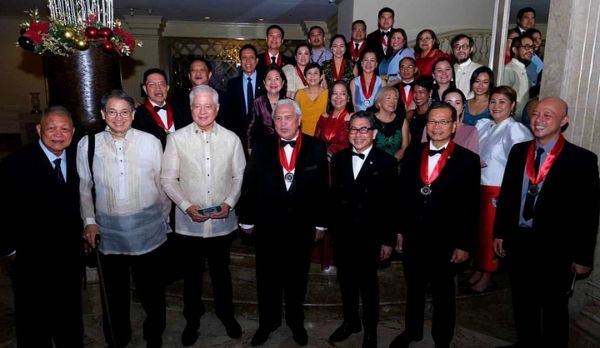
Courses on governance, economics, and leadership challenged his assumptions. He absorbed new theories but weighed them against lived experience — against nights in Camp Crame, trips to conflict zones, the smell of gun oil and fear. “The classroom taught frameworks; the Philippines had taught reality,” he would later reflect. “Combining the two, I began to see governance not as command and control, but as community and conscience.”
A Year of Healing and Rediscovery
For Raffy, Harvard was more than an academic pilgrimage; it was a season of healing. The years in government had left scars — disappointments with politics, betrayals by allies, exhaustion from endless firefights both literal and bureaucratic. In Cambridge’s quiet libraries, he found space to think again, to pray again, to breathe.
He often attended Mass at St. Paul’s Parish in Harvard Square, sometimes bringing his children. “It was there I realized that peace is not the absence of conflict,” he wrote to a friend. “It’s the presence of purpose.”

The family flourished in that year abroad. They did housework and homework together, explored museums, and walked the cobblestone streets of Boston. On weekends, they shared clam chowder and laughter at Quincy Market. “We rediscovered ourselves as a family,” he said. “It was the happiest year of our lives.”
He also forged friendships with professors who would become lifelong mentors. One of them, a former diplomat, once told him, “You have the heart of a soldier and the mind of a statesman. But remember — every statesman must learn to rest, or he becomes a machine.” Raffy took the advice to heart. For the first time in decades, he learned to be still without feeling unproductive.
For nearly a year, the Alunan family lived in a modest apartment. Gone were the flashing police lights, the stream of meetings, the adrenaline of crisis. In their place: shared breakfasts, walks to the park, long discussions over homework, quiet nights, and the gentle rhythm of a family rediscovering one another.
He would later describe this year as “the most idyllic of our lives.”

They traveled together, learned together, laughed together. He washed dishes with his children, carried groceries, shoveled snow, did the housework that fame or office often steals from a man. In the simplicity of these routines, he found a joy that no title could equal.
The man who once negotiated with rebels and commanded security forces now learned to navigate Boston winters, work an American washing machine, and attend school events as simply “Dad.”
The Republic had its turn.
Now, his family did.

The Global Lens
At the Kennedy School, Raffy Alunan was hardly a novice. His years navigating crisis management, national security, governance, and institutional reform had given him a lived understanding of statecraft that no textbook could fully capture. Yet he arrived with characteristic humility, fully aware that learning is a lifelong discipline and that leadership must constantly evolve.
In Cambridge, he immersed himself in subjects that spoke directly to the challenges he had grappled with back home — governance and public administration, national security strategy, development policy, institutional reform, crisis leadership, and the ethics of public office. Each lecture, each case study, and every spirited exchange with classmates from across the world reinforced a truth he had long sensed on the ground: the problems confronting the Philippines were not unique, but the moral courage required to confront them was indispensable.
His professors quickly recognized the depth he brought to the classroom. His peers gravitated toward him, drawn not by title but by the authority of someone who had lived on the frontlines of governance, who had seen how institutions break and how societies heal.

And beneath the academic rigor, something more profound was taking place within him. The year became a season of reawakening — an opportunity to step back, to see his country from a wider lens, to measure what had been done and what remained unfinished. It reframed his life’s mission, deepened his understanding of the nation’s vulnerabilities, and strengthened his resolve to return home not to withdraw but to serve with renewed clarity and purpose.
Commencement and Homecoming
In June 1997, Raffy Alunan walked across the stage at Harvard Yard to receive his master’s degree. The setting was iconic, but what mattered more was the sight of Elizabeth and their children in the audience, waving proudly as his name was called. For a man who had spent so many years away from home in the service of the nation, this moment — simple, unadorned, familial — held a quiet, incomparable weight.
When he returned to the Philippines, it was without the trappings of public office, without the security escorts or the relentless pressure of a cabinet post. What he carried instead was far more enduring: a sharpened moral compass, a clarified worldview, and a renewed sense of purpose. Harvard had given him distance — not to detach from the Philippines, but to see it more clearly. And in that clarity, he rediscovered the depth of his commitment to the country he had long served.

From this point forward, his service would assume new forms. He would lend his voice to national security advocacy, guide institutions through corporate governance, lead in the military reserve force, engage more deeply in civic life, and eventually, find another arena of stewardship in Rotary. The cabinet title was gone, yet in its place emerged something rarer: the authority that comes from a life tested by crisis, tempered by discipline, and examined with honesty.
Harvard did not transform him into a different man.
It allowed him to become more fully the man he was meant to be.
A Citizen at Large

Most people leave government and close the chapter with finality, drawing a line between what came before and what will come after. For Raffy, leaving the Cabinet was not an ending but an inflection point. He returned to a Philippines still wrestling with the same forces he had confronted in office — political frailty, institutional gaps, national security concerns, and the persistent need for moral leadership. The tools he would use were different now. But the mission, in its essence, remained unchanged.
When he stepped back into private life after Harvard, he carried no official authority, yet the gravitas of his experience followed him. Years of crisis management, institution-building, and dangerous negotiations had given him an unusual vantage point from which to understand national fragility. The Harvard year had only sharpened that lens. He came home with a deeper appreciation for interdependence, for the global currents affecting Philippine stability, and for the ways strong institutions could lift or undermine a nation.
In the corporate world, he entered an environment that required a different kind of discipline. He served on the boards of major companies: At Pepsi-Cola Products Philippines, Inc., he served first as Independent Director, later as Chairman of the Audit Committee, insisting that transparency and consumer responsibility were not slogans but standards. He joined Sun Life of Canada (Philippines), where he helped modernize compliance and ethics systems. He advised the Sangley Airport Infrastructure Group, advocating local innovation and environmental responsibility long before “green logistics” became fashionable.
His roles spanned industries that were, in different ways, tied to national stability — consumer goods, insurance, defense manufacturing, energy, and infrastructure — industries ranging from beverage manufacturing to insurance, energy, defense production, and transport infrastructure. He moved through these boardrooms with the steady, reflective presence of someone who had seen institutions under stress and understood their long-term stakes. Decisions were never merely operational for him. They were tied to national resilience, workforce dignity, and ethical stewardship. His training in governance and his experience in government informed his approach. He favored long arcs over short-term wins, and institutional strengthening over expediency.

But his post-Cabinet life did not revolve solely around corporate responsibilities. His interest in national security — shaped by early aspirations of military service, tempered during his DILG years, and refined at Harvard — continued to grow. He became increasingly involved in foreign relations and strategic studies.
As chairman of the Philippine Council for Foreign Relations, he became an interlocutor between diplomats, military leaders, business executives, and academics. He assessed geopolitical developments with a steady hand, emphasizing credible deterrence, rule of law, and the need for cohesive national direction. His membership in institutions devoted to defense and maritime security expanded his understanding of how the Philippines fit into an increasingly contested regional order.
His military involvement deepened as well. Holding the rank of Colonel in the Reserve Forces, he commanded infantry divisions and was welcomed by elite units of both the AFP and the PNP. His bond with the uniformed services was not symbolic. It reflected a genuine alignment of values — discipline, moral courage, and preparedness. For him, national defense was not merely about weapons and formations; it was about character, leadership, and institutional integrity. Strength, he believed, was not performative. It was built quietly, consistently, and with purpose.
In the civic sphere, his service expanded further. He worked with organizations that promoted democratic values, institutional reform, youth development, athletic discipline, ethical leadership, and the spirit of EDSA. His influence in these circles was not anchored in charisma but in the steadiness of his moral compass. He became a mentor to emerging leaders and a resource person to policymakers navigating difficult terrain. Journalists often sought him for his sober assessments; his commentary never sensationalized issues but dissected them with clarity, experience, and an eye toward institutional upliftment.

His involvement in the International Institute for Strategic Studies (IISS) and the Maritime League expanded his network and deepened his understanding of maritime security, critical technologies, and regional defense architecture.
He also found a voice as a public intellectual. Through essays and columns, he articulated a vision of the Philippines grounded in cohesion, discipline, and values-based governance. His coauthored book Silver Linings and his documentary “Tagaligtas” highlighted stories of service and resilience — narratives that reflected his belief that the nation’s strength lies not only in its institutions but in the character of its people. For him, the moral trajectory of a nation depended on its ability to cultivate virtues across sectors and generations.
Politics remained within his orbit, though he approached it differently now. Instead of seeking office, he founded a party list focused on good governance and national renewal. His political views were rooted less in partisanship than in his conviction that the country needed leaders grounded in integrity and accountability. He spoke not as a critic from the sidelines but as someone who had walked into crises and understood the price of fragility.
There was no retirement in the traditional sense. Instead, there was a widening of fields in which he could contribute. His schedule remained full: corporate meetings, national security forums, civic engagements, military activities, public lectures, and advisory roles. He carried no trappings of power, yet he moved within circles of influence by virtue of the reputation he had earned — measured, sober, disciplined, principled, and unafraid to speak the truth.

The most compelling figures navigate life with an internal gyroscope — a mechanism that stabilizes them regardless of external turbulence. In Raffy, that gyroscope was formed from a blend of family, faith, heritage, and experience. The boy from Bacolod, shaped by Christian Brothers, guided by his mother’s humility, and matured through the crucibles of governance and crisis, faced this new era with composure and clarity.
He also became President and Trustee of the Harvard Kennedy School Alumni Association of the Philippines, organizing forums that bridged technocrats and public servants.
His message was consistent: competence without conscience is chaos.
Raffy no longer held a Cabinet seat, but his relevance had grown broader. In the scattering of roles he took on — corporate steward, military colonel, educator, strategist, civic leader — one could trace a consistent through-line. Service, to him, was not confined to a position. It was a lifelong posture.

He had returned from Harvard not to rest but to resume the mission by other means. And in these years, his influence, though less public, became more enduring. Because the work was no longer tied to an office. It was tied to the man himself.
Indeed, great lives move in arcs rather than straight lines. The next arc of Raffy’s life would be less visible to the public, but no less significant. It was the period in which he transformed from a government official into a national resource — an adviser, strategist, thought leader, and custodian of institutional memory.
The Servant Among Soldiers
Though now a civilian, he remained active in the reserve forces of the Armed Forces of the Philippines. As Colonel of both the 131st and later 9th Infantry Division (Ready Reserve), he trained alongside younger officers who had grown up reading about him. He insisted on discipline, physical fitness, and moral example. “The uniform is borrowed authority,” he told them. “The moment you forget that, you become a bully instead of a protector.”

He was adopted by elite units — the PMA Marangal Class of 1974, the Special Action Force, the Special Forces Regiment (Airborne), and the First Scout Ranger Regiment — not for ceremonial reasons but because he lived their creed. His speeches before troops were simple yet stirring: “The fight for the Philippines is fought daily — in offices, in classrooms, in families. Keep your integrity clean; it’s the only armor that doesn’t rust.”
The Civic Visionary
Beyond the barracks and the boardroom, Raffy extended his reach into youth and sports development. As President of the Philippine Taekwondo Foundation, he championed martial discipline as moral formation. “Taekwondo teaches control — of body, of temper, of ego,” he said. “That’s the kind of defense every nation needs most.”
He served as Eminent Fellow of the Development Academy of the Philippines, Fellow of the Institute for Corporate Directors and Institute for Solidarity in Asia, organizations that trained thousands in ethical governance. To each new batch of executives, he delivered the same challenge: “Governance is character in operation. Systems will fail if the souls that run them are weak.”

In forums he could shift from economics to ethics with seamless logic. Asked once what single reform the Philippines most needed, he replied, “The reform of the Filipino conscience.” Silence followed — then applause.
Rotary, Faith, and the Final Mission
By 2023, Raffy had lived many lives: soldier, secretary, scholar, and citizen. Now, at seventy-five, he was called once more to serve — this time not by a President, but by the oldest Rotary club in Asia. The Rotary Club of Manila was entering its 105 year, and its members sought a leader of moral weight to steady its course. He had not campaigned for the office. In fact, he had tried to decline. But service has its own way of summoning those who have already served.
“I was content just to help quietly,” he would say later. “But Rotary is a family, and when family calls, you answer.”

The Unexpected Mandate
On July 6, 2023, beneath the chandeliers of the City of Dreams in Parañaque, Supreme Court Associate Justice Jose Midas Marquez administered his oath. The ballroom was filled with Rotarians in barong, their pins glinting like medals of faith. As he took the podium, Raffy Alunan looked out at the gathered faces and felt the old familiar mixture of duty and destiny.
“Service above self,” he said, “is not a slogan. It is an examination we take every day — and one we must keep passing even when no one is watching.”
He called for a culture anchored on unity, sincerity, cooperation, and collaboration — principles he had learned on battlefields and boardrooms alike. “Without them,” he warned, “any organization rots from within, no matter how grand its past.”

Storm Inside the Sanctuary
The year that followed would test those principles to the edge. Behind Rotary’s decorum lurked the same frailties he had encountered in government — ego, indifference, factionalism. He found himself presiding over disputes that seemed beneath men of their stature. “It pained me,” he admitted, “to see leaders forget that true elitism is measured by character, not comfort.”
He responded as he always had — with discipline tempered by empathy. He convened assemblies to air grievances openly, initiated a Health Check Survey to diagnose behavioral fault lines, and insisted that Rotary could not preach ethics without living them. When criticism came, he absorbed it silently. “Leadership,” he said, “is the art of keeping faith when others lose temper.”
Through the turbulence, he continued to celebrate what worked — the community projects, the mentorship of Rotaractors, the district awards that validated the club’s service. When District 3810 recognized RC Manila as Outstanding Club of the Year, he stood at the ceremony and smiled without bitterness. “The real elite,” he told his members, “are those who refuse to quit on each other.”

The Private Battle
Public figures are often remembered for their titles, decisions, and the crises they navigate. But the truest measure of a leader often resides not in how he performs under the lights, but in the life he builds when no one is watching. For Raffy, the most defining presence in that private realm was his wife, Elizabeth. Their marriage, built quietly and steadily over decades, formed the emotional ballast that allowed him to withstand the turbulence of public service.
Long before he became a Cabinet member, before the motorcades and crisis briefings and midnight calls, Raffy was a young man learning the contours of responsibility — not yet to a nation, but to a partner. Elizabeth entered his life not as a dramatic turning point but as a stabilizing force, someone whose gentleness softened the sharp edges of his discipline. She offered what few in public life ever find: an anchor that did not demand to be seen.
During his government years, the pressures were relentless. Crises do not adhere to office hours, nor do security briefings wait for family dinners to end. Raffy was often away — physically, mentally, emotionally — caught in the machinery of state, navigating threats that could not be deferred. While he served the Republic, Elizabeth served their home. She raised the children, managed the rhythms of daily life, and carried the unseen weight of worry that accompanies loving someone whose work inhabits danger.

It is easy to overlook this kind of labor because it is quiet. But the quietest influences are sometimes the most foundational. Behind the calm, steady posture Raffy showed the world was a partner who absorbed the anxieties he could not afford to display. She created the space where he could rest his defenses, where the world’s demands were momentarily suspended, where he was not a secretary or strategist or crisis manager, but simply a husband and father.
But life, in its unpredictable rhythm, would soon demand of him a courage different from the kind he had exercised in government. On March 13, 2024, Elizabeth passed away. Her loss marked a rupture in the narrative of his life — a point after which everything would be measured differently. For a man accustomed to confronting armed threats and political crises, grief was a battlefield without a map. There were no protocols for this kind of pain, no briefings to prepare him, no contingency plan to execute. The loss was intimate, irreversible, and profoundly human.
He returned to work because he had to, but he returned diminished, walking through familiar responsibilities with an unfamiliar hollowing in the chest. The country had taken much from him already — time, safety, peace of mind — but this was the price that cut deepest. Public service had always demanded sacrifice; what he did not foresee was that the cost would one day be measured in the currency of absence.
Yet Elizabeth’s influence did not end with her passing. Her memory became his compass. In the interviews and writings he would later share, a pattern emerged — not in statements of grief, but in the moral clarity he carried forward. The humility he showed, the discipline he practiced, the steadfastness he embodied were reflections of a man shaped not only by the crises he faced, but by the love that had steadied him. Her grace lived on in his restraint; her patience echoed in his deliberation; her quiet faith mirrored in the maturity of his convictions.

Their children, now grown, carried her warmth even as they inherited their father’s resolve. Family gatherings held a different timbre after 2005 — muted at times, but suffused with a tenderness that reflected their shared loss. Raffy learned to navigate a new landscape of fatherhood, one without the partner who had once held the center. But he did not retreat. He adapted, as he always had, drawing strength from faith, memory, and the knowledge that his wife’s legacy lived through the very family she had held together.
In the years that followed, he would take on roles across institutions — corporate, civic, military, diplomatic — yet those who knew him well could sense the quiet transformation. His service, always anchored in moral values, became even deeper, even more marked by a kind of inward stillness. It was as if grief had stripped away whatever remnants of vanity or ambition might have lingered, leaving only the essential: stewardship, duty, integrity, and the conviction that one’s life must mean something beyond self.
Elizabeth had been his sanctuary, and losing her forced him to build one within himself.
The public sees the statesman, the strategist, the soldier, the board director, the commentator.

But those who look closer — those who read the whole arc of his life — will see something more enduring: a man who learned to lead with discipline, but to live with grace; who confronted crises with courage, but faced love and loss with an even greater form of strength; who served his nation faithfully, while carrying within him the quiet legacy of the woman who helped build the man.
The Burden of Stewardship
In the months that followed, he threw himself into work with renewed purpose. He spoke often about unity, not as a slogan but as a discipline. He taught that sincerity is the bedrock of trust, that cooperation is the bridge between intent and impact, and that collaboration is how ordinary men achieve extraordinary things. His final addresses read like poems of faith:
“Uniting for a common purpose requires maturity and selflessness. It is in unity that we find the courage to face challenges, the compassion to support one another, and the wisdom to build a brighter future.”
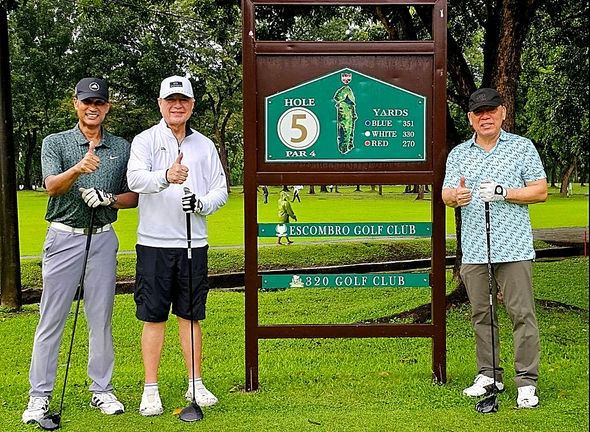
He refused to be embittered by conflict. Instead, he used it as parable. “True leaders,” he said, “don’t win arguments; they win people back.” When his term as President of the Rotary Club of Manila ended on June 30, 2024, he stood before his members for the last time. The Manila Polo Club Turf Room was hushed as he spoke, his voice measured but clear. He thanked those who had labored faithfully, acknowledged the errors that had wounded unity, and closed with grace: “A club is only as good as its members want it to be. May we always want it to be good.”
Then he added softly, almost to himself, “I dedicate this year to God, who kept me whole, and to Elizabeth, who waited for me without complaint.”
After stepping down, he announced a temporary disengagement from official duties. “I need to pick up the pieces of my shattered life,” he told friends honestly. He spent quiet months settling family matters, writing, and reconnecting with his children and grandchildren. He also returned to the forums that had long been his ministry — speaking on national security, ethics, and faith as the country faced new geopolitical storms.
He remained convinced that the Philippines could still fulfill its promise if its citizens learned to place “country above self.” He spoke of it not as slogan but as sacrifice. “To love the nation,” he said, “is to surrender our comfort for its growth. We are all stewards of a dream too precious to abandon.”

Love as Legacy
When Mother’s Day arrived in 2024, he published a heart-rending tribute titled “What is Love Like for Fifty-Five Years.” It was both eulogy and love letter. He recounted their courtship at Assumption and La Salle, their family life filled with humor and humility, and the years of caregiving that tested and transfigured him. He ended with these words:
“I’ll miss our walks, our Holy Week retreats, our shared music. I’ll now only imagine her in others, in the places we’ve been, in every corner of our home. Until we meet again somewhere in time.”
Readers wept; Rotarians shared the piece across social media; friends saw in it the final proof that strength and tenderness can coexist. “Even in loss,” one colleague said, “he was teaching us how to love well.”
The Continuing Call
Today, Raffy Alunan sits on corporate and civic boards, mentoring leaders who call him simply “Sir Raffy.” His days are quieter now, but his purpose remains unyielding. He still writes, still lectures, still prays for a country he has spent a lifetime trying to heal.
He often quotes his favorite passage from St. Paul (2 Timothy 4:7): “I have fought the good fight, I have finished the race, I have kept the faith.” To friends who ask what keeps him going, he answers without hesitation: “Because the race is not done. My generation must pass the torch brighter than we received it.”
When he speaks to young leaders, his voice remains steady, his eyes alight with the same resolve that once lit Malacañang’s crisis rooms. “Serve freely,” he tells them. “Don’t count the hours. Walk your talk. Live your values.”
And when he pauses, as he often does, he looks heavenward before adding softly:
“If I’ve learned anything in this life, it’s that service is love made visible. And love — real love — never ends.”
Epilogue: The Quiet Strength that Remains
In the end, the story of Rafael Moreno Alunan III is not the story of a man who sought greatness. It is the story of a man who sought goodness — and in doing so, became great.
He did not chase the spotlight. It found him only because he stood where duty required him to stand: in disaster zones, in conflict areas, in policy rooms where the fate of the Republic hung in the balance, in communities long abandoned by the state, in the quiet hours of caregiving, in the moral crossroads of public life. Wherever he was needed, he appeared not with fanfare but with fidelity.
Across the long sweep of his life, one principle held him steady: A Filipino must stand for the Philippines.
Not as slogan, not as posture, but as a lived truth.
He lived this truth through crises survived, reforms enacted, dangers faced, and values upheld. He lived it through friendships forged in service, through brothers-inarms who claimed him as one of their own, through the communities that trusted him with their stories, their fears, their hopes. He lived it through years of quiet work — writing, teaching, advising, serving — long after the stage lights of government had dimmed.
Most of all, he lived it through love.
Elizabeth had been his first home, the steady heart of his youth, the companion through every season of his journey. Her strength became his mirror. Her dignity softened him. Her suffering refined him. Her loss reshaped him. And in the silence that followed her passing, he came to understand service in its most intimate form: the courage to begin again when half one’s world is gone.
It was then, in grief’s long shadow, that he discovered a clearer, deeper mission — to speak not only as a former cabinet secretary or soldier, but as an elder of the Republic. To warn without bitterness. To teach without condescension. To uplift without illusion. To remind his countrymen that patriotism is neither grand nor abstract; it is the sum of daily acts rooted in integrity.
He served because he believed the Philippines could be better.
He served because he believed Filipinos deserved more.
He served because the alternative — apathy, cynicism, surrender — was unacceptable to a man who had seen how fragile freedom is. His legacy, therefore, is not simply the reforms he championed or the institutions he strengthened, but the conscience he carried into every corner of the nation. A conscience shaped by memory, disciplined by danger, deepened by loss, and tempered by faith.
In the closing chapters of his life, he stands not as a hero carved from marble but as something far more human and therefore more enduring — a man who did his best, who kept his word, who stayed the course even whenit cost him, who loved his country without condition, and who walked steadily toward the horizon with hope still in his hands.
The Republic he defended will continue to face storms — political, moral, economic, geopolitical. Yet it is stronger because men like him carried its weight for as long as they could.
And so the story ends not with a farewell, but with continuity.
For as long as the Philippines produces stewards who place country above self, as long as its young draw wisdom from those who served before them, as long as truth remains alive in those who choose principle over convenience — the flame he carried will continue to burn.
Quietly. Steadily. Faithfully.
A life examined becomes a life shared. A life shared becomes a legacy.
And a legacy rooted in service becomes a nation’s inheritance.
This is the gift he leaves behind.
A Philippines he never stopped believing in.
A mission he never stopped pursuing.
A devotion that outlived every title and outlasted every storm. In the heart of the Republic, his footsteps remain.

 Editorial
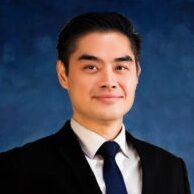
 Guest of Honor and Speaker’s Profile