

LIBERTY AND PROSPERITY | The Making of Chief Justice Artemio Villaseñor Panganiban Jr.

From a barefoot newsboy sleeping on the pavements of Sampaloc to a jurist whose judgment helped steady the Republic at its most perilous hour, the life of Artemio Villaseñor Panganiban Jr. unfolds as a dramatic study in endurance, conscience, and faith. Forged by poverty, sharpened by discipline, delayed by rejection, and ultimately entrusted with the nation’s highest judicial office, his journey is neither linear nor comfortable — but relentlessly purposeful. This is the story of a man who believed that law must do more than restrain power; it must protect liberty, nurture prosperity, and remain worthy of the people it serves — even when history demands decisions before dawn.
PROLOGUE: The Republic at Dawn
At dawn on January 20, 2001, the Philippines was no longer governed by certainty.
The night had ended, but the morning refused to arrive cleanly. Manila stirred under a low sky, its streets restless with rumor and anger. Barricades stood at Mendiola. Protesters clustered like unsettled weather. Somewhere between the palace and the people, authority had fractured.
Government, that great machinery of order, had stalled.
Inside this moment — before the oath, before the headlines, before history hardened into verdict — Artemio Villaseñor Panganiban Jr. prayed.

He was not a man drawn to drama. He did not court crisis or relish the spotlight of emergency. He had spent his life inside institutions, not outside them — believing, stubbornly, that constitutions mattered even when crowds did not.
But now the Constitution itself trembled.
Joseph Estrada was still, technically, President. Gloria Macapagal Arroyo was Vice President — unable to act while
legality remained unresolved. The military watched. The streets waited. A coup was imaginable. Bloodshed was possible. Silence was dangerous.
In the quiet hours before noon, Art reached a conclusion that would follow him for the rest of his life.
If the law waited, chaos would arrive first.

And so, at approximately 5:30 in the morning, he made a call — not as a politician, not as a strategist, but as a jurist confronting the edge of collapse. He called the Chief Justice and proposed something radical in its simplicity: swear her in.
Do it now. Do it lawfully. Do it before the Republic fractures beyond repair.
That call — invisible to the crowd, absent from photographs — would become one of the most consequential acts of judgment in modern Philippine history.
To understand how a man could make such a decision, one must return not to the Supreme Court, but to a sidewalk in Sampaloc — where a boy once learned that survival itself requires discipline, and that order, when absent, must be built by hand.
The Boy Who Slept on Pavement
Sampaloc did not produce future Chief Justices.
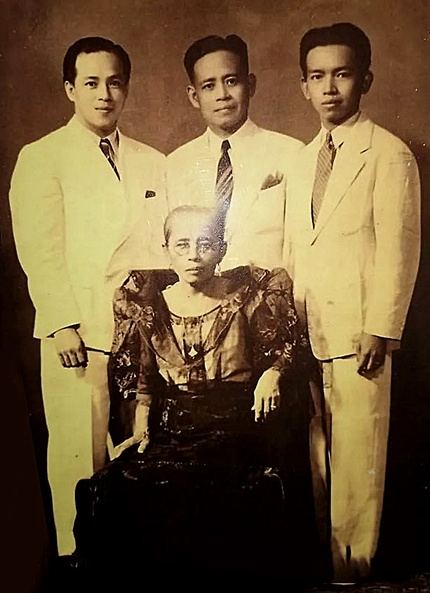
It produced workers. Survivors. Children who learned early that hunger was not an event but a condition.
In a cramped rented apartment on Cataluña Street, the youngest of four children grew up listening to adult conversations about money that never stretched far enough. His father, Artemio Sr., had left school early to support seven younger siblings after the death of his own father. His mother, Patricia Villaseñor, had little formal education but possessed the quiet endurance common to women who carry families through scarcity.
For the youngest son, childhood ended early.
He sold newspapers before dawn. He sold cigarettes during the day. He learned which streets produced buyers and which produced trouble. Some nights, it made no sense to go home. He slept on sidewalks — not from neglect, but from calculation. The papers arrived early. He needed to be there first.
Years later, he would recall those nights without sentimentality. He remembered the cold stone beneath his back. The envy he refused to indulge when he imagined classmates sleeping in beds. He remembered telling himself, again and again, that this was temporary — that discipline would outlast deprivation.
It was here, long before law books or Latin maxims, that Art learned his first philosophy: endure first, explain later.
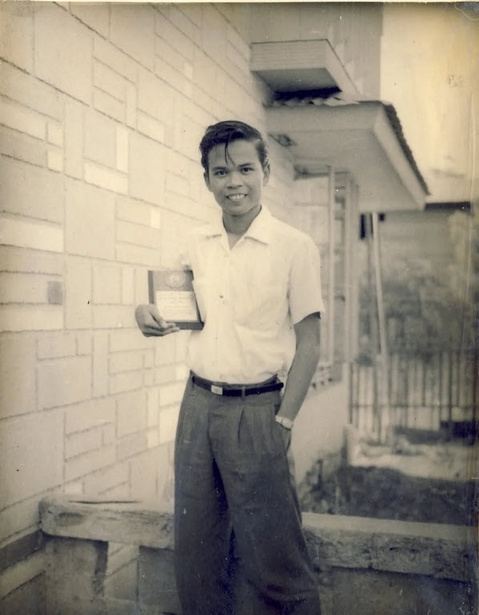
School became refuge. He studied not because teachers praised him, but because excellence was the only escape route he could see. He graduated with honors from public schools — Juan Luna Elementary, Victorino Mapa High — rising in crowded classrooms where obscurity was the default fate.
When he was accepted to the University of the Philippines on scholarship, it seemed that fate had finally cracked open.
Then came the bus fare. Fifteen centavos. That was the distance between Sampaloc and Diliman — between promise and possibility.
He never complained. He simply walked to Far Eastern University instead. FEU and the Construction of Ambition Far Eastern University was not his second choice. It became his proving ground. He walked into FEU carrying more than notebooks. He carried urgency. He studied as if time itself were rationed. He graduated summa cum laude in pre-law, cum laude in law, and in 1959 was named the Most Outstanding Student of the entire university.
Yet the transformation was not merely academic.
He entered FEU with almost no understanding of faith. Catholic by baptism, secular by upbringing, he once failed a scholarship interview because he could not name the persons of the Trinity. It would later become one of his favorite stories — told not for humor, but as testimony.

At FEU, faith arrived quietly.
A chaplain noticed the disciplined student. A priest invited him to Student Catholic Action. Another insisted that integrity was not enough — leadership required moral responsibility for others. Slowly, a boy raised without catechism began to read Scripture not as doctrine, but as instruction.
Leadership followed.
He became president of the FEU Central Student Organization — the youngest ever elected. He co-founded the National Union of Students of the Philippines, discovering that influence required listening as much as command. In student assemblies, he learned how ideals fracture under pressure — and how institutions survive compromise without surrender.
It was also here that he met Elenita Carpio.
She was thoughtful, precise, intellectually formidable. Where he was urgency, she was balance. Where he pushed, she measured. Their partnership would anchor him through decades of ambition and uncertainty.

But before life offered stability, it would test resolve.
The Bar Exam and the Discipline of Pain
In 1960, as bar candidates across the country arranged their schedules, sharpened their pencils, and rehearsed doctrines late into the night, Art lay flat on a hospital bed.
The timing could not have been worse.
The Philippine Bar Examination was not merely an academic hurdle; it was a rite of passage that determined whether years of sacrifice would harden into profession or dissolve into regret. For many, it was the most demanding intellectual trial of their young lives. For Art, it arrived when his body had begun to fail him.
Fever drained his strength. His head throbbed. His limbs felt heavy,

unresponsive. Doctors advised rest. Friends urged caution. The sensible choice — the rational choice — was withdrawal. There would be other years, they said. Better to recover fully than to risk collapse.
But withdrawal carried its own cost.
It meant postponement without guarantee. It meant prolonging dependency. It meant risking the erosion of momentum he had fought so hard to build. And, perhaps most painfully, it meant conceding that circumstance — not discipline — would dictate his limits.
Then his dean arrived. Jovito R. Salonga, himself already a figure of moral and intellectual authority, looked at the weakened young man and said words that would lodge permanently in Art’s memory:
“Do not quit.”
There was no lecture. No pep talk. Just conviction.

Salonga understood something essential about the student before him: that quitting now would wound him more deeply than any physical strain. That endurance, once surrendered, is difficult to reclaim.
So, Art rose from the hospital bed and entered the examination hall.
For four relentless weeks, he endured the bar examinations while ill. Each day demanded sustained concentration — hours of legal reasoning, careful writing, precision under pressure. The questions were unforgiving. The days were long. The nights offered little relief. His body weakened even as his mind was forced into sustained clarity.
It was an ordeal of balance: pushing hard enough to perform, but not so hard as to collapse. He finished not with exhilaration, but with exhaustion. When the results were released, his name appeared among the top ten — sixth overall, with a rating of 89.55 percent.
There was satisfaction, yes — but not celebration.
What marked the moment most deeply was not triumph, but confirmation. Proof that pressure did not fracture him. Proof that adversity, when met with discipline, could be absorbed rather than feared. Proof that he could endure without compromise.

It would become a defining trait — one that would surface again and again in courtrooms, committees, crises, and moments when retreat would have been easier than resolve.
Yet even as congratulations arrived and professional doors seemed poised to open, opportunity once again revealed its conditional nature.
A scholarship awaited him at Yale — a chance to pursue graduate legal studies at one of the world’s most storied institu-tions. It was the culmination of academic excellence, the validation of promise.
But validation did not pay for passage.
He applied for financial assistance. He sought a travel grant. He waited.
The answer came back: denied.

Without funds for airfare, the scholarship became an abstraction. The door closed — not dramatically, not cruelly, but decisively.
Years later, Art would say this was the moment when the world seemed to collapse around him.
He had done everything right. He had endured illness, excelled under pressure, earned distinction. And still, the horizon withdrew just as he approached it.
The disappointment was profound.
But it was not terminal.
In time, he would come to see this denial not as an ending, but as a redirection — one that forced him Rotary Club of Manila inward, toward mentorship instead of credentials; toward institution-building instead of personal advancement; toward a path that would ultimately carry him farther than Yale ever could.

The world had not closed.
It had simply asked him to enter through a different door.
The Mentor and the Moral Spine
The Yale scholarship that never materialized became, in retrospect, one of the most formative disappointments of Art’s life.
He had wanted it badly. Not for prestige — but for completion. He sensed, even then, that law was not merely a profession but a calling that demanded the sharpest tools available. Yale represented the pinnacle.
But money intervened, as it had before.

When the travel grant was denied, frustration gave way to something darker: the feeling that no matter how hard he worked, the ceiling might always descend just before he reached it.
It was at this juncture that Jovito R. Salonga stepped fully into his life — not merely as a former dean, but as a moral architect.
Salonga had walked the path Art dreamed of. He had studied at UP, Harvard, and Yale. He had absorbed not only legal technique but the ethical traditions of Western jurisprudence. When Yale became unreachable for his young protégé, Salonga made a quiet offer that would change everything:
If you cannot go to Yale, Yale will come to you.
At Salonga, Ordoñez and Associates, where Art apprenticed from 1961 to 1963, law was not practiced as transaction. It was practiced as responsibility. Cases were dissected for principle as much as outcome. Victory without integrity was considered failure. Political expediency was distrusted. Conscience mattered. Here,
Art learned something more valuable than advanced degrees: judgment.

Salonga introduced him to a lineage of Filipino legal giants — Jose W. Diokno, whose human rights advocacy would become legend; Claudio O. Teehankee, whose judicial courage would later define an era. These were not men who merely interpreted law. They embodied it.
Art absorbed their example with reverence. He learned that law divorced from morality becomes tyranny by another name. That judges must sometimes stand alone — and accept isolation as the cost of fidelity.
This apprenticeship forged his moral spine. When he left to establish his own firm in 1963 — PABLAW — he carried with him not only legal competence, but a philosophy: success must never outpace conscience.
Independence by Design
Art did not rush into government service.
Offers came early — invitations to become a judge, to join Malacañang as a technical assistant. He declined them all.

The reasons were not ideological. They were practical, even parental.
Public service did not pay enough to shield his family from the kind of insecurity he had known as a child. He was determined that his children would never sleep on pavements — metaphorical or otherwise.
So, he built independence first.
PABLAW grew steadily. He became a respected practicing lawyer, then a senior partner. Teaching followed — at Far Eastern University, Assumption Convent, San Sebastian College. His classrooms were demanding. He insisted on clarity, precision, and ethical reasoning. Law, he told students, was not about cleverness. It was about trust.
Beyond the courtroom and classroom, he ventured into business — not for opulence, but for autonomy.
He founded Baron Travel Corporation in 1967, then Arpan Tourism Industries Corporation in 1974. What began as pragmatic entrepreneurship evolved into leadership at scale. He would eventually lead the Philippine Society of Travel Agents, the Tourism Organization of the Philippines, and even the global American Society of Travel Agents, becoming the first Asian to chair it internationally.

This mattered.
By the time he reached his forties, Art had achieved something rare: freedom from political dependency. He owed no patron his livelihood. He could say no — and often did.
He also achieved something quieter but more enduring: the restoration of a childhood dream. The boy who once slept on sidewalks waiting for newspapers now ran travel companies that took him — and later his children — across the world. The Yale degree he never earned would, in time, be eclipsed by something more personal: five children who would graduate from Harvard, Stanford, Chicago, Michigan, and Berkeley.
Scarcity had been defeated — not by luck, but by architecture.
Faith Finds Its Voice
For many men of ambition, faith is an accessory — useful in ceremony, silent in decision.

For Art, faith arrived late — and then refused to stay quiet.
His early encounters at FEU had planted questions. Years of reading, listening, and reflection followed. But it was only in the mid-1980s, when he and his wife Elenita joined Bukas Loob sa Diyos (BLD), that faith ceased to be theoretical.
BLD demanded vulnerability. It asked professionals to pray aloud, to confess uncertainty, to submit ambition to discernment. It was not comfortable — which is precisely why it reshaped him.
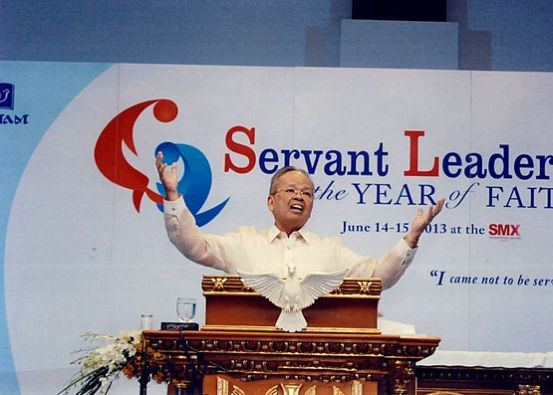
He became a servant leader. A marriage encounter facilitator. A speaker in Life in the Spirit seminars. He read Scripture not as metaphor but as instruction. Leadership, he began to believe, was not granted by election alone — it was discerned.
Faith soon pulled him into national service.
He became secretary of the Council of the Laity of the Philippines, a delegate to the Second Plenary Council of the Philippines, and later — improbably — the only Filipino appointed by Pope John Paul II to the Pontifical Council for the Laity.

The irony was not lost on him.
The boy who once could not name the Trinity now advised the Vatican on the life of the faithful.
Faith had not replaced law in his life. It had disciplined it.
Rotary, Earthquake, and the Test of Leadership
In 1990, Art found himself standing at the threshold of an institution older than the Republic he would one day help steady.
The Rotary Club of Manila — the first Rotary club in Asia and among the most influential civic organizations in the Philippines — was not merely a luncheon forum or a professional network. It was a proving ground for leadership, a gathering of Cabinet secretaries and jurists, captains of industry and ambassadors, physicians, educators, and public servants whose conversations often spilled beyond the ballroom and into the national bloodstream.

Its presidency was not sought. It was conferred.
Rotary tradition in Manila did not reward ambition. It elevated those who topped the open election for the Board of Directors, an arrangement that made the presidency both inevitable and inescapable. When Art emerged with the highest number of votes, the path ahead was clear — even if he did not wish to walk it.
His first instinct was refusal. The presidency demanded near-total commitment. Former presidents had taken leaves of absence from their professions to serve properly. Art, at the time, was deeply embedded in multiple worlds: a flourishing law practice, expanding business interests, a growing family, and an intense commitment to Bukas Loob sa Diyos (BLD), where he and his wife were entrusted with leadership roles that required spiritual, emotional, and logistical labor.
This was not a role that could be added casually to an already full life.
And so, he did what had become his reflex in moments of consequence: he prayed.
Not briefly. Not performatively. He entered a sustained process of discernment, gathering trusted companions, particularly within BLD, to pray with him — not for success, but for clarity. He asked not whether he could lead Rotary, but whether he should.

The answer that emerged shocked even him. When the time came to articulate his presidential vision, he announced a credo that stunned the Club:
LOVE GOD. SERVE MAN.
The reaction was immediate — and fierce.
Rotarians were aghast. Religion, they warned, had no place in a civic institution built on pluralism and neutrality. The credo was divisive. Unprecedented. Risky. Some feared it would alienate non-Christian members. Others worried it would reduce Rotary’s work to moral exhibitionism.
No one could recall a Rotary president anywhere who had framed his term so explicitly in theological language.
Art listened patiently. He explained calmly. He did not retreat.

He argued that Rotary’s foundational maxims — Service Above Self, He Profits Most Who Serves Best — were not merely civic slogans but moral truths, deeply consonant with the commandment to love one’s neighbor. His credo, he insisted, was not an imposition of belief but a clarification of purpose.
Faith, for him, was not sectarian. It was catalytic.
On July 12, 1990, he was inaugurated. He distributed a 76-page Program of Action, unprecedented in the Club’s history — detailing 178 projects, a calendar of execution, and a proposed budget of ₱90 million, an amount that dwarfed anything the Club had attempted before.
Skepticism followed him into the ballroom.
Then, four days later, the earth itself intervened.
On July 16, 1990, a 7.7-magnitude earthquake tore through Luzon, flattening communities, burying buildings, and killing more than two thousand people. Baguio lay in ruins. Panic spread faster than information. Suffering arrived before response.

At the next Rotary meeting, there was no prepared speech.
Art stood and made an appeal — not for ceremony, not for recognition, but for immediate action. He asked the Club to help the poor, the injured, the displaced — the least visible victims of a catastrophe too vast for any one institution to manage.
What followed stunned even him.
Within thirty minutes, pledges reached ₱5.5 million. By the next day, contributions exceeded expectations many times over. Doctors volunteered their services. Businessmen redirected resources. Rotary Anns mobilized clothing and food. A tent city rose in Burnham Park, sheltering hundreds of families.
Rotary clubs abroad responded as well. The Rotary Club of Waikiki organized a massive airlift — over 3,300 kilograms of relief goods flown in from Hawaii.
This was not charity as gesture.

It was compassion as mobilization.
Standing amid the whirlwind of response, Art understood something fundamental about leadership. Conviction, when aligned with compassion, could move institutions faster than policy, more decisively than procedure, and more enduringly than rhetoric.
His credo had been tested — not in theory, but in catastrophe.
And it had held.
For the first time, he allowed himself to believe that faith, when married to action, was not divisive at all.
It was transformative.

The Reckoning of a Year — and the Quiet Accumulation of Trust
When June 1991 arrived, Art did not speak of legacy. He spoke of accounting.
True to his nature, he refused to let the Rotary presidency dissolve into memory without measurement. At his valedictory meeting, he distributed a 94-page Final Report — a document unprecedented in the history of the Rotary Club of Manila. It was exhaustive, almost severe in its precision. Numbers were tallied. Projects itemized. Outcomes measured against promises.
Of the 178 projects pledged at the start of his term, 185 had been implemented. Of the ₱90 million budget once deemed unrealistic, nearly all had been responsibly deployed.
Committees had multiplied. Attendance had deepened. Service had expanded beyond rhetoric into reach.
But what mattered most was not arithmetic.
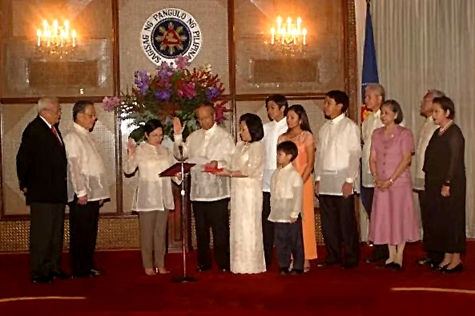
It was credibility.
For the first time in years, Manila Rotary was being spoken of not merely as influential, but as effective. Not merely prestigious, but purposeful. The Club had rediscovered its moral center without sacrificing its civic breadth.
Art did not claim credit.
Instead, he offered confession.
In his closing address, he described himself not as a successful leader, but as an unworthy servant, sustained not by talent alone but by grace. It was an unsettling posture for an audience accustomed to triumphal retrospectives. Yet it resonated. His humility did not diminish his authority — it clarified it.
Something had shifted.

Men who had once regarded him as a capable lawyer now saw him as a trusted steward. Business leaders observed how he balanced vision with discipline. Clergy took note of a layman who understood that faith, to be credible, must translate into service. Public officials — watchful, pragmatic — recognized in him a rare combination: decisiveness without arrogance, conviction without cruelty.
He had passed a test few recognized at the time.
Not of popularity, but of governance.
From Civic Leadership to National Visibility
In the years that followed, Art did not announce ambition.
He returned quietly to his law practice, his businesses, his writing, his work in Catholic lay movements. Yet invitations began arriving — first sporadically, then persistently. He was asked to chair awards committees, to mediate disputes, to speak on governance, ethics, and the rule of law.

He became Chief Legal Counsel of the Parish Pastoral Council for Responsible Voting (PPCRV) — a role that placed him near the moral fault lines of Philippine democracy. He advised without theatrics. He guarded credibility as fiercely as outcomes.
During elections, when passions flared and accusations multiplied, he insisted on process. When activists demanded instant righteousness, he cautioned patience.
When institutions faltered, he argued not for replacement — but for reform.
This was not the language of partisanship.
It was the language of institutional preservation.
Presidents noticed.

The Call from Malacañang — and the First Refusal
By 1992, the country stood again at a turning point. A new administration was taking shape. The wounds of authoritarianism had not fully healed; democratic institutions remained fragile, distrusted, incomplete.
President-elect Fidel V. Ramos summoned Art for a private meeting.
The offer was direct: Secretary of Justice.
It was the kind of appointment that would have thrilled many. For Art, it triggered caution. He had not campaigned. He had not sought office. More importantly, he sensed that politics — even in reformist guise — would exact a cost his family and conscience might not be prepared to pay.
He declined.

Ramos pressed him. Not with flattery, but with reasoning. He spoke of trust. Of observed competence. Of Rotary. Of PPCRV. Of a country that needed steady hands more than loud voices. Still, Art hesitated.
Then came the alternative.
“If not the Cabinet,” Ramos said, “then the Supreme Court.”
It was not a consolation prize.
It was a summons.
Seven Rejections
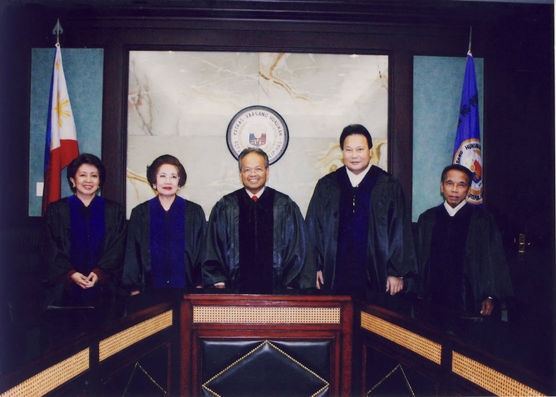
By the early 1990s, Art had done everything one was supposed to do before entering public service.
He had built professional independence. He had raised his children into academic excellence. He had led civic institutions without scandal. He had deepened his faith into discipline. When the call to serve finally came, it did not come gently.
It came with rejection.
From 1992 to 1995, vacancies opened repeatedly in the Supreme Court. Each time, Art’s name was submitted to the Judicial and Bar Council. Each time, it was scrutinized. Each time, it was questioned. And each time, it was passed over.
Seven times.
Objections arose from the past — some vague, some petty, some resurrected from decades-old client dissatisfaction. A former case was reexamined. An old grievance was amplified. Others were deemed “more qualified,” usually because they had climbed the judicial hierarchy instead of practicing law.

Each rejection landed heavily.
Art was not naïve. He understood institutional caution. But the cumulative effect was corrosive. Each screening became a public exposure. Each delay, a whisper of doubt. Each rejection, a silent question: Was this calling real—or self-invented?
At night, he prayed with increasing urgency.
“How long, O Lord?” “Why humiliation if the path is Yours?” “Why surrender ambition only to be tested again?”
The law had taught him patience. Faith demanded more.
In January 1995, after the seventh rejection, something broke — and something else was born. He surrendered completely.

He prayed not for appointment, but for removal of desire.
“Take all that I am,” he offered. “My career. My ambition. My will.” “Do what You want.”
For the first time in years, he stopped hoping.
Ask. Seek. Knock.
In July 1995, when Art had finally convinced himself that the chapter was closed, the past returned quietly—almost apologetically.
A friend from the Supreme Court approached him without ceremony, without persuasion, without the urgency that usually accompanies opportunity. It was said almost in passing, as if testing the air.

“Why don’t you try again?” the justice asked.
“There won’t be another vacancy for years.”
The words were simple. The effect was not.
Art dismissed the suggestion almost immediately. He had already surrendered. Months earlier, after seven humiliating rejections by the Judicial and Bar Council, he had made peace with what he believed was God’s answer. He had prayed not for appointment, but for detachment. He had offered up the ambition itself, believing that obedience meant letting go.
To hope again felt like disobedience.
To apply again felt like pride disguised as perseverance.

And yet — the words lingered.
They followed him home. They surfaced in the quiet between conversations. They returned in moments of stillness, unwelcome and unresolved. He could not tell whether they were temptation or invitation.
On the night of July 29, 1995, sleep refused him.
Past midnight, he lay awake, staring into the darkness, rehearsing the same question over and over—not aloud, but with the intensity of a cross-examination.
Was he clinging to ambition?
Or resisting obedience?

He rose and prayed. Not briefly. Not casually. For hours.
He did not ask to be appointed. He did not ask to be vindicated. He asked only for clarity—for the grace to know whether persistence would be faithfulness or defiance. He told God that he had already surrendered the dream. Why, then, would it not leave him alone?
Near dawn, exhausted, unanswered, he slept.
The following morning, Sunday, he served as a Special Minister of Holy Communion, as he had done many times before. The ritual was familiar. The church was quiet. His role was routine.
Then the Gospel was read.
From Luke:

Ask and you shall receive. Seek and you shall find. Knock and the door shall be opened to you.
The effect was immediate and physical. His skin prickled. Cold sweat gathered at his temples. Gooseflesh rose along his arms. The words did not sound ancient; they sounded personal—uncomfortably so.
He whispered inwardly, almost in protest:
“My Lord, is this meant for me?”
But discipline had taught him caution. He had spent too many years in law to trust first impressions, even spiritual ones. He feared mistaking desire for discernment.
That day, he prayed again.

“If this is truly Your will,” he asked quietly, “give me another sign. One more. I do not want to be deceived by my own longing.”
One week later, in the same church, with the same priest, the Gospel was read again—this time the account of the Transfiguration.
A cloud came and overshadowed them… and a voice said: This is my Son, my Chosen One. Listen to Him.
Listen.
The word struck him harder than the first reading.
Not ask. Not seek. Not knock.

Listen.
In that single command, the conflict resolved itself. Listening did not mean ambition. It meant obedience. It meant acting not because he wanted to rise, but because he was being called to respond.
That was enough.
He submitted his name to the Judicial and Bar Council once more.
The resistance returned immediately.
At one meeting, there was a concerted effort to strike his name from the list. Old objections resurfaced. Familiar skepticism hardened. The vote came dangerously close.

Only one member intervened.
“Let us defer this,” the member said. “We are meeting again next week.”
It was a procedural delay. Nothing more.
Two days later, the same member spoke to him privately.
“Unless something extraordinary happens,” he said plainly, “you will be removed next week.”
Unless a miracle happens.

Art did not panic.
He prayed — not defensively, not anxiously, but defiantly in faith. He had reached a strange calm. He no longer argued his merits. He no longer rehearsed rebuttals. He rested entirely on a conviction that had crystallized within him:
Human forces, however exalted, could not override divine will.
At the next meeting, something inexplicable occurred.
No one objected. The accusations did not resurface. The arguments did not return. The opposition did not speak. Silence filled the room.
For the first time in three years, his name survived the screening.

There was no applause. No announcement. No sense of triumph.
Only a quiet, unmistakable knowing.
The miracle had arrived — not with thunder, but with stillness.
And the door, at last, had opened.
The Bench
In October 1995, President Fidel V. Ramos appointed Artemio Panganiban Jr. as Associate Justice of the Supreme Court.

When Ramos later asked him how he had finally passed the Judicial and Bar Council, Art answered without irony:
“I did not do it. The Lord did.”
The bench changed him — and revealed him.
He wrote relentlessly. Opinions poured from his chambers. Decisions were not merely rendered; they were reasoned.
Colleagues soon noticed the pattern: clarity without arrogance, firmness without cruelty.
Justice Antonio Carpio would later call him “the most prolific writer of the Court.”
More than a thousand decisions bore his name.
He chaired divisions. Led reform committees. Wrote books — one each year — as if compelled to account for his stewardship. His judicial philosophy crystallized into a simple, audacious premise: The judiciary must protect liberty and nurture prosperity.
Law, he argued, was not merely restraint. It was enablement. Predictable justice encouraged economic growth. Fair courts strengthened democracy. Liberty without order was chaos; order without liberty was tyranny.
Then history intruded.
EDSA, Judgment at Dawn
January 2001 was not a legal puzzle to be solved by precedent or procedure.

It was a moral emergency, unfolding faster than doctrine could keep pace.
The streets had already rendered their verdict. President Joseph Estrada had lost the confidence of the people—his authority eroded not by court ruling, but by public withdrawal. Protesters massed at EDSA. Barricades hardened around Mendiola. The chants grew louder, angrier, less patient. Yet in the cold language of law, he remained President.
On the other side stood Vice President Gloria Macapagal Arroyo — endowed with moral authority, buoyed by popular support, but still tethered by constitutional constraint. She could not act without risking illegitimacy. The Constitution, designed to ensure order, now threatened paralysis.
The military hesitated. Each hour of delay increased the danger of miscalculation. A coup — open or disguised — was no longer unthinkable. Government machinery faltered. Authority fractured. The Republic stood exposed, suspended between legality and collapse.
From within the Supreme Court, Art watched the situation darken.
He saw the abyss clearly—not as abstraction, but as consequence. He imagined what hesitation could unleash: violence at the barricades, bloodshed justified by confusion, the Constitution rendered irrelevant by force. He understood that once order dissolved, no court ruling could restore it intact.

He feared violence more than controversy.
He feared constitutional collapse more than personal criticism.
And so, he did what he had trained himself to do his entire life: he withdrew from noise and turned inward — to reflection, to prayer, to judgment.
In the quiet hours before dawn on January 20, he reached a conclusion that would mark him permanently. The Constitution, he believed, had to be saved from annihilation by inaction. If the law could not move forward decisively, it would be overtaken by events beyond its control.
There was only one path left.
He placed the call to Chief Justice Hilario Davide Jr.

His words were direct. Unembellished. Grave.
Swear her in.
Davide listened.
The proposal was extraordinary — not because it was illegal, but because it was unprecedented. It carried risk. It invited criticism. It would be misunderstood. But it offered one essential thing: continuity of constitutional order without resort to force.
By noon, before uncertainty could metastasize into violence, Gloria Macapagal Arroyo took the oath of office.
The immediate crisis passed. The Republic held.

But the argument did not.
The decision would divide opinion for decades. Scholars would debate it. Politicians would weaponize it. Critics would accuse the Court of intervention; defenders would call it constitutional rescue. History would refuse easy consensus.
When the legality of Arroyo’s presidency later reached the Supreme Court, Art did what his conscience and integrity required: he recused himself. So did Davide. The Court deliberated without them.
The result was unequivocal. Thirteen justices voted unanimously to uphold Arroyo’s ascension to the presidency, and later to deny with finality Estrada’s motion for reconsideration.
The Court spoke. History continued to argue. Art did not. He had not acted to seize power. He had not acted to choose a president. He had acted, as he understood it, to preserve order when order was about to fail.
In moments like that, he believed, a jurist is not judged by popularity or applause — but by whether, when the Constitution trembles, he chooses courage over comfort and responsibility over silence.

Chief Justice
On December 20, 2005, Artemio Villaseñor Panganiban Jr. ascended to the highest judicial office in the land as Chief Justice of the Philippines.
There was no campaign trail behind him. No whispered lobbying. No calculated pilgrimage to political powerbrokers. He had not even sought an audience with the President who would appoint him. His elevation was not the result of orchestration, but of culmination — an acknowledgment, belated yet unmistakable, of a jurist whose life had already been spent in preparation.
For Art, the Chief Justiceship was not a coronation. It was a burden.
He entered the office without triumphalism, keenly aware that the authority of the Supreme Court does not rest in robes or titles, but in public trust — fragile, conditional, easily lost. He presided not as a conqueror of the institution, but as its custodian, conscious that he was merely holding the Court in trust for those who would come after him.
From the outset, he framed his leadership around restraint and reform. He championed judicial modernization, transparency, and ethical accountability — not through grand pronouncements, but through steady institutional discipline. Independence of the judiciary, he believed, was not something to be declared loudly; it was something to be practiced quietly, day after day, decision after decision, even when it proved inconvenient or unpopular.

Criticism came readily, as it always does to those who stand at the summit of power. He met it without retaliation. He neither belittled dissent nor weaponized authority. In an era where power was often confused with invulnerability, Art insisted on something rarer: intellectual humility.
That humility was tested publicly in 2006, after Congress abolished the death penalty. Reflecting on the now-historical case of Leo Echegaray, whose execution in 1999 he had affirmed as an Associate Justice, Art spoke with candor that unsettled many. He suggested that the Court may have committed a judicial error — that not all qualifying circumstances required for the ultimate penalty had been conclusively established.
He did not raise the issue to provoke outrage or to rewrite history. He raised it to confront moral consequence.
The reaction was swift. Death-penalty advocates bristled. Critics accused him of undermining the Court’s authority. Others worried that such admissions might weaken public confidence in the judiciary.
Art listened.
Then he clarified — calmly, precisely, without defensiveness. His remarks, he explained, reflected his personal conscience, not an institutional pronouncement. Courts speak collectively through decisions; individuals, even Chief Justices, remain accountable to their own moral reckoning.

It was a subtle but profound distinction.
In making it, he articulated one of his deepest convictions: that truth is not diminished by humility, and that the judiciary is not weakened when its leaders acknowledge fallibility. On the contrary, he believed that moral honesty — especially when voiced without compulsion — strengthens the legitimacy of institutions far more than rigid silence ever could.
For Art, the law was not a fortress designed to conceal doubt. It was a living structure, sustained by integrity, reflection, and the courage to confront uncomfortable truths.
That, more than any title he would ever hold, defined his tenure as Chief Justice.
Retirement Without Retreat
When Art stepped down from the Supreme Court in December 2006, there was no sense of disappearance.

He did not retreat into silence. He did not retreat into comfort. He did not retreat at all.
The robe came off, but the vocation did not.
Retirement, for him, was not an ending but a repositioning — a shift from judgment rendered behind closed doors to judgment articulated in the open forum of public discourse. He had spent more than a decade shaping jurisprudence through decisions. Now he would shape civic conscience through words.
In February 2007, he began writing a weekly column for the Philippine Daily Inquirer titled “With Due Respect.”
The title was not accidental.
It reflected both tone and posture: firm but civil, critical but disciplined, grounded in law yet attentive to human consequence. He wrote not as a partisan, nor as a scold, but as a former Chief Justice who understood how easily institutions could be weakened — and how slowly they were rebuilt.

Each Monday, readers encountered a familiar voice: measured, precise, occasionally stern, often pastoral. He wrote about governance, corruption, constitutional limits, judicial independence, moral leadership. He wrote as someone who had seen power from the inside and understood how thin its moral margins could be.
It did not take long for the column to find its audience.
Law students dissected it. Policymakers bristled at it. Judges quietly admired its restraint. Ordinary readers trusted it because it did not shout.
In time, the columns were gathered into books — With Due Respect, With Due Respect 2, With Due Respect 3 — each volume a ledger of civic conscience, each page insisting that democracy survives not on passion alone, but on restraint.
Even in retirement, Art remained accountable — to history, to faith, to the discipline of thought.
The Elder Statesman

Age did not soften Art into ceremonial irrelevance. It sharpened him.
He became a sought-after independent director, adviser, trustee, and chairman — not because of prestige, but because of trust. Corporations and institutions did not ask him to decorate their boards; they asked him to steady them.
He sat at tables where decisions affected power grids, energy policy, banking stability, telecommunications infrastructure, mass media, ports, hospitals, food systems, and national investment. He chaired audit committees, risk oversight bodies, governance panels. He insisted on process. He insisted on independence.
When asked why he continued to accept such roles long after he could have rested, his answer was consistent: Institutions matter. And institutions require guardians.
Beyond corporate governance, he returned again and again to foundations — the quieter arenas of nation-building. He led and advised organizations devoted to liberty, prosperity, judicial education, dispute resolution, the Church, and civic formation.
In 2017, he was appointed Chairman of the Philippine National Group to the Permanent Court of Arbitration in The Hague, a role that carried international consequence and symbolic weight. It was fitting: the former Chief Justice, once denied Yale for lack of fare, now represented his country in one of the world’s most venerable legal institutions.

Recognition followed — but he never chased it.
When he received the “Journalist of the Year – Law” award in 2023 from the Manila Overseas Press Club — the first such award in its long history — he accepted it not as validation, but as responsibility. When he was honored by the Bantayog ng mga Bayani as a Haligi ng Bantayog, he stood among figures associated with resistance, integrity, and moral courage. He understood the symbolism — and the burden.
And when the Church conferred upon him the papal award Pro Ecclesia et Pontifice, he received it not as culmination, but as confirmation: that a faith discovered late could still be lived fully.
EPILOGUE: The Judgment That Endures
In the quiet accounting of a life, titles eventually fall away.
Chief Justice. Associate Justice. President. Chairman. Columnist.

What remains is judgment — not the kind rendered from a bench, but the kind history renders over time.
Art was not born into advantage. He was born into necessity. His childhood taught him endurance before it taught him law. His poverty taught him discipline before it taught him ambition. His faith arrived not as inheritance, but as discovery — earned slowly, tested often, and embraced finally with conviction.
He learned early that institutions are fragile — that law must be defended not only from enemies, but from apathy; that democracy is not self-sustaining; that liberty decays without stewardship; that prosperity falters without fairness.
When the Republic trembled, he chose order over applause.
When ambition tempted, he chose patience.
When faith demanded obedience, he answered — even when the cost was delay, humiliation, or doubt.
He once wrote that he held office by God’s grace — and he meant it not as piety, but as accountability. Power, in his worldview, was never owned. It was borrowed.
Now, as age confers perspective rather than limitation, he stands as a reminder of something increasingly rare: that leadership can be both principled and effective; that judgment can be both firm and humane; that faith and reason, properly disciplined, do not compete — they converge.
From the pavements of Sampaloc to the halls of the Supreme Court, from silence to authorship, from judgment rendered to judgment reflected upon, his life traces a single, unwavering arc:
Liberty must be protected. Prosperity must be nurtured. And the law, above all, must be worthy of the people it governs.
When future generations ask what steadied the Republic in moments of peril, they will not find the answer in slogans or speeches. They will find it in men who chose restraint over power, conscience over convenience, and judgment over noise.
They will find it in the life of Artemio Villaseñor Panganiban Jr.

 Editorial
 Guest of Honor and Speaker