

A Gathering of Diplomacy, Service, and National Reflection at the Rotary Club of Manila
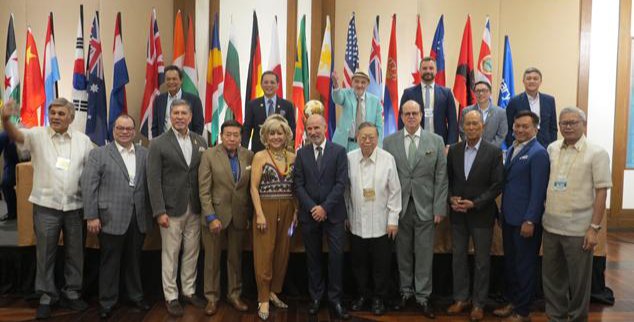
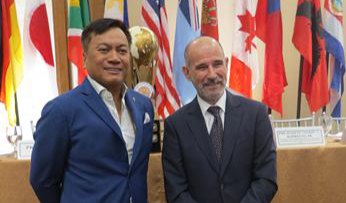
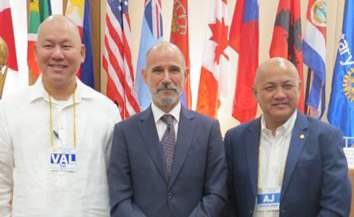
Spanish Ambassador Miguel Utray Delgado received the Rotary Club of Manila Outstanding Ambassador Award for 2026 at the club’s 31st Weekly Membership Meeting.
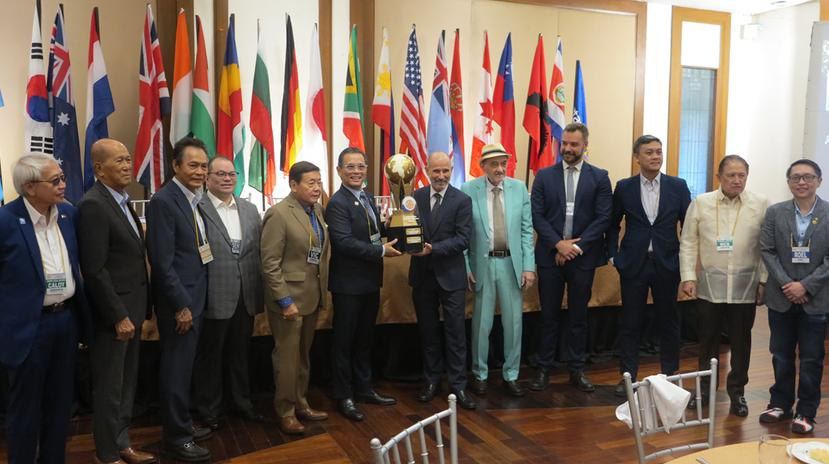
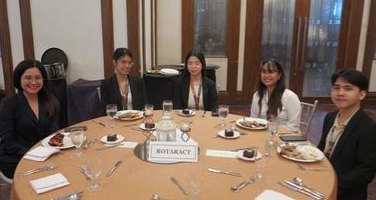
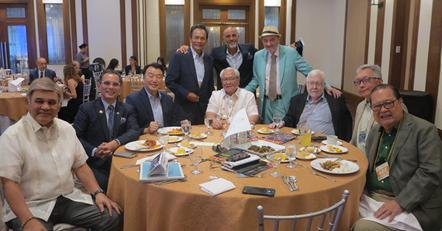
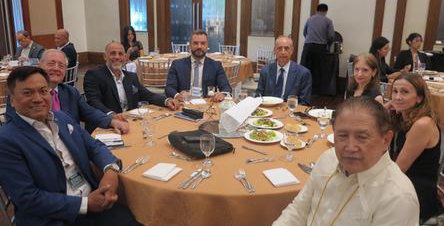
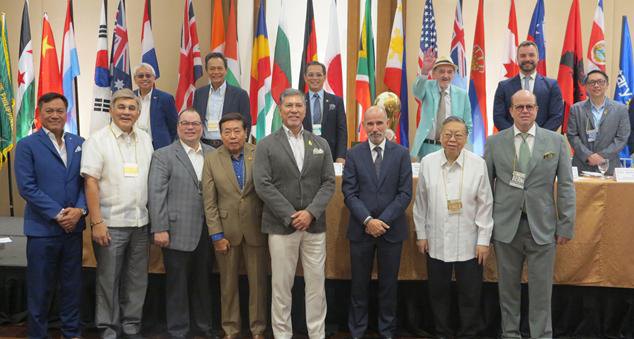
ON a warm Thursday afternoon at the historic Manila Polo Club, the Rotary Club of Manila convened its 31st Weekly Membership Meeting for Rotary Year 2025–2026, bringing together diplomats, civic leaders, business figures, Rotarians, and distinguished guests for what would become a meaningful convergence of public service, international friendship, and national reflection.
Moderated by Director-Elect Carlos G. “Caloy” Serapio, the gathering unfolded with the familiar dignity and fellowship that have long characterized the country’s oldest Rotary club. Yet beneath the formal cadence of ceremony and protocol was an unmistakable undercurrent of transition and uncertainty.
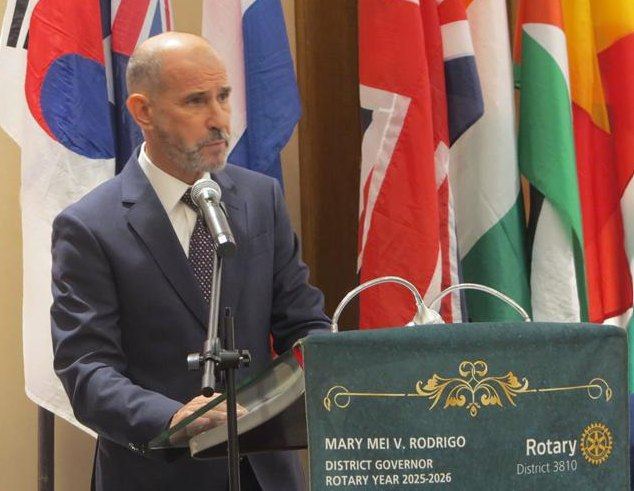
The afternoon’s scheduled Guest of Honor and Speaker, Mr. Emmanuel Sto. Domingo “Manny” Lopez, Lead Convenor of the People’s Constitutional Reform Initiative (PCRI), was unable to attend due to unforeseen circumstances. In many events, such an absence might have left an irreparable vacuum. But on this occasion, the gathering found an unexpected center of gravity in another voice entirely: that of Spanish Ambassador Miguel Utray Delgado, whose acceptance speech upon receiving the Rotary Club of Manila Outstanding Ambassador Award for 2026 transformed the luncheon meeting into something deeper than a routine recognition ceremony. It became, instead, a meditation on diplomacy, history, cultural memory, and the enduring ties between nations.
Fellowship Beneath the Chandeliers

The Manila Polo Club once again served as more than a venue. It became a stage upon which tradition and continuity quietly unfolded.
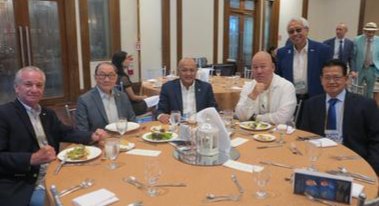
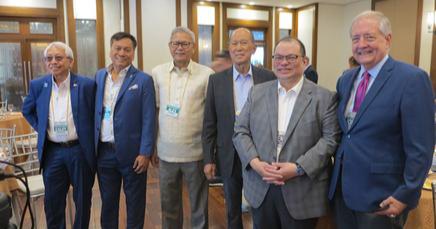
Guests arrived before noon, exchanging greetings over lunch as members of the Rotary Club of Manila gathered beneath the familiar atmosphere of old Manila elegance. At precisely 12:30 in the afternoon, President Atty. Raoul C. Creencia called the meeting to order. What followed was a sequence both ceremonial and deeply communal: the invocation led by VPE Karlo Eugene Josef M. “Karlo” Castro, the Philippine National Anthem presented through audio-visual presentation, the Rotary Club of Manila Hymn rendered by the RCM WF Music Chorale, and the recitation of The Four-Way Test led by Rotarian Rowel Janson S. Ong. Director-Elect Caloy Serapio acknowledged the distinguished guests in attendance, among them diplomats, past district governors, senior Rotarians, civic leaders, and members of the diplomatic corps.

The chorale then filled the hall with a welcome song that softened the formalities of the afternoon and reminded everyone that Rotary, for all its structure and stature, remains fundamentally about fellowship. The birthday celebrants for the month of May were likewise recognized in the spirit of camaraderie that has long defined the club’s weekly meetings. The gathering paused briefly from matters of diplomacy and governance to honor the ordinary yet meaningful rhythms of life: birthdays, friendships, shared laughter, and songs rendered in good cheer.
President’s Time and the Spirit of Recognition
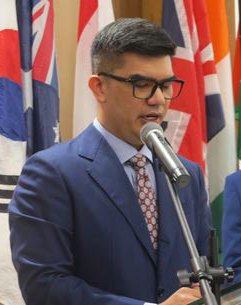
During President’s Time, President Raoul Creencia addressed the assembly with the composed confidence of a leader presiding over one of the Rotary Club of Manila’s final meetings for the Rotary year. There was an unmistakable sense that the club stood at the threshold of transition, preparing to hand stewardship to a new administration while continuing to affirm the values that have guided it for more than a century.
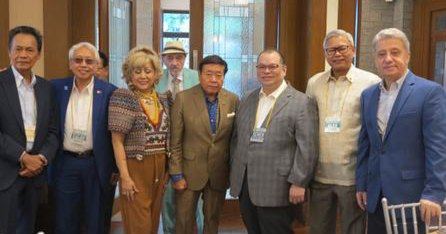
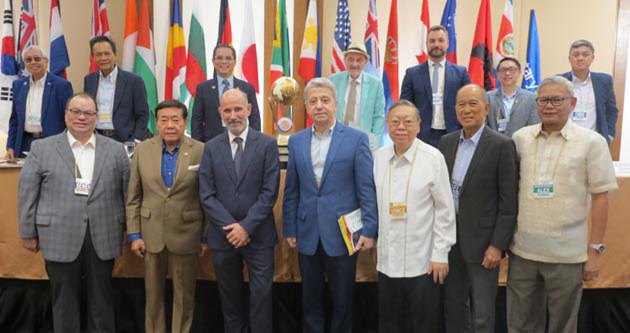
The afternoon’s central recognition soon followed. Rotarian Daniel C. “Dan” Obradó formally introduced the recipient of the Rotary Club of Manila Outstanding Ambassador Award for 2026, Spanish Ambassador Miguel Utray Delgado. The award itself was presented by President Raoul Creencia alongside Past District Governor Joaquin “Jackie” C. Rodriguez Sr., Chairman of the Rotary Club of Manila Ambassador of the Year Committee.
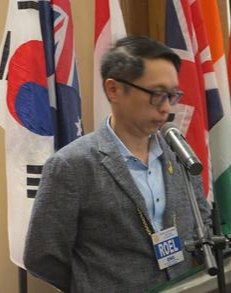
The atmosphere inside the hall shifted noticeably as Ambassador Delgado approached the podium. What might have been expected to be a standard diplomatic acceptance speech instead unfolded into an expansive reflection on Philippine-Spanish relations, global tensions, cultural memory, and the profound human dimension of diplomacy.
Ambassador Miguel Utray Delgado and the Meaning of Diplomacy

Ambassador Miguel Utray Delgado began not with politics or policy, but with gratitude. Addressing President Raoul Creencia, General Delfin Lorenzana, Past District Governor Jackie Rodriguez, Vice President-Elect Karlo Castro, Honorary Consul Issam Eldebs, Past District Governor Vince Carlos, Daniel Obradó, Ambassador Victor “Vic” Garcia, Ambassador Senen Mangalile, and the distinguished guests present, the Spanish envoy greeted the audience warmly: “Queridos amigos. Magandang hapon sa inyong lahat.” It was a small gesture, but one that immediately framed the tone of the speech. This would not merely be the remarks of a diplomat discharging protocol. It would be the reflections of a man who had come to regard the Philippines not as a distant assignment, but as a place deeply intertwined with his own personal and professional journey.
Receiving the Outstanding Ambassador Award, Ambassador Delgado described the recognition as among the fondest memories of his diplomatic career. He spoke with visible sincerity about his nearly four years in the Philippines, describing the posting as one of the most interesting and fruitful periods of his life. But what distinguished the speech was not merely its warmth. It was its unusual depth. Rather than offering broad platitudes, the ambassador spoke candidly about the extraordinary transformation he had witnessed in the Philippines during his tenure. He praised not only the country’s development, but more importantly, the resilience of its people. In an increasingly unstable world marked by geopolitical conflict, economic volatility, and social uncertainty, he expressed confidence that the Filipino people possessed the capacity to overcome whatever challenges lay ahead.

The speech gradually widened from personal reflection into geopolitical discourse. Ambassador Delgado underscored the exceptionally strong state of relations between Spain and the Philippines, noting that the two nations would soon commemorate the 80th anniversary of formal diplomatic relations. Yet he reminded the audience that the connection between both countries stretches back far beyond modern diplomacy. Nearly five centuries of shared history continue to echo through language, culture, faith, architecture, cuisine, law, and collective memory. Far from dwelling nostalgically on the past, however, Delgado emphasized how this shared history has evolved into a modern partnership grounded in mutual respect and common principles.
He spoke of political dialogue between Spain and the Philippines not merely in bilateral terms, but within the larger framework of global stability. He cited shared commitments to international law, rules-based order, peaceful resolution of disputes, and the defense of democratic principles at a time when conflicts in the Middle East, Ukraine, and other regions threaten global equilibrium. Particularly striking was his unequivocal expression of support regarding Philippine concerns in the West Philippine Sea. Spain, he affirmed, together with the European Union, supports a free and open Indo-Pacific governed by international law and anchored upon the 1982 United Nations Convention on the Law of the Sea (UNCLOS). His remarks drew particular attention from the audience, coming at a time when maritime tensions remain among the region’s most pressing geopolitical concerns.
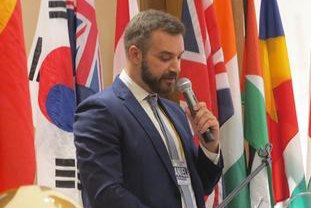
The ambassador also announced Spain’s support for the Philippines’ candidacy as a non-permanent member of the United Nations Security Council for the 2027–2028 term. It was a diplomatic gesture of considerable significance, signaling not merely goodwill but strategic confidence in the Philippines’ role on the global stage.
Yet perhaps the most compelling portions of the speech emerged when Ambassador Delgado turned toward culture and heritage. With visible enthusiasm, he spoke of the ambitious cultural initiatives currently being developed between Spain and the Philippines, particularly through collaborations involving the Museo del Prado and Filipino-Spanish artistic heritage. His narration of the rediscovery of Filipino-Spanish artworks scattered across Spain carried the texture of historical detective work. The Prado Museum, he explained, had spent years locating and restoring dozens of paintings and sculptures connected to Filipino artists and illustrados of the nineteenth century. Sixty-three paintings and thirty-one sculptures are presently undergoing restoration and are expected to be exhibited in Madrid before eventually traveling to the Philippines. For many in attendance, this may have been the first time they heard of what could become one of the most significant exhibitions of Filipino art ever assembled outside the country.

The ambassador’s remarks on the Museo del Galeón likewise reflected his fascination with shared historical memory. Referring to the life-size replica of the Spanish galleon Espiritu Santo, constructed in Cavite in 1603, Delgado highlighted the museum as both a historical and educational bridge between nations once linked by maritime trade routes that reshaped the world.
He also noted the remarkable increase in Filipino tourism to Spain, which had risen dramatically in recent years. Beyond statistics, however, he seemed genuinely moved by the idea that Filipinos traveling to Spain increasingly discover not a foreign civilization, but a strangely familiar one — a place where echoes of shared identity quietly persist despite oceans and centuries.

Toward the conclusion of his address, Ambassador Delgado returned once more to gratitude. He thanked the Rotary Club of Manila for the honor bestowed upon him. But more than that, he thanked the Filipino people themselves — for their kindness, warmth, and friendship. There was no theatrical flourish in his final words. No overt sentimentality. Only sincerity. “Maraming salamat. Muchas gracias.”
And in that brief bilingual farewell lay the essence of the entire afternoon: two nations, two histories, two cultures, still speaking to one another across time.
The Absent Speaker and the Presence of Reflection
The scheduled Guest of Honor and Speaker, Mr. Emmanuel Sto. Domingo “Manny” Lopez of the People’s Constitutional Reform Initiative, was unable to attend due to unforeseen circumstances. Yet in many ways, his absence created space for a different kind of conversation to emerge.

Rather than centering solely upon constitutional reform and political structure, the meeting evolved into a broader contemplation of diplomacy, international partnership, historical continuity, and civic responsibility. There was something fitting about this unexpected shift. Rotary itself has always occupied a unique intersection between local service and global citizenship. On that afternoon, through the words of Ambassador Delgado and the fellowship of those gathered, the meeting quietly reaffirmed that identity.
An Afternoon That Became Something More

At its surface, the 31st Weekly Membership Meeting of the Rotary Club of Manila followed the familiar structure of a Rotary luncheon program: invocation, songs, recognitions, introductions, speeches, and adjournment. But beneath the formal agenda was something far more enduring. It became an afternoon about bridges: between nations, between histories, between diplomacy and friendship, between memory and modernity.
In honoring Ambassador Miguel Utray Delgado, the Rotary Club of Manila did more than recognize diplomatic excellence. It honored the enduring possibility that nations shaped by complicated histories can continue to move forward not in resentment, but in mutual respect, shared purpose, and cultural understanding.

And perhaps that is what lingered most strongly after the meeting concluded. Not merely the applause. Not the protocols. Not even the award itself. But the quiet reminder that diplomacy, at its best, is ultimately about people — their stories, their shared humanity, and their willingness to continue building bridges long after history itself has changed course.
The meeting adjourned at 2:00 in the afternoon, with members and guests slowly dispersing through the halls of the Manila Polo Club carrying with them not only the memory of another Rotary gathering, but the resonance of an afternoon unexpectedly transformed by the grace and depth of a diplomat’s words. ∎
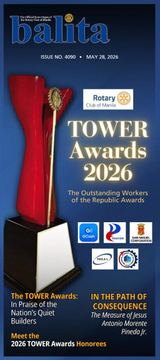
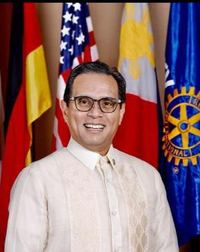 TOWER Awards: RCM’s Signature Celebration of Work, Honor, and Nationhood
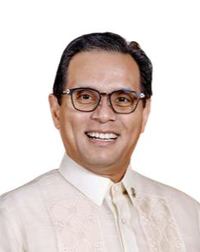 TOWER Awards 2026 Messages