

In the Path of Consequence: The Measure of Jesus Antonio Morente Pineda Jr.
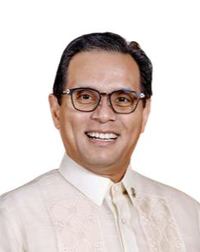
A profile of Centennial President Jesus Antonio “Susing” Morente Pineda Jr., from the rice fields of Tarlac to the boardrooms of banking.
HE never set out to be at the center of power — yet he stood there, quietly shaping institutions, navigating political tides, and building systems that would outlast the eras that created them.
FROM the rice fields of Tarlac to the boardrooms of banking, from the upheavals of Martial Law to the quiet discipline of service, the life of Jesus Antonio “Susing” Morente Pineda Jr. unfolds not as a story of ambition loudly pursued, but of influence deliberately exercised — measured, restrained, and enduring.
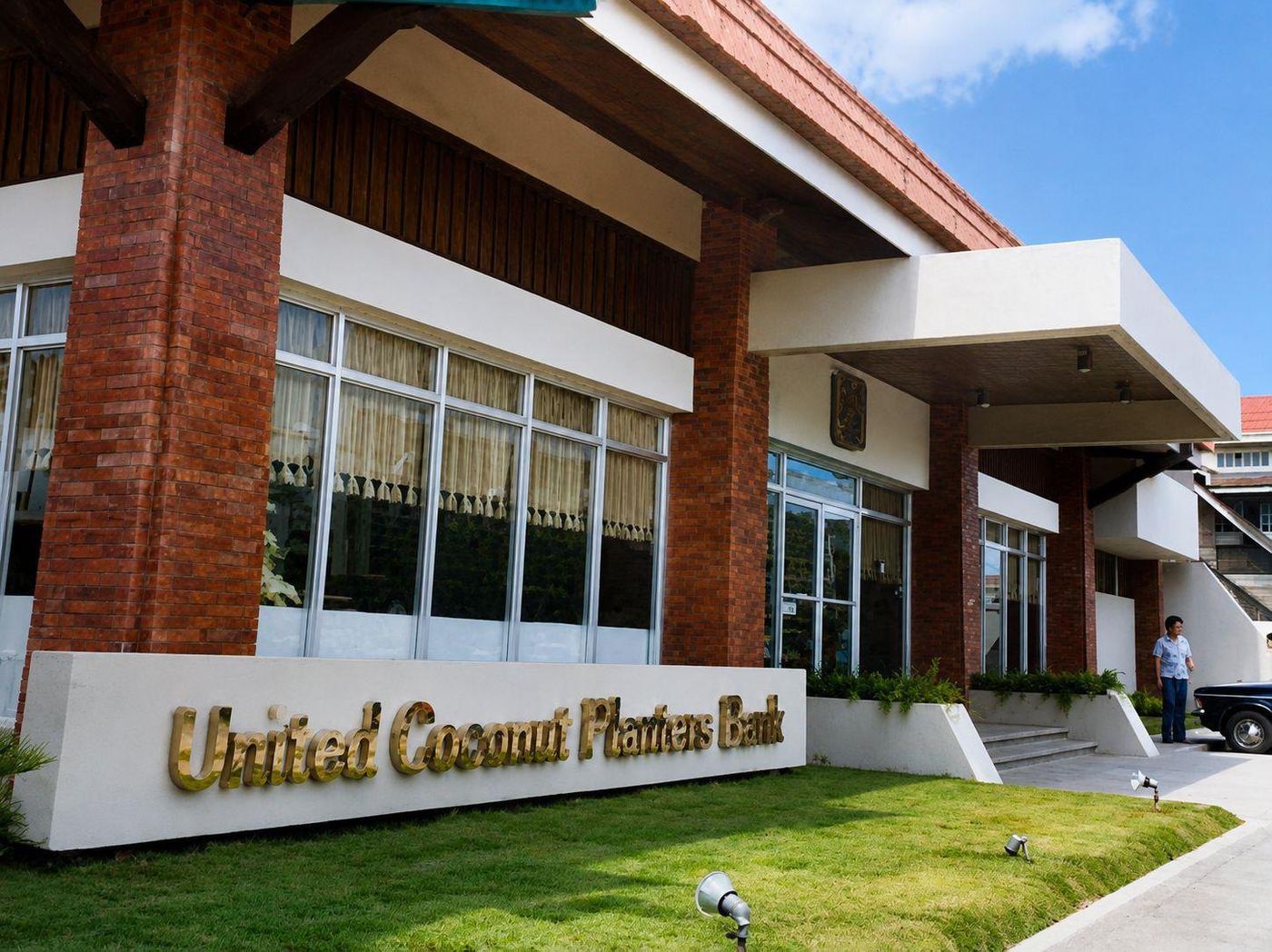
The idea did not begin with certainty. It began with an absence. By the early 1970s, the coconut industry stretched across the Philippines with quiet enormity, sustaining more than a million farmers and touching nearly every province. Yet for all its reach, it lacked a center. There was no institution that belonged to it, no system that allowed those who produced to influence what followed. The imbalance was not accidental. It was structural: the farmers grew, but others decided.

By then, Susing had spent enough time in banking to understand where control truly resided. It no longer rested in land alone. It had shifted — subtly but decisively — into finance. Capital dictated direction, and the ability to build systems determined who would shape outcomes. The question, therefore, was no longer whether the industry needed a bank, but whether one could be built that would genuinely serve it.
The discussions that followed were quiet, unfolding not in grand declarations but in offices and private conversations where practicality met ambition. At the center of them was Eduardo 'Danding' Cojuangco Jr., who saw clearly that without a financial backbone, the industry would remain dependent — reactive, never in control of its own course. Vision, however, was only a beginning. To endure, it required structure. And structure demanded execution.
What would eventually become the United Coconut Planters Bank did not originate with Susing. It emerged from Cojuangco’s conviction that the industry needed to be consolidated and directed. Susing’s role was different. He understood how to build what had been imagined. United Coconut Planters Bank (UCPB) opened its doors in 1975, becoming the institution where Susing would spend much of his banking career — years marked by dedication, leadership, and steadfast service during a transformative period in Philippine banking.

He did not claim authorship. He took responsibility. The work began, as it always does, with people. Drawing on relationships built over years within the banking community, he assembled a core group willing to take on an undertaking that offered little certainty. There were no guarantees to give, only clarity: this would require building from the ground up — systems, teams, processes — under conditions that left little room for error. Some hesitated. Others recognized the scale of what was being attempted and chose to step in. One by one, they joined.
What followed was relentless. Days stretched into nights as the institution took form. A bank could not remain an idea; it had to function — lending, processing, moving capital, sustaining operations from the moment it came into existence. Every delay risked credibility, and every misstep carried consequence. There were moments when the weight of it pressed heavily, when the scale seemed larger than the structure being built to contain it. But momentum began to take hold, and with it, belief.
Gradually, the system came together. What had been conceptual narrowed into something tangible. For the first time, there was the possibility that coconut farmers — long positioned at the margins — would be connected to an institution designed to finance their own industry. Ownership, even in part, suggested a shift in the balance. Or so it seemed.

No institution of that scale, in that era, existed apart from the state. As the bank moved from concept to operation, it entered the orbit of national power under Ferdinand Marcos, where industries were being consolidated and decisions increasingly centralized. At a critical moment, readiness was not enough. The project required sanction. There was no ceremony, no prolonged deliberation — only a directive that carried the weight of authority. Proceed. With that, the bank came into being — not as an accident, but as the convergence of vision, execution, and power.
For Susing, there was no space to pause and reflect on what had been accomplished. The work did not end with creation. It shifted. Building, he understood, was only the beginning. Sustaining would demand something else entirely.
Formation

Long before he would sit in rooms where industries were shaped and institutions conceived, Susing belonged to a world where power did not need to announce itself. It was understood. In Concepcion, Tarlac, where he was born on May 17, 1938, power lived in land — not as abstraction, but as presence. The horizon stretched across fields that seemed to run without end, marked only by the steady rhythms of planting and harvest. It was a landscape that carried both continuity and command, shaping the lives of those who depended on it.
This was the life his father chose. Jesus Tereso Pineda had been trained in law at Ateneo, prepared for a profession defined by structure and argument. But when he married, inheritance altered that path. A vast agricultural estate came with it — not only as opportunity, but as responsibility. He stepped into it without hesitation, leaving behind the profession he had trained for and embracing the life that had been handed to him. That decision defined the household his children would grow up in.
For Susing, responsibility was never abstract. It was visible, lived, and constant. The farm functioned as a system — tenants, laborers, overseers, and managers working within a structure that depended on coordination and trust. Decisions did not remain theoretical; they translated into outcomes that affected livelihoods. Even as a child, he observed this. He watched how his father led — not from a distance, but through presence. Authority was not imposed; it was exercised through familiarity, through an understanding of the people who made the system work. It was a quiet form of leadership, but one that left a lasting impression.

If his father provided structure, his mother provided direction. Caridad Morente possessed an intellect that had been recognized early, becoming a professor at a young age. Yet her path had been altered by a decision not her own — the denial of a scholarship that would have taken her abroad. She rarely spoke of it, but she did not forget it. Instead, she transformed that loss into resolve. Her children would not be limited.
In their home, this took the form of disciplined expectation. There were no raised voices or dramatic punishments, only a steady insistence on accountability. Meals were occasions for conversation, and report cards were examined with care — not to reprimand, but to understand. Questions were asked, not to assign blame, but to identify where improvement was needed. For Susing, this created a mindset that would endure. Failure was not something to fear, but something to address. It required response, and improvement was assumed.
Yet the household was not defined by discipline alone. There was also a quiet generosity that revealed itself in simple acts. When tenants arrived at their home during mealtime, they were not turned away. They were invited to sit, to eat, to share the table. It was not presented as charity. It was simply part of how life was lived. From this, another lesson took shape — one that would stay with him as clearly as any taught at the table. Leadership was not about distance. It was about inclusion.

The Weight of Expectation
By the time the family moved to Manila, the direction of their lives had already been set with quiet certainty. Education would no longer follow the rhythms of provincial life. It would be anchored in institutions that carried both academic rigor and social expectation — Ateneo for the boys, Assumption for the girls — schools where formation mattered as much as instruction. Their home in Quezon City marked more than relocation; it was an entry into a different environment, one in which identity would increasingly be shaped in relation to others.
At Ateneo de Manila University, Susing encountered both familiarity and contrast. The discipline was not new — the Jesuit structure, the emphasis on order, the insistence on intellectual rigor all echoed what he had known at home. What differed was the proximity to difference. Here, he was no longer defined by family or land, but by how he moved among peers who carried their own backgrounds, temperaments, and assumptions. He did not attempt to dominate this space. He adjusted to it.

He would later describe himself simply as a student who followed the rules, but the simplicity of that description concealed something more deliberate. For him, following the rules meant understanding the system well enough to move within it without friction — observing before acting, learning expectations, and meeting them without drawing unnecessary attention. It was a tendency that would stay with him: to absorb, to assess, and to respond rather than react.
Even within that structured environment, however, there were moments when order gave way to something less predictable. Among his classmates was an American student, Patrick Hilton, whose size and presence translated easily into influence. He used it casually, often at the expense of smaller boys — among them Mario Tiaoqui, Tony Lopa, and Susing himself. Their response was not confrontation, but restraint. They endured it, deflected it, and waited for it to pass. Until one day, it did not.
What followed was not planned but instinctive. Another classmate, less inclined toward restraint, stepped in. Joseph Estrada confronted Hilton, and the exchange quickly escalated into a fight. It ended the bullying in a way that quiet resistance had not. The consequences, however, did not unfold evenly. Authority responded to the act rather than the pattern behind it. Estrada was disciplined and eventually expelled, while Hilton faced far less consequence.

For Susing, the incident did not provoke defiance so much as recognition. It revealed, in a setting beyond the family, how power operated in practice — how it could diverge from fairness, shaped by perception, authority, and factors not always visible or consistent. It was a lesson that would surface again in different forms over the years.
Yet his time at Ateneo remained defined more by continuity than disruption. He moved from high school to college within the same institution, guided by routines that reinforced rather than challenged his upbringing. He chose business administration, drawn less to argument than to structure, less to persuasion than to systems. While others asserted themselves more visibly, Susing continued to refine a quieter approach — one grounded in consistency rather than display. It was not a style that demanded attention, but it proved to be one that endured.
The First Departure

The decision to leave for the United States was neither impulsive nor driven by a desire to escape. It had been set in motion years earlier, shaped by a quiet, unfinished chapter in his mother’s life. Caridad Morente had once been awarded a Fulbright scholarship — an opportunity that recognized her intellect and promise — but it was not hers to accept. Her father refused to let her go, a decision that, for that generation, was both unquestioned and final. She complied, but she never forgot. What had been denied to her would not be denied to her children.
By the time Susing completed his studies at Ateneo, the expectation had already taken form. He would study abroad — not as a visitor, but as someone who would step into a larger world and learn to move within it. When he arrived in New York in the early 1960s, the adjustment was immediate. Manhattan offered no transition. Its pace, scale, and anonymity stood in contrast to the familiarity he had known. There was no extended family to receive him, no network to soften the experience. For the first time, he was operating without the structure that had always defined his life.
At St. John’s University, he entered an MBA program populated by students who brought with them real-world experience — managers, professionals, individuals who spoke not in theory but from practice. He adapted in the way he always had: by observing, listening, and absorbing. He contributed when he could, but more often, he studied how others thought, how they approached problems, and how decisions were made under pressure.

Outside the classroom, life followed a different rhythm. He lived in Astoria, Queens, among fellow Filipinos who were navigating the same balance between independence and obligation. Together, they formed a small, familiar community within a city that offered little of it. There were late nights, shared meals, and conversations that moved easily across languages. For the first time, he experienced a kind of freedom that was not structured by expectation. It was, for a time, intoxicating. There were moments of excess — long evenings, easy indulgences, the small liberties that came with distance from home. Yet even within that loosened structure, something else began to take hold. A sense of responsibility.
That shift became clearer when he entered JPMorgan as an executive trainee. The environment demanded a different kind of discipline. Systems were precise, expectations defined, and decisions operated within frameworks that left little room for improvisation. Here, he saw how institutions functioned at scale — how consistency, rather than personality, sustained trust. It was a quieter education, but one that would stay with him.
At the same time, his personal life expanded. Relationships formed easily, shaped by proximity and shared experience, and for a while, the possibility of remaining in the United States seemed not only viable, but natural. He had work, a growing network, and a sense of belonging that had not existed when he first arrived. And yet, the pull of home remained. It did not assert itself dramatically. It lingered — subtle, persistent, shaped by memory as much as by obligation.

When his parents visited, the trip was framed as travel, but its purpose was understood. They wanted him to return. The conversation was quiet, without pressure. His mother did not argue; she reminded him — of family, of place, of a life that, while less independent, was more connected. The decision did not come immediately. There were reasons to stay, opportunities to pursue, and a life that had begun to take shape. But there was also an understanding, formed over time, that life was not only about where one could go, but where one was meant to be.
He chose to return. Not because the United States had failed him, but because the Philippines offered something he could not find elsewhere — a role within a system he understood, and a place where what he had learned could be put to use. When he left New York, he carried more than a degree. He carried perspective — an understanding of how systems operated at scale, an appreciation for independence tempered by its limits, and a growing sense that the life ahead would be defined not by distance, but by engagement. What awaited him in Manila was not yet clear. But it would require everything he had begun to learn.
Entry Into the System

When Susing returned to Manila in the mid-1960s, he stepped into a country on the cusp of transformation. The Philippines he had left as a student was still finding its postwar footing, its institutions developing within structures that were at once inherited and improvised. The one he returned to was more complex. The economy was expanding, though unevenly. Political ambitions were sharpening. Networks of influence — family, business, and government — were becoming more tightly interwoven. It was within this environment that he began his professional life in earnest.
His entry into banking came through Commercial Bank and Trust Company, or Comtrust, an institution that, while not yet dominant, held a strategic position within the financial system. The introduction was facilitated by family — his father arranging a meeting with his uncle, Atos Barcelona, then president of the bank — but whatever advantage that connection provided ended there. Inside, he was expected to perform. He entered as part of an executive training program designed not only to teach, but to observe. Young officers were rotated across departments — credit, investment, operations — exposed to the inner workings of banking in a way that revealed not just how decisions were made, but why.
Susing approached the process with intent. He treated each rotation as part of a larger system to be understood. In credit, he saw that risk was not defined by numbers alone, but by judgment and the evaluation of people. In investment, he observed how capital moved across sectors, shaping outcomes beyond the immediate transaction. In operations, he encountered the discipline required to ensure that systems functioned reliably, that errors were minimized, and that trust — once given — was maintained.
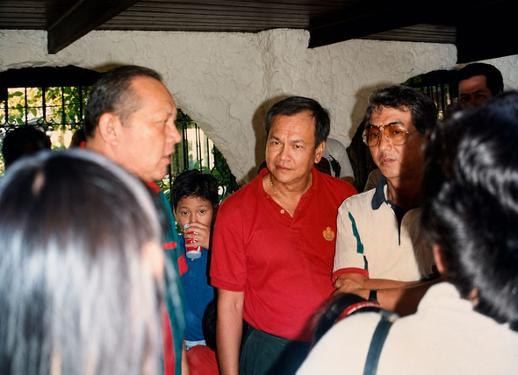
He did not distinguish himself through visibility. Instead, he developed a reputation that was quieter, but no less consequential. He was dependable, absorbed information quickly, and understood instruction without needing it repeated. Just as importantly, he worked within the system without disrupting it — a quality that, in a hierarchical environment, allowed him to advance without resistance.
Over time, familiarity became trust, and trust translated into responsibility. He was given increasing exposure — not only to processes, but to people — and began to engage with senior officers whose concerns extended beyond execution into judgment. The most significant shift in his trajectory, however, came from relationships beyond the formal structure of the bank. It was during this period that he came into closer contact with Danding. The connection emerged from overlapping networks rooted in Tarlac, but it quickly grew into something more consequential. Cojuangco represented a different kind of influence — one that recognized how economic power could be organized, expanded, and aligned with political direction.
Through this association, Susing began to see banking differently. It was no longer simply an institutional function, but an instrument. Capital, when directed with intent, could shape industries, influence outcomes, and create structures that extended far beyond individual transactions.

At Comtrust, his responsibilities expanded accordingly. He moved from trainee to officer, and from officer to manager, taking on roles that required both operational competence and judgment. His assignments placed him in closer proximity to decision-makers, where discussions moved beyond procedure into strategy. It was in these settings that he observed how influence truly operated. Rarely declared, often unspoken, it moved through relationships — the ability to convene, to align, to act without the need for formal instruction. Institutions, he came to understand, did not exist in isolation. They were part of a broader ecosystem that included politics. And in the Philippines of the mid-1960s, that ecosystem was changing.
When Ferdinand Marcos assumed the presidency in 1965, his administration introduced a style of governance that was both expansive and controlled. Development was emphasized — infrastructure, systems, national projects — but decision-making became increasingly centralized. For those in banking and business, this created opportunity and complexity in equal measure. Projects expanded. Financing needs grew. Institutions scaled. But these developments also required alignment with policies shaped at the highest levels of government.
Susing did not position himself as a political actor. He remained, fundamentally, a banker. But he was now operating within a system where the distinction between the two was becoming less defined. At a certain point, he was offered greater responsibility within the Philippine Bank of Commerce, an institution linked to the Cojuangco group. The move marked a transition from structured learning to active leadership. He accepted.

His early assignments focused on oversight — managing branches, ensuring operations ran effectively, and building teams capable of sustaining growth. In Quezon City, and later along Buendia, he was given control over branches that operated with a degree of autonomy uncommon at the time. These were not merely processing units; they were decision-making centers, capable of granting loans, structuring deals, and responding to local conditions without constant reference to head office.
It was here that his leadership style took clearer form. He did not rely on pressure. He relied on structure. Teams were built deliberately, often drawing from individuals he trusted, but always with an emphasis on competence. Expectations were defined. Responsibilities were clear. Performance was not left to chance.
At the same time, he maintained proximity to the center. Afternoons were often spent at head office, where conversations extended beyond immediate concerns. With Cojuangco and his associates, discussions would begin with banking operations and industry developments, then move into broader considerations — investments, political shifts, strategic direction. These were not formal meetings. They were working conversations. But they were where alignment took shape. And in those rooms, Susing was no longer simply learning the system. He was becoming part of it.

The Architecture of Power
By the early 1970s, the Philippines had entered a period in which the boundaries between business, politics, and state power were no longer clearly defined. With the declaration of Martial Law in 1972 by Ferdinand Marcos, the shift was not simply one of authority, but of structure. Industries were no longer left to evolve on their own; they were reorganized, consolidated, and aligned with national priorities that were as political as they were economic.
For Susing, already established within the banking sector, this transition was not abstract. It came as instruction, opportunity, and risk at the same time. His association with Danding placed him close enough to observe how decisions were shaped — not purely by market logic, but by political calculation. Cojuangco’s influence, rooted in provincial power and expanded through business, was further amplified by his alignment with Marcos. Together, they represented a convergence of authority that allowed large-scale initiatives to move with unusual speed.

It was within this environment that efforts to reorganize the coconut industry began to take form. Despite its scale, the industry had long been fragmented. Millions of farmers sustained production, yet control over pricing, processing, and export rested with a relatively small group of intermediaries. The imbalance was structural. Farmers produced, but they did not determine value.
The response was not incremental reform, but consolidation. The creation of the United Coconut Planters Bank became central to this effort, serving as the financial backbone of a broader system that sought to integrate financing, production, and distribution. Alongside it came institutions such as UNICOM, designed to consolidate oil mills and stabilize processing. The objective extended beyond efficiency — it was to establish control over supply, pricing, and direction.
What followed extended beyond banking. As the system took shape, capital did not remain idle within the institution. It moved — deliberately, strategically — into assets that could anchor the industry’s long-term position. Among the most consequential of these was the acquisition of a significant stake in San Miguel Corporation. Framed at the time as an investment on behalf of coconut farmers, the move was carried out through the Coconut Industry Investment Fund (CIIF), financed by the coconut levy — a tax collected from millions of millers across the country. United Coconut Planters Bank served as the financial conduit, holding and managing these funds, while the structure itself was directed under the leadership of Eduardo “Danding” Cojuangco Jr., whose influence bridged both finance and state power.

Through this mechanism, roughly 27 to 31 percent of San Miguel Corporation was acquired during the early 1980s. The shares were effectively placed under a system that linked the country’s largest food and beverage conglomerate to the resources of its coconut industry — an alignment that, in concept, was meant to give farmers indirect participation in one of the nation’s most valuable corporate assets.
Control, however, did not disperse as broadly as the structure implied. The shares, while sourced from levy funds, were consolidated under entities within the CIIF network and managed through UCPB, placing operational authority within a tightly held circle. San Miguel, in turn, became the largest depositor of UCPB, reinforcing a financial loop in which the bank, the investment fund, and the corporate asset were bound together. By 2012, the original ₱ 1.65 billion outlay tied to the acquisition of a 31 percent stake had expanded into an estimated ₱ 93.5 billion in value, reflecting the extraordinary performance of San Miguel Corporation over nearly three decades. What had begun as a strategic deployment of levy funds had evolved into one of the most financially significant assets associated with the coconut industry.
In the end, the acquisition of San Miguel Corporation stood as both achievement and contradiction. It demonstrated how capital, when organized at scale, could transform an industry’s position within the national economy. But it also revealed the tensions inherent in that transformation — between intent and control, between structure and ownership, and between the systems that were built and the people they were meant to serve.

For Susing, the work was both technical and relational. Building a bank required more than capital; it required trust. Drawing from his network in Commercial Bank and Trust and the wider banking community, he persuaded executives to join a venture that was ambitious but uncertain. Competitive compensation helped, but what ultimately convinced many was the opportunity to build something at scale. The demands were relentless. Long days stretched into nights as systems were put in place and operations brought online within compressed timelines. Every delay carried consequences, and the margin for error was narrow.
Yet the work did not exist apart from the state. At critical moments, alignment at the highest levels was necessary. Decisions could shift in a single meeting in Malacañang. Susing was not always present in those rooms, but he understood their weight. When directives came, they were executed. It was a system that rewarded decisiveness, but it also required loyalty.
At the same time, power was not concentrated along a single axis. In Tarlac, where Susing had deep roots, another figure shaped the political landscape: Benigno Aquino Jr. The relationship between Cojuangco and Aquino was, at least initially, complex rather than adversarial. Both operated within overlapping spheres of influence, each commanding authority in different ways. Aquino, as governor, wielded a form of power rooted in communication and political instinct. Where Marcos was methodical, Aquino was fluid — capable of shaping outcomes through persuasion as much as policy. Their approaches, however, diverged. Aquino’s reformist inclinations, particularly in land distribution, placed him at odds with structures that figures like Cojuangco — and by extension, those working within his sphere — were helping to build.
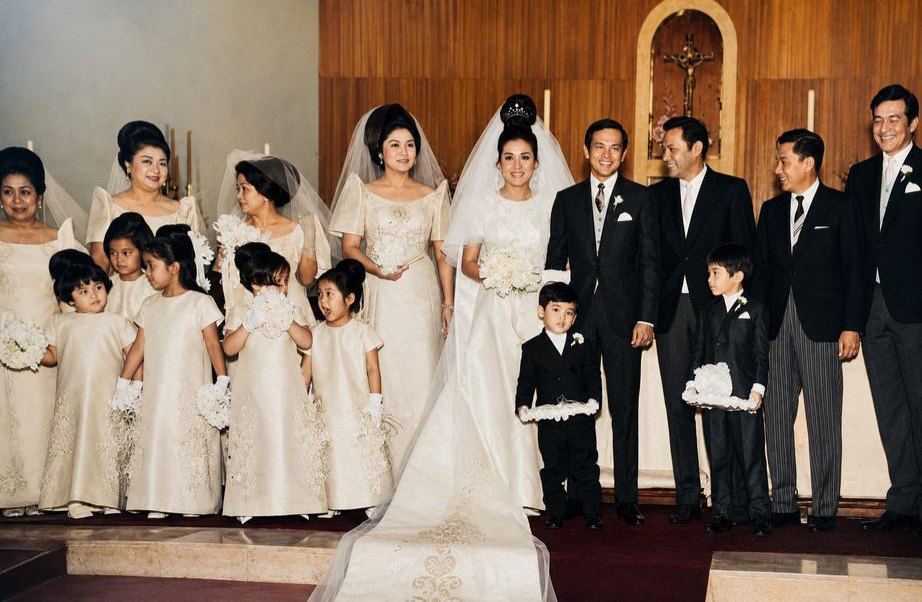
An episode from that period captures the nature of these dynamics.
When the Spanish-owned Central Azucarera de Tarlac encountered operational difficulties amid unrest, its owners moved to sell. Aquino stepped in as intermediary, facilitating the transfer to his in-laws. The transaction required a sovereign guarantee — approval that could only come from the highest levels of government. It was secured through political negotiation, aligning interests that were, at least temporarily, compatible. The episode underscored a defining reality of the time: Economic decisions were rarely purely economic. They were shaped by politics, strategy, and personal relationships.
For Susing, navigating this environment required discipline of a different kind. He was not a politician, yet he operated within political structures. He did not set policy, yet he implemented decisions that carried wide consequences. His role was not to define direction, but to ensure that institutions could function within the framework that had been established. It required balance. And, at times, silence.

Collapse and Consequence
There are moments in history when systems do not unravel gradually, but all at once. For those within them, however, the shift is rarely as dramatic as it appears from the outside. There is no single rupture, no clear line separating what was from what is about to follow — only a growing recognition, first among a few, then more widely, that something fundamental has changed.
By the mid-1980s, that recognition had begun to take hold. The Philippines, long defined by centralized authority, was reaching a point of strain. Institutions that once seemed stable were now subject to scrutiny, and relationships that had enabled access and influence were becoming liabilities. The alignment between business and politics, once an advantage, was turning into a source of risk.
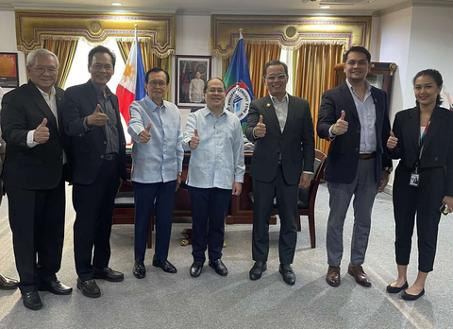
For Susing, this shift was not abstract. It was immediate. Institutions such as the United Coconut Planters Bank, which had grown into a central force within the coconut industry, now found themselves under a different kind of attention. The systems, networks, and relationships that had once driven their expansion were no longer viewed in the same light. What had enabled growth was now being examined through a lens shaped by reform, accountability, and the redefinition of power.
When the People Power Revolution unfolded, it did more than change political leadership. It altered the conditions under which institutions could exist. Assets were sequestered, investigations initiated, and decisions made years earlier were revisited — not in the context in which they had been made, but in light of what had followed.
For Susing, this marked the beginning of a different kind of challenge. The bank, once a symbol of structure and consolidation, became a point of contention. Shares were placed in escrow, and legal processes began — slow, complex, and often without clear resolution. Much of what he had helped build was no longer within his control.

It was not a moment of collapse. It was a moment of reckoning. The response it demanded was not the discipline of action, but of restraint — the ability to accept uncertainty, to continue without resolution, and to move forward within conditions that could no longer be shaped in the same way.
Reinvention
If his early life had been shaped by inheritance, and his middle years by institution-building, the period after 1986 would come to be defined by reinvention — not as a single decision, but as a gradual shift shaped by circumstance. There was no moment of declaration. No clear turning point. What followed unfolded quietly, through a series of decisions that, taken together, marked a change in direction.

He returned to what he understood best: systems — not always at scale, but always with structure. Even before the political transitions of the mid-1980s, this instinct had already begun to take form. In 1980, he organized the United Sari-Sari and Livelihood Corporation, an effort to bring order to one of the most diffuse yet essential components of the Philippine economy: the sari-sari store. These small neighborhood shops were ubiquitous, forming the final link between supply and everyday life, yet they operated without coordination.
The concept itself originated with Danding, framed as a “tulong sa mga tao” of Tarlac. What he envisioned as assistance, Susing translated into structure. He began by establishing logistical district offices across the province — nodes within a system designed to serve sari-sari store owners directly. These offices became distribution centers, ensuring the steady delivery of basic commodities and retail goods to communities that had long depended on fragmented and inefficient supply chains. What emerged was not merely a program of support, but a functioning network.
Alongside this, he organized joint ventures with rice millers throughout Tarlac. The arrangement was deliberate: rice production would no longer pass through multiple layers of middlemen. Instead, it would be consolidated, distributed, and sold directly to institutions, as well as to both traditional and non-traditional markets. Prices improved. Margins stabilized. For the millers, it meant something more significant — the ability to participate more directly in determining the value of what they produced, under the guarantee of the United Sari-Sari and Livelihood Corporation.
The model suggested a broader possibility. Had events taken a different course — had the EDSA People Power Revolution not intervened — the system might well have expanded beyond Tarlac, evolving into a national network of sari-sari stores. It would have stood as a locally rooted alternative to the retail chains that would later emerge, many of them franchised by foreign multinational companies. But history redirected its path. Even so, the intention behind it remained intact. These efforts were not conceived for scale alone. They were built to reach those who had less in life — to create access where there had been none, to strengthen livelihoods at the margins, and, in quiet but meaningful ways, to make the poor less poor.
But intention does not remain untouched by history. After 1986, the corporation became entangled in the broader legal processes that examined assets linked to the Marcos era. Identified in government investigations and later included in the case of Republic vs. Sandiganbayan, it was drawn into a narrative far removed from its original purpose. What had begun as a livelihood initiative became part of a larger inquiry into power and accountability. For Susing, this was not entirely unfamiliar. It reinforced a pattern he had already come to recognize: systems, once created, do not remain confined to their intent. They are shaped — and at times overtaken — by the forces around them.
Even as one chapter was reinterpreted, another began. By the late 1980s, he turned to production. The global market for artificial flowers was shifting, moving from low-grade plastic to more refined materials such as polyester and silk. Production was consolidating in Asia, where labor-intensive processes could be scaled to meet international demand. In 1988, he established Flora Arts Philippines in Concepcion, Tarlac — not simply as a business, but as a livelihood system. Designed to employ thousands, it combined imported manufacturing technology with local labor, creating a structure that could meet global standards while providing income to communities with limited opportunities.
The response was immediate. Exports to the United States and Europe grew steadily, and production expanded. Workers were organized on a piece-rate basis and supported with transportation and meals, allowing them to earn in proportion to their output. The venture complemented his wife’s business in artificial foliage, which had already found markets in the Middle East and Southeast Asia. Recognition followed. Flora Arts Philippines received the Golden Shell Award, one of the country’s highest honors for export excellence. It validated not only the enterprise, but the model — one that combined industry with livelihood.
But markets shift as surely as institutions. By the early 1990s, China’s manufacturing capacity had transformed the industry. Factories multiplied in the Pearl River Delta, producing at a scale that dramatically lowered costs and expanded global reach. Artificial flowers became a high-volume export, driven by efficiency rather than craftsmanship. The change became unmistakable during a visit to a manufacturing facility in Shenzhen. What he encountered was not merely competition, but magnitude — a workforce of thousands operating within a system that no smaller enterprise could match. The conclusion was clear. No adjustment in efficiency could bridge that gap.
In 1995, after nearly a decade of success, he closed the business — not out of failure, but out of recognition. The discipline that had guided him in building now guided him in letting go.
As the country moved into a period of liberalization under Fidel V. Ramos, the emphasis shifted toward rebuilding institutions and attracting investment. It was during this time that Susing became involved in Philippines, Inc., a group focused on facilitating engagement between foreign investors and the local environment. The work was less about control and more about coordination — navigating regulatory frameworks, aligning interests, and ensuring that projects could move forward.
His proximity to political leadership continued, though in a different capacity. Meetings with presidents became functional rather than symbolic, centered on practical concerns rather than influence. He was appointed to roles such as director of the National Power Corporation and Clark Development Corporation, positions that required oversight and discretion. His presence in these spaces was not driven by ambition. It was continuity. He understood the system, and the system understood him.
At the same time, he returned to banking — though not in the way he had before. The rural bank tied to his wife’s family, known as the Bank of Rodriguez, was not initially positioned for expansion. It was a legacy institution, shaped as much by family dynamics as by financial considerations. He saw it differently. Where others saw complication, he saw structure waiting to be imposed. Internal decision-making had been hindered by emotion and indecision. He introduced a mechanism — a put-and-call arrangement — that allowed ownership to be consolidated. It was a simple proposal, but one that brought clarity. It was accepted almost immediately.
What followed was not dramatic transformation, but stabilization. Professional management was introduced, systems were put in place, and the institution began to function with greater coherence. He did not take control in the traditional sense. Instead, he stepped back, allowing professionals to manage operations while positioning himself as a guide. It marked a shift in leadership. He no longer needed to be at the center. Only to ensure that things worked.
At the same time, he expanded into other ventures. Ugong Trade & Holdings became a platform for broader business activity, defined not by a single industry but by adaptability — distribution, partnerships, and industrial engagement shaped by opportunity rather than fixed direction. He also revisited earlier ideas, particularly those centered on grassroots systems. The concept behind the United Sari-Sari Corporation — organizing small retailers into a structured network — remained relevant. Experience had only reinforced the insight: markets are not shaped solely from the top. They can be influenced from the ground, through systems that enable those who operate within them.
Much of this work was not visible. But it was consistent. And it was deliberate.

That continuity found deeper expression during the administration of Joseph Estrada. Their relationship was not newly formed. It traced back to their years as classmates at Ateneo de Manila University High School — a connection shaped in youth, interrupted by Estrada’s expulsion, yet sustained across decades. What began in the familiarity of shared classrooms matured into a friendship that endured beyond circumstance, position, and time.
When Estrada entered the presidential race, Susing joined him — not as a political operative seeking prominence, but as a friend offering quiet support grounded in trust. The campaign, for him, was less about ambition than about continuity. Upon Estrada’s election to the presidency, that trust was affirmed through appointment. He was named Director of the National Power Corporation and Director of the Clark Development Corporation — roles that placed him once again within institutions central to national development. As in earlier chapters of his life, he approached these positions not as platforms for visibility, but as systems to be guided with discipline and care.
Yet it was in moments removed from formal office that the depth of their relationship became most evident. During Estrada’s period of house arrest in Tanay, when authority had receded and public life had narrowed into confinement, Susing remained present. He, together with a small circle of trusted friends, made regular visits — not out of obligation, but out of constancy. The conditions had changed, but the relationship had not.
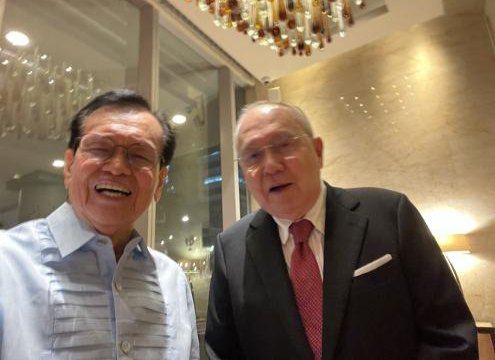
That same constancy endured in the years that followed, including Estrada’s tenure as Mayor of Manila. Their interactions were no longer framed by position or power, but by familiarity — conversations shaped by shared history, quiet understanding, and the recognition of a bond that had outlasted the shifting tides of public life.
For Susing, these moments were not separate from the broader arc of his life. They reflected a pattern he had followed throughout: relationships sustained not by convenience, but by presence; loyalty expressed not in declaration, but in continuity.
The Quiet Center
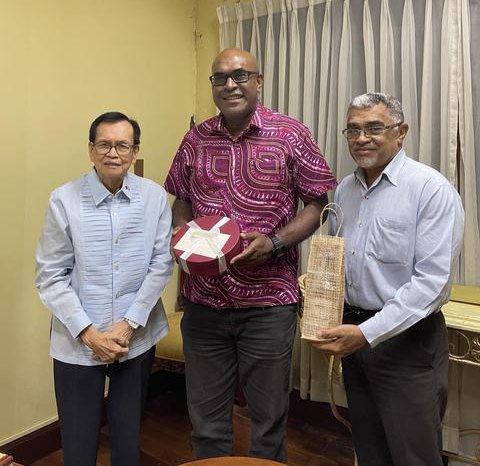
Amid the shifting demands of business and the uncertainties of institutional life, one area remained constant. Family.
His relationship with Maritess Rodriguez Mendoza-Pineda did not begin with urgency, nor was it marked by dramatic gestures. It unfolded gradually, shaped by conversation, presence, and a shared understanding of what mattered over time. They met in New York, introduced through family connections during a holiday gathering. She was reserved, almost distant, and conversation did not come easily. For many, that might have been reason enough to move on. For Susing, it became something else — a quiet invitation to understand.
He pursued her with patience rather than intensity. What began as curiosity settled into certainty. When the moment came, he chose her without hesitation. They married in 1968.

The early years of their life together were defined, in large part, by the demands of his career — long hours, frequent absences, and responsibilities that left little room for balance. There were sacrifices, moments missed, and time that could not be recovered. Yet the foundation of their relationship held, anchored in trust, faith, and a shared sense of purpose that did not require constant affirmation.
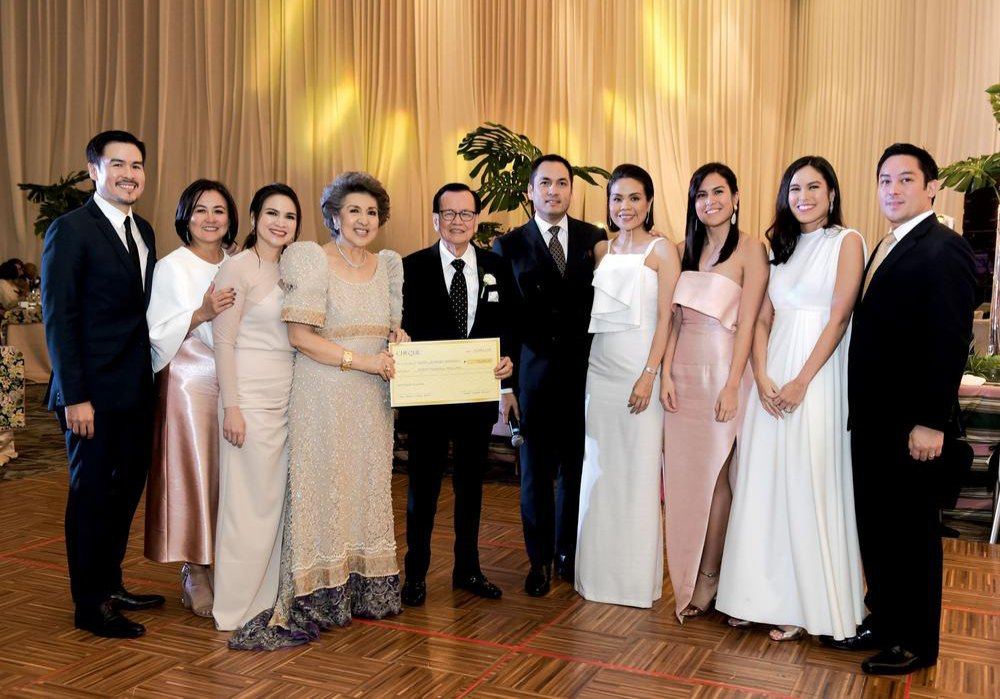
Together, they raised four children — Ria, Paolo, Carlo, and Patricia — offering them both support and independence. He did not impose direction so much as provide opportunity, allowing each to find their own path. It was an approach that reflected his own upbringing: guided, but not controlled; present, but never overbearing.
Years later, when asked about the secret to a lasting marriage, he did not offer anything elaborate. He spoke simply of humor — of the ability to laugh, to defuse tension, and to accept that perfection was neither expected nor necessary. “There are no perfect marriages,” he would say. “Only perfectly imperfect ones.”

Service Without Spectacle
When Susing entered the Rotary Club of Manila on December 1, 1993, it was not the result of long-held ambition or deliberate pursuit. It came, as many things in his life did, through circumstance and persistence — shaped by a relationship he could not easily refuse. His uncle, Past District 3810 Governor Patricio “Pat” Pineda, had been inviting him for years. The invitations were steady, almost expected, and just as consistently declined. At the time, Rotary seemed peripheral to Susing — admirable, certainly, but not essential to a life already occupied by business and institutional commitments.
But persistence, when anchored in familiarity, tends to endure. One afternoon at the Manila Polo Club, over what was meant to be a routine lunch, the conversation shifted. There was no extended persuasion. Instead, his uncle recited the Rotary Four-Way Test — not as argument, but as reminder. By the time the meal ended, the application was in front of him. All that remained was his signature. He signed.

What followed was not immediate immersion. As he had done in every new system he entered, Susing began by observing. He attended meetings regularly but did not rush to participate, choosing instead to listen and to understand the rhythms of the organization. He gravitated toward the elder statesmen of the club — figures such as Don Francisco “Paco” Delgado and his uncle — men whose understanding of Rotary was shaped not by recent projects, but by decades of experience. From them, he came to see that Rotary, particularly in Manila, was more than a network. It was a tradition.
His transition from observer to participant came gradually. During the presidency of Gert Gust, he was elected to the Board of Directors, taking on responsibilities that required both judgment and collaboration. The work exposed him to the inner mechanics of the organization — committee decisions, project oversight, and the realities of governance within a civic institution. Not all of it was straightforward. At one point, a legal dispute involving the club drew him into court proceedings alongside fellow director Teddy Ocampo. It was his first direct encounter with litigation in that setting — unfamiliar, at times uncomfortable, and markedly different from the cooperative environment he had come to expect. Yet the experience reinforced a principle he already understood: institutions, regardless of intent, are not immune to conflict. They require stewardship — and, when necessary, defense.
Over time, his presence within the club became more defined. He was not the most vocal member, nor the most visibly assertive, but he was consistent. He showed up, contributed where needed, and built relationships that extended beyond formal roles. When the opportunity to lead came, it did not come easily. His election to the presidency — eventually culminating in his role as Centennial President in 2019 — was closely contested, reflecting the dynamics of an organization where leadership was both privilege and responsibility. By the time he assumed the role, the club was preparing to mark its 100th year, a moment that called not only for reflection, but for direction. Susing approached it with focus.

His presidency was anchored on education. He believed that if Rotary were to remain relevant, its work had to produce outcomes that endured beyond the life of any single project. Visibility, while useful, was secondary to impact. One of his most significant initiatives was a scholarship program launched in partnership with institutions such as the Pamantasan ng Lungsod ng Maynila and the Polytechnic University of the Philippines. Beginning in 2019, the program supported approximately 200 students, each receiving a modest monthly stipend. In absolute terms, the amount was limited. In practice, it was transformative. For many of the students, the support covered transportation, meals, and daily expenses — costs that often determined whether they could remain in school.
The selection process was deliberate, overseen by respected Rotarians to ensure that recipients were chosen not only for academic performance but for character and genuine need. What emerged from that process left an impression on him. These were not abstract beneficiaries, but individuals navigating constraints that extended well beyond the classroom. Their ability to continue studying depended not only on intelligence, but on resilience. He did not see the program as charity. He saw it as investment.
Alongside this, he supported broader initiatives, working with partners such as the Ayala Foundation to develop educational facilities, including programs designed for working students in underserved communities. He also contributed to ongoing Rotary efforts in healthcare and nutrition, ensuring continuity in projects that had already taken root.
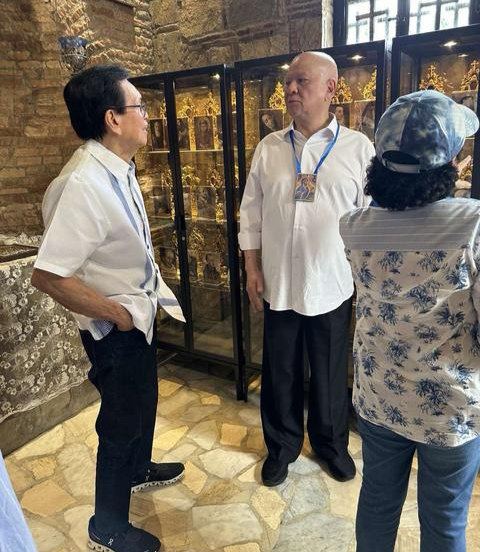
Fundraising, often a challenge in civic organizations, came naturally to him — not because he approached it as a campaign, but because he treated it as an extension of relationships. During his Centennial year, he raised approximately ₱ 24 million, largely through direct engagement. He spoke to individuals, explained the purpose of each initiative, and asked — not for himself, but for the work. People gave because they trusted him.
His involvement extended beyond Rotary into microfinance, where he served as chairman of Grameen Pilipinas Microfinance, Inc. Through this work, he helped expand access to small loans for underserved communities — sari-sari store owners, small entrepreneurs, and individuals operating at the margins of the formal economy. By the late 2010s, the program had reached around 10,000 beneficiaries. For Susing, this was not a departure from his earlier work, but a return to it. It reflected a belief he had long held — that systems, to be meaningful, must include those at their lowest levels.
What distinguished his approach across these efforts was consistency. He did not publicize his involvement extensively, nor did he frame projects as personal achievements. He saw them as part of a continuum — work that extended beyond any single role or period. Service, for him, was not an event. It was a practice. It required presence more than performance. And in that steady, deliberate way, he built a legacy within Rotary that was not defined by visibility, but by impact — measured not in recognition, but in the lives that moved forward because something had been made possible.

Diplomacy Without Illusion
Susing Pineda did not set out to become a diplomat. Unlike his entry into banking, which followed a deliberate progression of education, exposure, and responsibility, his involvement in diplomacy came almost by accident — an extension of relationships rather than ambition. What began as a brief encounter would, over time, evolve into a role that quietly occupied his later years.
The moment itself did not announce its significance. In 2014, during a diplomatic gathering in Manila hosted by Ambassador Manuel “Manolo” Lopez, the evening unfolded in the familiar rhythm of such events — formal, courteous, and largely inconsequential. Conversations moved easily across tables, introductions were made, and pleasantries exchanged. It was within that setting, at one table among many, that Susing found himself seated beside the Ambassador of Fiji to Japan, who also held jurisdiction over the Philippines. Fiji, though distant and modest in scale, maintained its diplomatic presence across the region through a network of honorary consuls. Their exchange was brief. Names were shared, cards passed, and the conversation moved on. There was no indication, at that moment, that anything more would follow.

Three months later, the call came. The Fijian government was offering him the position of Honorary Consul General to the Philippines. He accepted — not for the title, but for the nature of the work itself. What he encountered bore little resemblance to the formal image often associated with diplomacy. There were no negotiations of consequence, no ceremonial exchanges that defined policy or power. Instead, the work unfolded through individuals — through cases that required attention, judgment, and persistence more than protocol.
Among the first challenges he faced were Fijian nationals who had overstayed their visas in the Philippines. Many had built lives — marrying Filipinas, raising families — but existed without legal status, caught between countries and systems that did not easily accommodate them. Resolving their situation was not a matter of simple compliance. It required navigating immigration processes, securing clearances, and addressing penalties that had accumulated over time.
This was work that could not be handled at a distance. Susing engaged directly, establishing contact with officials at the Bureau of Immigration and building relationships that allowed the process to move forward. Rather than relying solely on formal channels, he approached the problem in a way that was characteristically his — practical, deliberate, and relational. He created access where it did not exist, built trust where it was needed, and worked through each case individually. The number of individuals involved was not large — perhaps fifty in total — but the complexity of each situation required attention. He handled them one by one.

Beyond immigration concerns, he began to focus on education, recognizing an opportunity that aligned both with the Philippines’ strengths and Fiji’s needs. He facilitated the placement of Fijian students in agricultural and irrigation training programs at institutions such as the University of the Philippines. These were not formal agreements negotiated at the state level, but arrangements made possible through coordination and trust — practical solutions that served immediate and long-term purposes. For Fiji, it represented capacity-building. For Susing, it was a continuation of something he had long believed — that education, when properly directed, could create lasting impact.
Not all situations were structured. There were cases that demanded immediate intervention, where process alone was insufficient. In one instance, he encountered a young Fijian national struggling with drug dependency — a former athlete whose circumstances had deteriorated beyond control. The situation required more than administrative handling. Susing arranged for rehabilitation, coordinating with medical institutions to ensure that the individual received care despite limited resources. These efforts were not visible. They were not meant to be. But they mattered.
Over time, his involvement deepened, and he became more active within the Consular Corps of the Philippines — a network of honorary consuls that functioned as both a formal and informal structure for coordination among diplomatic representatives. The work required not only familiarity with systems, but the ability to move within them, balancing relationships, responsibilities, and expectations across different jurisdictions. Leadership within the Corps was not automatic. It had to be recognized. In 2024, he was elected Dean of the Consular Corps, a role that placed him at the center of its operations. The position required both diplomacy and management — providing direction while maintaining alignment with Philippine institutions and the interests of the countries represented. He approached it the same way he had approached everything else in his life. Not with visibility, but with structure.

One of his priorities was economic diplomacy, an area that allowed him to draw from his experience in business while extending the reach of his diplomatic work. In mid-2024, he led a mission to Davao City, bringing together ambassadors and representatives from several countries to explore opportunities in agriculture and tourism. The objective was not ceremonial. It was to understand, to connect, and to identify where collaboration could be made practical. The delegation engaged with local leaders, examined possibilities, and established pathways that could be developed further. It was, in many ways, a continuation of the work he had done decades earlier — linking systems, facilitating relationships, and enabling movement across boundaries that were often more administrative than real.
He also emphasized education as a central focus, supporting initiatives that sought not only to provide resources but to create environments where learning could be sustained. Programs developed during his tenure reflected this approach — measured, practical, and oriented toward outcomes rather than visibility.
What distinguished his leadership was not scale. It was clarity. He did not attempt to redefine diplomacy or expand its image. Instead, he grounded it — reducing it to what he believed it should be at its core: a means of making systems work for people. For him, diplomacy was not representation alone. It was problem-solving. Ensuring that relationships produced tangible outcomes. That systems functioned as intended. That individuals, often overlooked, could find resolution within structures that otherwise moved too slowly.

By January 2025, as his term concluded and leadership transitioned, there were no dramatic changes to mark his tenure. No sweeping reforms or visible transformations. But there was continuity. And in institutions, continuity often matters more than disruption.
Looking back, his role in diplomacy did not alter his identity. It extended it. He remained what he had always been — a man who understood systems, who moved within their limits, and who worked, quietly and persistently, to make them function just a little better than they otherwise would have.
A Life, Considered

In the later years of his life, as the urgency of daily decisions began to recede, Susing Pineda found himself entering a phase few ever fully prepare for — the gradual shift from participation to reflection. It did not arrive all at once. There was no clear moment when work ended or responsibility was formally set aside. Instead, the transition unfolded quietly, as roles evolved, others assumed what he once carried, and the systems he had helped build continued to function without his direct involvement. For a man shaped by decades within institutions, this required a different kind of discipline — not the discipline of action, but of perspective.
Looking back, he does not divide his life into neat categories. Business, politics, and personal decisions were never separate spheres; they overlapped, influenced one another, and often unfolded simultaneously. His years in banking, particularly during the formation of the United Coconut Planters Bank, remain central — not because they defined success, but because they revealed both the potential and fragility of systems. He had seen institutions rise with clarity of purpose, only to be reshaped by forces beyond their control. Structures that once seemed stable could, in time, become subjects of scrutiny, their origins questioned and their intentions reinterpreted. These experiences did not leave him disillusioned, but they did leave him measured.
He speaks of Ferdinand Marcos without absolutes, recalling the decisiveness of the early years while recognizing the limitations that emerged over time. Discipline, once imposed, created order, but power, when extended without restraint, could lose its balance. His view of Benigno Aquino Jr. is shaped by a different appreciation — an acknowledgment of his ability to communicate, to connect, and to move people through words. Yet even that admiration is tempered by the understanding that leadership is never defined by a single strength. He does not attempt to reconcile these figures into a single narrative. He allows them to remain as they were — complex, contradictory, shaped by their time.
That same refusal to simplify extends to how he understands his own life. He does not frame it as a sequence of successes and failures, nor does he attempt to impose meaning on moments that, at the time, unfolded without clear resolution. Instead, he sees it as a series of situations — some understood, others not — each contributing in ways that only become clear in hindsight.
When asked about regret, he acknowledges it without dwelling on it. There are decisions that might have been made differently, relationships that did not unfold as expected, and outcomes that moved beyond his control. But for him, regret serves no purpose unless it leads to acceptance, and acceptance is not passive. It is an active recognition that life resists perfect balance. “Life is not fair,” he says — not as a complaint, but as fact. The response, then, is not to expect fairness, but to work toward it — to adjust, to compensate, and to make circumstances less unequal where possible. It is a philosophy shaped by experience, grounded in the understanding that outcomes are often influenced by forces beyond individual control.
This perspective extends to his relationships. Over the years, he has known both loyalty and its absence. There were those he helped who did not return that support, moments when trust was tested and expectations were unmet. He does not deny these experiences, but neither does he allow them to define his approach. To help, in his view, is not to create obligation — it is simply to act. Whether that action is acknowledged or reciprocated is secondary. It is not idealism. It is discipline.
The same discipline that guided his work within institutions now informs how he understands people. Expectations, when left unchecked, lead to disappointment. When adjusted, they allow for clarity. In contrast, the relationships that have endured — family, close friends, long-standing associates — were never contingent on circumstance. They were built over time and sustained not by transaction, but by presence. He speaks of his children, each having pursued their own paths, and of gatherings that continue not out of obligation, but because they are valued. These are not peripheral to his story. They are what remain when other roles recede.
There are moments when the impact of his life returns to him unexpectedly — a former employee whose retirement benefits provided stability, a family whose circumstances improved through assistance given years earlier, a passing encounter where someone recalls a decision that made a difference. He does not seek these affirmations, but he recognizes them when they come. They do not define his achievements. They affirm his approach.
When asked how he wishes to be remembered, he does not construct an elaborate legacy. Titles and positions, he understands, are temporary. What endures is simpler — a name, a reputation, and the sense, carried by others, that he acted with fairness, that he was consistent, and that he used what he had not to accumulate, but to contribute. He does not claim to have done this perfectly. Only with intention.
And in the end, when the institutions he once moved within have evolved beyond recognition and the urgency of his earlier years has given way to quieter rhythms, he returns to what he considers the only measures that matter. Family and friends. Everything else belongs to time.
Epilogue: Power, Memory, and Meaning
In reflecting on his life, Susing does not divide experience into neat categories. The personal and the political, the professional and the philosophical, have never existed separately for him; they have always overlapped, each shaping the other in ways that only become clear over time. He has seen power in many forms — held, resisted, and, at times, absorbed by those who moved within it. He neither romanticizes it nor rejects it outright. What remains with him is an understanding of its complexity, shaped less by theory than by proximity.
He speaks of Ferdinand Marcos with measured acknowledgment, recalling the decisiveness that defined the early years of his administration while recognizing how that same power, extended over time, revealed its limits. His view of Benigno Aquino Jr. carries a different tone — an appreciation for his ability to communicate, to persuade, and to connect with people in ways few could. He does not attempt to reconcile these perspectives into a single judgment. He allows them to remain as they were: complex, incomplete, and human.
That same acceptance shapes how he understands his own life. He does not see it as a sequence of clearly defined chapters or tidy conclusions, but as a collection of experiences — some understood, others not, some resolved, others still unfolding in memory. Regret, when it surfaces, is acknowledged but not given weight. It is part of the whole, but not its center. What matters more, in his view, is acceptance — the recognition that outcomes are often shaped by forces beyond individual control, and that fairness, while never guaranteed, remains something worth working toward.
In the end, he does not measure his life by what has been accumulated, but by what has endured. Relationships — family, friends, those who remain when structures change and roles recede — form the constant thread. Everything else, he understands, moves with time.
What remains is who stayed. ∎

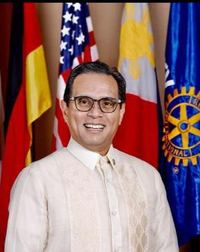 TOWER Awards: RCM’s Signature Celebration of Work, Honor, and Nationhood
 TOWER Awards 2026 Messages