

Energy Under Pressure, Leadership Under Fire: The Rotary Club of Manila’s 33rd Weekly Membership Meeting
Energy Secretary Sharon S. Garin briefed Rotarians on the Hormuz Crisis, fuel security, and the road to energy resilience at the 33rd Weekly Membership Meeting.

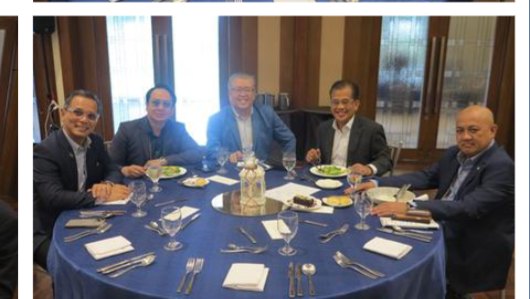
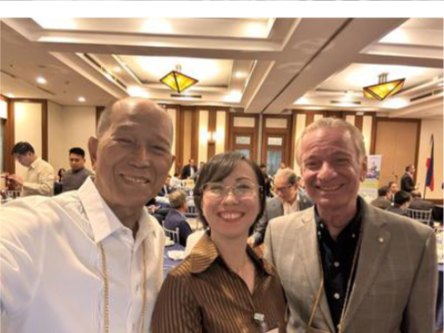
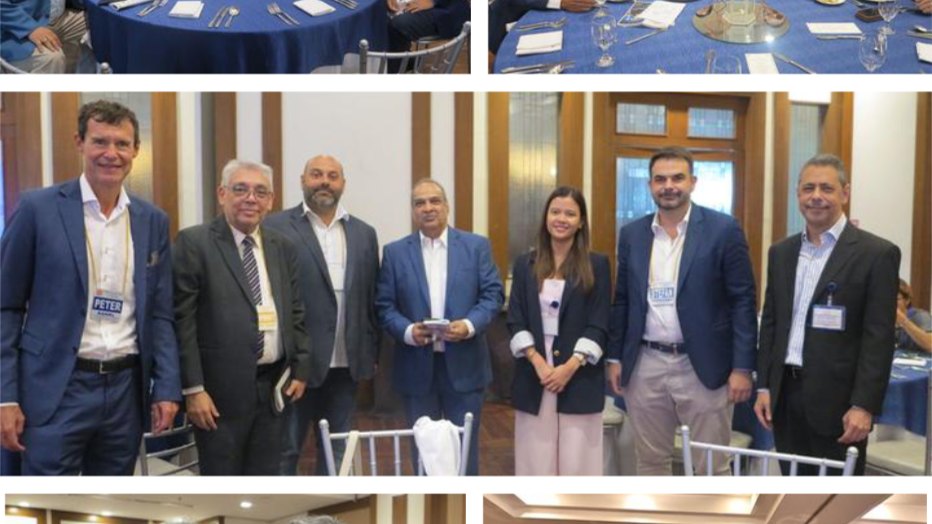
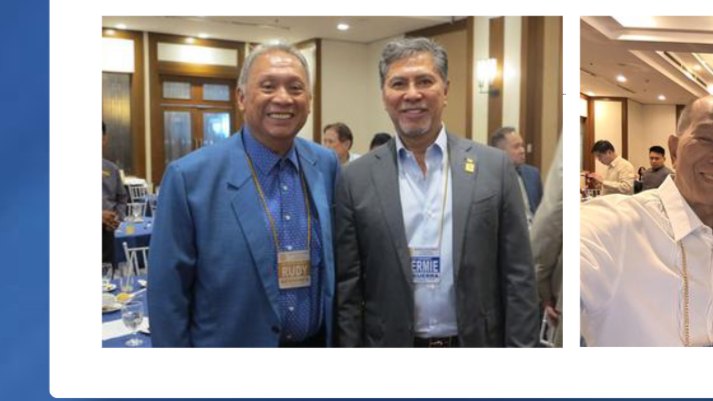
THE 33rd Weekly Membership Meeting of the Rotary Club of Manila (RCM), held on Thursday, June 4, 2026, at the historic Manila Polo Club, was more than a regular luncheon gathering. It became a timely and highly relevant forum on one of the most pressing concerns confronting the nation and the world today: energy security in an increasingly volatile geopolitical environment.
Against the backdrop of continuing global uncertainty arising from the prolonged Strait of Hormuz crisis, Rotarians were afforded a rare opportunity to hear directly from the government official tasked with safeguarding the country’s energy future—The Honorable Atty. Sharon S. Garin, Secretary of the Department of Energy (DOE). Her presentation, aptly titled “Energy Under Pressure: Landscape, Crisis Response, and the Road to Resilience,” provided an illuminating and candid assessment of the challenges confronting the nation and the strategies being undertaken to ensure stability amid global turbulence.

The meeting was presided over by Club President Raoul C. Creencia and moderated by Past Director Issam Eldebs. The program commenced with a solemn invocation led by Director Rami Chahwan, followed by the Philippine National Anthem, the Rotary Club of Manila Hymn rendered by the RCM WF Music Chorale, and the recitation of The Four-Way Test led by PSAA Gunter Matschuck. Club Secretary Anton Mauricio introduced visiting Rotarians and guests, after which the Music Chorale welcomed everyone with a spirited musical number. Birthday celebrants for the month of June were likewise recognized before the assembly proceeded to the formal program.
President Creencia delivered his message before introducing the day’s featured segment. Director Warren So then formally introduced Secretary Garin, highlighting her distinguished public service career and the critical role she currently occupies in steering the nation through one of the most challenging periods in global energy markets.

A Nation at the Crossroads of Energy Security
From the outset, Secretary Garin set the tone with a straightforward acknowledgment that the Philippines remains deeply affected by events occurring thousands of kilometers away.

She explained that her presentation would focus on three broad themes: the current energy situation, the government’s emergency response measures, and the country’s long-term roadmap toward resilience.
The centerpiece of her discussion was the continuing impact of the Hormuz Crisis, now in its fourteenth week. Although a ceasefire between the United States and Iran had eased some immediate tensions, uncertainty remained. The Strait of Hormuz, one of the world's most critical oil transit routes, continued to operate under severe constraints, creating persistent disruptions in global energy markets.

Secretary Garin emphasized that the greatest achievement of the Department of Energy during the crisis was ensuring that the Philippines never experienced a fuel shortage.
Through aggressive diplomacy, extensive coordination with ASEAN partners and fuel suppliers around the world, and strategic stockpiling initiatives, the government maintained national diesel inventories at levels sufficient to protect the country from supply disruptions. She explained that securing fuel inventories was not a simple exercise in procurement. The DOE had to account for shipping lead times, alternative sourcing arrangements, and storage limitations while balancing national consumption patterns. The challenge was immense, yet largely invisible to ordinary Filipinos precisely because the contingency measures had worked.

As Secretary Garin noted with some pride, most Filipinos never noticed the enormous effort occurring behind the scenes because fuel remained available throughout the crisis. That, she suggested, was perhaps the strongest evidence that the government's strategy had succeeded.
When Supply Is Stable but Prices Are Not

While fuel availability remained secure, the more difficult challenge became controlling the impact of soaring prices.
Secretary Garin carefully explained that the problem was no longer access to oil but the escalating cost of bringing oil into the country. Insurance premiums surged. Freight costs increased dramatically. Shipping routes became riskier. Traders demanded higher premiums to move fuel across unstable regions.

The result was a cascade of price increases that affected not only fuel but virtually every commodity dependent upon transportation.
Diesel, she explained, sits at the heart of the Philippine economy. When diesel prices rise, food prices rise. Agricultural products become more expensive to transport. Supply chains become more costly. Inflation accelerates.

One particularly striking observation from her presentation was the extent to which global events now influence local fuel prices almost instantaneously.
A military strike in the Middle East. A disruption in shipping. A diplomatic announcement.

Even a social media post from a major world leader.
Each event could trigger market reactions that eventually affected the price paid by Filipino motorists and consumers. The world, she noted, had become extraordinarily interconnected, making energy security not merely a domestic issue but a geopolitical one.

Despite significant fuel rollbacks in the weeks preceding the meeting, she cautioned that prices remained vulnerable to developments beyond the country's control. While the market appeared to be stabilizing, uncertainty remained the defining characteristic of the global energy landscape.
Executive Order No. 110: Giving Government More Teeth

A major portion of Secretary Garin’s presentation focused on Executive Order No. 110, issued by President Ferdinand R. Marcos Jr., declaring a National Energy Emergency. The measure provided government agencies with enhanced authority to stabilize energy markets and coordinate nationwide responses.
Secretary Garin described the Executive Order as a “game changer.”

Under the Oil Deregulation Law, the government traditionally possesses limited authority over fuel pricing. The DOE can monitor and evaluate, but it cannot ordinarily dictate prices. EO 110 temporarily strengthened the government's ability to intervene, enabling it to establish clearer pricing parameters, curb abuses, and protect consumers from excessive increases.
The Department also intensified enforcement efforts against profiteering and hoarding. Fuel stations were directed to follow prescribed guidelines on pricing and fuel dispensing, while anti-hoarding regulations were strengthened through partnerships with local government units, law enforcement agencies, and other government offices.

This inter-agency approach transformed what would ordinarily have been a DOE-led regulatory effort into a nationwide mobilization involving the Department of the Interior and Local Government, the Philippine National Police, and numerous other agencies. Secretary Garin candidly noted that the DOE alone lacked the manpower necessary to monitor over 14,000 gasoline stations nationwide. The crisis therefore required a whole-of-government response.
Technology, Transparency, and Public Participation

Another notable aspect of the DOE's response involved the use of technology to strengthen monitoring and accountability.
Secretary Garin explained how the Department partnered with the Department of Information and Communications Technology (DICT) to establish the eGovPH Complaint Center and related reporting mechanisms. Through these platforms, citizens could report suspected hoarding, overpricing, unauthorized fuel increases, or supply shortages.

Rather than relying on social media complaints or informal reporting channels, the system provided a structured, transparent process for routing complaints directly to the appropriate enforcement agencies.
For Rotarians accustomed to discussing governance and accountability, this portion of the presentation resonated strongly, demonstrating how digital innovation can improve regulatory effectiveness during times of crisis.

Strategic Fuel Stockpiling: Preparing for the Worst
Perhaps the most consequential initiative discussed was the government's strategic fuel stockpiling program.

Recognizing the hesitation among private oil companies to purchase large fuel inventories during uncertain market conditions, the government stepped forward as a partner. Through PNOC and PNOC Exploration Corporation, the DOE facilitated the procurement and storage of significant quantities of diesel and gasoline to bolster national reserves.
Secretary Garin described how government participation helped reassure private sector players, enabling them to continue importing fuel despite fears of market volatility. The strategy eventually expanded inventories to levels approaching the country's storage capacity limits.
This initiative ensured that the Philippines remained insulated from severe supply disruptions even as global markets experienced unprecedented stress.
Equally important, it demonstrated the value of constructive government-private sector cooperation during periods of national emergency. Rather than competing against industry, the government worked alongside fuel companies to secure the nation’s energy needs.

Conservation as Patriotism
One of the most compelling portions of the presentation involved energy conservation.
Secretary Garin argued that conservation is no longer merely an environmental responsibility; it is a matter of national resilience.
The DOE launched extensive campaigns promoting energy audits, temperature regulation in buildings, work-from-home arrangements, and broader energy-saving practices. Government offices were encouraged to optimize electricity use, while the public was urged to adopt habits that would reduce overall demand.

She emphasized that every kilowatt-hour saved contributes to national stability.
Reduced demand lessens pressure on fuel inventories, lowers electricity generation costs, and minimizes reliance on expensive imported fuels. The Department even promoted a Filipino-style "Earth Hour" initiative encouraging households to switch off lights and unplug appliances during designated periods each week.

Her message was simple yet powerful: resilience begins not only with government action but also with individual responsibility.
The Secretary stressed that energy conservation should become a permanent habit rather than a temporary reaction to crisis. The more efficiently Filipinos consume energy, the stronger the country's ability to withstand future shocks.

The Long Road Toward Energy Independence
As her presentation turned toward the future, Secretary Garin outlined the broader vision emerging from the lessons of the Hormuz Crisis.

The central lesson, she argued, is that the Philippines remains dangerously dependent on imported fuel.
Reducing this vulnerability will require a multi-pronged strategy involving increased domestic exploration, accelerated renewable energy development, expanded electrification of public transportation, greater adoption of biofuels, and stronger investments in indigenous energy resources.

She highlighted ongoing exploration initiatives, new energy contracts, and the continued expansion of renewable energy projects. While acknowledging that these efforts will take years to fully mature, she stressed that the country can no longer afford to postpone difficult decisions regarding long-term energy security.
Particularly noteworthy was her emphasis on reducing dependence on diesel, which currently powers much of the country's transportation sector. Electrification of public transport, expansion of renewable energy capacity, and development of local fuel sources will all play critical roles in achieving greater energy independence.

The future, she suggested, belongs to nations that can produce more of their own energy, diversify their energy mix, and reduce dependence on geopolitical chokepoints.
A Meeting of Insight and Relevance

The Open Forum that followed proved lively and engaging, as members sought clarification on issues ranging from fuel pricing and public transportation to renewable energy investments and the country's long-term energy strategy. Secretary Garin answered questions with candor and authority, reflecting both her command of the subject and her commitment to public accountability.
President Raoul Creencia subsequently delivered the Club’s formal response, expressing appreciation for the Secretary’s comprehensive briefing and for the Department of Energy’s tireless efforts during a period of global uncertainty. A Certificate of Appreciation was then presented to the Guest of Honor and Speaker.

The meeting concluded with President Creencia formally calling the assembly to adjourn.
Yet long after the luncheon ended, the message of the day lingered.
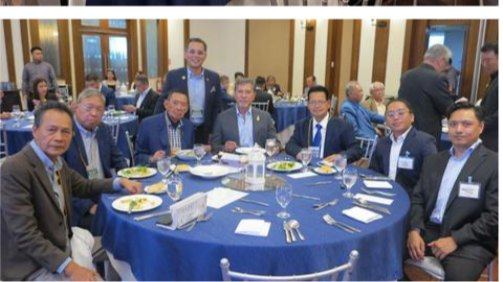
The 33rd Weekly Membership Meeting demonstrated the enduring value of the Rotary Club of Manila as a forum where public policy, business leadership, and civic engagement intersect. More importantly, it reminded everyone present that energy security is no longer merely a technical concern for engineers, regulators, and economists. It is a national imperative that touches every Filipino household, every enterprise, and every community.
In Secretary Sharon Garin, the Club encountered not merely a government official reporting on statistics and policies, but a public servant confronting one of the defining challenges of our time: how to keep a nation moving, productive, and resilient in a world where energy has become both an economic necessity and a strategic battleground.

Through preparation, innovation, collaboration, and foresight, her message was clear: the Philippines must not simply survive future crises. It must emerge from them stronger, wiser, more self-reliant, and more energy secure than ever before.



 34th Weekly Membership Meeting Editorial
 Pro Patria and Outstanding Journalism: A Natural Alliance of Truth and Nationhood
 The Pro Patria Journalism Awards: The Rotary Club of Manila's Enduring Tribute to Truth, Press Freedom, and Nation-Building