
Nourishing the Nation's Soul
Art is not ornament appended to existence but the very marrow of it, and deserves its rightful share of importance in national policy-making.

IN a recent exhibition of his artworks at the Philippine Center in New York, Filipino master and preeminent watercolorist Rafael “Popoy” Cusi began his remarks by saying, “Ang isang bansang walang sining ay isang bansang walang kaluluwa.” A nation without art is a nation without soul.
Indeed, art is essential to being human, and this is no novel proposition — the ancients had already settled the matter millennia before us. Aristotle, in his Poetics, held that the aim of art is not to mimic the outward appearance of things but to reveal their inward significance, their essential truth beneath the surface. Plato, ever wary of the poets, nonetheless conceded in the Republic that rhythm and harmony steal into the innermost recesses of the soul, taking the firmest hold there and bringing grace to those rightly trained. Confucius, too, taught that ritual and music together cultivate virtue — that a people schooled only in utility, without beauty, remains unrefined, a jade uncarved. Across civilizations and centuries, philosophy converges on this singular verity: that art is not ornament appended to existence but the very marrow of it.

But in an impoverished nation, art can seem an otiose extravagance — a luxury ill afforded when food, shelter, and livelihood remain elusive for so many. Why fund a gallery when a classroom leaks? Why subsidize a sculptor when a farmer needs irrigation? These are not unreasonable questions, and any editorial that dismisses them out of hand does the nation a disservice.
Yet this should not be the calculus. Art, as one of the principal foundations and tangible expressions of culture, is indispensable to a nation's identity, its humanity, and ultimately its success. Culture and the arts help define who we are, who we aspire to become, and the path by which we might get there. They furnish meaning to our collective existence — a meaning that infrastructure and GDP, however necessary, cannot by themselves supply. A people fed but unmoored from beauty and memory is a people merely surviving, not truly living.

It is this conviction that animates the work of our Guest of Honor and Speaker, Abdulmari De Leon Imao, Jr. — known to nearly everyone simply as Toym. An artist of unquestionable pedigree, being the son of National Artist Abdulmari Asia Imao, the first National Artist hailing from Mindanao, Toym has nonetheless carved (quite literally, given his extensive list of sculptural installations in the Philippines and beyond) a distinguished path of his own. Mentored by no less than National Artists Napoleon Abueva and his own father, honed in the science of architecture and fine arts at the University of the Philippines, and later at the Rinehart School of Sculpture at the Maryland Institute College of Art, his journey has been, by any measure, a formation of rare breadth: equal parts discipline and daring.
Today, as Dean of the University of the Philippines College of Fine Arts, Toym bears the weighty charge of forming the nation's next generation of artists — instructing them in the classical disciplines while urging them to break free, to unleash their imagination in service of their own vision and that of the country. He oversees art programs across the UP System and is developing a curriculum on art conservation and programs on art and culture education. Beyond the academy, Toym is an indefatigable champion of artists' rights and of drawing non-professionals into creative life. He continues to campaign for legislation that would uphold the rights of Filipino artists and establish robust national arts and culture programs and policies.

It is our hope that through Toym's labors, and those of other advocates of art and culture who share his zeal and commitment, art shall cease to be regarded as a mere add-on — an afterthought tacked onto the margins of governance — and instead be accorded its rightful share of importance in national policy-making. For it is art, ultimately, that helps define our people's identity, sets our collective aspirations, and nourishes the nation's soul, lending meaning to our shared existence.
As Aristotle might remind us, we do not merely live; we must learn to live well — and no nation has ever done so without its art.

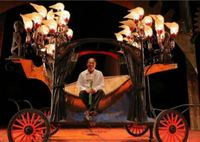 Abdulmari “Toym” L. Imao Jr.
 Rotary Club of Manila Champions Children's First 1,000 Days, Welcomes Global Peace Advocate at Fifth Weekly Membership Meeting
 Meeting with Camara, Custodio & Co. Regarding Treasury Concerns