

Find the Courage to Say No
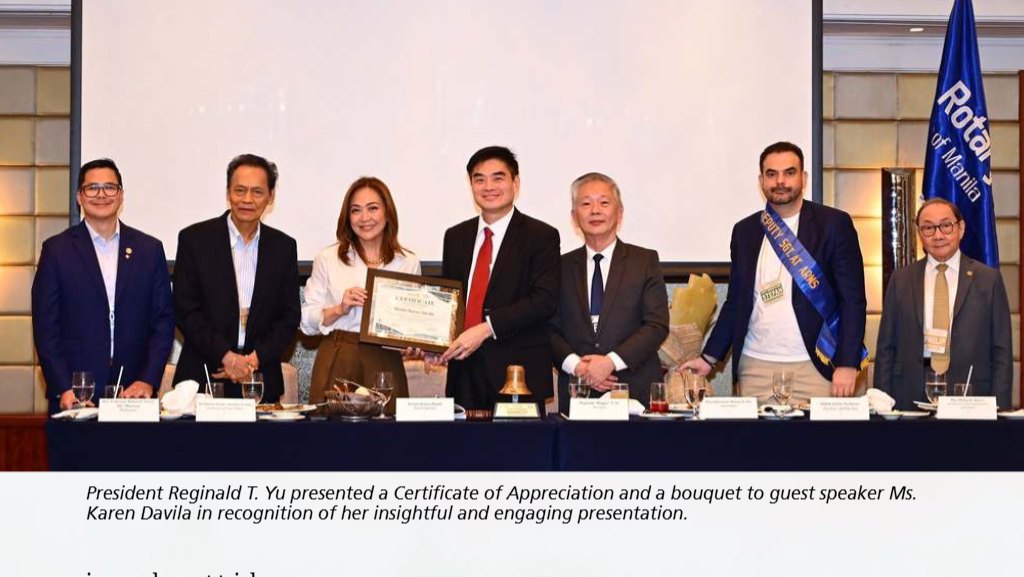
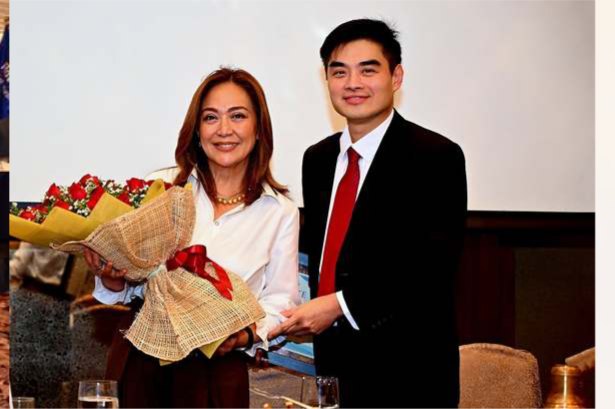
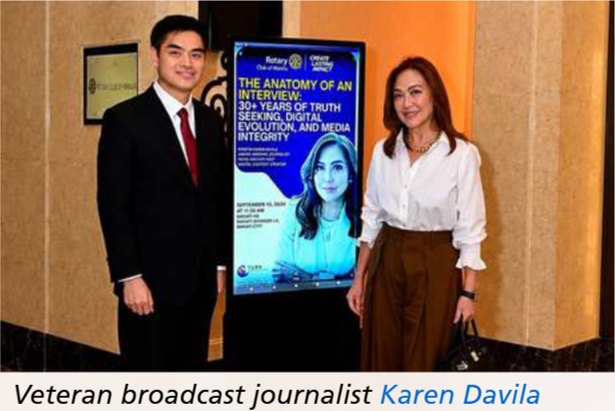
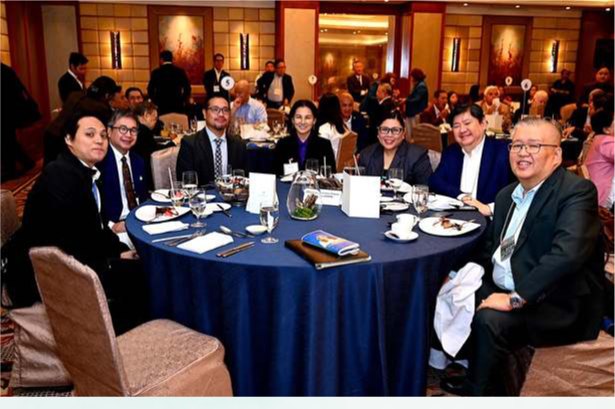
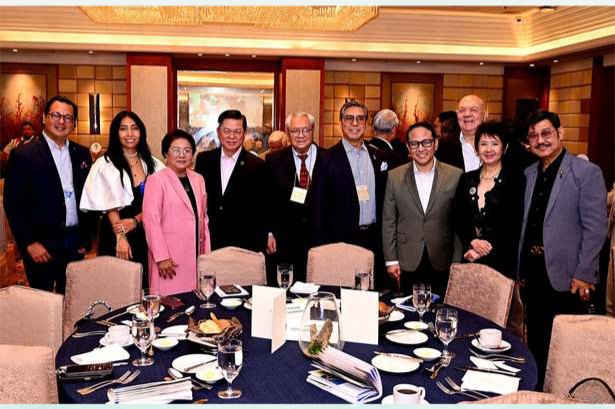
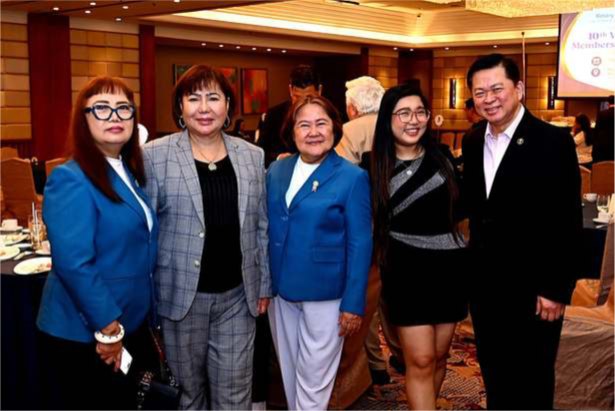
Veteran broadcast journalist Karen Davila takes center stage before a jam-packed audience of close to a hundred attendees at the Rotary Club of Manila’s 10th Weekly Membership Meeting. Drawing from more than three decades of truth-seeking, storytelling, and navigating the evolving media landscape, she delivered a clear and compelling message: lasting success rests not only on talent, but on preparation, courage, and an unwavering commitment to integrity.

Award-winning broadcast journalist Karen Davila underscored the importance of integrity, preparation and moral courage during the Rotary Club of Manila’s 10th Weekly Membership Meeting at the Makati Shangri-La Hotel.
Rather than delivering a conventional account of her professional success, Davila drew from her 33-year career in broadcast journalism to challenge Rotarians to identify the principles they would never compromise in pursuit of recognition, influence or advancement.

She said success is shaped not only by the opportunities a person accepts but also by the temptations, compromises and questionable arrangements one has the courage to reject.
Before Davila’s address, the Rotary Club of Manila renewed its Memorandum of Agreement for the Legal Education and Advancement Program Awards with the Office for Alternative Dispute Resolution and the Philippine Institute of Arbitrators. The agreement reaffirmed the Club’s commitment to peace, responsible citizenship and institutions that promote dialogue, fairness and public trust.

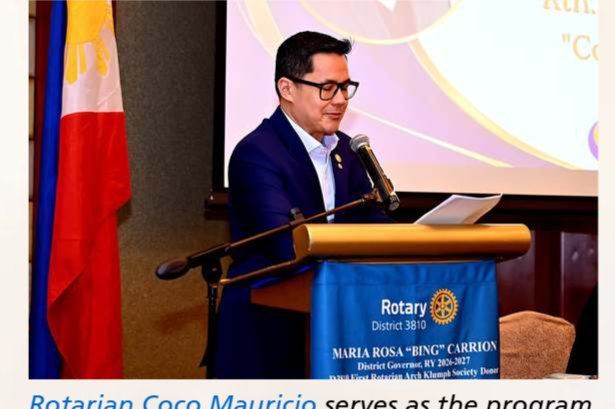
Past Director Amado D. Valdez introduced Davila, while Rotarian Francisco Roberto “Coco” DC. Mauricio moderated the open forum.
The Power of Saying “No”

Davila recalled her longstanding connection with the Rotary Club of Manila through The Outstanding Young Men of the Philippines awards. Rotary Club of Manila President Reginald T. Yu had encouraged and assisted her in preparing her application, but recognition did not come immediately. She was nominated more than once before finally receiving the award on her third attempt in 2008.
She cited the experience as proof that failure and delay can form part of the preparation for eventual success. It also became a lesson she would later impart to her sons: an unsuccessful first attempt should never be a reason to give up.
“We often equate success with what we say yes to,” she reflected, “but very few ever really teach us the power of saying no.”
Davila then turned to what she described as a more fundamental requirement of professional life: deciding in advance what one would never do to succeed.

When she joined GMA Network in 1993, Davila earned a monthly salary of ₱5,000. Her father drove her to work in an old Volkswagen that occasionally broke down. Long before she became one of the country’s most recognizable broadcast journalists, she had already resolved never to dishonor her profession for money, influence or personal advancement.
That early decision, she said, became a form of protection throughout her career. Davila reminded the audience that credibility is a journalist’s most valuable capital. It may take decades to establish but only one compromised decision to destroy. She added that the principle applies equally to business, government, civic leadership and private life.

Ethical failure, she warned, does not always begin with one dramatic act. It can develop gradually through seemingly minor accommodations, concealed conflicts, dishonest transactions and compromises justified as necessary for survival.
Values must therefore be settled before temptation arrives, she said. If principles remain negotiable until the moment they are tested, temptation itself may determine the outcome.

Preparation Transforms Talent
Davila identified preparation as another indispensable principle of professional excellence. While natural talent may open doors, she said it cannot sustain a career without discipline. In live journalism, there is no substitute for reading the material, researching the subject, studying its history and understanding the context needed to ask meaningful questions.

“Our main asset is our credibility. It takes years to build and is easy to destroy,” she declared. “You can never be courageous if you are compromised.”
Preparation, she added, is not merely a professional requirement but an expression of respect for one’s audience, colleagues and the people affected by a public conversation.

After years of hosting as many as two or three live programs in one day, Davila said she had learned that there were no shortcuts to readiness. Whether circumstances were favorable or difficult, the responsibility remained the same: to arrive prepared and perform the work faithfully.
Integrity as the Foundation of Courage

Davila’s third principle was courage, which she described not as the absence of fear but as a consequence of integrity. A compromised person cannot be entirely courageous, she explained, because hidden obligations create constraints. They weaken a person’s voice, limit the questions that can be asked and compel individuals to protect private arrangements instead of defending the truth.
She offered a simple measure of personal integrity: whether a person can still look at oneself in the mirror. Even when compromises remain hidden from others, the individual who made them knows they exist. That knowledge, she said, can diminish the moral authority from which courage must speak.

As she approached her 56th birthday, Davila said her understanding of success had also evolved. Awards, wealth, professional titles and public recognition remain meaningful, but they no longer constitute the ultimate measure of a life. She now places greater importance on what she called an “eternal investment,” referring to choices and contributions whose value extends beyond applause and professional recognition.
Drawing from a reflection by tennis champion Roger Federer, she said greatness can be found not only in extraordinary achievements but also in balancing meaningful work with time devoted to one’s family.

Beyond professional success, she invited everyone to reflect on a deeper measure of achievement: “How did I live and lead my life? Is it a life I can be proud of?”
Turning Imperfection as a Distinctive Voice

During the open forum, Davila spoke candidly about the distinctive raspiness of her voice. She revealed that she had been diagnosed with hyperthyroidism in her twenties and later underwent radioactive iodine treatment. For years, she considered her voice a “thorn in the flesh” and admitted that she had never particularly liked it.
Over time, however, she learned to accept what she could not change and make the best use of what she had been given. The vocal quality she once regarded as an imperfection eventually became one of the most recognizable voices in Philippine broadcasting. Her experience, she said, demonstrated that people may not always choose the instruments entrusted to them, but they remain responsible for using those gifts faithfully.

No Plans to Seek Public Office
Asked whether she would consider running for public office in 2028, Davila immediately said no. She acknowledged the dignity of public service and the privilege of serving the country. She also expressed confidence that she possessed the competence to perform the work, particularly when compared with officials who hold office without demonstrating sufficient ability or commitment.

Her hesitation, she explained, concerned the vast financial and political machinery required to mount a serious electoral campaign, as well as the compromises and personal costs that often accompany it. Davila said she was unwilling to surrender her peace of mind or risk everything she had built unless the call to public office became unmistakably clear.
Her response reinforced one of the central arguments of her address: leadership does not require accepting every available platform. Influence may sometimes be exercised more authentically outside elected office.

Public Figures Who Left An Impression
When asked which Filipino interviewee had inspired her most, Davila named Pasig City Mayor Vico Sotto, citing his integrity, clarity of vision and determination to change the practice of governance. His example, she said, showed that public office does not create character but reveals and tests the character a person has already formed.

Davila also recalled memorable encounters with the late senator Miriam Defensor Santiago, former Senate President Juan Ponce Enrile and former vice president Leni Robredo. She described Santiago as an unforgettable subject because of her intensity, while noting Enrile’s intellectual alertness and habit of remaining well-read despite his advanced age. Robredo, meanwhile, represented what Davila regarded as a certain purity in public life and a sincere desire to serve beyond political calculation.
Journalism Under Pressure

Addressing the state of Philippine journalism, Davila acknowledged the industry’s historical problems, including corruption and the practice known as “attack-collect, defend-collect.” She said, however, that one of the more serious present dangers comes from the political environment surrounding the press.
Davila cited the failure to renew the ABS-CBN franchise as a development that sent a chilling message to media organizations and businesses. The shutdown demonstrated how political power could be used against institutions that refused to conform, she said, fostering fear and self-censorship among journalists.

She also expressed concern about politicians acquiring interests in media organizations. Ownership, she noted, can influence not only which stories are reported but also which issues are deliberately ignored.
The challenge has become more complex with the growth of social media, artificial intelligence and politically controlled online platforms. Fabricated stories can now imitate legitimate journalism and reach millions of people before verified information can catch up. Even intelligent and educated citizens may be deceived by false reports presented through professional-looking platforms, she warned.

In this environment, media literacy has become a civic responsibility, while credible journalism has become even more necessary at precisely the time it is most vulnerable.
Discipline in Reporting Complex Issues

Davila was also asked about the two-thirds threshold in a possible Senate impeachment trial. She outlined the legal and practical questions surrounding the definition of the Senate’s total membership, particularly when senators may be absent, suspended, resigned, deceased or unable to take their oaths as senator-judges.
While describing retired Supreme Court Associate Justice Antonio Carpio’s position as reasonable and substantial, Davila distinguished between a journalist’s responsibility to examine a legal argument and the judiciary’s authority to resolve it. She said any disputed interpretation would likely reach the Supreme Court.

Her answer reflected the journalistic discipline of clarifying an issue, examining competing arguments and refraining from presenting personal opinion as final judgment.
Leadership Begins with Self-Command

District Governor-Nominee Hermie Esguerra posed the final question, asking Davila to identify the most difficult question she had ever asked herself and what its answer had taught her about leadership.
Davila said she regularly evaluates her performance after an interview. She asks whether she could have done better, whether she missed an important question, whether she could have spoken more clearly or whether she might have responded with greater composure.

She then discussed the influence of Don Miguel Ruiz’s "The Four Agreements" on her personal and professional life: be impeccable with one’s word, do not take things personally, do not make assumptions and always do one’s best.
Davila acknowledged that she had occasionally become emotional or raised her voice during interviews. Maria Ressa, her former supervisor, had reminded her that journalists must not allow personal reactions to control an exchange.

She also stressed the need to seek clarity instead of relying on assumptions, particularly in political journalism, where reducing people to simplistic categories of good and evil can obscure the systems and pressures influencing their actions.
Davila recalled a demanding period in which she hosted a morning program, covered stories in the field, conducted an afternoon radio show, returned home for dinner with her children, rested briefly and then anchored a late-night newscast. She maintained the schedule for about 12 years because she regarded work and access to a national platform as privileges that should never be wasted.

She did not claim to be the country’s best journalist and readily acknowledged that others might possess greater natural gifts. What she could say with confidence, however, was that she consistently tried to give her best.
Her message offered a broader lesson for leadership: before governing an organization, community or country, a leader must first learn to govern personal ego, appetites, reactions, assumptions and fears.

Davila’s appearance at the Rotary Club of Manila ultimately became more than a discussion about journalism. It was a reflection on the moral foundations of leadership and a reminder that credibility cannot be improvised, courage cannot thrive in compromise and influence must be treated as a trust rather than a personal possession.
Her closing message was clear: establish one’s non-negotiable principles, prepare relentlessly, remain free enough to act courageously and use one’s voice in service of something greater than oneself.



 A Healthy Tension: Balancing National Ambition and Local Autonomy
 Atty. Roseller "Boots" Rodriguez