

The Lady of the Palace
An editorial survey of notable First Ladies through history, from Dolley Madison to Liza Araneta-Marcos, and the qualities that define the role.
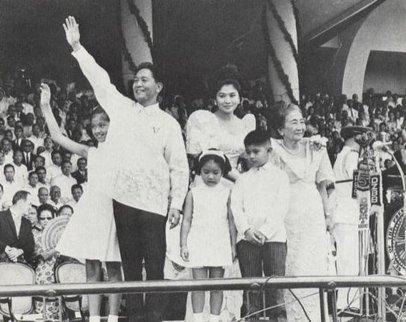
No constitution lists the duties of a First Lady, yet history keeps showing how much the role can matter. The best-remembered spouses of presidents and prime ministers tend to share a few traits: they act as the leader's honest mirror, they carry causes the government cannot easily carry itself, and they make the highest office of state accessible to the common person.
On August 24, 1814, with British troops about to enter Washington, Dolley Madison ordered that state papers, crimson draperies and Gilbert Stuart's portrait of George Washington be carried out of the President's House before it burned. The White House Historical Association confirms she gave the order and that staff and others present carried it out. It also notes that the story grew in the telling; the enslaved worker Paul Jennings later insisted she did not personally cut the painting from its frame, as popular legend had it. The lesson is clear whatever version is told: in a crisis, a First Lady who stays calm and decides what is worth saving becomes a symbol of national resolve.
In June 1940, with France fallen and invasion feared, Winston Churchill had been prime minister for about six weeks. On June 27 Clementine wrote him a letter, preserved at Churchill College, Cambridge, saying that a devoted member of his circle had warned her he risked being disliked by colleagues and subordinates because of a rough, sarcastic, and overbearing manner. She told him she had noticed he was "not so kind as you used to be," and signed herself his loving, devoted, and watchful wife. Few advisers can say that to a wartime leader. A spouse can, and that letter is a reminder that candor delivered with love is one of the most valuable things a leader's partner can offer.
In March 1941, while visiting Tuskegee, Alabama, Eleanor Roosevelt asked Charles "Chief" Anderson, the Tuskegee Institute's chief flight instructor, to take her up in a plane despite serious misgivings from her security detail. At the time the Army's first Black flying unit had only just been created. The flight lasted over an hour and its photographs were widely circulated. National Park Service and Smithsonian sources describe the flight as a deliberate public rebuttal to the belief that Black Americans could not fly. Mrs. Roosevelt's action showed how a First Lady's presence can focus attention on an issue and shift public opinion in ways a formal policy pronouncement might not.
Lady Bird Johnson turned beautification into what History.com and PBS describe as the first major legislative campaign ever launched by a First Lady. She created the First Lady's Committee for a More Beautiful Capital and, according to the White House Historical Association, left the White House early in the mornings by minibus to lead planting activities around Washington. She then lobbied for the Highway Beautification Act of 1965, which limited billboards and junkyards along highways and provided for scenic overlooks and rest stops. PBS notes the billboard industry made the fight fierce. The bill passed the Senate in September and the House in October, and President Johnson signed it on October 22, 1965; it was nicknamed "Lady Bird's Bill." She was also gracious toward her predecessor. In April 1965 she renamed the East Garden the "Jacqueline Kennedy Garden" and carried forward many of Mrs. Kennedy's White House preservation efforts, while taking an active part in the launch of Head Start, a federally funded U.S. initiative to provide comprehensive early childhood education, health, nutrition, and family support services for low-income children and families. The takeaway: a First Lady who chooses to support a cause with her political reach can extend a president's agenda into actual government policy.
A former teacher and school librarian, Laura Bush helped found the Texas Book Festival while First Lady of Texas and launched the first National Book Festival with the Library of Congress on September 8, 2001. Three days later she was on her way to testify before a Senate committee on early childhood education when the September 11 attacks began, as she herself has recounted. Her focus shifted, and on November 17, 2001, she became the first First Lady to deliver the president's weekly radio address in full, using it to condemn the Taliban's treatment of women and children in Afghanistan. She later made three trips to Afghanistan, and in January 2002 she did testify before the Senate education committee, calling for better teacher pay and training. The credibility earned in the practice of her profession, bolstered by her steadiness in a national crisis, lets a First Lady speak with authority when events demand it.
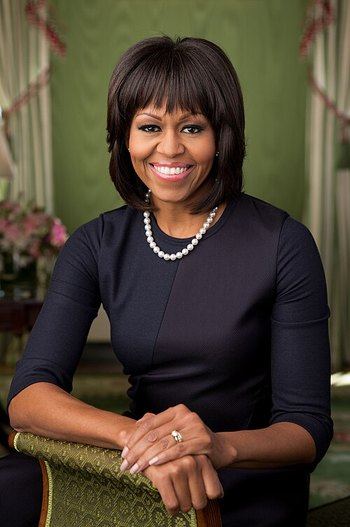
Michelle Obama, the first African American First Lady, planted a kitchen garden on the White House South Lawn in 2009, the first since Eleanor Roosevelt's wartime Victory Garden, according to the Obama Foundation. It became the seed of Let's Move!, a program launched on February 9, 2010 to tackle childhood obesity by bringing together parents, schools, doctors and communities. Healthier school meals were part of the push, and the Healthy, Hunger-Free Kids Act followed in December 2010. In April 2011, with Jill Biden, she launched Joining Forces to support military families and veterans, including a challenge to businesses to hire or train 100,000 unemployed veterans and military spouses by 2013. Joining Forces was designed to be non-partisan and used the First Lady's platform rather than legislation. This is evidence of a First Lady's power as a convener: someone who can bring business, schools and communities to the table around a cause without needing to pass a law.
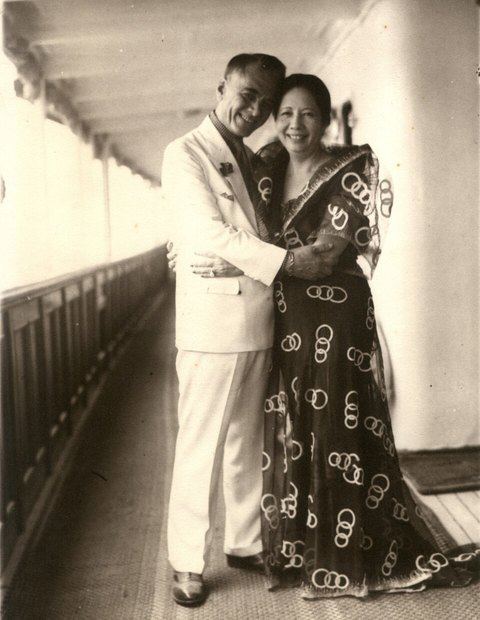
Aurora Aragon Quezon was the first presidential spouse in the Philippines to be called "First Lady." Historical accounts describe her as a supporter of women's suffrage, which was achieved in 1937, and of hospitals and orphanages. It was said that she kept away from partisan politics and reportedly preferred a nipa house in Malacañang Park to the palace itself. In 1947 after the war, she became the first chairperson of the Philippine National Red Cross. Her tragic death on April 28, 1949 while on her way to inaugurate a hospital in Baler only bolstered her reputation as a First Lady defined by humanitarian work.
The first Marcos to have the role of First Lady is arguably the most visible on the world stage, Imelda Romualdez Marcos, First Lady from 1965 to 1986. In September 1974 she led a mission to Beijing as the President's special envoy to lay the groundwork for diplomatic relations with the People's Republic of China, meeting Premier Zhou Enlai and Chairman Mao Zedong. The photograph of Mao kissing her hand became one of the best-known images of the era, and the South China Morning Post notes that it still marks a high point in relations between the two nations. She made frequent trips abroad carrying personal messages as special envoy of President Ferdinand E. Marcos, Sr. Over the years she met figures including Nixon, Reagan, Gaddafi, Saddam Hussein and Fidel Castro, and she had also visited Moscow. Her best-known mission came in 1976 when the President sent her to Libya in November 1976 to win over Colonel Gaddafi. She is associated with the establishment of the Cultural Center of the Philippines and the national centers of excellence in health care, which includes the Philippine Heart Center, the Lung Center of the Philippines and the National Kidney and Transplant Institute.
Across these examples, it can be argued that the qualities that make a First Lady an asset to her spouse is composure under pressure, the courage to tell the leader the truth, the passion for causes that serve the people beyond the government's own programs, and the ability to project the nation's best to the rest of the world.
The chapter of Philippine history that would speak of First Lady Marie Louise "Liza" Araneta-Marcos is still being written. This early, however, there are indications of the above qualities in what she has been involved in - be it in her passion for teaching law, her signature program, Lab for All, her historic visit to the New Bilibid Prison, her commitment to bring the "Fostering the Future Together" initiative to Manila, or her promotion of Filipino arts, culture and creativity. We at the Rotary Club of Manila extend our warmest welcome as she joins us for an afternoon of fellowship and shared purpose, and we wish her well on her continuing endeavors for the country and for the people.
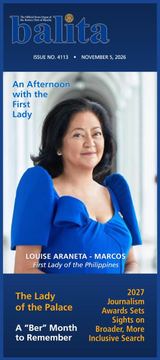
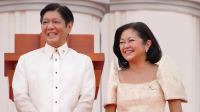 Louise Araneta-Marcos
 A "Ber" Month to Remember
 2027 Journalism Awards Sets Sights on Broader, More Inclusive Search
