

Five Generations, One Group Chat
An editorial on how five generations communicate differently, seen through family group chats and the history of Filipino emigration abroad.
Every family has a group chat, and every group chat has the same cast. There is the uncle who sends a glittering "GOOD MORNING, GOD BLESS" GIF at 5:04 a.m. There is the cousin who replies with a single thumbs-up, which is somehow both a blessing and a threat. There is the teenager who has muted the chat for the fourth time this week, and a small child, not yet allowed a phone, who is nonetheless dictating to a smart speaker that the family should "stop being cringe."
Welcome to the generational divide: five generations, one living planet, and a shared inability to agree on whether a phone call is a normal thing to do.
Let's be fair and meet The Cast of Characters properly. But first things first: the birth years below are conventions, not laws of physics, and the borders are fuzzy. Plenty of people born in 1980 will tell you they are "basically a Millennial," and plenty of 1995 babies will insist they are "emotionally Gen Z." But the broad strokes are useful, and funnier.
The Baby Boomers, born roughly 1946 to 1964, grew up in a world where you were expected to find a job, keep it for forty years, and at the end receive a gold watch and a handshake. Many did. They remember rotary dials, the arrival of color television, and a time when "the news" was a thing that happened at six o'clock and then politely stopped.
Their relationship with technology is best described as enthusiastic and unsupervised. Picture a Boomer lola discovering voice messages and sending a four-minute one that begins with "Hello? Hello? Is this recording?" and ends with the sound of her setting the phone down on a table to go check on the rice. Or the Boomer dad who types an entire text message in capital letters because he assumes the shift key is a kind of volume knob. He is not shouting. He is simply COMMITTED.
Boomers also keep everything. Plastic bags live inside other plastic bags. Ice cream tubs hold anything except margarine. A drawer in the house contains forty-one unlabeled keys, none of which open anything, all of which must be kept "just in case."
Generation X, born roughly 1965 to 1980, is the middle child of history, and it has made peace with being forgotten. They were the latchkey kids, the ones who came home to an empty house, made their own snacks, and learned that the family's emotional support system was a cassette tape and the neighborhood. Their parenting philosophy, in four words: "Go figure it out."
Gen Xers are the translators of the family. They can fix a VCR and a Wi-Fi router. They remember the dial-up screech, and they still flinch slightly at the sound of a fax machine. They are also the generation most likely to say "I'm fine" in a tone that could strip paint, and then take a long drive to nowhere in particular.
Ask a Gen Xer whether they want to talk about their feelings and you will receive a shrug so eloquent it should be in a museum.
The Millennials, born roughly 1981 to 1996, were promised that if they studied hard, they would get a good job. They studied hard. Then they graduated straight into a recession, a gig economy, and a rent market that treated a one-bedroom like a luxury yacht. Naturally, they responded by inventing the word "adulting," posting about it, and then going back to bed.
They are the generation that went to therapy and came back with vocabulary: "boundaries," "burnout," "toxic." They love a brunch, a plant they will inevitably kill, and an oat-milk something. They were also told, repeatedly and with great confidence, that their financial problems were caused by avocado toast. Several million of them are still waiting to be shown the avocado that was supposedly bankrolling their lifestyle.
Millennials are the bridge generation, fluent in both analog and digital. They remember when a "Friendster testimonial" was a form of social currency, and they now spend their days explaining to their parents that no, that email asking for gift cards is not from the bank.
Generation Z, born roughly 1997 to 2012, never knew a world without the internet, and it shows. They communicate in a flurry of memes, emoji, and acronyms that evolve faster than a dictionary can print. If you say something is "mid," you have not paid a compliment. If someone tells you that you "ate and left no crumbs," you have been praised, and no food was involved.
This generation is famously allergic to the phone call. A ringing phone is not a conversation; it is an ambush. Many a Gen Z has stared at an incoming call as if it were a small, buzzing bomb, then texted the caller: "hey, everything ok??" Meanwhile, the Boomer on the other end is wondering why the child will not simply pick up like a normal person.
But Gen Z is also quietly serious. They have inherited a hot planet and a hot job market, and they respond with a mixture of dark humor and genuine activism. They are at ease talking about mental health, the way earlier generations were at ease talking about the weather. They will also, in the same breath, ask you to hold their phone while they "manifest."
Generation Alpha, born roughly 2013 to now, is of course the youngest cohort. They are still learning to read, but they are already fluent in a dialect that confuses everyone older than twelve.
Gen Alpha is the first generation raised from birth on tablets and streaming. They have never waited for a video to buffer. They will walk into a room, announce that something has "rizz" or is "so skibidi," and watch an entire table of adults nod with the fake confidence of someone who has just been handed a menu in an unfamiliar language.
One exhausted teacher has described her classroom as "a daily field study in a new language I am too old to learn." A grandparent, hearing a seven-year-old declare a lunch "lowkey fire," reasonably asked if the cafeteria was in danger of burning down.
Gen Alpha also has views about screens, and they are surprisingly well informed. A six-year-old will correct your grammar in the same sentence in which she asks you for the Wi-Fi password. The same child may also teach her great-grandmother to make a video call, which is the closest thing the family has to a historic peace treaty.
It is tempting to read all of this as a battle: Boomers versus Millennials, the old versus the young, the people who remember the weight of a payphone handset versus the people who consider a landline a haunted object.
Sociologists generally caution against taking the labels too literally. A person's age, income, culture, and upbringing shape them as much as the year on a birth certificate. Every generation contains saints, scoundrels, and people who still do not know how to attach a file.
But the divides are real enough to matter. They show up in how we work (clock in and stay loyal, or find a better offer?), how we talk (call, text, or send a meme?), how we spend (save every peso, or treat yourself because the future is uncertain?), and how we love (show up and fix the roof, or say the words out loud?). Often, both sides are saying the same thing in different languages. The Boomer who says "Have you eaten?" and the Gen Z who says "I just want to check in" are, in all honesty, doing the same thing.
Nowhere is this more vivid than in families whose members live on different continents, which brings us to the Filipino family.
The Great Filipino Story is of a family spread across the map. The Philippines has one of the world's largest diasporas. Estimates have long put the number of Filipinos living or working abroad at around ten million, roughly one in ten of the population, and the money they send home runs to tens of billions of dollars every year. But behind the statistics are waves of people, each wave with its own reasons, its own hardships, and its own generation's way of coping.
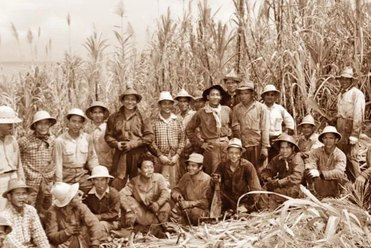
The early chapters of Filipino emigration go back more than a century. In the early 1900s, Filipino laborers known as sakadas sailed to Hawaii to work the sugar plantations, while others, often called manongs, followed the harvest along the American West Coast. Some were pensionados, young scholars sent to study in the United States. They were the original pioneers: hardworking, homesick, and often underpaid, writing letters that took weeks to arrive and sending home what money they could. They are the ancestors of countless Filipino-American families today, and their stories sit quietly in the background of the community, like a family heirloom nobody has opened in years.
The next major wave arrived in the 1960s and 1970s. After changes to US immigration law, Filipino doctors, nurses, and other professionals began to settle abroad in large numbers. At about the same time, the Middle East's oil boom created an enormous demand for construction workers, engineers, and domestic help. In 1974, the Philippine government formalized an overseas employment program, and what had been a trickle became an organized flow.
This is the generation of Boomers many Filipinos know best: the father who spent a decade in the Gulf, returning for brief visits with suitcases of chocolates, perfume, and electronics, and a face his youngest child barely recognized. The balikbayan box, that cardboard treasure chest packed to the point of structural improbability, became the unofficial symbol of this era. Contents often included a pound of cheese, nine tubes of toothpaste, a rice cooker the destination country actually sold cheaper, and a single pair of sneakers wedged in as a final act of defiance against physics.
By the 1980s and 1990s, Filipinos were everywhere. Women, many of them from the Gen X cohort, left for Hong Kong, Singapore, Italy, and the Gulf as domestic workers and caregivers. Filipino seafarers staffed a large share of the world's merchant ships. The term OFW, overseas Filipino worker, became part of everyday vocabulary, and in time, the government began to call these workers bagong bayani, modern-day heroes.
and staying, in new ways. Some are students abroad, some are remote freelancers serving clients in a dozen countries without leaving their hometowns, and some are the children of OFWs growing up as "third-culture kids" in Toronto, Doha, or Cambodia. They speak Taglish at home, English at school, and a meme-heavy internet dialect with their friends. They may not speak the language of their grandparents well, but they can recognize a pot of sinigang from across a room. And when someone mentions lola's adobo, something in them quietly turns toward home.
For Gen Alpha overseas, the challenge is the opposite of their parents'. Their parents left a homeland for a new one. These children inherit a double belonging, a homeland they have visited but never lived in, and a country they live in but is never guaranteed to be theirs.
The effects of these waves on Filipino society are deep and double-edged. On the one hand, remittances have lifted families out of poverty, built houses, paid for school fees, and kept the national economy afloat in difficult years. Whole neighborhoods bear the marks of overseas success: the sturdy second floors, the tiled porches, the brand-new gate with the family name.
The label was deserved, and it was also complicated. It acknowledged sacrifice, but it also quietly turned sacrifice into an economic strategy. The same decade saw painful cases of abuse that shook the nation and led to stronger protections for migrant workers. The lesson, learned the hard way, was that being a hero should never mean being unprotected.
The Millennials of the Philippines grew up with the fruits of the earlier waves, and many followed the same path: nurses to the UK, the United States, and the Gulf; engineers and IT specialists to Canada and Australia; caregivers to Japan, and seafarers once again to the seas. Others stayed home but joined the globalized workforce through call centers and the business process outsourcing industry, working through the night to serve customers whose daylight was the Philippines' darkness.
This generation also invented the modern family video call. Imagine a nurse in Dubai, a grandmother in Batangas, and a student in Perth, all on one screen, each in a different time zone and none of them able to hear anyone else. It is chaos. It is also, quite literally, how love now travels.
Today's young Filipinos are leaving,
On the other hand, the price has been paid in absences. Many children of OFWs grew up with a parent on a screen, raised by grandparents, aunts, or older siblings. Birthdays were celebrated over video; graduations were attended by proxy. Doctors and nurses who trained in the Philippines left to serve other countries' hospitals, a phenomenon known as brain drain. And the cultural norm that someone must go abroad can quietly weigh on the young, who feel the pressure to leave before they have even decided what they want.
Yet the diaspora is also a source of enormous cultural wealth. It has carried Filipino food, music, faith, and humor to every corner of the globe. It has created a worldwide community that, whatever its disagreements, shares one deep reflex: when someone in the family needs help, you show up.
Imagine a family gathering, a few years from now. The long table is crowded: a Boomer lolo who survived the oil boom and still has the lone perfume bottle from his first trip home, a Gen X tita who ran a household in Hong Kong and can fix anything with a rubber band and willpower, a Millennial mother who knows exactly how to run a family from a laptop, a Gen Z cousin home from abroad who will explain AI to the whole table, and a Gen Alpha child who has just taught the lolo to use the video filter that turns everyone into a potato.
Nobody is trying to win. The Boomer shares the stories no search engine will ever hold. The Gen Xer shows everyone the quiet strength of getting on with it. The Millennial brings the language of care and boundaries. The Gen Zer brings the courage to ask hard questions, and the Gen Alpha child brings a kind of fearless curiosity about everything. They argue, of course, about the thermostat, the playlist, and who gets the last piece of lechon. But the arguments are the sound of a family that is still, gloriously, together.
The divide between generations was never the point. It was the raw material. Each age brings something the others lack, and the real work of a community, whether in a barangay, a Filipino community organization abroad, or a single crowded group chat, is to make sure everyone has a seat at the table. If we can learn to listen across the gaps, to laugh at our own glittery GIFs and our own incomprehensible slang, then the next generation of Filipinos, wherever they live, will inherit more than remittances and recipes. They will inherit a home that was built by many hands, across many decades, and is always, always big enough for one more chair.
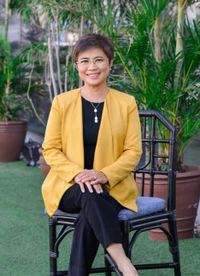 Pauline Fermin
 An Afternoon with the First Lady
 Rotary Club of Manila's 5th Regular Board Meeting
