

Hospicio at Norzagaray Livelihood Training Center and Project
VPE/Dir. Lance Masters reports on the February 16 visit to the Hospicio de San Jose Norzagaray site and the needs of the proposed livelihood training center.

Last May 17th, several of us journeyed to “Jardin dela Virgen Milagrosa,” in Norzagaray, Bulacan (the former retreat that was donated to Hospicio de San Jose in 2014), to participate in the blessing of rehabilitated housing units that we had partially funded in collaboration with RC Osaka. We also witnessed the blessing of a dormitory, whose renovation had been funded by Ford Foundation and others, above the planned livelihood center.
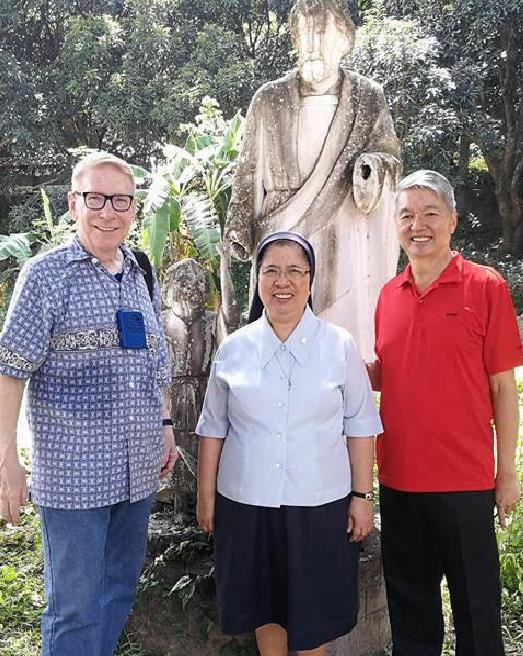
Last Friday, February 16th, Rtn. Phillip Ong, Sister-in-charge Maria Soccoro “Corrie” Evidente and I again trekked to the far-away location, this time to see the progress since last May (funded by others), so that we could assess the needs to complete the proposed livelihood training center and project. Sister was able to secure some private donations to accelerate work on the building. We hope to complete, furnish and equip the center to provide training in bakery and cookery for former informal street dwellers from Manila. When classes are not in session, Hospicio wants to use the facility for a livelihood project, producing finished bakery and cookery products for internal use and for sale to Hospicio’s expanding customer base. The people who stay there need to have an income, and the livelihood project needs to provide this.

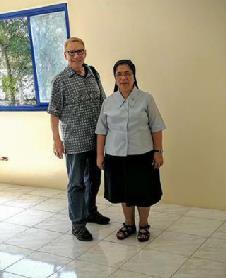
The first floor of the intended livelihood training center was just a shell last year and has undergone substantial renovation. Interior walls have been erected, with spaces designed by Hospicio’s ally in this effort, the Dean of Concordia College Bulacan’s Hospitality Program. Sister Corrie has also engaged Tesda in Region 4, and the program and plan can work as a charity-based training program. Tesda’s regular requirements for school-based programs are very stringent and, frankly, I was really worried about what I saw before I learned that charity-based program can have different regulations. Spaces are now provided for use as a teaching bakery, classroom(s), a teaching kitchen, a store room, and CR’s. Basic electrical is in, with additional to be added to support cooking and baking equipment requirements. Basic plumbing is in, but not yet “stubbed” to needed sinks and wet work stations. Windows and doors are in, walls are painted and floors are tiled.
We need the floor plan with detailed equipment placement to be able to specify and bid the numerous furnishings, fixtures and equipment under the proposed grant. This is critical because we also need to get estimates for further modifications to accommodate draining through walls (there are no floor drains) and anything with water (student work stations, pot & dish washing, etc.) has to be located on an external wall to allow for installation of external drainage. Further, anything with cooking heat (stoves, ovens, etc.) will also have to be located on an external wall to install through-wall exhausts. Once these things are provided, we will be able to get prices for all of the furnishings, fixtures and equipment.

 Presidential Timeline
 Atty. Gloria Estenzo Ramos
 The Week That Was