

STAR Rtn. Joaquin Pablo “Jop” Esquivias: Not Your Typical Lawyer
A distinguished Iskolar ng Bayan, STAR Rtn. Joaquin Pablo “Jop” Esquivias graduated cum laude with a double major in Business Administration and Accountancy from the University of the Philippines where he also earned his Juris Doctor degree with honors and a Dean’s Medal for Academic Excellence award.

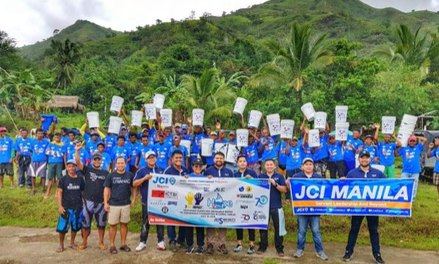
While he excelled in academics, STAR Rtn. Jop was not sure if he wanted to be a lawyer when he was a kid. He actually had a bigger dream—to be the country’s president! Driven by his ardent desire and strong commitment to serve the people, especially the marginalized, he joined organizations and engaged in activities benefitting the community. In 2018, STAR Rtn. Jop served as President of Junior Chamber International–Manila and initiated numerous socio-civic activities. Continuing his advocacy to help others, he now joins the Rotary Club of Manila.
On the professional side, STAR Rtn. Jop is a Partner at Esquivias Law Firm. He also serves as Chief Financial Officer and General Legal Counsel for Azta Urban Salon, Hanako Japanese Restaurant, Medica Industriya, Inc. and Sinag Consultancy Group.

Read on and get to know more about STAR Rtn. Jop—what motivated him to go into law practice, what legal practice areas he is into, and how he manages an extraordinary combination of responsibilities and industries. He also shares what would have been his profession had he not been a lawyer, who inspired him to become who he is today, and what he does during his free time.
Rhea Vitto Tabora (RVT): Was it your dream to become a lawyer? What motivated you to go into law practice?

Joaquin Pablo “Jop” Esquivias (JE): I’m not sure. I think it was more of dreaming to be the President of the Philippines by being a lawyer that will help champion the causes of the marginalized. The thought of being able to significantly impact things or events through law motivates me the most.
RVT: What do you wish you knew about practicing law before you got into it?

JE: Maybe about how imperfect law is or can be; how it can be actually used to maintain injustice in certain situations or circumstances. And also, the frustration that comes with the “not so desirable” system or platform where the practice operates.
RVT: Which legal practice area are you into and why did you choose it?

JE: I mainly “practice” via the myriad of legal issues and concerns of my businesses – therefore, business, corporate and finance law. But I also do tax law as I am also an accountant and that’s where the influence of the family’s practice led me.
RVT: What do you like most about practicing law?
JE: The concept of delivering justice through it.
RVT: You have on your plate an extraordinary combination of responsibilities and industries —from law to retail, food, real estate and business consultancy. How do you manage all of these?

JE: This is true as it is quite overwhelming. I think I am able to manage all the various ventures I’m a part of through an effective management that we have invested a lot of time in training and developing. From the get-go, I would like to believe that we have established a culture of excellence that allowed us to focus as well on the growth of our people.
RVT: What do you think would you be doing if you were not at your current profession?

JE: A news reporter for CNN International or someone who works for the UN.
RVT: Who inspired you to become who you are today? How did this person influence your life?

JE: My mother, who, incidentally, is not a lawyer, but has a heart of genuine service for people in all walks of life. I remember, vividly, whenever I go to the office with her that she would have different groups of people she has lunch or merienda with—from management to the office staff, to the service or maintenance crew—always asking what she can help them with.
RVT: As a previous JCI president and now a STAR Rotarian, how would you describe your experience and transition to RCM?

JE: The experience has been great so far, but of course there is still so much to learn and experience. Suffice to say that the “transition” has not been hard, or actually even felt that much. The two organizations, from a general standpoint, are quite fundamentally similar—in that the heart for service is at their respective cores.
RVT: What do you usually do when you are not working?
JE: Prior to the pandemic, I travelled a lot. There’s a constant, deeply rooted need to learn and experience new things and see different people and places. But now, I watch a lot of documentaries on history, geopolitics, travel and technology. And just most recently, I’ve discovered the joy of biking and scuba diving.
RVT: What is the most important thing that people should know about you?
JE: I think it should be my genuine compassion for people—for people around me, even strangers actually. This, coupled with my core belief that people are essentially good. Also, though life may not have always been kind nor easy, my sense of hope and optimism is always steadfast. I live by these values and principles because they propel me to do things that would leave the world better than I found it.

 The Week That Was