

Musings of a Chan Fan
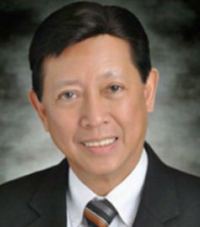
Club Secretary Reginald T. Yu profiles Jose Mari Chan, the “King of Christmas Carols,” whose songs return each September.

“Music expresses that which cannot be put into words and that which cannot remain silent” — Victor Hugo
It’s September once again and for many Filipinos, it is the “comeback day” of Jose Mari Chan, whose Christmas songs would endlessly blast in shopping malls and residential areas as soon as the “Ber months” begin. Over the past few years, Jose Mari Chan has become an unofficial reminder that Christmas is coming.
Christmas hits of multi- awarded musician Jose Mari Chan has become a staple on the playlist of radios and piped-in music in malls and stores as soon as September starts. The so-called "King of Christmas Carols," is aware that the “Ber” month is also the season his face appears on countless hilarious photos and videos shared by thousands of Filipinos in cyberspace.
A typical Piscean, born March 11, 1945, Jose Mari Chan saw the first light of day in Iloilo City where he was reared and early schooled. Although music was already a part of his formative years Joe Mari opted to finish a Bachelor of Arts Degree in Economics from the Ateneo de Manila University in 1967 to augment the management force of their family-owned sugar business. But innate inclination will tend to surface despite all odds and an instantly famed reality bolstered his status after the release of his first single. It was easy for him to magnetize a huge following with his uniquely husky and non-baritone vocal sound which even added flavor and finesse to his composition.
Lured by the glitz and enticing promise of showbiz, Joe Mari was first spotted under the limelight as a TV host and singer of Nine-Teeners, an ABS-CBN youth-oriented musical variety show in 1966, a year before he recorded “Afterglow.” He wrote his first original song, “Afterglow,” which he first sang on Nineteeners in 1966 where an independent producer, Sonny Lozano, thought it was good enough to record. Striking the rod while hot as his moniker slowly carved a niche, he released his first LP (Long Playing record in vinyl) in 1969 entitled “Deep In My Heart.” Amid the emergence of numerous balladeers and hopefuls, the name Jose Mari Chan remained uncontested and unperturbed. With a growing reputation and budding career, he represented the Philippines in the 1973 World Popular Song Festival in Tokyo where his song “Can We Just Stop and Talk Awhile” reached the finals. That same year, his songs “Can We Start All Over Again” and “Refrain” were simultaneously lording it over the airwaves and had been neatly associated with his name since.
In 1974, Jose Mari Chan was awarded the TOYM and he received the Dangal ng Musikang Pilipino award from the Philippine Association of the Recording Industry and the Antonio C. Barreiro Lifetime Achievement Award from the Metropop Foundation. His reserved personality, unrelenting perseverance, excellent artistry in writing poetic verses, and the ability to integrate his emotions to the fluidity of his songs gave him the paramount edge over other competitors in the industry.
The Filipino-Chinese mellow balladeer with an emotionally heart-throbbing vocal was unpredictably dealt with a massive decision in 1975 when he was made to move to the US for his sugar business that would require him to be away for more than a decade. In 1986, after 11 years, he returned home and recorded his second album, “Constant Change” which won Album of the Year from Awit Awards and reached Diamond Record in terms of sales. The said album also garnered unprecedented sales in Malaysia, Singapore, and Indonesia.
A Christmas album, “Christmas in Our Hearts,” was released in 1990 and reached triple platinum within that year and dubbed as the biggest selling album in the Philippine Recording history. A consistent award-getter, his “A Heart’s Journey” won 2001 Album of the Year. For the 2005 Southeast Asian Games, he was commissioned to compose and sing its theme song thus, the birth of “We’re All Just One.”
Not many people know that Joe Mari Chan is not exclusively pinned down to writing romantic ballads; this singer-songwriter is also a versatile commercial advertisement and jingle artist. He has created numerous appealing and effectual commercial jingles that were not only pleasing to hear but also addicting to listen to while simultaneously marketing the product. Released in 1997, “Strictly Commercial: The Jingle Collection” sold briskly like his love songs tantamount to saying that anything by Joe Mari Chan is something worth-owning. Surprisingly, his pen and voice were the powerful marketing endorser behind the familiar radio-TV ads of more than 70 products.
Indubitably, there’s no other Filipino talent who deserves to take a slot close to Jose Mari Chan when it comes to writing emotionally- laden songs, composing beguiling melodies, creating catchy commercial jingles, and constantly maintaining unparalleled record sales all year round. His music is timelessly defying genres and generations.

 President’s Corner
 The Week That Was