

Editor's Note
The Editor's Note on disability inclusion, Rotary International's push for it, and the United Nations Disability Inclusion Strategy.

There are at least a billion people in the world who grapple with various types of disabilities. Of this number, about 80% live in developing countries like the Philippines. Moreover, 46% of our senior citizens (age 60 and above) are people with disabilities. Disability inclusion must thus be given emphasis, if a DEI strategy is to acquire more meaning and impact on the people who must benefit most from this program.
Rotary International is thus spot on in not only pushing for disability inclusion, but also in inspiring Rotarians to ensure that this is pursued. Jeremy Opperman of the Rotary Club of Newlands in Cape Town, South Africa, a person with disability, is an example in this regard. Born with Retinitis Pigmentosa, a deteriorating eye condition which results in total blindness, Jeremy is a diversity practitioner and a disability equity specialist. In an interview by Rotary International (https://blog.rotary.org/2021/10/07/shifting-the-paradigm-on-dei/), he was asked why he thinks it is beneficial for everyone to make disability equity a priority in all that we do. To this question, he replied:
"Because inclusion makes more sense than exclusion. If we categorically exclude people, even if we do it without realizing it, we exclude more than just one individual. For instance, picture a restaurant. We all love to eat out, right? Let's say you've got a party of four people and they want to go out. And let's say one of the four is in a wheelchair -- could be temporary, maybe they recently broke their leg. Now the question you want to ask yourself is could you go to absolutely any restaurant you chose? And the chances are that you probably couldn't, because of an access issue. Did that restaurant lose just one meal, or did they lose the whole party? And so that's what we call the business case. Disability inclusion makes business sense. Which is why we see more focus on accessibility in malls and things because people have realized this. From a Rotary perspective, if we want to grow more, we can't afford to lose people through thoughtlessness and carelessness, or even tacit exclusion. We need to embrace the idea of inclusion so that we can in fact attract even more people than we are thinking of."
The United Nations has also been giving attention to disability inclusion. In June 2019, the UN Secretary General spearheaded the launching of the United Nations Disability Inclusion Strategy, during which he emphasized that the United Nations, as an organization, should itself should lead by example, apply the adopted strategy, and even raise its standards on disability inclusion. The United Nations Disability Inclusion Strategy "reaffirms that the full and complete realization of the human rights of all persons with disabilities is an inalienable, integral and indivisible part of all human rights and fundamental freedoms."
Rotary International and the United Nations: two respected and worldwide organizations giving premium and much needed support to our brethren with disabilities.
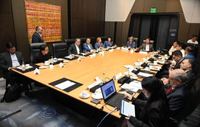 President's Diary
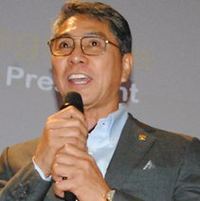 32nd Regular Meeting: A Recap