

Forging the Future: Insights from BDO CEO Nestor V. Tan at the Rotary Club of Manila’s Joint Meeting with RC Makati West
At the 12th Weekly Membership Meeting, BDO President and CEO Nestor V. Tan spoke on the Philippine banking outlook, technology and banking, and cybersecurity.
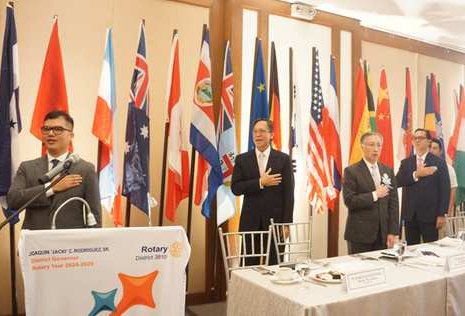
THE 12th Weekly Membership Meeting of the Rotary Club of Manila (RCM) for Rotary Year 2024-2025 last October 10 at the Manila Polo Club was a gathering steeped in camaraderie, insight, and collaboration, as the RCM hosted a joint meeting with the Rotary Club of Makati West (RCMW) at the prestigious Manila Polo Club. Moderated by Past Treasurer Karlo Eugene Josef “Karlo” M. Castro, the meeting commenced with registration at noon, followed by the formal Call to Order at 12:30 PM by the two esteemed club presidents: President Eduardo “Jujut” Enriquez III of RCM and President Gerardo Oliverio “Gerry” V. Laperal of RCMW.
Past Treasurer Karlo M. Castro took the floor again, acknowledging the distinguished guests, as the RCM’s World-Famous Music Chorale filled the air with their signature Welcome Song. The gathering also took time to honor the day’s birthday celebrant, RCM’s own Rotarian Micray Gonzales, with a heartfelt rendition of “Maligayang Bati.”

The proceedings began with a solemn invocation led by Past President Carmelino “Jun” P. Alvendia, representing RC Makati West. The spirited gathering then moved to a multimedia presentation of the Philippine National Anthem, followed by the rousing anthems of both Rotary clubs. Dir. Lemarc Limosnero, also from RC Makati West, then led the recitation of the Four-Way Test, reminding the assembly of the core tenets that Rotarians worldwide live by.
The President’s Time

Both Presidents Enriquez and Laperal took turns addressing the assembly, sharing updates and reflections on the clubs’ current initiatives. The tone of the gathering was celebratory yet focused, as both clubs, united by shared ideals, looked ahead to the challenges and opportunities that lay before them in the coming Rotary year.
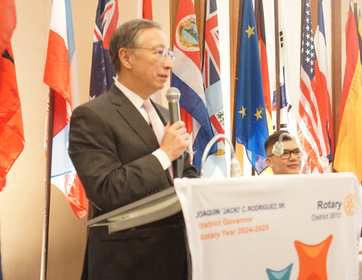
As the clock struck 1:00 PM, Past Treasurer and Immediate Past Chairman of RC Manila Foundation, Joselito “Lito” H. Sibayan, introduced the guest of honor and speaker, Mr. Nestor V. Tan, President and CEO of BDO Unibank, Inc. In his opening remarks, Sibayan highlighted Tan’s pivotal role in steering BDO to unprecedented heights as one of the Philippines’ largest banks.

In his address, Tan delivered a comprehensive and enlightening speech that delved into three key areas: the outlook for the Philippine banking industry, the transformative role of technology in financial services, and the persistent and evolving threats of cybersecurity. His insights were a blend of both foresight and practical realities, grounded in his extensive experience at the helm of one of the country’s most prominent financial institutions.
Tan’s Speech: An Expansive Outlook on Philippine Banking and Technology

Tan opened his speech with a candid admission that he found it challenging to distill such a broad topic into a single discussion. “When I was asked to speak here today, I initially wasn’t sure what angle to take,” he admitted. However, he eventually decided to focus on the issues that currently preoccupy the BDO management team. He structured his discussion around three crucial topics: the Philippine banking outlook, the impact of technology on banking — particularly fintech and electronic money interchanges (EMIs) — and the critical concern of cybersecurity.
“First, let’s talk about the outlook for banking,” Tan began. “For large institutions like BDO, our performance is often a microcosm of the Philippine economy. We thrive when the economy thrives.” He pointed out that the Philippines had witnessed significant growth outside Metro Manila over the past decade. “When I first entered banking in 1998, 65% of the economy was concentrated in the financial capital. Today, that figure has dropped below 50%, which tells you that the regions outside of Metro Manila are growing at a much faster pace.”
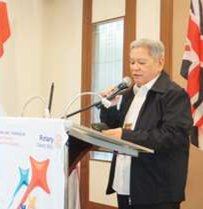
He noted that many people still fail to grasp the full potential of regional economic development. “When foreigners come to the Philippines, they focus solely on Metro Manila. I tell them, go outside, explore the other regions. You’ll see a different picture entirely,” Tan explained. The untapped potential outside the capital, especially in areas like BPOs (business process outsourcing) and the increasing spending power of a growing middle class, has been a crucial driver of banking opportunities.
Tan elaborated on the importance of demographic factors. “Our country’s young population is a double-edged sword. It offers vast potential in terms of labor and consumption, but at the same time, it presents a challenge if we can’t provide enough jobs to keep up. This is the balancing act we face — creating enough employment while capitalizing on the growing spending power of this youthful demographic.”

He then touched upon the growing sophistication of Filipino consumers. “Have you tried booking a table at a fine dining restaurant on a weekend? It’s tough because people are spending. When per capita income hits around $3,000, discretionary spending on services and luxury items increases.” Yet, Tan cautioned that this growing prosperity masked the reality of a significant wealth disparity. “The average per capita income might be approaching $4,000, but many are still below the poverty line. That’s the other side of the coin.
Tan then shifted to discuss the role of technology in banking. “Everyone talks about fintech and the rise of digital banking, but we need to remember that cultural and infrastructural barriers still exist.” He explained that while there’s no question that the banking industry is moving towards digitalization, the pace of adoption will vary. “Many think digital banking will completely replace physical branches, but that’s not the case just yet,” he said. “Cultural resistance is one factor. Filipinos, by and large, still prefer to trust people they know rather than rely on purely digital interfaces.”
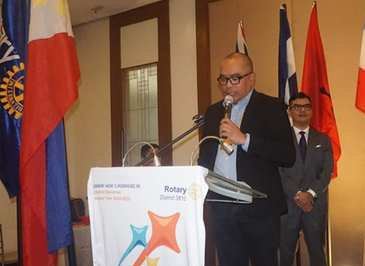
He also noted that the ecosystem is not fully ready for an entirely digital banking system. “We have to consider the infrastructure that supports fintech. For example, a sari-sari store owner may have the option to use digital payment systems, but if all their customers are paying in cash, the technology becomes less useful.”
Tan also pointed out that for many Filipinos, particularly those in lower-income brackets, the cost-benefit analysis of adopting digital banking doesn’t always make sense. “Many of them say, ‘Why should I pay for something when I can do it manually at no cost during my downtime?’”

On cybersecurity, Tan was especially emphatic. “If there’s one thing that keeps me awake at night, it’s cybersecurity. As banks become more dependent on digital technology, the risks of cyberattacks increase.” He noted that while digital banking has the potential to transform the industry, it also opens up new vulnerabilities that must be managed. “Cybersecurity is not just a technical issue; it’s a business issue, and it’s something that affects the entire banking ecosystem.”
He concluded his speech by highlighting the need for the banking sector to remain nimble and adaptable. “We need to place ourselves in a position where we can be resilient, secure, and adaptable to the fast-paced technological changes in our industry. The infrastructure we build today — whether it’s branches, digital platforms, or cybersecurity systems — must be designed to meet the challenges of tomorrow.”
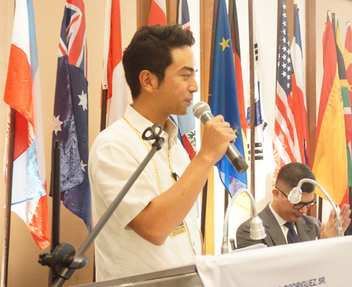
Tan’s speech was met with enthusiastic applause as the audience, composed of both Rotarians and industry leaders, absorbed the depth of his insights. His message was clear: while the future of Philippine banking holds immense promise, it will require a careful balancing act between embracing technological advancements and addressing the unique cultural and economic realities of the country.
Open Forum and Conclusion

Following Tan’s speech, the floor was opened to an engaging question-and-answer session, where attendees probed deeper into the challenges and opportunities he presented. Questions ranged from the specifics of BDO’s regional expansion plans to the broader implications of fintech for financial inclusion.
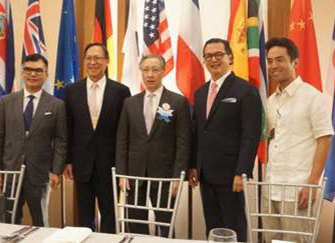
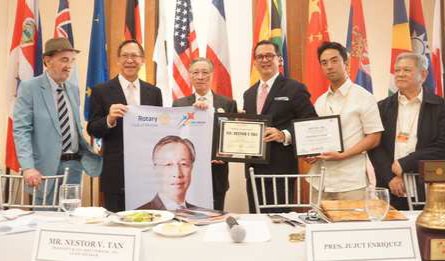
As the meeting drew to a close, both Presidents Jujut Enriquez and Gerry Laperal presented Tan with a certificate of appreciation, thanking him for his thought-provoking address. With a final note of gratitude, President Enriquez adjourned the meeting at precisely 2:00 PM, leaving the assembly inspired and better informed about the future of banking in the Philippines.





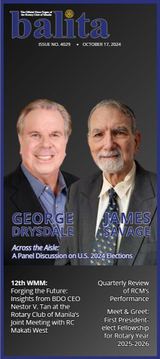
 James “Jay” Savage
 George M. Drysdale