

A Moment of Sight and Inspiration from An Esteemed Thought Leader
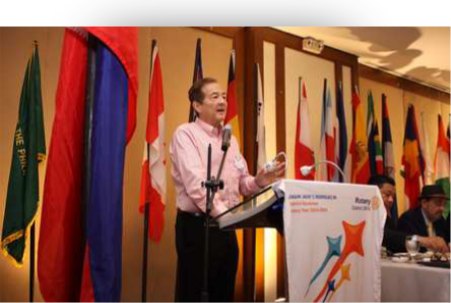
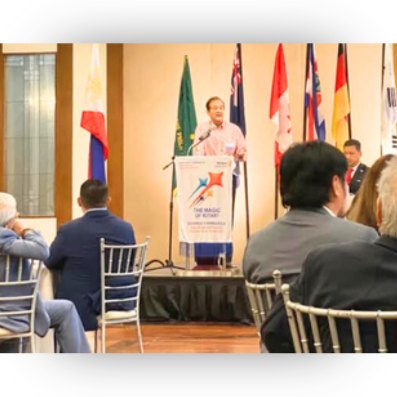
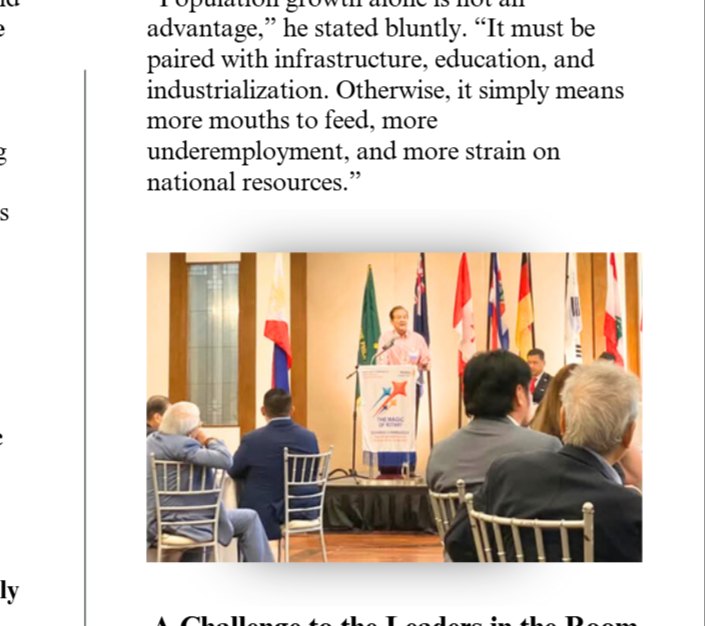
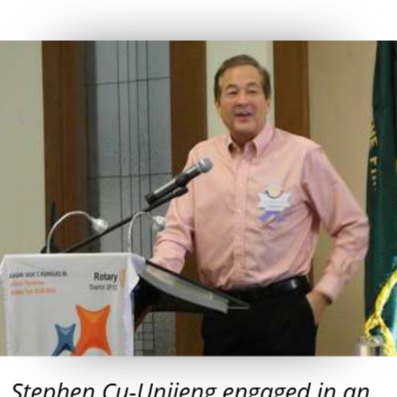
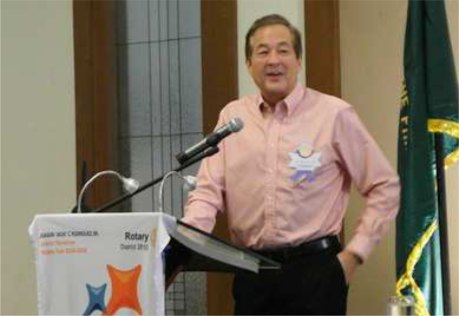
Investment banker Stephen Cu-Unjieng addressed the club's 23rd Weekly Membership Meeting at the Manila Polo Club on the Philippine economy's long-term trajectory.

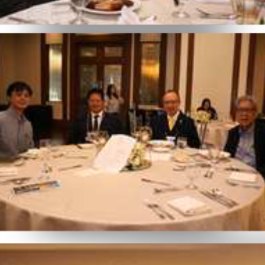
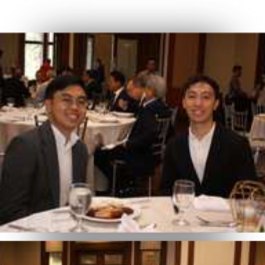
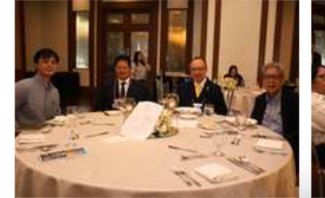
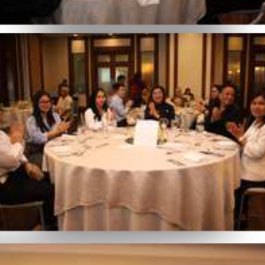
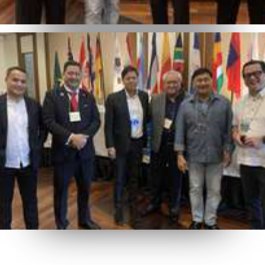
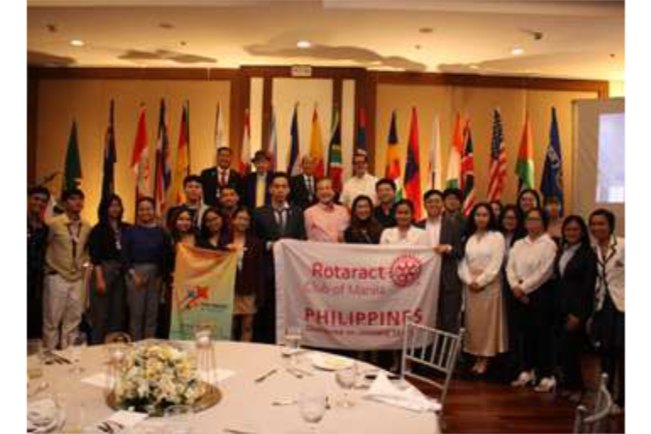
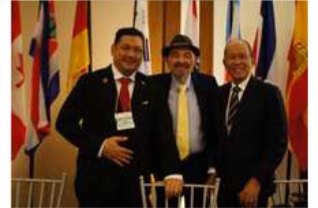
The Manila Polo Club provided a fittingly distinguished setting for the 23rd Weekly Membership Meeting of the Rotary Club of Manila, a gathering that commenced at precisely 12:00 noon, an earlier start to accommodate the demanding schedule of the day’s honored guest. Against the elegant backdrop of Manila’s premier social club, Rotarians, guests, and distinguished figures in business and civic leadership came together for an afternoon of fellowship, intellectual discourse, and a call to action for the nation’s future.
A Tradition of Excellence: The Opening of the Meeting

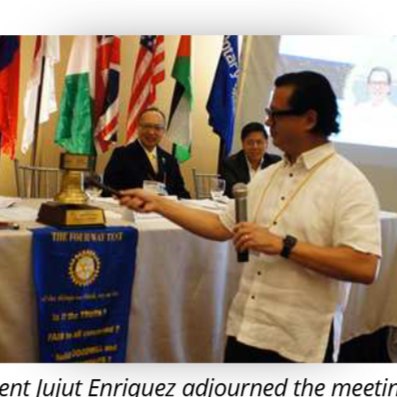
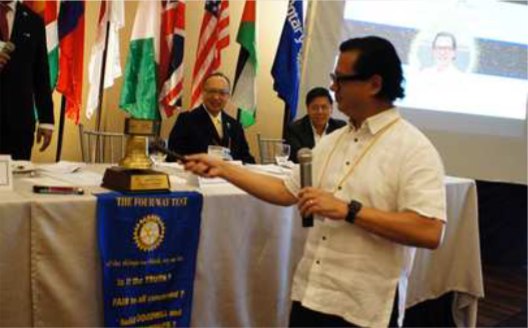
The proceedings began with the customary Call to Order by President Jujut Enriquez, who set the tone for an engaging and thought-provoking session. As the assembly stood for the Invocation, led by Rtn. J Alfonso L. “Al” Katigbak, a solemn reflection on service and duty filled the air, reinforcing the Rotary’s mission to foster goodwill and peace.
With a deep sense of patriotism, the attendees then turned their attention to the Philippine National Anthem, presented through an audiovisual performance, followed by the Rotary Club of Manila Hymn, beautifully rendered by the RCM WF Music Chorale, a musical tribute to the unity and shared purpose of the club’s members.

Past Treasurer Paul Joseph M. “PJ” Garcia then led the assembly in reciting the Four-Way Test, the guiding ethical principles of Rotary. As always, these words resonated with all present, reinforcing the values of truth, fairness, goodwill, and mutual benefit — ideals that have long been at the core of Rotary’s service and leadership.
DIS Antonilo DC. “Anton” Mauricio, serving as the meeting’s moderator, then took the stage to acknowledge the esteemed guests in attendance. A warm and heartfelt Welcome Song, performed once more by the RCM WF Music Chorale, celebrated the spirit of hospitality that defines the Rotary Club of Manila. The mood was further uplifted with the Maligayang Bati / Happy Birthday Song, extending well wishes to members celebrating their special day.

An Address of Gravitas: Mr. Stephen Cu-Unjieng’s Vision for the Nation
As the meeting transitioned to its second part, President Jujut Enriquez took the podium for President’s Time, addressing current matters of the club and setting the stage for the day’s most anticipated segment — the keynote address by Mr. Stephen Anthony T. Cu-Unjieng. His speech tackled a subject both urgent and complex: the long-term trajectory of the Philippine economy and the structural barriers preventing it from reaching its full potential.

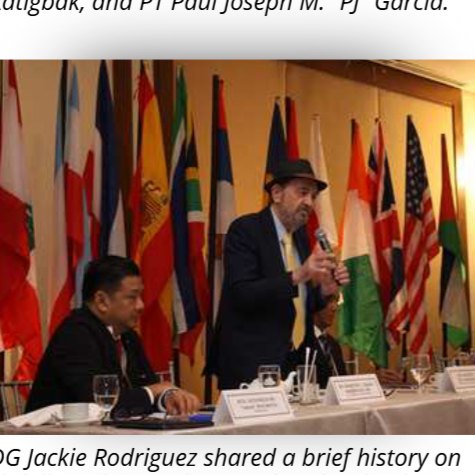
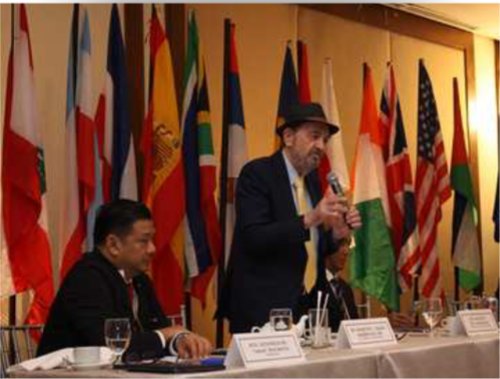
Rtn. Delfin N. “Del” Lorenzana, himself a figure of national significance as a former General and Defense Secretary, introduced the guest speaker with due reverence, underscoring his deep expertise in finance, industry, and economic strategy. Cu-Unjieng, an esteemed investment banker and corporate strategist, took the microphone without the aid of prepared slides or notes — his command of the subject matter and his passion for national progress more than sufficient to captivate the audience.
With a blend of historical insight, economic analysis, and candid assessment, Cu-Unjieng dissected the narrative that the Philippines was once the second most prosperous nation in Asia. “The idea that we were the second largest economy in the 1960s is misleading,” he remarked. “What we really were, was the second least poor. Our per capita income was not reflective of true economic strength, but rather of relative positioning in an underdeveloped region. Since then, countries like Malaysia, Thailand, Indonesia, and now Vietnam have all surpassed us.”

He highlighted a painful reality: the Philippines has been growing, but not at the pace necessary to keep up with its neighbors. He likened it to a basketball game: “If the score starts at 20-0, and at halftime you manage to tie, but in the second half, you fall behind again, then yes, you are still scoring—but others are scoring faster, and that is the real issue.”
The Power of Long-Term Vision and Manufacturing Imperatives

One of Cu-Unjieng’s central arguments was the need for long-term planning, drawing lessons from Japan, South Korea, and China, nations that have methodically built industries and global competitive advantages. He cited Japan’s post-war strategy of prioritizing two key sectors: automobiles and consumer electronics. By investing decades into research, development, and incremental innovation, Japan transformed itself from an exporter of cheap, inferior goods into a global industrial powerhouse.
He contrasted this with the Philippines' lack of a cohesive industrial strategy, noting the near-total collapse of its manufacturing sector.

“Manufacturing isn’t just about factory jobs — it’s about the multiplier effect. A single factory job creates five additional jobs in supply chains, logistics, retail, and services. By contrast, while overseas Filipino workers (OFWs) send remittances, they do not generate domestic employment at the same scale.”
Cu-Unjieng pointed to power consumption as a direct measure of industrial development, revealing a sobering comparison:

The Philippines’ peak demand is approximately 16,000 megawatts for a population of 120 million.
Vietnam, with only 96 million people, consumes over 60,000 megawatts, a reflection of its booming industrial base.

Thailand, with 70 million people, has double the Philippines’ power demand, and even Malaysia, with only a quarter of the Philippine population, consumes more electricity.
“These figures speak volumes,” Cu-Unjieng asserted. “Electricity powers factories. Factories power economies. And economies power national wealth.”

The Fallacy of the Demographic Dividend
Another prevailing economic argument he dismantled was the so-called “Demographic Dividend” — the idea that a large, youthful population automatically translates into economic growth. While many have touted the Philippines’ young workforce as an advantage, Cu-Unjieng warned that this only holds true under two conditions: full employment and a high level of national wealth.

He compared the population growth rates and GDP per capita of the United States, China, and Japan:
The United States grew from $3,000 per capita in 1960 to $70,000 today, a 22-fold increase.

China, despite its restrictive one-child policy, grew from $90 per capita in 1960 to $12,000 today — a 139-fold increase.
The Philippines, despite one of the highest birth rates in the world, has failed to achieve comparable economic gains.

“Population growth alone is not an advantage,” he stated bluntly. “It must be paired with infrastructure, education, and industrialization. Otherwise, it simply means more mouths to feed, more underemployment, and more strain on national resources.”
A Challenge to the Leaders in the Room

As Cu-Unjieng’s speech drew to a close, he posed a challenge to the assembled leaders: to think beyond political cycles, short-term fixes, and stopgap measures.
“There is a great line from Lewis Carroll’s Through the Looking Glass,” he mused. “‘You don’t know how much running I have to do just to stay in the same place.’ That is where we are as a nation. We are running, but others are running faster.”

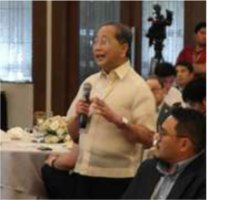
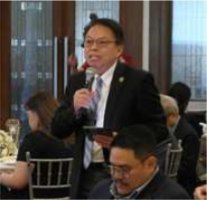
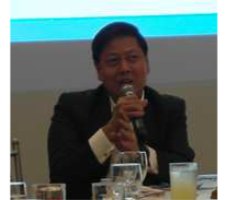
His remarks set the stage for an animated Open Forum, where members of the Rotary Club of Manila engaged him in further discussion, drawing out deeper insights into industrial policy, governance, and strategic direction.
Closing and Reflection

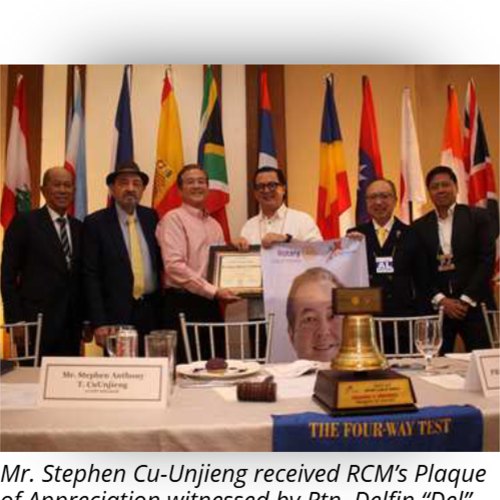
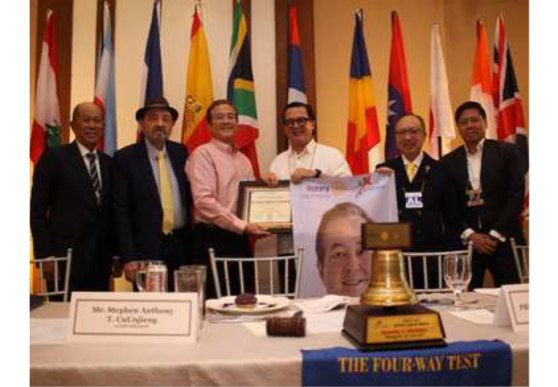
As the meeting neared its end, President Jujut Enriquez formally presented a Certificate of Appreciation to Cu-Unjieng, thanking him for his invaluable insights and for challenging the Rotary community to become catalysts for real economic transformation.
With a final call to action, the meeting was adjourned at 2:00 PM, leaving attendees with much to ponder — and, perhaps, a renewed resolve to help steer the country toward a more sustainable and prosperous future.

In the grand tradition of The Rotary Club of Manila, this gathering was more than just a luncheon — it was a forum for vision, leadership, and the unwavering belief that service and action can change the course of history.

 Editorial
 Jose Arnulfo "Wick" Veloso