
Editorial
Editor-in-Chief Reginald T. Yu argues that storytelling is a strategic necessity for Rotary and introduces this week's speaker, Ajit Sharma.

IN today’s fast-paced world, where attention spans are shorter than ever, the ability to communicate effectively has become a necessity. For organizations like the Rotary Club of Manila, which dedicate themselves to service and community building, the challenge is not only in executing meaningful projects but also in ensuring that these efforts resonate with a wider audience. Too often, the most transformative initiatives go unnoticed — not because they lack significance, but because they are not shared in ways that inspire action.
Storytelling, therefore, is not just an art but a strategic necessity. It has the power to bridge the gap between intention and impact, turning noble causes into movements and passive observers into engaged participants. For Rotary, the ability to tell a compelling story about its humanitarian work, its advocacy, and its legacy can mean the difference between an initiative that fades into the background and one that galvanizes widespread support.
The essence of Rotary’s mission is service above self, but for this mission to gain momentum, it must be communicated in ways that connect deeply with people. Facts and figures can demonstrate success, but numbers alone do not move people — stories do. A well-crafted narrative has the unique ability to touch hearts, evoke emotions, and drive people to action.
Consider how the greatest leaders and changemakers in history have influenced others. From Mahatma Gandhi to Nelson Mandela, from Mother Teresa to Bill Gates, their impact was not only a result of their work but also how they framed their work in ways that inspired belief and participation. They understood that storytelling is not about merely relaying information — it is about making people feel part of something greater than themselves.
In the context of Rotary, this means telling the stories of lives changed by scholarships, communities uplifted by healthcare programs, or families given a second chance through disaster relief efforts. These narratives make the mission real and personal. They allow others to see that behind every initiative is a person, a struggle, a victory — something they can relate to and support.
Despite Rotary’s long-standing commitment to service, there remains a challenge: how do we ensure that our stories are heard, remembered, and acted upon? In an age of social media and digital saturation, simply sharing updates or reports is not enough. To truly make an impact, Rotary must adopt more strategic and engaging ways of storytelling.
Authenticity is key — people connect with real, human stories. The best narratives do not just highlight success; they also show struggles, setbacks, and perseverance. A story that showcases the journey — not just the outcome — is far more powerful.

Additionally, emotional connection often outweighs data. While statistics matter, they must be paired with compelling narratives. Instead of simply stating that 500 children received school supplies, a more engaging approach would be telling the story of a single child whose education was transformed because of the initiative.
Personal testimonies can also be incredibly moving. When beneficiaries, volunteers, and partners share their personal experiences, it creates a ripple effect that draws others into the cause.
In today’s digital age, storytelling must go beyond traditional formats. Rotary can maximize its reach by creating engaging video documentaries, impactful social media campaigns, and interactive storytelling experiences that captivate audiences.
To help the Rotary Club of Manila harness the power of storytelling, this week’s meeting will feature Ajit Sharma, an internationally recognized storytelling and communication coach. With over 15 years of experience mentoring changemakers, he has worked with TED Global, the Bill & Melinda Gates Foundation, and organizations across Asia and Africa. His expertise in helping individuals and organizations craft compelling narratives will be invaluable in equipping Rotarians with the skills to amplify their message.
Ajit’s "What Are You Saying" system is designed to help leaders communicate their vision effectively, ensuring that their message does not just inform but inspires action. As a TEDx Global Ambassador and a graduate of Harvard Kennedy School’s Public Narrative, Storytelling & Leadership program, his insights will be particularly relevant for Rotary’s efforts in showcasing its contributions to society.
Rotary has no shortage of meaningful stories — what it needs is a stronger, more deliberate strategy for telling them. As Rotarians, the challenge is not only to serve but also to make service visible, relatable, and inspiring. The more effectively we communicate our mission, the greater our ability to attract support, forge partnerships, and ultimately create a larger, more lasting impact.
As we look ahead, let us embrace storytelling not just as a communication tool but as a fundamental part of Rotary’s advocacy. Because in the end, service is not just about what we do — it is about how we inspire others to join us in doing it.

 Ajit Sharma
 Rotary Club of Manila Welcomes GSIS Chief Wick Veloso: A Vision for Financial Security and Nation-Building
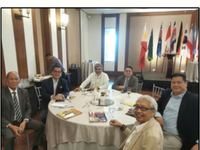 Program Committee Meeting