

The Crown Prince Who Learned to Serve: The Life and Law of Cesar Penson Manalaysay
A profile of Atty. Cesar “Citos” Penson Manalaysay, a lawyer of half a century and a member of the Rotary Club of Manila since 1994.

IN a world where boardrooms can resemble battlefields and billion-peso empires rise or fall on a single ruling, one man has spent half a century standing quietly at the crossroads of law and humanity. From the cloisters of Ateneo to the marble halls of the Supreme Court and the fellowship tables of the Rotary Club of Manila, Atty. Cesar “Citos” Penson Manalaysay has lived the paradox of power — to lead with intellect yet remain anchored in grace.
The Night Before the Bench
The fluorescent lights of Makati burned late that evening. Inside a glass-walled office at Siguion Reyna Montecillo & Ongsiako, papers were neatly arranged across a mahogany desk. The next day, Atty. Cesar P. Manalaysay and his team were prepared to face the Supreme Court over a case that would determine the future of Equitable Bank and Banco de Oro. The issue was urgent — two boards of directors were claiming legitimacy, creating confusion within the bank and among regulators. A paralysis loomed over the financial sector.
“We carefully studied for long hours until early mornings,” he recalled, “on how to file a Petition straight to the Supreme Court and ignore the hierarchy of courts.”
But the day did not unfold in the theatrics of open-court arguments. The justices, recognizing the gravity of the matter, decided to forgo the formal hearing in the main chamber. Instead, they invited counsel into their expansive conference room — a space heavy with quiet authority. “We were ready with a PowerPoint presentation,” he remembered, “but the justices preferred a direct dialogue. There were no heated debates — only thoughtful questions and careful answers.”
The Court’s restraint reflected the delicacy of the case. Soon after, a restraining order was issued, calming the turmoil. The paralysis was averted; the legal equilibrium restored. Years later, that same stability would pave the way for BDO’s rise as the country’s largest universal bank. For Citos, the episode was a testament not to victory but to balance. Law, he believed, was less about drama and more about discernment.
The Dethroned Crown Prince
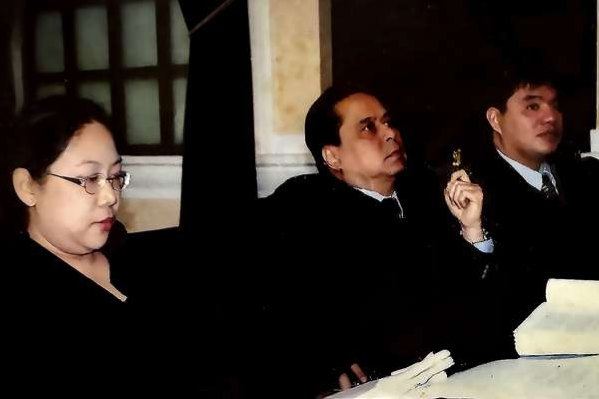
“I was born a Crown Prince,” Citos Manalaysay would say, half-smiling, “being the first child and apo.” His early life was steeped in affection; his parents, grandmother, and a circle of spinster aunts doted on him with unrelenting devotion. But the throne, as he liked to tell the story, was not to last. “After five years, when my siblings started being born, I was dethroned and experienced trauma at an early age.” It was an awakening — an early rehearsal for the realities of a world where privilege must always yield to purpose.
From his earliest days, he learned how to navigate both affection and adversity with humor. That humor would become a defense mechanism, a form of grace that lightened the heavy seriousness of legal life. “The best family value I received,” he reflected, “was the lesson to learn how to mingle and enjoy with everyone — from the lower class of society to those on top.” The tension between curiosity and conscience — between the daring mind and the disciplined heart — would define him for life.
His father, though not a lawyer, sowed the first seeds of ambition. “He brainwashed me,” Citos joked, “telling me lawyering is the best profession because when he goes to law offices, he sees his lawyer friends just receiving and signing checks or papers.” The young man believed him — until the real world intervened. “When I became a lawyer,” he said, laughing, “I was horrified at how much hard work, blood, sweat, and tears the profession requires.” From the trauma of dethronement to the rigors of Jesuit formation, the boy who began as a “Crown Prince” was already learning the paradox that would later define his success: that greatness begins in humility, and mastery begins in service.
The Jesuit Forge
Ateneo de Manila was both sanctuary and crucible. “Our Jesuit mentors were mainly Americans from New York,” he recalled. “We were taught how good democracy is and how bad communist countries are.” The lessons were moral as much as academic: the dignity of service, the discipline of conscience.
One episode, however, became a legend of its own. “A week before graduation, someone brought a Penthouse magazine and passed it around,” he said, amused. “Those who looked at it — about ten classmates — were expelled. Luckily, I was busy reading the Bible.” He smiled. “So, I graduated.” It was the perfect Atenean parable: temptation, choice, and consequence.
Among his mentors, one stood out — the revered Onofre Pagsanghan. “He enabled me to have deep respect for the Pilipino dialect, the arts, poetry, and drama,” Citos said. From Pagsanghan he absorbed rhythm, empathy, and a love for words — the very tools of advocacy. The Jesuits, meanwhile, opened his world to English literature and Western civilization. Between them, they forged a hybrid mind: Filipino in heart, cosmopolitan in reason.

At Ateneo, he also saw the strange geometry of success. “My journey from school to law practice is full of contradictions,” he reflected. “Classmates with medals filled wheelbarrows with awards, while some were kicked out for failing grades. To my astonishment, those who had lackluster performance became billionaires with yachts and choppers.” He would later joke that he arrived at reunions by hitching rides on their helicopters. Beneath the humor was insight — that life rewards not only brilliance but resilience.
During his law studies at Ateneo, Citos joined the Fraternal Order of Utopia, a brotherhood of future lawyers bound by the ideals of excellence, integrity, and service. The fraternity deepened his sense of camaraderie and discipline — values that would mirror his later years in corporate practice and leadership. “Utopia strengthened our brotherhood beyond the classroom,” he recalled, “and taught us to live our ideals both in law and in life.” The Jesuit creed of men for others took root quietly. It would resurface decades later in courtrooms, boardrooms, and Rotary meetings, guiding every argument and act of charity.
The Berkeley Mind
In 1973 he graduated LL.B. with honors; by 1976 he was in California, walking beneath Berkeley’s eucalyptus groves. The shift from civil law orthodoxy to American common-law pragmatism was seismic. “American law education was mind-altering,” he said. “In Ateneo, we were taught what the law is. In UC Berkeley, ten minutes was spent on what the law is — and the rest on its loopholes.” The method was exhilarating. “We were taught how to argue for or against anything in an organized and clear manner.” Professors like Richard Buxbaum and Lawrence Friedman drilled precision into every sentence. “They shared not only the law but numerous facts that provoke confusion and train you to distinguish the relevant from the irrelevant.”
Berkeley in the 1970s was alive with protest, intellect, and experiment. The young Filipino, far from the discipline of Jesuit classrooms, found himself in seminars on constitutional theory one day and in debates over human rights the next. “It gave me a roadmap on how to handle trials,” he said. More than that, it broadened his moral lens: law was not a fortress but a conversation across cultures.
When he returned home, martial law was in full force. Many of his contemporaries stayed abroad. He came back, quietly determined to practice in a country still learning the language of reform. What Berkeley had taught him — critical thinking, humility before complexity — would become his compass in the turbulent years ahead.
The House of Siguion Reyna

In 1975, Citos walked through the doors of Siguion Reyna Montecillo & Ongsiako, a law firm already woven into the history of Philippine jurisprudence. It was more than an office; it was an academy of minds. The portraits on the walls told stories — of Perkins and De Witt, American founders who had built both fortunes and philanthropy; of bar topnotchers who would later become senators, justices, and business icons.
“I had both challenges and fun in my fifty years in SRMO,” he said. “Challenge because I needed to live up to the legacy of our American forefathers… They were accomplished lawyers who also struck gold through business insights from clients.” He admired how they channeled their success into service — De Witt’s scholarships, Perkins’ philanthropy — and saw in them a model of law fused with conscience.
His recruiter was Art Brion, fresh from placing first in the bar exams. “He later became Labor Secretary and Supreme Court Justice,” Citos noted with pride. The firm’s alumni roll was dazzling: Juan Ponce Enrile, Ike Belo, Henry Gozon — names etched into both legal and national history.
The culture at SRMO was rigorous yet companionable. “Our work centered on businessmen and big corporations — labor law, taxation, mergers, arbitration,” he said. “We worked long hours but also shared hours of fun. Work becomes easier when lawyers in a team understand each other even without talking.” That silent understanding, born of endless strategy sessions and late-night drafting, became the firm’s rhythm.
He loved the camaraderie as much as the challenge. “I’m still having fun,” he said decades later, “because I’m with friends and meet many people — mostly clients with different minds, characters and emotions. Many have become richer and some poorer.” To him, every case was a window into human behavior. Law, he realized, was not only about codes but about character.
By the late 1980s, as the economy liberalized, the firm’s cases spanned industries — banking, telecommunications, mining, oil, real estate. The young associate who once worried about living up to legends was now writing new chapters of his own.
Wars of the Boardroom

The Philippines of the 1980s and 1990s was a volatile experiment in capitalism — a nation learning the grammar of free enterprise amid the noise of politics and power. Mergers, hostile takeovers, and bankruptcies unfolded like high-stakes chess matches played on an uneven board. By the time the decade turned, corporate law had become its own theater of war — not always televised, but always consequential.
At the center of this arena stood Citos Manalaysay, a man companies called when boardrooms fractured and fortunes trembled. His reputation was one of quiet command — a strategist who understood that every crisis, no matter how complex, was human at its core. “Simply make the client happy,” he once said of his guiding rule. The simplicity was deceptive. Behind it lay the relentless discipline of a man who researched until dawn, crafted pleadings with surgical precision, and listened with empathy — to both the anxious entrepreneur and the ambitious conglomerate. For Citos, the boardroom was not a battlefield but a proving ground — where intellect met instinct, and principle met pragmatism.
The Equitable–BDO Takeover
Among the cases that cemented his legend was the hostile takeover of Equitable Bank by Banco de Oro — a saga that combined corporate intrigue, legal ingenuity, and national consequence. “We carefully studied for long hours until early mornings,” he recalled, “on how to file a Petition straight to the Supreme Court and ignore the hierarchy of courts.” He smiled at the recollection — not boastful, merely reflective. “We described our Petition as one imbued with transcendental importance.”
The gamble worked. The Supreme Court restrained the hostile board from acting, halting a paralysis that threatened the entire banking system. “Equitable Bank then was one of the biggest banks,” he said. “Two boards of directors were claiming legitimacy. Officers, employees, and the public were confused as to who was steering the bank. Paralysis was imminent.” His tone softened as he recounted what came next. “The Supreme Court heard our oral argument, restrained the board hostile to us, and an amicable settlement was reached. BDO eventually purchased the controlling interest.”
Behind that measured retelling was the patience of a craftsman who saw law not as a contest of egos but as an act of restoration — the reordering of chaos into coherence.
The Global Stage

That same steadiness carried him beyond the archipelago. When he joined the legal team representing Fraport AG of Germany in its decade-long arbitration battle over NAIA Terminal III before the International Center for the Settlement of Investment Disputes (ICSID) in Washington, D.C., Citos found himself navigating the dense terrain of international investment law and national sovereignty. “We were for ten years having hearings in the World Bank,” he said. “We had meetings in Hong Kong, Washington, Frankfurt, Munich, and Berlin.”
The work was intricate — a tangle of treaties, statutes, and geopolitical nuance. Yet what he remembered most were the interludes of humanity. “During rest days, executives of Fraport would drive us — sometimes in vintage convertible Mercedes Benz — around scenic rivers and castles. We would relax and enjoy wine at vineyards.” For him, it was a paradox beautifully lived: that even in the cold corridors of arbitration, law could still be personal — almost pastoral.
The Craftsman’s Reach
Back home, his practice expanded across an ever-widening field — taxation, customs, power, trade, and finance. He handled BIR assessments, Customs disputes, and local government taxation. He guided Siemens AG through a 1,500-megawatt power generation project, steered Unilever into the Philippine ice-cream market through a joint venture, and advised Nestlé Philippines on distribution issues. He counseled companies through listings in Manila and Singapore, and even defended the Philippine Stock Exchange itself in a precedent-setting case over its right to deny listings — a victory that quietly fortified ethical governance.
His rule in all these battles was consistent: clarity anchored in integrity. “I use a technical approach on the law to achieve a practical result,” he explained. “That’s how I balance the two.”
The Age of Ambiguity
The 2000s brought new dimensions — multinational compliance, foreign arbitration, and cross-border mergers. But through the shifting tides, his equilibrium held. “The evolution of Philippine law is both good and bad,” he observed. “Good because its complexity means investors need lawyers. Bad because foreign investors could be turned off. Even a simple question on whether the Philippines applies the grandfather rule or control test in corporate investments cannot be answered with a short yes or no.” He saw in this ambiguity both peril and promise — the hallmark of a legal system still finding its maturity, and of a profession that demanded not just intellect but moral stamina.

For Citos Manalaysay, the wars of the boardroom were never truly about conquest. They were about clarity — the quiet triumph of order over confusion, reason over impulse, and ethics over expedience.
From the Battlefield to the Bridge
By the time Citos emerged from those boardroom wars, he had become more than an advocate — he was an architect of order. The lessons of those years had refined him: that precision without empathy leads to arrogance, and that intellect without integrity breeds only clever chaos. Each negotiation, each sleepless night before a Supreme Court argument, became part of an unspoken apprenticeship in leadership.
When he eventually assumed the mantle of Managing Partner at Siguion Reyna Montecillo & Ongsiako, he carried with him not the swagger of victory but the calm of understanding. He had seen how power could distort purpose, and how principle — quietly practiced, not loudly professed — could restore balance. The same steadiness that once tamed the chaos of corporations would now guide a century-old firm through the uncharted age of digital lawyering and generational change.
The Mentor Who Led by Listening
As Citos ascended to the helm of the firm, he inherited not only its name but its weight — a century-old institution that had withstood wars, coups, recessions, and reforms. Yet the greatest test awaiting him would not come from the battlefield or the courtroom, but from the digital frontier and the generational divide it unleashed.
Law itself was changing. Technology was reshaping the tools of advocacy; speed had become the new currency; and a new breed of lawyers thought, spoke, and drafted in digital shorthand. The firm’s survival would depend not on nostalgia but on adaptation. Citos understood that he was leading a venerable house into a restless century — one where wisdom had to learn to speak the language of youth.

He chose reflection over rigidity. “We train our lawyers not only to listen,” he said, “but more importantly, to ask questions.” It was a subtle but seismic inversion of hierarchy — the senior partner as mentor, not monarch. “We encourage them to disagree,” he added, “but supported by law, reason, and logic.” In rooms lined with casebooks and LED screens, he would spar with his young associates in mock debates. He delighted in their boldness in the way they questioned precedent and challenged assumptions. “We pretend that we are teaching them,” he confessed with a quiet smile, “when in truth, they are the ones teaching us the latest trends and developments.” It was not false modesty. To Citos, knowledge was never possession; it was motion — a current flowing between generations.
The Craft and the Code
His philosophy of leadership was exacting but humane. “Clients don’t like long discussions,” he would tell his juniors. “They want the bottom line: can it be done, and if not, what are the alternatives?” Yet he was a craftsman of persuasion, careful with form as much as with substance. “Form and substance are both important,” he reminded them. “If you ride an airplane, would you rather see your pilot in T-shirt and sandals, or in his splendid uniform?”
At SRMO, integrity was not a slogan framed on a wall but a discipline practiced in the ordinary rhythms of the day. “We cultivate integrity through regular discussion of the latest rules and jurisprudence on the code of ethics,” he said. “We promote teamwork through lunch meetings, evening socials, and trips to our beach house in Nasugbu.” There was a wisdom in the balance — knowing when to invoke doctrine and when to exercise empathy. For Citos, ethics was not an elective in law; it was the invisible spine that held the profession upright.
“The stock market is premised on transparency and a level playing field,” he would explain. “Our Philippine Stock Exchange and SEC are at par with Singapore in regulatory compliance. However, we are unable to attract foreign direct investments due to difficulties in approvals and perceived corruption.” It was not a complaint, but a diagnosis — spoken by someone who had spent half a century navigating the fragile intersection between law and nation, and still believed that reform was possible, not through outrage but through competence.
The Heart Behind the Hierarchy
In time, he became known not just for his legal acumen but for his tradition of taking the entire firm — partners, associates, and even underbars — on annual travels abroad. “Our annual travels include all our young lawyers and even our under-bars waiting for results,” he said. “Sometimes results are released when we are in Greece or France, and we celebrate with those who place first or second. Once, someone failed. We cried with her in Italy and encouraged her to take the bar again. She is now a successful lawyer.” Those moments revealed the human beneath the hierarchy — a managing partner who understood that compassion was as essential to leadership as competence. For him, the law was never meant to harden the heart; it was meant to refine it.

Those who have worked under his guidance describe him as both anchor and compass. “The true test of success,” he once mused, “is when the people you taught begin to surpass you.” In a field where sharpness is often mistaken for brilliance, Citos stood for something rarer — discernment. He could command a boardroom without raising his voice; he could win arguments by listening longer than anyone else. To his peers, he is a rainmaker whose success comes not from chasing clients, but from earning their trust. To the generation he mentored, he remains proof that mastery need not abandon humility.
The Honors of a Gentleman
Recognition found Citos in the same quiet way he practiced law — without fanfare, but with inevitability. In 2025, he was named Managing Partner of the Year by Asian Legal Business (ALB) at the Philippine Law Awards, an accolade that distilled decades of leadership into a single evening of applause. The hall was filled with the country’s brightest legal minds, but when his name was called, he simply smiled — modest, composed, almost amused at the pageantry of it all. For eight consecutive years, he has also been listed in the Asia Business Law Journal’s A-List of the Top 100 Philippine Lawyers, joining the ranks of those who shaped the nation’s jurisprudence. Yet, for him, these distinctions were never currency for prestige. They were milestones of stewardship — proof that consistency and conscience can coexist in an industry often defined by ambition.
Each award, each recognition, was merely a mirror reflecting what had always been there: a life of balance, intellect, and grace — the quiet power of a gentleman who made the law not just his profession, but his art.
The Measure of a Life
As he looked back on his long career, his measure of success was disarmingly simple. “A lawyer is successful when he enjoys what he is doing,” he said. “And I am enjoying it.” There was no bravado in the statement — only quiet fulfillment. After decades of trials, reforms, and reinventions, Citos Manalaysay remained, at his core, a student of life — a man who led by listening, taught by learning, and found in the law not just a profession, but a purpose.
The Gentleman Rotarian

Long before philanthropy became fashionable among professionals, Citos Manalaysay lived it quietly through the Rotary Club of Manila, Asia’s oldest Rotary chapter. “Our office has a long tradition with RCM,” he explained. “Our American lawyer forefathers were members. At one time, Atty. Siguion Reyna was the longest living member.” He joined on June 1, 1994, endorsed by another legend, Atty. Maning Montecillo, who had placed first in the bar exams decades earlier. Montecillo’s own grade of 100 percent in Civil Law — under bar examiner Alfonso Ponce Enrile, father of former Philippine Senate President Juan Ponce Enrile — had become part of legal lore.
For Citos, Rotary offered something the courtroom could not: a community bound not by contracts but by conscience. “Rotary attracted me because of its global organized reach to do good,” he said. “For those who are more blessed in life, it’s a way to share with the less fortunate.”
Among all RCM’s advocacies, one stood out: Clean the Pasig River. “It runs through Manila,” he said, “and any filthiness reflects on RCM.” The statement was more than metaphor. To him, the river symbolized conscience — the waterway that carried both the city’s waste and its hope of renewal. Rotary, he said, “complemented my professional life because I meet leading persons from varied fields. I learn from their ideas and thought processes. Some are amiable and some are not — which makes Rotary exciting.” He never joined any other civic club. “I see RCM as the shining star in Asia, which is now the focus of the business world,” he said. To his peers, he embodied the motto Service Above Self with the same quiet dignity he brought to court — no grandstanding, only steady work.
The Circle of Home
Away from law books and boardrooms, Atty. Citos’ world narrows into something profoundly human — the companionship of marriage, the pride of fatherhood, and the laughter of grandchildren half a world away. “My family is mostly confined to my wife and I,” he said, “since our only child, a daughter with her husband and our two apos, live in New York.” The distance, bridged by calls and visits, only deepened their bond. “Our lawyer-daughter is a partner in an American law firm and is assigned in its London office,” he said. His eyes lit up as he added with comic honesty, “I make sure my wife is happy, otherwise she might go to New York to be with the apos who are more adorable than me.”
The humor concealed a discipline of love — a balance he had perfected after years of balancing cases. “It’s really easy,” he said. “I enjoy my work, and I enjoy my time when not working.” Raising an only child, he resisted indulgence. “Though she’s the only child, we treated her as if she was one out of a dozen fictitious children,” he said. “We did not spoil her. We taught her how to work and deal with both disappointments and triumphs.” The result was self-reliance, grace, and quiet pride.
His generosity extended beyond blood. “My father and mother were always very helpful to the less fortunate,” he said. “Our maids and houseboys have become landowners. One consulted me about trust agreements. We have excellent rapport with our household helpers who’ve been with us for decades.” He spoke tenderly of one who showed him her new house in Bicol — “built by her salary from us.”

When asked his proudest accomplishment, he didn’t hesitate. “I met my excellent wife, we produced a fantastic daughter, who met an awesome husband, and they produced the best grandsons. Those are my biggest and most rewarding accomplishments.”
Legacy, Reflection, and Life Lessons
Five decades in law have given Citos Manalaysay both perspective and peace. The moments that fulfill him now are not victories before tribunals but quiet evenings shared with family and colleagues. But the moral tests of a career are never forgotten. “The most difficult decision,” he admitted, “was a crisis which had only two options — leave our law firm or stay. I decided to stay, and I think I made the right decision.” The choice defined his loyalty: to people, to heritage, to principle.
His leadership style evolved, he said, by “constantly learning, adjusting, and evolving to changing times.” It is a philosophy born of observation rather than dogma. “Be prepared for hard work,” he advised young lawyers. “Do not concentrate on legal fees alone; look for investment opportunities through clients’ ideas.” Some of his predecessors, he recalled, “earned more from dividends than legal fees.” Then came the counsel that reveals the heart behind the intellect: “Spend time with businessmen of varied businesses. They think differently from lawyers. If you know how they think, you’ll know how to answer their questions with precision — and you’ll transcend legal fees income and give more to charity.”
If he could distill his philosophy into one sentence, it would be this: “Learn how to convert failures into triumphs.” It is the through-line of his life — from the dethroned crown prince to the enduring counselor of giants.
And how would he like to be remembered? His answer is disarmingly human: “A happy guy to be with.”
Epilogue: The Forest and the Trees
In the twilight of every case, when the verdict is rendered and the papers are archived, what remains is not the judgment but the journey — the quiet dignity of those who upheld the law without losing their laughter. Citos Manalaysay has lived that balance. For half a century he has looked, as he says, “at the forest, then the trees,” guiding corporations, colleagues, and communities with an equilibrium rare in his field. He has argued before justices and dined with janitors, quoted Latin maxims and cracked jokes over lunch, trained lawyers who now train others, and built bridges across rivers both literal and moral. His story is not one of relentless ambition but of grace through constancy — a life that proves intellect need not eclipse kindness, and power need not silence laughter. In his world, the true counsel is not merely the man who wins cases, but the one who keeps faith with people.
When future generations of lawyers study the evolution of Philippine corporate law, they will find his name in the footnotes of major decisions. But those who knew him will remember something greater — the warmth of his humor, the steadiness of his hand, and the wisdom of a man who never stopped believing that every failure can indeed be turned into triumph. And perhaps that is his truest triumph — to have navigated a profession built on conflict without ever losing his humor or humanity. He has seen fortunes rise and fall, companies crumble and resurrect, laws written and rewritten — yet through it all, he has remained steadfast, seeing always “the forest, then the trees.”
In an age when brilliance often burns too fast, Atty. Cesar Penson Manalaysay endures — proof that wisdom is not the loudest voice in the courtroom, but the calm that follows when justice, finally, is heard.

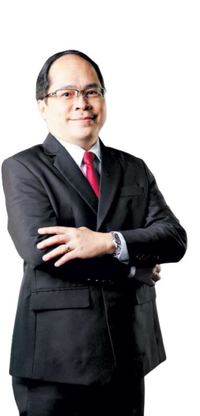 Tereso O. Panga
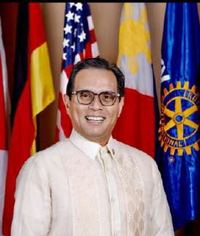 President’s Message