

The Listener: The Legacy of Jose Manuel del Gallego Romualdez in Service and Diplomacy
Jose Manuel “Babe” del Gallego Romualdez has lived many lives — newscaster, publisher, civic leader, presidential adviser, and diplomat — yet every chapter reveals the same quiet strength: a man who listens before he speaks, who steadies when others falter, and who navigates the world not with spectacle but with sincerity.

From the reborn streets of post-war Manila to the marble corridors of Washington, from Rotary halls to crisis negotiations that shaped the nation’s fate, his journey is the story of a Filipino who carried service as his compass and integrity as his anchor. This is the life of the ambassador who turned attentiveness into influence, and whose calm voice, across decades of national change, became one of the Philippines’ most trusted guides.
LONG before the first cars cut through the early-morning quiet of Massachusetts Avenue, before the diplomats and lobbyists filled its corridors, a single figure often walked toward the Philippine Embassy in Washington, D.C. The city was still half-asleep — its monuments dim, its avenues hushed — but he moved with the calm certainty of someone who understood the weight of the day long before it began.
The Marine guard at the entrance would straighten as he approached. There was no entourage, no flashing lights, no display of authority. Only the soft rhythm of measured steps, the faint fog of breath in the cold air, and an unmistakable presence that carried both steadiness and resolve. He gave a modest nod, as he always did, acknowledging duty with the same understated grace that had guided him through every chapter of his life.

Inside his office, he would pause. Sometimes his gaze lingered on the framed photographs — presidents, dignitaries, moments of history captured in stillness. Other times he looked out the window toward the waking city, its domes and spires catching the first light. But more often than not, he simply closed his eyes for a moment and breathed.
It was a ritual not born of habit but of gratitude — a quiet grounding before the storms of policy briefings, negotiations, interviews, and urgent calls that came with representing a nation of more than 110 million people in one of the world’s most consequential capitals.
In those early hours, stripped of ceremony, he was simply Babe Romualdez — a communicator whose voice had crossed airwaves, a publisher whose columns had shaped conversations, a civic servant whose efforts had touched communities, and a diplomat who carried his country’s hopes into rooms where decisions outlived headlines.

He understood the contradictions of his role. The ambassador is visible yet invisible, praised and blamed in unequal measure, bound by duty yet required to remain above politics. He knew that diplomacy rarely offered triumphs; it demanded patience, restraint, and the capacity to carry burdens quietly. In those still moments at dawn, he confronted not the grandeur of the position but the responsibility it required of him.
He had seen enough of the world to understand that what moves nations is often unseen. He had learned that the truest influence is not rooted in spectacle but in sincerity. And he had come to believe that leadership, at its highest form, is built not on the force of one’s voice, but on the discipline to listen.
From the reborn streets of post-war Manila to the crowded halls of New York City, from the intensity of television studios to the quiet contemplations of the writing desk, from Rotary fellowship halls to the marble floors of the Pentagon, his life had been shaped by stories — those he reported, those he witnessed, and those he lived. Each phase had prepared him for the work that awaited him behind that embassy door.

What history would eventually record as diplomatic achievement began with moments exactly like this: a man sitting alone before sunrise, gathering the fragments of experience that had brought him to this point — discipline from his father, empathy from his mother, clarity from Jesuit teaching, resilience from immigrant life, purpose from Rotary service, perspective from journalism, and steadiness from the countless human encounters that had taught him the value of understanding.
Outside, the city slowly awakened — traffic thickened, newsrooms churned, government buildings brightened, and corridors filled with the noise of ambition. Yet inside the quiet office, the ambassador remained still for a final breath, committing himself once more to the work ahead.
For in a world of shifting alliances, contested narratives, and relentless scrutiny, his greatest strength was not a commanding voice. It was the calm, attentive presence of a man who had spent his entire life listening — to stories, to people, to history, to conscience — and who now carried that discipline into the delicate art of guiding a nation’s place in the world.

And when he finally opened his eyes and rose to begin the day, he did so with the same quiet conviction that would define his legacy: That in the long arc of public life, what endures is not spectacle, but service.
Two Lineages, One Foundation
Babe Romualdez was born on November 8, 1947, into a Philippines still recovering from war, a country stitching itself back together after years of devastation. His world began at the crossroads of two distinguished lineages: the Romualdez clan of Leyte and the del Gallego family of Camarines Sur. These were heritages rich in public service, exploration, and intellectual rigor, but they were never brandished in his home as instruments of entitlement. They formed, instead, the quiet frame of responsibility that would guide his life.

His father, Dr. Alberto Romualdez Sr., was a physician of global standing who eventually became Secretary-General of the World Medical Association. Yet what remained in Babe’s memory was not the prestige of the title but the discipline behind it — the early mornings spent reading medical journals under the glow of a desk lamp, the calm precision with which his father treated both ideas and people. From him, Babe learned that competence must be grounded in character.
His mother, Dr. Covadonga del Gallego, a respected pathologist at the University of Santo Tomas Hospital, embodied a blend of scientific rigor and Spanish warmth. She brought tenderness to a profession defined by precision. Her life taught her children that intellect was hollow without empathy, and that leadership began with respect for human dignity.
In this household, excellence was not demanded but demonstrated. Babe grew up alongside siblings whose achievements spanned medicine, sports, and public service, yet rivalry never defined them. Their parents emphasized purpose over prestige, urging each child to forge his own role in the world.

From the del Gallego side came stories of exploration and civic duty. His maternal grandfather, Don Juan del Gallego, a Spanish explorer, had founded the town that bears the family name. His maternal uncle, Manuel del Gallego, served as governor of Camarines Sur. These narratives instilled in Babe a sense that service was neither burden nor performance — it was a natural extension of one’s place in the world.
Taken together, these influences formed a foundation that would accompany him through the many transformations of his life: discipline from his father, empathy from his mother, curiosity from his ancestors, and a quiet conviction that purpose mattered more than applause.
A City Rebuilding Itself

Babe grew up in a Manila learning to stand again. The 1950s capital was a place of contrasts — scarred buildings beside new storefronts, American military remnants blending with a culture eager to reclaim its identity. The city hummed with the energy of a people determined to rebuild.
For a child, it was a daily lesson in resilience. He witnessed families striving to restore normalcy, children returning to classrooms, entrepreneurs reopening humble shops, and communities refusing to let the memory of war dictate their future. The Manila of his youth was not glamorous, but it was determined. That spirit of perseverance — modest, unsentimental, persistent — would leave a lasting impression on him.
In 1954, Babe entered the Ateneo de Manila Grade School and later the High School. The Jesuit environment imposed an intellectual discipline that would shape the rest of his life. The priests taught him to think rigorously, to examine motives, to speak with clarity, and to use education not as a private asset but as a tool for service.

The Jesuit motto of becoming “a man for others” resonated deeply with him. Their style — analytical but empathetic, decisive but reflective — formed the template for the communicator and diplomat he would later become.
Among his teachers, one stood out: Onofre “Pagsi” Pagsanghan. Pagsi was legendary for his ability to stir both intellect and conscience. He taught literature not as mere text but as moral inquiry. Under him, Babe learned that words could reveal truths, illuminate choices, and sometimes even change the direction of a life. Pagsi sparked a patriotism rooted not in rhetoric but in responsibility.
Through these formative years, Babe absorbed the essence of Jesuit leadership: clarity of thought, depth of reflection, and the conviction that public life must be guided by a well-formed conscience.

The American Shift
In 1965, when his father assumed the post of Secretary-General of the World Medical Association, the Romualdez family moved to New York. The shift was jarring — from the familiar rhythms of Manila to the relentless pace of Manhattan and the multicultural sprawl of Queens.
At Forest Hills High School, Babe was exposed to a tapestry of identities: recent immigrants from Europe, Puerto Rican families carving a place in American life, African-American students shaped by the civil rights era, and fellow Asians finding their footing in a changing city. It forced him to develop an instinct he would rely on for the rest of his life — the ability to listen across differences.

New York also taught him humility. He worked part-time jobs at a fast-food shop in Manhattan and later at an A&P supermarket in Queens. These experiences stripped away any illusions of privilege. They showed him what it meant to serve customers, to manage pressure, and to treat people with dignity regardless of status. He learned that leadership was not an entitlement but a practice built on daily effort.
Years later, when he stood in the Oval Office or walked into the Pentagon, he carried with him the memory of grocery aisles, clattering trays, and the honesty of working-class America. It kept him grounded through every chapter that followed.
Returning to a Country in Awakening

When Babe returned to Manila in 1966, he encountered a nation on the brink of social transformation. The youth were stirring. Activism surged across campuses. The idealism of post-war recovery was giving way to calls for justice, reform, and structural change.
He studied Business Administration at De La Salle College, learning the frameworks of commerce and management. But outside the classroom, he witnessed a country grappling with inequality, ideological conflict, and political tension. These years sharpened his perception of Philippine society and deepened his understanding of the forces that shape national identity.
By 1970, as he graduated, the Philippines stood on the edge of turbulence. The First Quarter Storm was approaching. Martial Law loomed over the horizon. His generation sensed — even before anyone could articulate it — that the country was entering a decisive and complex chapter.

What Babe did not yet know was that destiny was waiting for him in an unexpected realm — broadcasting — where his voice would first meet the public ear and where the quiet instincts of a diplomat would begin to take shape.
Stepping Into the Light
The suggestion first came from a friend — casual, almost playful. “Why not try television?”

It was not something Babe had seriously considered. With a newly earned degree in Business Administration, he expected to build a conventional corporate career. But the country was turbulent, and he sensed that the familiar pathways of business would not be enough to satisfy the deeper curiosity forming within him.
The Philippines was changing, and he wanted to understand it — not simply as a participant in commerce but as an observer with a fuller view of the national mood.
The audition at Kanlaon Broadcasting System (KBS) was meant to be exploratory. He arrived with no formal training, no theater background, no prepared persona for the camera. He brought only his steadiness, the discipline acquired at home and in school, and the clarity of thought shaped by Jesuit education.

In the studio, under the glare of hot lights, something clicked. His delivery was calm, precise, and free of affectation. There was no attempt to impress; the strength lay in simplicity. Executives noticed immediacy in his presence — not the loud charisma common in broadcasting, but a quiet authority rooted in composure. Before the session ended, they knew they had found someone who could speak to the country with clarity.
He was hired. And he accepted, sensing that a door had opened.
Learning the Craft

Broadcasting in the early 1970s was a demanding field. There were no teleprompters to rely on. Anchors digested stories themselves, summarized them in their own words, and delivered them live with no margin for error. The newsroom was a relentless environment — the clatter of typewriters, the chaos of deadlines, the tension of political uncertainty.
Babe found himself in the company of veterans who took the craft seriously. Ronnie Nathanielsz, sharp and uncompromising, taught him the value of precision. Atty. Felipe Medina, the KBS news manager, instilled discipline and the strict ethics of reporting. They were exacting mentors, and he learned quickly under their guidance.
He spent long hours studying scripts, understanding the context of events, and training himself to maintain composure on air. He arrived early, stayed late, and treated everyone in the studio — from cameramen to technicians — with equal respect. That consistency, more than anything, set him apart. In a medium where ego often overshadowed professionalism, his humility made him a stabilizing force.
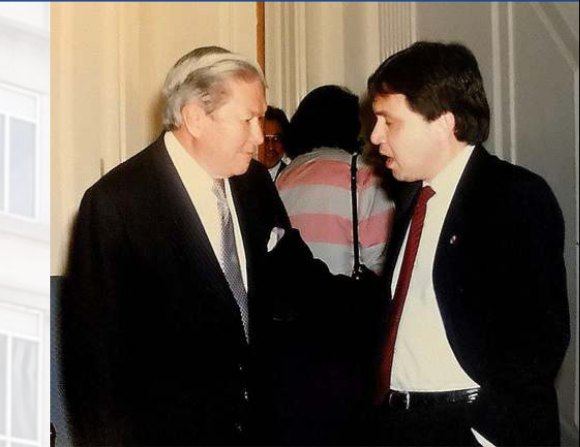
Soon he was trusted not only as an anchor but as an executive assistant to the chairman of the board. The exposure gave him a clearer view of how media intersected with politics, business, and public sentiment. He learned that news was not merely information; it was influence.
By his late twenties, he had risen to President and Vice Chairman of the Television Corporation of the Philippines, an affiliate of KBS. It was a steep ascent — a testament to capability more than ambition. But even as he entered executive roles, he never lost the grounding sense of responsibility that broadcasting had given him: the awareness that words carry weight, and that clarity in communication shapes the way a nation understands itself.
From Television to the Printed Word

Television gave him a voice, but print journalism gave him perspective. Over time, Babe felt drawn to a medium that allowed more reflection. In print, he could explore ideas beyond the constraints of airtime.
He transitioned toward writing and publishing, eventually taking on the leadership of Stargate Media Corporation, an affiliate of The Philippine Star. There he became publisher of PEOPLE Asia Magazine, shaping the publication into a platform not for glamour but for substantive human stories. He insisted that profiles dig beneath public image to reveal character — the struggles, convictions, and defining values of the individuals featured. It was an editorial philosophy he inherited from his mentor and friend, Max Soliven, who believed that stories matter most when they help a nation understand its own identity.
Parallel to his work in publishing, Babe developed his weekly column in The Philippine Star. The column became his steady conversation with the public. His pieces were never sensational. They were marked by restraint, clarity, and a desire to illuminate rather than provoke. He wrote about global affairs, foreign policy, leadership, and Filipino communities across the world. His readership grew not because he courted controversy, but because he offered reason and insight in a time often dominated by noise.

Through these years, Babe refined the habit of observation — the ability to sense the deeper forces shaping events. He learned to spot patterns beneath the surface of politics and economics, and to communicate them in a language accessible to ordinary readers. This gift, more than any formal training, became the foundation of his diplomatic skill.
The shift from broadcasting to print was not a change in direction but an evolution — from immediacy to depth, from delivering news to interpreting it, from reflecting events to helping shape how they were understood.
The Spirit of Service

Even as he navigated media and business, another dimension of his life was quietly taking shape — one that would deepen his sense of purpose. In 2010, he joined the Rotary Club of Manila, the oldest Rotary chapter in Asia. Introduced by Past Vice President Fausto Preysler, he entered Rotary with the same attitude he had toward every new phase of his life: he listened first.
He found in Rotary a fellowship rooted in humility and service. The club’s weekly gatherings at the Manila Polo Club exposed him to the needs of communities often overlooked by mainstream institutions. He learned about medical missions in remote barangays, scholarship programs for students with limited means, disaster response efforts, and livelihood initiatives that helped struggling families stand on firmer ground.
Rotary shaped him not by ceremony but by encounter. He met farmers who survived typhoons, children who walked miles for schooling, families who relied on the generosity of volunteers. These experiences strengthened his understanding of the Filipino story — not from headlines, but from lives lived on the margins.

His leadership emerged naturally. He became Vice President of the club for three consecutive terms — a rare affirmation of trust in an organization filled with accomplished leaders. He worked on programs that brought relief to disaster-stricken communities, supported education, and strengthened civic institutions.
Rotary also taught him the essence of diplomacy before he formally entered it. He learned how to build consensus among people with differing views, how to mediate discussions with calmness, and how to keep purpose at the center of group effort. It was a grounding force — one that prepared him for the rigorous world of statecraft.
Entering the Global Stage

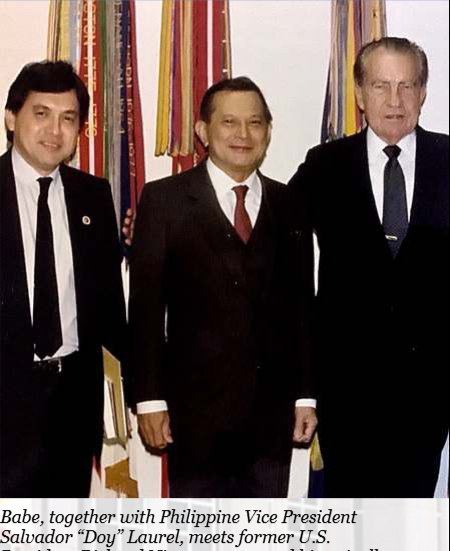
His involvement in international affairs began not through formal appointment, but through years of joining official trips and delegations. As early as 1989, he coordinated the media group for Vice President Salvador Laurel’s visit to the United States. He observed the choreography of diplomatic meetings — the gestures, the silences, the subtle cues that shaped outcomes.
Under President Fidel V. Ramos, he joined delegations to the United States, Mexico, and the APEC Summit in Canada. He noticed how alliances were strengthened through both formal negotiations and informal conversations. He saw how economic opportunities emerged from patience, preparation, and sincerity. These missions taught him the rhythm of diplomacy — a practice built not on spectacle but on relationship.
Under President Benigno Aquino III, he joined trips to China, Japan, and New Zealand, gaining an even deeper appreciation for the complexities of the Asia-Pacific. He understood how economic ambition, political caution, and cultural identity interplayed in a region where power was shifting rapidly. These journeys gave him firsthand exposure to geopolitical dynamics that textbooks could only outline.

By the time the Duterte administration came in 2016, Babe had already accumulated decades of insight. President Rodrigo Roa Duterte appointed him Special Envoy to the United States — a role that demanded tact during a period of recalibration in Philippine–U.S. relations. He approached the task with characteristic steadiness, ensuring that communication lines remained open and that both sides continued to engage constructively.
Later that year, he was asked to serve as Ambassador to the United States. But a serious eye condition required urgent surgery, forcing him to decline — a difficult decision made out of integrity, not hesitation. After recovering, he accepted the appointment in 2017, stepping into one of the Philippines’ most consequential diplomatic posts.
He carried with him not only credentials but a lifetime of preparation — the broadcaster’s clarity, the writer’s insight, the Rotarian’s empathy, and the communicator’s instinct for nuance. He was ready.
The Ambassador Arrives
When Babe Romualdez presented his credentials at the White House on a warm afternoon in November 2017, he carried with him not only the formal weight of the ambassadorship but also the accumulated wisdom of a life spent listening — in newsrooms, civic halls, boardrooms, and community centers.
His path to diplomacy had been unconventional, shaped more by experience than by doctrine. He had not risen through the ranks of the foreign service, but through roles that demanded a deeper understanding of people: journalist, executive, publisher, adviser, Rotarian. These positions taught him that diplomacy was not merely about policy but about perception, empathy, and trust.

In Washington, he stepped into a political landscape defined by volatility. The United States under President Donald J. Trump was reconfiguring alliances, renegotiating economic relationships, and asserting a new brand of transactional diplomacy. Meanwhile, the Philippines under President Rodrigo Duterte was recalibrating its foreign policy, testing new strategic directions while reaffirming its long-standing alliances.
The role of ambassador required a steady presence — someone with enough clarity to navigate shifting narratives and enough restraint to keep dialogue intact even when rhetoric grew sharp.
From the outset, Babe understood his task: he needed to steady an alliance undergoing stress, preserve communication at all levels, and ensure that Filipino interests remained clearly understood in Washington. He operated with calm precision, choosing words carefully, maintaining professionalism even when political winds blew unpredictably.

Those who worked with him — American officials, Filipino diplomats, congressional staffers — noted a quality rare in modern public life: he did not chase attention, and yet attention gravitated toward him because he spoke with balance and sincerity.
He approached diplomacy the way a journalist seeks context. He listened first, interpreted second, and responded only when the full picture became clear. It was an approach that brought stability during moments when it was most needed.
A Relationship Tested, A Relationship Renewed

During his early months, Babe found himself carefully positioned between two strong-willed leaders. President Duterte and President Trump shared blunt rhetorical styles, but each carried different priorities. In such moments, an ambassador becomes more than a messenger; he becomes a mediator of tone. Babe ensured that conversations between Manila and Washington remained anchored in mutual respect.
He spent long hours in congressional offices, reassuring senators and representatives that the alliance remained strong. He engaged American defense officials, clarifying the Philippines’ positions on security cooperation and maritime stability. He met with business leaders, investors, Filipino-American organizations, and policy think tanks, explaining the nuances behind headlines and reminding them of the deep historical ties between the two nations.
The work was not glamorous, nor was it loud. It was methodical, steady, deliberate — the quiet labor that prevents alliances from unraveling.

His efforts bore fruit. Washington grew to view him not merely as Manila’s representative but as a stabilizing figure whose clarity helped cut through noise. His credibility became one of the Philippines’ most valuable diplomatic assets during a turbulent geopolitical era.
The Return of the Balangiga Bells
Among the defining moments of his ambassadorship, one stands apart — the return of the Balangiga Bells. For 117 years, the bells taken from Eastern Samar in 1901 had remained in American possession, their return stalled across administrations despite repeated negotiations.

They were relics of a painful chapter in Philippine history, symbols of loss and unfinished reconciliation.
Babe understood that the bells represented more than historical objects. They embodied memory — the kind nations struggle with, reconcile with, and eventually must face together.
To succeed where others had failed, he reframed their narrative. He did not approach the issue as a demand, nor as a grievance. Instead, he framed it as an opportunity for healing.

He worked quietly with senior officials in the Pentagon, cultivated dialogue with senators and military historians, and engaged Filipino-American veterans and community leaders who understood both sides of the story.
Progress came slowly, then suddenly. Once consensus formed, momentum followed.
In December 2018, the bells began their journey home. At F.E. Warren Air Force Base in Wyoming, where the turnover ceremony took place, Babe stood before rows of American soldiers as the bells — heavy with history — were lowered and prepared for transport. It was a moment of solemn dignity, a gesture of goodwill that resonated far beyond military tradition.

Days later, when the bells arrived in Manila, the applause that greeted them was not merely for the bells but for what they represented: the possibility of closing historical loops, of healing old wounds, of renewing respect between allies.
The return of the Balangiga Bells became the signature achievement of his ambassadorship — a moment that required patience, tact, and the ability to persuade not through pressure but through principle.
Diplomacy in a Time of Pandemic

No ambassador in recent memory faced a crisis as sweeping as the COVID-19 pandemic. In early 2020, as borders closed and countries scrambled for scarce supplies, vaccine diplomacy became a defining test of global leadership.
For the Philippines, securing access to vaccines was a national imperative. Competition was fierce, and the Philippines risked being pushed to the sidelines by larger, wealthier nations.
The embassy in Washington became a command center, and Babe found himself at the heart of the effort. He activated networks across government agencies, pharmaceutical companies, and congressional offices. His decades of relationships — built through credibility, not favor — became crucial pathways to securing early vaccine commitments.

He negotiated with Pfizer, Moderna, Janssen, and Novavax, navigating supply chain bottlenecks, regulatory issues, and international agreements. Many negotiations unfolded in late-night calls, when urgency overshadowed time zones. Some discussions were derailed by production delays or bureaucratic hurdles, but he persisted until solutions were found.
His diplomacy during the pandemic was unlike the ceremonial functions of peacetime. It was the work of crisis — pressure-filled, time-sensitive, and consequential.
Through his efforts, the Philippines secured millions of doses that helped jumpstart vaccination programs at home. He never framed the achievement as personal. It was, in his view, simply the duty of the office he held. But those who witnessed the effort knew that his persistence made a difference in the lives of millions.

Beyond Washington — The Caribbean Posts
As ambassador to the United States, Babe also served as non-resident ambassador to a constellation of Caribbean nations, including Jamaica, Haiti, Trinidad and Tobago, Antigua and Barbuda, and several others. Each country carried unique challenges and opportunities — labor agreements, disaster resilience, maritime issues, and the welfare of overseas Filipino workers.
He approached these nations with the same respect he brought to all diplomatic engagements. Even when meetings were virtual or constrained by geography, he ensured that ties remained warm and purposeful. His efforts strengthened Philippine presence in regions seldom reached by Manila’s traditional diplomacy, proving that representation does not diminish with distance.

Continuity Under a New Administration
In 2022, when Ferdinand “Bongbong” Marcos Jr. assumed the presidency, observers wondered how the Philippines’ foreign policy would evolve. The answer came early. Babe was reappointed as ambassador and confirmed unanimously by the Commission on Appointments — a rare bipartisan nod of confidence.
The continuity signaled something essential: diplomacy was best served by steadiness. Under President Marcos, Babe expanded engagements across the U.S. government, strengthened defense cooperation, and renewed discussions on trade, technology, and maritime security.

He did not alter his style. He remained measured, diplomatic, and unhurried, maintaining the same calm presence that had defined his service from the beginning.
The Man Behind the Office
Through all his years in Washington, Babe remained grounded. He began days with quiet reading, scanning global developments with the eye of a lifelong journalist. He wrote columns even during the busiest weeks, believing that communication was part of his responsibility to the Filipino public. On weekends he found balance in golf — not as a luxury, but as a form of mental reset.

Despite the demands of diplomacy, he remained a family man. His wife and daughters were constants in his life, the center around which everything else revolved. They were his anchor through long postings far from home, through diplomatic challenges, through personal tests.
For all the titles he held, he never allowed position to overshadow the person. Those who interacted with him, from senior officials to embassy staff, noted the same qualities: respectfulness, patience, a habit of listening before speaking, and an unwavering sense of purpose.
Lessons Shaped by a Lifetime

As the years in Washington unfolded, Babe grew increasingly aware that diplomacy, at its core, was less about ceremony than it was about character. Policies changed, leaders came and went, priorities rose and fell — but the essential qualities that guided effective diplomacy remained constant: clarity, consistency, and conscience.
He never claimed to be a theorist. His understanding of international relations was not born from textbooks alone but from the sum of lived experiences: the discipline of his father’s medical world, the empathy of his mother’s vocation, the Jesuit insistence on reflection, the newsroom’s demand for accuracy, the corporate world’s lessons in strategy, the civic realm’s grounding in service, and the diplomatic arena’s call for steadiness. Each phase of his life had left an imprint, forming a coherent philosophy of leadership.
He believed that a public servant must listen before speaking, understand before deciding, and remain calm when others are overtaken by urgency. He believed that one must yield ego in order to see the larger picture, and that the most effective influence is often the quietest.

If there was a single thread that tied his journey together, it was the habit of attentiveness. He had learned early that a communicator who cannot listen is merely a performer. A journalist who cannot listen distorts truth. A leader who cannot listen mistakes noise for public sentiment. And a diplomat who cannot listen fails to grasp what is unsaid — which is often the most crucial part of any negotiation.
Across decades, that attentiveness became his anchor. It allowed him to build trust even among skeptical counterparts. It allowed him to sense shifts in tone that others missed. It kept his work grounded not in ambition but in responsibility.
A Steward of Institutions

Ambassadors serve not for themselves but for the office they temporarily inhabit. Babe understood this deeply. He treated the embassy not as an extension of personal authority but as a national institution whose credibility must be protected.
He strengthened the embassy’s operations, upgraded systems, and improved the morale of its staff by encouraging professionalism and unity. He welcomed every visitor — from senior officials to overseas Filipino workers — with the same courtesy. He made it clear that public office required accessibility, not distance.
Diplomacy, to him, was never about status. It was about stewardship. He carried the office with dignity but without extravagance. Washington saw in him a representative who respected both the Philippines and the country to which he was assigned — a balance essential for alliances to flourish.

His credibility became a bridge not only between governments but between people. Filipinos abroad felt they had an advocate who understood their concerns. Americans found in him a counterpart who approached negotiations with sincerity rather than posturing. Within the diplomatic corps, his reputation was that of a man who was steady in crisis and gracious in success.
The Quiet Strength of a Communicator
The clarity with which Babe communicated became one of the hallmarks of his diplomatic work. His weekly columns, written even amid intense schedules, served dual purposes. For Filipino readers, they explained global developments in straightforward, contextual language. For policymakers in Washington and Manila, they offered insight into how issues were perceived by the public — a form of analysis that no official memo could fully replicate.
He wrote not to persuade but to illuminate. His style was unembellished, thoughtful, and restrained — reflecting the very manner in which he conducted himself in person. In an era when commentary often sought controversy, his voice stood apart: calm, rational, and anchored in facts.
Communication had always been his craft, but diplomacy refined it into an instrument of bridge-building. He mastered the art of choosing the right words at the right moment, avoiding unnecessary escalation, and framing the Philippines’ interests with precision. Whether in a congressional hearing room, a corporate roundtable, or a private meeting with senior officials, he spoke with the same careful cadence — never hurried, never careless, always grounded.
A Life Beyond Titles
The public often sees only the visible part of an ambassador’s life — the speeches, ceremonies, official photos, and diplomatic events. But those who knew Babe understood that the core of his being lay elsewhere.
He was a devoted husband and father, and his family remained the center of his identity. His daughters grew up watching him navigate the demands of public life with humility, and they saw the sincerity behind his commitments — not the pursuit of recognition but the desire to serve well.
He often said that whatever success he enjoyed came from the values instilled in him at home. The steadiness that defined his public life was mirrored in his private one: he valued simplicity, loyalty, and quiet routine. Golf brought him balance; writing gave him clarity; family gave him purpose.
Those who met him casually encountered a man who was approachable and even humorous, unburdened by the airs that often accompany high office. He treated people not according to rank but according to respect. This consistency — between public duty and private character — became one of the most enduring features of his legacy.
Legacy
As his years in Washington drew on, it became clear that Babe Romualdez had left an imprint on Philippine diplomacy that would outlast his term. His tenure coincided with some of the most complex geopolitical shifts of the 21st century: rising tensions in the Indo-Pacific, the recalibration of alliances, increased competition among global powers, and the pandemic that tested every government on earth.
Through these transformations, he provided continuity in a world prone to sudden change. He strengthened defense cooperation through the Mutual Defense Treaty and Visiting Forces Agreement. He expanded dialogues on trade, technology, and maritime security. He broadened the Philippines’ diplomatic footprint in the Caribbean. And he rebuilt trust at moments when rhetoric threatened to overshadow decades of alliance.
But perhaps his greatest legacy was the manner in which he served. He showed that diplomacy need not be loud to be effective. That clarity matters more than spectacle. That relationships are strengthened through patience, not pressure. And that a nation’s dignity is best represented by individuals who combine humility with conviction.
History often remembers grand gestures, but the quieter contributions — the ones rooted in understanding and consistency — shape outcomes in ways that numbers and headlines do not easily capture. Babe’s story is one of those contributions.
Epilogue
In the final months of his service, when the sun dipped lower over the Potomac and the winter air sharpened the edges of Washington’s skyline, Babe Romualdez often found himself taking one last slow walk through the embassy corridors.
At that hour — quiet, unhurried, unguarded — the building carried a different character. The bright urgency of diplomacy softened into something more reflective, almost sacred, as though the walls themselves understood the weight of the years they had witnessed.
On certain evenings, he would pause before stepping outside, much as he had done at dawn countless mornings before. The same photographs lined the entrance hall. The same flags stood in their places. The same long glass panels reflected the same steady figure.
But in the warm glow of the setting sun, there was a subtle shift — not in the world around him, but in the man himself. He had come to Washington as a communicator, a bridge, a listener. He now prepared to leave as something far quieter and far greater: a steward of a chapter in Philippine history.
Outside, the embassy grounds were bathed in the soft amber of late afternoon. The Marine guard — younger now, new to service, unaware of the early mornings this ambassador once kept — snapped to attention as he approached. Babe returned the gesture with the same modest nod he had given for years, a small but telling signature of a man who never allowed authority to overshadow humanity.
He stepped out into the cooling air. The city hummed with its usual pulse — policy meetings still underway, motorcades slicing through traffic, the Capitol dome catching the last of the light. Yet where others saw power, he saw continuity. Where others felt pressure, he felt purpose.
It was easy for outsiders to view diplomacy in terms of the dramatic: the ceremonies, the speeches, the televised handshakes. But he had learned — as all true diplomats eventually do — that the real work is quiet. It is done in conversations that leave no headlines, in tensions eased by sincerity, in alliances strengthened by patience, and in the unseen labor of those who choose humility over spectacle.
His life had always returned to one principle: service carries its own reward.
In that twilight walk, he felt no need to rehearse accomplishments. He thought instead of the people who shaped his journey — his parents, whose integrity formed his compass; his mentors, who taught him clarity; the journalists who sharpened his discipline; the Rotarians who showed him the meaning of fellowship; the embassy staff who worked beside him; the Filipino people whose hopes he carried across continents.
He remembered the dawns that began his days, the crises that demanded calm, the bells that journeyed home after more than a century, the vaccine shipments secured in dark hours of uncertainty, the alliances reaffirmed in a world growing more divided.
The work had been demanding. The responsibility enormous. But the privilege unmistakable.
As the last light slipped behind the Washington horizon, Babe looked once more at the embassy — not with attachment, but with gratitude. He had given what he could, in the way he knew best. With steadiness. With discipline. With attentiveness.
And then, unhurried and unburdened, he walked away from the building not as a man leaving office, but as a man whose duty had come full circle.
The dawn that opened his journey was his offering. The dusk that closed it was his peace.
For in the end, his legacy was not found in titles or ceremonies, but in the quiet truth he carried his entire life: Leadership begins with listening. Service begins with humility. And a nation is best served by those who understand the power of both.

 Editorial
 Her Excellency MaryKay L. Carlson
 President’s Christmas Message