

BORN INTO THE REPUBLIC: The Making of Victor de Guzman Garcia III

In the great chambers where the destinies of nations are debated — where the language of law tempers the impulses of power, and where the hopes of small states must stand with dignity before the ambitions of great ones — there are diplomats whose names are etched quietly into the architecture of history. They are not conquerors, nor demagogues, nor men of spectacle. They are builders: of consensus, of institutions, of bridges across cultures and centuries.
Victor de Guzman Garcia III belongs to that lineage.
He would one day sit in the Security Council of the United Nations as a young adviser while the Cold War still divided the world into rival camps. He would later help craft the very “constitution of the oceans” that now anchors the Philippines’ sovereign rights in the West Philippine Sea. He would represent his country in the nuclear councils of Vienna, in the strategic corridors of Moscow, in the humanitarian crises of Kobe and Los Angeles, and in the ceremonial heart of Malacañang, where protocol becomes the language of respect among states.

Yet long before he affixed his signature to global treaties, before he addressed assemblies and negotiated conventions, he was a child of a young republic — born into a family where diplomacy was not merely a profession but a calling, and where the service of country was woven into daily life.
His story is, in many ways, the story of Philippine diplomacy itself: from post-war emergence to Cold War alignment, from archipelagic assertion to multilateral leadership, from bilateral courtesies to the forging of international law.
It is the story of how a nation of islands learned to speak with one voice in the world — and how one man, trained by history, law, and conscience, helped that voice be heard.

This is not a tale of glamour, though embassies and ceremonies would mark its chapters. It is a chronicle of patience, discipline, sacrifice, and quiet courage. It is the life of a man who believed that the true measure of diplomacy lies not in headlines, but in the slow, steadfast work of building order where chaos threatens, and understanding where mistrust prevails.
Before he became an architect of treaties, a defender of overseas Filipinos, a guardian of protocol, and a mentor to a new generation of diplomats, Vic Garcia was first a son — listening to his father recount a moment when the Philippines, newly independent, stood proudly among the nations of the world.
It is there, in that intimate moment of inheritance and aspiration, that his story truly begins.

Heirs to a Calling
On a quiet evening in Manila in the early 1950s, a young boy listened intently as his father recounted a scene that seemed drawn from the pages of a history book.
The setting was Westminster Abbey, its ancient stone walls resonant with the weight of centuries. The occasion was June 2, 1953 — the coronation of Queen Elizabeth II. But what made the story unforgettable was not the splendor of crowns and pageantry. It was the pride in his father’s voice.

Ambassador Enrique Melocoton Garcia had stood there not as a subject of the British Crown, but as the diplomatic representative of a newly independent republic. For the Philippines, barely seven years free from colonial rule, it was a moment of symbolic arrival on the world stage. For his son, Victor de Guzman Garcia III, it was a moment of quiet awakening. As he listened, wide-eyed, he felt — without yet fully understanding — that the life of a diplomat was a life lived at the intersection of history and hope, where personal destiny could merge with the destiny of a nation.
Vic was born into diplomacy. His father was among the pioneers of the Philippine Foreign Service, entering the Department of Foreign Affairs at its founding in 1946, when the young republic was just beginning to define its place in a fractured postwar world. His mother, Roberta Laperal de Guzman, brought to this peripatetic life a deep sense of faith, grace, and emotional anchoring. Together, they raised their children in embassies and official residences across continents, where conversations at the dinner table often revolved around world events, state visits, and the delicate art of representing the Philippines with dignity.
From an early age, Vic learned that diplomacy was not merely about protocol and ceremony. It was about service. A diplomat, his father taught him, carries the voice of his people and the honor of his country wherever he goes. That sense of representation — of standing for something larger than oneself — would become the moral core of his career.

His formal education mirrored the breadth of his upbringing. He studied at De La Salle in Manila, then at Universidad Central in Madrid, later at University College London, and finally at Ateneo Law School. Business, political science, international affairs, and law formed a multidisciplinary foundation that equipped him to understand power, economics, culture, and legal order as interconnected forces. Europe exposed him to the long memory of nations and the institutional frameworks that governed their relations. Law trained him in precision, argument, and respect for rules — the very grammar of international relations.
Returning to Manila, he entered Ateneo Law School at a time when the Philippines itself was navigating political and social transformation. He graduated in 1977, already determined to follow the path that had quietly beckoned since childhood. Three years earlier, in 1974, he had taken and passed the highly competitive Career Foreign Service Officer Examination, a defining threshold for those who aspired to serve the country abroad. For him, it was not simply a professional milestone; it was a personal calling fulfilled.
By the time he and his contemporaries formally completed their studies in 1977, Vic was already a young Vice-Consul at the Department of Foreign Affairs in Padre Faura. His immediate superior was Ambassador Armando D. Manalo, a brilliant diplomat and gifted writer who was then one of the closest advisers of the Secretary of Foreign Affairs, General Carlos P. Romulo. Romulo — statesman, soldier, Pulitzer Prize-winning author, and former President of the United Nations General Assembly — was affectionately and reverently called “The General,” a moniker he himself enjoyed.

It was Romulo who discerned the promise of the young officer. Recognizing both his legal training and his instinct for international affairs, Romulo sent Garcia to his first overseas assignment: the Permanent Mission of the Philippines to the United Nations in New York. For a young diplomat, it was both an honor and a baptism by fire.
At the United Nations, Vic was thrust into the demanding world of multilateral diplomacy at a moment when the Cold War still defined the global order. The General Assembly was a forum of ideological contestation, decolonizing nations asserting their voices, and great powers maneuvering for influence. In committee rooms and plenary halls, he learned that diplomacy was rarely about simple victories. It was about building coalitions, crafting language that could command consensus, and reconciling national interest with global responsibility.
He witnessed firsthand the workings of the Security Council, on which the Philippines would later serve from 1980 to 1981. He observed how international peace and security were debated under the shadow of superpower rivalry, and how smaller states, through preparation and moral clarity, could still make their voices heard. He worked closely with seasoned diplomats, including Ambassador Alejandro Yango, whose mastery of UN procedure and negotiation became an informal school for the young officer.

These early years in New York were formative in the deepest sense. They exposed Vic to the complexity of multilateralism, where one negotiated not with a single counterpart but with the entire community of nations. They also taught him patience, discipline, and the importance of law as a stabilizing force in international affairs.
From the vantage point of later decades, he would look back on this period as the crucible of his professional identity. The foundations laid at the United Nations — under the mentorship of Romulo and Manalo, amid the ideological crosscurrents of the Cold War — would serve him well as he rose through the ranks of the Foreign Service. Through sheer hard work, perseverance, and sacrifice, he would eventually be appointed Ambassador in 1989, at the age of fortytwo — one of the youngest in the annals of Philippine diplomatic history.
The boy who had once listened to stories of coronations and chancelleries had now entered the world where history was made not in spectacle alone, but in the painstaking work of dialogue, negotiation, and law. Born into the republic, shaped by family, education, and early exposure to the highest councils of nations, Victor Garcia III had begun a journey that would carry him from the halls of the United Nations to the front lines of treaty-making, crisis management, and statecraft — always guided by the quiet conviction that to serve one’s country abroad was both a privilege and a solemn trust.
Architect of the Oceans, Envoy of the Filipino People
By the late 1970s and early 1980s, Vic had moved beyond the apprenticeship of diplomacy into its most demanding arena: the crafting of international law itself. The United Nations was no longer merely a forum he observed; it was a laboratory in which he helped forge the rules that would govern relations among states for generations.
Among the most consequential chapters in the diplomatic life of Victor de Guzman Garcia III was his participation in the negotiations of the United Nations Convention on the Law of the Sea (UNCLOS) — a treaty often described as the “constitution of the oceans.” For the Philippines, an archipelagic nation whose history, security, and economic future are inseparable from the sea, the stakes could not have been higher.

Garcia, however, has always been careful to place his own role in its proper historical context. At the time of the negotiations, he was still a young officer of the Foreign Service, serving as an adviser and member of the Philippine delegation. He does not, and has never, claimed personal credit for the intellectual leadership or authorship of the Philippine position. That distinction rightly belongs to the brilliant Senator Arturo M. Tolentino, the principal architect and indefatigable champion of the Philippine archipelagic doctrine, together with the country’s foremost legal luminaries who formed the core of the delegation — former Solicitor General Estelito P. Mendoza, former Secretary of Justice Vicente Abad Santos, Ambassador Pablo Suarez, and other senior diplomats and jurists whose scholarship and statesmanship secured one of the most important victories of Philippine diplomacy in the twentieth century.
The negotiations themselves were arduous and historic. Maritime powers, concerned with freedom of navigation, and developing and archipelagic states, determined to safeguard their security and resources, had to reconcile competing interests in order to establish a comprehensive legal regime for the world’s oceans. For the Philippines, the recognition of the archipelagic concept — treating the waters enclosed by the outermost islands as an integral part of national territory — was a matter of sovereignty and survival. Garcia witnessed at close range how law, diplomacy, and national vision converged in the painstaking search for consensus.
UNCLOS was opened for signature at Montego Bay, Jamaica, on December 10, 1982. The Philippine delegation to this historic event was led by Senator Tolentino, with Ambassador Pablo Suarez, Ambassador Reynaldo Arcilla, and First Secretary of the Philippine Mission to the United Nations in New York, Victor G. Garcia III, as members. After affixing his own signature to the Convention, Senator Tolentino asked the three other members of the delegation to sign individually as well, as each had been granted full powers by the President of the Philippines to do so. Thus, four Filipinos formally signed UNCLOS on behalf of the Republic. Of the four, it is Garcia who remains today the sole surviving signatory.
He has always regarded this not as a personal accolade, but as a solemn historical trust: to be a living witness to the moment when the Philippines, through the vision of its statesmen and the rigor of its legal minds, helped shape the rules that now govern the seas. Decades later, when the 2016 Arbitral Award would affirm the country’s sovereign rights in the West Philippine Sea under UNCLOS, Garcia would look back on Montego Bay not with claims of authorship, but with quiet gratitude that he had been present at the creation of a legal framework that continues to safeguard the nation’s maritime destiny.
For him, the experience was formative in a deeper sense. It revealed how a small and developing country, armed with principled arguments and guided by exceptional leadership, could leave an enduring imprint on international law. It also reinforced the lesson that would define his career: that in diplomacy, true legacy is not measured by personal prominence, but by faithful participation in causes that outlive one’s own name.
Rome and the Human Face of Diplomacy
After the high drama of global negotiations, Vic’s career took him into the equally demanding world of consular and bilateral diplomacy. As Minister and Consul-General in Rome, he confronted the realities faced by thousands of Filipinos working abroad, many of whom lacked proper documentation and lived in precarious conditions. Europe, he learned, was not only a theater of grand politics but also a landscape of human stories — of caregivers, domestic workers, and professionals whose welfare depended on the vigilance of their embassy.
Rome was also the seat of the Food and Agriculture Organization (FAO), where Vic represented the Philippines in discussions that linked diplomacy to development. Through persistent engagement, the Philippines secured loans and technical assistance for agricultural programs, translating multilateral dialogue into concrete benefits for farmers back home. It was diplomacy measured not in communiqués, but in livelihoods
His exposure to European integration deepened his understanding of sovereignty in a regional context. The European Union, he observed, balanced shared regulations with enduring national identities — a tension that resonated with his own country’s efforts to assert independence while participating in regional and global institutions.
Kobe, Earthquakes, and Resilience
In Japan, as Consul-General in Kobe and Osaka, Vic encountered diplomacy under the shadow of natural disaster. The Great Hanshin Earthquake of 1995 devastated Kobe, leaving thousands dead and entire neighborhoods in ruins. The Philippine community was not spared, and the consulate became both a refuge and a coordination center.
Crisis management, he discovered, demanded the same qualities as highlevel negotiation: calm under pressure, clarity of communication, and empathy. The experience reinforced his conviction that the essence of diplomacy lay not only in representing the state, but in protecting its citizens wherever they might be.

Los Angeles and the Power of a Global Community
If Kobe tested his crisis response, Los Angeles tested his capacity for largescale community mobilization. As Consul-General in the early 1990s, he oversaw one of the largest Filipino populations abroad, concentrated in Southern California and extending to parts of Texas, Arizona, and Nevada. The consulate’s workload was relentless, ranging from labor disputes to immigration concerns, from cultural promotion to emergency assistance.
Then, in 1991, Mount Pinatubo erupted in the Philippines, unleashing one of the largest volcanic events of the 20th century. From Los Angeles, Vic spearheaded fundraising efforts among Filipino-American organizations, coordinating with the Philippine Red Cross and the Commission on Overseas Filipinos. The campaign raised approximately one million US dollars for the victims — a testament to the solidarity of a diaspora and the leadership that could harness it.

For Vic, this episode illustrated a central truth: that the nation extended far beyond its geographic borders. The Filipino community abroad was not merely a constituency to be served, but a strategic and moral asset, capable of mobilizing resources and advocacy in times of need.
Vienna: At the Crossroads of Global Governance
Professionally and personally, Vienna would become the most fulfilling chapter of his diplomatic life. Appointed Ambassador to Austria and concurrently Permanent Representative to the United Nations Office in Vienna, he found himself at the nexus of some of the world’s most critical institutions: the International Atomic Energy Agency (IAEA), the United Nations Office on Drugs and Crime (UNODC), the United Nations Industrial Development Organization (UNIDO), and the Comprehensive Nuclear-Test-Ban Treaty Organization (CTBTO).

In this setting, his legal acumen and multilateral experience converged. He played an active role in negotiations that led to the adoption of the UN Convention against Transnational Organized Crime and the UN Convention against Corruption — landmark instruments aimed at combating human trafficking, terrorism, cybercrime, and systemic graft. These treaties reflected a growing global consensus that security in the modern world depended as much on the rule of law as on military strength.
At the IAEA, he engaged in discussions on the peaceful uses of nuclear energy, advocating for technical assistance to developing countries. It was a delicate balance: promoting access to nuclear technology for medicine, agriculture, and power generation, while supporting strict safeguards to prevent proliferation. The role required both scientific literacy and political sensitivity — qualities he had cultivated through years of interdisciplinary study and practice.
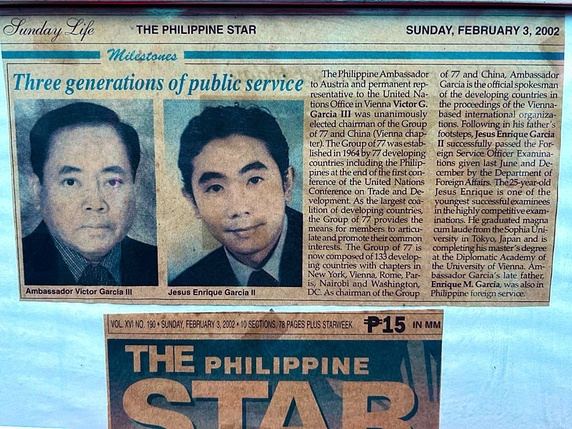
Vienna was also where his family’s own diplomatic legacy took a generational turn. His son, Hendrik, pursued advanced studies in international affairs at the Vienna Diplomatic Academy and later joined the Philippine Foreign Service, eventually rising to become Chief of Mission and a future Ambassador and Deputy Permanent Representative to the UN in New York. . His daughter, Roxanne, built a career at the IAEA, overseeing technical assistance programs for developing countries. For Vic, there was quiet pride in seeing the values of service and international engagement take root in the next generation.

The Diplomat as Treaty-Maker
Across these varied assignments — Rome, Kobe, Los Angeles, Vienna — Vic’s role evolved from representative to architect, from advocate to negotiator of global norms. Whether crafting provisions on maritime sovereignty, mobilizing aid for disaster victims, or shaping conventions against crime and corruption, he demonstrated a consistent philosophy: that diplomacy must be anchored in law, animated by compassion, and guided by a clear sense of national interest.
He believed that firmness and courtesy were not opposites but complements. One could defend a country’s position with resolve while remaining open to dialogue and compromise. This approach, honed in committee rooms and crisis centers alike, would later prove invaluable when he took on one of the most challenging postings of his career — representing the Philippines in the heart of a resurgent great power.
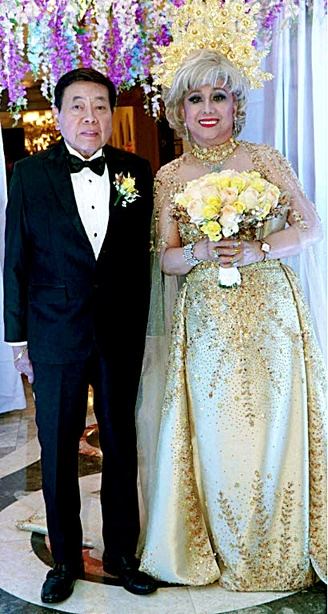
That next chapter would take him to Moscow, into the strategic calculations of a nation described by Winston Churchill as “a riddle wrapped in a mystery inside an enigma,” and into a world where history, power, and national interest intersected with renewed intensity.
Moscow, Malacañang, and the Meaning of a Life in Diplomacy
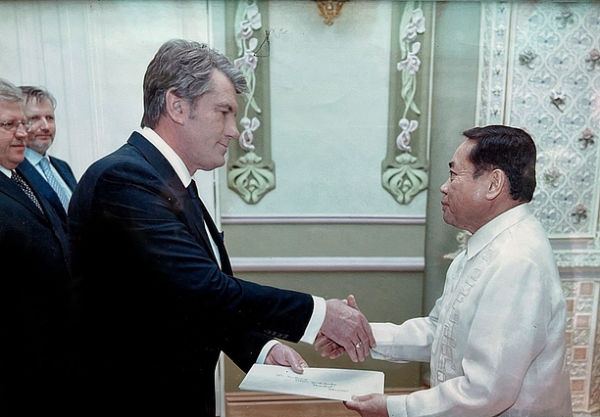
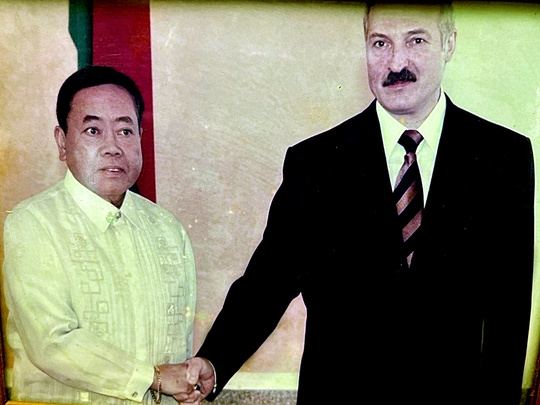
On a cold winter morning in 2008, Vic arrived in Moscow to assume one of the most demanding posts of his career: Ambassador of the Philippines to the Russian Federation, with concurrent accreditation to Armenia, Belarus, and Ukraine. The city was wrapped in snow and history, its grand avenues and onion-domed cathedrals bearing the weight of empire, revolution, and renewed great-power ambition.

In his mind echoed the words of Winston Churchill, who had once described Russia as “a riddle, wrapped in a mystery, inside an enigma,” adding that the key to understanding it lay in its national interest. Vic would soon find that this insight was as relevant in the twenty-first century as it had been in the twentieth.
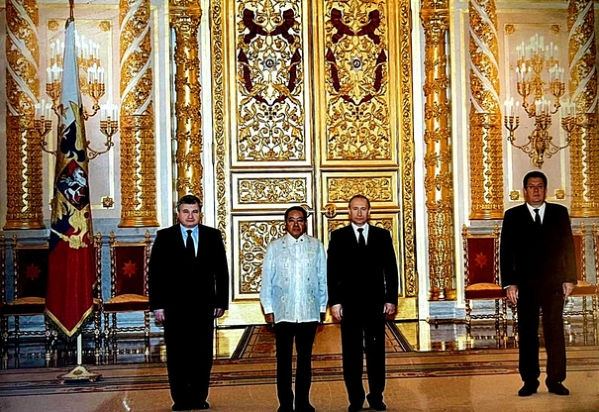
Russia, a permanent member of the UN Security Council and heir to the strategic legacy of the Soviet Union, was asserting its place in a changing global order. It viewed its near abroad, particularly Ukraine, as part of its historical and security sphere. While the Philippines, anchored in international law and a treaty alliance with the United States, would later vote against Russia’s actions in Ukraine, Vic’s tenure was marked by professionalism and mutual respect. There were no outstanding bilateral disputes, and he was received with the full courtesies due an ambassador, including audiences at official functions with President Vladimir Putin and exchanges with Foreign Minister Sergei Lavrov and senior Kremlin advisers.
Beyond geopolitics, he encountered a Russia of immense cultural depth: the music of Tchaikovsky, the ballets of the Bolshoi, the literary heritage of Tolstoy and Dostoevsky. Even language became a bridge. Though Russian was notoriously difficult, he and his wife, Connie, took the effort to learn enough to navigate daily life, discovering along the way that Tagalog was being taught at Moscow State University by Russian scholars who had studied in the Philippines. It was a reminder that cultural diplomacy often runs quietly beneath the currents of power politics.

From Moscow, Vic reflected on the evolving landscape of international relations. The Cold War certainties of his early career had given way to a multipolar world in which the Philippines sought a calibrated balance — friend to all, foe to none — while steadfastly defending its sovereignty and rights under international law. It was the same philosophy that underpinned the country’s reliance on UNCLOS and the 2016 Arbitral Award in the West Philippine Sea, a legal framework he himself had helped craft decades earlier.
The Art of Protocol and the Theater of the State
If Moscow represented the geopolitics of power, his earlier service as Chief of Protocol of the Department of Foreign Affairs had immersed him in the theater of state. In Malacañang Palace, where the rituals of the republic unfold, Vic was responsible for ensuring that the courtesies of diplomacy were observed with precision and respect. From arranging state visits to organizing the President’s vin d’honneur for the diplomatic corps, he learned that symbolism, when properly understood, could convey messages of amity, equality, and national dignity more eloquently than words.

The role demanded an encyclopedic knowledge of ambassadors, precedence, and protocol, and a temperament that combined firmness with tact. A single misstep could cause embarrassment; a well-executed ceremony could strengthen relationships. For Vic, protocol was not mere formality. It was a language of respect, a way of acknowledging the sovereignty and culture of others while affirming one’s own.
In negotiations, he carried the same balance. Courtesy opened doors; firmness protected interests. He believed in first understanding the other side’s perspective, then seeking a middle ground without surrendering principle. It was a method he had refined from the Security Council to treaty committees, from consular crises to bilateral talks.
Family: The Quiet Pillar of a Public Life

Behind the public roles stood a family that bore the weight of constant relocation and adjustment. His wife, Connie, was, in his words, “the perfect ambassador’s wife,” an indispensable partner who managed residences, hosted counterparts, and created an atmosphere of warmth that complemented official engagements. In diplomacy, social functions are not peripheral; they are extensions of policy, spaces where trust is built over conversation and shared meals. Connie’s grace and organizational skill made their homes abroad true extensions of the Philippine mission. Their children, Hendrik and Roxanne, grew up across cultures, experiencing both the privilege and the disruption that come with a diplomat’s life. They learned early that friendships might be temporary and that schools would change, sometimes abruptly. Yet these very disruptions nurtured resilience and a global outlook.
In Vienna, the family’s story came full circle. Hendrik earned a master’s degree at the Vienna Diplomatic Academy and later joined the Philippine Foreign Service, eventually rising to become Chief of Mission II and on the cusp of appointment as Ambassador and Deputy Permanent Representative to the United Nations in New York. He would also obtain a second master’s degree from Harvard’s Kennedy School of Government, continuing the tradition of intellectual rigor and public service. Roxanne, for her part, joined the International Atomic Energy Agency, overseeing technical assistance programs that brought peaceful nuclear applications to developing countries. For their father, these paths were a source of deep pride — not as personal achievements, but as evidence that the values of service and global engagement had taken root in the next generation.
Faith, Purpose, and Service Beyond Retirement

Throughout his career, Vic drew strength from faith and a sense of purpose. He believed that ethical leadership meant leading by example, telling the truth, treating colleagues with respect, and inspiring them to reach their full potential. These principles sustained him through crises, difficult negotiations, and the inevitable disappointments that accompany public life.
After retiring from active diplomatic service, he did not withdraw from engagement. He assisted in family enterprises and devoted time to the Lourdes Grotto Shrine Foundation in San Jose del Monte, Bulacan, which serves pilgrims and supports charitable activities. He also became involved in the Philippine Council for Foreign Relations, contributing to policy discussions and promoting international understanding. For him, retirement was not an end, but a transition from official duty to civic and spiritual service.
Rotary: Fellowship and Service Above Self
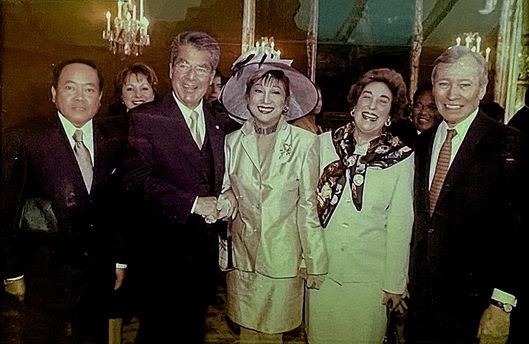
Parallel to his diplomatic life ran another thread of service: his membership in the Rotary Club of Manila. Inducted in 1997, with Past District Governor Vince Carlos as his sponsor, he found in Rotary a community that resonated with his own ideals of public service and ethical conduct. The club’s Four-Way Test — truth, fairness, goodwill, and benefit to all — mirrored the values he sought to uphold in diplomacy.
Rotary provided a platform for fellowship that transcended borders. Wherever he was posted, his membership opened doors to clubs abroad, reinforcing the idea that service and goodwill form a universal language. He took particular pride in the heritage of the Rotary Club of Manila as the oldest and largest in Asia, and in its role in fostering people-to-people connections, including through the recognition of foreign ambassadors who had contributed to Philippine relations.
A Life Framed by Law, Service, and History

As Vic looked back on a career spanning four decades, he found it difficult to single out one defining moment. The signing of UNCLOS in Montego Bay stood out, as did the negotiation of conventions against transnational crime and corruption, the management of crises from earthquakes to volcanic eruptions, and the representation of the Philippines in capitals and international organizations across the globe. Each assignment, he believed, had demanded its own form of courage and creativity.
He often reflected on the figures who had inspired him: his father, Ambassador Enrique Garcia, who rose from the province of Aklan to become a pioneer of Philippine diplomacy; national heroes such as José Rizal and Apolinario Mabini; statesmen like Manuel Quezon; and global leaders from Abraham Lincoln to Winston Churchill. From them, and from his own mentors in the Department of Foreign Affairs, he drew lessons on leadership, sacrifice, and the enduring power of ideas.
If he were to title his memoir, he said, it would be “Why Be an Ambassador?” The answer, implicit in the story of his life, lay in the opportunity to serve something larger than oneself — to give voice to a nation, to protect its people, and to contribute, however modestly, to the architecture of peace and order.

To young Filipinos considering the Foreign Service, his counsel was both inspiring and candid. Diplomacy, he would say, offers the privilege of representing the country, of exploring cultures, and of participating in the making of history. But it is not a path to wealth or glamour. It is a vocation of sacrifice, sustained by patriotism and a commitment to the common good.
In the end, Vic measured success not by rank or decoration, but by fidelity to purpose. He had sought to uphold the interests of the Philippines, to defend its citizens in distress, to strengthen the rule of law, and to build bridges of understanding in a world often divided by fear and ambition. From the boy who once listened to tales of coronations to the statesman who helped shape the law of the seas and the conventions of global justice, his journey embodied the quiet heroism of public service.
It was a life lived, in the fullest sense, in the service of the Republic.

Epilogue: Why Be an Ambassador?
In the autumn of his life, when official titles had been set aside and the diplomatic passport had finally been returned, Vic often reflected on a question he once posed to himself and later to generations of young Filipinos:
“Why be an ambassador?”

The answer, he knew, could never be reduced to rank, ceremony, or privilege. It lay instead in the long arc of service that began with a boy listening to stories of Westminster Abbey and ended with a statesman who had helped write the law of the seas, defend migrant workers, negotiate global treaties, and represent the Philippines in the councils of great powers.
To be an ambassador, in his understanding, was to become the living bridge between history and hope.
He had stood in the negotiating halls of Montego Bay as the Philippines secured its maritime soul.

He had spoken in Vienna for the peaceful uses of nuclear science and for the global war against crime and corruption.
He had walked the snow-covered streets of Moscow while balancing principle and pragmatism amid great-power rivalry.
He had comforted distressed Filipinos after earthquakes and volcanic eruptions, mobilized diaspora compassion across oceans, and safeguarded dignity through the quiet precision of protocol.
Yet perhaps his most enduring legacy was not written in treaties or communiqués, but in people.
In his son, Hendrik, now himself a rising diplomat of the Republic. In his daughter, Roxanne, advancing development through international institutions. In the countless young foreign service officers he examined, mentored, and inspired. In Rotarians who saw in him the living embodiment of Service Above Self. And in a nation whose maritime rights and diplomatic stature rest in part on foundations he helped lay.
He had lived through eras — the Cold War, the birth of multilateral law, the reemergence of great-power rivalry — and in each, he chose the same compass: national interest anchored in international law, pursued with courtesy, courage, and conscience.
For him, diplomacy was never transactional. It was moral. It was the disciplined pursuit of peace. It was the art of defending one’s country without losing one’s humanity. It was, at its core, an expression of love for country.
And so, when asked how he wished to be remembered, he did not speak of honors or decorations, though they came. He spoke instead of having lived a purposeful life — as a lawyer, as a husband, as a father, as a Rotarian, and above all, as a servant of the Republic.
A life that proved that a boy from Manila, raised in chancelleries and classrooms, guided by faith and family, could one day help shape the law of oceans, the fight against global crime, and the dignity of a nation among nations.
A life that answered, in full:
“Why be an ambassador?”
Because in a world of conflict and uncertainty, someone must carry the flag not in battle, but in dialogue; not in conquest, but in conscience; not in silence, but in the steady, principled voice of a people.
 A Convergence of Values, Vision, and Global Responsibility: The Rotary Club of Manila’s 19 Weekly Membership Meeting
 Editorial