
Editorial

Reginald T. Yu
Editor-in-Chief
When John Patrick G. Gregorio, Chairman of the Philippine Sports Commission, steps before the Rotary Club of Manila as Guest Speaker for its 21st Weekly Membership Meeting, he does so at a moment when Philippine sport — much like Philippine society itself — stands at a crossroads.
Sport, in its truest sense, has never been merely about medals, rankings, or momentary triumphs. It is about discipline before applause, sacrifice before recognition, and character before victory. These are values Rotarians know well. They are values forged not in the spotlight, but in training halls, grassroots programs, and systems that quietly insist on excellence long before the world notices.
Chairman Gregorio represents a generation of public servants who understand that sport is not an ornament of nationhood, but a foundational pillar of it. In a country where talent is abundant but opportunity often uneven, the role of leadership in sports governance becomes nothing less than a moral obligation — to widen access, professionalize structures, and ensure that promise is not lost to neglect or politics.
Under his stewardship, the challenge is clear: how do we transform isolated athletic success into a sustainable national system? How do we ensure that the victories we celebrate today are not accidents of individual brilliance, but outcomes of deliberate policy, inclusive development, and longterm investment?
For Rotary, this conversation resonates deeply. Service above self is not foreign to the world of sport. Every coach who stays after hours, every trainer who believes in an athlete before results come, every administrator who chooses integrity over expediency — these are Rotarian virtues expressed in another arena.
Chairman Gregorio’s presence reminds us that leadership is not defined by the microphone, but by the ecosystem one builds. A sports commission that functions well does more than produce champions; it cultivates hope, discipline, and national pride. It offers young Filipinos—regardless of background — a fair field on which effort matters more than privilege.
In welcoming him, the Rotary Club of Manila does more than host a speaker. It affirms a belief that sport, when governed with vision and conscience, can be one of the most powerful instruments of social cohesion. That athletic excellence and civic responsibility are not separate pursuits, but parallel expressions of the same commitment to the common good.
As Rotary embraces the theme “Unite for Good,” this dialogue could not be more timely. Nationbuilding does not happen only in boardrooms or legislatures. It happens on tracks, courts, pools, and fields — where values are tested daily, and where leadership, when done right, leaves a legacy far greater than a scoreline.
This week’s meeting is therefore not simply another gathering on the calendar. It is an invitation to reflect on how excellence is cultivated, how systems endure, and how service — whether through Rotary or sport — ultimately shapes the kind of nation we aspire to become.
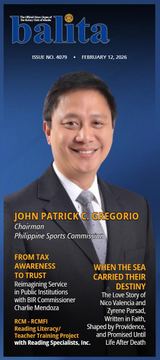
 John Patrick C. Gregorio
 FROM TAX AWARENESS TO TRUST: Reimagining Service in Public Institutions with BIR Commissioner Charlie Mendoza
 WHEN THE SEA CARRIED THEIR DESTINY | The Love Story of Nico Valencia and Zyrene Parsad, Written in Faith, Shaped by Providence, and Promised Until Life After Death