

The first Rotary club in Asia · Established 1919Secretariat loginEditor loginLibrarian login
Attend a meeting
← Balita · Issue 4080 · 19 February 2026 Balita

THE BRIDGE BUILDER | Leadership, Service Above Self, and the Life of Jose Claveria de Venecia Jr.

Joe de Venecia serving as a Congressman, delivers an impassioned address on the plenary floor of the House of Representatives in 2008, shortly after being stripped of his post as House Speaker. 

In a moment charged with emotion and consequence, Joe publicly argued the circumstances of his removal, asserting that he had been betrayed by the very administration he had supported, which he alleged was behind his ouster. The speech marked a dramatic and defining episode in his long parliamentary career — one that laid bare the fractures within the political establishment and underscored his willingness to confront power openly in defense of principle, institutional integrity, and his own political legacy.
Joe de Venecia serving as a Congressman, delivers an impassioned address on the plenary floor of the House of Representatives in 2008, shortly after being stripped of his post as House Speaker. In a moment charged with emotion and consequence, Joe publicly argued the circumstances of his removal, asserting that he had been betrayed by the very administration he had supported, which he alleged was behind his ouster. The speech marked a dramatic and defining episode in his long parliamentary career — one that laid bare the fractures within the political establishment and underscored his willingness to confront power openly in defense of principle, institutional integrity, and his own political legacy.

A life shaped not by conquest, but by connection. Across politics, diplomacy, and peacebuilding, Jose de Venecia Jr. chose dialogue over division and institution-building over spectacle — believing that democracy endures through trust patiently earned and service quietly rendered.

The House chamber was still.

Not the ordinary stillness before a session begins, but the heavy, anticipatory quiet that settles when outcomes are already known and words are about to be weighed for the record rather than the vote. It was February 4, 2008. The motion had been filed. The numbers had been counted. Survival had become a matter of arithmetic.

Joe on the hustings, surrounded by enthusiastic and devoted constituents — an image that captures his enduring connection with the people he served. This campaign culminated in his sixth consecutive term as Representative of the 4th District of Pangasinan, affirming the deep trust and confidence repeatedly bestowed upon him by his electorate. 

More than a local triumph, this decisive victory proved pivotal on the national stage. It paved the way for his unprecedented fifth term as Speaker of the House of Representatives of the Republic of the Philippines, marking a rare feat in Philippine parliamentary history and underscoring his singular influence, legislative mastery, and sustained leadership in shaping the nation’s democratic institutions.
Joe on the hustings, surrounded by enthusiastic and devoted constituents — an image that captures his enduring connection with the people he served. This campaign culminated in his sixth consecutive term as Representative of the 4th District of Pangasinan, affirming the deep trust and confidence repeatedly bestowed upon him by his electorate. More than a local triumph, this decisive victory proved pivotal on the national stage. It paved the way for his unprecedented fifth term as Speaker of the House of Representatives of the Republic of the Philippines, marking a rare feat in Philippine parliamentary history and underscoring his singular influence, legislative mastery, and sustained leadership in shaping the nation’s democratic institutions.

Jose de Venecia Jr. rose from his seat.

He did not hurry. He did not look around for approval. He moved with the practiced calm of a man who had stood in this hall for decades and knew its rhythms better than its acoustics. When he began to speak, his voice was level, almost conversational, as if addressing colleagues across a long table rather than a chamber on the verge of rupture.

He spoke of years spent holding the House together, of moments when the country teetered and institutions threatened to give way. He spoke without drama, without grievance. Then, without pause or flourish, he said that generals had come to his home.

JDV's iconic campaign photograph — a defining image that came to symbolize his populist appeal, political resilience, and enduring bond with the electorate. Framed by the energy of the campaign trail, the photo captures JDV at his most elemental: confident, accessible, and firmly rooted in the people’s trust, an image that would endure as shorthand for a long and consequential public life.

They had warned him, he said, that he and his son were in danger. That others had already been killed. That he had written to the President, asking for intervention. That nothing had been done.

The room did not react. There was no murmur, no rush of indignation, no applause to break the weight of the words. Silence held.

This was not accusation for effect. It was testimony.

Judge Jose R. de Venecia Sr. and Casimira Villamil Claveria, the esteemed parents of former Speaker Jose de Venecia Jr., embodied discipline, dignity, and quiet strength. 

A jurist guided by integrity and fairness, Judge de Venecia Sr. instilled a deep respect for justice and public service, while Casimira Villamil Claveria anchored the family with grace, faith, and steadfast resolve. Together, they shaped a home rooted in principle, learning, and service — values that would profoundly influence their son’s lifelong commitment to statesmanship and nation-building.
Judge Jose R. de Venecia Sr. and Casimira Villamil Claveria, the esteemed parents of former Speaker Jose de Venecia Jr., embodied discipline, dignity, and quiet strength. A jurist guided by integrity and fairness, Judge de Venecia Sr. instilled a deep respect for justice and public service, while Casimira Villamil Claveria anchored the family with grace, faith, and steadfast resolve. Together, they shaped a home rooted in principle, learning, and service — values that would profoundly influence their son’s lifelong commitment to statesmanship and nation-building.

Hours later, just past midnight, the vote was taken. One hundred seventy-four members declared the Speakership vacant. Thirty-five opposed. Sixteen abstained. Numbers did what numbers do. Joe walked out of the chamber he had shaped for more than a decade — without escort, without spectacle — no longer Speaker, but unmistakably a man who had chosen record over survival, conscience over office.

That moment lingered.

Long before and long after that night, the rooms he entered were rarely quiet.

Joe as a young boy during his First Holy Communion — a quiet, formative moment of faith and innocence that reflected the values of reverence, discipline, and moral grounding instilled in him at an early age, and which would later underpin a life devoted to service and public leadership.

Not because he demanded attention, but because attention moved toward him, drawn by an unseen current. Presidents paused mid-sentence. Prime ministers smiled before they were conscious of doing so. Parliamentary veterans — hardened by years of brinkmanship — found themselves leaning in, listening.

There was something about him that resisted imitation: a confidence that did not assert itself, a warmth that did not concede ground, an attentiveness that made even adversaries feel, briefly, understood. Watching him move through a hall of statesmen was to witness a subtler form of power at work — not command, not coercion, but gravity.

Once, at a gathering of parliamentarians on the far side of the world, someone whispered, half amused and half in awe, “He’s a rock star.” The remark was meant lightly, but it carried truth. Joe did not merely attend history; he moved within it. He belonged to that rare class of leaders whose presence altered the chemistry of a room, making the improbable feel discussable and the unthinkable momentarily negotiable.

Young Joe pictured in 1955 as Editor-in-Chief of Aegis, the official yearbook of the Ateneo de Manila University — an early glimpse of his intellectual rigor, leadership instinct, and command of ideas, foreshadowing a lifelong engagement with public discourse, institution-building, and national service.

And yet this is the paradox that clings to his life: despite five terms as Speaker of the House of Representatives — the most in Philippine history; despite authoring more than two hundred landmark laws; despite brokering peace with insurgents, mutineers, and secessionists; despite shaping Asia’s parliamentary and interfaith architecture — Joe remains persistently misunderstood.

To some, he is the consummate coalition builder, the steady hand who gave a fragile democracy its legislative backbone. To others, he is too smooth, too conciliatory, too committed to consensus in a country that often prefers confrontation to compromise. In truth, he is something more difficult to categorize: an architect of institutions in a nation prone to dismantling them; a believer in dialogue in a political culture addicted to rupture.

His story is not one of linear ascent. It is a story shaped by scale — of thinking beyond election cycles, beyond borders, beyond the fleeting applause of crowds. It is the story of a man who believed that politics, at its best, was not war by other means, but architecture: the patient assembly of structures strong enough to hold competing interests without collapse.

As an 18-year-old correspondent, Joe was already at the center of history, covering Vice President — and later President — Carlos P. Garcia for the Pan-Asia Newspaper Alliance, the first Asian news agency of its kind. It was a formative period marked by national transition and uncertainty: Garcia had assumed the presidency following the tragic death of Ramon Magsaysay, who perished in a plane crash, an event that profoundly shaped the political mood of the country. 

By the age of 25, Joe was no longer merely an observer of events but an active participant in their resolution. In a defining moment of political maturity, he successfully appealed to President Garcia to finally concede defeat to President-elect Diosdado Macapagal, helping ease the nation through a delicate democratic transition. Garcia’s decision — and his response — was given directly to a jubilant young Joe, a testament to the trust he had earned and an early indication of his lifelong role as a bridge between power, principle, and the public good.
As an 18-year-old correspondent, Joe was already at the center of history, covering Vice President — and later President — Carlos P. Garcia for the Pan-Asia Newspaper Alliance, the first Asian news agency of its kind. It was a formative period marked by national transition and uncertainty: Garcia had assumed the presidency following the tragic death of Ramon Magsaysay, who perished in a plane crash, an event that profoundly shaped the political mood of the country. By the age of 25, Joe was no longer merely an observer of events but an active participant in their resolution. In a defining moment of political maturity, he successfully appealed to President Garcia to finally concede defeat to President-elect Diosdado Macapagal, helping ease the nation through a delicate democratic transition. Garcia’s decision — and his response — was given directly to a jubilant young Joe, a testament to the trust he had earned and an early indication of his lifelong role as a bridge between power, principle, and the public good.

There were triumphs so complete they felt permanent. Defeats so intimate they nearly unmade him. Loss — unspeakable loss — that no title, no office, no standing ovation could soften. Through it all ran a single, unyielding conviction: that nations do not endure on rage, nor on charisma, nor even on laws alone, but on the fragile, hard-won miracle of trust.

And in that belief, quietly and stubbornly held, lies the measure of Jose de Venecia Jr.

A Man Born into History

At just 19 years old, Joe distinguished himself as the Philippine Correspondent and Manila Bureau Chief of the Pan-Asia Newspaper Alliance — a remarkable early achievement that underscored his precocious intellect, journalistic discipline, and emerging role as a keen observer and interpreter of regional affairs, long before his rise as a national statesman.

Jose Clavería de Venecia Jr. was born on December 26, 1936, in Barangay Pogo Grande, Dagupan City, at a time when the Philippines itself was suspended between inheritance and invention. The Commonwealth era promised self-rule but offered no guarantees. Institutions existed, but their permanence was untested. Sovereignty was imagined more than secured. Into that uncertainty arrived a child whose life would come to echo the nation’s recurring struggle — between fracture and repair, collapse and construction.

Public service was not an abstraction in the de Venecia household; it was a daily language. His father, Judge Jose Ravago de Venecia, represented the law in its most exacting form — measured, disciplined, unsentimental. Authority, in his presence, was something earned through restraint.

His mother, Casimira Villamil Clavería, supplied the moral ballast of the home, grounding ambition in continuity and memory, reminding her children that duty was not something announced but practiced. His grandfather, Guillermo de Venecia, had served as mayor of Dagupan in an era when leadership was intimate, personal, and constantly observed. Politics, in that generation, had faces.

At 33 years old, Joe, then serving as Minister-Counselor, is pictured with William Westmoreland, Commander of the United States Forces in Vietnam. The meeting reflects Joe’s early engagement at the highest levels of international diplomacy and security affairs during a critical period of the Vietnam War, underscoring his exposure to global power dynamics and his growing role as a trusted interlocutor linking Philippine interests with major allied military and diplomatic leadership.

Jose was the youngest of seven children, a position that trained him quietly but thoroughly. He learned early how to listen before speaking, how to read the emotional temperature of a room, how to attract attention without demanding it. These were not lessons taught explicitly. They were absorbed. And in time, they would become instincts.

His precocity appeared early. In elementary school, he was accelerated by a full year — a bureaucratic adjustment that hinted at a life that would repeatedly outrun standard timetables. At De La Salle College in Manila, his world widened abruptly. Manila was not simply larger than Dagupan; it was sharper. It was a place where ambition announced itself openly, where intellect competed for oxygen, and where reputation was earned in public view.

The decisive turn came at Ateneo de Manila University, where Joe chose journalism. In an era when law and economics were the conventional gateways to power, journalism was a deliberate divergence. It was a statement of method: he wanted to understand power by explaining it.

Joe de Venecia, then Minister-Counselor for Economic Affairs at the Philippine Embassy in Saigon, in conversation with Philippine troops of PHILCAG in Tây Ninh, Vietnam, near the Cambodian border. 

The moment reflects his dual engagement in diplomacy and on-the-ground realities during a volatile period in Southeast Asia, underscoring a leadership style attentive not only to policy and international relations, but also to the welfare, morale, and lived experience of Filipino servicemen deployed far from home.
Joe de Venecia, then Minister-Counselor for Economic Affairs at the Philippine Embassy in Saigon, in conversation with Philippine troops of PHILCAG in Tây Ninh, Vietnam, near the Cambodian border. The moment reflects his dual engagement in diplomacy and on-the-ground realities during a volatile period in Southeast Asia, underscoring a leadership style attentive not only to policy and international relations, but also to the welfare, morale, and lived experience of Filipino servicemen deployed far from home.

He thrived. As Associate Editor of The Guidon and later Editor-in-Chief of The Aegis, he demonstrated not only command of language but an instinct for relevance — an ability to sense which ideas mattered before others recognized their importance. Under his leadership, The Guidon achieved rare international distinction, recognized as among the finest college newspapers in the world. The honor mattered less for its prestige than for what it revealed. Even then, Joe was thinking beyond borders.

Journalism disciplined him. It also armed him. He learned that facts persuade only when arranged with meaning, that truth without structure is easily ignored, and that leadership often begins not with command, but with narrative coherence.

Barely out of his teens, he entered professional journalism as Manila bureau chief and Philippine correspondent for a Pan-Asia news alliance. He wrote weekly columns on Asian affairs at a moment when Asia itself was renegotiating its identity in the aftermath of empire. This was not local reporting. It was geopolitical apprenticeship.

In 1974, Joe was conferred The Outstanding Young Men (TOYM) of the Philippines award for Business Leadership by the Philippine Jaycees, in recognition of his pioneering contributions to national economic development at a remarkably young age. He was likewise honored with the President Roxas Economic Leadership Award, affirming the transformative impact of his early initiatives. 

These distinctions recognized Joe’s trailblazing role in opening overseas contract work for Filipinos in the Middle East and North Africa, a visionary effort that generated employment for millions and helped establish overseas labor as a vital pillar of the Philippine economy. He was also cited for pioneering oil and gas exploration in Palawan, an undertaking that led to the first commercial oil discoveries in the western Philippines, strengthening the country’s energy prospects and economic resilience. 

Together, these achievements underscored a rare blend of entrepreneurial foresight, nation-building ambition, and practical leadership that would continue to define his public life.
In 1974, Joe was conferred The Outstanding Young Men (TOYM) of the Philippines award for Business Leadership by the Philippine Jaycees, in recognition of his pioneering contributions to national economic development at a remarkably young age. He was likewise honored with the President Roxas Economic Leadership Award, affirming the transformative impact of his early initiatives. These distinctions recognized Joe’s trailblazing role in opening overseas contract work for Filipinos in the Middle East and North Africa, a visionary effort that generated employment for millions and helped establish overseas labor as a vital pillar of the Philippine economy. He was also cited for pioneering oil and gas exploration in Palawan, an undertaking that led to the first commercial oil discoveries in the western Philippines, strengthening the country’s energy prospects and economic resilience. Together, these achievements underscored a rare blend of entrepreneurial foresight, nation-building ambition, and practical leadership that would continue to define his public life.

That apprenticeship deepened dramatically in 1966, when at just twenty-nine years old he was appointed Minister and Economic Counselor at the Philippine mission in Saigon, during the Vietnam War. Saigon was diplomacy under siege — a city where protocol unfolded beneath the constant thrum of helicopters, where official briefings competed with the knowledge that yesterday’s certainties could dissolve overnight. It was a place where systems failed visibly, and human consequences followed immediately.

It was there, amid war and displacement, that Joe conceived what would become one of the most consequential economic innovations in Philippine history: the Dollar Remittance Program for overseas Filipino workers.

At the time, Filipinos working abroad sent money home through fragile, informal channels. Black-market exchanges devoured earnings. Families waited in uncertainty. Joe saw that migration, unmanaged, could hollow out households — but structured properly, it could stabilize them. The program he designed was not merely technical. It was moral. It asserted that the state owed protection to its citizens even when they labored beyond its shores.

House Speaker Cornelio Villareal in strategic consultation with his Foreign Policy Adviser, Jose de Venecia Jr., in 1964, a formative moment that highlights Joe’s early immersion in the craft of governance and international affairs. Still in the early stages of his public life, Joe was already engaged at the highest levels of legislative strategy and foreign policy thinking, contributing insight and perspective to national decision-making. The scene foreshadows a career that would later place him at the center of Philippine diplomacy and parliamentary leadership, bridging domestic politics with a widening global outlook.

In time, the program would channel billions of dollars into the Philippine economy, cushioning it through devaluations, political crises, and global shocks. But at its origin, it was an act of empathy sharpened by policy. Recognition followed. So did a reputation for thinking in systems rather than slogans.

Long before remittances were spoken of as lifelines, Joe had built one.

The program became a model for other developing economies — Pakistan, Bangladesh, Egypt, India, Turkey — seeking to harness migrant labor without exploiting it. BizNews Asia would later estimate that the system had generated more than USD250 billion since its inception. For this achievement, Joe received The Outstanding Young Men (TOYM) award — recognition not for rhetoric, but for architecture.

Senator Benigno Aquino Jr. and presidential candidate Sergio Osmeña Jr. formally proclaim Jose de Venecia Jr. in 1969 as the Liberal Party’s free zone congressional candidate, marking a decisive moment in his early political ascent. The proclamation took place in the presence of key national and local leaders, including Antonio Villegas, then Mayor of Manila; Maria Kalaw-Katigbak; and Pangasinan party stalwarts A. Perez, L. Reyna, and L. Catubig. Together, they signaled a broad coalition of reform-minded leadership and regional support, underscoring the confidence placed in Joe’s candidacy and foreshadowing his emergence as a formidable figure in Philippine legislative politics.

From diplomacy, Joe moved into international enterprise — not as an escape from public life, but as an extension of it. In the 1970s, he became a pioneer in overseas contract work for Filipinos, deploying tens of thousands of workers to the Middle East and North Africa. His companies operated ports in Saudi Arabia, developed agriculture in Africa, built mass housing, and ventured into oil exploration in the Middle East.

Business taught him scale. It also taught him execution — the unforgiving truth that vision without delivery is indistinguishable from fantasy. These years hardened him, expanded his global network, and deepened his respect for labor — not as abstraction, but as sacrifice.

At thirty-two, he entered Congress for the first time, elected in 1969. He was young, articulate, and unusually prepared. Then history intervened. Martial Law was declared in 1972. Congress was abolished.

Joe de Venecia, a freshman congressman, is formally sworn into office in 1969 by Alejo de Guzman, then Mayor of Binmaley, assuming his post as Representative of the 2nd District of Pangasinan at the age of 32. 

The ceremony marked the beginning of a distinguished legislative career rooted in public trust and local mandate, signaling the arrival of a young lawmaker whose intellect, discipline, and political acumen would soon propel him to the highest ranks of national leadership.
Joe de Venecia, a freshman congressman, is formally sworn into office in 1969 by Alejo de Guzman, then Mayor of Binmaley, assuming his post as Representative of the 2nd District of Pangasinan at the age of 32. The ceremony marked the beginning of a distinguished legislative career rooted in public trust and local mandate, signaling the arrival of a young lawmaker whose intellect, discipline, and political acumen would soon propel him to the highest ranks of national leadership.

The lesson was unmistakable and enduring: institutions are fragile. Progress is reversible. Power, when unchecked, erases process first.

When democracy returned in 1987, Joe returned with it — older, seasoned, and acutely aware that rebuilding a legislature required more than eloquence. It required alignment. It required patience. It required coalitions strong enough to hold when personalities failed.

He had spent a lifetime preparing for that work — though he may not yet have known it.

Joe de Venecia was elected Congressman of Pangasinan’s 2nd District in 1969, marking his first term in the House of Representatives. 

The victory signaled the formal entry of a young and formidable leader into national legislation, launching a parliamentary career that would span decades and eventually elevate him to the Speakership multiple times. It was an early mandate rooted in local trust, foreshadowing his rise as one of the most influential figures in Philippine legislative history.
Joe de Venecia was elected Congressman of Pangasinan’s 2nd District in 1969, marking his first term in the House of Representatives. The victory signaled the formal entry of a young and formidable leader into national legislation, launching a parliamentary career that would span decades and eventually elevate him to the Speakership multiple times. It was an early mandate rooted in local trust, foreshadowing his rise as one of the most influential figures in Philippine legislative history.

The Coalition Builder

Joe did not come to power by confrontation. He came to it by counting — counting votes, counting interests, counting the invisible cost of instability. Long before he held the Speaker’s gavel, he had reached a conclusion that would govern his public life: in a fragmented democracy, ideology without arithmetic was sentiment, and power without coalition was illusion. That conviction hardened after 1972.

When Martial Law abolished Congress, Joe did not merely lose a seat. He lost any faith in the permanence of institutions. The legislature, he concluded, survived not because it was noble, but because it was useful. When it ceased to serve power, it vanished. If it was to endure, it had to make itself indispensable — not adversarial to the executive, not submissive to it, but operationally necessary.

Jose de Venecia Jr., Representative of the Fourth District of Pangasinan, takes his oath of office on July 27, 1992 as Speaker of the House of Representatives for the 9th Congress of the Philippines. 

The moment marked the beginning of one of the most consequential speakerships in Philippine legislative history, ushering in a period of assertive parliamentary leadership, institutional reform, and close collaboration with the executive branch during a critical phase of democratic consolidation and economic restructuring.
Jose de Venecia Jr., Representative of the Fourth District of Pangasinan, takes his oath of office on July 27, 1992 as Speaker of the House of Representatives for the 9th Congress of the Philippines. The moment marked the beginning of one of the most consequential speakerships in Philippine legislative history, ushering in a period of assertive parliamentary leadership, institutional reform, and close collaboration with the executive branch during a critical phase of democratic consolidation and economic restructuring.

This insight would shape everything that followed.

When democracy returned in 1987, Joe ran again — this time for the newly created Fourth District of Pangasinan — and won. But the House he entered bore little resemblance to a democratic revival. It was fragmented, suspicious, ideologically scattered, and scarred by years of authoritarian rule. Reformists distrusted compromise. Conservatives feared reform. Veterans understood that survival required agility rather than purity.

Joe distinguished himself quickly, not through speeches, but through presence. He listened more than he spoke. He brokered rather than postured. He remembered who needed what — and when. He shared credit freely. In a legislature emerging from enforced silence, this was disarming. Trust accumulated around him almost unintentionally.

The Ten Outstanding Congressmen of 1972 — a distinguished assembly of lawmakers recognized for legislative excellence and public service. Jose de Venecia Jr., pictured second from left, stands out as a first-term congressman among seasoned peers, a testament to his early impact and promise in national legislation. 

Sharing the honor with him (from left) are Neptali Gonzales, Emilio Espinosa, Ramon Bagatsing, Jun Leido, Aguedo Agbayani, Teodulo Natividad, and Ramon Mitra—a cohort whose collective achievements helped shape Philippine governance during a pivotal era. For Joe, the recognition marked an early affirmation of his legislative skill, integrity, and emerging stature as a national leader.
The Ten Outstanding Congressmen of 1972 — a distinguished assembly of lawmakers recognized for legislative excellence and public service. Jose de Venecia Jr., pictured second from left, stands out as a first-term congressman among seasoned peers, a testament to his early impact and promise in national legislation. Sharing the honor with him (from left) are Neptali Gonzales, Emilio Espinosa, Ramon Bagatsing, Jun Leido, Aguedo Agbayani, Teodulo Natividad, and Ramon Mitra—a cohort whose collective achievements helped shape Philippine governance during a pivotal era. For Joe, the recognition marked an early affirmation of his legislative skill, integrity, and emerging stature as a national leader.

Then came 1992.

Fidel V. Ramos, the former general who had defended democracy in 1986, sought the presidency. His problem was not vision or credibility. It was arithmetic. He lacked a dominant party and faced a fractured electorate — and an even more fractured Congress.

Ramos turned to Joe.
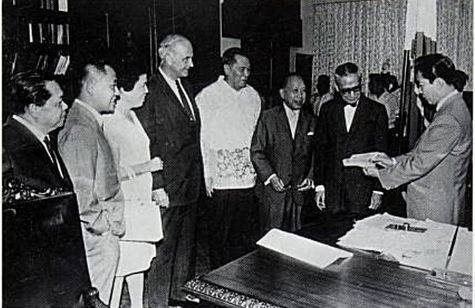
A historic moment in Philippine economic diplomacy: Alfonso Calalang, Governor of the Philippine Central Bank; Carlos P. Romulo, Secretary of Foreign Affairs; Eduardo Romualdez, Secretary of Finance; James Wilson, U.S. Chargé d’Affaires; and Jose de Venecia Jr. present to President Ferdinand Marcos the first “lipstick” U.S. dollar checks — distinctive instruments bearing red overprints and cashable only in Philippine pesos. 

This landmark presentation inaugurated the country’s first formal U.S. dollar remittance mechanism, laying the groundwork for a transformative inflow of foreign exchange. The initiative would prove pivotal in strengthening external reserves, stabilizing the economy, and institutionalizing overseas remittances — an early milestone in a system that would later become a vital pillar of Philippine economic resilience.
A historic moment in Philippine economic diplomacy: Alfonso Calalang, Governor of the Philippine Central Bank; Carlos P. Romulo, Secretary of Foreign Affairs; Eduardo Romualdez, Secretary of Finance; James Wilson, U.S. Chargé d’Affaires; and Jose de Venecia Jr. present to President Ferdinand Marcos the first “lipstick” U.S. dollar checks — distinctive instruments bearing red overprints and cashable only in Philippine pesos. This landmark presentation inaugurated the country’s first formal U.S. dollar remittance mechanism, laying the groundwork for a transformative inflow of foreign exchange. The initiative would prove pivotal in strengthening external reserves, stabilizing the economy, and institutionalizing overseas remittances — an early milestone in a system that would later become a vital pillar of Philippine economic resilience.

Together with Raul Manglapus and a small circle of moderates, Joe helped assemble a new political vehicle: Lakas ng Tao, later Lakas–Christian Muslim Democrats. It was not built around dogma. It was built around inclusion. Christian Democrats and Muslim leaders, reformists and pragmatists, were gathered under a broad tent that promised stability rather than ideological victory.

Ramos won with only a plurality. The real battle shifted immediately to Congress.

In parliamentary systems, plurality victories can be absorbed. In presidential systems with weak parties, they are combustible. Joe understood the danger at once. Without a working majority in the House, reform would stall — or provoke institutional warfare.
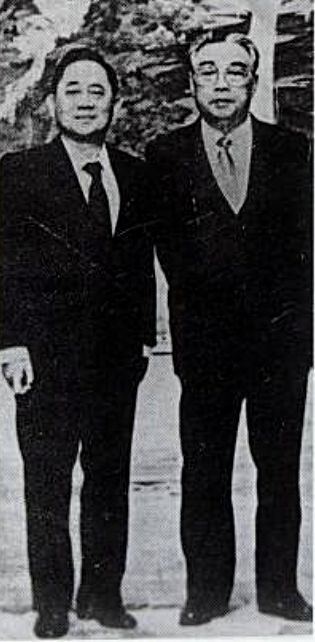
In 1990, Jose de Venecia Jr., a prominent member of the House of Representatives, held a historic meeting with Kim Il Sung at a secluded North Korean mountain retreat — a rare and consequential encounter during a period of deep Cold War tension in East Asia. 

The talks yielded significant diplomatic breakthroughs. The two leaders agreed on the establishment of diplomatic relations between the Philippines and North Korea, and Joe secured an unprecedented written pledge from Pyongyang committing not to support the Communist New People’s Army (NPA) — a major assurance with direct implications for Philippine national security. 

Beyond bilateral concerns, Joe used the meeting to press for broader regional and global reconciliation, urging North Korea to pursue normalization of relations with the United States and Japan, and to work toward peaceful reunification with South Korea. The dialogue reflected his consistent belief in engagement, dialogue, and parliamentary diplomacy as tools for conflict resolution. 

Notably, this landmark meeting preceded the high-profile visits to North Korea by former U.S. President Jimmy Carter and Japanese political leader Shin Kanemaru, underscoring Joe’s role as an early bridge-builder in one of the world’s most closed and complex diplomatic theaters.
In 1990, Jose de Venecia Jr., a prominent member of the House of Representatives, held a historic meeting with Kim Il Sung at a secluded North Korean mountain retreat — a rare and consequential encounter during a period of deep Cold War tension in East Asia. The talks yielded significant diplomatic breakthroughs. The two leaders agreed on the establishment of diplomatic relations between the Philippines and North Korea, and Joe secured an unprecedented written pledge from Pyongyang committing not to support the Communist New People’s Army (NPA) — a major assurance with direct implications for Philippine national security. Beyond bilateral concerns, Joe used the meeting to press for broader regional and global reconciliation, urging North Korea to pursue normalization of relations with the United States and Japan, and to work toward peaceful reunification with South Korea. The dialogue reflected his consistent belief in engagement, dialogue, and parliamentary diplomacy as tools for conflict resolution. Notably, this landmark meeting preceded the high-profile visits to North Korea by former U.S. President Jimmy Carter and Japanese political leader Shin Kanemaru, underscoring Joe’s role as an early bridge-builder in one of the world’s most closed and complex diplomatic theaters.

What followed was his first great architectural achievement: the Rainbow Coalition.

Rather than enforce loyalty, he offered participation. He reached across party lines — LDP, NPC, Lakas, and smaller blocs — assembling a majority not through conversion, but coexistence. The logic was blunt and effective: the House would be a partner in reform, not a battlefield.

In 1992, Joe was elected Speaker of the House of Representatives.

The peace agreement with the Moro National Liberation Front (MNLF), signed in 1996, followed Joe de Venecia’s pivotal offer of a Coalition Agreement to Nur Misuari, a bold political accommodation aimed at transforming armed struggle into participatory governance. 

As a result of this framework, Nur Misuari assumed office as Governor of the Autonomous Region in Muslim Mindanao (ARMM), marking a critical step toward political inclusion and stability in the region. The agreement became a cornerstone of the 1996 peace process, demonstrating how dialogue, power-sharing, and institutional integration could advance lasting peace and development in Mindanao.
The peace agreement with the Moro National Liberation Front (MNLF), signed in 1996, followed Joe de Venecia’s pivotal offer of a Coalition Agreement to Nur Misuari, a bold political accommodation aimed at transforming armed struggle into participatory governance. As a result of this framework, Nur Misuari assumed office as Governor of the Autonomous Region in Muslim Mindanao (ARMM), marking a critical step toward political inclusion and stability in the region. The agreement became a cornerstone of the 1996 peace process, demonstrating how dialogue, power-sharing, and institutional integration could advance lasting peace and development in Mindanao.

He was not yet fifty-six.

From the outset, he redefined the position. Previous Speakers had treated the role as ceremonial or reactive. Joe treated it as managerial. Legislation, he believed, should move at the speed of necessity, not tradition. Committees were reorganized. Calendars enforced. Dead bills buried without sentiment to clear space for viable ones.

The Ramos administration carried an ambitious agenda — tax reform, deregulation, privatization, infrastructure, financial liberalization. None of it would pass without discipline. Joe supplied it.

Libyan leader Muammar Qaddafi meets in 1992 with then Congressman Jose de Venecia Jr. and former Defense Secretary Fidel V. Ramos in Sirte, Libya, in a high-level exchange marked by regional and geopolitical significance. 

Held just months before Ramos’ presidential victory, the meeting reflected early diplomatic engagement and strategic dialogue amid shifting post–Cold War alignments, underscoring Joe’s active role in parliamentary diplomacy and his proximity to pivotal moments in Philippine political transition.
Libyan leader Muammar Qaddafi meets in 1992 with then Congressman Jose de Venecia Jr. and former Defense Secretary Fidel V. Ramos in Sirte, Libya, in a high-level exchange marked by regional and geopolitical significance. Held just months before Ramos’ presidential victory, the meeting reflected early diplomatic engagement and strategic dialogue amid shifting post–Cold War alignments, underscoring Joe’s active role in parliamentary diplomacy and his proximity to pivotal moments in Philippine political transition.

Under his stewardship, the House became an engine. Bills moved not because they were popular, but because they were essential. Critics accused him of being too close to the executive. He answered privately that proximity was not subservience — it was coordination.

Two laws captured his governing philosophy.

The first was the Build-Operate-Transfer Law. Infrastructure, Joe believed, was the skeleton of development. Without power plants, roads, ports, and transit systems, reform remained theoretical. The state lacked capital. Rather than wait for aid or inflate public debt, he championed a framework that mobilized private capital to build, operate, and eventually transfer infrastructure to government.

Joe, then a House Representative, links arms with Kim Dae Jung, President of South Korea; Corazon Aquino; and Raul Manglapus in a moment emblematic of democratic solidarity. 

Their exchange centered on political and economic integration and the shared defense of human rights, reflecting a convergence of reform-minded leadership across Asia. The scene captures a rare alignment of statesmen committed to dialogue, democratic transition, and regional cooperation — values that would continue to shape Philippine foreign policy and Joe’s enduring advocacy for parliamentary diplomacy.
Joe, then a House Representative, links arms with Kim Dae Jung, President of South Korea; Corazon Aquino; and Raul Manglapus in a moment emblematic of democratic solidarity. Their exchange centered on political and economic integration and the shared defense of human rights, reflecting a convergence of reform-minded leadership across Asia. The scene captures a rare alignment of statesmen committed to dialogue, democratic transition, and regional cooperation — values that would continue to shape Philippine foreign policy and Joe’s enduring advocacy for parliamentary diplomacy.

It was not ideological. It was functional. The BOT Law unlocked tens of billions of dollars in investment and became a model for other developing economies. Joe valued it not for its elegance, but for its results.

The second was the Bases Conversion Law.

The closure of American military bases left behind vast tracts of land — and deep uncertainty. Joe saw opportunity. The law he authored converted former bases — Subic, Clark, Camp John Hay, Fort Bonifacio — into economic zones, free ports, and eventually cities. It was a long game. Critics mocked the timelines. Joe waited.

Former Speaker of the House of Representatives, Joe de Venecia, ran for President in the 1998 Philippine national elections, carrying his long parliamentary record and reform agenda onto the national campaign stage. He was joined by Gloria Macapagal-Arroyo, then a sitting Senator, as his vicepresidential running mate. 

The tandem brought together legislative experience and economic expertise, presenting a platform anchored on governance reform, economic modernization, and political stability at a pivotal moment in the country’s post-EDSA democratic transition.
Former Speaker of the House of Representatives, Joe de Venecia, ran for President in the 1998 Philippine national elections, carrying his long parliamentary record and reform agenda onto the national campaign stage. He was joined by Gloria Macapagal-Arroyo, then a sitting Senator, as his vicepresidential running mate. The tandem brought together legislative experience and economic expertise, presenting a platform anchored on governance reform, economic modernization, and political stability at a pivotal moment in the country’s post-EDSA democratic transition.

Years later, Bonifacio Global City rose where barracks once stood. Clark reemerged as an economic hub. Subic became a logistics gateway. These outcomes were not accidents. They were decisions made years earlier by a Speaker who understood spatial economics and political patience.

Reelected Speaker in 1995, Joe entered his second term with confidence — and with heavier burdens. The country remained volatile. Military rebellions simmered. Communist insurgency persisted. Muslim separatism in Mindanao remained unresolved. Joe believed force alone would fail. He had learned that lesson in Vietnam and reinforced it in diplomacy and business.

As peace envoy, he undertook negotiations others deemed reckless.

Joe de Venecia, then Speaker of the House of Representatives, formally receives Pervez Musharraf, President of Pakistan, expressing gratitude for Pakistan’s co-sponsorship of the JDV initiative on Interfaith Dialogue at the United Nations and its support for Joe’s Debt-for-MDGs anti-poverty programs — efforts aimed at linking peacebuilding with concrete development outcomes. 

On the same occasion, President Musharraf was conferred the Congressional Medal of Achievement and addressed a joint session of the Philippine Congress, underscoring the depth of bilateral engagement and the shared commitment to dialogue, cooperation, and inclusive development at both the parliamentary and international levels.
Joe de Venecia, then Speaker of the House of Representatives, formally receives Pervez Musharraf, President of Pakistan, expressing gratitude for Pakistan’s co-sponsorship of the JDV initiative on Interfaith Dialogue at the United Nations and its support for Joe’s Debt-for-MDGs anti-poverty programs — efforts aimed at linking peacebuilding with concrete development outcomes. On the same occasion, President Musharraf was conferred the Congressional Medal of Achievement and addressed a joint session of the Philippine Congress, underscoring the depth of bilateral engagement and the shared commitment to dialogue, cooperation, and inclusive development at both the parliamentary and international levels.

He crossed the Sahara Desert twice to meet Muammar Qaddafi and Moro National Liberation Front leader Nur Misuari. The journeys were punishing and politically dangerous. But Joe believed distance should never excuse indifference.

He persuaded Misuari to accept autonomy over secession, leading to the 1996 peace agreement that ended decades of armed conflict. It was not perfect. But it was real.

At the same time, he opened quiet channels to military rebels who had tried to overthrow the government, negotiating ceasefires that led to amnesty. He extended dialogue to the Communist Party and the New People’s Army, traveling to Europe to meet exiled leaders.
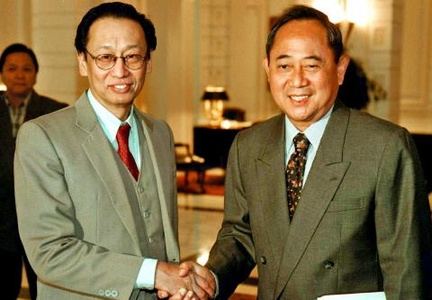
Jose Maria Sison, founder of the Communist Party of the Philippines, and then Jose de Venecia Jr., Speaker of the House of Representatives, meet at a hotel in Amsterdam on March 24, 1997. 

The encounter formed part of Speaker de Venecia’s broader efforts at political dialogue and conflict resolution, reflecting his belief that engagement — even with ideological adversaries — was essential to exploring peaceful pathways toward national reconciliation. The meeting underscored a rare moment of direct contact between the Philippine political establishment and the communist movement, set against the wider context of peace initiatives and back-channel diplomacy during the late 1990s.
Jose Maria Sison, founder of the Communist Party of the Philippines, and then Jose de Venecia Jr., Speaker of the House of Representatives, meet at a hotel in Amsterdam on March 24, 1997. The encounter formed part of Speaker de Venecia’s broader efforts at political dialogue and conflict resolution, reflecting his belief that engagement — even with ideological adversaries — was essential to exploring peaceful pathways toward national reconciliation. The meeting underscored a rare moment of direct contact between the Philippine political establishment and the communist movement, set against the wider context of peace initiatives and back-channel diplomacy during the late 1990s.

What unified these efforts was not idealism, but calculation. Instability, Joe believed, was economically ruinous and morally corrosive. Peace — even imperfect peace — created room to govern.

By 1998, after six years as Speaker, he faced another reckoning.

The ruling party sought a successor to Ramos. Many expected Defense Secretary Renato de Villa to prevail. Joe entered the contest knowing the risks. He won the nomination. De Villa bolted. The election that followed was crowded, emotional, and volatile.

Junichiro Koizumi, Prime Minister of Japan, expressed his deep appreciation to Joe., then Speaker of the House of Representatives, for his decisive interventions that helped bring the Japan–Philippines Economic Partnership Agreement (JPEPA) to a successful conclusion. 

The landmark agreement paved the way for expanded Japanese investments, facilitated the entry of Philippine nurses and skilled workers into Japan, increased Philippine exports to the Japanese market, and included a crucial safeguard guaranteeing that Japan would not export toxic waste to the Philippines — a provision reflecting Joe’s insistence on balancing economic openness with environmental and public-interest protections. 

Prime Minister Koizumi likewise thanked Speaker Joe for his support of Japan’s bid for permanent membership in the United Nations Security Council, underscoring Joe’s broader role in advancing strategic partnerships, regional stability, and principled multilateralism through parliamentary diplomacy.
Junichiro Koizumi, Prime Minister of Japan, expressed his deep appreciation to Joe., then Speaker of the House of Representatives, for his decisive interventions that helped bring the Japan–Philippines Economic Partnership Agreement (JPEPA) to a successful conclusion. The landmark agreement paved the way for expanded Japanese investments, facilitated the entry of Philippine nurses and skilled workers into Japan, increased Philippine exports to the Japanese market, and included a crucial safeguard guaranteeing that Japan would not export toxic waste to the Philippines — a provision reflecting Joe’s insistence on balancing economic openness with environmental and public-interest protections. Prime Minister Koizumi likewise thanked Speaker Joe for his support of Japan’s bid for permanent membership in the United Nations Security Council, underscoring Joe’s broader role in advancing strategic partnerships, regional stability, and principled multilateralism through parliamentary diplomacy.

Joe finished second to Joseph Estrada.

The loss struck deeper than anticipated. For months, he withdrew from public life. Later, he admitted to depression — a rare confession from a man accustomed to control. The defeat was not merely political. It was existential. He had built coalitions, delivered reforms, stabilized institutions — and still lost to populism.

Yet power has a way of returning to those who understand its mechanics. On New Year’s Day 2001, Joe reemerged, calling for constitutional transition as unrest mounted. When Estrada fell weeks later, the country entered another moment of uncertainty.

Joe, a proud Rotarian, is pictured with His Excellency Ambassador Jorge Moragas Sánchez of Spain at the Manila Polo Club in 2019. 

The occasion marked one of the last personal appearances of the former Speaker at a Rotary Club of Manila membership meeting, lending the moment a quiet poignancy. It captured JDV still engaged in fellowship and dialogue, embodying Rotary’s ideals of service and international goodwill even in the later years of a life devoted to public leadership and civic engagement.
Joe, a proud Rotarian, is pictured with His Excellency Ambassador Jorge Moragas Sánchez of Spain at the Manila Polo Club in 2019. The occasion marked one of the last personal appearances of the former Speaker at a Rotary Club of Manila membership meeting, lending the moment a quiet poignancy. It captured JDV still engaged in fellowship and dialogue, embodying Rotary’s ideals of service and international goodwill even in the later years of a life devoted to public leadership and civic engagement.

Joe returned to the House — unchallenged in his district — and was again elected Speaker.

This time, the coalitions were thinner, the palace more volatile, and the stakes far higher.

And this time, the very skills that had lifted him would, eventually, be turned against him.

Speaker Joe, together with Albert del Rosario, Philippine Ambassador to the United States, paid a courtesy call on senior U.S. Senator Daniel Inouye at his office on Capitol Hill. 

The meeting sought Senator Inouye’s support for JDV’s debt-for-equity initiative, a forward-looking proposal designed to help finance the United Nations Millennium Development Goals (MDGs). The initiative aimed to convert portions of sovereign debt into targeted investments for poverty reduction, education, health, and sustainable development — reflecting Speaker de Venecia’s continuing advocacy for innovative, cooperative solutions that link global finance with human development outcomes.
Speaker Joe, together with Albert del Rosario, Philippine Ambassador to the United States, paid a courtesy call on senior U.S. Senator Daniel Inouye at his office on Capitol Hill. The meeting sought Senator Inouye’s support for JDV’s debt-for-equity initiative, a forward-looking proposal designed to help finance the United Nations Millennium Development Goals (MDGs). The initiative aimed to convert portions of sovereign debt into targeted investments for poverty reduction, education, health, and sustainable development — reflecting Speaker de Venecia’s continuing advocacy for innovative, cooperative solutions that link global finance with human development outcomes.

A Different Kind of Institution

In the year 2000, as the country drifted through political unease and Joe remained publicly subdued after his 1998 defeat, he made a quieter decision — one that did not register on front pages or party rosters, but would matter deeply to him.

He joined the Rotary Club of Manila.
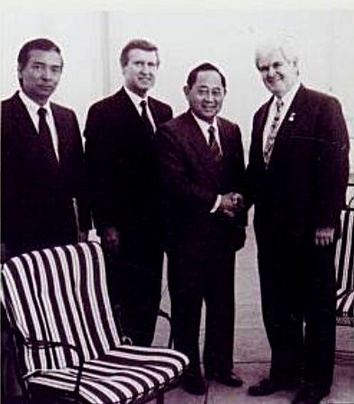
Joe de Venecia, Speaker of the House of Representatives, is pictured at the U.S. Congress with Raul Rabe, Newt Gingrich, and William Cohen, who would later serve as U.S. Secretary of Defense. 

Earlier that same morning, Speaker de Venecia met separately with Bob Dole, then U.S. Senate Majority Leader, accompanied by adviser Anthony Start. Their discussions focused on the contentious Spratly Islands issue, the shared imperative of keeping the South China Sea sea lanes open to freedom of navigation, and the growing political, economic, and social role of the 2.8 million Filipinos living in the United States and Canada. 

The engagements underscored Joe’s active parliamentary diplomacy at the highest levels of American leadership, linking regional security, international maritime stability, and the interests of the global Filipino diaspora within a broader framework of strategic Philippine–U.S. relations.
Joe de Venecia, Speaker of the House of Representatives, is pictured at the U.S. Congress with Raul Rabe, Newt Gingrich, and William Cohen, who would later serve as U.S. Secretary of Defense. Earlier that same morning, Speaker de Venecia met separately with Bob Dole, then U.S. Senate Majority Leader, accompanied by adviser Anthony Start. Their discussions focused on the contentious Spratly Islands issue, the shared imperative of keeping the South China Sea sea lanes open to freedom of navigation, and the growing political, economic, and social role of the 2.8 million Filipinos living in the United States and Canada. The engagements underscored Joe’s active parliamentary diplomacy at the highest levels of American leadership, linking regional security, international maritime stability, and the interests of the global Filipino diaspora within a broader framework of strategic Philippine–U.S. relations.

Founded in 1919, the Rotary Club of Manila carried its own history of institution-building — one rooted not in elections or executive power, but in voluntary service, ethical discipline, and continuity. For Joe, Rotary did not represent retreat from public life. It represented refinement.

He had spent decades navigating coercive power: votes, budgets, alliances, crises. Rotary operated by an entirely different logic. There were no whips, no rewards to dispense, no penalties to impose. Influence here was earned through consistency, credibility, and service rendered without spectacle. Leadership functioned only if others consented to follow.

This appealed to him.

Joe de Venecia, Speaker of the House of Representatives, and Manny Villar, Senate President, applaud Gloria Macapagal-Arroyo during her State of the Nation Address at a joint session of Congress held at the Batasang Pambansa in 2006. 

The moment captures a rare display of institutional unity between the legislative and executive branches, underscoring the constitutional solemnity of the SONA and the leadership roles played by Congress’s top officials in steering national policy discourse at a pivotal juncture in Philippine governance.
Joe de Venecia, Speaker of the House of Representatives, and Manny Villar, Senate President, applaud Gloria Macapagal-Arroyo during her State of the Nation Address at a joint session of Congress held at the Batasang Pambansa in 2006. The moment captures a rare display of institutional unity between the legislative and executive branches, underscoring the constitutional solemnity of the SONA and the leadership roles played by Congress’s top officials in steering national policy discourse at a pivotal juncture in Philippine governance.

In Rotary, Joe encountered a familiar challenge stripped to its essentials: how to align people without authority; how to move projects forward without hierarchy; how to sustain institutions without ambition as fuel. It was democracy reduced to its moral mechanics.

Those who worked with him during this period noticed a shift — not in his intellect or energy, but in his tempo. He listened more than he spoke. He observed process closely. He treated Rotary meetings not as social ritual, but as exercises in disciplined cooperation. Service, he believed, was not an abstraction. It was logistical. It required planning, accountability, and continuity.

Rotary also offered something politics rarely did: memory without vengeance. Its members carried long institutional recollections, but they were not weaponized. Failures were absorbed, lessons retained, egos largely checked by shared purpose. For a man who had watched institutions collapse under the weight of personality, this mattered.

Michael Camdessus (right), then Managing Director of the International Monetary Fund, honors Jose de Venecia Jr. with a luncheon at the IMF headquarters in Washington, D.C. in 1997. 

The recognition cited Speaker de Venecia’s partnership with President Fidel V. Ramos in successfully sponsoring a comprehensive Philippine tax reform package, as well as achieving three consecutive years of balanced budgets and fiscal surplus for the national government — milestones that strengthened macroeconomic stability, restored investor confidence, and underscored the country’s commitment to sound, disciplined economic governance.
Michael Camdessus (right), then Managing Director of the International Monetary Fund, honors Jose de Venecia Jr. with a luncheon at the IMF headquarters in Washington, D.C. in 1997. The recognition cited Speaker de Venecia’s partnership with President Fidel V. Ramos in successfully sponsoring a comprehensive Philippine tax reform package, as well as achieving three consecutive years of balanced budgets and fiscal surplus for the national government — milestones that strengthened macroeconomic stability, restored investor confidence, and underscored the country’s commitment to sound, disciplined economic governance.

The ethic of Service Above Self resonated with convictions Joe had long practiced intuitively but seldom named. He did not interpret it as self-denial. He interpreted it as sustainability. Institutions endure, he believed, only when leaders subordinate personal urgency to collective longevity.

Rotary gave him space to lead without defending territory — to practice influence divorced from survival.

It was also, quietly, a form of preparation.

While accompanying President Fidel V. Ramos on an official visit to the White House, Jose de Venecia Jr., then Speaker of the House of Representatives, is received by Bill Clinton in 1997. 

The encounter underscored the strength of Philippine–United States relations at the close of the 20th century, reflecting close cooperation on democratic governance, economic reform, and regional security, and highlighting Speaker de Venecia’s active role in advancing high-level parliamentary diplomacy alongside the executive leadership of the Philippines.
While accompanying President Fidel V. Ramos on an official visit to the White House, Jose de Venecia Jr., then Speaker of the House of Representatives, is received by Bill Clinton in 1997. The encounter underscored the strength of Philippine–United States relations at the close of the 20th century, reflecting close cooperation on democratic governance, economic reform, and regional security, and highlighting Speaker de Venecia’s active role in advancing high-level parliamentary diplomacy alongside the executive leadership of the Philippines.

When Joe returned to the political arena in early 2001, calling for constitutional transition amid national unrest, he did so with a recalibrated sense of scale. Power, he had relearned, was not only what could be commanded. It was what could be convened. Rotary had sharpened that distinction.

So, when he reassumed the Speakership later that year — again by overwhelming vote — it was not simply the return of a seasoned tactician. It was the reemergence of a leader who had spent a year relearning governance in its most voluntary form.

The coalitions would be thinner this time. The palace more volatile. The stakes higher.

Then Condoleezza Rice, United States National Security Adviser, with Jose de Venecia Jr. following a substantive exchange in which Speaker de Venecia outlined his proposal for global and regional interfaith dialogue. 

Joe explained how sustained, structured engagement among faith communities could reduce ethnic tensions and politicoreligious conflicts by strengthening moderate voices and isolating extremist elements, offering a pragmatic framework that linked peacebuilding with security and development. The discussion reflected a shared recognition of dialogue as a strategic tool in addressing some of the most complex challenges of a post– Cold War world.
Then Condoleezza Rice, United States National Security Adviser, with Jose de Venecia Jr. following a substantive exchange in which Speaker de Venecia outlined his proposal for global and regional interfaith dialogue. Joe explained how sustained, structured engagement among faith communities could reduce ethnic tensions and politicoreligious conflicts by strengthening moderate voices and isolating extremist elements, offering a pragmatic framework that linked peacebuilding with security and development. The discussion reflected a shared recognition of dialogue as a strategic tool in addressing some of the most complex challenges of a post– Cold War world.

But the discipline — the patience, the respect for process, the belief that institutions outlast ambition — had been quietly reinforced in a room where no one needed to obey him.

Power, Betrayal, and the Price of Conscience

By the time Joe returned to the Speakership in 2001, he understood that power had changed its temperament.

While accompanying President Gloria Macapagal Arroyo to the White House Oval Office, Joe de Venecia, then Speaker of the House of Representatives, is received by President George W. Bush. 

During the meeting, Speaker de Venecia was given the opportunity to explain his initiatives for interfaith dialogue and global Christian–Muslim engagement, aimed at reducing conflict through mutual understanding, moderation, and sustained dialogue among faith traditions. President Bush responded positively to these proposals, in the presence of Condoleezza Rice and Colin Powell, underscoring international recognition of Joe’s role as a leading advocate of faith-based diplomacy as a tool for peace and global stability.
While accompanying President Gloria Macapagal Arroyo to the White House Oval Office, Joe de Venecia, then Speaker of the House of Representatives, is received by President George W. Bush. During the meeting, Speaker de Venecia was given the opportunity to explain his initiatives for interfaith dialogue and global Christian–Muslim engagement, aimed at reducing conflict through mutual understanding, moderation, and sustained dialogue among faith traditions. President Bush responded positively to these proposals, in the presence of Condoleezza Rice and Colin Powell, underscoring international recognition of Joe’s role as a leading advocate of faith-based diplomacy as a tool for peace and global stability.

The country was weary. People Power had restored democracy, but it had not restored trust. Institutions functioned, but they were brittle. Loyalty had become transactional, patience scarce, memory short. The coalitions Joe once built on shared purpose now had to be assembled on thinner material — fear of instability, exhaustion with crisis, the desire to keep things moving even when direction was uncertain.

Still, he did what he had always done.

He counted. He listened. He assembled.

Speaker Joe addresses the United Nations Security Council in a landmark moment of Philippine parliamentary diplomacy. Seated behind him are Bayani Mercado, then Ambassador and Deputy Permanent Representative, and Mr. Anacleto Lacanilao III of the Permanent Mission of the Philippines to the United Nations. 

The address formed part of a sustained Philippine initiative to advance interfaith dialogue as a global peace-building mechanism. In 2004, on behalf of the Philippines, Lauro Baja Jr. (Ambassador Larry Baja), together with his deputy Mercado, introduced in the United Nations General Assembly the first in a series of resolutions that ultimately led to the creation of a dedicated unit or focal point within the United Nations tasked with promoting and coordinating interfaith dialogue worldwide — institutionalizing an idea long championed by Speaker de Venecia as a means of reducing conflict, empowering moderates, and fostering global understanding.
Speaker Joe addresses the United Nations Security Council in a landmark moment of Philippine parliamentary diplomacy. Seated behind him are Bayani Mercado, then Ambassador and Deputy Permanent Representative, and Mr. Anacleto Lacanilao III of the Permanent Mission of the Philippines to the United Nations. The address formed part of a sustained Philippine initiative to advance interfaith dialogue as a global peace-building mechanism. In 2004, on behalf of the Philippines, Lauro Baja Jr. (Ambassador Larry Baja), together with his deputy Mercado, introduced in the United Nations General Assembly the first in a series of resolutions that ultimately led to the creation of a dedicated unit or focal point within the United Nations tasked with promoting and coordinating interfaith dialogue worldwide — institutionalizing an idea long championed by Speaker de Venecia as a means of reducing conflict, empowering moderates, and fostering global understanding.

Once again, the House moved. Budgets passed. Legislation advanced. The machinery of government functioned because he insisted it must. From the outside, it appeared as continuity. From the inside, it was constant negotiation against erosion.

Joe had always believed that proximity to the executive was not a moral failing but a structural necessity. Coordination, he argued, was how systems survived. The House could restrain excess not by open warfare, but by making itself indispensable — by absorbing pressure rather than amplifying it.

For a time, this logic held.

President of South Africa, Nelson Mandela, receives Jose de Venecia Jr. in a meeting centered on the transformative promise of “open education” or long-distance learning. 

During their discussion, Speaker de Venecia shared his experience introducing and advancing open and distance education in the Philippines as a means of democratizing access to learning, especially for working students, those in remote communities, and learners excluded by geography or circumstance. President Mandela expressed keen interest in the model’s potential to expand opportunity, empower citizens, and build human capital, reflecting a shared conviction that education — made accessible and inclusive — is a cornerstone of social justice, national development, and enduring freedom.
President of South Africa, Nelson Mandela, receives Jose de Venecia Jr. in a meeting centered on the transformative promise of “open education” or long-distance learning. During their discussion, Speaker de Venecia shared his experience introducing and advancing open and distance education in the Philippines as a means of democratizing access to learning, especially for working students, those in remote communities, and learners excluded by geography or circumstance. President Mandela expressed keen interest in the model’s potential to expand opportunity, empower citizens, and build human capital, reflecting a shared conviction that education — made accessible and inclusive — is a cornerstone of social justice, national development, and enduring freedom.

But power, he was discovering, had grown less tolerant of mediation. The palace was no longer content with partnership. It wanted obedience. Nuance was interpreted as resistance. Independence, once an asset, began to look like defiance.

The change was subtle at first.

Meetings became shorter, more formal. Conversations that once ranged freely narrowed to scripts. Decisions arrived already formed. Joe noticed the shift not in what was said, but in what was no longer asked of him.

Speaker Joe de Venecia, formally receives George W. Bush and Laura Bush at the House of Representatives of the Philippines. 

President Bush’s visit marked a historic parliamentary moment, as he accepted Speaker de Venecia’s invitation to address a joint session of the Philippine Congress, underscoring the depth of Philippine–United States relations and the central role of legislative diplomacy in advancing shared commitments to democracy, security, and international cooperation.
Speaker Joe de Venecia, formally receives George W. Bush and Laura Bush at the House of Representatives of the Philippines. President Bush’s visit marked a historic parliamentary moment, as he accepted Speaker de Venecia’s invitation to address a joint session of the Philippine Congress, underscoring the depth of Philippine–United States relations and the central role of legislative diplomacy in advancing shared commitments to democracy, security, and international cooperation.

Signals blurred. Allies hesitated. The arithmetic that had long been his ally — his most reliable instrument — began to rearrange itself quietly, beyond his reach.

He had spent decades mastering the geometry of coalitions: how pressure moves, how incentives align, how compromise stabilizes competing ambitions. But coalitions, he knew, depend on a single fragile assumption — that participation remains safer than exclusion.

That assumption was beginning to fail.

Joe with his children Leslie, Vivian, Sandra, and Joey, captured during Leslie’s First Holy Communion — a tender family moment marked by faith, pride, and togetherness, reflecting the deep importance he placed on family life, spiritual grounding, and shared milestones amid the demands of public service.

What had once made Joe indispensable now made him inconvenient. He did not rule by fear. He tolerated dissent. He believed institutions should outlast personalities. In a political climate growing increasingly impatient with restraint, these were liabilities.

He sensed the ground shifting beneath him. There were moments — brief, almost imperceptible — when he could have adjusted course. He could have tightened control, demanded loyalty, silenced dissent. He chose not to. Authority, he believed, decayed when it relied too heavily on coercion. A legislature that governed by intimidation would eventually be stripped of legitimacy — and then of power.

The costs of that choice accumulated.

Joe and Gina with their family, captured in a moment that reflects both closeness and a remarkable constellation of individual paths shaped by education, faith, and service. 

From left are Joey III; Vivian V. Garcia, holder of a master’s degree from Smith College, married to Dr. Dennis Garcia, a Harvard Medical School graduate; their beloved daughter KC, who passed away at the age of 16; Ipe, an Ateneo de Manila University graduate who worked with ABSCBN Publications; and Christopher, an Ateneo stage actor and youth columnist for The Philippine Star. 

Not in the photo, as they were then based in the United States, are Sandra, a Wellesley College graduate, former scientist with the U.S. Armed Forces and now a patent lawyer holding a doctorate in Chemistry from Princeton University, with her American husband Mark Haner; and Leslie Perez de Venecia Norton, a Yale University graduate with a master’s degree in journalism from Columbia University, former Bloomberg correspondent in London and currently columnist and Asian Editor of Barron's in New York. 

Together, the family reflects a shared legacy of learning, professional excellence, and global engagement — anchored by strong family bonds and values that transcend borders and generations.
Joe and Gina with their family, captured in a moment that reflects both closeness and a remarkable constellation of individual paths shaped by education, faith, and service. From left are Joey III; Vivian V. Garcia, holder of a master’s degree from Smith College, married to Dr. Dennis Garcia, a Harvard Medical School graduate; their beloved daughter KC, who passed away at the age of 16; Ipe, an Ateneo de Manila University graduate who worked with ABSCBN Publications; and Christopher, an Ateneo stage actor and youth columnist for The Philippine Star. Not in the photo, as they were then based in the United States, are Sandra, a Wellesley College graduate, former scientist with the U.S. Armed Forces and now a patent lawyer holding a doctorate in Chemistry from Princeton University, with her American husband Mark Haner; and Leslie Perez de Venecia Norton, a Yale University graduate with a master’s degree in journalism from Columbia University, former Bloomberg correspondent in London and currently columnist and Asian Editor of Barron's in New York. Together, the family reflects a shared legacy of learning, professional excellence, and global engagement — anchored by strong family bonds and values that transcend borders and generations.

By 2007, the tension had become unmistakable. The House remained functional, but trust had thinned to calculation. Decisions were weighed not for their necessity, but for their alignment. Joe’s insistence on process — on record, on transparency, on dialogue — was no longer admired. It was resented.

Then came the moment that clarified everything. His son publicly questioned a government-backed deal involving a foreign telecommunications firm. It was an act rooted in principle, but politics rarely honors intent. The challenge was interpreted as defiance. The distance between father and son blurred in the eyes of power. What had been tolerated as independence hardened into threat.

Joe understood immediately what this meant.

Speaker Joe de Venecia of the House of Representatives, is photographed with his wife Gina and their children Christopher “Toff” (right) and the late Kristina Casimira “KC” (left) during the opening of the Joint Session of Congress on July 25, 1994. 

Taken at a moment of constitutional solemnity and national attention, the photograph offers an intimate counterpoint to public office — capturing the Speaker not only as a parliamentary leader presiding over a critical legislative occasion, but also as a husband and father, grounded in family amid the demands and responsibilities of national leadership.
Speaker Joe de Venecia of the House of Representatives, is photographed with his wife Gina and their children Christopher “Toff” (right) and the late Kristina Casimira “KC” (left) during the opening of the Joint Session of Congress on July 25, 1994. Taken at a moment of constitutional solemnity and national attention, the photograph offers an intimate counterpoint to public office — capturing the Speaker not only as a parliamentary leader presiding over a critical legislative occasion, but also as a husband and father, grounded in family amid the demands and responsibilities of national leadership.

Power does not need to explain itself when it decides to move. It simply withdraws cover.

All at once, arithmetic turned hostile. Names were counted without him. Meetings happened elsewhere. The coalition he had built with care did not fracture loudly. It dissolved quietly, one calculation at a time.

He did not panic. He had seen this pattern before — in other countries, other systems, other leaders who mistook indispensability for immunity. Power, he knew, always reasserts itself eventually. The only question is whether institutions survive the correction.

On December 28, 2025, some 300 friends, loyalists, and members of the De Venecia family gathered at Golden Bay Restaurant to celebrate the 90th birthday of Jose de Venecia Jr. — affectionately known as "Manong Joe," the country’s five-time Speaker of the House of Representatives.

Former Speaker Joe, shares lighthearted and affectionate moments with his children by his first wife, Victoria — Joey, Vivian, Sandra, and Leslie. 

The candid scene reveals a relaxed, paternal side of the statesman, capturing the ease, humor, and closeness of family life that complemented his demanding public career and grounded him beyond the halls of power.
On December 28, 2025, some 300 friends, loyalists, and members of the De Venecia family gathered at Golden Bay Restaurant to celebrate the 90th birthday of Jose de Venecia Jr. — affectionately known as "Manong Joe," the country’s five-time Speaker of the House of Representatives. Former Speaker Joe, shares lighthearted and affectionate moments with his children by his first wife, Victoria — Joey, Vivian, Sandra, and Leslie. The candid scene reveals a relaxed, paternal side of the statesman, capturing the ease, humor, and closeness of family life that complemented his demanding public career and grounded him beyond the halls of power.

As pressure mounted, he made a final calculation of his own.

He could preserve his position by narrowing the record — by remaining silent, by absorbing the blow privately, by allowing the machinery to move without resistance. Or he could speak, knowing full well that speech would accelerate the outcome.

He chose the record.

Shown here are Joe de Venecia and his wife Gina, together with son-in-law Dr. Dennis Garcia, daughter Carissa Evangelista, and son Joey de Venecia — a warm family tableau that anchored the evening’s tributes in gratitude, continuity, and love. The gathering marked not only a personal milestone, but a collective salute to a life devoted to public service and bridge-building at home and abroad.

When he rose in the House and spoke of warnings delivered in private, of threats unaddressed, of silence from those entrusted to act, he was no longer negotiating. He was documenting. The chamber did not erupt. It absorbed his words in stillness.

Hours later, the numbers did what numbers always do.

The position was declared vacant. The gavel passed. The chamber emptied.

Fidel V. Ramos proudly displays the authorized biography of former Speaker Jose de Venecia Jr., who in turn holds up the biography of President Ramos’ wife, Amelita Ramos (“Ming”). 

Beside them, Manay Gina de Venecia shares a warm, convivial moment with the two iconic Pangasinan statesmen, capturing a scene rich in mutual respect, shared history, and enduring friendship — an exchange of books that symbolized lives intertwined by public service, leadership, and a common commitment to nation-building.
Fidel V. Ramos proudly displays the authorized biography of former Speaker Jose de Venecia Jr., who in turn holds up the biography of President Ramos’ wife, Amelita Ramos (“Ming”). Beside them, Manay Gina de Venecia shares a warm, convivial moment with the two iconic Pangasinan statesmen, capturing a scene rich in mutual respect, shared history, and enduring friendship — an exchange of books that symbolized lives intertwined by public service, leadership, and a common commitment to nation-building.

Joe walked out without ceremony, without bitterness, without illusion. He had lost the office. He had preserved the line.

In politics, survival is often mistaken for victory. Joe had learned, too early and too often, that the two are not the same.

What remained was not power, but consequence. And consequence, once set in motion, has a longer memory than power ever does.

Speaker of the House of Representatives, Martin Romualdez, together with his wife, Yedda Marie Romualdez, Representative of Tingog Party-list, leads the inauguration and unveiling of the marker for the Jose C. de Venecia Jr. Building and Museum at the Batasang Pambansa Complex on January 27, 2025. 

At the center of the ceremony is the 88-year-old honoree, Jose de Venecia Jr., accompanied by his wife Gina de Venecia and their son, Christopher de Venecia, Representative of Pangasinan. The event paid tribute to JDV’s enduring legacy as a five-time Speaker and statesman, institutionalizing his contributions to Philippine parliamentary leadership, diplomacy, and nation-building within the very halls where he served for decades.
Speaker of the House of Representatives, Martin Romualdez, together with his wife, Yedda Marie Romualdez, Representative of Tingog Party-list, leads the inauguration and unveiling of the marker for the Jose C. de Venecia Jr. Building and Museum at the Batasang Pambansa Complex on January 27, 2025. At the center of the ceremony is the 88-year-old honoree, Jose de Venecia Jr., accompanied by his wife Gina de Venecia and their son, Christopher de Venecia, Representative of Pangasinan. The event paid tribute to JDV’s enduring legacy as a five-time Speaker and statesman, institutionalizing his contributions to Philippine parliamentary leadership, diplomacy, and nation-building within the very halls where he served for decades.

Legacy, Love, and the Long View of History

Power, once lost, has a way of stripping life to its essentials. What remains is not what one commanded, but what one built — and what one refused to trade away.

After his ouster in February 2008, Joe did not attempt a return to the Speakership. He did not assemble a counter-coalition, nor did he nurse grievances in public. The House had spoken in the only language it ultimately respected: numbers. The coalition builder accepted the arithmetic. But acceptance did not mean retreat, and it did not mean silence.

Manong Joe, now in his later years, stands before a towering image of his younger self at the Jose C. de Venecia Jr. Building and Museum — a poignant visual dialogue between past and present. 

The juxtaposition captures a lifetime of public service distilled into a single frame: the youthful fire of the campaign trail set against the quiet gravitas of legacy. More than a portrait, the scene reflects continuity — of conviction, leadership, and nation-building — within the very halls where JDV shaped Philippine parliamentary history and where his contributions are now permanently enshrined.
Manong Joe, now in his later years, stands before a towering image of his younger self at the Jose C. de Venecia Jr. Building and Museum — a poignant visual dialogue between past and present. The juxtaposition captures a lifetime of public service distilled into a single frame: the youthful fire of the campaign trail set against the quiet gravitas of legacy. More than a portrait, the scene reflects continuity — of conviction, leadership, and nation-building — within the very halls where JDV shaped Philippine parliamentary history and where his contributions are now permanently enshrined.

Instead, he widened the frame.

Freed from the daily calculus of floor counts and alliance management, Joe returned fully to the work that had always run parallel to his domestic career: international dialogue, peacebuilding, and the slow, unglamorous construction of institutions designed to outlast election cycles. He had long believed that Asia’s future would be determined not by dominance, but by integration — not by rivalry, but by conversation disciplined enough to survive disagreement. Now he could pursue that belief without compromise, and without permission.

He devoted himself to institutions he had spent decades imagining into existence. The International Conference of Asian Political Parties, conceived as a neutral table where ruling, opposition, and independent parties could speak without the theater of statecraft, expanded steadily across the continent. It became a rare space where adversaries encountered one another not as enemies, but as political actors bound by the same regional consequences. He continued shaping the Asian Parliamentary Assembly, careful not to replicate Europe’s models but to fashion something suited to Asia’s particular fractures — its uneven development, its historical wounds, its unresolved tensions.
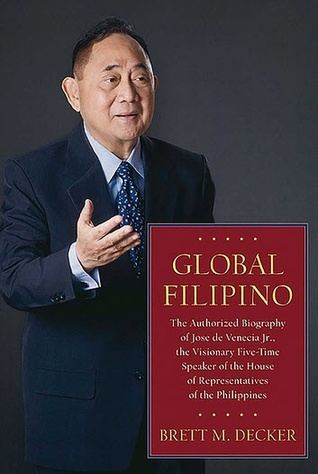
In Global Filipino: The Authorized Biography of Jose de Venecia Jr., the Visionary Five-Time Speaker of the House of Representatives of the Philippines, author Brett M. Decker offers a rare, behind-the-scenes portrait of a statesman at the center of power in one of America’s most important allies. 

Tracing his meteoric rise to the Speakership in 1992, the book chronicles how Jose de Venecia Jr. became a principal architect of Philippine policy on war and peace, parliamentary diplomacy, and global engagement. Published in 2008, the biography situates de Venecia’s leadership within the wider currents of regional security and international politics, revealing the convictions, negotiations, and strategic choices that shaped a decisive era in Philippine governance.
In Global Filipino: The Authorized Biography of Jose de Venecia Jr., the Visionary Five-Time Speaker of the House of Representatives of the Philippines, author Brett M. Decker offers a rare, behind-the-scenes portrait of a statesman at the center of power in one of America’s most important allies. Tracing his meteoric rise to the Speakership in 1992, the book chronicles how Jose de Venecia Jr. became a principal architect of Philippine policy on war and peace, parliamentary diplomacy, and global engagement. Published in 2008, the biography situates de Venecia’s leadership within the wider currents of regional security and international politics, revealing the convictions, negotiations, and strategic choices that shaped a decisive era in Philippine governance.

He spoke insistently of an Asian Parliament, an Asian monetary framework, and cooperative mechanisms that could buffer the region from economic shocks and political extremism. These ideas were often dismissed as aspirational. Joe accepted the skepticism. He had learned long ago that institutional change rarely looks practical before it becomes necessary.

Interfaith dialogue became another arena for his pragmatism. His approach was neither sentimental nor naïve. He did not believe that religious conflict could be dissolved by goodwill alone. But he believed it could be managed — through structure, sustained dialogue, and the moral courage to convene those who would otherwise never share a table. He spoke at global forums not as a partisan Filipino politician, but as a statesman shaped by decades of negotiation with men who once carried weapons and commanded armies.

In 2017, when he was appointed Special Envoy for Inter-Cultural Dialogue, the role formalized what he had already been doing for much of his adult life. It was an acknowledgment — quiet but significant — that his most enduring influence might not be legislative, but conversational: the ability to bring together people whose differences were real, and whose consequences were shared.

Rotary Club of Manila, led by President Raoul Creencia, presented the RCM name badge of former House Speaker/Rotarian Jose de Venecia to Mrs. Gina De Venecia.

Yet even as his international stature endured, the most defining chapters of his later life unfolded far from podiums and plenary halls.

Joe’s public identity had always been expansive — Speaker, lawmaker, diplomat, peacemaker. But those who knew him best understood that his emotional center was not institutional.

It was familial. He had endured public defeats and political betrayal, but nothing tested him more profoundly than private loss.

Centennial President Susing Pineda and Past Director Oscar del Rosario

On December 17, 2004, a fire broke out in his home in Dasmariñas Village. The blaze, traced to Christmas lights, spread quickly. His sixteen-year-old daughter, Kristina Casimira — KC — was trapped inside. She died of suffocation.

No public office prepares a man for that.

The death of KC left a permanent fracture in the De Venecia household. Friends noticed that even as Jose continued to perform his duties as Speaker, something within him had quieted. Grief did not make him theatrical; it made him inward. Those close to him would later say it deepened his empathy, stripped away whatever remnants of political vanity remained, and reinforced a belief already forming within him: that power, unmoored from compassion, is ultimately hollow.

Director Mike Albaña, Asst. Secretary Paco Magaaysay, and PD Oscar del Rosario

It was during these years that his partnership with his wife, Georgina “Gina” Vera-Perez de Venecia, became visibly central to his life. Gina was not a political accessory or ceremonial presence. She was a leader in her own right — twice elected to Congress, a tireless advocate for women, children, abused mothers, and the forgotten. As head of the Congressional Spouses Foundation, she led the establishment of women’s centers across the country, creating sanctuaries for victims of violence and neglect. Her work did not mirror his. It complemented it.

Their marriage was often described by friends as joyful, but it was also resilient. They had met in the early 1980s, introduced by a mutual friend.

Their first date — at a screening of Flashdance — ended with Joe falling asleep from jet lag. Gina, instead of being offended, thought simply: this man needs someone to look after him. Three days later, he sent her roses with a note that revealed his old journalist’s instinct for language: In each rose, I crown thee the empress of my heart and the sovereign of my domain.

PVP Joel Valdes
PVP Joel Valdes

It was not a line one forgot — and it proved prophetic.

Through triumph and tragedy, Gina remained what she later called “the wind beneath his wings,” and he remained her fiercest supporter. Their partnership revealed a dimension of Joe often obscured by his public image: he admired strength in others, especially when it did not resemble his own.

Their children grew into accomplished adults — scientists, scholars, writers, legislators — each reflecting a different facet of their parents’ values. When their son Christopher later assumed the congressional seat in Pangasinan, it was not framed as inheritance, but as continuation. The torch passed without spectacle, with quiet pride.
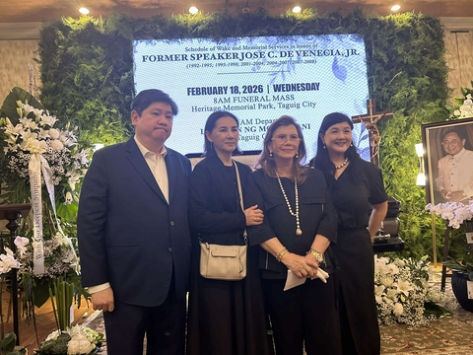
DE Teddy Kalaw with Mrs. Gina De Venecia

As Joe aged, the pace of his life slowed, but the reach of his legacy widened. Invitations to speak continued to arrive from parliaments and assemblies across the world. Abroad, he was still greeted with deference. At home, reassessment began.

In August 2024, the Philippine Senate adopted a resolution commending him for an “illustrious career and invaluable contributions to the country.” The measure was co-authored across party lines. Senators spoke not only of laws passed and coalitions built, but of a man who steadied democracy when it was most vulnerable. One senator recalled that her own political career had begun at his invitation — a reminder that influence often operates quietly, through trust extended rather than authority imposed.

In January 2025, a building and museum bearing his name were inaugurated at the Batasang Pambansa Complex. The gesture was deliberate. It acknowledged that Joe had shaped the House not merely as an occupant, but as an architect.

Makati City Mayor Nancy Binay, Mrs. Gina De Venecia, and Centennial Pres. Susing Pineda

By the time he celebrated his ninetieth birthday, at a modest gathering organized by Gina, he was no longer physically spry. But those present noticed what had not changed. He listened more than he spoke. When he spoke, it was measured. There was no triumphalism, no bitterness — only a quiet contentment.

History, when it finally settles, rarely measures leaders by the titles they held. It asks harder questions. Did they build or merely occupy? Did they divide or connect? Did they leave institutions stronger than they found them?

Joe took big strides through Philippine history. He did not tiptoe. He believed that dialogue was not weakness, that compromise was not surrender, and that democracy — messy, imperfect, and fragile — requires engineers as much as it requires orators.

He was a coalition builder in a country suspicious of coalitions. An institutionalist in a culture often impatient with institutions. A peacemaker who understood that peace is rarely pure, but always preferable to endless conflict.

His life suggests that the most durable form of power is not domination, but trust — patiently assembled, vote by vote, law by law, conversation by conversation.

And in that sense, long after the gavel fell silent, Joe remained what he had always been at his best: a builder of bridges, standing quietly at the crossings of history.

Past District Governor Alex Cureg and Secretary Anton Mauricio

EPILOGUE: What Endures

In the end, power recedes more quickly than the questions it leaves behind.

Joe held some of the highest offices a democracy can offer. He shaped laws, assembled coalitions, brokered peace, and stood at the intersection of domestic politics and global diplomacy for more than half a century. He knew the mechanics of power intimately — how it is built, how it is sustained, and how it withdraws its protection without warning.

Former Congressman Cristopher de Venecia, Rotarian Raf Dionisio, and Secretary Anton Mauricio

Yet when the offices fell away, what remained was not bitterness, nor nostalgia, nor a need to settle accounts.

What remained was clarity.

He had learned — early and often — that power is never permanent, but consequence is. Laws outlast speeches.
Institutions outlast personalities. Records outlast applause. And silence, when chosen for survival, exacts a cost that authority can never fully repay.

His life was marked not by a straight ascent, but by cycles of construction and disruption. He rose by persuasion rather than intimidation, by arithmetic rather than anger. He believed that democracies fail not because they lack passion, but because they lack architecture — structures strong enough to contain disagreement without collapsing under it. That belief guided his legislative work, his coalitionbuilding, his peace negotiations, and even his defeats.

He was often criticized for being too conciliatory, too patient, too willing to compromise in a political culture that rewards confrontation. But history has a way of softening judgments that once seemed sharp. Compromise, he understood, was not surrender. It was the price of coexistence in a plural society.

President Raoul Creencia and Director-elect/Assistant Internal Auditor Mike Roxas offer their condolences to the family of STAR Rotarian Winston Gines.

He crossed deserts — literal and political — to make peace. He sat across from men who had once carried weapons, believing that dialogue, however imperfect, was preferable to endless war. He accepted that peace agreements would be flawed, that institutions would disappoint, that progress would arrive unevenly. Perfection was never the standard. Stability was.

He also learned, painfully, that no public success shields one from private loss. The death of his daughter broke something that no office could repair. Grief reordered his sense of urgency, stripping away whatever vanity power might still have held. After that, ambition no longer stood alone. It answered to something quieter, more exacting.

In his later years, reassessment came — not in the language of triumph, but of recognition. Honors arrived. Buildings bore his name. Younger leaders acknowledged debts that had once gone unspoken. But these gestures mattered to him less than the knowledge that systems he helped build continued to function without him.

That, to his mind, was the true test.

History rarely remembers leaders kindly if they mistake authority for purpose. It remembers more generously those who treat power as a tool rather than an identity — who use it to build frameworks sturdy enough to survive their own absence.

Joe belonged to that rarer category.

He was an institutionalist in a culture often impatient with institutions. A coalition builder in a country suspicious of coalitions. A peacemaker who understood that peace is seldom pure, but always preferable to the corrosion of perpetual conflict.

He did not believe democracy was elegant. He believed it was necessary. He accepted its messiness, its compromises, its reversals, and its costs. And he spent a lifetime working within those constraints rather than attempting to transcend them.

In the quiet of old age, as the tempo of his life slowed and memory did its selective work, what seemed to matter most was not how often he prevailed, but when he chose not to yield — when he placed something on the record knowing it would cost him power, when he favored endurance over advantage.

Titles fade. Coalitions dissolve. Gavels fall silent.

But bridges — patiently built, imperfectly aligned, and strong enough to be crossed — remain.

And it is there, at those crossings, that the life of Jose de Venecia Jr. ultimately resides.

At the Wake of Former House Speaker/ Rotarian Jose de Venecia

Manila Rotarians Offer Condolences to the Family of STAR Rotarian Winston Gines
More from this issue

Andrew JeffriesWhen the Flag Rises: Service, Sport, and the Spirit of a NationTOWER Awards Committee Gears Up for This Year’s Awards