
When the Flag Rises: Service, Sport, and the Spirit of a Nation

The Rotary Club of Manila gathered for its 21st Weekly Membership Meeting in an atmosphere both dignified and dynamic — an assembly that reflected its 107-year heritage while looking decisively toward the future. Held at the Manila Polo Club, the meeting brought together Rotarians, distinguished guests, civic leaders, and figures from the world of sports for an afternoon defined by fellowship, vision, and national pride.
At exactly 12:15 PM, President Raoul C. Creencia called the meeting to order, formally commencing the day’s proceedings.

The invocation was led by Rtn. Nicolo S. “Nico” Hallare, setting a contemplative tone that grounded the gathering in gratitude and purpose. This was followed by the Philippine National Anthem and the Rotary Club of Manila Hymn, stirringly rendered with accompaniment by the RCM WF Music Chorale. Incoming Sergeant-at-Arms Nagi Zeitouni led the recitation of The Four-Way Test, reaffirming the ethical bedrock upon which Rotary’s service stands.
Director Edwin H. Hernandez, serving as Moderator, warmly acknowledged the guests in attendance, extending the Club’s trademark hospitality. The Chorale’s Welcome Song further infused the room with warmth and camaraderie.

A joyful interlude followed as birthday celebrants for the week were recognized — Past President Ebot Tan, Rtn. Paco Magsaysay, Rtn. Cris Acosta, Rtn. Dong Benedicto, Rtn. Val Co, and Past President Chito Zaldarriaga. The traditional rendition of “Maligayang Bati” underscored the spirit of fellowship that distinguishes Rotary gatherings.
President’s Time: Programs and Purpose
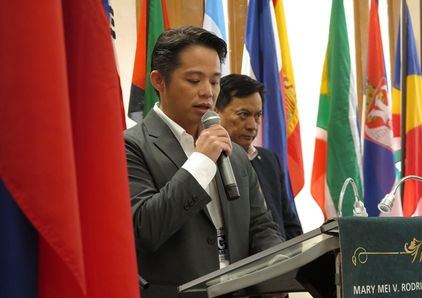
During President’s Time, President Raoul addressed the membership, providing updates on the Club’s initiatives and forward programs. Of particular note was the announcement and launching of the RCM Pro initiative, supported by Past Director Amado D. “Amading” Valdez. The Pro Patria Journalism Awards were likewise highlighted, reflecting the Club’s continued commitment to responsible media, civic education, and principled public discourse.
This segment served as a reminder that Rotary is both guardian of tradition and architect of renewal — constantly adapting its service to contemporary needs while preserving its core values.

Introduction of the Guest of Honor and Speaker
Director Michael Jaey C. “Mike” Albaña introduced the Guest of Honor and Speaker, Hon. John Patrick C. Gregorio, Chairman of the Philippine Sports Commission. John Patrick Gregorio, widely known as “Pato,” brings to public service decades of leadership in sports management and corporate governance prior to his current role at the helm of the Philippine Sports Commission.

What followed was not merely a formal address — it was a stirring narrative of resilience, national identity, and collective aspiration.
From Grass to Gold: The Address of Chairman John Patrick Gregorio
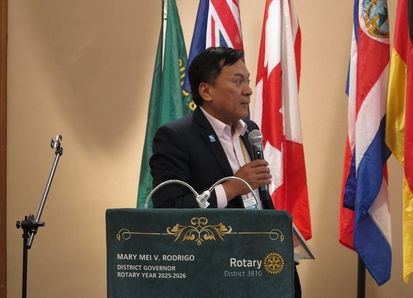
Chairman Gregorio began with warmth and humility, acknowledging the Rotary Club of Manila as the oldest Rotary club in Asia and recalling his early professional years when the Club met at the Manila Hotel. His tone was both respectful and personal, bridging institutional history with shared memory.
Accompanied by his Chief of Staff, Professor Eugene Sunido, and media colleague Jun Albano of the Philippine Daily Inquirer, he framed his message through powerful storytelling, including video presentations that captured the emotional arc of Philippine sports.

A Nation’s First Gold
The Chairman reminded the audience that it took the Philippines 96 years from its Olympic debut in 1924 to win its first gold medal — courtesy of Hidilyn Diaz in Tokyo. Three and a half years later, Carlos Yulo secured two additional gold medals in Paris.

These triumphs, he emphasized, were not sudden miracles but the fruit of long perseverance. Hidilyn competed in four Olympics across 16 years before clinching gold. Carlos Yulo began training at the age of seven and endured early setbacks before rising to the pinnacle of global competition.
One of the most moving moments of his speech was his recollection of standing in Paris as acting chief of mission when Yulo won gold. As the Philippine flag was raised and the national anthem began, he found himself unable to sing — overcome with emotion. In that singular instant, sport ceased to be competition; it became a unifying national experience. The anthem caught in his throat, and tears flowed freely — an image that resonated deeply with the Rotarians present.

The Three Pillars of Philippine Sports
Chairman Gregorio outlined three strategic pillars guiding the Philippine Sports Commission:

• Athletes’ Welfare. Ensuring timely allowances, proper nutrition, quality training, and international exposure for over 2,000 national athletes and coaches, with plans to expand funding to a National Youth Training Pool for athletes aged 18 and under. This initiative aims to ease the financial burden on families nurturing young talent.
• Facilities Modernization. Upgrading the Rizal Memorial Sports Complex and PhilSports facilities, including dormitories, pools, and infrastructure improvements, made possible through support from the Office of the President.
• Sports Tourism. Positioning the Philippines as a premier destination for international sporting events — recognizing that global tournaments drive tourism, stimulate economic activity, and elevate national visibility. Recent events in volleyball, football, surfing, tennis, golf, and martial arts illustrate this strategy in motion.
A Funding Breakthrough and Regional Vision

A landmark development for Philippine sports was the Supreme Court ruling increasing the Commission’s share from PAGCOR revenues from 2.5% to 5% of gross earnings. This translates to approximately ₱400 million monthly, with substantial cumulative returns over time.
With strengthened funding, the Commission is establishing regional training centers outside Metro Manila — boxing in Bukidnon, weightlifting in Zamboanga, archery in Canton, and combat sports in Baguio. This decentralized model allows young athletes to train within their communities, study locally, and develop without being uprooted at a young age.

A Call for Partnership
Chairman Gregorio extended an invitation to the Rotary Club of Manila and the broader business community to collaborate. Under its charter, the Commission may accept private sector support in exchange for branding and tax credits — creating a win-win model that aligns corporate visibility with national athletic development.

He concluded with conviction: having already secured three Olympic gold medals, the Philippines stands poised to win more in Los Angeles. The present moment, he declared, may well be the “glory years” of Philippine sports.
Open Forum and Recognition

An engaging Open Forum followed, where members raised thoughtful questions on grassroots development, corporate participation, and long-term sustainability.
President Raoul then presented a Certificate of Appreciation to Chairman Gregorio, symbolizing Rotary’s gratitude and the potential for meaningful partnership.

At 1:45 PM, President Creencia formally adjourned the 21st Weekly Membership Meeting.
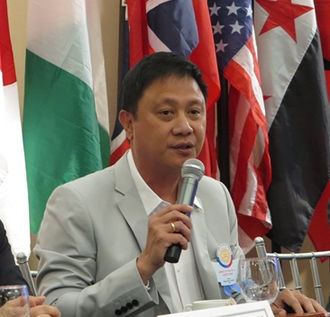
PSC Chair Gregorio engaged in a Q&A session with Rtn. Ramby Nolido, Sec. Anton Mauricio, DGND Hermie Esguerra, AIA Mike Roxas, visiting Rotarian from RC Ritto, PD Abe Pascual, and PDG Alex Cureg.

Service and Sport: Parallel Missions
The 21st Weekly Membership Meeting was more than a scheduled gathering. It was a convergence of ideals. Rotary builds character, discipline, and community through service. Sport does the same through competition and perseverance.

On that February afternoon at the Manila Polo Club, those parallel missions stood side by side — reminding all present that whether in service or in sport, excellence demands commitment, partnership, and unwavering belief in what a nation can become.


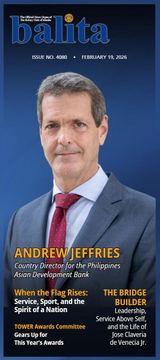
 Andrew Jeffries
 TOWER Awards Committee Gears Up for This Year’s Awards
 THE BRIDGE BUILDER | Leadership, Service Above Self, and the Life of Jose Claveria de Venecia Jr.