

STEWARD OF CONTINUITY | Alberto Gatmaitan Romulo and the Discipline of Public Service

Steward of Continuity
Alberto Gatmaitan Romulo and the Discipline of Public Service
By PE Reginald T. Yu
ALBERTO Gatmaitan Romulo entered public life late and left it quietly. In between, he occupied some of the highest offices of the Philippine state — not as a performer of authority, but as its steward. Trained by institutions long before he led them, shaped by restraint rather than ambition, Romulo’s life offers a rare study in how power can be exercised without noise, how service can endure without ownership, and how leadership, at its best, leaves things stronger than it found them.
Character is revealed not in moments of triumph, but in moments when power could be used — and is not.
There are people who enter a room and immediately announce themselves. Their presence fills the space, their authority made visible through volume, posture, or command. Alberto “Bert” Gatmaitan Romulo was not one of them. Those who met him for the first time often found themselves recalibrating their expectations. The authority came later — sometimes only after conversation had already begun.

Bert spoke carefully. He listened longer than most. He rarely interrupted. When he disagreed, he did so without edge or spectacle, as though disagreement itself were not an act of combat but an invitation to think more precisely. This was not hesitation. It was discipline. Restraint, for Bert, was not a personality trait. It was a habit.
Late one night, years ago, a stranger entered his home uninvited. The situation was inherently volatile: a private space breached, children sleeping upstairs, the ever-present possibility of fear escalating into violence. Yet when Bert encountered the intruder, there was no eruption. No assertion of dominance. No performance of authority.
There was only composure.
He greeted the man. Asked him to leave. Walked him out. Then returned upstairs to check on his children before resuming sleep. The incident ended not with confrontation, but with quiet closure.
The story spread not because of danger averted, but because of the manner in which it was done. It unsettled people. It challenged assumptions. Was this courage? Was it confidence? Or was it something rarer — a temperament trained to refuse escalation even when escalation was justified?
Bert never offered an explanation. He never told the story himself. That, too, was characteristic.

Those who worked with Bert over the years observed the same pattern in less dramatic settings. Meetings that could have turned adversarial did not. Conflicts that invited theatrical posturing were met instead with questions. Decisions were framed not as victories to be claimed, but as consequences to be weighed.
He seemed instinctively resistant to the intoxication of authority. Where others experienced power as permission — to speak louder, to dominate, to impose — Bert experienced it as constraint. The higher the office, the narrower the margin for error. The greater the responsibility, the greater the need for self-control.
This inversion puzzled some. In political environments that reward assertion, Bert’s refusal to dramatize himself could be mistaken for passivity. It never was. Those who tested him learned quickly that restraint did not mean softness. It meant that when he finally spoke, he had already done the work others rushed past.
Bert believed that power, once displayed, diminished. Authority, once flaunted, weakened. Influence, to endure, had to be exercised sparingly.
He distrusted impulse. He distrusted moral grandstanding. He distrusted certainty that arrived too quickly. Instead, he cultivated preparation — intellectual, emotional, and ethical. Decisions, he believed, should feel inevitable only after they had been thoroughly questioned.
This discipline made him reliable in moments when institutions faltered. When tempers flared, he cooled the room. When consensus fractured, he rebuilt process. When others sought cover, he sought clarity.

It was not that he avoided conflict. It was that he refused to let conflict define him.
In an age increasingly shaped by noise, Bert’s manner can seem almost anomalous. Yet it was precisely this quality — this refusal to weaponize power — that would place him, again and again, at the center of events where steadiness mattered more than spectacle.
Before the titles, before the offices, before the public record, there was already a governing principle at work: power exists not to be displayed, but to be held.
The chapters that follow trace how that principle was formed, tested, and applied across a lifetime of public service. But at its core, the story begins here — not with position, but with temperament.
Not with ambition, but with restraint.
Formation: The Making of Discipline

Alberto Gatmaitan Romulo was born on August 7, 1933, in the town of Camiling, Tarlac, when the Philippines itself was still learning the discipline of independence. The nation was young, its institutions newly formed, its ambitions tempered by uncertainty. In the provinces, life moved at a deliberate pace. Seasons mattered more than slogans. Reputation was something earned slowly, and once lost, rarely recovered.
Camiling offered no appetite for excess. It was a place that rewarded steadiness and distrusted display. In such towns, one learned early that attention was not something to seek, but something to deserve.
Bert grew up in a household that reflected those values. His father, Gilberto Peña Romulo, and his mother, María Asuncion Buendia Gatmaitan, came from Pangasinan and Pampanga — regions shaped by work ethic, thrift, and a quiet sense of obligation. Authority in the Romulo home did not announce itself. It was assumed. Expectations were conveyed without flourish. Words were used sparingly, and precisely.
Don Gregorio Romulo (1865–1921), the grandfather of Alberto Gatmaitan Romulo, belonged to a generation of Filipino leaders who helped shape local governance during the formative years of the American period. He served as Mayor of Camiling, Tarlac, in 1901, and later as Governor of Tarlac from 1910 to 1914, earning a reputation for steady leadership and public trust at a time of profound political transition.
Born in Dagupan, Pangasinan, to Don Alberto Romulo and Doña Juana Besacruz, Don Gregorio received his formal education at Colegio de San Juan de Letran, one of the country’s most venerable institutions of learning. His life reflected the values of education, public service, and civic responsibility — values that would echo across generations. Alberto Gatmaitan Romulo, affectionately known as “Bert,” was later named in honor of his great-grandfather, a quiet testament to this enduring family legacy.
His wife, Doña Maria Peña de Romulo (1869–1948) — Bert’s grandmother— was born to Angelo Peña and Ines Cabrera. The couple were married on July 15, 1894, forming a union that anchored the Romulo family through decades of social and political change. Together, Don Gregorio and Doña Maria laid the foundations of a lineage distinguished by public service, intellectual pursuit, and national contribution.

In that environment, self-control was not framed as discipline imposed from above, but as respect extended outward — to parents, to elders, to the order of things. Restraint was learned not through reprimand, but through example.
Even as a child, Bert displayed a preference for order. He was observant rather than demonstrative, attentive rather than impulsive. Teachers noticed that he listened intently, often longer than others, and spoke only after forming his thoughts. When he did speak, it was rarely to impress. More often, it was to clarify.
preference for order. He was observant rather than demonstrative, attentive rather than impulsive. Teachers noticed that he listened intently, often longer than others, and spoke only after forming his thoughts. When he did speak, it was rarely to impress. More often, it was to clarify.
By the late 1940s, Bert was a student at Ateneo de Manila, entering adolescence at a school that demanded not only intellect, but conscience. The Jesuit formation emphasized reflection before action, judgment before assertion. Excellence carried responsibility; brilliance without ethics was incomplete.
Bert thrived in this environment not because he sought distinction, but because it aligned with habits already forming. He questioned assumptions. He resisted easy conclusions. He learned to pause — not as hesitation, but as method.
At Ateneo, authority was earned through preparation. That lesson stayed with him.

Upon graduating with First Honors in 1950, Bert made a choice that surprised some of his peers. He did not turn immediately toward law, philosophy, or public life. Instead, he chose numbers.
At De La Salle University, he pursued commerce, majoring in accounting. The discipline offered no refuge for rhetoric. Balances had to reconcile. Every figure demanded explanation. Optimism unsupported by evidence was not inspirational — it was wrong.
He graduated as Salutatorian, cum laude, in 1954, not through flourish, but through consistency.
Accounting taught Bert something enduring: that every decision carries a cost, and that costs deferred do not disappear — they accumulate. Long before he would encounter national budgets or public finance, he had already absorbed its first rule: discipline is not the enemy of compassion; it is its prerequisite.
Only after mastering limits did Bert turn to law.
In his early twenties, at Manuel L. Quezon University, he encountered legal reasoning not as combat, but as structure. Law, he came to understand, was not primarily about winning arguments. It was about designing frameworks strong enough to withstand disagreement without collapse.

Rules mattered because they were shared. Authority mattered because it was restrained. Properly understood, law did not impose order through fear; it sustained it through consent. Bert absorbed this quietly. He did not approach law as a stage for performance, but as a discipline of design — an architecture within which human conflict could be contained, managed, and resolved. He received his law degree in 1959.
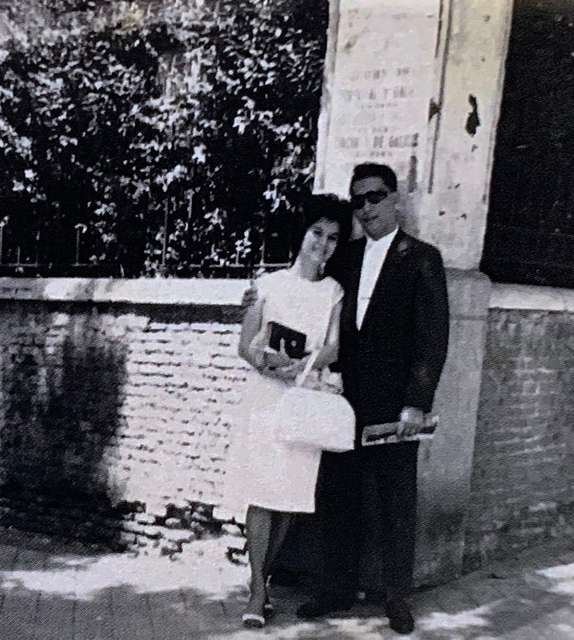
By the early sixties, his intellectual formation carried him farther still. In Madrid, at the Universidad de Madrid, Bert pursued advanced legal studies and earned his Doctor of Laws degree in 1962, with the distinction sobresaliente, the university’s highest honor.
Madrid offered more than academic achievement. It offered distance.
From Europe, Bert learned to see the Philippines not only as a place of immediate concern, but as part of a longer historical arc. European legal traditions emphasized continuity over rupture, precedent over impulse. Institutions endured precisely because they resisted haste.
For a young Filipino scholar, the lesson was clarifying: progress did not require constant disruption. Often, it required patience.
Living abroad sharpened his sense of proportion. He learned that legitimacy accumulates slowly and dissolves quickly. That authority, once abused, is difficult to restore. That institutions, not personalities, carry societies forward.

By early adulthood, Bert had achieved something unusual but revealing. He was both a Certified Public Accountant and a member of the Philippine Bar — trained in precision and structure, in limits and systems. The pairing was not accidental. Accounting taught him restraint. Law taught him design.
Together, they shaped a mind wary of shortcuts and deeply suspicious of solutions that promised speed without durability.
Those close to him noticed his temperament even then. He did not rush decisions. He did not escalate disagreements. When challenged, he paused, gathered facts, and weighed consequences. Silence, when used deliberately, became persuasive.
This was not indecision.
It was preparation.
By 1956, Bert had not yet entered organized civic leadership, much less public office. But the essentials were already in place. The discipline of restraint — intellectual, emotional, ethical — had been forged quietly over more than two decades.
The world had not yet tested him.
That would come next.
Civic Awakening: Learning Leadership Among Equals
By the early 1960s, Bert had returned to the Philippines intellectually complete but civically untested. He was in his late twenties — credentialed, trained, and deeply formed — yet still standing just outside the arena where character meets consequence. He had learned how systems worked. What he had not yet learned was how people did.
That lesson would come not from government, but from civic life.
The invitation arrived casually, almost unceremoniously. A friend — Albert del Rosario — asked Bert to join the Manila Jaycees. It was the sort of organization that rarely makes headlines but often makes leaders: young professionals committed to service, debate, and action, bound not by ideology but by shared responsibility.

Bert accepted without fanfare. He did not see it as a step toward anything larger. At the time, it was simply a place where men of similar age and ability gathered to do useful work.
What he encountered instead was his first rehearsal for public life.
The Jaycees operated on a principle unfamiliar to many who would later hold office: authority was temporary, accountability immediate, and ego quickly exposed. There were no permanent titles, no inherited prestige. Leadership rotated. Decisions were debated openly. Influence had to be earned anew each year.
For Bert, this environment proved instructive.
He was not the most forceful voice in the room. He did not dominate discussions. Instead, he listened — often longer than others — and spoke with care. When disagreements arose, he showed an instinctive resistance to escalation. He asked clarifying questions. He sought consensus not through compromise of principle, but through precision of argument.
It did not go unnoticed.

Within his first year, Bert was invited onto a leadership slate. In an election led by Albert del Rosario, he was chosen as one of the directors alongside Sonny Belmonte, Ting Bengzon, and Ronnie Buencamino. Del Rosario himself was elected president by acclamation in 1969.
For Bert, the election mattered less than the process. This was leadership without entitlement. Authority conferred not by age or pedigree, but by trust.
It would shape how he understood power from that point forward.
It would shape how he understood power from that point forward.The Jaycees were not a rehearsal for politics in the narrow sense. They were something more demanding: a test of temperament. Meetings were long. Opinions varied. Consensus was difficult. There were no staff to shield leaders from criticism, no protocol to mask disagreement.
Bert discovered that his instinct for restraint — honed in classrooms and libraries — translated unexpectedly well into civic life. Where others grew impatient, he slowed the discussion. Where tempers flared, he softened tone without diluting substance. He did not seek to win arguments. He sought to make decisions durable.
This made him dependable.

This made him dependable.Colleagues began turning to him not in moments of celebration, but in moments of uncertainty. When discussions stalled, he was asked to clarify options. When disagreements hardened, he was asked to reframe the question. He became, quietly, a stabilizing presence.
It was here — among peers, not superiors — that Bert first learned the subtle difference between authority and trust.
Looking back years later, Bert would describe this period with characteristic understatement. He did not present it as destiny unfolding, nor as ambition awakening. But he acknowledged its significance.
The Jaycees introduced him to something he had not yet encountered: the mechanics of collective decision-making. The reality that leadership was not about personal conviction alone, but about persuading others to share responsibility for an outcome.
It was also his first exposure to public scrutiny — not from voters or media, but from equals who were unafraid to challenge him.
That experience proved formative.

Twenty-three years later, during a celebration marking Albert del Rosario’s sixtieth birthday, Bert would recall how that early invitation into civic life altered his trajectory. It was during that gathering that he thanked del Rosario not only for friendship, but for opening a door he had not known he was approaching.
Twenty-three years later, during a celebration mWhen Bert later won his first electoral contest, del Rosario was the first to congratulate him.
But that moment lay far in the future.
By 1964, Bert’s participation in civic life had done something subtle but irreversible. It had shifted his understanding of responsibility. Public service was no longer abstract. It was personal. It involved disagreement, compromise, persistence, and restraint practiced under pressure.
He did not yet seek office. He did not yet speak of governance. But the habits required for both were quietly taking root.
The Jaycees did not give Bert ambition.

They gave him rehearsal.
Work Without Applause
By this time, Bert had already acquired something rare for a man barely past thirty: a reputation for reliability without spectacle. He was not yet visible to the electorate, but he was known in institutions that valued discretion — corporate boards, policy circles, professional associations, and civic networks where competence mattered more than visibility.
This was not accidental. Bert’s life after Spain unfolded not as a straight ascent, but as a deliberate accumulation of responsibility.
He worked first where precision was unforgiving. In the late 1950s and early 1960s, as a cost accountant for the Container Corporation of America in Los Angeles, Bert learned how decisions reverberated across balance sheets. Numbers allowed no rhetoric. They revealed truth without emotion. The discipline stayed with him.
Back in the Philippines, he entered legal and corporate service quietly. In 1959, he began working closely with Justice César Bengzon, then Chief Justice of the Supreme Court, serving as his assistant secretary. Bengzon was not merely a jurist; he was a moral benchmark — so austere in integrity that even proximity demanded discipline. Bert absorbed this ethic without commentary or imitation. It became internal.

From there, his career progressed not through ambition but through trust. In the early 1960s, he served as Executive Committee Secretary at Elizalde & Company, then as Comptroller of Samar Mining, Inc. These were not headline positions. They were stabilizing ones. Colleagues noted that Bert did not dominate meetings. He clarified them. When others argued, he reconciled. When decisions stalled, he structured a way forward.
Yet it was public health — not law or finance — that quietly expanded his understanding of service. In the mid-1960s, Don Paquito Ortigas invited Bert to become Executive Director of the Philippine Tuberculosis Society, an institution founded in 1910 and long committed to prevention, treatment, and research. Tuberculosis was increasingly under control, but its management required coordination across barangays, clinics, volunteers, and local governments — long before “community based healthcare” became policy language.
Bert thrived in this environment. Throughout the late 1960s and early 1970s, he worked closely with barangays across Greater Manila, helping to strengthen referral systems, volunteer networks, and logistical coordination. It was here — almost unknowingly — that he learned grassroots governance: how credibility is earned face to face, how trust travels person to person, how institutions only function when communities believe in them.
These were not political lessons yet. But they would become political instincts
By 1970, Bert’s professional life had expanded beyond national borders once more. He was appointed Director of Finance and Administration of Jaycees International, headquartered in Coral Gables, Florida. The role required relocating his family to the United States for two years, overseeing financial systems for a global organization operating across dozens of countries.
The assignment was daunting. He was selected from a large field of candidates, entrusted with ensuring that the organization not only functioned but remained solvent. Those who worked with him later recalled how quickly doubts faded. Bert brought order without intimidation, discipline without rigidity. Leadership, he believed, was a form of stewardship.

By the time he returned to Manila in the early 1970s, his worldview had widened — but his temperament remained unchanged. He was more convinced than ever that institutions mattered, and that service required systems strong enough to survive their leaders.
It was during this period — 1975, to be precise — that Alberto Romulo entered the Rotary Club of Manila.
He did not arrive as an aspirant. He arrived as a student.
Rotary was not impressed by résumés. It was sustained by memory. Its rituals, committees, and expectations formed a parallel education — one rooted in service but governed by procedure. Bert plunged into it with characteristic seriousness.
Under the mentorship of Father Francisco “Frank” G. Reyes, OFM of the Santuario de San Antonio, he was appointed board secretary almost immediately. It was an apprenticeship by immersion. The Rotary Club of Manila operated through more than fifty committees, each with its own rhythms and histories. Bert attended multiple meetings a day, listened carefully, took meticulous notes, and learned how consensus was built rather than imposed.
A Presidency That Revealed a Governing Style

Rotary suited him. It rewarded preparation, discouraged ego, and placed service within structure. By 1977, just two years after joining, Bert was elected president of the Rotary Club of Manila — by one of the largest margins in the club’s history.
His presidency was methodical and expansive.
The day after his election in 1977, Bert visited every elected director individually — not ceremonially, but deliberately — to discuss mission, responsibility, and expectations. Mentorship, for him, was not inspiration. It was architecture. During his presidency, he appointed Francisco “Paqui” Ortigas III as board secretary, quietly preparing another generation for leadership.
Those who served under him recall Those who served under him recallsomething consistent: clarity without coercion. Bert did not command. He aligned.
That year, he hosted the Diamond Joint District Conference of Districts 380, 382, 385, and 386 in celebration of sixty years of service, publishing a commemorative Diamond Book and producing medallions, car stickers, and plates to mark the milestone — not as souvenirs, but as a record. Past District Governor Marianito Lichauco’s History of Rotary in the Philippines was supported and disseminated to all Philippine Rotarians, allowing the organization to “reach out to the past” in order to ground the present. He launched Operation Paglilinis ng Palengke, emphasizing public hygiene at the grassroots. He sponsored the Waiters Placement Seminar, bridging livelihood with dignity.
Through RCM’s Medico-Surgical “Reach Out” Mission, medical assistance was extended to indigent communities in Northeastern Mindanao. The club participated in the First Metro Manila Restaurant and Small Eateries Cleanliness Contest. A Christmas Drive distributed ₱20,000 worth of goods. A ₱5,000 check was extended to the Rotary Club of Gumaca for fire victims.

The Tulungan Center in Malate was completed at a cost exceeding ₱32,000. RCM Foundation, Inc. was established. Six Paul Harris Fellows were produced during his term.
None of this was loud. All of it endured.
By the late 1970s, his life had reached a rare equilibrium. He was professionally accomplished, deeply embedded in civic institutions, and intellectually grounded.
At home, with his wife Rosie Lovely Tecson-Romulo, he was raising their children — Lupe, Mons, Roman, Berna, and Erwin — in a household where duty was modeled rather than preached.
Politics had not yet called him.
But the habits required for it — restraint, patience, institutional loyalty, and moral clarity — had already been rehearsed for nearly two decades.

When history finally disrupted that equilibrium, Alberto Romulo would not need to reinvent himself.
He would simply step forward.
The moment invited grandeur. Bert declined excess.
Bert articulated the logic with characteristic restraint: history was not nostalgia; it was instruction.
One of the quiet triumphs of Bert’s Rotary presidency was achieved not through ceremony, but through credibility.
Through sustained institutional engagement, Rotary secured Presidential Proclamation No. 1809, declaring January 29 to February 4 of every year as Rotary International Week in the Philippines.

It was not a political act. It was a civic acknowledgment — recognition that voluntary service, when organized and sustained, merited national regard.
Bert never claimed the achievement. He treated it as evidence that institutions, when patient, could be heard without shouting.
The TOWER Awards: Recognition Without Privilege
Among Bert’s most enduring contributions was the strengthening and institutionalization of the TOWER Awards, conceived in 1976 to honor Filipino workers whose excellence rarely attracted public notice.
The philosophy was deliberate. The awards were not for prominence, but for contribution. They affirmed dignity without conferring rank.
Bert ensured that the program was structurally embedded within Rotary Manila — not attached to his presidency, not branded by personality. Committees were formed. Criteria were clarified. Continuity was protected.

Decades later, the TOWER Awards would remain Rotary Manila’s longest running and most nationally recognized program — a quiet confirmation of Bert’s belief that the best institutions survive their founders by design.
Youth, Work, and the Shape of the Future
The TOWER Awards: Recognition Without Privilege Bert’s Rotary presidency gave particular attention to the future — not as abstraction, but as preparation.
Career information convocations were organized for graduating students. Job training and placement seminars were conducted for out-of-school youth and wards of Boys’ Town. Rotaract and Interact clubs were not merely sponsored but integrated into the club’s rhythm.
Students were invited into Rotary meetings as participants, not symbols.
During Youth Activities Week, Bert invited Diwata Reyes, then Editor-inChief of The Philippine Collegian, as Guest of Honor and Speaker — a subtle but unmistakable signal that critical thinking and civic engagement belonged in the same room. Bert was not unsettled by dissent. He believed institutions weakened when they excluded questioning voices.

Perhaps the most revealing moments of Bert’s Rotary presidency occurred away from ballrooms and proclamations.
During a visit to the children’s pavilion of the National Orthopedic Hospital, Bert and fellow Rotarians encountered a suffering that resisted language. Children lay crowded into cribs, many immobilized by casts, others suspended by slings. The club had come to deliver ten new cribs and to see what modest interventions — paint, cleanliness, order — could accomplish.
Bert later wrote of the children’s eyes, of small hands waving, of a boy forcing a smile through pain. There was no rhetoric in the account. Only observation.
From this encounter flowed Rotary’s intensified commitment to the 3-H Program — Health, Hunger, and Humanity. Under Bert’s watch, more than 70,000 doses of tetanus toxoid vaccine were airlifted from Canada to the Philippines for Rotary’s first fullscale immunization effort.
For Bert, compassion was not sentimental. It was logistical.
Bert’s presidency also deepened Rotary Manila’s international engagement. The club hosted the First Asian Rotary Fellowship Golf Tournament, attended Rotary International Conventions in Tokyo (1978) and Rome (1979), and expanded friendships across Asia.

These exchanges mattered to Bert not for ceremony, but for habit. He believed that contact preceded trust, and trust preceded cooperation. Long before he would represent the Philippines abroad, he was already practicing diplomacy in its quietest form.
Leaving Without Residue
As his presidency concluded in June 1979 at the Manila Hilton, Bert did not speak of legacy. In his valedictory message, he spoke instead of obligation.
His valedictory message at the close of his Rotary presidency was revealing — not for what it claimed, but for what it emphasized. There was no triumphalism. Instead, there was gratitude, continuity, and a call to carry the torch forward. He spoke of children in hospital wards, of modest interventions that produced dignity rather than dependency. He invoked not power, but responsibility — the idea that progress was built from countless small acts of discipline and care.
Even then, one could glimpse the statesman he would later become.
Rotary taught him something no classroom could: how ideals survived when translated into budgets, committees, and minutes of meetings. It taught him that leadership was less about command than about trust, and that institutions endured only when leaders resisted the temptation to personalize them.

By 1979, when Bert stepped down as Rotary president, he had not yet entered politics. But the transition was already underway — not outwardly, but inwardly.
He had learned how to carry authority lightly.
He invoked the Roman citizen who carried a soldier’s pack beyond the required mile — not out of duty, but choice. Leadership, he believed, always demanded more than mandate.
He passed the torch deliberately to President-Elect Francisco “Paqui” M. Ortigas III, thanked his board, acknowledged the Rotary Anns, and expressed gratitude to his wife, Lovely Romulo, whose presence he described simply and without flourish.
There was no attempt to linger.
By the end of the 1970s, Bert had not yet sought elective office. But he had already mastered a rarer discipline: how to lead without owning, how to influence without imposing, and how to leave without diminishing those who followed.

When national politics finally called, it would not find a novice.
It would find a man trained by institutions — ready to enter power having first learned its limits.
The Threshold of Power: Entering Politics Without Losing Restraint
Bert did not enter politics out of impatience. For most of his adult life, he had believed that institutions — when properly tended — could correct themselves. He trusted process. He trusted continuity. He trusted that reform, however slow, was preferable to rupture.
By the early 1980s, he was already in his late forties — an age when many politicians were planning their second or third ascent. Bert had resisted that timetable. He had watched politics from close range, advised quietly, and served institutions whose influence depended on credibility rather than coercion. What he had not done — deliberately — was seek office.
That restraint would make his eventual entry consequential.

Then came August 1983.
The assassination of Benigno “Ninoy” Aquino Jr. did not immediately turn Bert into a politician. It did something quieter and more unsettling: it collapsed his belief that silence was still a form of responsibility. Like many Filipinos of his generation — especially those who had spent decades building institutions from within — he waited at first, watching, listening, measuring.
The streets, however, were no longer waiting.
What followed in the months after Ninoy’s death was not merely outrage, but moral disorientation. Institutions that were supposed to protect order had become instruments of fear. The careful balance Bert had spent years mastering — between authority and restraint, power and accountability — had tipped.
By 1984, the question confronting him was no longer whether he was prepared for politics. It was whether his refusal to enter it had become a form of evasion.
Those closest to him noticed the change. He spoke less, but thought more intensely. Conversations that once revolved around policy design began circling back to first principles: legitimacy, consent, responsibility. The habits of discipline that had defined his life now pushed him toward a conclusion he had long resisted.

Enough was enough.
When Bert decided to run for the Regular Batasang Pambansa representing Quezon City, it was not framed as ambition. It was framed as duty. He joined a slate that included figures of unquestioned moral standing — Justice Cecilia Muñoz Palma and Orly Mercado — individuals whose presence signaled seriousness rather than opportunism. The decision was neither impulsive nor ideological theater. It was practical. By then, the Marcos regime had begun to fray — economically weakened, morally exhausted, and increasingly disconnected from public trust. Institutions were brittle. Voices inside government were few, and many of them compromised.
Bert believed that withdrawal no longer preserved integrity.
He entered the race without the vocabulary of defiance. His campaign was quiet, disciplined, and grounded in
competence rather than outrage. He spoke of budgets, accountability, and the dangers of governing without limits — language that rarely electrified crowds but resonated with voters weary of excess.
The campaign was austere by design. Bert did not posture. He did not promise transformation. He spoke instead about competence, restraint, and institutional repair. Voters responded not to charisma, but to credibility.

He won.
The Batasang Pambansa was not designed to be adversarial. It was a legislature operating within constraints, its independence circumscribed, its debates often performative. Many who entered it chose either accommodation or theatrics.
Bert chose neither
From 1984 to 1986, Bert served as assemblyman during one of the most volatile periods in Philippine political history. The Batasan itself was an uneasy institution — functioning, but strained; deliberative, but constrained. Bert approached it the only way he knew how: by mastering its rules, respecting its procedures, and using its limited space to insist on accountability.
He was not a firebrand. He did not posture. He studied bills, asked procedural questions, and pressed for clarity in appropriations. His interventions were precise. When he spoke, it was usually late in the discussion — after listening, after weighing, after identifying where language failed logic.
Colleagues noticed that he did not personalize disagreement. He challenged proposals without challenging people. In a political culture shaped by loyalty tests and retaliation, this unsettled both allies and opponents.

Bert did not seek confrontation. But neither did he retreat.
He was not incendiary. He was meticulous.
February 1986: The Collapse of Certainty
Then, in February 1986, the system finally collapsed.
The snap elections of February 1986 ended whatever illusion of permanence the regime still possessed. The weeks that followed — marked by contested results, public outrage, and quiet defections — pushed the country toward rupture. The EDSA People Power Revolution did not merely depose a regime; it dissolved the political order that had governed Bert’s brief legislative career. The Batasang Pambansa was abolished. The question facing the country — and Bert himself — was what would replace it.
When the EDSA People Power Revolution unfolded, Bert was not on the barricades. He was not on television. He was inside government, watching the institutional scaffolding give way.

What distinguished him during those days was not visibility, but steadiness.
He understood that revolutions succeeded or failed not only on the streets, but in the days after — when decisions had to be made without scripts, when power changed hands faster than rules could be rewritten.
President Corazon Aquino, assembling a government amid uncertainty, looked not for loyalists but for stabilizers. She chose Bert as interim Minister of the Budget during the transition period.
It was an inspired, if understated, choice. It was not a glamorous assignment. It was, in fact, among the most perilous.
The new government inherited empty coffers, fractured agencies, and a public hungry for immediate transformation. Expectations were vast. Resources were not.
Bert accepted the role without public celebration.

Budgets reveal values. In times of upheaval, they also reveal discipline — or its absence. Bert brought to the task what he had always brought to institutions under strain: structure without rigidity, principle without drama. He believed that reform without fiscal responsibility was merely rhetoric postponed.
His tenure was brief but consequential. He helped restore coherence to public finance at a moment when coherence itself was fragile. There were no grandstanding speeches, no self congratulation. There was simply work.
Governing Without Noise
When elections were called in 1987, Bert faced another decision. He could have remained safely within the executive branch, insulated from electoral risk. Instead, he resigned and ran for the twenty-four-seat Senate.
He won — placing among the top candidates.
The Constitution shortened what would have been a six-year term to five. Bert used every year.

The Senate he joined was newly restored but deeply unsettled. Democracy had returned, but habits had not yet caught up. The chamber was crowded with ambition, memory, grievance, and expectation. Many senators spoke as if history itself were listening. Bert listened as if history would ask questions later.
He was quickly recognized not for eloquence, but for dependability
In the early years of the restored Congress, legislation arrived unevenly — some bold, some hasty, many symbolic. Bert gravitated instinctively toward the less visible work: shaping committee outputs, reconciling conflicting drafts, ensuring that laws were implementable rather than merely expressive. He believed that a bill unfinished in its details was a promise deferred to failure.
By the early 1990s, his colleagues had come to rely on him as a stabilizing force. When debates grew heated, Bert would often intervene not with argument but with structure — summarizing positions, identifying points of convergence, and proposing a procedural path forward. It was leadership by calibration.
This made him an unlikely but effective Majority Leader, a role he would hold for five years. Working closely with Senate President Neptali Gonzales Sr., Bert helped guide the legislative agenda with a rhythm that emphasized preparation over performance. The Senate functioned not because voices were raised, but because schedules were respected, committees were disciplined, and negotiations were conducted quietly.
A former Senate President, Paterno, would later describe Bert’s stewardship as “indefatigable,” praising his ability to balance competing egos while maintaining legislative momentum. The compliment was telling: it spoke not of dominance, but of endurance.

Bert’s legislative record reflected this temperament. Over the course of his Senate career, he served as principal author of 48 laws and co-author of 127 others — figures impressive not for their quantity alone, but for their coherence. His interests gravitated toward fiscal responsibility, governance reform, and institutional clarity. He was wary of laws that promised benefits without identifying funding, or authority without accountability.
That wariness extended to his own conduct.
In the mid-1990s, as pork barrel politics increasingly blurred the lines between legislation and patronage, Bert made a decision that surprised even his allies. For the final three years of his term, he refused to use his allocated discretionary funds. He argued publicly — and repeatedly — that legislators were not implementers, that appropriations belonged to the executive branch, and that the temptation to conflate lawmaking with spending eroded institutional integrity.
It was not a popular position. It was not meant to be.
Bert never framed the decision as moral superiority. He framed it as constitutional fidelity. “Legislators should legislate,” he said. “Project implementation is an executive function.” The clarity of the statement left little room for misinterpretation.
Throughout these years, Bert remained remarkably consistent in another way: he resisted permanence. When his second term concluded in 1998, he declined to seek a third, despite encouragement from supporters who believed his experience was needed. Term limits, he insisted, were not inconveniences to be navigated but principles to be honored.

This belief was not theoretical. It governed his choices even when it constrained them.
By the end of his Senate career, Bert had become something increasingly rare in Philippine politics: a figure respected across factions, trusted across administrations, and untouched by scandal. He had never been flashy. He had never needed to be. His authority derived from preparation, restraint, and an almost stubborn loyalty to institutional roles.
Yet the end of his Senate service did not mark a withdrawal.
It marked a transition.
In 2001, following political upheaval once again, Bert would be called back — this time not as legislator, but as steward of the nation’s finances, then as chief of staff to the presidency, and eventually as the country’s principal diplomat.
The work ahead would require not just discipline, but nerve.
And for perhaps the first time, Alberto Romulo would be asked not merely to preserve institutions — but to defend the nation itself.
The Weight of the Purse
When Bert was asked to return to government service in early 2001, the invitation came not as an honor but as a burden. The country was again in transition — this time abrupt, volatile, and uncertain. Institutions were intact, but trust was brittle. Markets were wary. The state needed reassurance, not rhetoric.
Bert was appointed Secretary of Finance not because he inspired confidence in crowds, but because he inspired confidence in numbers.
The fiscal situation he inherited was fragile. Revenues lagged behind obligations. Deficits had become normalized. International observers were cautious, some openly skeptical. Bert approached the task the way he always had: by diagnosing before prescribing. He reviewed assumptions, recalibrated forecasts, and insisted on clarity where optimism had previously sufficed.
He understood that confidence — especially financial confidence — was cumulative. It could not be demanded. It had to be earned, line by line.

In Cabinet meetings, Bert was often the quietest voice in the room. But when he spoke, discussions slowed. He was known to ask questions that reframed the problem rather than answered it: What are we assuming? What happens if we are wrong? Who carries the risk? These were not ideological questions. They were structural ones.
By mid-2001, Bert was already signaling an uncomfortable truth: reform would require restraint before relief. Taxes would need rationalization. Enforcement would need credibility
Spending would need discipline — not theatrics. He resisted shortcuts that might buy temporary applause at the cost of long-term stability.
This posture did not make him universally popular. Finance secretaries rarely are.
What it did was restore a degree of seriousness to fiscal governance. International partners — multilateral institutions, credit rating agencies, bilateral lenders — began to read the Philippines differently. Not as a country chasing growth through improvisation, but as one attempting to re-anchor policy in prudence.
Bert’s approach was shaped by memory. He had seen crises before: devaluations, capital flight, political shocks. He knew how quickly markets punished inconsistency. He also knew how slowly credibility returned.

In late 2001, his responsibilities expanded. He was asked to serve concurrently as Executive Secretary, effectively the President’s chief of staff. The dual role placed him at the crossroads of policy and politics, where fiscal logic often collided with political necessity.
Bert navigated the tension without theatrical protest. He did not moralize disagreements. He documented them. When proposals crossed his desk, he evaluated not just their intent but their institutional implications. Could the bureaucracy execute this? Would it survive legal scrutiny? What precedent would it set?
These questions made him indispensable — and occasionally inconvenient.
Yet even critics acknowledged his reliability. He did not leak. He did not grandstand. He did not personalize disputes. His loyalty was not to personalities, but to process.
By 2003, as the administration stabilized and reform efforts matured, Bert’s role evolved again. He began to spend more time engaging external counterparts — foreign finance officials, multilateral agencies, investors — explaining not just what the Philippines planned to do, but how it thought about doing it.
In these exchanges, his European training surfaced. He spoke of continuity. Of institutional memory. Of the dangers of overcorrecting in response to crisis. Progress, he argued, was less about dramatic turns than about sustained alignment.

When Bert stepped away from the Finance portfolio in 2004, the fiscal challenges were far from resolved. But the framework had shifted. Decisions were again being made within boundaries. Discipline had returned as a governing value.
He left without claiming credit
That would become a pattern.
Later that same year, he would be entrusted with a role that required an entirely different kind of judgment — one less numerical, more existential. The country’s voice abroad had grown uncertain. Its alliances were under strain. Its sovereignty would soon be tested.
And Alberto Romulo — methodical, reserved, unflinching — would be asked to carry the nation’s position not in spreadsheets, but on the world stage.
That test would define his final and most consequential chapter in public life.

Avoiding the Cult of Personality
Unlike many of his contemporaries, Bert did not cultivate a public persona. He gave few grand interviews. He avoided quotable outrage. His name was rarely associated with controversy. This was deliberate. He believed senators were stewards, not performers.
In a chamber increasingly shaped by media attention, Bert remained focused on internal coherence. His influence was felt most strongly not in headlines, but in final drafts. By the mid-1990s, Bert had become something rare in Philippine politics: a senator whose authority rested on trust rather than fear, competence rather than charisma.
Younger legislators sought his counsel. Older ones relied on his memory. Administrations consulted him when proposals needed grounding.
He had mastered the art of being indispensable without being visible.
As his Senate term drew to a close, Bert faced a decision. He could have pursued higher office. He had the résumé, the respect, the networks.

He chose otherwise.
Public service, he believed, was not a ladder. It was a series of rooms. One entered when useful. One exited when finished.
His departure from the Senate was quiet.
His reputation endured.
By the end of this chapter, Bert had completed his legislative formation. He had proven that restraint could coexist with influence, and that authority need not announce itself to be effective. The next phase would test these convictions in a different arena — foreign policy, where words carried consequences far beyond borders. Diplomacy as Discipline: Speaking Softly for a Noisy World Power, when exercised at the level of nations, is often mistaken for volume. The louder the declaration, the firmer the resolve — or so the assumption goes. Bert never believed this. By the time he assumed leadership of the Department of Foreign Affairs in the mid-2000s, he had already learned a harder lesson: that in diplomacy, durability matters more than drama, and restraint more than display.
The corridors of the DFA did not change when Bert became Secretary. The routines remained: early briefings, cables read line by line, memos returned with marginal notes instead of instructions barked aloud. What changed was the tone. There was less urgency to impress, more insistence on coherence. Bert did not ask his diplomats to move faster. He asked them to think longer. Foreign policy, as he practiced it, was not an extension of politics by other means. It was an architecture — slowly built, carefully load-bearing, intolerant of shortcuts. And nowhere would this philosophy be tested more relentlessly than in ASEAN. ASEAN as Discipline, Not Stage To outsiders, ASEAN often appears ceremonial: annual summits, choreographed handshakes, statements dense with adjectives and light on enforcement. Bert understood the criticism. He also understood the deeper truth. ASEAN was not designed to move quickly. It was designed to prevent rupture.

For Bert, this was not a weakness but a constraint — one that demanded intellectual patience and moral clarity.
Consensus, in ASEAN, was not something to be conquered. It was something to be cultivated, even when doing so meant accepting incremental gains over dramatic wins.
When the Philippines assumed the chairmanship of ASEAN in the latter half of the decade, Bert approached the role as a custodian rather than a crusader. The task was not to dominate the agenda but to hold it together. Negotiations on the ASEAN Charter, including provisions that would eventually give rise to the ASEAN Intergovernmental Commission on Human Rights, required a delicate balance between aspiration and acceptability. Push too hard, and the charter would fracture. Move too softly, and it would mean nothing.
Bert chose the middle path — the most difficult one. He framed human rights not as an imposition of values but as a shared regional investment in stability. He argued not from moral absolutism, but from institutional self-interest: a region that cannot articulate its own norms will eventually have them imposed by others.
This was Bert’s foreign policy instinct at work — never confrontational, never evasive. Firm without being theatrical. Patient without being passive.
The Three Pillars, Lived

During his tenure, Bert articulated what would come to be known as the three pillars of Philippine foreign policy: national security, economic diplomacy, and the protection of overseas Filipinos. But these were not slogans devised for speeches. They were conclusions drawn from experience.
Security, for Bert, was inseparable from multilateral credibility. The Philippines could not secure its interests alone, nor could it rely indefinitely on alliances unanchored by regional legitimacy. ASEAN, imperfect as it was, provided a framework where disputes could be slowed, managed, and — sometimes — defused.
Economic diplomacy, meanwhile, was not about courting capital with promises that could not be kept. It was about predictability. Trade agreements, strategic partnerships, and development assistance only flowed toward countries that honored commitments quietly and consistently. Bert believed that reputation, once lost, was almost impossible to recover. And then there were the overseas Filipino workers — the quiet majority of the nation’s external presence. Bert rejected the idea that OFWs were merely labor exports. They were citizens first, ambassadors by circumstance. Their welfare was not an add-on to foreign policy; it was its moral baseline. In this sense, Bert’s diplomacy always began at the border — and often at the airport.
The Passport as Dignity
Long before biometrics became commonplace, Bert was unsettled by how Filipino travelers were treated abroad. Delays. Suspicion. Quiet humiliation at immigration counters where documents were scrutinized more closely than faces.
The move toward a machine-readable passport, and eventually the Philippine ePassport, was not driven by technological fashion. It was driven by an ethical concern: that a Filipino abroad should not have to explain the legitimacy of their identity.

Through Bert’s initiative to establish regional offices nationwide, Filipinos no longer needed to travel to Manila to apply for passports, significantly easing access to consular services across the country. Notably, a remote passport office was also set up at the Philippine Overseas Employment Administration (POEA), enabling overseas Filipino workers (OFWs) and their families to avail themselves of passport services more conveniently. The reform reflected a deliberate shift toward decentralization, accessibility, and citizen-centered public service under the Department of Foreign Affairs. STEWARD OF CONTINUITY Alberto Gatmaitan Romulo and the Discipline of Public Service The legal battles were protracted. The reforms slow. But when the ePassport was finally launched, the Philippines found itself among the early adopters globally — its travel document secure, interoperable, and respected. The change was subtle but profound. A passport, Bert believed, should not merely permit travel. It should confer confidence. This, too, was foreign policy — executed not in summits but in systems.
Leadership Seen from Within
Those who worked under Bert understood his style best. Enrique Manalo, then Undersecretary for Policy, would later reflect that Bert’s most distinctive trait was not decisiveness but trust. He did not micromanage. He did not posture. Instead, he set a direction and expected competence to rise to it.
There was, within the DFA, a shift in self-perception. The department no longer saw itself as reactive, but as capable of initiative. Problems were framed not in terms of obstacles but possibilities. It was a cultural change more than an administrative one.
Bert’s authority was never loud. But it was steady. And in diplomacy, steadiness often outlasts brilliance.
There were moments, however, when consensus proved elusive — and when restraint alone was insufficient. In a now-historic ASEAN Foreign Ministers’ Meeting in Phnom Penh, discussions over the South China Sea collapsed into unprecedented discord. For the first time in ASEAN’s history, no joint communiqué was issued.

Bert had warned his counterparts of the danger: that silence in the face of encroachment invited repetition. He quoted a familiar moral progression — how injustice, tolerated in increments, eventually becomes unavoidable. His intervention did not salvage the communiqué. But it clarified the stakes.
President Benigno Aquino III would later echo the same warning at the leaders’ level: that the failure to defend a neighbor’s rights today endangered one’s own tomorrow.
Bert understood the cost of such moments. Standing firm could isolate. But retreating would redefine the Philippines’ posture for years to come. He chose firmness — not as provocation, but as record.
When Bert stepped down from the DFA in the early 2010s, there was no sense of unfinished business. That, perhaps, was the point. The systems were in place. The culture had shifted. The Philippines’ voice — measured, credible, and consistent — was recognized even when it disagreed.
He did not leave behind a doctrine. He left behind a method.
Foreign policy, in Bert’s hands, had never been about asserting presence. It was about preserving space — space for dialogue, for dignity, for a nation to move without being pushed.

The next chapter of his life would turn toward stewardship of a different kind — economic, institutional, and deeply personal. But before that transition, this much was clear:
Alberto Romulo had shown that in a world addicted to noise, quiet conviction could still hold the line.
The Long View: What Endures After Power
There comes a stage in public life when authority no longer derives from position but from trust — earned, tested, and quietly reaffirmed. For Bert, that stage arrived not as a withdrawal from public service, but as a return to its most elemental form: stewardship.
When Bert accepted the chairmanship of the Development Bank of the Philippines, the assignment did not announce itself as a coda to a long career. It read, instead, like a familiar problem set — capital, risk, time. DBP was not a political platform. It was an institution with memory and obligation, designed to finance the long arc of national development rather than the short burst of applause.
Bert approached the bank with the instincts he had honed over decades: reconcile before you promise; fortify systems before you expand them; measure impact not by velocity but by durability. Development, he believed, was not an act of generosity. It was a discipline. Loans were not favors; they were commitments whose consequences would be borne by communities long after the signatures dried.
Under his stewardship, DBP was treated less as a dispenser of funds and more as a partner in national intent — supporting infrastructure, industry, and local enterprise with the same restraint he had practiced in diplomacy. The mindset was familiar: credibility first, ambition second. Progress without spectacle.
Yet if institutions reveal how a man thinks, family reveals how he feels.
At the center of Bert’s life stood his wife, Rosie Lovely Tecson-Romulo — “Lovely” to those who knew her — whose steadiness mirrored his own. Their partnership was not performative. It was practical, affectionate, and quietly sustaining, built on shared endurance rather than shared limelight.
Together, they raised five children, each of whom carried forward a different facet of the Romulo inheritance — not as replicas, but as continuations.
Rosa Guadalupe Angela “Lupe” Romulo, the firstborn, possessed a gentleness that anchored the family. Her passing in November 2017 — after a cascade of illness — left a silence that words could not mend. It was a loss that reordered the emotional geometry of the household, reminding Bert, even in later years, that no preparation shields a parent from grief.
Monserrat “Mons” Romulo channeled conscience into culture. As a writer and the founder of Katutubo PH, she devoted herself to indigenous narratives and social memory — work that echoed her father’s belief that dignity begins with recognition.
Roman Romulo entered public service with legal precision, serving as a legislator and later as Pasig City Representative. Where his father had shaped policy through institutions, Roman worked through lawmaking — direct, contested, and accountable.
Bernadette “Berna” Romulo-Puyat bridged governance and growth, serving as Secretary of Tourism and later as Deputy Governor of the Bangko Sentral ng Pilipinas. Her career embodied the same fusion of discipline and empathy that had guided her father’s approach to economic policy.
Erwin Romulo, editor, writer, and musical director, followed a more artistic path — proof that service does not require uniformity. His work gave voice to stories and rhythms that resist bureaucracy but enrich civic life all the same.
Bert never tried to impose coherence on their choices. Continuity, he understood, does not mean repetition. It means permission.
The Shape of Legacy
In his later years, Bert was often asked to summarize his philosophy of leadership. He usually declined. The question presumed that ideas precede action. In his life, it had been the other way around.
He believed that institutions outlive individuals only when they are built to restrain ego. That diplomacy works best when it protects dignity rather than pursues dominance. That development fails when it outruns trust. And that family — like the republic — is sustained not by perfection, but by presence.
If there is a single throughline to Alberto Romulo’s life, it is this: a refusal to confuse motion with progress, or noise with meaning. From classrooms to courtrooms, from ASEAN halls to bank boardrooms, he practiced a form of leadership that moved carefully because it intended to last. In an age that celebrates disruption, Bert chose continuity. And in doing so, he proved that endurance — quiet, principled, and humane — can be the most radical legacy of all.
Recognition Without Pursuit
Bert never campaigned for recognition. When honors arrived, they did so late, and quietly.
In May 2023, the Government of Japan conferred upon him the Grand Cordon of the Order of the Rising Sun, its highest civilian decoration, recognizing decades of patient work in strengthening Philippine–Japanese relations. The award was presented as part of the Spring Conferment of Japanese Decorations — measured, dignified, free of excess.
Bert accepted the honor surrounded by family. He spoke not of accomplishment, but of friendship between nations — of trust built incrementally, sustained without noise.
It was fitting. His diplomacy had always been cumulative rather than declarative.

 The State of the Nation in AI
 At the Crossroads of Sovereignty and Truth: The Rotary Club of Manila’s 23rd Weekly Membership Meeting
 District Activities and Events