

Where Intelligence Meets Purpose: The 28th Weekly Membership Meeting of the Rotary Club of Manila

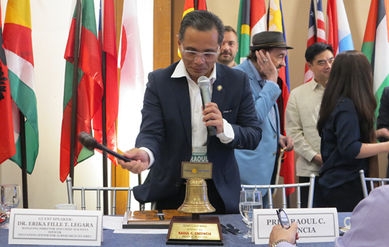
At precisely 12:30 PM, the gavel fell. With quiet authority, President Raoul C. Creencia called to order the 28th Weekly Membership Meeting of the Rotary Club of Manila, convened within the stately halls of the Manila Polo Club. What unfolded that afternoon was not merely a gathering of Rotarians, but an encounter between tradition and transformation, where the enduring values of Rotary were set against the rapidly evolving landscape of artificial intelligence.
Guided by Moderator STAR Rotarian Ingill Ra, the program moved with the elegance and precision that has long defined the Club’s culture.

The invocation, solemnly delivered by Rotarian Ramon Alberto B. “Ramby” Nolido, centered the assembly in reflection and gratitude. This was followed by an audio-visual presentation of the Philippine National Anthem, stirring in every attendee a renewed sense of national pride and shared responsibility.
The room resonated with the Rotary Club of Manila Hymn, performed by the RCM WF Music Chorale, a familiar melody that continues to bind generations of Rotarians. Soon after, STAR Rotarian Oliver L. Pantaleon led the recitation of the Four-Way Test, reaffirming the ethical framework that remains the bedrock of Rotary’s identity.

As host, STAR Rotarian Ingill Ra extended a gracious acknowledgment of guests and members, setting a tone of warmth and inclusivity. The Chorale returned with a welcome song that lifted the atmosphere, seamlessly transitioning the program into a moment of celebration as the Club honored its birthday celebrants. Names were called, greetings were exchanged, and laughter filled the room as the Maligayang Bati was rendered with heartfelt enthusiasm.
President’s Time: A Steady Hand on the Helm

During President’s Time, President Raoul addressed the membership with clarity and purpose, articulating both the responsibilities of the present and the possibilities of the future. His message carried the quiet strength of a leader who understands that stewardship is not only about continuity, but about preparing the institution for what lies ahead. It was a reminder that Rotary’s relevance is sustained not by tradition alone, but by its ability to adapt while remaining anchored in its core values.
Ms. Delby Bragais, President of the Inner Wheel Club of Manila, and Ms. Jeanne Harn, Ms. Philippines Earth 2007, extended a warm invitation to their upcoming fundraising event, "Dinner Dance!"

The Introduction: Framing the Future
The afternoon took on a more anticipatory tone as Club Secretary Antonilo D.C. “Anton” Mauricio stepped forward to introduce the Guest of Honor and Speaker, Dr. Erika Fille T. Legara.

His introduction was both precise and compelling, presenting not only her distinguished credentials as Managing Director and Chief AI & Data Officer of the Education Center for AI Research and Associate Professor at the Asian Institute of Management, but also underscoring the importance of the subject she was about to address. Artificial intelligence, he suggested, is no longer a distant concept reserved for technologists; it is an undeniable force shaping industries, institutions, and the very way society functions.
Artificial Intelligence — Responsible Use and Aid to Productivity

Dr. Legara began with an ease and authenticity that immediately connected with her audience. There was no attempt to overwhelm with jargon or abstraction. Instead, she invited the room into a conversation — one that sought to make artificial intelligence both understandable and relevant.
She opened with a thought that lingered throughout her talk: the future is already here, but it is not evenly distributed. In that single line, she captured the paradox of modern innovation — where extraordinary technological advancements coexist with uneven access and understanding.

From there, she gently dismantled the mystique surrounding artificial intelligence. She explained that what many perceive as a singular, almost mythical entity is in reality the convergence of three forces: vast amounts of data, increasingly powerful computing systems, and the evolution of algorithms capable of identifying patterns and making predictions. These elements, when brought together, form the foundation upon which modern AI systems are built.
Yet, she was careful to temper expectations. The intelligence we see today, she explained, is not the all-encompassing, human-like intelligence often portrayed in films.

What exists now is something far more specific — systems that excel in narrowly defined tasks. They can process language, recommend products, detect fraud, or analyze behavior with remarkable precision, but they remain confined to the boundaries of their design.
What made her presentation particularly compelling was her ability to ground these ideas in real-world applications, many of them developed within the Philippine context. She spoke of systems capable of assessing the value of repossessed motorcycles by analyzing images, sounds, and technical specifications — reducing hours of expert work into minutes. She described how financial institutions have used AI to better understand borrowers, allowing them to extend credit more responsibly while significantly reducing default rates. These were not abstract possibilities; they were tangible examples of how technology can drive both efficiency and inclusivity.

Her discussion then shifted to the public sector, where the impact of artificial intelligence becomes even more profound. She spoke of initiatives that use AI to detect malnutrition among children, enabling faster intervention and potentially changing the trajectory of young lives. She described systems designed to identify learning disabilities at an early stage, allowing for timely support in communities that may otherwise lack access to specialists. She shared how AI is being used to map disaster risks across the country, providing decision-makers with hyperlocalized data that can guide critical actions during times of crisis.
Each example reinforced a central theme: technology, when guided by purpose, can become a powerful instrument for social good.

As the presentation progressed, Dr. Legara introduced the concept of generative artificial intelligence — a more recent development that allows machines not just to analyze data, but to create new content. She demonstrated how these systems can write, interpret, simulate conversations, and even assist in complex decision-making processes. Yet, even as she showcased these capabilities, she maintained a measured perspective. These tools, she emphasized, are meant to augment human intelligence, not replace it. Judgment, ethics, and accountability remain firmly within the domain of people.
In her closing, she turned her focus to leadership. Artificial intelligence, she asserted, is neither inherently good nor bad. Its impact depends entirely on how it is used. For organizations like the Rotary Club of Manila — institutions built on service, integrity, and community — the responsibility is clear. The challenge is not simply to adopt new technologies, but to ensure that they are harnessed in ways that uplift, include, and empower.

A Dialogue of Minds
The open forum that followed was marked by thoughtful engagement. Members posed questions that reflected both curiosity and discernment, exploring not only the opportunities presented by artificial intelligence, but also its ethical implications and practical applications within their respective fields.

It was evident that the conversation had moved beyond passive listening. The room had become a space for dialogue, where ideas were tested, perspectives were shared, and understanding deepened.
A Gesture of Gratitude

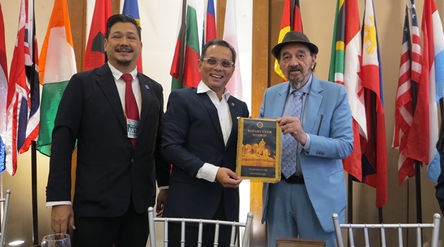
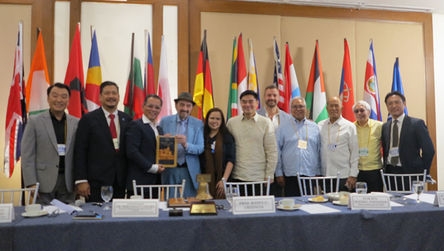
PDG Jackie Rodriguez presented President Raoul Creencia with a bannerette from the Rotary Club of Madrid.
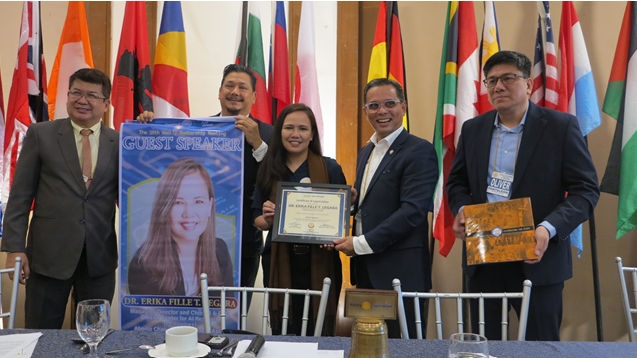
In recognition of her insightful and thought-provoking presentation, President Raoul presented Dr. Legara with a Certificate of Appreciation. It was a simple gesture, yet one that carried the weight of collective gratitude for a message that had both informed and inspired.

Closing the Afternoon
At 2:00 PM, the meeting was formally adjourned.

And yet, as members slowly dispersed, there remained an unmistakable sense that something more enduring had taken place. The afternoon had not merely added to the Club’s calendar of meetings; it had expanded its horizon.
For in that space — where tradition stood firmly rooted and the future quietly unfolded — the Rotary Club of Manila once again affirmed its place not only as a steward of legacy, but as a participant in shaping what comes next.

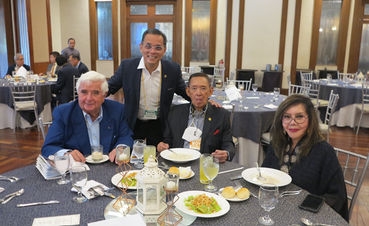
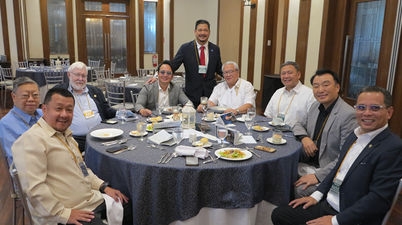
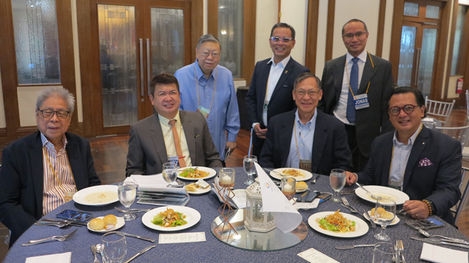
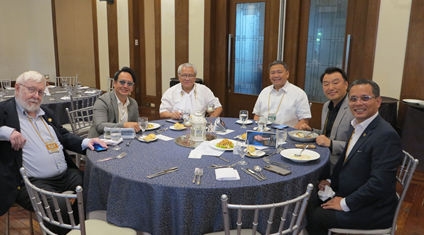
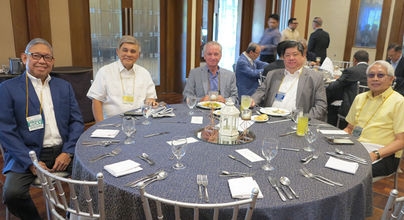
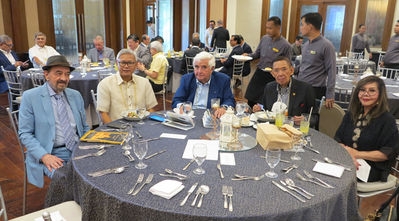
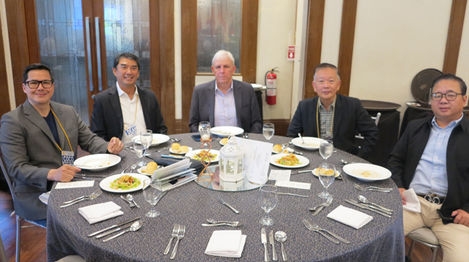
Meeting Fellowship
 Hon. VOLTAIRE D. MAURICIO
 A Builder of Places, A Shaper of People | The Journey of Wilhelm “Bollie” Vorster Bolton Across Continents, Careers, and Callings