

The Architecture of Power
The Life, Leadership, and Enduring Systems of Rodolfo Garong Valencia

A man who learned to read systems before he ever sought to lead them, Rod Valencia built a life at the intersection of enterprise and public service — where land, people, and policy converge. From the quiet discipline of his upbringing to the high-stakes decisions of governance, his journey is one of structure imposed on disorder, vision tested by reality, and sacrifice chosen over comfort. This is the story of a builder who stepped beyond business to reshape the very systems that defined opportunity — for a province, for an industry, and for generations that would follow.
The wind had picked up by mid-morning. From the port in Batangas, the sea looked unsettled — not violent, but restless enough to slow everything down. The ferry, already delayed, sat heavy against the dock as passengers gathered in uneven lines: farmers with sacks of produce, mothers with children, traders carrying goods that would lose value with every passing hour.
Among them stood Rodolfo “Rod” Garong Valencia.
He had made this crossing many times before, but on this day, he did not move as a passenger alone. He watched.
He watched how people waited — not impatiently, but with a kind of resignation that comes from familiarity. He watched port workers move without urgency, as if delay had become routine. He listened to conversations around him — half complaints, half acceptance.

“Ganyan talaga,” someone said. That’s just how it is.
The phrase lingered.
It was not the delay itself that unsettled him. It was what the delay represented.
A farmer, leaning against a wooden crate, spoke quietly to no one in particular. If the trip took too long, he said, the vegetables would wilt before they reached the market. Prices would drop. The day’s work would not be enough.
A young man, dressed for what looked like an interview, checked his watch repeatedly. Each minute lost on the dock was a minute he could not recover.

A mother tried to calm her child, who had grown restless in the heat.
None of them spoke of systems. None of them used words like “monopoly” or “logistics” or “infrastructure.”
But they felt it. They lived inside it.
Rod understood, in that moment, that what he was seeing was not an isolated inconvenience. It was a pattern — repeated, normalized, embedded.
Movement, in this place, was not free.

The implications extended far beyond inconvenience. When goods could not move efficiently, value diminished. When time could not be relied upon, planning broke down. What appeared as delay at the port translated into loss across the province —farmers earning less, traders adjusting downward, entire chains of effort weakened by a system that did not support them.
It was not just movement that was constrained. It was productivity. It was controlled.
The ferry would eventually depart, as it always did. The passengers would board, as they always had. The crossing would be made, delayed but completed. And life would continue.
But something in him resisted that quiet acceptance.
“Ganyan talaga.”

No. It did not have to be.
He would return to this moment years later — not in memory alone, but in action. Because what he saw that day was not simply a delayed ferry. It was a system that constrained lives in ways both visible and invisible. It was a structure that dictated outcomes long before effort could intervene.
And he would come to believe, with growing certainty, that such structures could be changed.
He would later understand that the systems that constrained movement were not confined to ports and schedules. They extended inland. Into forests that no longer held as firmly as they once had. Into watersheds whose quiet work sustained everything, yet were rarely seen until they began to fail.
In Mindoro, the land had always been generous. He knew its capacity — not as abstraction, but as lived reality. He had seen what its soil could produce. He had walked fields that, with the right structure, could feed not just a province, but a nation.

He would come to articulate it clearly in the years that followed: a vision of Mindoro as a food basket of the Philippines. One hundred thousand hectares of farmland organized into a functioning rice granary. Coconut, cassava, and other crops cultivated not in isolation, but as part of an integrated system.
It was not a casual vision. It was measured.
The whole island of Mindoro — stretching across more than a million hectares — held within it a scale that few fully appreciated. Larger than Metro Manila’s combined footprint, with land that could be cultivated, organized, and sustained, it possessed the capacity to contribute meaningfully to the national economy.
Rod saw what others only described in fragments. A province that could feed beyond itself. An agricultural system that, if properly structured, could supply rice, coconut, cassava, and other staples at scale. He spoke of one hundred thousand hectares not as aspiration, but as allocation — land that could be brought into productive alignment.
Not scattered. Not inefficient. But organized.

Because for him, potential was never enough. It had to be systematized.
But even then, the contrast was already visible.
A land capable of abundance…
Operating below its potential.
Not because it lacked resources. But because it lacked structure — and because parts of it were slowly being diminished.

He did not yet speak of mining. He did not yet speak of watershed destruction in formal terms.
But he understood enough.
Enough to recognize that what was being lost would not easily be restored. And that if no one intervened, the cost would not be immediate. It would be permanent.
There are men who seek power for position, and men who seek it for protection.
Rod came to seek it for something else entirely.

He sought it to reorganize what did not work. To dismantle what constrained. To build what endured.
This is the story of how he did it.
The House That Formed Him
Long before he would stand on docks studying systems, before he would sit in committee rooms shaping laws, Rod learned his first lessons about order and responsibility in a place far removed from public life.
It was not a grand house.

There were no visible signs that it would produce a man who would later move between business, government, and national organizations with such ease. What it offered instead was something quieter, and perhaps more enduring: consistency.
Mornings began early. Not out of compulsion, but out of habit. There was work to be done, and time was not something to be wasted. In that household, effort was not something that earned praise. It was something expected.
His parents did not speak often about discipline. They lived it.
There were no elaborate explanations about integrity, no long discussions about responsibility. But rules were clear, and they were followed. Words were to be matched by action. Commitments, once made, were to be kept.
Years later, when Rod would reflect on his upbringing, he would not describe it in sentimental terms. He would describe it as formative.

It was there that he first encountered the idea — though not yet the language — that systems worked best when they were consistent. That people functioned better when expectations were clear. That disorder, even in small things, had a way of expanding if left unchecked.
Family life reinforced something else as well. Responsibility was shared. No one stood apart from it. No one was exempt.
This sense of shared obligation would remain with him long after he left that house, shaping the way he viewed leadership — not as authority over others, but as accountability to them.
The Discipline of Not Standing Out
At San Beda College, Rod did something that, in retrospect, seems almost unusual for someone who would later hold positions of influence.

He did not try to lead.
He did not run for office. He did not seek recognition. He did not attempt to distinguish himself in visible ways.
Instead, he blended in.
But blending in, for him, did not mean disengaging. He participated in debates, where he discovered that ideas had weight only when they were structured. A good argument was not one that sounded convincing — it was one that held together under scrutiny.
He played sports, where effort had to be sustained, not just displayed.

He studied, not for distinction, but because it was expected of him.
There is a kind of ambition that reveals itself early — loud, insistent, unmistakable. Rod’s was not that kind.
His development was quieter. He was learning how things worked.
The Education of Necessity
By the time he entered the University of the East, the rhythm of his life changed. There was less room for abstraction.

He was no longer simply a student. He was a working student — balancing coursework with the demands of earning, managing time not in broad stretches, but in fragments.
Hours mattered. Choices mattered. There was no excess.
This period did something important. It removed the illusion that effort alone guaranteed outcome. He saw, firsthand, that access mattered. That opportunity could be uneven. That systems — economic, social, institutional — played a decisive role in shaping what individuals could achieve.
It was also during this time that he entered the real estate business, working with his father’s company.
At first, it was work. Then it became something else.

Land, People, and the Missing Order
Real estate, to an outsider, often appears straightforward: land is bought, sold, developed. But Rod saw something more complex.
He saw transactions that depended heavily on trust — but operated without consistent standards. He saw buyers making decisions that would affect their lives for decades — often without clear guidance. He saw agents who operated professionally, and others who did not.
He saw, in short, a system that mattered deeply — but lacked structure.
This contradiction stayed with him. Why was something so essential allowed to function with such inconsistency?

He did not yet attempt to answer the question. But he began to understand its importance.
When Rod eventually established his own company — RGV Marketing and Management Corporation — it was not simply a move toward independence. It was an attempt to impose order.
The company grew, steadily at first, then rapidly. Projects multiplied. Agents increased. Operations expanded across multiple areas.
Growth did not remain confined to transactions. It extended into place-making. In Calapan, RGV began to translate vision into physical form — a Filipiniana-inspired hotel and commercial complex designed not merely as a business venture, but as a signal. Development, in Rod’s view, had to reflect identity as much as function. It had to root itself in the culture of the place even as it introduced new economic activity.
These were not isolated projects. They were prototypes — early attempts to demonstrate what coordinated development could look like when design, commerce, and locality were brought into alignment.

At its height, the organization managed thousands of agents — a scale that required not just ambition, but coordination.
Within this company, Rod could implement standards. He could enforce discipline. He could create systems that worked.
But beyond it, the industry remained uneven. Fragmented. Unregulated.
And once again, he encountered the same limitation.
There are problems that cannot be solved within the boundaries of private enterprise.

They require something more.
The Jaycees: Where Leadership Was Tested
Rod’s entry into the Junior Chamber International, or Jaycees, did not come at a moment of established leadership. It came early.
At twenty-one, while still a college student at San Beda, he was urged by a professor to join a young and growing chapter in Caloocan. The professor himself was an active Jaycee. What he recognized in Rod was not ambition, but capacity — an ability to organize, to follow through, to see things to completion.
The invitation was simple. The implications were not.

If business would later give him structure, the Jaycees gave him arena.
This was not an organization that rewarded passive presence. It demanded engagement. Projects had to be imagined, built, and delivered. Outcomes were not theoretical — they were visible, measured, and judged.
It was here that Rod began to step forward. Not with flourish, but with method.
He approached every initiative the way he would later approach enterprise and governance: by clarifying objectives, organizing resources, and driving execution. He learned to mobilize people — not through authority, but through precision. Not by commanding attention, but by earning alignment.
More importantly, the Jaycees introduced him to something that would remain constant throughout his life.

Service.
Not as an abstract ideal, but as a working discipline. Programs were not undertaken for recognition. They were undertaken for effect. Communities were not treated as beneficiaries. They were engaged as partners in outcomes that had to be built, not bestowed.
He joined the Caloocan Jaycees in 1963, at a time when the chapter itself was still taking shape. As the organization grew, so did his role within it — his work gaining recognition not only locally, but across the national stage.
In 1983, his contributions to human settlements management earned him a place among the Ten Outstanding Young Men of the Philippines — a distinction reserved for individuals whose work had already begun to influence the country’s direction. He stood among a cohort that would later define their respective fields: Virgilio Almario in literature, Jose Laurel V in public administration, and Manuel V. Pangilinan in international finance.
The recognition was significant. But not for the reason many might assume.

It did not alter his trajectory. It clarified it.
The work he had begun — in organizing, in building, in serving — was not incidental. It was direction.
A Moment That Clarified, Not Completed
The ballroom was brighter than he preferred. Lights reflected off polished surfaces, voices carried across tables, and the quiet formality of the evening stood in contrast to the years of work that had led to it. The Ten Outstanding Young Men awards had gathered a cross-section of the country’s rising leaders — each representing a field, a discipline, a story.
When Rod’s name was called for Human Settlements Management, there was applause — warm, sustained, respectful. He stood, composed, neither hurried nor hesitant, and walked toward the stage.

For many, such a moment might have felt like culmination — a point at which effort was recognized, validated, perhaps even completed.
But as he received the award, what stayed with him was not the recognition itself. It was the realization of scale.
Housing was no longer simply a profession. It was a national concern. The problems he had seen in individual transactions — lack of standards, limited access, uneven practices — were not isolated. They were systemic.
The award did not elevate him beyond the work. It drew him deeper into it.
The Expanding Sense of Responsibility

Success in business could have been enough. Recognition in civic organizations could have been sufficient.
But for Rod, these experiences led to a different realization.
He had learned how to build within systems. He had learned how to organize people. He had seen how structure — or the lack of it — affected outcomes.
And he had begun to understand that certain problems could not be addressed from the outside.
They required authority. They required policy. They required entry into the very systems that shaped them.

The decision to enter public service did not come as a sudden shift. It came as a continuation.
The decision to enter public service was not without cost. At the time, his business trajectory was not only stable — it was accelerating. Opportunities presented themselves, some of them significant, others transformative. Paths that, if pursued fully, would have expanded his enterprises even further.
He stepped away from many of them.
Not because they lacked value, but because they demanded a kind of attention that public service would not allow. It was a trade he understood clearly. To serve at scale required sacrifice at the personal level.
And he accepted it.

The First Entry into Power
When Rod first ran for Congress in 1987, he did so not as a traditional politician, but as a man who had already spent years observing how systems functioned — and how often they failed.
The Philippines was emerging from a period of upheaval. Institutions were being restored, redefined, tested. There was a sense of possibility, but also uncertainty. For many who entered public office during that time, the challenge was not simply to govern — it was to rebuild trust.
Rod approached the campaign with the same discipline he had applied in business and civic work.
He listened more than he spoke. He studied the needs of the district. He paid attention not only to what people said, but to what they endured.

What he heard, repeatedly, were variations of the same concern. Opportunity was uneven. Access was limited. Development felt distant.
Winning the seat in the First District of Oriental Mindoro gave him something he had not previously possessed: the authority to act at scale.
But authority, he understood, was only useful if it was applied with clarity.
The Watershed Decision
One of the earliest tests of that clarity came in the form of Timber License Agreement No. 376.

The agreement covered tens of thousands of hectares of watershed land — areas that sustained rivers, agriculture, and long-term ecological balance. Logging operations, while economically attractive in the short term, carried consequences that would unfold slowly but decisively.
Rod had seen enough to understand those consequences. Flooding would increase. Soil would degrade. Agricultural productivity would decline. Communities that depended on the land would suffer.
The decision to move against the agreement was not simple. It meant confronting interests that were entrenched and influential. It meant choosing long-term preservation over immediate economic gain.
But for Rod, the calculation was clear. Development that destroyed its own foundation was not development at all.
The cancellation of the agreement sent a message — not just about environmental policy, but about the kind of leadership he intended to exercise.

It would not always be easy. It would not always be popular. But it would be deliberate.
The decision was not made in isolation from a broader realization. He had seen, in different forms, how extraction — whether of land, resource, or system — often promised immediate gain while quietly eroding long-term capacity. Watersheds, once compromised, did not simply recover. Agricultural systems, once disrupted, did not easily return to equilibrium.
What was at stake was not a single agreement. It was the foundation upon which the province’s future depended.
Building Outside the System
At the same time that he was shaping policy in Congress, Rod was building something parallel to it.

The Mindoro Kabuhayan Foundation, Inc. began as an effort to address immediate needs — livelihood, skills, access. But it quickly evolved into something more structured.
Programs were organized. Beneficiaries were identified. Outcomes were measured. Over time, the foundation reached tens of thousands of individuals, becoming one of the most effective non-governmental initiatives in the region.
What distinguished it was not scale alone. It was intent.
Rod did not see the foundation as a substitute for government, nor as a purely charitable effort. He saw it as a way to bridge gaps — to act where bureaucracy moved too slowly, to respond where policy had not yet caught up.
It reflected a recurring pattern in his approach. When systems were insufficient, he did not wait. He built.

The Years Between
After his initial term in Congress, Rod returned to private life, but not to inactivity. Business continued to expand. Projects grew. Networks deepened.
But something had changed.
He had seen what governance could accomplish — and what it could not. He had experienced the limits of authority, and the possibilities it opened.
Those years were not a retreat. They were a period of consolidation. He refined his understanding of systems. He observed developments from a distance. He maintained his connections to community and civic organizations.

And he waited.
The Call to Govern
By the early 1990s, Rod had already lived several lives within one. He had built a business that demanded discipline and rewarded structure. He had moved through the Jaycees, where leadership was not inherited but tested in the field. He had served in Congress, where he first confronted the machinery of government — its possibilities, and its limits.
Each experience had added a layer to his understanding, not only of systems, but of people who lived within them. And yet, there remained a sense — difficult to articulate, but impossible to ignore — that his work was not yet aligned with the scale of the problems he had come to see.
Mindoro was never far from his thoughts. It was not simply a place of political relevance; it was a place that had revealed to him, in very concrete terms, how development could stall when systems failed to connect. He had seen its potential — fertile land, strategic location, communities willing to work — but he had also seen how that potential remained underrealized, constrained by weak infrastructure, uneven governance, and a lack of coordinated direction.

In conversations with local leaders, businessmen, farmers, and ordinary residents, a pattern began to emerge. The concerns were not always expressed in technical language, but they carried a consistent undertone: things could be better, if only someone could bring order to the way they were being done. These were not demands for dramatic change. They were appeals for clarity, for direction, for leadership that could translate intention into structure.
It was in this context that the possibility of running for governor began to take shape — not as a sudden decision, but as a gradual convergence of expectation and readiness.
There were reasons to hesitate. The governorship was not an extension of business, where variables could be managed with relative control. It was not even like Congress, where influence operated within a defined institutional framework. To lead a province was to enter a space where problems were immediate, visible, and often resistant to simple solutions.
The provincial government of Oriental Mindoro at the time was not in a position of strength. Financial constraints limited its capacity to act. Illegal activities — long tolerated, sometimes embedded — had eroded both resources and public confidence. Infrastructure lagged behind what was needed to support growth. The province was not without promise, but it lacked cohesion.
To step into such a situation was to accept not only responsibility, but risk.

For Rod, the decision was not made in isolation. It unfolded through discussions — with family, with trusted colleagues, with individuals whose perspectives he valued not for their agreement, but for their honesty. These conversations did not simplify the choice; if anything, they made its weight clearer.
But they also clarified something else.
If he chose not to act, the conditions he had observed would remain largely unchanged. The systems he had studied from the outside would continue to operate as they had — unevenly, inefficiently, without the structure he believed was possible.
The question, then, was not whether the task would be difficult. It was whether he was prepared to undertake it.
When he finally decided to run, the campaign that followed was not built on spectacle. It did not rely on grand promises or sweeping rhetoric. Instead, it focused on something more deliberate: listening, understanding, and communicating a sense of direction that resonated with what people already knew, but had not yet seen articulated.

He spoke of development, but not as an abstract goal. He spoke of roads that would allow farmers to bring their produce to market more efficiently. He spoke of systems that would reduce waste and improve coordination. He spoke of governance not as control, but as organization — of bringing together the different elements of the province into something that could function as a whole.
There was, in his approach, a quiet confidence — not the kind that demanded attention, but the kind that suggested preparedness.
When the results came, they reflected not just a political victory, but a transfer of trust. The people of Oriental Mindoro had chosen him not simply to represent them, but to lead them through a period of uncertainty toward something more stable, more coherent, more sustainable.
With that choice came a new reality.
The problems he had once observed from a distance were now his to address. The systems he had studied were now his to reshape. And the expectations that had once been expressed in conversations were now formalized into responsibility.

The call to govern, when it finally arrived, was not a moment of arrival. It was the beginning of a deeper commitment — one that would test not only his ability to build, but his capacity to endure, to decide, and to lead under conditions where outcomes were neither immediate nor guaranteed.
He stepped into it fully aware that what lay ahead would not be simple.
But also with the conviction that it could be done.
Taking the Helm
When Rod took his oath as Governor of Oriental Mindoro in 1992, there was no illusion about the condition of the province he was inheriting. The numbers told part of the story — strained finances, limited fiscal flexibility, a government that could barely move beyond its immediate obligations — but numbers alone rarely capture the texture of a place.

That could be seen in the towns. Roads that ended where they were most needed. Ports that functioned, but without rhythm. Agricultural output that held promise, but struggled to reach markets efficiently. And beneath all of this, a quieter erosion: the gradual acceptance that things would remain as they were because they always had been.
In his first weeks in office, Rod did not rush to announce programs. He traveled.
He saw the province not as a collection of municipalities, but as a connected landscape — coastlines, uplands, farms, and emerging centers of commerce that, if properly linked, could function as a single economic system.
From elevated ground, the geography revealed itself differently. Not as isolated areas. But as parts of a whole that had yet to be organized.
He went where decisions would eventually land — municipal halls, farms, transport hubs, barangays where the effects of policy, or the lack of it, were not theoretical but immediate. He asked questions that were often simple but revealing:

What takes the longest? Where do you lose the most? What would make this easier?
The answers varied in detail but not in direction. Movement was slow. Coordination was weak. Systems existed, but they did not connect.
He began to understand that the province’s problem was not a lack of effort. People were working. Communities were trying. But effort, without structure, dissipated.
And so, before building anything new, he set out to establish something more fundamental.
Control.

Restoring the Line Between Order and Disorder
Illegal activities had, over time, woven themselves into the fabric of the province. Logging beyond permitted limits, informal operations that bypassed regulation, practices that had become normalized simply because they had gone unchallenged for so long.
Addressing them required more than directives. It required presence.
Rod understood that enforcement, to be credible, had to be visible. Instructions issued from the provincial capitol would not be enough if they were not reinforced in the field. So he worked through the system — reorganizing enforcement mechanisms, clarifying responsibilities, and, where necessary, replacing those who could not or would not act.
The process was not smooth. There was resistance, sometimes quiet, sometimes direct. There were moments when the cost of action seemed higher than the cost of inaction.

But Rod approached these challenges the way he had approached others in his life — by returning to the question of consequence.
What happens if nothing changes?
The answer was clear. So he persisted.
Gradually, the lines began to reappear — between what was permitted and what was not, between what was enforced and what had previously been ignored. It did not eliminate all problems. No administration does. But it restored something essential.
Predictability.

And with predictability came the possibility of planning.
The Province That Could Not Move
For all the issues that required attention, one remained constant in its impact: the difficulty of movement.
It was not a problem confined to a single town or sector. It affected everyone. Farmers who harvested crops without certainty that they could reach markets in time. Traders who factored delay into every transaction. Families who measured distance not in kilometers, but in hours — sometimes unpredictable ones.
The sea that separated Mindoro from the mainland was not vast. On a clear day, the crossing seemed almost modest. But the system that governed that crossing made it feel longer than it was. Schedules shifted. Costs fluctuated. Control rested with a limited number of operators whose priorities did not always align with those who depended on them.

Rod had seen this before, long before he became governor. He had stood in lines, watched delays unfold, listened to explanations that carried the same quiet resignation: ganyan talaga.
Now, the problem was no longer observational. It was operational.
Opening the Route
The first approach was measured. Conversations were initiated. Meetings were held. The concerns were laid out — not as accusations, but as realities that needed to be addressed. The goal, at least initially, was not confrontation, but alignment.
But alignment requires willingness from all sides.

When it became clear that change would not come from within the existing structure, Rod made a decision that would define his administration.
He opened the routes.
New shipping operators were invited to enter. Barriers that had effectively limited participation were lowered. The system, which had functioned as a closed circuit, was introduced to competition.
The reaction was immediate. There were objections. Concerns were raised about sustainability, about disruption, about the implications of opening a system that had long operated within defined boundaries.
But the change moved forward.

And with it came results that were both measurable and felt.
Travel time shortened. Not dramatically at first, but enough to matter. Costs began to adjust, responding to a new reality. Schedules became more reliable, not because of regulation alone, but because alternatives now existed.
For the people of Mindoro, the effect was subtle but significant. Movement became possible in ways it had not been before.
And with movement came opportunity.
Vision 2020: Building Coherence

With key constraints addressed and a measure of stability restored, Rod turned his attention to something more ambitious: not a program, but a framework that could guide the province beyond the immediate.
Vision 2020 was introduced not as a declaration, but as a plan — one that sought to bring together the different elements of development into a coherent whole.
Agriculture was identified as a strength, but one that required support in the form of infrastructure and market access. Energy was recognized as essential, not only for industry but for the daily functioning of communities. Education and health were not treated as separate concerns, but as integral to the province’s capacity to sustain growth.
Mindoro’s contribution, if fully realized, was not marginal. Estimates suggested that its potential output could account for a significant share of national economic activity — its agricultural base alone capable of scaling far beyond its existing performance.
But potential, once again, depended on structure. Without roads, crops remained local. Without ports, markets remained distant. Without coordination, productivity remained fragmented.

Vision 2020 was not about discovering new strengths. It was about unlocking existing ones.
The challenge was not in identifying these areas. It was in connecting them.
Rod approached this the way he had approached systems in business — by mapping relationships. Roads were not simply construction projects; they were links between production and market. Energy projects were not isolated investments; they were enablers of broader activity. Social services were not expenditures; they were investments in stability.
Over time, the framework began to take shape not only on paper, but in practice. Projects moved forward. Investments followed. The province, which had once struggled to define its direction, began to show signs of alignment.
Resistance and Resolve

Not all decisions were met with agreement.
Among the most contentious issues during his tenure was mining. The province’s natural resources attracted interest, and with that interest came proposals — some promising economic gain, others raising concerns about environmental impact.
Rod’s position was not formed quickly, nor was it based on abstract principle. He had seen what unchecked extraction could do — not immediately, but over time. The loss of forest cover, the degradation of water systems, the long-term effects that often outlasted the initial benefits.
In discussions that were often complex and, at times, contentious, he maintained a consistent view: development must not undermine the very resources on which it depends.
It was a stance that required resolve. Economic arguments were compelling. The promise of revenue was immediate. But the costs, though less visible, were no less real.

Rod chose preservation — not as an act of resistance alone, but as a component of a broader strategy that sought sustainability over expediency.
The Measure of Change
By the time his tenure as governor drew to a close, the changes in Oriental Mindoro were not defined by a single project or achievement. They were visible in patterns. In the way goods moved more efficiently. In the way systems operated with greater clarity. In the way the province began to be perceived — not only by those who lived within it, but by those who looked at it from the outside.
Recognition followed — awards for governance, acknowledgments of performance, metrics that reflected improvement. But for Rod, these were indicators, not conclusions.
They suggested that the approach had worked — not perfectly, not completely, but meaningfully.

And that, in governance, is often the most that can be achieved.
The House That Continued to Hold
Long before public office, before business expansion, before the demands of leadership took hold, there was already a constant in Rod’s life.
He met Chona “Chalie” Peñarroyo when he was nineteen. She was seventeen. From the same province of Mindoro, she possessed a presence that was immediately striking — not only for her beauty, which was undeniable, but for a composure that would prove far more enduring.
He never let her go.

For all the systems he would later build — within government, within industry, within institutions — there was one system in Rod’s life that required no formal structure, no legislation, no deliberate design. It was the one he returned to.
His home.
At the center of it was his wife, Chona “Chalie” Peñarroyo Valencia, whose presence did not seek the visibility of public life, yet quietly anchored it. In a life that often demanded movement — between meetings, provinces, institutions — she remained constant, holding together the rhythms of family with a steadiness that allowed him to move outward without losing his center.
Those who observed them closely would note that her strength did not announce itself. It revealed itself in continuity — in the way things were kept in order even when his own schedule was not, in the way decisions made outside the home never fully displaced the life within it.
It is often said, too easily, that behind every public figure stands a supportive partner. In Rod’s case, the phrase feels insufficient. Chalie was not behind him. She was part of the foundation from which he operated.
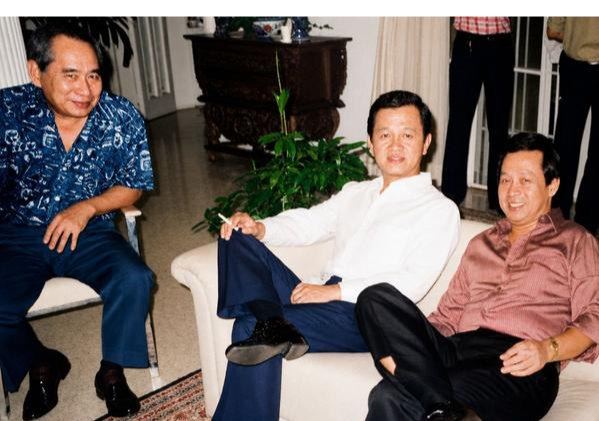
In time, he would come to understand that their union carried a dimension beyond the personal. She came from a Nacionalista family. He from the Liberal Party. In a province where loyalties often followed lineage, this alignment mattered. It allowed him to bridge divides that might otherwise have remained fixed — uniting constituencies not through rhetoric, but through relationship.
What began as a relationship became, in the years that followed, a quiet convergence — of families, of communities, of political alignments that would later matter in ways neither of them could have fully anticipated.
Their children grew up not in isolation from his work, but in proximity to it. They saw what public service required — not in speeches, but in absence. Not in declarations, but in the quiet understanding that time was often claimed by responsibilities larger than the household.
And yet, what they absorbed was not distance. It was example.
And then there was Joanna.

The only daughter. Her path carried both continuity and departure. As President of RGV Real Estate Center, Inc., she assumed leadership within the family enterprise, guiding it through an increasingly complex landscape with a steady hand and a clear sense of direction.
Yet her decision to enter politics — to run for governor of Oriental Mindoro in 2025 — marked something more deliberate. It was not simply an extension of legacy. It was an assertion.
To step into that arena, to stand before the same electorate that had once entrusted leadership to her father, required not only preparation, but conviction. The outcome did not result in victory, but it affirmed something more enduring: presence. The willingness to stand, to be measured, to engage. In that, she embodied the family’s instinct to enter the arena rather than remain at its edges.
Joseph Arnold, the eldest son, emerged as the bridge between enterprise and service. His work in sales and marketing within the family’s real estate ventures placed him at the operational heart of a business his father had helped build. Yet it was his earlier experience — as a Political Affairs Officer in his father’s congressional office, and as a community organizer within the Mindoro Kabuhayan Foundation — that shaped his deeper orientation. He understood that markets and communities were not separate spheres, but interconnected systems requiring both efficiency and empathy.
Charleston developed along the line of strategy and expansion. In business, he assumed roles that required foresight — guiding development efforts across multiple companies within the RGV group, navigating growth with calculated direction. His entry into public service, as City Councilor of Calapan, reflected a parallel instinct: to translate plans into policy, and to understand governance not as abstraction, but as something that must function at the level of the community. His path revealed a leader attuned to scale, but grounded in locality.

Gerard — Gerry, within the family — anchored himself in execution. Where others worked in vision or strategy, he operated where plans met reality. His responsibilities in brokerage and sales demanded precision, discipline, and reliability — ensuring that what was brought to market was both accurate and credible. His earlier work in project management reinforced this orientation, placing him in environments where outcomes depended not on intention, but on follow-through. In him, the family’s systems found their point of implementation.
John Nico represented convergence. As President and Executive Officer of Westchester Realty Corporation, he worked at the intersection of finance, real estate, and institutional partnership — particularly with the Home Development Mutual Fund. His efforts in transforming non-performing assets into productive economic activity reflected a systems-level understanding of value creation. Yet his grounding in governance — through years of service across multiple Congresses as Chief of Staff, and later as a development consultant — added depth. He moved fluidly between policy and enterprise, understanding not only how systems operate, but how they are designed. His continued engagement in civic and Rotary work suggested a leadership that extended beyond sector, into community.
They did not remain at the edges of the systems that shaped their lives. They entered them.
In time, grandchildren would arrive, adding another layer to the household — one that shifted the rhythm once more. Where once the home had been shaped by discipline and expectation, it now held moments of lightness, of renewal. The responsibilities remained, but they were reframed by perspective. The work that had once been urgent began, in some measure, to be seen in terms of continuity. What would endure. What would be passed on.
There were still evenings — rare, but valued — when Rodolfo Valencia would sit at the family table, not as governor, not as legislator, not as businessman, but simply as father, as husband, as grandfather. The conversations in those moments did not revolve around policy or projects. They moved in smaller circles — around experiences, observations, the quiet unfolding of daily life.

And yet, within those conversations, one could trace the same principles that had guided his public work. Attention. Clarity. Responsibility. He listened the way he always had — not to respond immediately, but to understand.
It would be easy, in telling the story of his life, to separate the public from the private, to treat family as context and career as substance.
Recognition and Responsibility
The awards that came during and after his tenure — recognitions from presidents, institutions, and organizations — reflected the impact of his work. Most Outstanding Governor. Excellence in calamity management. Professional achievements in real estate.
These recognitions mattered, but they did not define his work. They acknowledged it.

For Rod, responsibility did not end with recognition. It expanded.
Return to Congress: The Work That Waited
When Rod returned to Congress in 2004, it was not with the urgency of someone seeking to prove himself, nor with the uncertainty of a first-term legislator learning the rhythms of public office. He returned with something quieter but far more consequential: a sense of unfinished work.
The years he had spent outside national office had not diminished his engagement with the issues that had once occupied him. If anything, distance had clarified them. From business, from provincial governance, from civic involvement, he had observed the same patterns repeating themselves across different sectors — gaps between policy and implementation, inconsistencies in professional standards, and, most persistently, the difficulty ordinary Filipinos faced in securing something as fundamental as a home.
Housing had always been part of his life, first as a profession, then as a policy concern. But now, returning to the legislative arena, he saw it not as a sectoral issue but as a national imperative — one that intersected with employment, migration, social stability, and economic growth.

In committee rooms, where discussions often drifted into abstraction, Rod had a way of returning the conversation to its practical consequences. He spoke not in generalities, but in scenarios — families attempting to secure financing, workers sending money home with the hope of building something permanent, communities expanding without the infrastructure to support them.
It was not that others did not understand these realities. It was that Rod had lived closer to them, had seen how small inefficiencies accumulated into systemic barriers.
And so, as Chairman of the Committee on Housing and Urban Development, he began to approach the issue not as a legislator proposing isolated measures, but as a builder attempting to create a system that could sustain itself.
Pag-IBIG: The Idea of Access
The strengthening of the Home Development Mutual Fund — widely known as Pag-IBIG — did not begin with a single legislative draft. It began with a recognition that access, not intention, was the central problem.

Filipinos wanted to own homes. That had never been in doubt. What stood in the way was the structure that would allow them to do so.
Banks required collateral that many did not possess. Informal arrangements lacked security. Existing programs were fragmented, often inaccessible to those who needed them most.
Rod approached the problem the way he had approached others before it — by asking not what could be offered, but what could be sustained.
A housing system, he believed, could not rely on periodic funding or temporary programs. It required continuity. It required participation. It required a mechanism that would endure beyond individual administrations.
The Pag-IBIG Fund Law, as it took shape, reflected this thinking. It was not designed as a subsidy alone, nor as a one-time intervention. It was structured as a mutual fund — a pooling of contributions that could be directed toward housing loans, creating a cycle that reinforced itself. The requirement that a substantial portion of its resources be allocated to housing ensured that the institution would remain focused on its core purpose.

But the law itself was only the beginning.
There were discussions — sometimes prolonged, sometimes contentious — about implementation, about governance, about ensuring that the system would not drift from its intended function. Rod remained engaged in these conversations, aware that the difference between a law that existed and a law that worked often lay in the details that followed its passage.
Over time, the impact became visible. Families who had once relied on informal arrangements found a structured pathway to ownership. Overseas workers, whose contributions to the economy were immense but whose access to housing had been limited, found in Pag-IBIG a mechanism that recognized both their capacity and their need.
The fund grew — not rapidly at first, but steadily, until its scale could no longer be ignored. It became one of the primary instruments of housing finance in the country, its reach extending far beyond what had initially been imagined.
For Rod, this was not a moment of completion. It was confirmation that structure, when properly designed, could transform intention into reality.

The Long Struggle for Order: The RESA Law
If Pag-IBIG represented the creation of access, the Real Estate Service Act represented something different — the imposition of order.
The effort to professionalize the real estate industry did not begin in 2004. It had been part of Rod’s thinking for years, dating back to his earliest observations of the industry’s inconsistencies. He had seen how the absence of standards exposed both practitioners and clients to risk. He had seen how transactions of enormous personal and financial significance were often conducted without uniform guidelines. And he had come to believe that without a regulatory framework, the industry would remain vulnerable — not only to inefficiency, but to erosion of trust.
The first attempts to pass such a law met resistance. Not always openly, but persistently. There were concerns about regulation, about cost, about the impact on those already operating within the system.
There were competing interests, differing priorities, and the slow movement that often characterizes legislative work.

Rod did not abandon the effort. He waited, recalibrated, returned. The process extended across years — through changing political landscapes, through shifts in legislative priorities, through moments when progress seemed uncertain.
And yet, the problem remained.
When the Real Estate Service Act was finally passed into law in 2009, it represented more than a legislative victory. It represented the culmination of a sustained effort to align an industry with the standards it required.
The law established licensing requirements, defined professional categories, and created a regulatory board under the Professional Regulation Commission. It mandated continuing education and adherence to a code of ethics.
In doing so, it did something fundamental. It transformed real estate from a loosely organized field into a profession.

The RESA Signing
By the time the Real Estate Service Act was ready for final passage, the moment did not carry the drama one might expect from a struggle that had spanned years. There were no sudden revelations, no dramatic reversals.
Instead, there was a sense — subtle but unmistakable — that something long in the making had finally reached its conclusion.
In the legislative chamber, discussions moved toward closure. Language had been refined, provisions clarified, concerns addressed as far as they could be.
For Rod, the moment was less about victory than about completion. He had seen the problem decades earlier, in transactions that lacked consistency, in practitioners who operated without shared standards, in clients who navigated uncertainty without protection.

Now, as the law moved toward enactment, the question was no longer whether the industry would change. It was how it would adapt.
When the measure passed, it did not transform the industry overnight. No law ever does. But it established something that had not existed before.
A framework.
And within that framework, the possibility of trust.
PhilRES and the Work of Implementation

Laws, once enacted, do not implement themselves. They require institutions, and institutions require leadership.
When the Philippine Institute of Real Estate Service Practitioners (PhilRES) was designated as the accredited integrated professional organization for the sector, it carried with it the responsibility of translating the principles of the RESA Law into practice.
Rod’s involvement in PhilRES was not incidental. He understood that the success of the law depended not only on its provisions, but on the culture that would emerge around it. As national president, he emphasized professionalism, ethical conduct, and continuing education. These were not abstract ideals; they were necessary components of a functioning system.
Under his leadership, PhilRES expanded, its membership growing across regions, its presence felt in major cities and municipalities. It became a platform through which standards could be reinforced, through which practitioners could align themselves with a shared framework.
For Rod, this phase of his work was as important as the legislation itself. It was where theory met practice.

Rotary and the Continuity of Service
Long before many of the roles that would later define him — before the governorship, before the return to Congress, before the scale of responsibility expanded beyond province and industry — Rod made a decision that, at the time, seemed almost incidental.
In 1981, he joined the Rotary Club of Manila.
It was not entirely his own idea.
The suggestion — quiet, deliberate, and characteristic of the man who made it — came from his father, Artemio “Tem” Valencia. Tem did not press the matter with urgency. He did not present Rotary as an obligation, nor as a strategic move. Instead, he framed it in the language he understood best — not in terms of advantage, but of alignment. It was a place, he implied, where one learned to serve without expectation.
For Rod, the suggestion carried weight, not because it was insistent, but because of who it came from. His father had never been one to recommend lightly. When he spoke, it was usually because he had already considered the matter from multiple angles and arrived at a quiet conviction.
So Rod joined.
At first, the experience unfolded without ceremony. Rotary meetings were structured but unadorned — gatherings of men who came together not for recognition, but for continuity. There were no dramatic declarations, no immediate sense of transformation.
But over time, the rhythm of Rotary began to reveal itself.
Projects were conceived and carried out not through directive, but through participation. Needs were identified not in theory, but in practice. Service was not episodic — it was sustained.
And what distinguished it most was its consistency.
The Rotary Club of Manila had endured across decades, not because of any single initiative, but because of a collective commitment to showing up — again and again, across changing circumstances, across different generations of leadership.
For Rod, this continuity resonated deeply. He had seen, in business and in public life, how systems could falter when they depended too heavily on individuals. Rotary offered a different model — one in which the structure held, even as the people within it changed.
As his own responsibilities expanded — first in enterprise, then in government — his connection to Rotary remained. It did not compete with his other roles. It complemented them.
In a life increasingly shaped by decisions of scale — laws, policies, programs — Rotary provided a counterbalance. It brought service back to its most direct form, where the distance between intention and action was short, and where impact, though sometimes modest, was immediate.
And perhaps, in ways not immediately visible, it reinforced something that had begun much earlier, in the quiet guidance of his father.
That leadership, at its core, is not about position.
It is about continuity.
About the willingness to serve, not once, but repeatedly.
Without spectacle. Without expectation.
Simply because it must be done.
The Man and the Measure
As the years passed, the accumulation of achievements — awards, recognitions, titles — began to form a visible record of Rod’s life. He was recognized as one of the Ten Outstanding Young Men of the Philippines, honored for his work in human settlements management. He received awards for his governance, his professional contributions, his leadership in real estate.
But these recognitions, while significant, tell only part of the story.
To understand the man, one must look at the pattern that runs beneath them.
The insistence on structure. The attention to systems. The willingness to act where others hesitated. The patience to persist where others might have withdrawn. And, perhaps most importantly, the ability to see connections — between policy and practice, between governance and daily life, between individual effort and collective outcome.
What he saw in Mindoro was never just land. It was capacity. And capacity, left unstructured, is often mistaken for limitation.
Epilogue: What Remains, What Endures
In the end, the pattern becomes clear.
He did not enter public life because of a single issue. But when he did, he carried with him a clarity that had been forming for years:
That land, once diminished, could not easily be restored. That systems, once left unstructured, would continue to fail those within them. And that leadership, if it were to matter, had to intervene before decline became irreversible.
In the later reflections of a life spent moving between systems — business, government, civic work — there comes a point where the question is no longer what was achieved, but what remains.
It is constructed. Piece by piece. Decision by decision. Over time.
For Rod Valencia, the answer is not singular. It is distributed.
It is found in the homes financed through systems he helped strengthen — homes that now stand quietly across cities and provinces, inhabited by families whose lives were shaped by access that once did not exist.
It is found in the real estate professionals who operate within a framework that demands competence and accountability, where once there had been uncertainty.
It is found in a province that learned to move more freely, to grow more steadily, to see itself not as constrained by circumstance, but capable of direction.
But beyond these visible outcomes lies something less tangible, and perhaps more important.
A way of thinking.
That problems must be understood before they are addressed. That systems must be built, not assumed. That leadership requires patience as much as decisiveness.
And that progress, when it is real, is rarely sudden.

 31st Weekly Membership Meeting Editorial
 Outstanding Ambassador Award: RCM’s Signature Project