

Editorial
The editorial argues that the Philippines must build energy resilience now, as the Middle East conflict again shows its vulnerability to imported fuel.
THE worsening conflict in the Middle East serves as a stark reminder of a reality that the world periodically forgets but invariably rediscovers: energy remains the lifeblood of modern civilization.
Every escalation in one of the world's most volatile regions sends ripples across global markets. Oil prices rise. Supply chains tighten. Transportation costs increase. Inflationary pressures return. Businesses hesitate. Consumers spend less. Governments scramble to cushion the impact. What may appear to be a distant geopolitical conflict quickly becomes a local economic concern felt in households, factories, farms, and transportation networks.
For the Philippines, a nation that continues to import the majority of its petroleum requirements, the implications are particularly significant. We are not merely observers of global energy events. We are participants in a marketplace whose prices are often determined far beyond our shores.
This is why discussions about energy management can no longer be confined to engineers, economists, or policymakers. Energy security has become a national concern that affects every Filipino.
The challenge before us extends beyond responding to the immediate crisis. It is about building resilience against the next one.
Historically, energy crises have revealed vulnerabilities that were long present but largely ignored during periods of stability. The oil shocks of the 1970s transformed global energy policy. More recent disruptions arising from pandemics, wars, and geopolitical tensions have reinforced the same lesson: nations that depend excessively on external energy sources remain vulnerable to forces beyond their control.
The Philippines must therefore pursue a dual strategy.
First, we must manage present realities with discipline and prudence. Conservation remains one of the most overlooked sources of energy. Every megawatt not consumed is a megawatt that need not be generated or imported.
Government agencies, businesses, institutions, and households all have a role to play in promoting efficiency. Smarter buildings, efficient transportation systems, modern industrial processes, and responsible consumption habits are no longer merely environmental choices; they are economic necessities.
Second, we must accelerate the transformation of our long-term energy portfolio.
The nation's growing investments in renewable energy are encouraging. Solar, wind, hydroelectric, and geothermal resources offer opportunities to diversify supply while reducing dependence on imported fossil fuels. The Philippines is fortunate to possess abundant natural resources capable of supporting a cleaner and more secure energy future. Yet these resources must be developed with urgency, supported by modern transmission infrastructure and stable regulatory frameworks.
At the same time, difficult conversations about emerging technologies must continue. Among these is nuclear energy, a subject that has increasingly moved from theoretical discussion to serious policy consideration. Around the world, many nations are reexamining nuclear power as a reliable source of baseload electricity that can complement renewable energy. While legitimate concerns regarding safety, cost, and governance must be addressed transparently, the conversation itself reflects a growing recognition that energy security demands a diversified and future-oriented approach.
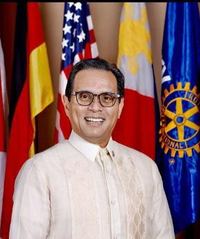
In this regard, the leadership of Energy Secretary Sharon S. Garin comes at a consequential moment. With a background that bridges law, finance, public policy, and economic governance, she brings to the Department of Energy a perspective that recognizes energy not simply as a technical issue, but as a strategic pillar of national development.
Her stewardship over initiatives involving energy infrastructure, legislative reforms, renewable energy expansion, and the country's nuclear energy program reflects an understanding that the energy challenges of tomorrow cannot be solved using the tools of yesterday. The task requires vision, innovation, regulatory clarity, and long-term commitment.
Yet government alone cannot achieve energy resilience.
Industry must continue investing in efficiency and innovation. Educational institutions must prepare future energy professionals. Civil society must participate in informed public discourse. Citizens themselves must embrace a culture of responsible energy use.
The Middle East crisis will eventually pass, as all crises do. Oil prices will stabilize. Markets will recover. Headlines will move elsewhere.
The larger question, however, is whether we will once again allow urgency to fade into complacency. True energy security is not built during periods of crisis. It is built during the quieter moments between crises, when nations have the foresight to prepare for the uncertainties ahead.
The Philippines stands at such a moment today.
The choices we make now — in policy, investment, technology, and consumption — will determine whether future generations inherit an energy system defined by vulnerability or by resilience.
In an increasingly uncertain world, energy management is no longer merely about keeping the lights on. It is about safeguarding economic growth, protecting national competitiveness, strengthening national security, and ensuring that the promise of progress remains within reach for every Filipino.
The future belongs not to the nations that possess the most energy, but to those that manage it most wisely.

 Atty. Sharon S. Garin
 Energizing the Nation
 The Unsung Heroes of Industry