

A Brave New World
At Rotary Club of Manila meeting, the UP president calls for principled leaders, trustworthy institutions and opportunities that reach communities long excluded from the country's premier state university.

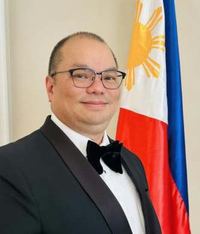
University of the Philippines President Angelo "Jijil" Azura Jimenez challenged Filipinos to resist defining the country solely by corruption, instability and institutional failure, urging civic and professional leaders to advance a more truthful national narrative grounded in scientific achievement, public service and the demonstrated capabilities of the Filipino people.
Speaking before the Rotary Club of Manila during its 9th Weekly Membership Meeting at Fairmont Makati, Jimenez said the country's many serious problems should neither be denied nor allowed to become the entirety of the Filipino identity.
The meeting, presided over by Rotary Club of Manila President Reggie Yu, brought together two institutions with more than a century of history.
Founded in 1908, UP is the country's National University, while the Rotary Club of Manila, established in 1919, is the first Rotary club in the Philippines and Asia.
The gathering also took on an international character with the presence of a 19-person delegation from the Rotary Club of Kangjin-Tangjin in Korea. The Korean Rotarians attended the meeting as part of a fellowship visit highlighting the cross-border friendship and shared commitment to service between the two clubs.

The program opened with an invocation, the Philippine National Anthem, the Rotary Club of Manila Hymn, the Four-Way Test, the introduction of visiting Rotarians and guests, and a welcome song performed by the RCM WF Music Chorale.
Rotarian Romeo "Romy" C. Nones introduced Jimenez, describing UP and the Rotary Club of Manila as institutions joined by a common tradition of service. While UP prepares its graduates not only for professional success but also for service to the nation, Rotary calls upon its members to use their professions, talents, leadership and resources for the betterment of society.
What is the Filipino identity?
Jimenez began his address with characteristic humor, describing the challenges of leading an institution with one of the country's largest concentrations of scholars and doctorate holders — many of whom, he joked, believe they could perform the president's job better.
The lighthearted opening soon gave way to a more uncomfortable question: How do foreigners see the Philippines, and how have Filipinos come to see themselves?

Jimenez recounted how an international gathering of university leaders that UP had successfully bid to host was cancelled after overseas participants reacted fearfully to news reports about conditions in the Philippines.
The incident, he said, reflected the persistent international image of the country as a place marked by corruption, instability, crisis and inefficiency.
More troubling, he added, is the danger that Filipinos may eventually internalize these descriptions and accept them as the complete story of their country and themselves.
Jimenez asked whether Filipinos still felt proud and confident about their national identity or whether they had already been persuaded that they were incapable of building a better society.
His proposed response was not blind nationalism or manufactured optimism. Rather, he called for a credible counter-narrative based on actual achievements, measurable results and institutions that work.

Such a narrative, he emphasized, already exists in the contributions of Filipino scientists, educators, healthcare professionals, researchers and public servants. The challenge is to bring these stories to the surface and ensure that the country's failures do not overwhelm evidence of its ability to innovate, care and lead.
Scientific Evidence as Public Service
Jimenez cited the work of UP scientists as examples of how research can directly protect lives and improve governance.
He discussed efforts by university experts to establish objective, evidence-based standards for evaluating flood-control proposals. Scientific parameters, he explained, can help determine whether projects are appropriate for particular geographic and environmental conditions before billions of pesos in public funds are committed.
Even an initial scientific assessment had reportedly identified a substantial amount in proposed expenditures that could be removed from consideration because the projects failed to meet sound criteria.

Jimenez acknowledged that such work could be dangerous. Scientists who present evidence that challenges financially or politically powerful interests may expose themselves to threats and pressure.
The courage to follow evidence, therefore, is not merely an academic virtue. When public funds and public safety are involved, scientific integrity becomes a form of moral and civic leadership.
Jimenez also pointed to UP's work in disaster science, particularly the predictive tools and hazard maps associated with Project NOAH.
The Philippines experiences numerous typhoons, earthquakes, volcanic hazards and floods every year. Scientific forecasting and risk mapping enable citizens and local governments to anticipate danger, plan evacuations and avoid hazardous routes instead of simply reacting after a calamity has occurred.
Jimenez noted the significant reduction in average disaster-related deaths during the years in which these scientific capabilities were developed and increasingly used. Although he cautioned that the relationship could not be presented as direct scientific proof of causation, the figures offered compelling counterfactual evidence of the number of lives that improved preparedness may have saved.

UP's Ambitions in Innovation
Jimenez also outlined fields in which UP seeks to expand its national role, including artificial intelligence, robotics, semiconductors, genetics, nuclear science and engineering, satellite-based resource mapping and AI-assisted medical diagnostics.
These investments, he said, are essential to the country's future competitiveness, healthcare system, food security, energy capacity and disaster resilience.
He cited research involving the use of artificial intelligence and computer vision to improve the detection and monitoring of diseases such as breast cancer. He also referred to satellite technologies that could identify mineral resources and support responsible scientific research.
UP has created an Office of the Vice President for Research and Innovation as part of its effort to strengthen the university's research culture and global standing.

Jimenez said UP intended to become a genuine research university and ultimately enter the ranks of the world's top 100 institutions.
The university's limited financial resources, he declared, should not be allowed to limit its aspirations.
"The limits of our resources are not the limits of our dreams," Jimenez said.
The millions of engagements recorded by UP's predictive flood maps also showed that ordinary citizens would use scientific information when it was made understandable and accessible.
A map, model or algorithm becomes an act of public service, he said in substance, when it helps a family choose a safer route, enables a community to evacuate earlier or prevents the government from wasting limited resources on projects that fail to address the real problem.

Filipino Professionals as Goodwill Ambassadors
Beyond the university's laboratories, Jimenez identified Filipino professionals working overseas as another source of a more positive and truthful national narrative.
He spoke of the strong demand for Filipino teachers in countries such as Thailand, Cambodia and the United States. Their competence and ability to teach in multicultural environments have made them highly sought after by foreign schools and education systems.
Their departure, however, presents the Philippines with a serious dilemma. The country itself needs more teachers, but educators can receive substantially higher compensation abroad.
Jimenez said their decision to seek opportunities overseas should not automatically be interpreted as a lack of patriotism.

It is not enough to ask teachers and other professionals to love their country, he suggested. The country must also demonstrate that it values and supports them.
Drawing from more than a decade of experience in labor and migrant-worker affairs, Jimenez also discussed the continuing international demand for Filipino doctors and nurses.
Through their competence, warmth, patience and compassion, Filipino healthcare professionals have become informal ambassadors of goodwill. For many foreigners, an encounter with a Filipino nurse or caregiver is their most personal and meaningful experience with the Philippines.
That human connection has built goodwill that no conventional public-relations campaign could easily reproduce.
The same international demand, however, has intensified the shortage of doctors and other healthcare workers in the Philippines, particularly in rural and underserved areas.

A Medical School for Mindanao
Jimenez said UP was preparing to open a medical school in Mindanao as part of its response to the severe shortage of physicians in the region.
He contrasted the number of doctors available in the country — and especially in Mindanao — with the ratio recommended by the World Health Organization.
The shortage, he emphasized, is not merely a healthcare problem. In communities where people experience basic government services as distant, inaccessible or nonexistent, social distrust and conflict can deepen.
The establishment of a medical school in Mindanao should therefore be viewed not only as a health initiative, but also as an instrument of peace-building, inclusive development and national integration.

The proposed school would focus on training doctors for the communities that need them most, rather than merely adding specialists to already well-served urban centers.
This plan became the subject of the first substantive question during the open forum moderated by Past President Arsenio "Archit" M. Bartolome.
Club Secretary Albert Alday asked whether the new medical school would follow the curriculum of the UP College of Medicine in Manila or the community-oriented and ladderized model of the UP School of Health Sciences in Palo, Leyte.
Jimenez explained that the new program would adopt a hybrid curriculum, but would have a decisively community-based orientation.
The country does not lack only medical specialists, he said. It also needs doctors who will remain on the ground, practice preventive medicine and serve communities that have historically lacked access to healthcare.

The curriculum had been reviewed with leaders of the UP College of Medicine, UP Manila and the School of Health Sciences.
The program would provide a pathway for qualified nursing graduates from the School of Health Sciences' ladderized system to proceed to medicine. It would also accommodate outstanding students from Mindanao who could not be accepted by the medical program in Manila because of limited capacity.
Doctors from Within
Jimenez described the UP School of Health Sciences' ladderized model as a distinctive approach to medical education.
Under the system, communities participate in selecting the students they will send for training. A student may initially qualify as a midwife, proceed to nursing after passing the required licensure examination, and later advance to medicine.

This process develops healthcare professionals one stage at a time while maintaining their connection to the communities that entrusted them with the opportunity.
According to Jimenez, the model has already produced hundreds of doctors and achieved an exceptionally high retention rate in rural areas.
Its effectiveness rests not only on formal return-service requirements, but also on a powerful sense of belonging and accountability. Graduates know that their barangays and neighbors collectively invested in their education and placed their hopes in their success.
The proposed Mindanao medical school would carry this principle forward: identify talent within underserved communities, provide rigorous professional formation and return much-needed health capacity to the areas from which the students came.
UP and RCM'S Shared History

The open forum also highlighted the longstanding connections between the University of the Philippines and the Rotary Club of Manila.
One Rotarian recalled that George A. Malcolm, founding dean of the UP College of Law, served as President of the Rotary Club of Manila in 1937–1938.
Past District Governor Hermie Esguerra added that Carlos P. Romulo served as RCM President in 1935–1936 before becoming UP President from 1962 to 1968.
The historical connections reinforced the theme introduced at the beginning of the meeting: UP and the Rotary Club of Manila have repeatedly intersected through leaders who combined professional achievement with public and civic service.
Producing the Right Kind of Leaders

Jimenez traced UP's beginnings to 1908, when it was established during the American colonial period as a Western institution on Asian soil.
The university was created to educate professionals and administrators who could operate the emerging institutions of government, including systems for public health, education, engineering, law and finance.
At the time, the country had a population of roughly seven million and only a small number of higher-education institutions.
More than a century later, the Philippines has a population approaching 120 million and a university system composed of thousands of public and private institutions.
UP's influence on the country's development is undeniable.

Jimenez cited the university's record of producing presidents, Senate presidents, speakers of the House, chief justices, National Artists, National Scientists, social scientists, public officials and captains of industry.
No other educational institution in the country, he said, has produced a comparable concentration of individuals capable of shaping the Philippines' political, cultural, scientific and economic direction.
He then posed what he described as an overarching moral question: After more than a century of producing so many national leaders, why does the Philippines remain one of the world's most unequal societies?
The question transformed a celebration of UP's achievements into an examination of its responsibility.
It is not enough for a university to produce leaders, Jimenez argued. It must help produce the right kind of leaders—men and women who love the country, uphold ethical standards and dedicate their abilities to serving others.

This conviction led Jimenez to add "service" to UP's longstanding institutional motto of "honor and excellence."
Excellence without honor can be dangerous, while honor without service may remain a purely private virtue. Together, honor, excellence and service describe the kind of leadership the country urgently needs.
Building Institutions Worthy of Trust
Jimenez's second major lesson was that even principled leaders cannot transform society by themselves.
Good leaders must be supported by strong institutions and credible processes. Even a well-intentioned person can be swallowed by a system that rewards antisocial behavior, favoritism or corruption.

Institutional trust develops when people believe that rules are fair, processes are transparent and outcomes are not merely the spoils of competing political families, factions or interest groups.
Freedom of expression and robust debate remain essential in a democracy, Jimenez said, but citizens must also agree upon basic rules and respect legitimate institutions.
Without such trust, politics becomes a continuous struggle for advantage, and reforms disappear whenever individual leaders leave office.
The Nation Cannot Always Wait for a Savior
Jimenez's third lesson was directed at the Filipino tendency to search for heroic individuals who might rescue the country.

Referring to José Rizal's warning about the unfortunate nation that is always looking for a hero, Jimenez said a healthy society should not place its entire future in the hands of a single leader.
A strong country requires strong citizens and strong civic institutions, not merely a powerful government.
It was in this context that Jimenez praised the Rotary Club of Manila and the broader Rotary movement.
Civic organizations help citizens work together outside the formal machinery of government. They create networks of trust, mobilize professional expertise, encourage voluntary service and provide a safeguard against illegality, arbitrariness and oppression.
Rotary projects, viewed in this light, do more than deliver goods, facilities or services. When properly governed, they demonstrate that citizens from different professions and backgrounds can organize themselves, manage resources responsibly and solve problems collectively.

Each credible project becomes evidence that institutions can still work.
Are UP Scholars Required to Remain?
During the open forum, Bartolome asked whether UP students, as Iskolar ng Bayan, could be required to work for the government or remain in the Philippines for two, three or five years before accepting employment abroad.
Jimenez responded that a blanket requirement would raise constitutional concerns involving the freedom to travel and pursue opportunities outside the country.
Specific scholarships and professional programs, however, may carry return-service obligations. He cited the service requirements imposed upon students in certain medical programs, including those at the UP College of Medicine and the UP School of Health Sciences.

Jimenez stressed that legal compulsion was not the only—or necessarily the strongest — reason graduates returned to their communities.
Many graduates of the School of Health Sciences go back because the communities themselves selected and supported them. Their professional achievement is tied to the barangay that placed its confidence in them.
That relationship creates a form of social and moral accountability that can be more enduring than a contractual obligation. Graduates understand that their success belongs partly to the people who invested their collective hope in them.
The same principle has implications for civic and development organizations. Programs are more sustainable when beneficiaries are treated not as passive recipients, but as participants, partners and eventual owners of the undertaking.
Confronting the Charge of Elitism

Jimenez also addressed the perception that UP had become an elitist institution increasingly dominated by students from privileged families and private schools.
He responded with statistics and accounts of students whose circumstances are often absent from public discussions of university admissions.
Only a small percentage of those who take the UP College Admission Test are admitted. Many other qualified young people do not even apply because they assume they have no realistic chance of entering the university.
Some students who pass the examination are nevertheless unable to enroll because their families cannot afford the expenses surrounding a subsidized education, such as transportation, lodging and daily meals. Other students are needed at home to work or contribute to the family's income.
Jimenez spoke of UP students from households with no reliable or documentable source of earnings. Some students regularly go hungry. Others send part of their allowances home so their younger siblings can eat, leaving themselves without sufficient food.

UP has responded through free-meal initiatives, food assistance, opportunities for working students and the Lingap Iskolar program introduced during Jimenez's administration.
According to Jimenez, these interventions have contributed to a reversal in the composition of UP's student population. From a majority previously coming from private schools, a majority of entering students now come from public schools.
UP has also waived application fees, expanded testing centers and brought the admissions examination closer to communities that previously sent very few applicants.
Jimenez cited the results in areas such as Nabunturan in Davao de Oro and Marawi, where the placement of accessible testing centers resulted in significant increases in successful examinees.
Bringing the examination closer to underserved areas did not lower the university's requirements. It simply removed unnecessary financial and geographic barriers that had prevented capable students from competing.

Talent Beyond Privilege
Jimenez also reported an increase in the number of first-generation college students at UP.
These are young people from families in which no parent or earlier family member had ever attended college. The university has similarly expanded opportunities for students from indigenous and tribal communities.
Such initiatives, Jimenez maintained, should not be viewed as charity disguised as admissions policy. They are part of a more determined search for intellectual ability in communities that traditional educational systems have often overlooked.
He firmly rejected the suggestion that greater inclusion required UP to lower its academic standards.

"No compromise in quality," he stressed.
Instead of reducing expectations, the university provides bridging programs in English, mathematics and science to help students from disadvantaged educational backgrounds meet UP's standards.
Jimenez recalled an earlier university experiment involving students admitted outside the conventional entrance route. After receiving intensive academic preparation, the students eventually achieved an average higher than the general university population.
The experience demonstrated that students from impoverished families were "bankable," provided they received sufficient nutrition, preparation, guidance and support.
A great university's role, he suggested, is not simply to select students already polished by privilege. Its greater test is whether it can discover potential in ordinary circumstances, develop that potential rigorously and prove that excellence can emerge from every social class and every region of the country.

Reclaiming the Filipino Story
Throughout his address and the open forum, Jimenez avoided presenting a romanticized picture of the Philippines. He acknowledged corruption, inequality, institutional weakness, migration, inadequate public services and the country's shortage of resources.
What he rejected was the habit of allowing these failures to become the Filipino people's only national identity.
A fuller and more truthful story can already be found in scientists who use predictive maps to protect communities, teachers sought by education systems around the world, healthcare professionals whose compassion has shaped international perceptions of Filipinos, barangay-nominated scholars who become rural doctors, and poor and first-generation students who excel when longstanding barriers are removed.
The same story is reflected in civic institutions that demonstrate trustworthiness through sustained and transparent service.
Jimenez urged Filipinos to surface these achievements and use them to push back against a culture of defeatism.
A positive national narrative unsupported by evidence would be propaganda. But evidence without a compelling narrative can be ignored or overwhelmed by scandal and pessimism.
The country needs both: achievements that can withstand scrutiny and institutions capable of explaining why those achievements matter.
Seeking a Newer World
Jimenez concluded his address by reciting the closing lines of Alfred, Lord Tennyson's poem "Ulysses."
The poem's summons "to strive, to seek, to find, and not to yield" reflected his message to both UP and the Rotary Club of Manila—two institutions that have existed for more than a century but must continue seeking new ways to serve.
UP, his address suggested, must not yield to the belief that world-class research is beyond the reach of a developing nation. It must reject the idea that poverty, geography and family background should determine who may become a doctor, scientist or national leader.
The Philippines must not surrender its self-image to those who see only its failures. Civic institutions, meanwhile, must resist complacency at a time when trust, cooperation and public-minded leadership are urgently needed.
Following the open forum, President Reggie delivered the Club's response and presented a Certificate of Appreciation to Jimenez.
The Rotary Club of Manila and the Rotary Club of Kangjin-Tangjin then exchanged bannerettes, symbolizing the friendship between the clubs and the shared international fellowship of Rotary.
The exchange provided an apt conclusion to a meeting centered on the importance of institutions and the possibilities created when people organize around a common purpose.
UP's mission tells a gifted child from a remote community that present circumstances need not determine the limits of the future. Rotary's example reminds citizens that they need not wait for a national savior before beginning to serve.
Together, these institutions advance a broader message: the Philippines' problems are real, but so are the courage, ingenuity, compassion and capacity of its people.
A newer world remains within reach — but reaching it will require Filipinos to build it together.

 The Fourth Estate and the Weight It Carries
 A Long Walk Toward Hope: Rotary Club of Manila Visits Bayanan Elementary School in Baco, Oriental Mindoro