

Our Waters, Our Responsibility
The Philippines marks Maritime and Archipelagic Nation Awareness Month by reflecting on its seafaring history and the defense of its maritime rights under UNCLOS.

The Philippines is an archipelago. Its more than seven thousand six hundred islands are held together by the waters around and between them. These waters have carried our traders, fed our families, and linked our peoples for as long as there have been Filipinos. Our coastal communities have an intrinsic relationship with the seas that nurture them and that relationship is woven in the fabric of these communities' cultural past and economic future.
The Philippines is a maritime nation with both a rich seagoing history and an undeniable presence in today's oceanic trade. The islands of the Marianas were settled directly from the Philippines around 3,500 years ago, our ancestors making a voyage of well over 2,000 kilometers across the ocean. The Manunggul Jar from Palawan, crafted about 2,800 years ago, has a lid that shows two figures in a boat carrying a soul to the afterlife. Life, death, and the sea were already woven together in our people's belief long before we became a sovereign nation. On October 18, 1587, the first living persons from Luzon, part of a crew plying the Manila-Acapulco galleon trade, landed at what is now Morro Bay, California, some 33 years before The Mayflower reached Cape Cod.
At present, our stake in the sea reaches well beyond our own waters. Nearly one in five of the world's seafarers is a Filipino. The 2026 Seafarer Workforce Report by BIMCO and the International Chamber of Shipping counts more than 460,000 Filipino officers and ratings out of a global supply of about 2.57 million, with the Philippines having the largest national share in the world. When a container ship crosses an ocean or a tanker docks in a distant port, Filipino hands are very often aboard. The same people who keep the world's trade moving depend, more than most, on seas that are open, lawful, and safe.
This is the idea behind Proclamation No. 316, signed in September 2017, which declared every September as the Maritime and Archipelagic Nation Awareness Month (MANAMo). The proclamation directed government agencies, local governments, the private sector, and Philippine embassies and consulates worldwide to hold awareness programs to deepen our people's appreciation of the importance of our maritime and archipelagic identity as a nation.
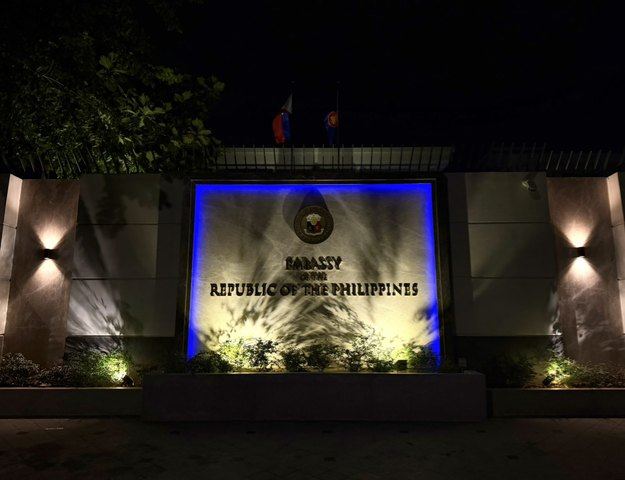
This year's theme is "Karapatan sa Karagatan, Sama-sama Nating Alagaan". It pairs our maritime rights with a serious responsibility, and that pairing is deliberate. This year's observance falls alongside the tenth anniversary of the 2016 South China Sea Arbitral Award, a ruling issued under the United Nations Convention on the Law of the Sea (UNCLOS) which found that China's sweeping claim over the South China Sea has no basis in international law.
A party to the UNCLOS, Beijing has disregarded the ruling and continued with its unfounded claims that almost the entire South China Sea is theirs. Its actions since then have shown what that disregard means for Filipinos at sea: an almost constant coast guard, militia, and naval presence in waters well within the Philippines' exclusive economic zone (EEZ) and around islands and maritime features that have been under our effective control and jurisdiction; harassment, water cannoning, and intentional ramming of Bureau of Fisheries and Aquatic Resources vessels carrying fuel and food to our fishermen; dangerous maneuvers targeting Philippine Coast Guard vessels while on patrol; and run-ins with Philippine Navy troops stationed on Ayungin Shoal. These are not isolated confrontations. They are the everyday cost of one country's refusal to accept an arbitral award that flowed out of a process instituted by an international convention it is party to.
Protecting our maritime interests, securing our legal entitlements, and guarding our sovereignty and sovereign rights are not the burden of the Navy and the Coast Guard alone. Every Filipino inherits these waters, and every Filipino owes them defense: in the classroom, where children should learn what an archipelago is; in the workplace, where we should articulate the consequences of inaction and indifference; and in the diaspora, where our voices carry the Philippine case to the world.
The obligation is plain. Protecting our maritime zones and sovereign entitlements, in accordance with UNCLOS, is the responsibility of every Filipino. Whoever surrenders them, helps others take them, or convinces fellow Filipinos not to fight for them in the name of harmony or economic gains, is a traitor to the country. Beyond this past month of remembrance, we have an obligation to stand together and defend what is ours.

 Rear Admiral Jay Tristan Tarriela
 The Questions Rotarians Carried Home
 Election of the Board of Directors of the Rotary Club of Manila for Rotary Year 2027–2028