

The Voice at the Podium
A look at the men and women who have spoken for presidents, prime ministers and now a Philippine president, and what separates the merely competent from the memorable.
Every leader speaks in two voices: their own, and the one that answers when they cannot. The second belongs to the spokesperson, a job that demands a diplomat's tact and punishes the smallest slip with a glaring headline. Presidents and prime ministers get the monuments; their spokespeople get the questions. But sometimes the spokespersons themselves become the story, and those are the ones history remembers.
A spokesperson's job as we know it today was largely based on the performance of two men. Stephen Early ran Franklin Roosevelt's press office for twelve years, from March 1933 to March 1945, still the longest tenure on record, according to Pew Research. James Hagerty then served Dwight Eisenhower for all eight of his years in the White House and allowed the first ever televised presidential press conference. A columnist observed that Ike left things "to Jim." The trust was tested in 1960, when the cover story about a downed U-2 spy plane collapsed; Hagerty reportedly urged Eisenhower to take responsibility himself, advice that arguably changed the course of the crisis.
Staying power is rare in this assignment. Pew finds only five other press secretaries who lasted a US president's entire stay in office: Hagerty, Pierre Salinger, Ron Ziegler, Jody Powell and Marlin Fitzwater. Our very own PBBM recently appointed his sixth press secretary since taking office in June 2022.
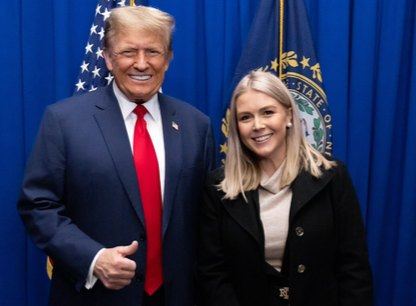
Karoline Leavitt was 27 when Donald Trump named her White House press secretary in 2025, the youngest ever appointed. Her first briefing ran about 47 minutes and opened the room to podcasters and online creators, a quiet revolution in who counts as "the press." The earlier record belonged to Ron Ziegler, 29 when Richard Nixon hired him in 1969.
Dee Dee Myers was 31 when she became the first woman in the post, under Bill Clinton in 1993. Reporters prized her "humor and patience," and she later helped inspire C.J. Cregg of The West Wing.
No one keeps a register of the oldest. But the candidate every veteran would back is Sir Bernard Ingham, who died at 90 and was still filing weekly newspaper columns days before he wrote 30.
Few spokesmen have been quoted as often, or as inaccurately, as Alastair Campbell. "We don't do God" became shorthand for Tony Blair's Downing Street. Campbell says the truth is humbler: he said it when an interview had reached the journalist's "eleventh 'one more question'" about Blair's faith, and he now gets an email about it nearly every day. Years later he conceded that Blair "does do God" in quite a big way.
Pierre Salinger has the best errand story. John F. Kennedy told him, "I need a lot of cigars." Salinger spent the whole night buying every Petit Upmann he could find, 1,200 in all. The next morning after getting his cigars from Salinger, Kennedy signed the order banning Cuban imports. Salinger was almost 35 when he joined Kennedy's team.
Sir Bernard Ingham served Margaret Thatcher for eleven years, 1979 to 1990, and was knighted in her resignation honours. Her last act as prime minister was a letter thanking him for "loyal and trusty service and companionship." Obituarists noted he could work out what she thought without asking, which was his strength and, once, his trap: Europe's furious reaction to her 1988 Bruges speech was fueled by his reading of it, not just her words.
James Brady had been Ronald Reagan's press secretary for less than three months when John Hinckley shot him in the head on 30 March 1981. He never returned to the podium but kept the title, and his White House salary, until January 1989. He became a leading gun-control advocate; the Brady Bill carries his name, and in 2000 the White House briefing room was renamed in his honor.
The man who filled his shoes, Larry Speakes, gave more than 2,000 briefings. But in his 1988 memoir, he admitted he had invented two quotations and attributed them to Reagan, including one at the 1985 Geneva summit, because Gorbachev's remarks had been more quotable. Fitzwater called it an outrage, and it cost Speakes his job at Merrill Lynch.
Dickie Arbiter spoke for Queen Elizabeth II from 1988 to 2000, through the "annus horribilis" of 1992, the Windsor Castle fire and the death of Diana. His favorite memory is domestic: after a Balmoral picnic he offered the Queen, "I'll wash, you dry." She replied, quietly but firmly, "No. I'll wash. You dry." Diana, who could go silent on him when he brought bad news, gave him a bottle-green cashmere jumper for his 50th birthday. He never found an occasion grand enough to wear it. Asked what he learned on the job, he answered in one word: tolerance.
Three qualities spell success for any spokesperson. The first is credibility. A spokesperson's only capital is the believability of the next sentence. Hagerty built it through frankness; Speakes spent it on two invented quotes.
The second is proximity to the appointing authority that allows the spokesperson candor behind closed doors. The best spokespersons know the principal's mind without Ingham's trap of speaking more loudly than the principal intended. Hagerty's advice on the U-2 and Campbell's sharp "no" to Blair show closeness that still dares to say what the leader would rather not hear.
The third is composure in the sense of a swan swimmingly elegantly on the surface but paddling furiously underneath. Brady's courage, Myers's humour and Arbiter's calm in the week of Diana's death share one trait: they lowered the temperature of the room.
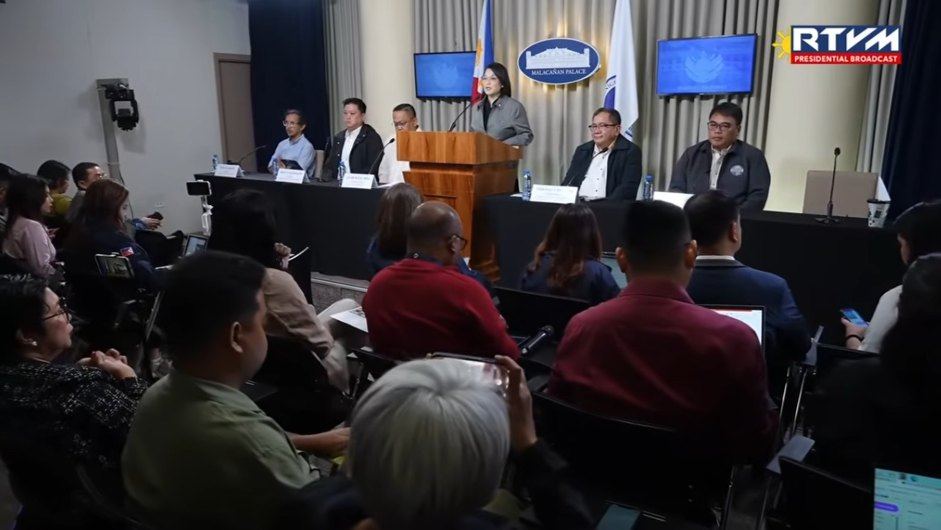
On 24 February 2025, President Marcos swore Atty. Clarissa "Claire" A. Castro in office as Undersecretary of the Presidential Communications Office, with the designation Palace Press Officer, a post created that day, making her its first holder. She brings to the job her experience as a communicator, both as a radio and TV host and as a lawyer representing clients in her solo practice.
Will she be counted among the great spokespersons when this chapter of Philippine political history is written? There is enough evidence that she has composure. A broadcaster's fluency, a lawyer's precision, and near-daily briefings give her credentials that Hagerty and Early earned over years. On proximity to power, her designation has her reporting to the PCO Secretary rather than the President directly, and that office has changed hands more than once on her watch. She has kept her podium though, and that counts.
Credibility is the test she will be measured by. Her broadcaster's directness can also be her vulnerability, as shown by Representative Leandro Leviste's P110 million civil libel complaint over her online remarks about his solar business. She countered with a P500 million claim for damages. The verdict now depends on the glacial speed of the courts.
Atty. Claire is a capable, relatable communicator and the best chapters may be ahead. One defining crisis handled with candor can move her into the pantheon of the greats. But it would require the discipline to let her principal be the story.
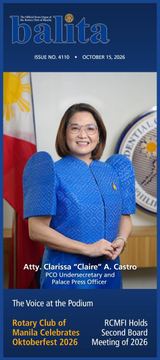
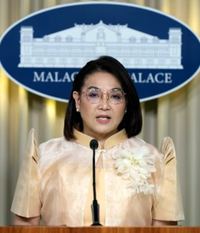 Atty. Clarissa "Claire" A. Castro, PCO Undersecretary and Palace Press Officer
 Rotary Club of Manila Celebrates Oktoberfest 2026
 RCManila Foundation Inc. Holds Second Board Meeting of 2026