

Pasko Na
An editorial on the roots of Filipino Christmas traditions, the history of Christmas carols, and Jose Mari Chan's legacy as the 'Father of Philippine Christmas Music.'

In the Philippines, Christmas arrives on the first day of September when radio stations, shopping malls, and offices and organizations start their slow, joyful countdown. Filipinos have become known all over the world for celebrating the world's longest Christmas season, which runs from the first "ber" month until at least the feast of the Epiphany in early January.
The love runs deep because Christmas here is a collision of faith, family, and sheer festivity. In a country where roughly eight in ten people are Christians, the season is both sacred and social. Nine dawn Masses known as Simbang Gabi draw families to church before sunrise while bibingka and puto bumbong vendors wait outside. Homes glow with the parol, the star-shaped lantern that has become a national symbol, and nowhere is this more visible than in the city of San Fernando, Pampanga which has earned the title "Christmas Capital of the Philippines" for its giant, dazzling lantern displays. On Christmas Eve, families gather for noche buena, a midnight feast that is as much about being together as it is about heirloom recipes and festive delights.
For many Filipinos working abroad, the season carries extra weight. Homecomings, remittances, and video calls home turn Christmas into a celebration of connection across oceans. Airline seats are in great demand and vacation leaves from workplaces are filed even a year in advance. Balikbayan boxes, filled with gifts and pasalubong for loved ones, start their seaborne journey to the Philippines from far-flung shores.
No Filipino Christmas is complete without its soundtrack. Classic carols like Ang Pasko ay Sumapit and the Cebuano favorite Kasadya Ning Taknaa, known by nearly everyone and sung across generations and regions, are heard inside malls and on the streets. Children go door to door singing, often with improvised instruments like tambourines made from bottle caps, to receive a dime or two from neighbors who probably give just for the kids to stop mangling the lyrics and melodies.
Christmas music is older than most of the songs on a mall playlist. The earliest Christmas hymns were Latin chants of the 4th Century, sung in churches rather than at doorsteps. The turn toward joyful, singable carols came in the Middle Ages. Tradition credits St. Francis of Assisi, who staged a living nativity scene at Greccio in 1223, with encouraging worshippers to sing in their own languages instead of Latin.
Some medieval and Renaissance pieces are still sung today. Veni, Veni, Emmanuel grew out of the Latin O Antiphons of the early Middle Ages and reached English speakers in John Mason Neale's 1851 translation. Gaudete and the tune of Good King Wenceslas both come from Piae Cantiones, a Finnish collection published in 1582. The Coventry Carol, God Rest Ye Merry, Gentlemen, and The Holly and the Ivy survive from England's folk tradition, while Deck the Halls borrows an old Welsh melody.
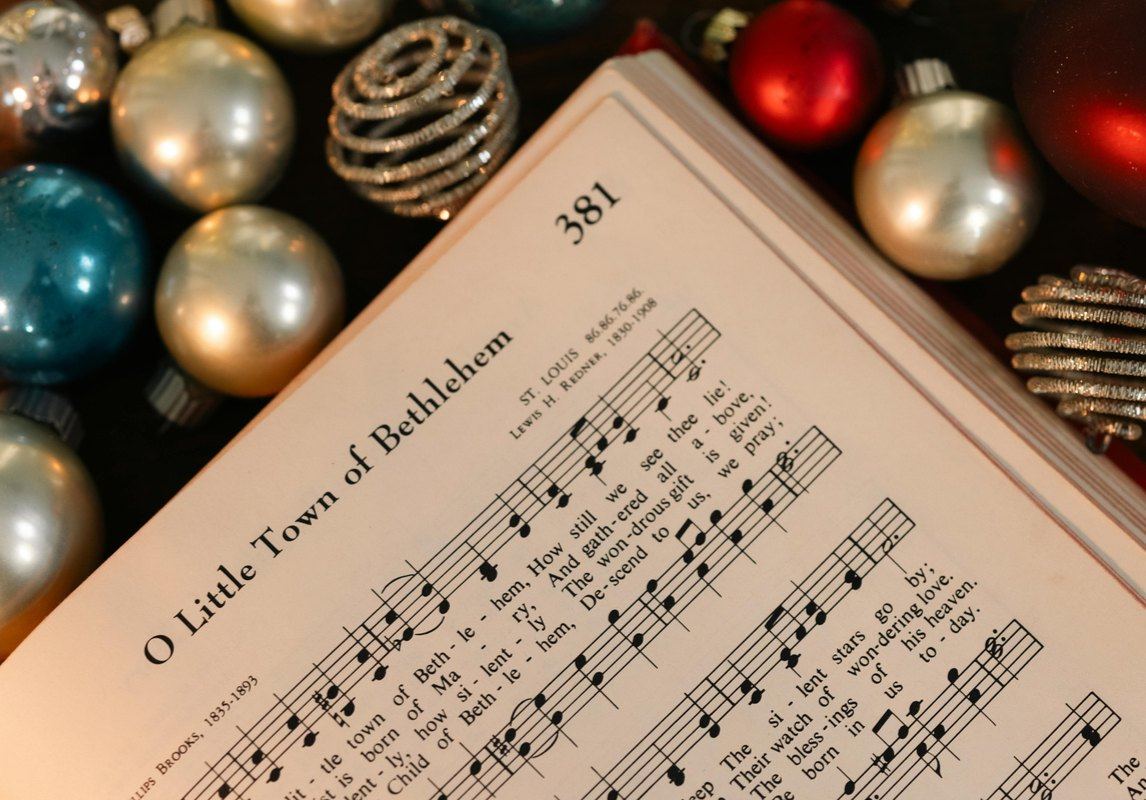
The 18th and 19th centuries gave us the carols most of the world sings now. Isaac Watts wrote Joy to the World in 1719, and Charles Wesley's Hark! The Herald Angels Sing followed in 1739. O Come, All Ye Faithful began as the Latin Adeste Fideles and was translated into English by Frederick Oakeley in 1841. Other lasting favorites include O Holy Night, composed in France in 1847, It Came Upon the Midnight Clear (1849), We Three Kings (1857), and O Little Town of Bethlehem (1868).
The most beloved of all carols began in a small Austrian village. Silent Night was first performed in 1818 in Oberndorf, with words by the priest Joseph Mohr and a melody by teacher Franz Gruber. It has since been translated into hundreds of languages, and UNESCO recognized it as a piece of intangible cultural heritage in 2011.
The 20th century added new classics. Ukrainian composer Mykola Leontovych arranged Carol of the Bells in 1916 from a folk chant, and Irving Berlin's White Christmas (1942) became one of the best-selling songs ever recorded. Today these old and new carols are blended in streaming playlists, choir repertoires, and church services.
Filipino carols belong to this long story of Christmas music. Spanish missionaries brought the villancico, a festive song tradition from Spain, and Filipinos made it their own, eventually composing carols in Tagalog, Cebuano, Ilocano, and other languages. The blending is such that one Simbang Gabi mass can include centuries-old hymns, a village carol in a local tongue, and a pop ballad from 1990, all together in a pious, festive, acculturated mix.
Over the decades, Filipino artists have built a rich repertoire of original holiday music, from upbeat pop to sentimental ballads. What makes these songs special is their emotional range. They celebrate, but they also express deep longings for loved ones or strong yearning for home, for absent loved ones, for the simple warmth of a family gathered together.
Of all these voices, one has become inseparable from the season: Jose Mari Chan. His musical career long predates his Christmas fame. He first appeared on Philippine television in 1966 as host and singer of ABS-CBN's 9 Teeners, released his first single, Afterglow in 1967, and his debut album in 1969. He wrote the beloved Philippine Airlines jingle Love at Thirty Thousand Feet and continued composing even while working for the family's sugar business in the United States. Returning to the Philippines, his 1989 album Constant Change, which carried the regional hit Beautiful Girl, won Album of the Year at the Awit Awards.
Christmas in Our Hearts was released on November 17, 1990. It was The Music Man's seventh studio album and his first Christmas album. It became the first OPM album to surpass the Diamond milestone, which in the 1990s required selling 400,000 units. It was eventually certified Double Diamond by the Philippine Association of the Record Industry (PARI) for doubling that benchmark. Christmas in Our Hearts exceeded 1.6 million overall modern units including streaming metrics and remains the best-selling album of all time in the Philippines, still climbing the charts every holiday season.
The album's lasting popularity earned Joe Mari the nickname "Father of Philippine Christmas Music." This claim to fame has also become a national running joke. Before each September, Filipinos on social media would release memes declaring that the "Jose Mari Chan season" is about to begin. The Music Man has embraced the affection with good humor, often joining in the fun himself, and his appearances in news features and on talk shows are treated as a sure sign that Christmas is near. In 2012, twenty-two years after his first, he released a second Christmas album, Going Home to Christmas, a 22-track collection recorded with four of his five children.
His contribution goes way beyond one massive hit. In a tradition stretching from medieval Latin chants to Spanish villancicos to modern pop, Jose Mari Chan gave Filipinos an album that captures what they most want from the holidays: not gifts or glitter, but peace, love, and togetherness. In a nation that celebrates Christmas harder and longer than any other, his voice and music are the soundtrack of the Filipino Christmas.

 Jose Mari L. Chan, Filipino Singer, Songwriter, and Businessman
 Fairness Beyond Politics
 Cogs in the Wheel
