

Lawyers and Injustice: The Rotary Club of Manila Confronts the Lawyer’s Role in Building Integrity
At the seventh weekly membership meeting, a panel moderated by Teddy Kalaw IV discussed the lawyer’s role in avoiding injustice, followed by a book launch.

On that Thursday noon, the Taft Room of Conrad Manila carried an air of solemn anticipation and quiet dignity. Members of the Rotary Club of Manila — the nation’s oldest and most prestigious Rotary Club — filed in with the easy camaraderie of brothers and sisters who, though bound by their own professions and obligations, meet weekly to renew the higher call of service above self.
The tables were set in careful symmetry, white linen offset by the golden gleam of cutlery and the polished warmth of wood. A chorus of quiet greetings filled the room as Rotarians clasped hands, exchanged updates, and settled into their places. At the center of this convergence stood the weight of tradition: the weekly membership meeting, the pulse of continuity in a club whose history has long been entwined with the life of the nation.

At exactly noon, President Raoul C. Creencia called the assembly to order. His voice, steady yet vibrant, seemed to signal more than the start of a luncheon program; it evoked the unbroken thread of fellowship that stretches back through decades of RCM’s leadership in civic life.
The Invocation and Opening Rituals

The invocation, offered by Rotarian Abdul Gani M. Macatoman, was brief yet resonant, a prayer not only for guidance but also for discernment in times of moral ambiguity. There was a sense that the day’s discussions would demand more than surface politeness — they would call upon conscience itself.
An AVP presentation of the Philippine National Anthem rose to fill the room, followed by the RCM Hymn, rendered gracefully by the RCM World Famous Music Chorale. In those solemn notes, memory and purpose intertwined: a reminder that service to country and service to humanity are threads of the same fabric.

The Four-Way Test was led by Rotarian Jason Roland Valdez, spoken with the gravity of a creed. Its familiar cadence resonated all the more deeply given that the subject of the day’s panel was the lawyer’s role in avoiding injustice.
Acknowledgements, Fellowship, and Celebration

Director-Elect Carlos G. “Caloy” Serapio, serving as moderator for the day’s program, extended the club’s warm welcome to guests and visiting friends. The Chorale once again uplifted spirits with the RCM Welcome Song, a melody that never fails to soften the most serious of gatherings with notes of joy.
Then came a moment of fellowship: the recognition of birthday celebrants. Rotarian Emyl Eugenio and PDSAA Bollie Bolton. The familiar strains of Maligayang Bati and Happy Birthday floated through the room, an interlude of celebration amidst weighty deliberations.

The morning’s first formal gesture of service unfolded next: the turnover of a check to PETA Asia, spearheaded by Past District Governor Alexander “Alex” P. Cureg. It was a reminder that every meeting, no matter the theme, is anchored in Rotary’s enduring mission of giving back.
President Creencia then took his time at the podium, delivering a message that framed the afternoon: a balance of fellowship, reflection, and intellectual engagement.

The Panel Discussion: On the Lawyer’s Role
The centerpiece of the meeting was the panel discussion — a conversation both urgent and timeless. The subject, “What is the Lawyer’s Role in Avoiding Injustice?” was as provocative as it was necessary. Moderated with intellectual flair by Director-Elect Teodoro “Teddy” Y. Kalaw IV, the panel brought together distinguished voices: Atty. Allan G. Panolong, National President of the Integrated Bar of the Philippines; Justice Solomon M. Hermosura, Government Corporate Counsel; Past Internal Auditor Jordan M. Pizarras; and Rotarian Citos Manalaysay of Siguon Reyna, Montecillio & Ongiako Law.

The Framing
Teddy Kalaw, himself a lawyer steeped in academic and professional gravitas, set the stage with a mixture of wit and provocation. He quoted Shakespeare’s much-misunderstood line from Henry VI, Part 2: “The first thing we do, let’s kill all the lawyers.” Too often dismissed as a crude jest, Kalaw reframed it as a recognition of the lawyer’s profound role in shaping order. To build a just society, lawyers must not be eliminated but elevated in their vocation.

He pointed out that the day’s discussion would move beyond caricature, seeking instead to probe the heart of a profession often maligned yet indispensable to justice.
Justice Versus Injustice

Justice Solomon Hermosura opened with candor. He admitted surprise at the negative framing of the panel’s topic. All his life as a lawyer, he explained, he had sought not merely to avoid injustice but to pursue justice itself. “To avoid injustice,” he said, “is to fight to ensure justice.”
He emphasized that the challenge lies in rules that are sometimes twisted to shield corruption rather than expose it. True justice, he argued, requires rules that are transparent and fair — rules that allow truth to emerge unmanipulated. His words cut through abstraction and landed as both a warning and a call to integrity.

Justice as Perspective
Rotarian Citos Manalaysay spoke from the trenches of practice. Justice, he suggested, is a matter of perspective: to the victor in court, justice is served; to the loser, injustice prevails. His reflections revealed the paradox of law in an adversarial system, where due process protects even the most guilty, and acquittals may wound victims even as they honor constitutional safeguards.

His critique widened into a cultural. Filipinos, he lamented, are often too forgiving — prone to absolve even the gravest corruption. This cultural tendency, he argued, enables injustice more than any defect in the law itself.
He recalled historical examples of swift, decisive punishment — such as the execution of a drug trafficker during Marcos Sr.’s regime — and contrasted them with today’s climate of impunity.

He underscored that the fight against injustice requires systemic reform: transparency in procurement, independent judiciary, empowered civil society, and ethical leadership. Injustice, he warned, is not an abstraction; it manifests in unbuilt classrooms, empty clinics, and citizens withdrawing from civic life. His words placed the lawyer’s role within the larger framework of nation-building.
Exchanges and Reflections

As the discussion deepened, Kalaw guided the panel through reflections on perspective, process, and systems. How can lawyers advocate credibly without compromising truth? How should they respond when it is not the client but the system itself that is unjust?
Justice Hermosura emphasized that fairness rests on rules designed to surface truth. Pizarras countered with the reminder that lawyers owe not only their clients but also the broader public. Manalaysay, in turn, pressed the uncomfortable reality: rules and laws are meaningless if society itself is unwilling to demand accountability. The exchange revealed not only professional insight but the cultural contradictions at the heart of Philippine justice.

The Inspirational Talk: A Provocation for Reform
When the panel drew to a close, Justice Hermosura returned to the podium — this time not as discussant but as inspirational speaker. His talk, however, was more provocation than consolation.

He challenged the club to confront the limits of moral exhortation. Calls to unity, he argued, cannot by themselves dismantle entrenched corruption. History has shown that oaths, pledges, and frameworks are not enough when bad governance is normalized.
Instead, he called for structural reforms: transparency and accountability. He proposed that even private citizens — particularly those who do business with government or wield significant influence — should submit Statements of Assets, Liabilities, and Net Worth (SALNs). Only then, he suggested, could public officials be compelled to disclose honestly.

“Transparency,” he declared, “must become the culture, not the exception.” His vision was clear: without transparency, accountability is impossible; without accountability, justice is a mirage.
The applause that followed was not only for eloquence but for the courage of a truth spoken plainly.

The Launch of a Novel: Literature Meets Law
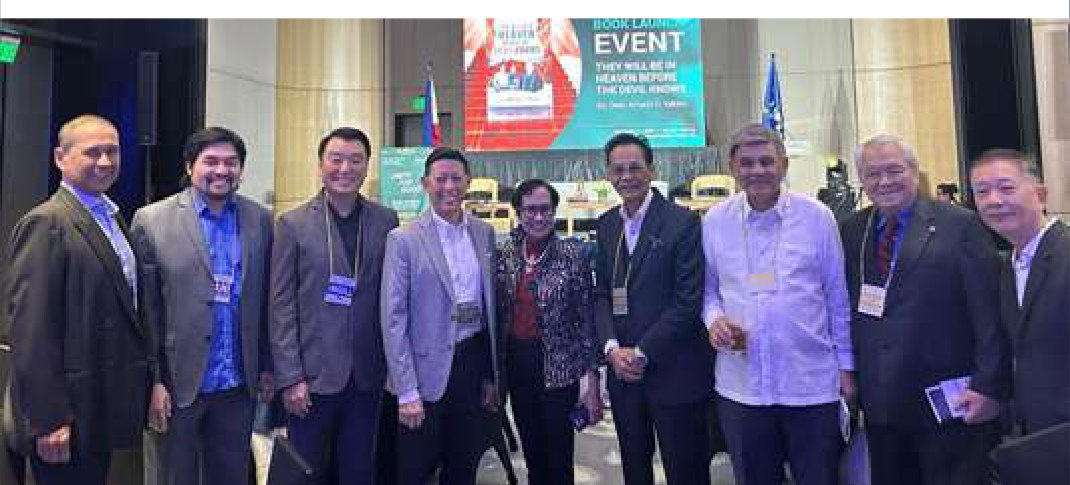
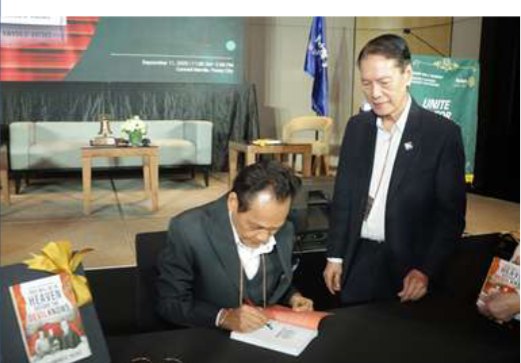
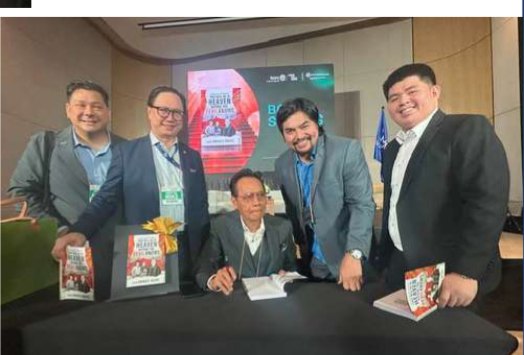
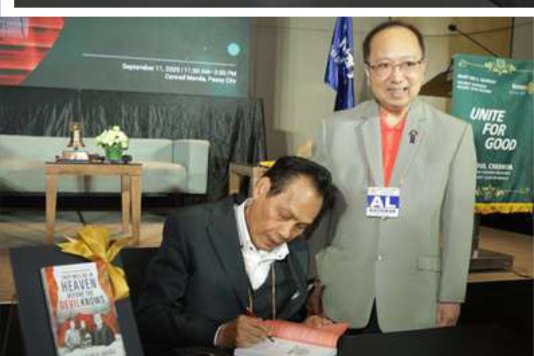
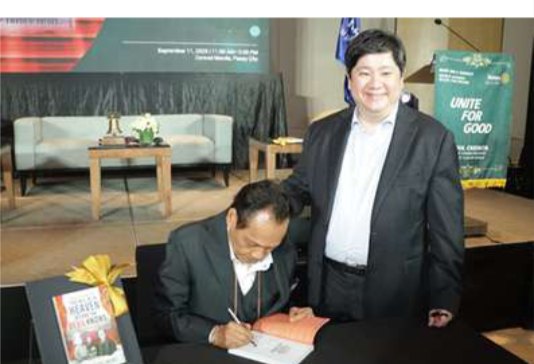
The program then shifted from panel to page, from discourse to literature. Rotarian John Emyl G. Eugenio presented the book They Will Be in Heaven Before the Devil Knows, a novel by Past Director Dean Amado “Amading” Valdez.

The message of Eric Eugenio of C&E Publishing framed the launch: literature, he said, is not an escape but an engagement. Valdez’s novel dares to portray law not as abstract principle but as a battlefield where justice and injustice wrestle daily. In bringing such a book to light, publishing becomes an act of conscience.
When Dean Valdez himself took the podium, he spoke not only as an author but as a son. He recounted a moving passage about a character’s reunion with his mother — an orphan who, upon meeting his aged and unrecognizing mother, sought not to be loved but to love. In this tender image, law and literature intertwined: justice was no longer a courtroom verdict but a moral act, the fragile yet redemptive bond between mother and child.

Valdez confessed that he wrote that scene inspired by a fellow Rotarian’s story of sculpted hands preserved in memory of a mother. It was a moment of intimacy shared publicly, a reminder that behind legal treatises and national issues lies the most human of truths: love, regret, remembrance.
Closing and Fellowship

As the afternoon waned, President Creencia returned to close the meeting. Certificates of appreciation were presented, and the gathering was adjourned not with finality but with continuity: a book signing followed, allowing members to linger in conversation, autograph in hand, reflection in heart.
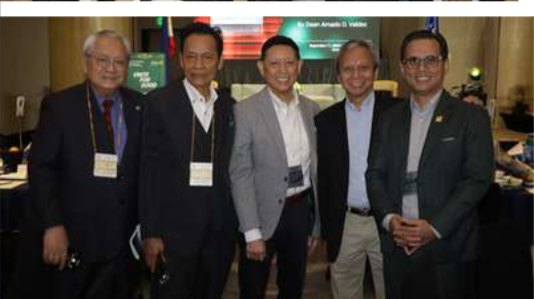
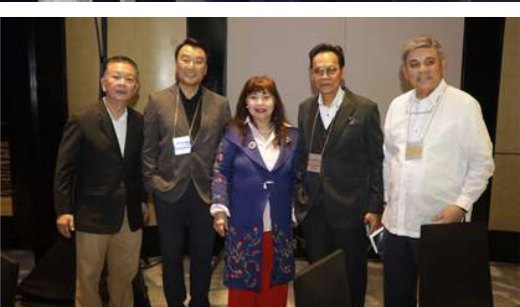
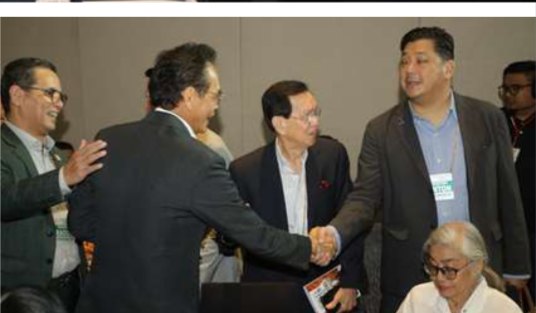
The room, which had earlier hummed with debate and discourse, now glowed with the warmth of fellowship — Rotarians queuing for signatures, pausing for photos, and sharing impressions. The discussion of justice and injustice had been weighty, even heavy, but it had not dampened the club’s spirit. If anything, it had deepened the sense of purpose.

Reflections on a Meeting
The seventh weekly membership meeting of the Rotary Club of Manila was more than a luncheon. It was a meditation on justice, a reckoning with culture, and a reminder of Rotary’s place at the intersection of civic conscience and national life.

The meeting blended ritual and reflection: hymns and birthdays alongside panel debates and book launches. In that blend lay the secret of Rotary’s endurance: it is a fellowship that can sing joyfully even as it wrestles with the gravest questions of governance and morality.
The theme that day — lawyers and injustice — was framed in the language of law but carried implications for all professions and citizens. The lawyer’s role, the speakers agreed, cannot be separated from the citizen’s role. Justice is too important to be left to lawyers alone; it requires all to act.

From Hermosura’s provocative challenge to Valdez’s tender literary moment, the meeting was a journey across registers: from public scandal to private grief, from systemic corruption to the sculpted memory of a mother’s hand. Through it all, the Rotary Club of Manila stood not as passive audience but as active witness, called again to its mission to serve above self.






 Editorial
 President’s Message
 Rotary Club of Manila’s Fourth Monthly Regular Board Meeting