

Beyond the Scoop: How Francisco Delgado Magsaysay Turned Milk, Faith, and Perseverance into a Filipino Legacy
Francisco “Paco” Delgado Magsaysay turned a surplus of fresh milk into the Carmen’s Best ice cream brand.

AT thirty-five thousand feet above the clouds, on a papal charter bound for Rome, a humble cup of ice cream became a silent benediction.
Pope Francis, still basking in the warmth of the Filipino faithful, reached for two single serve cups of ice cream: Malted Milk and Brown Butter Almond Brittle. They were branded Carmen’s Best — a name inspired by the founder’s daughter, and a product born of love, grit, and a refusal to compromise purity.
On that quiet flight home, something poetic happened. A pontiff, known for his simplicity and compassion, savored a dessert crafted by a man who shared those same virtues. For Francisco “Paco” Delgado Magsaysay, it wasn’t just a divine endorsement. It was a sign — that goodness, when done with heart and integrity, travels farther than one ever imagines. “How sweet is that?” he would later say with a grin that could melt even the coldest scoop.

Yet behind that humor lay a story not of luck, but of layers — much like ice cream itself — where every flavor carries a struggle, every texture tells a story, and every taste reveals a truth.
The grandson of a beloved president and the son of a principled senator, Paco’s name came with weight — the kind of weight that could crush or carve character. He carried it not with entitlement, but with purpose. And that purpose — like the artisan ice cream he would one day perfect — was slow-churned through faith, failure, and fortitude. This is not merely a story about business. It is a story about becoming.
Roots of a Legacy
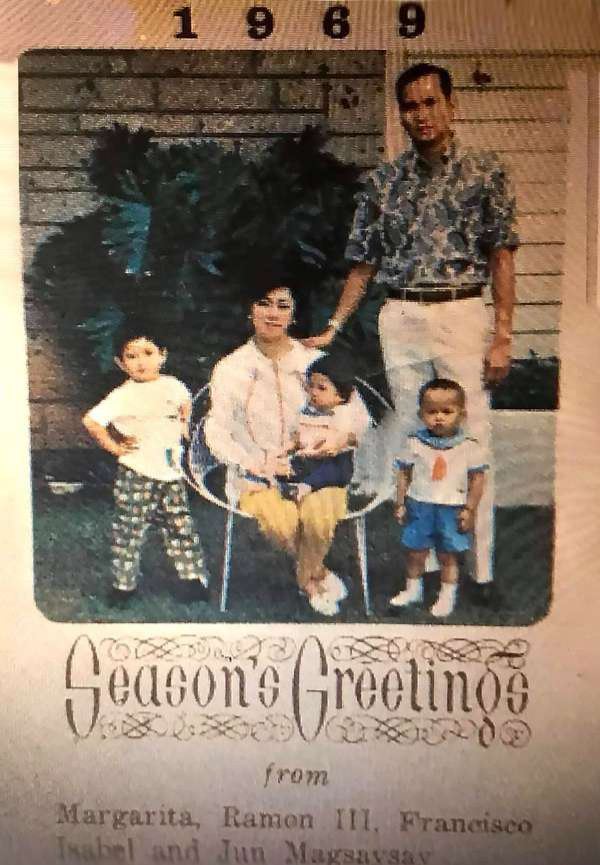
Before there was Carmen’s Best, before the milk and the churn, there was a boy growing up in the long shadow of a national hero. Francisco “Paco” Magsaysay was born into a family whose name was etched into the conscience of a nation. His grandfather, President Ramon “Monching” de Fierro Magsaysay, had been immortalized as “The Guy Who Did Not Steal,” a leader who embodied honesty, humility, and the belief that government should serve the people, not the other way around.
Paco never met his grandfather — Ramon Magsaysay died in a plane crash in 1957 — but his moral presence was everywhere: in the stories retold at family gatherings, in the quiet dignity of his father, Senator Ramon “Jun” Banzon Magsaysay Jr., and in the unspoken expectation that decency was not optional; it was duty.
“I grew up hearing about Lolo Monching’s discipline,” Paco recalls. “He didn’t allow family members to use public funds for personal expenses. Even fuel for his car — he paid that from his own salary.” That discipline ran deep. The cost of his daughter Mila’s debut was deducted from his own paycheck, as was the fuel consumption of his only son, Jun. Every peso was accounted for, every example intentional.

Such integrity left an imprint on a young boy who didn’t yet understand politics but understood honor. His father, Jun, carried that same lesson beyond the halls of government to the family dinner table. Honesty. Hard work. Integrity. These were not virtues to be admired — they were verbs to be lived.
But lineage, however noble, cannot shield one from the trials of growing up. Paco’s childhood in the Philippines was filled with warmth and comfort, yet beneath it, a storm was forming — one that would uproot him from everything familiar. At the age of twelve, he found himself on a plane to Houston, Texas. The move was meant to provide opportunity and exposure, but to a preteen boy, it felt like exile. He didn’t understand the culture, the slang, the undercurrents of racial difference. In Manila, he was a Magsaysay; in Houston, he was just another kid with a hard-to-pronounce name. “I carried resentment for years,” he admits. “I felt displaced — like I didn’t belong anywhere.”
But displacement, as life would later teach him, can be divine preparation. Those Houston years — from middle school at St. Vincent de Paul, to high school at St. Thomas, and college at the University of St. Thomas (all in Houston, Texas), where he majored in Marketing and minored in Philosophy — would forge in him the quiet resilience of an immigrant and the disciplined work ethic of someone who had to earn every inch of acceptance. He learned early that respect cannot be inherited; it must be worked for.

And so, while other students went out for parties, Paco worked part-time at United Parcel Service. “Four to six hours a day after school,” he says. “That’s where I learned that if you want something to happen, you can’t wait for luck — you work for it.” It was in the land of fast food and wide highways that he began to understand slow growth — the kind that forms character rather than comfort. Years later, when he would be faced with rejection after rejection while looking for a job, it was this same steel forged in Houston that would keep him from breaking.
For now, though, he was a young Filipino abroad — half longing for home, half searching for purpose. The future would bring him back to the islands. But first, he had to learn how to stand on his own feet, far from the safety of legacy. The boy from a presidential family was becoming something rarer — a man of quiet grit.
Exile and Education

Houston, in the late 1970s, was a city of contradictions — booming oil rigs and southern hospitality, but also unfamiliar accents, strange foods, and a sense of distance that stretched far beyond the miles between continents. For a twelve-year-old Paco Magsaysay, freshly uprooted from Manila’s warmth, it felt like landing on another planet. There were no familiar jeepneys or friendly house helpers, no doting titas to cushion the homesickness. Just long highways, biting winters, and the uneasy awareness of being different. “I didn’t understand the customs, the culture, the humor,” Paco recalls. “I was the Filipino kid with an accent, and I stuck out.”
But exile, as the ancients said, can be the beginning of wisdom. In Houston, Paco learned to do without the trappings of privilege. He swept floors, folded laundry, washed dishes, and cleaned cars. Every job was a lesson in humility, every chore a small rebellion against entitlement.
At St. Vincent de Paul Catholic School, he found both discipline and faith — a moral framework that would later mirror his grandfather’s creed: Service before self. Simplicity in strength. He went on to attend St. Thomas High School, also run by the Basilian Fathers, where the motto — “Teach Me Goodness, Discipline, and Knowledge” — would shape his character for life. He later enrolled at the University of St. Thomas in Houston, another Basilian institution, where he majored in Marketing and minored in Philosophy. It was a rare pairing that reflected the dual sides of his nature: the practical mind of a strategist and the reflective soul of a thinker.

Those years were not glamorous, but they were grounding. All throughout college, Paco carried a full academic load while working at United Parcel Service (UPS) after school — four to six hours a day, five days a week. “I worked at UPS after school while taking a full load every semester,” he recalls. “It taught me grit. There were no shortcuts. You show up, you work, and you do it again tomorrow.” He remembers the late nights spent lugging heavy boxes until dawn, then rushing to class half-awake. The rhythm — humble, repetitive, relentless — became the metronome of his adult life. The discipline of ordinary effort would one day churn into extraordinary success.
Years later, when he faced rejection after rejection searching for a full-time job — long before the milk and ice cream ever came into the picture — he found himself drawing from the same perseverance he had learned in Houston. Rejection no longer felt fatal; it was simply part of the process.
By the time he graduated, Paco had acquired not just a degree but a worldview — a pragmatic optimism shaped by American efficiency and Filipino compassion. He understood the value of systems, but he also knew that business, at its core, was about people. “I didn’t realize it then,” he reflects, “but those twelve years in the States gave me the backbone I would need later. The exposure, the perspective, the different way of thinking — all of it became an advantage.”

When he finally boarded the plane back to the Philippines in the early 1990s, he did so not in pursuit of comfort but of contribution. His father, Senator Jun Magsaysay, was then running as Vice President alongside Miriam Defensor-Santiago, and Paco returned home to help. That homecoming marked a turning point. He carried with him not wealth but wisdom — a broadened perspective, an immigrant’s work ethic, and a longing to build something of his own, on his own soil.
Coming Home
Homecoming stories are rarely as simple as nostalgia suggests. When Paco returned to the Philippines in the early 1990s, he came home to a country he loved — but also one that had changed. He was no longer the boy who left, and the Philippines was no longer the place he remembered.

His father had long been involved in public service, but by then was also venturing into business. He had started in the cable television industry as early as 1972, and decades later, in 2007, he expanded into dairy farming — a completely different challenge that combined patriotism with enterprise. The idea was noble and deceptively simple: to produce fresh, pasteurized milk from local cows in Bay, Laguna, a province known for its agricultural heritage.
The dairy farm was a passion project with a patriotic soul. It aimed to prove that Filipinos could produce milk that was 100% fresh, natural, and local. But noble intentions do not always make sound economics. The challenge was brutal: Filipinos weren’t used to premium milk that expired in just ten days. The shelves were already dominated by long-life, powdered, and UHT varieties. The farm produced excellent milk — creamy, rich, and pure — but the market wasn’t ready. Bottles began to pile up, unsold. The losses mounted.
One day, Jun turned to his son and said, “Paco, can you help us sell the milk?” For most people, that would have sounded like a favor. For Paco, it was a calling in disguise. “I took it as a mission,” he says. “My task was simple: sell the milk.” He began cold-calling hotels, cafés, and restaurants — enduring rejection after rejection. Doors slammed; emails went unanswered. Some laughed at the idea of “Filipino fresh milk.” But his years in America had trained him for exactly this: rejection without resentment, failure without fear.

Still, as the unsold bottles piled up, he began to see the situation not as a problem, but as potential. Somewhere between frustration and faith, an idea began to take shape — one that would change the course of his life. If the market couldn’t accept fresh milk, perhaps it could embrace something that made milk irresistible. Something joyful. Something indulgent.
He didn’t know it yet, but the story that began with a surplus of milk was about to be churned into something far sweeter.
From Milk to Magic

It began quietly — not with a business plan, but with a question. “What can we do with all this milk?” The answer would come not from strategy, but from serendipity. In a small room in Alabang, lit by the soft hum of freezers and the faint scent of cream, Paco began experimenting. There were no investors, no consultants, no brand architects — just a man, a mixer, and a mountain of unsold milk that demanded imagination. He didn’t set out to build an empire. He simply wanted to make use of what was there — to turn waste into worth. But what began as practicality would soon unfold into artistry.
“I didn’t even know what product we were going to make at first,” Paco recalls. “I just knew the milk was too good to throw away.” That milk came from a dairy farm in Bay, Laguna, which his father had established in 2007 with a group of friends. The idea wasn’t born out of commerce but conviction — a desire to help develop the rural economy by starting a dairy farm that could employ locals and empower small producers. Working closely with the National Dairy Authority (NDA), they envisioned a model that would modernize local milk production while keeping it proudly Filipino.
The milk they produced was exceptional — rich, fresh, and pure — but also fragile. It had no preservatives, which meant a short shelf life of only ten to fourteen days. And as noble as the goal was, the market wasn’t ready. Filipinos were accustomed to long-life or powdered milk, not fresh, locally sourced dairy that spoiled quickly. Soon, the farm faced a surplus that couldn’t be sold fast enough. For most, it was a logistical nightmare. For Paco, it was an opportunity in disguise.

He started tinkering with the milk in his own kitchen, guided not by manuals but by instinct. Ice cream felt like the natural evolution — a joyful way to preserve what would otherwise go to waste. He didn’t want just any ice cream, though. He wanted something authentic — the kind of indulgence that would make people close their eyes after the first spoonful. “I thought, let’s make the best ice cream we possibly can — and see what happens,” he says.
The first batches came out of that small kitchen in Alabang — modest, hand-packed, and labeled with care. There were no machines to automate the process, no marketing team, no glossy campaigns. Just hours of mixing, tasting, freezing, and refining. He called his creation Carmen’s Best, after his only daughter, born in 1997. It was a name that carried not just affection, but accountability. “I named it after my daughter,” Paco says. “That meant everything we made had to be something I’d be proud to give her.”
Each pint became a reflection of his values — sincerity, simplicity, and precision. The ice cream had no shortcuts, no artificial flavors, no water to dilute the richness of fresh milk and cream. Every batch was a balancing act of patience and timing. It was slow food, crafted in a fast world. He would often spend long nights perfecting his base recipe, testing textures and proportions. Friends became taste-testers; family, his first critics. “I remember doing deliveries myself,” he laughs. “I’d load the containers in a small cooler and drive them to cafés and restaurants. I was the owner, the salesman, and the driver.”

In those early years, rejection was his constant companion. Many cafés and hotel kitchens turned him away. They couldn’t imagine paying more for ice cream when cheaper commercial brands dominated the market. But Paco persisted — polite, patient, and undeterred.
Then came the breakthrough — a call from Amanpulo, the ultra-exclusive island resort that had hosted the likes of Brad Pitt, Beyoncé, and JFK Jr. The resort’s general manager, a woman from New Zealand, immediately recognized the quality and purity of Paco’s fresh milk. It was exactly the kind of honest, premium product that matched Amanpulo’s uncompromising standards. “That meeting changed everything,” Paco recalls. “She appreciated what we were trying to do — keeping things pure, simple, and honest. She gave us our first big chance.”
That account became a turning point. The farm was finally supplying fresh milk to one of the most discerning resorts in the world — a quiet validation that luxury could indeed be local. Encouraged by that success, Paco decided to formalize the venture. He incorporated Carmen’s Best Dairy Products with the Securities and Exchange Commission (SEC) — intentionally leaving out the words ice cream, since at the time, it wasn’t yet part of the plan. But destiny, like flavor, has a way of evolving. What began as a mission to sell milk would soon churn into something far sweeter.

That single account became a cornerstone for credibility — a turning point that anchored the fledgling brand. Encouraged by the success with Amanpulo, Paco found renewed confidence in the farm’s potential. The partnership proved that world-class quality could come from Filipino soil, and that the discipline of doing things right would always find its audience.
Still, despite the resort’s steady orders, the dairy farm continued to produce more milk than it could sell. Paco faced the same recurring challenge — a surplus that demanded creativity. “I didn’t want to waste good milk,” he recalls. “So, I started thinking of ways to make it last longer — and that’s when I thought of ice cream.” What began as an experiment soon became a fascination. In the same spirit that guided his family’s ventures — equal parts curiosity, perseverance, and purpose — he started making small batches in Alabang, testing flavors late into the night. He didn’t want just any ice cream. He wanted something sincere — dense, creamy, and unhurried, made with the same fresh milk they produced on the farm and the finest ingredients he could source from around the world.
Still, Paco refused to scale recklessly. He believed that craftsmanship dies when it becomes convenience. “You can’t mass-produce something that’s supposed to be personal,” he says. “You lose the soul when you chase the volume.” The process remained painstaking. The milk was pasteurized daily. The bases were churned in small batches. He sourced only the best ingredients from around the world: Madagascar vanilla beans, Swiss chocolate, Sicilian pistachios, English malted milk. Nothing less than world-class would do.

Soon, Carmen’s Best had a lineup of flavors as refined as their maker’s philosophy: Salted Caramel, Butter Pecan, Malted Milk, Brazilian Coffee, and Brown Butter Almond Brittle. Each flavor had a backstory — a place, a memory, a principle. Butter Pecan reminded him of Houston — the taste of his youth, of perseverance and discovery. Hokey Pokey, a nod to his stepfather’s New Zealand roots, carried a sense of nostalgia and play. And He’s Not Worth It — a cheeky Mississippi Mud Pie flavor — became a fan favorite, born from the humor that keeps even the most serious entrepreneurs human.
By then, word of mouth had begun to work its quiet magic. Small specialty stores and cafés started stocking Carmen’s Best. Discerning customers — from five-year-olds with sticky hands to octogenarians with lifelong palates — began to recognize that this was something different. “People could taste the sincerity,” Paco says. “You can’t fake quality.”
He had created something that transcended dessert. Carmen’s Best wasn’t just ice cream — it was experience. Each spoonful evoked memory and emotion, bridging generations. “There’s something deeply human about ice cream,” Paco muses. “You share it in moments of joy — birthdays, family gatherings, even heartbreak. It connects people. I wanted Carmen’s Best to be part of that story.”

Those early days were defined not by profit, but by purpose. He didn’t yet have the machinery of a global food giant, but he had something rarer — heart. And slowly, through word, work, and unwavering consistency, Carmen’s Best began to carve its place in the national consciousness. What started as a problem of surplus milk was transforming into a movement of sincerity — a Filipino-made brand setting the gold standard in craftsmanship and care.
Still, Paco remained grounded. “We weren’t a multinational,” he says. “We were a family business, learning as we went. But what kept us going was faith — and a little bit of that grit I learned in Houston.” And perhaps, divine timing. Because soon, Carmen’s Best would receive a blessing no marketing genius could have dreamed up — one that came not from Michelin stars or media acclaim, but from the highest seat of faith itself.
The Turning Points

Success stories, when told in hindsight, often seem inevitable. But the ascent of Carmen’s Best was anything but linear. It was shaped by three moments — each one transformative, each one a lesson in grace, grit, and divine timing.
The first came not from business but from education. In 2013, Paco attended the Penn State Ice Cream Short Course, the oldest and most respected ice cream program in the world. For a week, he immersed himself in the science of flavor — learning about overrun ratios, dairy chemistry, and freezing dynamics. It was a pilgrimage to the Mecca of ice cream-making. “What I learned at Penn State changed everything,” he recalls. “We refined the formula, improved the process, and the difference was immediate. Sales went up almost overnight.” Knowledge had crystallized into mastery. Carmen’s Best evolved from a promising curiosity to a bona fide premium brand.
Then, in 2015, came the second turning point — one so surreal that it would cement Carmen’s Best in the national imagination. When Pope Francis visited the Philippines, Philippine Airlines chose to serve Carmen’s Best on the papal flight back to Rome. There, at 30,000 feet, the Holy Father — perhaps unaware of the symbolism — reached for two small cups: Malted Milk and Brown Butter Almond Brittle. When word got out that the Pope had enjoyed Carmen’s Best, it was as if heaven itself had blessed the brand. “It was the ultimate validation,” Paco said. “You can’t buy that kind of endorsement.” Media headlines followed. Demand surged. But for Paco, it wasn’t about profit; it was about purpose. He saw it as a gentle reminder from above — that faith, patience, and perseverance are never wasted.

The third turning point came in 2022, when Metro Pacific Agro Ventures, a subsidiary of Metro Pacific Investments Corporation, acquired 51% of the Carmen’s Best Group. It marked not just a business milestone, but a profound transition — from a passionate family enterprise built on faith and craftsmanship to a structured, scalable organization ready to stand shoulder-to-shoulder with multinational giants.
“The partnership with Metro Pacific gave us the muscle to grow,” Paco reflects. “But it also allowed us to stay true to our roots. We didn’t have to compromise our standards.” It was more than capital infusion; it was continuity — proof that a homegrown brand built on integrity could find a seat at the table with corporate titans without losing its soul.
By then, Carmen’s Best had expanded into more than thirty flavors, with kiosks and outlets across Metro Manila. From Salted Caramel to Ube, Avocado to Turkish Baklava, every flavor embodied a philosophy: small-batch, slow-made, and sincere. But behind the smiles and sweetness, a storm was brewing — one that would test every belief Paco had about faith, life, and what truly matters. It wouldn’t come from business competitors or market downturns. It would come from within his own body — a whisper of mortality that would change how he saw everything.

Grit, Grace, and the Man Upstairs
By 2013, Carmen’s Best was finally on a steady climb. Sales were healthy, recognition was growing, and Paco Magsaysay was busier than he had ever been — overseeing operations, expanding partnerships, balancing family and business. On the surface, life looked charmed.
Then came the diagnosis. It began innocently — a routine executive check-up that should have been uneventful. But in the process, doctors noticed a small glitch in his white blood cell (WBC) count and asked him to return for a retest. What followed was the verdict no one ever wants to hear: Chronic Lymphocytic Leukemia (CLL). At first, Paco couldn’t quite process it. The fatigue he had been feeling suddenly made sense, but the words cancer of the blood hit like a silent explosion. “It was surreal,” he recalls. “One moment you’re just doing your annual check-up, and the next, you’re told something’s wrong with your blood.”

“Cancer of the blood,” Paco repeats softly, as though even now, years later, the words retain their sting. “It hit me like a freight train.” For someone who had spent his life building — companies, relationships, a reputation — it was a moment of shattering stillness. The man who had learned to overcome every setback through effort suddenly faced something that no amount of hard work could fix. The prognosis was grim. His doctors in Manila told him he might have three years left. It was a death sentence with an expiry date.
But Paco wasn’t one to accept fate without a fight. He flew to Houston — back to the city that had once tested his endurance — to seek a second opinion at the world-renowned MD Anderson Cancer Center. There, a more hopeful picture emerged. The cancer was at an early stage. Aggressive treatment could contain it. The road ahead would be long, but not impossible.
Still, the early months were brutal. Chemotherapy stripped his strength, his appetite, his sense of certainty. “At the beginning,” he recalls, “I thought I was going downhill fast. The chemo was crushing. One day you think you’re in the halftime of your life; the next, it feels like the final two minutes.” He learned humility in a new way — not the humility of business or leadership, but of existence itself. When your own body becomes the battleground, pride dissolves into prayer. “I told myself: if this is how my story ends, let me end it well,” he says. “Let me prepare my papers, make peace, and thank God for what I’ve been given.”

But fate, or perhaps faith, had other plans. Over the next two years, the treatments began to work. The cancer retreated, then went into remission. In 2015, doctors confirmed the best possible outcome: his disease was under control. By 2018, his annual checkups were reduced. Ten years later, Paco remains in remission — a survivor, not a statistic.
And with survival came transformation. “In a way, cancer was a blessing,” he says without irony. “It forced me to take inventory of my life — to see what mattered and what didn’t.” Gone was the impatience, the constant forward motion that had once defined him. In its place was gratitude, calm, and a newfound gentleness. He learned to slow down, to listen more, to appreciate the ordinary miracles — mornings with his children, conversations with friends, a spoonful of his own ice cream shared with a stranger.
“I became more patient, more tolerant,” he reflects. “I realized that every day you wake up healthy is a gift — and that belief, that gratitude, affects how you treat people.” Those who worked with him noticed the change. He smiled more, delegated more, and spoke of “purpose” rather than “plans.” The entrepreneur had become a philosopher — one who saw business not merely as commerce, but as a vehicle for meaning. He began donating part of Carmen’s Best proceeds to the Philippine General Hospital Medical Foundation, helping indigent patients access healthcare. “It was the least we could do,” he said. “We were blessed with success — it only made sense to give some of it back.”

His faith, once quiet, deepened. He no longer viewed challenges as punishment, but as preparation. “Everything in life happens for a reason,” he mused. “Every relationship, every hardship, every delay — they all happen when they’re supposed to.” Cancer had not taken away his drive; it had purified it. The man who once chased excellence now sought balance. The entrepreneur who once built a business now built perspective.
There’s an old saying that life gives us two births: one when we enter the world, and another when we discover why we’re here. Paco’s second birth came in a hospital room in Houston, where he realized that survival isn’t measured in years, but in gratitude per day. He returned to the Philippines with a body healed and a soul transformed. And from that point onward, every decision — in business, in family, in service — would be guided by one principle: Live well. Live with purpose. Live with grace.
Beyond the Creamery

After the quiet triumph of surviving cancer, Paco Magsaysay found himself in a new season of clarity. He had built Carmen’s Best from excess milk and sheer determination, transforming it into a brand synonymous with authenticity. But now, he was drawn to another challenge — one that carried echoes of his father’s pioneering spirit.
His father, Senator Jun Magsaysay, had built a telecommunications company long before “digital transformation” became a corporate buzzword. It began as a modest cable TV enterprise serving provincial towns — a far cry from the metropolitan centers that dominated the tech conversation. For Jun, it was about bringing information, entertainment, and opportunity to communities that the big telcos often ignored.
When Paco stepped in to help, he did so not as a conqueror but as a steward. “I’m fully aware that the company is my father’s baby,” he says. “He built it from scratch. My job was to honor that legacy, not to outshine it.” Their company, Asian Vision, had long operated in the provinces of Batangas, Quezon, and Zambales — regions often overlooked by larger telecommunications firms. Over the years, it evolved from a traditional cable provider into a full-fledged ICT (Information and Communications Technology) service company. Under Paco’s leadership, the goal was not reckless expansion but deeper service and stronger presence. “We were already in Batangas, Quezon, and Zambales,” he explains. “I just focused on increasing our market share in the areas where we already operated — making sure we served those communities better.”

In doing so, Asian Vision connected thousands of small and medium enterprises that had long been left behind by the digital revolution, proving that growth is not always about spreading wider — sometimes it’s about digging deeper. While the corporate giants chased Fortune 500 clients, Paco saw value in the quieter corners of the economy — the small hotels, rural hospitals, tourism operators, and microfinance firms that made up the lifeblood of the provinces. “Big telcos go after big accounts,” he says, “but we focus on SMEs — businesses that bill maybe ₱3,000 to ₱50,000. For us, those are meaningful partnerships.”
His philosophy was simple: serve the underserved. He knew that in smaller cities and towns, business owners were often their own accountants, HR managers, and IT heads. They didn’t need jargon — they needed understanding. So, he changed the way Asian Vision sold its services. Instead of pushing generic packages, his teams built relationships. They sat with clients, asked questions, and customized solutions. “When you deal with SMEs,” he explains, “you deal directly with the owner. It’s about trust, not transactions. You sell by listening.”
Asian Vision’s people came from the same towns they served — local technicians, local managers, local call-center staff. It wasn’t outsourcing; it was rooting. “Our staff live in the communities we serve,” Paco says. “That means accountability. If a line goes down, it’s personal — it’s their neighbor’s internet. That makes a difference.” The company’s service mantra — respond to clients within twenty-four hours — became not just a metric but a moral code. In a landscape of faceless corporations and endless hotlines, Asian Vision built loyalty the old-fashioned way: by showing up.

Through strategic partnerships with AWS, Microsoft Azure, Cisco, and Huawei, Asian Vision began bridging the gap between global innovation and local access. SMEs could now use cloud computing, cybersecurity tools, and data analytics once reserved for multinationals — all with Filipino-style support and affordability. “Our mission is to make world-class technology reachable to every Filipino business, no matter how small,” Paco says. “We’re not just building networks — we’re building confidence.”
In 2022, Paco and his team finally began operating under their long-held telco franchise, launching Avocado Broadband — a new brand with the mandate to expand across the Philippines. The name was as friendly as it was fresh — a nod to Carmen’s Best’s artisanal roots, but this time serving a different kind of nourishment: connectivity. On paper, the franchise gave them national reach. In practice, it demanded immense investment. “We’re rolling out slowly,” he explains. “We started with Visayas and Mindanao. We’ve secured capacity in a subsea cable facility to ensure reliable delivery. It’s a marathon, not a sprint.”
The vision was clear: within five years, Avocado Broadband would be present across key provinces, connecting communities and catalyzing progress. For Paco, it wasn’t just expansion; it was inclusion. This second act — in technology rather than dairy — reaffirmed what had always guided him: that business exists not only to profit, but to empower. Whether it’s ice cream or internet, the purpose remains the same — to serve, to uplift, to connect.

The Philosophy of Fulfillment
To understand Paco Magsaysay’s philosophy is to recognize the quiet conviction beneath his calm demeanor. He speaks without fanfare, preferring clarity over charisma, principle over pitch. But behind his words is a deeply examined life — one forged by legacy, hardship, success, and gratitude. “Business is not just about money,” he says often. “It’s about fulfillment.” It’s a deceptively simple statement — yet in a world where metrics often replace meaning, it becomes almost radical.
When Paco started Carmen’s Best, he wasn’t chasing profit margins. He was chasing perfection. Every pint sold below cost in the early years, but he saw that as an investment in trust. “You can’t outspend or outmuscle the giants,” he says. “But you can outthink them, out-care them, and out-quality them.” That same ethic guides his leadership at Asian Vision. He refuses to see his work merely as infrastructure. To him, every connection installed represents a small victory — another Filipino business gaining access to opportunity. “We’re not just selling bandwidth,” he says. “We’re helping entrepreneurs stay competitive in a digital world.”

He lives by what he calls the three R’s of leadership: Respect, Responsibility, and Relationships. Respect — for people, processes, and promises. Responsibility — for one’s decisions, especially when no one is watching. And Relationships — because in the end, businesses don’t grow from contracts; they grow from trust. He often tells his team, “There’s no such thing as a perfect company, but there can be an honest one.” This honesty, he believes, is what sustains innovation. In the tech world, hype comes easy. Everyone promises disruption. Paco prefers construction — building something quietly, consistently, that actually lasts.
His approach to innovation echoes his ice cream philosophy: find the gaps, study them deeply, and fill them with sincerity. “Every business begins with a pain point,” he explains. “The question is: who’s willing to endure the pain of solving it?” For Paco, fulfillment lies in that endurance — in showing up day after day, guided not by ego but by empathy. He sums it up best with a line he’s fond of repeating to young entrepreneurs: “Understand your strengths and weaknesses deeply. When you know yourself, you can play to your strengths and manage your weaknesses. That’s where true success begins.”
To him, fulfillment is not applause or awards — though he has received many, from the Agora Award to Ernst & Young Entrepreneur of the Year honors. “I never set out to win anything,” he says. “The recognition was a byproduct, not the goal. What I value most are the people I’ve met and the lives we’ve touched.” And perhaps that is why Paco Magsaysay’s story resonates so deeply: it isn’t the tale of a tycoon, but of a teacher — one who learned, through trial and grace, that meaning outweighs money, and purpose outlasts profit.

Legacy and Family
When people ask Paco why he named his company Carmen’s Best, he always smiles before answering. “Because my daughter deserves nothing less,” he says. It wasn’t a marketing decision — it was a moral one. Naming the company after Carmen, his only daughter, made every batch personal. It meant that every pint carried his promise of integrity. If he wouldn’t serve it to his child, he wouldn’t sell it to anyone.
Family has always been the quiet force behind Paco’s ambition. In every phase of his journey — from milk salesman to ice cream artisan to digital pioneer — his family has been both anchor and compass. They are the reason he works late and the reason he slows down. “Everything I do, I do for them,” he says simply. He remembers vividly the early days when Carmen was still a little girl, sitting on a countertop as he experimented with flavors. “She would taste and give her verdict,” he laughs. “Sometimes brutally honest. Kids don’t sugarcoat.” Those moments — innocent, tender, fleeting — gave the business its soul. Carmen’s Best wasn’t born in a boardroom; it was born in a kitchen, in the laughter of a child who believed her father could make magic out of milk.

As the brand grew, so did the family’s involvement. His son Jaime took charge of social media and digital strategy, translating Carmen’s Best’s warm, homegrown charm into an online presence that resonated with younger audiences. Paco gave his children freedom, never pressure. “I’ve made it clear that they don’t have to follow my path,” he says. “They have the freedom to explore their own. But I hope they carry the same values — honesty, hard work, integrity.” He often tells them that success is not measured by what you earn, but by what you become. “I want them to remember that Carmen’s Best was built with blood, sweat, and tears. It was the road less traveled, but it was the right one.”
At home, he is not “the ice cream guy” or “the tech entrepreneur.” He is simply Dad — the man who insists on Sunday dinners, cracks quiet jokes, and reminds everyone to say grace. The Magsaysay home is filled with reminders of legacy — not in the form of portraits or medals, but in habits: the discipline of punctuality, the courtesy of thank-yous, the decency of keeping one’s word. These, he believes, are the true heirlooms. His lineage is storied — grandson of President Ramon Magsaysay, son of Senator Jun Magsaysay — but Paco has always sought to live with the name, not under it.
“I’m grateful that I wasn’t named Ramon Magsaysay III,” he says. “That was my older brother’s name before he passed away. Being named after my maternal grandfather, Paco Delgado, gave me a bit of space to find my own identity.” That freedom allowed him to become more than a descendant. It allowed him to become his own man — a man defined not by politics or pedigree, but by purpose. Today, he takes pride not only in what he’s built, but in what he’s preserved: a good name, a united family, and a legacy of integrity that outlives product cycles. “Fame fades, money flows, but your name stays,” he says. “Guard it. That’s the real inheritance.”

And so, when people call him the “Ice Cream Guy,” he laughs. For all his family’s historical gravitas, Paco finds joy in something as simple as that. It means he has succeeded not just in honoring his heritage, but in creating one of his own.
Service Above Self
For Paco Magsaysay, business was always about more than transactions — it was about transformation. But it was in Rotary that he found a formal path to translate that personal ethos into community impact.

He had been invited to join Rotary several times over the years, but the timing was never quite right. Then, in August 2021, Past District Governor Jackie Rodriguez, a long-time family friend, invited him to join the Rotary Club of Manila, the oldest and largest Rotary Club in Asia. “When Jackie asked, something clicked,” Paco recalls. “He had known my family since the 1950s. I remembered accompanying my Lolo Paco Delgado to a Rotary meeting in Tampa, Florida, when I was young. He was my maternal grandfather — and being named after him gave me a bit of space to find my own identity.”
That distinction mattered. While his paternal lineage traced back to the late President Ramon Magsaysay, it was through his Lolo Paco Delgado that he found a different kind of inspiration — one rooted in quiet integrity and civic involvement. “I realized it was time to give back,” he says. “Not later, not someday, but now.” For Paco, joining Rotary wasn’t about prestige. It was about purpose — carrying forward a legacy of service that stretched back to his grandfather’s creed: Those who have less in life should have more in law.
As he immersed himself in the club, he found in Rotary a reflection of his own philosophy: humility in leadership, excellence in execution, and generosity in success. “Helping others doesn’t have to be loud or grand,” he says. “It just has to be done.”

In 2023 and 2024, he served as a Trustee of the Rotary Club of Manila Foundation, Inc., where he contributed ideas to strengthen the organization’s sustainability. One seed of inspiration — drawn from his experience organizing the Magsaysay Golf Cup to raise funds for the Ramon Magsaysay Award Foundation — helped inspire the creation of the RCM Foundation Golf Cup, which now raises substantial resources for charitable projects. “I don’t take credit for it,” he says modestly. “I just shared the idea. But seeing it happen — seeing people come together for a cause — that was meaningful.”
His belief in quiet leadership also guided his approach when he became Assistant Secretary of RCM in 2025. “Good governance,” he says, “starts with transparency and accountability.” He emphasizes open dialogue, clarity in decision-making, and integrity in managing funds. “Rotary has a strong legacy,” he says. “My goal isn’t to reinvent it, but to build on what works — to make sure we measure impact not by ceremony, but by change.”
He advocates projects that speak to the times: digital literacy, healthcare access, and livelihood programs for underserved communities. His business acumen helps structure these initiatives for long-term sustainability, while his faith keeps them anchored in compassion. “Impact comes from people, not just programs,” he says. “When members feel ownership, they bring their best — their ideas, their networks, their energy. That’s when Rotary becomes unstoppable.”

To Paco, Rotary is not just an organization; it’s a reflection of a truth he’s lived all his life — that service above self is not a slogan, but a way of being. It is in giving that one truly receives, and it is in serving that one finds one’s self renewed. His approach to service mirrors his approach to business: start small, act sincerely, stay consistent. “We’re all just passing through,” he says. “So, while we’re here, let’s leave things a little better than we found them.”
In the quiet dignity of his Rotary work, one sees the full circle of a life guided by conscience. The boy who once felt out of place in Houston, the entrepreneur who turned milk into magic, the survivor who learned gratitude through pain — all of them find meaning here, in the company of fellow servants of humanity. When asked how he sees his future in Rotary, Paco answers without hesitation: “As long as I can serve, I’ll serve. It’s not about position or title. It’s about purpose.”
The Measure of a Man

There is a kind of success that shouts — the kind built on headlines, valuations, and applause. And then there is another kind — quieter, steadier, more enduring — built on integrity, gratitude, and grace. Francisco Delgado Magsaysay belongs to the second kind.
When asked what he wants to be remembered for, he doesn’t mention Carmen’s Best or Asian Vision or the awards his work has garnered. His answer is simple, almost disarming: “I want to be remembered as a family man first, and a businessman second. Someone fair, hardworking, honest, and who lived with integrity.” It’s a statement that feels like the closing line of a prayer — not for recognition, but for relevance; not for fame, but for faithfulness.
The arc of Paco’s life — from his childhood under the weight of a historic name to his quiet redefinition of that legacy — reveals a man shaped not just by fortune, but by formation. He learned early that privilege is not a cushion but a calling, and that every blessing carries responsibility. The virtues of honesty, humility, and hard work, passed down from his father and grandfather, are no longer merely inherited values — they are lived truths, proven through trials. Whether battling the market or battling cancer, Paco’s strength has always come from the same source: a steadfast trust in God, in family, and in doing what is right.

He has known success in many forms — the thrill of business victories, the sweetness of papal recognition, the honor of national awards — but he has also known the humbling silence of hospital rooms, the fatigue of chemotherapy, and the uncertainty of survival. Each experience has deepened, not diminished, his gratitude. “Every day you wake up healthy,” he says, “is already a blessing.”
To those who work with him, Paco is more than a boss — he is a mentor who leads by listening. He is the man who insists that humility is not weakness but wisdom; that leadership is not authority but accountability. To his family, he is the father who measures success not by what he leaves to them, but by what he leaves in them — faith, perseverance, decency, and love. To his employees, he is the reminder that a company, like a person, must have a soul. And to those who have crossed his path — whether in business, service, or friendship — he is proof that one can rise high without losing one’s grounding, and that one can build something beautiful without ever forgetting to be kind.
In the twilight of a long day, Paco often reflects on his journey — the milk that turned to ice cream, the struggle that turned to strength, the illness that turned to insight. “Everything happens for a reason,” he says, “and every person comes into your life when they’re meant to.”
And as he looks toward the future, Paco continues to share the lessons that shaped his journey. He is now writing a book — a collection of thirty short stories in the style of Chicken Soup for the Soul, chronicling how he built Carmen’s Best Ice Cream from humble beginnings. True to his lifelong belief that blessings are meant to be shared, 100% of the book’s proceeds will go to the Good Shepherd Foundation. “I’ll call it Beyond the Scoop. It’s my way of giving back,” he says quietly. “Carmen’s Best gave me more than I ever expected — this is just my chance to pay it forward.”
He dreams of helping the Ramon Magsaysay Award Foundation grow its endowment fund — not out of obligation, but out of gratitude. “It’s about continuing what my grandfather started,” he says. “To strengthen a legacy of service and leadership in Asia. That’s a cause worth dedicating myself to.”
Perhaps that, more than anything, captures the measure of the man. For Paco Magsaysay, legacy is not about being remembered — it’s about being useful. It’s not about monuments, but moments. Not about what he has achieved, but about the lives he has quietly touched. He has turned milk into meaning, technology into trust, and survival into serenity. And through it all, he has remained grounded in the same truth that guided his grandfather decades ago: that the highest form of greatness is goodness.
In the end, his story is not merely about ice cream or innovation or entrepreneurship. It is about the sweetness of a life lived with conscience, courage, and compassion. And that — far more than any flavor or fortune — is Paco’s best.
 Editorial
 His Excellency Endo Kazuya
 President’s Message