

Between Enterprise and Nation | The Life, Leadership, and Public Service of Abdulgani Matua Macatoman

On a humid morning in July 2017, Abdulgani “Gani” Matua Macatoman stood quietly in his office, looking out over the Manila skyline.
The city was already alive with motion. Traffic crept along the avenues below, office towers reflected the early sunlight, and the restless energy of the capital hummed through the streets. In a few hours, he would formally assume a new role.
The appointment letter lay on the desk beside him.
“Undersecretary of the Department of Trade and Industry.”

For many professionals, such a title would represent the culmination of ambition — a position of national influence within one of the government’s most important economic institutions.
Yet Gani’s thoughts were not focused on the prestige of the office.
They were focused on responsibility.
Accepting the appointment meant stepping away from the private enterprise he had spent years helping build. It meant leaving behind the daily decisions of corporate leadership and entering the far more complex world of national policy.

And it meant trusting that the company he helped create would continue forward under new leadership.
Across the room sat his wife, Mufaida Unda Alonto Macatoman.
Together they had built Global Empire International Group of Companies, navigating the uncertainties of entrepreneurship and the demands of developing projects in industries as challenging as renewable energy and infrastructure.
Now the moment had come for a transition.

As Gani prepared to enter government service, Mufaida would assume full leadership of the enterprise as President and Chief Executive Officer, guiding the company into its next chapter.
Neither of them spoke for a moment.
They both understood the weight of what was about to happen.
Public service has a way of changing the trajectory of a life. It shifts the center of responsibility from organization to nation, from boardroom decisions to policies that affect millions.

Gani picked up the appointment letter again.
For a brief instant, the memories of a much earlier time came rushing back — memories of the community in Mindanao where he had grown up, of parents who taught him that leadership meant keeping one’s commitments, of teachers who insisted that education carried with it a duty to serve others.
Those lessons had shaped every step of the journey that brought him to this moment.
Now they would shape what came next.

He placed the letter back on the desk and turned toward the door.
Outside, a new chapter of responsibility awaited.
But the story of how he arrived there — how a boy raised in the communities of Mindanao came to stand at the intersection of enterprise and national leadership — began many years earlier.
Roots in Mindanao

Long before Gani would sit across negotiating tables with international investors, long before he would help shape policies affecting Philippine enterprise and trade, his life unfolded in a place where leadership was understood in its most basic form — within the rhythms of family and community.
Mindanao, the island where he was raised, is a land of remarkable diversity. Its landscapes range from fertile plains and coastal waters to mountainous regions and bustling towns shaped by centuries of cultural exchange. Generations of communities — Muslim, Christian, and indigenous — have lived side by side, each contributing traditions that form the region’s rich social fabric.
For the young Gani, Mindanao was not simply a geographic location. It was the environment that shaped his earliest understanding of responsibility.
The communities where he grew up valued relationships deeply. Families maintained close ties with neighbors, relatives, and elders whose wisdom carried quiet authority.

Respect for age and experience was ingrained from childhood. Children were taught to listen carefully when elders spoke, for their stories were not merely anecdotes but lessons drawn from lives shaped by struggle and perseverance.
Within the Macatoman household, these values were reinforced every day.
His parents believed strongly that character formed the foundation of success. Material circumstances, they reminded their children, might rise or fall with time, but integrity remained constant.
His father, Abdulrahman Macatoman, embodied discipline and responsibility. A man of firm convictions, he believed that leadership began with personal accountability. If a promise was made, it must be kept. If a task was undertaken, it must be completed with diligence.

From him, the young Abdulgani learned that credibility is earned slowly and lost quickly.
His mother, Rasmia Matua Macatoman, by contrast, represented the quiet strength that sustains families through life’s uncertainties. Patient and deeply rooted in faith, she emphasized compassion, humility, and the importance of treating others with dignity.
From her, he absorbed the belief that leadership must be tempered with empathy.
Together, his parents created a home environment where expectations were clear. Education was not optional. Discipline was not negotiable. And faith was not merely professed — it was practiced.

The family’s circumstances were modest, but the atmosphere within the household was rich in encouragement. Books were valued. Curiosity was welcomed. Questions were met with thoughtful conversation rather than dismissal.
Family gatherings often became informal classrooms.
Relatives and elders would share stories about the past — stories of communities navigating economic hardship, of individuals who overcame adversity through determination, and of leaders who placed service above personal comfort.
The young Gani listened attentively.

In those moments, he began to understand something fundamental about leadership: that it often grows quietly within communities long before it becomes visible in public life.
Life in Mindanao also instilled resilience.
The region’s history has been shaped by both opportunity and challenge. Communities learned to adapt to shifting economic conditions, political changes, and the complexities of a multicultural society.
For young people growing up in such an environment, adaptability was not merely useful — it was essential.

Gani’s childhood unfolded within this atmosphere of both stability and uncertainty. The lessons he absorbed during those years would later become central to his leadership philosophy.
Hard work was necessary. Integrity was non-negotiable. And service to others was a responsibility that accompanied success.
Yet childhood was not defined solely by lessons and discipline.
Like many young boys, he was curious about the wider world beyond his immediate surroundings. Books opened windows into places and ideas far beyond the boundaries of his community. Through reading, he discovered stories about leaders, innovators, and thinkers whose influence extended across nations.

Education soon became the pathway through which those possibilities might be explored.
When he entered Camp Keithley Elementary School in Marawi City, teachers quickly noticed his seriousness toward learning. He approached assignments with quiet determination, rarely seeking attention but consistently demonstrating diligence.
His teachers encouraged that curiosity.
They understood that education could serve as a bridge between the realities of rural life and the opportunities that lay beyond.

Later, at the Mindanao State University Training Center, his intellectual horizons expanded further. Surrounded by students from different backgrounds across Mindanao, he encountered new perspectives on politics, economics, and social development.
These experiences introduced him to a broader national conversation.
For many young Filipinos of his generation, the question of how one might contribute to the country’s progress was deeply personal. The Philippines was navigating economic transitions and social challenges that demanded both innovation and leadership.
Gani began to imagine a future where he might play a role in that process.

Teachers and mentors recognized his potential and encouraged him to pursue higher education beyond Mindanao. Their advice planted a seed that would eventually lead him to Manila — a journey that would expand his horizons and prepare him for the responsibilities that awaited him.
Yet even as his ambitions grew, the lessons of Mindanao remained firmly anchored within him.
The values learned in childhood — respect, discipline, humility, and faith — would accompany him through every stage of his life.
In later years, when he found himself working in government institutions, advising businesses, or advocating for economic development, he would often reflect on those early influences.

They were the compass that guided his decisions. And they reminded him that leadership, in its truest form, begins not in public office but in the communities that first shape a person’s character.
The Discipline of Education
The classroom at Camp Keithley Elementary School in Marawi City was quiet except for the soft scratching of pencils against paper.
Rows of wooden desks faced the chalkboard where numbers had been carefully written in neat columns. The exercise seemed simple enough: solve the arithmetic problems and show the process step by step.

For most of the students, the task required concentration.
For the young Abdulgani Macatoman, it required something more — precision.
He leaned forward slightly as he worked through the equations, methodically checking each calculation before moving to the next line. Numbers, he had begun to realize, followed a logic that rewarded patience and careful thought.
His teacher watched the room attentively as students worked. When she reached Gani’s desk, she paused briefly.

His answers were correct.
More than that, the work showed an unusual attention to detail for a student his age.
Moments like these were small and easily overlooked, yet they often revealed something about the future direction of a young mind.
For Gani, the discipline required in those early classroom exercises mirrored the values he had learned at home. His parents had instilled in him a respect for effort and preparation. School, therefore, was not merely an obligation — it was an opportunity.

From the beginning, he approached his studies with seriousness.
Camp Keithley provided more than academic instruction. Located in Marawi City, the school operated within an environment shaped by both community life and the presence of nearby institutions that valued order and discipline.
Students were expected to arrive prepared. Teachers emphasized not only academic performance but also responsibility, respect, and cooperation.
Gani responded well to that structure.

He developed an early interest in subjects that demanded logical thinking and careful analysis. Mathematics and accounting concepts — though still simple at the elementary level — captured his attention.
Numbers made sense. They followed rules. And when those rules were understood, problems could be solved.
Yet education was never confined to the classroom alone.
Outside school hours, conversations at home continued to reinforce the lessons of discipline and perseverance. His parents reminded their children that learning was a privilege — one that many families struggled to obtain.

As he progressed through his elementary years, teachers began encouraging him to aim higher. They recognized not only his academic ability but also his quiet determination.
Such encouragement can shape a young student’s sense of possibility.
For Gani, it planted the idea that education might eventually carry him beyond the boundaries of his hometown.
The Training Center Years

When Gani later entered the Mindanao State University Training Center for his secondary education, his world expanded significantly.
The Training Center brought together students from different communities across Mindanao. In the hallways and classrooms, conversations reflected a wide range of backgrounds, cultures, and perspectives.
For many students, the school served as a gateway to opportunities beyond their local communities.
Gani quickly immersed himself in the environment.

High school introduced new academic challenges and intellectual debates. Subjects became more complex, and expectations for independent thinking grew.
At the same time, the Training Center offered opportunities for students to participate in organizations and activities beyond academic coursework.
Gani began to explore these opportunities.
Through student activities and school initiatives, he gained his first experiences working collaboratively with peers to organize events and manage responsibilities.

These early leadership experiences were modest in scale but meaningful in impact.
They taught him an important lesson: leadership often begins with small responsibilities carried out faithfully.
Teachers again played a pivotal role during these years.
Several mentors recognized his discipline and intellectual curiosity.

They encouraged him to pursue higher education and to consider fields where analytical thinking and leadership could be applied.
Their advice broadened his ambitions.
By the time he approached graduation, Gani had begun considering a future that extended beyond Mindanao.
Manila, with its universities and national institutions, represented the next stage of that journey. Leaving home would not be easy.

But it was necessary.
The lessons learned in Marawi and at the Training Center had prepared him for that step.
And soon, the young student from Mindanao would find himself entering a much larger world — one where the ideas he had cultivated in the classroom would begin to intersect with the realities of business, governance, and national development.
A New World in Manila

When Abdulgani Macatoman arrived in Manila to pursue higher education, the experience felt like stepping into an entirely different universe.
The capital moved with a rhythm that was both exhilarating and intimidating. Streets were crowded with students, workers, and entrepreneurs chasing their own ambitions. Conversations in classrooms often extended late into the evening, fueled by debates about politics, economics, and the future of the country.
For a young man from Mindanao, Manila was both a challenge and an opportunity.
He enrolled at the University of the East, one of the country’s most respected institutions for business and legal education. There he pursued a Bachelor of Science in Commerce, majoring in Accounting — a discipline that appealed to his methodical nature and his affinity for structured reasoning.

Accounting demanded precision. Numbers left little room for ambiguity. Each calculation required discipline, patience, and clarity of thought.
For Gani, the field became more than a technical specialization. It was a way of understanding how organizations functioned — how financial systems shaped decisions and how accountability could be measured.
Yet even as he immersed himself in accounting studies, he recognized that leadership required a broader intellectual framework.
The world of enterprise did not operate solely on financial logic. It was also shaped by laws, institutions, and governance systems.

Determined to deepen his understanding, he pursued legal studies while continuing his academic journey. Law offered insight into how societies organize themselves, how regulations shape markets, and how institutions maintain order.
Eventually he expanded his education further through a Master’s Degree in Business Administration, completing a trio of disciplines — accounting, law, and management — that would later define his professional versatility.
Each field offered a different perspective. Accounting sharpened analytical discipline.
Law illuminated the structures of governance. Business administration provided the strategic lens through which organizations could grow and innovate.

Together they formed an intellectual toolkit that would guide Gani throughout his career.
Business, he believed, was not merely about profit.
It was about creating value — value for workers, for investors, and for society.
This belief eventually led him to participate in ventures that sought to combine entrepreneurship with long-term development goals.

Among the most significant of these was the creation of Global Empire International Group of Companies Inc.
The company emerged during a period when renewable energy and infrastructure development were becoming increasingly important to the Philippines’ economic future. As the country grappled with rising energy demands and the need for sustainable power solutions, businesses operating in these sectors faced both enormous challenges and extraordinary opportunities.
Within Global Empire International Group, Gani became deeply involved in strategic planning and corporate leadership.
Yet from the very beginning, the enterprise was not solely his undertaking.

It was the product of a partnership.
A Partnership in Leadership
Behind many leadership journeys stand individuals whose contributions remain less visible but equally vital.
For Abdulgani Macatoman, that presence has been his wife, Mufaida.
Long before she became a business executive, Mufaida had built a career in journalism. She served as an executive broadcast journalist for TV3 Malaysia, where she developed a reputation for professionalism and insight.
Broadcast journalism demanded the ability to interpret complex events quickly and communicate them clearly to a wide audience. It required discipline, composure under pressure, and a deep awareness of the social forces shaping public life.
Those experiences would later prove invaluable when she entered the world of enterprise. Over time, Mufaida transitioned from journalism into business leadership. Together with her husband, she helped establish Global Empire International Group of Companies Inc.
Within the organization she initially served as Chief Operating Officer, overseeing the operational structure that allowed the company to function efficiently. Her work required navigating regulatory frameworks, coordinating projects, and managing teams working within the emerging field of renewable energy.
The company gradually developed expertise in solar and power solution industries, sectors that were gaining importance as the Philippines explored sustainable energy alternatives.
For more than a decade Mufaida accumulated extensive executive management experience, becoming a central figure in the company’s development.
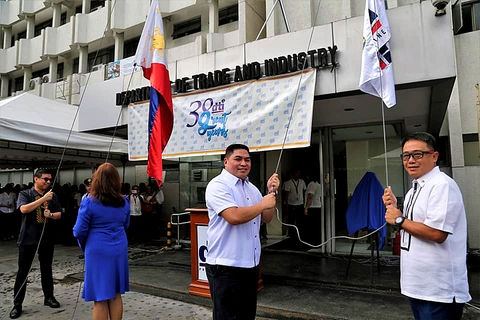
Then in July 2017, the trajectory of the Macatoman family’s professional life took a decisive turn. Abdulgani Macatoman accepted an appointment as Undersecretary of the Department of Trade and Industry.
Public service required his complete focus. Government ethics demanded that he step away from direct corporate leadership.

At that moment, the responsibility for guiding Global Empire International Group passed fully to Mufaida.
She assumed the role of President and Chief Executive Officer, leading the company through the next stage of its development.
The transition reflected not only professional capability but also trust.
Under her leadership, the company continued its work in renewable energy and development-oriented ventures, sustaining the enterprise even as her husband entered the demanding world of national policy.

Yet her interests extended beyond corporate leadership.
In the 2022 national elections, Mufaida Macatoman served as the first nominee of the Ang Kabuhayang Kayang Kaya (AKKK) Party-List, a movement advocating entrepreneurship development, livelihood opportunities, and economic empowerment.
Her advocacy mirrored many of the values that had guided the couple’s shared journey: the belief that enterprise could become a powerful tool for uplifting communities.
The Call to Government Service

The path that eventually led Gani national government did not begin with a single appointment or political ambition. Rather, it unfolded gradually — through a series of engagements that exposed him to the inner workings of public institutions and the complex responsibilities of governance.
By the time he entered formal government service, Gani had already spent years working at the intersection of enterprise, policy, and civic engagement. His experience in business had allowed him to see firsthand how economic decisions made in government offices reverberated across industries and communities. Regulations could determine whether entrepreneurs thrived or struggled; policies could open markets or close doors.
These observations slowly drew him closer to public service.
His earliest roles in government came through advisory work. He served as a Consultant in the Office of the President of the Republic of the Philippines, where he gained insight into the processes through which national priorities were shaped and coordinated.

The experience offered a rare vantage point into the machinery of governance, where decisions often required balancing competing interests and long-term national goals.
At around the same time, he also served as Executive Officer in the Department of Education, Culture and Sports (DECS). The role exposed him to another dimension of public policy — education, a sector he believed formed the foundation of national development. If entrepreneurship and economic growth created opportunity, education ensured that citizens could seize it.
His work later expanded into areas connected with national security and law enforcement. Gani served as a Consultant to the Philippine Center on Transnational Crime (PCTC) as well as to the Office of the Chief of the Philippine National Police (PNP). These engagements required coordination across agencies addressing complex challenges that extended beyond national borders.
Alongside these responsibilities, he also served as a Lieutenant Colonel in the Philippine Army, reflecting his broader commitment to national service.

Through these varied roles, Gani gained a deeper understanding of how public institutions operate. Governance required patience and discipline. It demanded the ability to work within systems that moved deliberately and often required consensus among multiple stakeholders.
These early experiences prepared him for a turning point that would significantly expand his responsibilities.
In July 2017, President Rodrigo Roa Duterte appointed Abdulgani Macatoman as Assistant Secretary of the Department of Trade and Industry (DTI). The appointment placed him within the agency responsible for shaping the country’s economic competitiveness, promoting trade and investment, and supporting the development of Filipino enterprises.
Gani entered the department with a perspective shaped by years in business and advisory roles in government. He understood the concerns of entrepreneurs as well as the institutional realities of public administration.

His diligence and work ethic soon earned the confidence of leadership within the department.
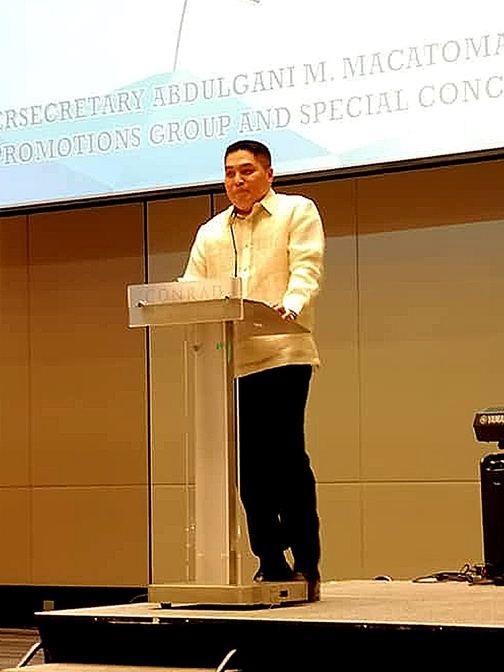
Barely a year after his appointment, in July 2018, he was promoted to Undersecretary for Special Concerns, a role that required coordination across key programs and strategic initiatives.
The scope of his responsibilities continued to grow.
In February 2019, he was given an additional appointment as Undersecretary of the Trade Promotions Group, placing him in a position where his experience in enterprise and international engagement would become particularly valuable.

By that point, Gani had moved fully into the center of the country’s economic policy framework.
The responsibilities awaiting him would involve not only government administration but also engagement with industries, entrepreneurs, and international partners seeking to understand the opportunities within the Philippine economy.
It was a role that demanded both technical expertise and diplomatic skill.
And it marked the beginning of one of the most significant chapters of his public life.

Inside the Department of Trade and Industry
When Abdulgani Macatoman assumed leadership responsibilities within the Department of Trade and Industry, he stepped into one of the most complex arenas of Philippine economic policy.
The agency carried a broad mandate: strengthening domestic industries, promoting exports, attracting foreign investment, and supporting the millions of micro, small, and medium enterprises (MSMEs) that form the backbone of the country’s economy.
These enterprises represent the entrepreneurial spirit of the Philippines. From family-owned workshops and neighborhood retailers to emerging technology ventures, MSMEs provide employment for a vast segment of the population.

Yet they also face formidable challenges — limited access to financing, difficulties in reaching international markets, and the pressures of competing in a globalized economy.
Gani understood these realities well. Having spent much of his career in business, he was familiar with the obstacles entrepreneurs encounter when navigating regulatory systems and competitive markets.
Within the Department of Trade and Industry, he sought to help bridge the gap between policy and practice.
His responsibilities placed him at the intersection of government strategy and private sector development. Programs aimed at strengthening export competitiveness and improving the country’s investment climate became central to the department’s work.

International engagement also played an important role. Trade promotion required constant dialogue with foreign investors, business chambers, and economic partners interested in exploring opportunities in the Philippines.
Gani’s experience in enterprise and international business circles proved valuable in these discussions. He understood the questions investors often asked: How stable are regulatory systems? What opportunities exist in emerging sectors? How can partnerships between local industries and foreign companies be structured to benefit both sides?
Such conversations were rarely limited to economic statistics. They involved building confidence — demonstrating that the Philippines possessed both the resources and the institutional capacity to support long-term investment.
The department’s work also intersected with regional development initiatives, particularly those connected to Mindanao. Expanding economic opportunities in historically underserved regions formed an important part of the country’s broader development strategy.

For Gani, this aspect of the work carried personal meaning. The island where he had grown up possessed enormous economic potential, and initiatives that encouraged entrepreneurship and investment there represented opportunities to strengthen communities as well as industries.
The role demanded constant movement between policy discussions, consultations with business leaders, and international engagements.
Yet throughout these responsibilities, Gani remained guided by a principle that had shaped his career from the beginning. Economic development should not exist solely in policy documents or corporate balance sheets.
It should translate into opportunity — into jobs created, enterprises strengthened, and communities empowered.

Within the Department of Trade and Industry, he sought to advance that vision.
The Global Arena
As the Philippine economy became increasingly integrated into global markets, Gani’s responsibilities also took on an international dimension.
Trade diplomacy had become an essential component of economic policy. Nations competed not only through domestic reforms but also through their ability to attract investment, expand export markets, and position themselves strategically within regional alliances.

Gani’s experience in the private sector proved invaluable in these discussions.
Having spent years interacting with international investors and business organizations, he understood the concerns that often shaped investment decisions — regulatory stability, infrastructure capacity, and the predictability of economic policy.
His work frequently intersected with organizations such as the Foreign Chamber Council of the Philippines, where representatives from foreign business chambers discussed the evolving conditions for investment and trade.
These dialogues were not merely technical. They were conversations about trust.
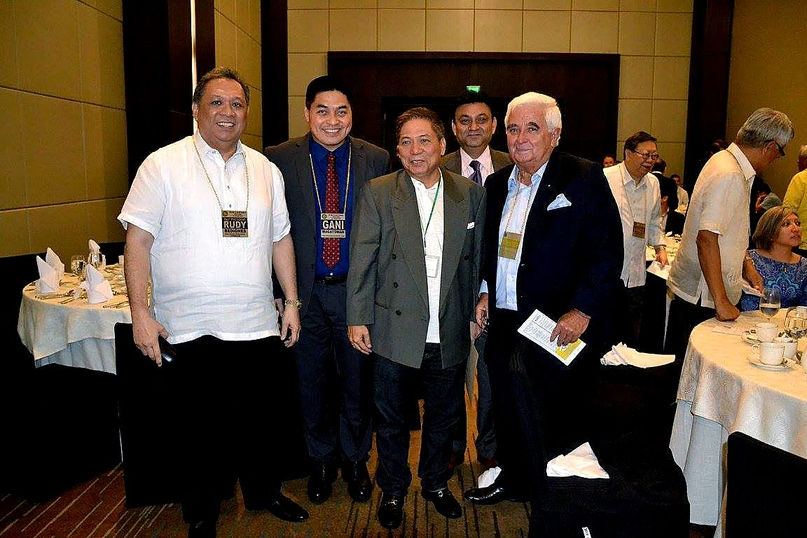
Investors sought assurance that the Philippines could provide a stable environment for long-term development. Government leaders, in turn, sought partnerships that could generate employment, stimulate innovation, and strengthen domestic industries.
Gani often found himself at the intersection of these interests, helping bridge perspectives between global investors and national policy priorities.
In doing so, he contributed to a broader effort to position the Philippines as a competitive participant in the global economy.
Mindanao and the Promise of Development

While his responsibilities increasingly involved national and international initiatives, Gani never lost sight of the region that had shaped his earliest experiences.
Mindanao remained central to his vision for inclusive development.
For decades, the island had faced challenges that extended beyond economics — political tensions, uneven infrastructure development, and the lingering effects of conflict. Yet it also possessed enormous potential.
Rich natural resources, strategic geographic location, and vibrant communities offered opportunities for economic transformation.

Gani believed that entrepreneurship and investment could become powerful instruments for stability.
Through initiatives connected to organizations such as the Bangsamoro Business Council, he advocated for programs designed to attract investors, support local enterprises, and create employment opportunities in the region.
Economic development, he believed, could complement broader peacebuilding efforts by giving communities a stake in stability and progress.
Mindanao, in this sense, represented more than a policy priority.

It was the place where his own journey had begun.
The Public Voice
Leadership sometimes requires more than policy work.
It also requires communication.

Gani’s commitment to entrepreneurship advocacy eventually extended into media through the program “Kabuhayan at Negosyo,” broadcast nationally on Channel 23 and DWIZ 882.
The show offered practical discussions about business development and livelihood opportunities. Entrepreneurs shared their experiences, experts discussed strategies for small businesses, and viewers across the country gained access to information that might otherwise remain confined to policy circles.
For Gani, the program served an important purpose.
Economic knowledge should not belong exclusively to specialists.

Entrepreneurs across the Philippines — whether operating in urban centers or rural communities — deserved access to insights that could help them succeed.
By bringing discussions about enterprise into the public sphere, the program sought to encourage a culture of innovation and initiative.
Ideas and Advocacy
Beyond his work in government and media, Gani also contributed to discussions about emerging economic sectors.

Among these was the global halal economy, a rapidly expanding market encompassing food production, finance, tourism, and consumer goods designed to meet the needs of Muslim populations worldwide.
Recognizing the Philippines’ potential role in this sector, Gani authored “Global Halal Economy,” a work exploring how the country could position itself strategically within this international market.
The book examined not only commercial opportunities but also the broader implications of halal industries for inclusive development — particularly in regions such as Mindanao with significant Muslim populations.
For Gani, the subject represented more than economic analysis.

It reflected a broader belief that development strategies must recognize cultural diversity and regional strengths.
Recognition and Responsibility
Over the course of his career, Gani’s work has been acknowledged through numerous awards and recognitions.
Among them were distinctions such as Management Man of the Year from the Philippine Council of Management, recognition as one of the Ten Most Influential Filipinos by the Philippine Cancer Society, the Lambert Award, and honors from the University of the East as one of its most outstanding alumni.

He has also served as a Reserve Lieutenant Colonel in the Armed Forces of the Philippines, reflecting another dimension of his commitment to national service.
Yet those who know him personally often remark that Gani rarely dwells on recognition.
For him, awards serve less as milestones than as reminders of responsibility.
Leadership, he believes, is measured not by accolades but by the lives affected through one’s work.

Service Above Self
Public service does not always take place within the formal structures of government.
For Abdulgani Macatoman, another dimension of service emerged through an institution whose influence has quietly shaped leaders across generations — the Rotary Club of Manila, the oldest Rotary club in Asia and one of the most respected civic organizations in the Philippines.
His introduction to Rotary came through an invitation from Past Director Amado “Amading” Valdez, who recognized in Gani a set of values deeply aligned with the organization’s mission.
In 2016, Gani joined the Rotary Club of Manila.
Rotary’s guiding principle — “Service Above Self” — resonated immediately with him. The philosophy mirrored the lessons he had carried since childhood in Mindanao: that leadership must be measured not by personal advancement but by the willingness to serve others.
Within Rotary, Gani found a community of professionals, entrepreneurs, and public servants united by a shared commitment to humanitarian service and ethical leadership.
The club’s projects ranged widely — from education and health initiatives to disaster relief and community development programs. Through these efforts, Rotary provided an avenue where professional expertise could be transformed into practical service.
Gani approached Rotary in the same way he approached every responsibility in his life: with quiet diligence and a sense of stewardship.
He participated actively in the club’s activities, contributing not only his professional experience but also his perspective on economic development, entrepreneurship, and community empowerment. Over time, his colleagues recognized both his integrity and his commitment to the institution.
After more than nine years as a member of the Rotary Club of Manila, Gani was appointed Club Auditor for Rotary Year 2026–2027.
The role carries significant responsibility within the organization. The Club Auditor helps safeguard financial transparency and institutional accountability — principles that are essential to sustaining trust within a century-old institution.
For Gani, the position reflected a natural alignment between his professional training in accounting and governance and Rotary’s emphasis on ethical stewardship.
Yet the significance of Rotary in his life extends beyond titles or roles.
The organization represents a community where leadership is expressed through service — through projects that uplift communities, support education, and respond to humanitarian needs.
In Rotary, Gani found a continuation of the same ideals that had guided his journey from the beginning.
Integrity. Responsibility.
And the belief that service, when practiced consistently and humbly, can strengthen the fabric of society.
Family and the Meaning of Legacy
In the public imagination, leadership is often measured through titles held, policies shaped, or institutions guided. Yet for Gani, the deeper measure of a life’s work has always been far more personal.
It lies in family.
Despite the wide scope of his professional journey — spanning enterprise, government service, civic leadership, and public advocacy — Gani has remained deeply conscious that the foundations of character are built not in public office but within the quiet spaces of home.
Throughout the many transitions of his career, one constant presence has been his wife, Mufaida. Their partnership has extended far beyond shared professional endeavors. It has been rooted in a mutual understanding that leadership, whether in business or public service, requires both sacrifice and support. The responsibilities that accompany such roles often demand long hours, difficult decisions, and a willingness to place the needs of institutions and communities ahead of personal convenience.
In such moments, the strength of a family becomes essential.
For Gani, the encouragement and steadfast presence of his wife have been a source of stability throughout the demands of public life. Together they have navigated the shifting landscapes of enterprise and national service while maintaining a home environment centered on faith, humility, and mutual respect.
Their family life has been shaped by the same principles that guided Gani’s upbringing in Mindanao — values passed down from parents who believed that character mattered more than circumstance.
Those values now form the foundation of the household he and Mufaida have built together.
The couple has been blessed with three children: Abdul Hakeem, Amirah Jareeza, and Kamilah Amber.
For Gani, fatherhood represents one of the most meaningful responsibilities of his life. While public leadership carries its own obligations, raising children offers a different kind of legacy — the opportunity to shape the next generation’s understanding of integrity, discipline, and compassion.
In conversations with his children, he often returns to the lessons he learned as a young boy growing up in Mindanao.
Respect for others. Commitment to education. The importance of humility even in moments of success.
And above all, the understanding that leadership is not defined by recognition but by service.
These are the principles he hopes will guide them as they pursue their own paths in life.
Balancing family life with the demands of professional responsibility has never been simple.
Public service often requires travel, extended meetings, and responsibilities that stretch far beyond normal working hours. Yet Gani has remained mindful of the importance of preserving time for the moments that define family life — shared meals, celebrations of milestones, and the quiet conversations that strengthen relationships.
Such moments provide perspective.
They remind him that the ultimate purpose of leadership is not merely institutional achievement but the well-being of people and communities.
As the years have passed, Gani has come to view legacy not as something measured through individual accomplishments but as something reflected in the lives touched along the way.
Legacy can be found in the entrepreneurs who gain opportunities through economic development initiatives. It can be seen in the communities strengthened through cooperation and investment. It can be felt in the institutions that continue to serve long after individual leaders have stepped aside.
But perhaps most enduringly, legacy lives within family.
It lives in the values passed from one generation to the next, in the quiet example of integrity, and in the lessons children carry forward into their own lives.
For Gani, this understanding brings his life’s journey full circle.
The boy who once listened attentively to the wisdom of elders in Mindanao now finds himself sharing those same lessons with his own children.
The principles remain unchanged.
Faith. Humility. Responsibility. Service.
These values shaped his beginnings, guided his career, and now define the legacy he hopes to leave behind.
Epilogue: The Measure of Leadership
The life of Abdulgani Macatoman illustrates a quiet but powerful truth about leadership.
Influence does not always emerge from dramatic moments or public attention.
More often, it grows steadily through years of disciplined work, ethical decisions, and the willingness to serve beyond personal interest.
Gani’s journey — from the communities of Mindanao to the halls of national government — reflects that philosophy.
He has moved between sectors that often appear distinct: enterprise and policy, local communities and international markets, private initiative and public service.
Yet throughout these transitions, one principle has remained constant.
Leadership must serve others.
The Philippines today continues to navigate the challenges of economic development, globalization, and social transformation. Within that evolving landscape, leaders who can bridge perspectives between sectors remain essential.
Gani’s career stands as an example of that bridge.
A life lived between enterprise and nation.
And a reminder that the true legacy of leadership is measured not only by achievements, but by the opportunities created for others to succeed.

 Brandon "Gelo" Wong
 Bridging Nations, Building Understanding: The Rotary Club of Manila’s 25th Weekly Membership Meeting with H.E. Jing Quan
 A Convergence of Purpose: The March 24 Joint Meeting of Three Rotary Clubs