

A LIFE THAT BUILT A NATION | Francisco Tomas Vivencio del Rosario and the Quiet Architecture of a Life That Endures

On the morning of March 2, 2026, Francisco Tomas “Toting” V. del Rosario slipped away quietly, as though mindful not to disturb the rhythm of a world he had long learned to move within without demanding attention.
He was ninety-nine.
There are lives that end with ceremony — announced in headlines, recounted in superlatives, compressed into a litany of achievements meant to capture, in hurried sequence, the breadth of a man’s years. But there are other lives, rarer perhaps, that resist such treatment. They do not lend themselves easily to summary, not because they lack accomplishment, but because their true weight lies elsewhere — in the consistency of their making, in the quiet discipline with which they are lived, in the structures they leave behind that continue long after the man himself has gone.
Toting’s was such a life.
He was not the beginning of the story. He was its continuation — shaped by a lineage of builders, by a mother whose will held a family together, and by a name that had already begun to mean some-thing in the world before he was born.
He had lived through nearly a century of change. He was born into a Philippines still finding its footing in the aftermath of colonial transition, came of age in the shadow of war, built his career in the optimism of reconstruction, and matured into leadership at a time when institu-tions — business, civic, and govern-mental — were beginning to take on the shape of permanence. He moved through all these phases not as a spectator, but as a participant — sometimes at the center, more often just off to the side, where the real work tends to be done.
And yet, if one were to ask what defined him, the answer would not come readily from the list of roles he held.
He had been many things: an accountant trained in the discipline of numbers, a businessman who helped reshape access to modern living, a civic leader who believed deeply in the development of others, a Rotarian whose sense of service extended beyond gesture into structure, a diplomat who carried the weight of representation with quiet clarity. These are all true.
But they are not, in themselves, sufficient.
Because what distinguished him was not the variety of what he did, but the sameness of how he did it.

He approached everything — whether modest or monumental — with a kind of internal order. There was no visible strain in the way he carried responsibility, no flourish in the way he exercised authority. Things were simply done, and done properly. It was not a style that drew immediate notice. It did not seek to.
It endured.
In his later years, when the demands of work had eased and conversation had taken on the slower cadence of reflection, he spoke of success in a way that surprised those who expected something more elaborate. There was no formula, no grand theory. Instead, he spoke of something almost disarmingly simple: the way one chose to do a thing.
He would recall, for instance, a bellman in a hotel in Tokyo — an ordinary man performing an ordinary task, and yet doing so with such quiet pride that the task itself seemed to change in character. It was not the work that elevated the man, but the man who elevated the work.
A man splitting rocks, he would say, is not merely splitting rocks.
He is building a church.
It was a remark offered without emphasis, almost in passing. But it lingered.
Because in it was contained the essence of how he had lived.
The Youngest Son
He was born on January 29, 1927, into a household already in motion.

The Del Rosario family was not one that stood still long enough for any single member to define its direction. It moved forward through the collective momentum of its parts — each sibling finding his place, each carving out a path that would, in time, become a contribution not only to the family name but to the wider world they were beginning to inhabit.
That momentum did not begin with the brothers.
It had been set in motion long before them.
His father, Salvador V. del Rosario, was a man shaped by both intellect and service. Educated at the University of Santo Tomas and later in Madrid, he belonged to a generation that believed in the disciplined pursuit of knowledge and the responsibility that came with it. He was among the early physicians of his time, and his involvement as a delegate to the Malolos Congress placed him within the country’s early efforts at self-definition. His life was one of structure — of study, of profession, of contribution.
But it was his mother, Benita Quiogue, who would define the atmosphere in which her sons were raised.
She came from a lineage rooted in trade and enterprise, the daughter of a family that understood commerce not as theory, but as daily practice. She inherited not only business acumen, but a kind of tenacity that did not easily yield to circumstance. Widowed early, she assumed the weight of the household without hesitation. She did not speak of resilience. She embodied it.
In a family that had known loss — where several children did not survive infancy — the lessons were neither abstract nor gently delivered. Stability had to be built. Discipline had to be maintained. There was no room for drift.
And so the surviving sons — Mariano, Ramon, Jesus Vivencio, and the youngest, Francisco — grew up not only under guidance, but under expectation.
Toting was the youngest.
Before him came men who were already beginning to define what it meant to be a Del Rosario.

Mariano, the eldest, carried himself with a kind of quiet steadiness that inspired confidence. He was dependable in the way only those accustomed to responsibility from an early age can be. In time, he would take charge of the family’s funeral services business — an enterprise that required not only organization, but a certain sensitivity to people at their most vulnerable. He approached it without fanfare, doing what needed to be done, day after day, with little need for recognition.
Ramon moved with a different rhythm. Where Mariano was rooted, Ramon was expansive — comfortable in broader circles, navigating relationships with ease. There was an instinct in him for connection, for understanding how people moved and how influence traveled. His path would bring him into spaces where presence mattered as much as substance, and he learned to carry both.
Then there was Jesus Vivencio — “J” to those who knew him — whose energy seemed to move ahead of him. He began as a salesman for International Harvester, and not just any salesman, but one who understood early that selling was not merely about product, but about possibility. He had a way of seeing opportunity where others saw routine, of pushing beyond the expected boundaries of his role. It was through him that the family would later encounter the opening that would change everything — the chance to take over the distribution of appliances, and with it, to build something of their own.
Each brother was different.
Yet they shared a common trait — a refusal to remain static.
Benita did not raise her sons to inherit comfort. She raised them to create.
Even in the smallest details of daily life, this was evident. She remained deeply present — not only as a figure of authority, but as a participant in the rhythms of the household. Her grandchildren would later remember her not as distant, but as attentive: taking them to the movies, placing coins in their hands for small indulgences, bringing them along on errands — even to collect rent from family properties. These were not grand gestures, but they carried something more enduring. They revealed how work and life were not separate spheres, but continuous, intertwined.
And beneath this lived example was an unspoken standard: that one must be useful, that one must be prepared, that one must never remain idle when there was something to be done.
And then there was Francisco.
The youngest. A menopausal baby, in fact.

There is something particular about arriving last in a family such as this. The path is not unmarked; it is already being carved. Expectations are not loudly declared, but they exist nonetheless — quietly, steadily, like a current beneath the surface.
He grew up not in isolation, but in observation.
He watched how Mariano handled responsibility without complaint, how Ramon moved through people and circumstance with ease, how “J” pushed forward with restless energy, always searching for the next opportunity. He saw how decisions were made, how risks were taken, how work was approached not as obligation but as necessity.
He saw enough to understand that each man carried his own strength.
And that his would have to be different.
At the center of it all remained his mother — decisive, forward-moving, unwilling to accept inertia. If something needed to be done, it was done. If an opportunity did not present itself, it was created.
His father, in contrast, offered something quieter but no less essential. There was structure in the way Salvador approached life — a discipline rooted in education, in order, in doing things properly even when no one was watching.
Between them, something took root in the youngest son.
Not a desire to outshine, nor a need to distinguish himself through force of personality, but a steadier instinct — to understand, to prepare, to be ready when the moment required it.
He was not the loudest in the room. He did not need to be.

He was paying attention.
And in that quiet attention, something essential was forming — an understanding that life was not simply to be lived, but to be built.
Learning to See What Others Missed
At the University of Santo Tomas, the habits that had taken root in silence began to find form.
It was not a place that rewarded noise. It rewarded discipline — steady effort, applied day after day. For Toting, this was not a constraint. It was familiar ground.
He chose Commerce, majoring in Accounting — not because it was the obvious path, but because he saw in it something others often overlooked. Business, he believed, could be learned in the real world — through decisions made, risks taken, outcomes observed.
Accounting was different.
It required structure. It demanded formal discipline. It was a language that had to be learned properly, or not at all.
So, he approached it the only way he knew — quietly, methodically, without display. There was no need to announce ambition. It revealed itself in the work.
He graduated magna cum laude in 1949.

A year later, he passed the Certified Public Accountant examinations.
These were not turning points. They were confirmations — of a way of thinking already in place.
To those outside it, accounting can seem narrow, confined to numbers and ledgers. But to those who stay with it, it becomes something else entirely. It becomes a way of seeing.
One begins to understand that every action creates consequence, that every decision must reconcile somewhere.
Errors do not appear suddenly; they accumulate, quietly, until they surface. And systems, when properly designed, carry far more weight than individual effort ever could.
Toting understood this early.
When he joined SyCip, Velayo, Jose & Co., he entered a world where discipline was not optional. It was the foundation upon which trust was built. The firm itself was still taking shape — Filipino professionals building something that could stand alongside long-established institutions.
There, he encountered a principle that would stay with him for life.
Systems do not succeed because of brilliance alone.
They succeed because they are consistent.

He saw how processes were designed not just to function, but to endure — how decisions were documented, reviewed, validated; how the smallest lapse in discipline could ripple outward into consequence.
And he saw something more enduring still.
That institutions are not built in moments.
They are built in repetitions.
The same standard, applied over and over again, until it ceases to be effort and becomes habit.
DRB: The Opportunity That Changed Everything
By the early 1950s, the Del Rosario brothers were, by all outward measures, already successful. Each had found his footing in a world that rewarded discipline and initiative.
Mariano had anchored himself in a business that required constancy, where steadiness mattered more than recognition and where responsibility was carried quietly, without need for acknowledgment. Ramon, by contrast, moved with a broader ease, navigating circles where relationships shaped outcomes and influence traveled through presence as much as through action. Jesus Vivencio — “J” — had risen within International Harvester not merely through effort, but through instinct. He possessed an uncommon ability to look beyond the immediate transaction and recognize, even early on, the larger possibilities that lay behind it.
Toting, for his part, had taken a different route. His early career moved across industries that appeared, at first glance, unrelated, but which in hindsight formed a coherent preparation. From Burroughs to Shell, from his training in London to his work with Henry Hunter, Bayne & Co., he absorbed not just experience, but structure — how organizations held together, how decisions were made, how
risk was measured, and how systems endured. He was not searching for prominence. He was learning how things worked.

Together, they were doing well.
But they were building for others.
It was their mother who gave voice to what had until then remained unspoken.
The moment came without ceremony, in the middle of an ordinary gathering, where conversation moved as it always had — until it didn’t. Benita Quiogue, who had long watched her sons rise within the structures of other men’s enterprises, chose that moment to speak with characteristic clarity.
“You are all successful,” she said. “But you are making other people rich.”
There was no reproach in her tone, only precision. Then came the question that would linger far longer than the moment itself.
“When will you build something of your own?”
It did not demand an answer. It introduced a direction.
What followed was not haste, but a quiet convergence of intent. The idea settled first before it moved. In time, a company was formed — Del Rosario Brothers, Incorporated. It would later be known simply as DRB, but at that moment, it represented something more than a business venture. It was a declaration that the family would begin to build under its own name.
There was capital, modest but sufficient, and there was the advantage of experience drawn from different fields.

What remained uncertain was direction.
They did not rush to define it.
They waited, but not passively. They paid attention.
It was “J” who first recognized the opening when International Harvester decided to divest its appliance line. Refrigerators and air-conditioning units, once part of its broader portfolio, were no longer aligned with its future. To most observers, it was a routine corporate decision. To him, it was something else entirely — an opportunity shaped by timing and proximity.
Through relationships cultivated over years, he secured for DRB the chance to take over the distribution of these products. More significantly, the arrangement came with access to Central Bank dollar allocations, a decisive advantage in an era when foreign exchange was tightly controlled. It was an opportunity that, once recognized, could not be ignored.
Yet the real question was not whether the brothers could distribute these products, but how.
The market they were entering was narrow by design. A refrigerator cost six hundred pesos, at a time when the minimum wage was roughly one hundred twenty. Ownership, under such conditions, belonged almost exclusively to those who could afford to pay in full. The prevailing model was straight forward — cash, immediate, exclusive — and it had long been accepted as the only way such goods could move.
The brothers saw it differently.
Instead of asking who could afford the product, they began to consider who could afford the process of acquiring it. The distinction was subtle, but it changed everything. Ownership did not have to be immediate to be real. It could be constructed over time.
From this shift in thinking emerged the installment system — structured, deliberate, and aligned with the financial realities of the families they hoped to serve. What appeared simple on the surface was, in truth, a carefully built framework. Installment selling introduced risk, and without discipline, it could quickly unravel. Payments could be delayed, defaults could accumulate, and the balance between inflow and obligation could easily be lost.

This was where Toting’s training proved essential.
He understood that expansion without structure was not growth, but exposure. And so, the system was designed with care. A financing arm — the First Acceptance and Investment Corporation — was established to manage receivables. Promissory notes could be converted into liquidity through banking relationships. Sales operations were organized with discipline, and collections were structured to ensure consistency rather than reliance on chance.
What took shape was not simply a method of selling, but an integrated system that allowed scale without instability.
The results followed quickly. Within three years, revenues rose from two million to nearly fifteen million pesos. Yet the significance of what had been built could not be measured by numbers alone.
Something more fundamental had shifted.
Families who had once stood outside the market found themselves able to participate in it. Ownership was no longer defined solely by immediate capacity, but by the ability to engage over time. What had once been inaccessible became, in a practical sense, attainable.
The business did not merely distribute appliances.
It expanded access.
And in doing so, it altered the structure of the market itself.
For Toting, this was more than a successful venture. It affirmed something he had come to understand through years of observation and practice — that systems, when properly designed, could extend beyond their immediate function. They could create order where there had been limitation. They could enable participation where there had been exclusion.

They could, in quiet but lasting ways, change how people lived.
Beyond Distribution
Success has a way of narrowing a man’s world — if he allows it.
When systems begin to work and the numbers start to rise, there is a natural inclination to hold steady, to protect what has been built. One refines, scales, and safeguards the rhythm that has finally been achieved, careful not to disturb the balance that made success possible in the first place.
Many stop there.
Toting did not.
Even at the height of Del Rosario Brothers’ early success, he understood something that would guide him for the rest of his life — that growth, if it is to matter, must move outward.
By the mid-1960s, the Philippines itself was beginning to change. Cities were expanding, offices were becoming more complex, and the language of business was evolving. What had once been defined by simple transactions was giving way to systems of communication, documentation, and coordination. The world was becoming more interconnected, and with that came new tools — technologies that allowed information to move faster and decisions to be made with greater efficiency.
Many saw these developments as something happening elsewhere.
Toting saw them differently.

He recognized them as opportunities waiting to be brought home.
Through Del Rosario Brothers, he began engaging with companies that were not merely selling products, but shaping entire industries. One of these was Fuji Xerox. At the time, xerography was not yet widely understood, but its implications were unmistakable. Documents that once required time and labor could now be reproduced instantly. Offices could function differently. Information could circulate with a speed that altered the very nature of work.
Introducing such technology into the Philippines was not simply a matter of distribution. It required translation — not of language, but of context. How would it be used? Who would adopt it? What systems needed to be in place for it to take root?
These were not questions the manufacturer alone could answer.
They required someone who understood both sides — the origin of the technology and the environment into which it was being introduced.
Toting became that bridge.
It was a role he would repeat
With Sharp, the trajectory moved further — not just into distribution, but into production. Black-and-white television sets began to be assembled locally, followed in time by color units. What had once been imported could now, in part, be built within the country. It was a quiet shift, but a meaningful one.
The Philippines was no longer merely receiving technology.
It was beginning to participate in it.

These developments did not announce themselves as milestones. They unfolded gradually, within the logic of business decisions that, taken individually, seemed practical rather than transformative. But viewed together, they revealed something larger — a way of thinking that refused to accept limitation as permanent.
For Toting, this was not a departure from what he had done with Del Rosario Brothers.
It was an extension.
Where installment selling had expanded access, these ventures expanded capability. They were different expressions of the same instinct — to recognize what was possible, and then to give it structure.
And yet, even as business continued to grow, another current was beginning to take hold — one that had less to do with products, and more to do with people.
Jaycees: Where Leadership is Tested
He joined the Manila Jaycees in 1948 at the age of twenty-one, at a time when the organization itself was still taking shape. It was his brother, Monching — nine years his senior — who first introduced him to it, drawing him into a circle of young men who believed that leadership was not something to be inherited, but something to be practiced.
At that age, one does not yet think of legacy. One thinks of movement — of doing, of participating, of being part of something that feels larger than oneself.
The Jaycees provided exactly that. It was not a quiet organization. It moved with urgency, animated by the energy of youth and the conviction that action mattered more than intention. Projects were not abstractions to be discussed at length; they were immediate, planned and executed within the span of a term, measured not by theory but by outcome. There was little patience for delay. If something was to be done, it had to be done now.
For Toting, it was a departure from the structured world of accounting and the systems-driven logic of business. Here, leadership was visible. One stood before others, spoke, persuaded, organized. There was no shelter in process alone.

He did not begin as the most visible among them.
But he was among the most prepared.
He approached Jaycee work as he approached everything else — with attention, discipline, and an instinct for structure. While others were energized by activity itself, he looked beyond the movement to the mechanics behind it — how it could be organized, sustained, made effective beyond the immediate moment.
Over time, this distinction became clear. Responsibility followed, not abruptly, but with a certain inevitability. He moved through the organization — Director, then Vice President — and eventually, in 1958, assumed the presidency of the Manila Jaycees at the age of thirty-one.
Leadership at that level reveals something essential — not what a man says he believes, but what he chooses to build.
During his term, the work continued. Playgrounds were constructed, community efforts undertaken, restoration initiatives pursued. These projects addressed immediate needs and carried their own importance. But beneath them, something else was taking shape — something less visible at first, but far more enduring.
An idea.
It did not originate with him alone. It was proposed by a fellow Jaycee, Howard Q. Dee — a man whose own life would later come to be defined by service of the highest order. The idea was simple in its framing, yet profound in its implications: to recognize outstanding young Filipinos — not those already established in power, but those still in the process of becoming.
At the time, recognition tended to be informal, limited to circles that rarely extended beyond their own reach. There was no structured way of identifying excellence across fields, much less of presenting it as something to which others might aspire.
The proposal sought to change that.

Under Toting’s presidency, the idea moved from suggestion to structure. It was refined, organized, and given form in a way that allowed it not merely to exist, but to endure.
On April 15, 1959, the Ten Outstanding Young Men Awards was formally launched.
At first glance, it was a program. But it carried within it something more enduring — a standard.
The first awardees — Napoleon Abueva, Leandro Locsin, Alejandro Roces, along with leaders in medicine, science, and music — were not chosen for prominence alone. They were recognized for contribution, for a kind of excellence that was defined not by position, but by impact.
The awards were presented in Baguio during the national convention, before President Carlos P. Garcia. It was a formal moment, marked by ceremony, but its deeper significance would only become clear over time.
What had been created was not merely recognition.
It was continuity.
Each year, new names would be added. Each generation would encounter, in those names, a model — not of perfection, but of possibility. And through that repetition, the idea would take root, extending beyond the moment of its creation into something that could be carried forward.
For Toting, this was where its true success lay.
Not in the event itself, but in the fact that it could continue without him — that it had been structured well enough to outlast its origin.

It was, in many ways, a reflection of how he thought.
He did not build for the moment. He built for continuation.
And in doing so, he moved beyond the boundaries of enterprise and into something larger — quietly shaping not just projects or institutions, but the way a nation comes to recognize its own.
When Recognition Turns Inward
It is one thing to help establish a standard. It is another to be measured by it.
In 1959, under his presidency, the Ten Outstanding Young Men (T.O.Y.M.) Awards had been launched with a clear sense of purpose — to recognize excellence not as status, but as contribution. It was meant to look outward, to identify those whose work, still in its early stages, carried the promise of shaping the nation.
Two years later, in 1961, that gaze turned inward.
Toting himself was named among its awardees, recognized for Business and Civic Leadership. There is a symmetry in such moments that can easily be mistaken for closure, as though the arc of effort had come full circle. But for him, it was nothing of the sort.
He understood that recognition, if left unchecked, could alter a man’s orientation. It could invite a pause, encourage a shift from movement to reflection, from building to preserving. It could suggest, however subtly, that something had already been completed.
He did not allow that shift to take hold.
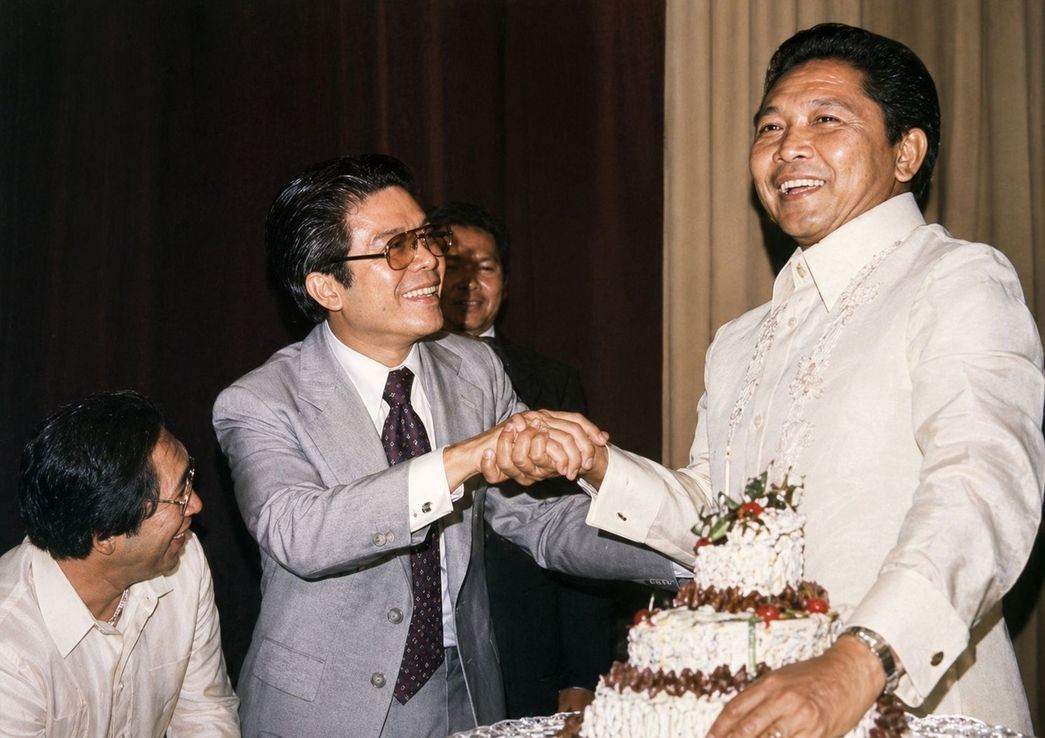
If anything, the recognition sharpened his sense of responsibility. To be measured against a standard he had helped put in place meant that the obligation did not end with the award. It continued — quietly, persistently — long after the moment had passed.
The following year, in 1962, he was named Young Businessman of the Year by the Business Writers Association of the Philippines (BWAP), then a prominent organization known for recognizing excellence in business and education. The acknowledgment came, as others had, without ceremony in his own mind. It was noted, understood for what it was, and then set aside.
Work continued.
What distinguished his response was not modesty in the conventional sense. He did not dismiss recognition, nor pretend it carried no meaning. He understood its value — its ability to open doors, to create space for engagement, to extend influence beyond immediate circles.
But he refused to let it define direction.
Recognition, in his view, was not a marker of arrival. It was an indication to continue.
In later years, when he spoke of success, he did so without reference to awards. He spoke instead of effort, reducing what others might complicate into something almost disarmingly simple.
“Success did not come easily,” he would say. “I had to work hard to achieve it.”
There was no embellishment in the statement — only a quiet acknowledgment of process.
And from there, he would often return to what he considered the more enduring principle: attitude.

It was not brilliance, he believed, that sustained a man, but the way he approached what lay before him. He would recall, with quiet clarity, the image of a bellman in Tokyo — performing an ordinary task with such dignity that the task itself seemed transformed. The man carried himself as though he were the best in the world at what he did, and in that conviction, the work took on a different meaning.
That, to Toting, was the lesson.
Not the scale of the work, but the spirit in which it was done.
It is in this light that his own recognition must be understood — not as elevation, but as alignment between what he believed and how he lived.
As his visibility expanded, so too did the range of his engagements. He was no longer simply a participant in business or civic life, but had become, in the eyes of others, a point of reference — a man whose presence suggested reliability, whose involvement implied seriousness of purpose.
It was not a position he sought.
But it was one he accepted, quietly, as he did everything else.
Rotary: A Place to Practice Service
If the Jaycees had been a proving ground, Rotary would become something else entirely — a place not to test leadership, but to live it.
He joined the Rotary Club of Manila in 1954, and his entry was anything but accidental. He was brought in by men who had already shaped his early professional life — Washington SyCip and Alfredo Velayo, his former principals in the accounting firm where he first learned the discipline of systems, order, and responsibility. They were more than sponsors. They represented a continuity of influence — men who believed that excellence in one’s profession must ultimately find its way into service.

That same year, the Club was under the presidency of Eugenio Puyat, a familiar figure from the Manila Jaycees, whose own journey reflected a transition many would make — from the urgency of youth leadership into a more enduring form of civic engagement.
For Toting, Rotary did not mark a departure.
It marked a continuation.
He entered not as a figure of prominence, but as a participant willing to understand the institution from within. His early years were quiet, but not passive. He served in the Membership Committee, the Fellowship Activities Committee, and the Fines Committee — roles that carried little outward visibility but required patience, attention to detail, and a deep understanding of people. They demanded presence, and he gave it.
Over time, his understanding of Rotary deepened. It was not, he came to see, an organization defined solely by its projects, but a living network sustained by relationships. Structure mattered, but it was not enough on its own. The strength of the institution lay in the quality of engagement among its members.
Fellowship, he realized, was not incidental.
It was foundational.
He developed a balance that would come to define his presence within the Club — the ability to move between seriousness and lightness, between structure and spontaneity, without losing the integrity of either. It was a quiet skill, but one that others began to notice.
Recognition followed, though not in a single moment or confined to a single year. He would be named Rotarian of the Year repeatedly — first in Rotary Year 1961–1962, and again in 1969–1970, 1972–1973, 1975–1976, and later, in a rare distinction spanning 1986 to 1988. These were not acknowledgments of isolated achievement, but of continuity — a recognition of a man who remained present long after he might have been excused from doing so.
Yet if there was one defining characteristic of his Rotary life, it was not the awards.

It was attendance.
Week after week, year after year, he showed up — not out of obligation, but Week after week, year after year, he showed up — not out of obligation, butout of conviction. He believed that service, like discipline, must be practiced, and that presence itself carried meaning. It was through this steady participation that something less visible but more enduring took shape.
Authority.
Not the kind that comes from position, but the kind that emerges from reliability — from being present often enough, long enough, that others begin to depend on it without needing to say so.
Toting developed this quietly.
He also brought something else into the space — lightness.
Within Rotary, the role of the Fine Master sits at the intersection of structure and spontaneity, intended to enliven proceedings and draw people closer through humor. In lesser hands, it can become routine. In his, it became something more.
He understood people — where they could be teased without offense, where humor could open rather than close, where a moment of levity could deepen rather than distract from the sense of community.
There is a story, often retold within Rotary circles, that captures this instinct. During a meeting attended by then President Ferdinand Marcos, Toting, serving as Fine Master, posed a question that balanced boldness with ease: how much, he asked, should two prominent businessmen be fined to support Rotary’s civic projects?
The President, playing along, named the amount — one hundred thousand pesos each.

It was a moment that drew laughter, but it also revealed something more enduring: that authority, when approached with the right tone, need not create distance. It can, instead, draw people in.
This was his gift within Rotary.
He did not impose himself upon the institution. He inhabited it.
In time, responsibility came — not because he pursued it, but because he was ready for it. And when it did, he brought with him everything he had learned — from family, from business, from the Jaycees, and from the quiet discipline of showing up.
By then, he understood something that would define his years in Rotary.
Service is not an event.
It is a way of being.
The Weight of Responsibility
When responsibility finally comes, it rarely announces itself as a culmination. More often, it feels like a continuation — an extension of what has already been practiced, refined, and understood over time.
By the time Toting assumed the presidency of the Rotary Club of Manila in 1965, there was little about the role that felt unfamiliar. He had been present long enough to understand its rhythms, engaged deeply enough to recognize its strengths, and disciplined enough to see where its potential lay. He did not approach the position as something to be occupied, but as something to be used.

The Rotary Club of Manila was, even then, an institution of consequence. Its members were men accustomed to responsibility in their own fields — leaders, professionals, individuals whose time was already committed in many directions. To lead such a group required something more than authority
It required alignment.
Toting did not begin with grand
declarations. He began with structure. He believed that service, if it was to move beyond intention, had to be organized — shaped into programs that could be carried out, measured, and completed. Goodwill alone, no matter how abundant, was not enough.
It needed form.
One of the earliest expressions of this belief came in response to a crisis. The eruption of Taal had displaced families, leaving behind not only damage, but uncertainty. Relief efforts arrived quickly, as they often do — food, clothing, temporary shelter. They were necessary, but they were not sufficient. Relief addressed the immediate moment; what was needed was continuity.
The project that emerged — Operation Damayan — was conceived not as a gesture, but as a solution. Homes were to be built, not as symbols, but as places where families could begin again. Fifty units were constructed with attention to both speed and durability, requiring careful coordination — resources mobilized, labor organized, logistics managed. It was not simple work, but it was familiar. It was, in many ways, an extension of what he understood best: how to take an idea and give it form.
The homes were completed, families moved in, and life resumed. Yet for Toting, completion was never defined by construction alone. What mattered was what followed — whether the structures would endure, whether the families would find stability, whether the effort would sustain itself beyond its initial momentum.
At the same time, another thread was taking shape — education.
He had long understood that opportunity, if it was to be meaningful, had to extend beyond immediate need. It had to create pathways, allowing individuals to move from circumstance into capability. Scholarship initiatives began to take form during his presidency, modest at first, but guided by a clear principle: support must lead somewhere. It must not end at assistance; it must continue toward independence.

He encouraged members to think in these terms — not in isolated acts of generosity, but in systems that could carry individuals forward. Education, when properly supported, could become one such system.
Other initiatives followed. The “Have Gavel, Will Travel” program extended the Club’s reach beyond its usual boundaries, reinforcing connections with other Rotary chapters. A Speakers’ Bureau created space for ideas to circulate, allowing members to engage not only in action, but in thought. Individually, each effort might have seemed modest. Together, they formed something more coherent — a pattern.
What defined his presidency was not any single project, but the way they fit together. Each addressed a different need, each was structured with care, and each was carried through with consistency. Beneath all of it lay an unspoken expectation — that members would participate.
He did not enforce this through instruction. He demonstrated it.
He was present — at meetings, at projects, in conversations — again and again, without announcement. Over time, that presence became a standard. Leadership, in this sense, was not something he imposed; it was something he embodied.
When his term came to an end, there was no dramatic shift, no sense of departure. What had been built was not dependent on him alone. It could continue.
That, more than anything, marked the success of his leadership — not what was accomplished during his time, but what remained after.
There comes a point in a life shaped by discipline when effort alone begins to reveal its limits. One can give time, resources, leadership — but eventually, something deeper becomes clear: that impact, if it is to endure, cannot remain centered on the individual. It must be shared.
For Toting, this realization did not arrive suddenly. It unfolded gradually, shaped by experience and by the repetition of projects, through an awareness that need, in all its forms, always exceeded the capacity of any one person. He had seen what organized effort could accomplish. He had built systems that expanded access and addressed immediate concerns with structure and intention. But now the question shifted — from what more he could do, to how many others could be brought into the work.
The approach he adopted was characteristically simple, yet deeply effective. He did not ask for sweeping commitments. He asked for something precise — something manageable.

One person, one commitment.
Repeated often enough, it becomes something more.
The Don Bosco scholarship initiative would become one of the clearest expressions of this thinking. The need was evident: young men, capable and willing, yet without the means to pursue technical education. At first glance, the solution seemed straightforward — provide funding. But Toting did not approach it as a benefactor. He approached it as an organizer.
He invited participation in its simplest form: sponsor one scholar.
The clarity of the request gave it weight. It did not overwhelm; it made action possible. More than two hundred Rotarians responded, and with that response, more than two hundred lives were set on a different path.
Yet even then, the work did not end.
Education alone could not guarantee outcome. A degree or certification was only a step. What followed would determine whether the effort had truly succeeded. Recognizing this, he extended the system further. Through relationships built over decades — within business, within institutions, within networks that had quietly expanded around him — he created pathways for employment.
Graduates were not left to navigate uncertainty alone. They were guided, placed, and given the opportunity not only to learn, but to build.
What emerged was a sequence that was both simple and profound: education, employment, dignity.
It was not charity. It was continuity

Around the same time, another effort began to take shape — one that carried forward an earlier instinct, now expressed on a larger scale. Housing, once again, but under different conditions.
This was no longer a response to a single event, but to a persistent need.
In Taguig, a project emerged through the alignment of multiple institutions. The city provided land, the Pag-IBIG Fund contributed financing, Habitat for Humanity offered technical guidance, and Rotary mobilized participation. Individually, each element was insufficient. Together, they formed something capable of enduring.
Eight buildings rose, three stories each, and one hundred families moved into homes that were no longer temporary, no longer uncertain, but stable.
To an observer, the outcome might appear straightforward — structures completed, units occupied, project concluded. But Toting did not measure success in completion alone. He rarely did.
What mattered to him was the alignment that made it possible — the coordination of systems, each operating within its own logic, brought together into something cohesive. It was, in many ways, the culmination of how he had learned to think — not as a builder of isolated efforts, but as a connector of systems.
By then, the pattern of his life had become unmistakable. In business, he had expanded access. In civic life, he had created structure. In Rotary, he had multiplied participation.
Each phase did not replace the previous. It extended it.
And through all of it, there remained a quiet consistency — the same instinct that had guided him as the youngest son, observing more than speaking; the same discipline that had shaped his years in accounting; the same clarity that had defined his approach to enterprise.
He was not doing something new. He was doing the same thing, at a different scale.

Toward a Larger Horizon
By the time the next transition came, it did not arrive as a break from what he had built. It came, as most things in his life did, as an extension.
Public service had never been absent from his work. It had always existed at the edges — in the communities he had helped support, in the systems he had quietly organized, in the institutions he had strengthened without calling attention to himself. What had once been informal would now take on a more defined shape.
His entry into government unfolded gradually, shaped by relationships and by a reputation that had been built long
before any formal appointment. During the Aquino administration, he was asked to serve as Philippine Trade Commissioner for Europe, a role that required him to navigate not only markets, but perception — to understand how the country was viewed beyond its borders and how that perception might be strengthened. It was unfamiliar in setting, but not in substance. The work still demanded structure, trust, and alignment across different systems.
From there, he moved into a broader field of responsibility as Undersecretary for International Trade at the Department of Trade and Industry. The role required a wider lens — balancing policy, coordinating priorities, and engaging with a global economy that was becoming more interconnected by the year. It called for steadiness more than speed, judgment more than visibility.
His work soon drew him outward again. As Philippine Consul General to the United Kingdom, based in Southampton, the nature of representation shifted. It was no longer confined to trade or policy, but extended into the everyday concerns of Filipinos abroad. The work became more immediate, more human. It required not only competence, but presence.
By the time he was appointed Ambassador to the Federal Republic of Germany, the transition felt less like a change in direction than the natural continuation of a path already in motion.
It was at this point that he made a decision that revealed, more clearly than any statement could, the principle that had guided him all along.
He divested.

The businesses he had helped build, the interests he had accumulated over
decades, the structures that could have continued to generate both influence and income — he stepped away from them. It was not required of him. It was not imposed.
It was chosen
For Toting, service was not something to be balanced against personal interest. It required clarity — an undividedness of purpose that could not coexist with competing claims. To represent the country fully, he believed, one had to be free of anything that might compromise that representation, even in perception.
In Germany, he entered a world shaped by a different kind of discipline — one governed by diplomacy, by negotiation, and by the careful management of relationships between nations. It was a different arena, but not an unfamiliar one. The principles remained the same.
He approached it as he approached everything else — with preparation, with attention, and with an instinct for alignment. Systems, whether in business or government, worked best when their parts moved together.
He would later speak of persistence as the defining requirement of such work. Progress, he observed, rarely comes quickly. It demands patience, a willingness to continue even when results are not immediately visible.
It was in this spirit that he pursued one of his most notable efforts — the visit of Chancellor Helmut Kohl to the Philippines. The invitation was not secured in a single attempt. It required sustained engagement over time, a steady cultivation of trust, and the discipline to follow through without guarantee.
When it finally came to fruition, the moment carried significance beyond ceremony. From October 29 to 31, 1996, Chancellor Kohl undertook a three-day state visit to the Philippines, meeting
with President Fidel V. Ramos to strengthen economic and bilateral ties. He was accompanied by a delegation of cabinet ministers and businessmen, underscoring the depth of engagement between the two nations and the opportunities such a visit made possible.

For Toting, however, the achievement did not call for celebration.
It called for perspective
He would later describe his role in disarmingly simple terms: to “sell the Philippines.” But what he meant extended far beyond promotion. It was about representation — about presenting the country not as a supplicant, but as a credible partner. It required an understanding of how others saw the Philippines, and the discipline to shape that perception with clarity and confidence.
He carried this out without flourish, with the same quiet steadiness that had defined his life. In doing so, he affirmed a principle he had long practiced: that the most enduring forms of influence are not asserted.
They are earned.
The Man Within
For all the systems he built and the institutions he helped shape, there remained a part of Toting that existed beyond the visible structures of his work. It was quieter, less documented, and yet no less formative.
He had lived much of his life in motion — moving between business, civic engagement, and public service with a consistency that left little room for pause. And yet, there was always a center to which he returned.
Family.
His first marriage, in 1949, to Teresa “Titang” Maceda Gomez, a former Miss Pangasinan, came at a time when his life was still taking shape, when the demands of building a career and establishing an enterprise unfolded side by side. From that union came four children — Juan Carlos, Francisco “Franco” Jr., Maria Socorro “Marissa,” and Maria Clara.

They did not grow up apart from his work, nor in its shadow, but alongside it.
They saw the hours he kept, the rhythm of his commitments, and the steady manner in which he moved from one responsibility to the next. There was little need for explanation. The example was there, quietly but persistently, in the daily repetition of effort.
At home, another dimension of his character revealed itself with clarity.
He was, by all accounts, a stern disciplinarian.
Order was not something he reserved for business or public life; it extended into the household with the same firmness of expectation. Language, for instance, mattered. When his children were heard using profanity, the correction was immediate and unmistakable — he would have them wash their mouths with soap, a lesson delivered not in anger, but in principle. Words, like actions, carried weight, and they were to be used with care.
Time, too, was not negotiable. Dinner was at eight o’clock — exactly. No matter the circumstance, all were expected to be home. If they were not, the consequence was equally clear: grounding for the rest of the week. It was not punishment for its own sake, but an insistence on discipline, on accountability, on the understanding that structure begins at home.
And yet, beneath the firmness, there was no absence of care.
He was not a man given to grand displays of affection, but neither was he distant. He guided in much the same way he led — through expectation rather than instruction, through presence rather than pronouncement. Those closest to him would later recognize this as his way. He did not impose unnecessarily; he allowed space. But within that space, the boundaries were clear, and responsibility had room to take root.
Life, as it often does, did not remain unchanged.
In 1974, his marriage to Titang came to an end. It was a turning point that did not unfold in public view, nor was it something he spoke of at length. Like many aspects of his life, it was carried quietly, without spectacle, absorbed into the broader movement of years that continued to demand his attention and resolve.

Four years later, in 1978, he married again — this time to Carmencita Katigbak of Lipa, Batangas, whose presence brought a different kind of balance into his later years. From this marriage came a daughter, Ma. Elena.
By then, he was no longer the young man finding his place in the world. Much had already been built. Yet the expansion of his family gave his life a continuity that extended beyond work, reshaping not its direction, but its depth.
It is often assumed that men who live at such a pace — who move through business, civic life, and public service with such constancy — must leave something behind in the process. Perhaps that is true. But in Toting’s case, what emerges is not absence, but integration.
His family was never separate from his life’s work. It was part of it — not in the sense of direct involvement in projects or institutions, but in the way it anchored him. It provided a space where the demands of the outside world could settle, where expectations did not need to be carried in full.
And yet, even within that space, the same principles remained. Discipline. Consistency. Presence.
There was no version of himself that he set aside when he stepped away from public life. He remained, in essence, the same man — measured, steady, unassuming.
If there was warmth, it revealed itself not in grand gestures, but in the constancy of small things: the time he gave, the attention he paid, the quiet assurance that, whatever else required him, he would return.
In the end, what defined him most clearly was not how he divided his life, but how he refused to divide it at all. He lived it as a whole — each part reinforcing the other, each role grounded in the same enduring center.
The Thinker
In his later years, when the urgency of building had gradually given way to the clarity of reflection, Toting found himself speaking more often — not to instruct, but to share.

He did not speak in abstractions. He spoke in stories.
One of these, which he would return to with quiet consistency, was the image of a bellman in Tokyo. There was nothing remarkable about the setting, nor about the task itself. The man opened doors, carried luggage, greeted guests — work that, to most, would pass without notice. And yet, in the way he carried himself — in the care with which he handled even the smallest gesture — there was something unmistakable.
Dignity.
To Toting, this was never incidental. It was the point.
The man was not defined by the task before him, but by the way he chose to perform it. And from this, Toting drew a conclusion that would linger long after the story was told: a man splitting rocks is not merely splitting rocks — he is building a church.
It was a simple observation, almost understated. But within it lay the essence of how he understood life.
Success, he would say, did not come easily. “I had to work hard to achieve it.” There was no embellishment in the statement, no attempt to soften its meaning. Effort was indispensable. But over time, he came to understand that effort alone was not enough.
There had to be something else.
Attitude — not the kind that announces itself, but the kind that endures. The quiet disposition that sustains a man when recognition is absent, when progress is slow, when the work itself offers no immediate reward.
He spoke of leadership in much the same way — not as a quality one possessed, but as something one practiced, repeatedly and without spectacle. He would point, at times, to figures like Ramon Magsaysay, not for their position, but for their readiness to accept responsibility when it was needed, and to act without hesitation when the moment called for it.

By then, however, his own life had begun to move into a different rhythm.
After completing his ambassadorial stint in Germany, he did not retire in the conventional sense. He returned to the world he understood best, but in a more focused and deliberate way. Through F.V. Del Rosario and Associates, Inc., he concentrated on the trading of club shares — an arena that required not only financial acumen, but the same discipline and judgment that had defined his earlier years in accounting and enterprise.
At the same time, he remained deeply engaged in corporate life, serving as director across a wide range of companies — twenty-one in all. Among these were major institutions such as Philippine National Bank, Philippine Airlines, First Philippine Holdings, and Philippine Commercial International Bank, along with numerous industrial, financial, and trading firms. It was a breadth of involvement that reflected both trust and reputation — earned over decades, sustained through consistency.
Yet even in this phase, there was no sense that he was accumulating for its own sake. The work was measured, deliberate, aligned with the same principles that had guided him from the beginning.
What mattered, in the end, was not what one had been given, nor even what one had built.
It was what one had done with it.
And if there was a measure of success, it was not to be found in awards or recognition, but in something quieter — a sense that the work had been carried through, that effort had found its proper place, that what had been started had, in its own way, been completed.
And yet, within those continuities, something of him remained.
The homes he helped build still stand, not as monuments, but as places where families continue to live and begin again. The scholars he supported have long since moved beyond the moment of assistance, working, providing, building lives of their own. The institutions he helped shape — within business, within Rotary, within the broader fabric of civic life — continue to function, often without conscious awareness of the man whose discipline and clarity once helped give them form.
Perhaps this is the truest measure of his life.
Not what he held, but what he left behind that no longer depended on him.
He did not set out to create permanence, nor did he speak of legacy in grand terms. But in the way he worked — in the systems he built, the standards he upheld, the consistency he practiced — he created something that endured beyond his presence.
In time, he became part of the structure of things.
There are lives that draw attention, and there are lives that sustain. His belonged to the latter. It was not lived loudly, nor marked by spectacle, but carried forward with a steadiness that
proved, over time, to be its own kind of strength
“Happiness,” he once said, “with all that has been achieved.”
It was not pride. It was clarity.
Epilogue: What Remains
On March 2, 2026, Toting passed away due to complications from pneumonia.
In his final years, he had lived a quieter life, attended to by a caretaker and a driver. His health had begun to decline nearly a decade earlier. The man once defined by an almost cyclonic energy — moving effortlessly between business, civic work, and public service — had gradually been confined to a wheelchair, his physical world narrowing even as the imprint of his life continued to expand beyond him.
He was, by then, the last of the illustrious Del Rosario brothers of his generation — a generation that had helped shape industries, expand opportunity, and leave an indelible mark on Philippine business and civic life. With his passing, a chapter quietly came to a close.
The world, as it always does, did not stop.
Meetings continued. Projects moved forward. Lives unfolded in their own directions, shaped by forces both visible and unseen.
Even in his final years, when movement was limited and the pace of his life had slowed, that steadiness remained. It had never depended on circumstance. It was, instead, a way of being — formed early, practiced often, and held to until the end.
And so, what remains is not simply memory, but continuation.
If there is a lesson to be drawn from his life, it does not arrive as instruction, but as example: that no task is small when undertaken with purpose, that no role is insignificant when carried out with integrity, and that a life lived in quiet, consistent service does not diminish with time.
It endures.

 Dr. Erika Fille Legara
 The Architecture of Trust: The 27th Weekly Membership Meeting of the Rotary Club of Manila
 TOWER Awards 2026 Preparations