

The Architecture of Trust: The 27th Weekly Membership Meeting of the Rotary Club of Manila

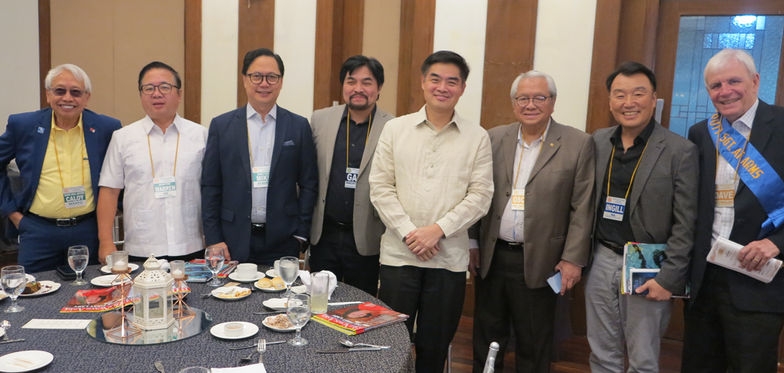
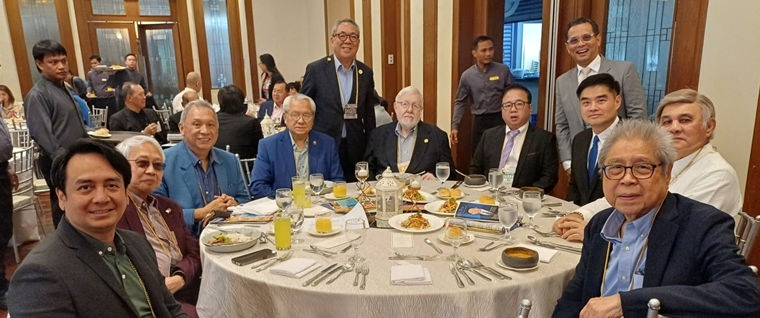
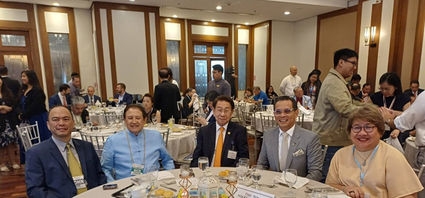
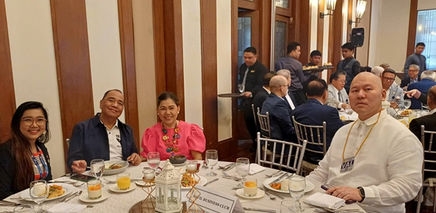
On a warm April afternoon at the Manila Polo Club, beneath high ceilings that have borne witness to generations of discourse and decision, the Rotary Club of Manila convened its 27th Weekly Membership Meeting, an assembly that felt at once familiar and forward-looking, anchored in tradition yet quietly leaning into the future.
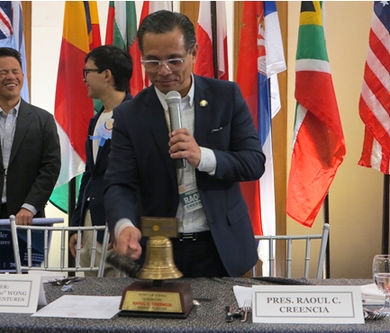
The gathering was called to order by President Raoul C. Creencia, whose steady hand continues to define the rhythm of Rotary Year 2025–2026. The invocation, solemnly delivered by STAR Rotarian Winston M. Ginez, set a tone of reflection, followed by the stirring cadence of the Philippine National Anthem and the Club’s own hymn, rendered by the RCM World-Famous Music Chorale. In that moment, the room became more than a venue. It became a continuum of purpose.

Presiding as moderator, Club Secretary Antonilo D.C. “Anton” Mauricio guided the proceedings with measured ease. Rotarian Raymond N. “Ray” Davis led the recitation of the Four-Way Test, while the Chorale returned to offer a welcome song that softened the formalities with warmth. The celebration of April birthday celebrants, among them Rotarian Dick Lee, Vice-President Ricky Guevara, Incoming Club Secretary Albert Alday, Past Director Noy Benedicto, Rotarian Willie Peliño, Rotarian Mike Ozaeta, Director-Elect Caloy Serapio, Rotarian Vic Garcia, and Assistant Internal Auditor Mike Roxas, added a personal cadence to the afternoon, a reminder that Rotary’s strength lies not only in its programs but in its people.
The meeting was further distinguished by the presence of District Governor-Elect Maria Rosa "Bing" N. Carreon, whose attendance lent both significance and continuity to the occasion, symbolizing the seamless thread of leadership that binds the district and its premier club.

A moment of purpose followed as Past District Governor Alexander P. “Alex” Cureg led the Bayanihan Fundraising segment, invoking the enduring Filipino spirit of collective action.
Soon after, the Club welcomed new members into its fold, Mr. Manuel E. Pangilinan of Finasiatech Corporation, proposed by President Creencia, and Mr. Myles Seymour Y. Tan of Llyon Industrial Corporation, proposed by President-Elect Reginald T. “Reggie” Yu. Their induction, solemnized by the President, symbolized continuity, the passing of Rotary’s torch to those who will carry it forward.

A Turning of the Lens: President’s Time
In his remarks, President Creencia paused to recognize District-Governor Nominee-Designate Hermie Esguerra, for his yeoman efforts in reconstructing the RCM headquarters and offices at his personal cost. Yet it was clear that the afternoon was building toward something more, a glimpse into a world rapidly reshaping itself.

The Future, Articulated
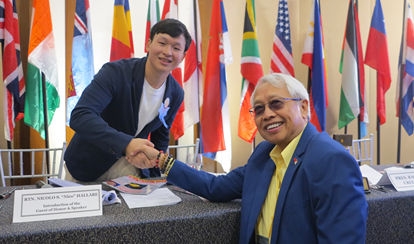
The introduction of the Guest of Honor and Speaker by Rotarian Nicolo S. “Nico” Hallare carried with it a sense of anticipation. The speaker, Mr. Brandon “Gelo” Wong, Co-Founder of BYC Ventures, represented a new archetype of leadership, young, technical, and deeply engaged in nation-building through innovation.

At just 23, Wong stood before a room of seasoned leaders not as a disruptor in defiance of tradition, but as a bridge between eras.
He began not with abstraction, but with clarity. Blockchain, he explained, is not cryptocurrency, an important distinction often blurred in public discourse. Rather, blockchain is infrastructure, “the road,” as he put it, upon which various applications such as currency, contracts, and identities may travel.

From there, he traced the evolution of the internet, from Web 1.0’s static consumption, to Web 2.0’s participatory platforms, and finally to Web 3.0’s promise of ownership, where individuals reclaim control of their data. This progression framed blockchain not as novelty, but as inevitability.
Yet Wong’s most compelling argument lay not in theory, but in application.

He spoke of the Philippines, of a nation quietly positioning itself at the frontier of technological governance. Through partnerships with agencies such as the Department of Budget and Management, the Department of Public Works and Highways, and the Department of Information and Communications Technology, his team has helped place over 90 billion US dollars in government records on-chain.
This was no small claim. It meant that national budgets, infrastructure records, and financial allocations, traditionally vulnerable to opacity and manipulation, could now exist in a tamper-proof, verifiable system accessible to citizens, NGOs, and media alike.

“Blockchain does not replace institutions,” Wong emphasized. “It makes them more trustworthy.”
The implications were profound. In a country where public trust in data remains fragile, where systems are often fragmented, blockchain offers a singular source of truth, a ledger that resists alteration not through authority, but through consensus.

He illustrated this elegantly. To alter a single piece of data on a blockchain, one would have to simultaneously change it across thousands of independent nodes. Truth, in this system, is not dictated. It is validated.
Beyond governance, Wong painted a broader horizon. Land titles that cannot be duplicated. Medical records that follow patients seamlessly. Academic credentials immune to forgery. Even elections, he suggested, could one day be secured by immutable registries.

And then, with a subtle shift, he looked ahead.
Blockchain, he argued, will not stand alone. It will converge with artificial intelligence, serving as the verification layer in a world increasingly shaped by machine-generated information. In an age where truth itself may be contested, blockchain becomes not just a tool, but a safeguard, a quiet arbiter ensuring that what is known remains anchored in what is real.

The room, accustomed to discussions of service projects and civic initiatives, found itself contemplating something larger, infrastructure not of roads or buildings, but of trust itself.
Dialogue and Recognition

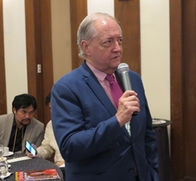
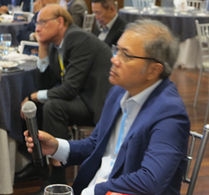
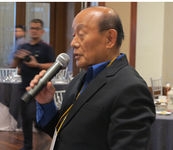
The Open Forum that followed allowed members to engage directly, bridging the gap between concept and context. Questions moved fluidly, from practical applications in business to broader implications for governance, reflecting a genuine curiosity among Rotarians to understand and perhaps participate in this unfolding transformation.
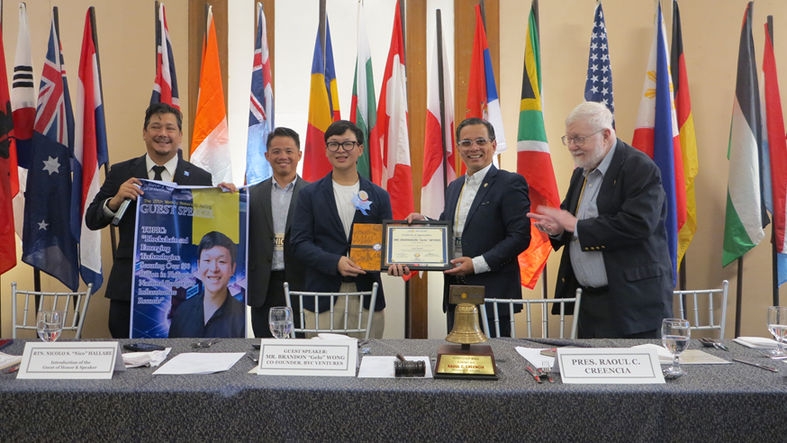
President Creencia later presented Wong with a Certificate of Appreciation, a gesture that, while customary, carried deeper meaning. It acknowledged not only a speaker, but a shift, a recognition that Rotary’s mandate of service must evolve alongside the tools that shape society.

The Quiet After
As the meeting drew to a close and was formally adjourned by President Creencia, the conversations did not end. They lingered, in small clusters, over coffee, in reflective pauses.

For what had transpired that afternoon was not merely another Weekly Membership Meeting. It was an encounter between legacy and possibility. Between those who have built institutions over decades, and those now reimagining how those institutions may endure.
In the end, the 27th Weekly Membership Meeting was less about blockchain, and more about belief, the belief that systems can be made better, that trust can be engineered, and that even in a world of rapid change, the enduring values of Rotary, integrity, service, and fellowship, can find new expressions in the architecture of tomorrow.

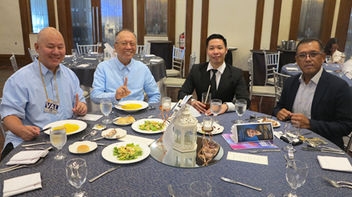
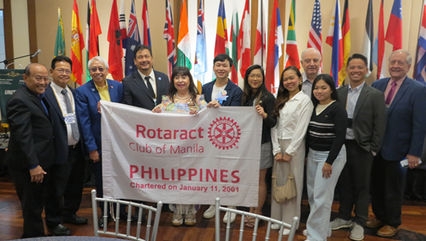
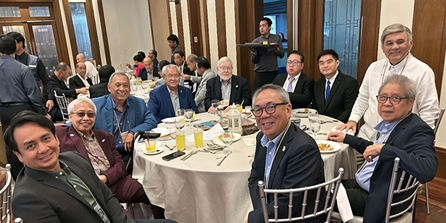
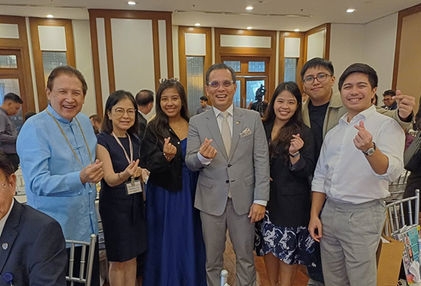
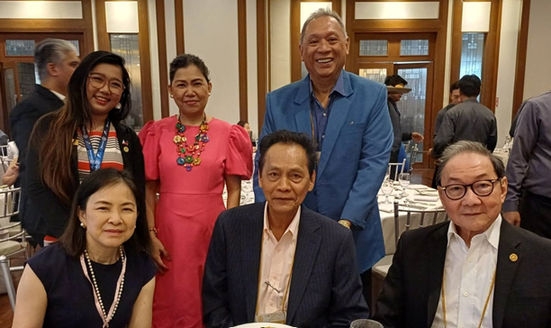
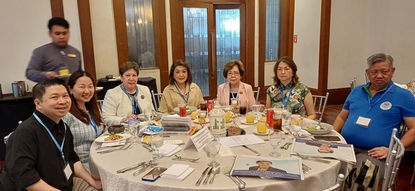
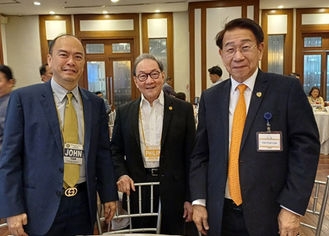
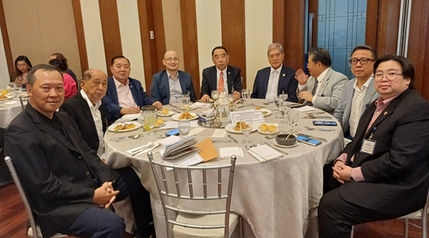
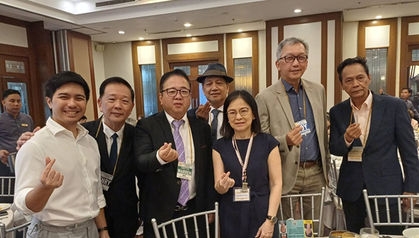
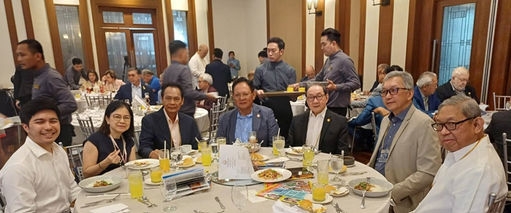
Meeting Fellowship

 Dr. Erika Fille Legara
 A LIFE THAT BUILT A NATION | Francisco Tomas Vivencio del Rosario and the Quiet Architecture of a Life That Endures
 TOWER Awards 2026 Preparations