

Every Step, A Promise of Hope
President Reginald Yu joined Rotaractors and fellow Rotarians in the pre-dawn Alay Lakad 2026 walk along Roxas Boulevard to support underprivileged Filipino youth.
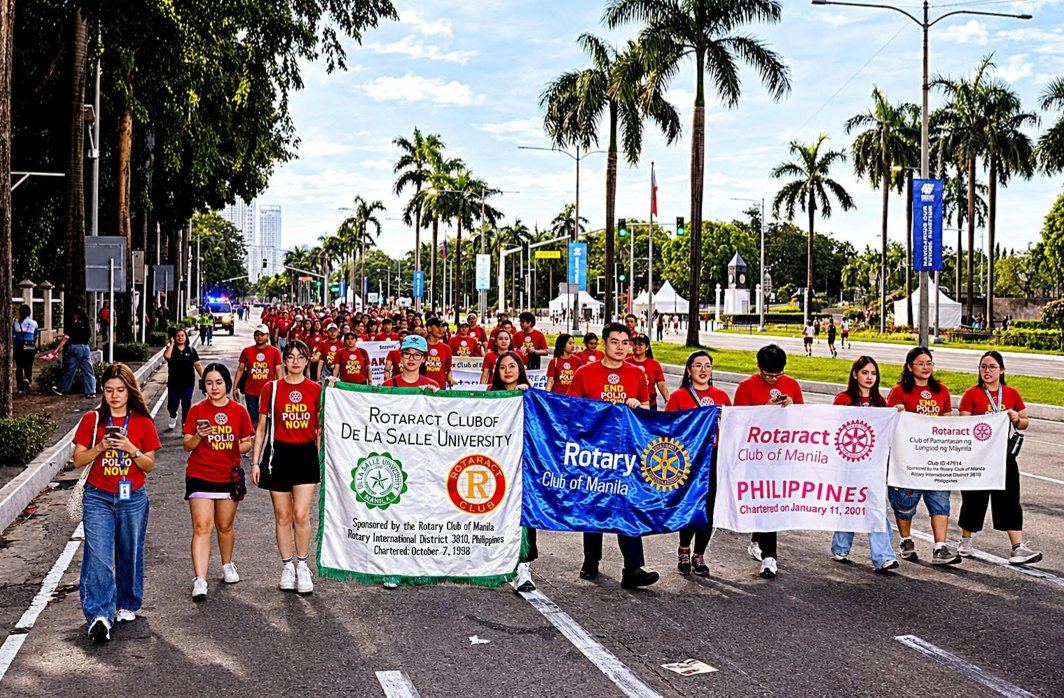
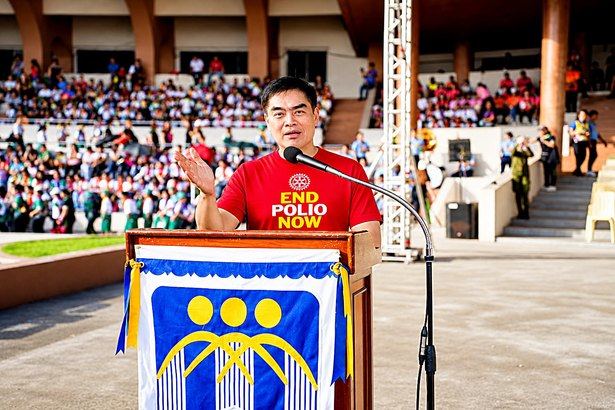
At four o'clock on a Sunday morning, November 22, 2026, Manila was still largely asleep. The streets surrounding Rizal Park, ordinarily bustling with traffic and activity, were unusually quiet. The sun had yet to rise, and the city seemed reluctant to surrender its last few hours of rest. Yet here I was, arriving at the assembly area for Alay Lakad 2026, joining a tradition that had endured for more than half a century.
I have attended countless civic gatherings throughout my years in community service, but there is something particularly meaningful about an event that requires people to leave the comfort of their beds before dawn. At that hour, participation is no longer a matter of convenience. It becomes a deliberate choice, a small personal sacrifice made in the service of something greater than oneself.

I was pleasantly surprised to find that I was not alone. A few fellow Impact Creating Presidents (ICPs) and enthusiastic Rotaractors had already arrived, equally determined to lend their presence to the occasion. Their early appearance brought an immediate warmth to the otherwise quiet morning.
We exchanged greetings and pleasantries as other participants gradually gathered, and I found myself reflecting on how much of volunteerism begins with something as uncomplicated, yet increasingly uncommon, as simply showing up.

This year's gathering marked the 54th anniversary of Alay Lakad, the nationwide walk-for-a-cause movement established in 1972 to help underprivileged and out-of-school Filipino youth gain access to education, financial assistance, and livelihood opportunities. What began as a collective expression of concern for disadvantaged young people has grown into one of the country's enduring traditions of civic participation, bringing together generations of Filipinos who believe that poverty should never be allowed to extinguish a child's aspirations.
The official theme, "Hakbang na may Impact: Kabataan at Edukasyon, Tungo sa Matatag na Kinabukasan," could hardly have been more appropriate. Its emphasis on education and youth development resonated with the very reasons many of us became involved in Rotary. We recognize that the circumstances of a child's birth should not determine the limits of his or her future, and that education remains one of the surest ways to break the intergenerational cycle of poverty.
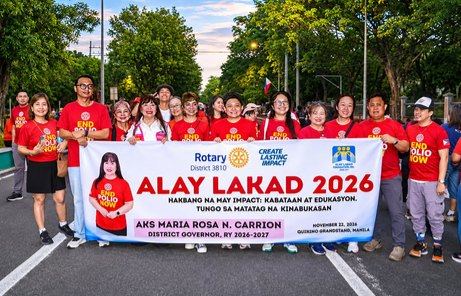
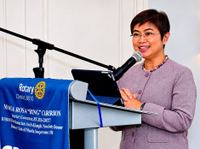
This year's celebration carried particular significance for our Rotary family. Rotary International District 3810 served as host, with District Governor Bing N. Carrion taking on the responsibility of Alay Lakad 2026 Host and National Committee Chairperson, working alongside Alay Lakad Foundation, Inc. President John Siy. Lions International District 301-D1 joined as co-host, while Kiwanis International Philippine Luzon District Division 4E-1 and other civic organizations participated as partners.
It was an impressive demonstration of what becomes possible when organizations with different histories and traditions set aside institutional distinctions in pursuit of a common purpose.

For the Rotary Club of Manila, Asia's First Rotary Club, founded in 1919, our participation was a continuation of a longstanding commitment to education, youth empowerment, and community development. The undertaking also reflected Rotary International's 2026–2027 theme, CREATE LASTING IMPACT, a reminder that worthwhile service must ultimately be judged by the difference it makes in people's lives rather than by the ceremonies and publicity surrounding it.
Our Rotary contingent was assigned to Walkgroup 1, identified by the color blue, with the assembly point along Padre Burgos Street on the Planetarium side of Rizal Park. The organizers had scheduled assembly between 4:30 and 5:15 a.m., followed by departure toward the Quirino Grandstand, where the main program was set to begin at seven o'clock. Our designated route passed through Padre Burgos and Katigbak Streets, skirting some of Manila's most recognizable historical landmarks.

There was something fitting about walking through this part of the capital. Nearby stood the Rizal Monument, a solemn reminder of a national hero who believed deeply in the transformative power of education and the promise of the Filipino youth. More than a century after his death, we were still confronting many of the challenges that concerned him: unequal opportunities, the persistence of poverty, and the struggle to give young Filipinos the means to shape their own destinies.
As the morning unfolded, I was struck by the diversity of those who had gathered. Rotary leaders and members, Rotaractors, representatives of other civic organizations, and volunteers from different generations had answered the same call. We came from different backgrounds, but our presence reflected a shared conviction that the future of our country depends considerably on what we are prepared to invest in its young people today.

Alay Lakad's mission is particularly relevant in a country where the barriers to education extend well beyond tuition fees. For many struggling families, the cost of transportation, school supplies, meals, uniforms, and daily allowances can become overwhelming. Young people who have already dropped out of school face even greater difficulties, often needing alternative learning opportunities, vocational training, and practical assistance to regain their footing.
The resources mobilized through Alay Lakad are intended to help address these needs, supporting educational opportunities and skills development for disadvantaged youth. Although no single fundraising activity can resolve the complex problem of educational inequality, the movement's enduring value lies in its ability to sustain public attention and collective responsibility across generations.
I found myself especially encouraged by the presence of our Rotaractors from the Rotaract Club of Manila, the Rotaract Club of De La Salle University-Manila, the Rotaract Club of Philippine Christian University-Manila, and the Rotaract Club of Pamantasan ng Lungsod ng Maynila. Here were young men and women who had willingly surrendered a leisurely Sunday morning to support the aspirations of other young Filipinos, many of whom they would probably never meet. They were not merely participants in an organized walk. They were learning, through experience, that leadership carries obligations extending beyond personal advancement.
Having spent much of my life in civic organizations, I have come to appreciate that the most effective lessons in leadership are seldom confined to lecture halls or formal training programs. They are acquired through shared responsibilities, personal sacrifice, and the quiet satisfaction of contributing to something worthwhile. Our Rotaractors were receiving precisely that kind of education, one that cannot be measured by grades or academic credentials but may nevertheless influence the kind of leaders they eventually become.

As the activities drew to a close, I thought it would be a nice gesture to treat our participating Rotaractors to breakfast. We proceeded to the McDonald's branch along United Nations Avenue, where I hosted a modest meal for the young volunteers under the care of the Rotary Club of Manila.
As I looked around the tables, I felt a quiet sense of satisfaction. The morning had begun in darkness, with a handful of dedicated volunteers gathering along the streets of Manila. It was ending in the cheerful company of young people whose willingness to serve gave me renewed confidence in the future of Rotary.
The contrast was not lost on me. We had spent the morning walking to help disadvantaged young Filipinos pursue an education, and here I was, sharing breakfast with another group of young Filipinos who were themselves learning some of life's most important lessons through volunteerism. In their enthusiasm, friendships, and emerging sense of responsibility, I could see the continuing relevance of the ideals that have sustained Rotary for more than a century.
The occasion also reminded me that civic service need not always be accompanied by grand gestures or substantial expenditures. The walk itself was a modest act of solidarity. Our breakfast afterward was an equally modest expression of appreciation. Yet both possessed a significance beyond their immediate circumstances, because they strengthened the relationships and commitments upon which sustained community service depends.
I extend my heartfelt congratulations to District Governor Bing N. Carrion, Alay Lakad Foundation, Inc President John Siy, and the many organizers, partner institutions, and volunteers who helped bring the 54th anniversary celebration to fruition. I am equally grateful to my fellow Impact Creating Presidents and our Rotaractors, whose presence demonstrated that the spirit of volunteerism remains very much alive.
Fifty-four years after its founding, Alay Lakad continues to offer a compelling lesson in the power of collective action. Its longevity is remarkable, but its real achievement lies in keeping alive the belief that ordinary citizens, acting together, can help expand the possibilities available to those who have been given fewer advantages in life.
The walk may have ended at the Quirino Grandstand, but its purpose extends far beyond that destination. It lives on in every young Filipino given another opportunity to study, acquire a skill, or pursue a dream that once seemed beyond reach.
And if our participation helped, even in some small way, to advance that purpose, then waking up at three o'clock in the morning was a small price to pay for a Sunday exceptionally well spent.
 Staying Awake So That Others May Sleep
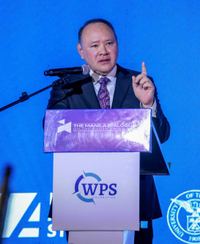 Honorable Gilberto C. Teodoro, Jr., Secretary of National Defense
 Project Alphabet
