

The Cooperative Dreamer: Faith, Resilience, and the Enduring Light of Roberto Mamangon Pagdanganan
From Calumpit, Bulacan to the governorship, the Cabinet and the Rotary Club of Manila presidency, the life of Roberto “Obet” Pagdanganan.

History often begins not in palaces or boardrooms but in the humblest of homes. For Roberto “Obet” Mamangon Pagdanganan, the story starts in the small town of Calumpit, Bulacan, where the river winds lazily past rice paddies, and life is measured by the cycles of planting and harvest.
His father was both leader and laborer — a former barangay captain and municipal councilor who, despite positions of authority, still worked with his hands as a carpenter and farmer. His mother, equally steadfast, rose before dawn to set up her stall at the market, trading vegetables and small wares so her children might eat and study. Together, they carried the dignity of ordinary people: working not for glory, but for survival, always anchored in faith and family.
Obet was the eldest of nine siblings, and with that role came the heavy weight of responsibility. He knew from an early age that his steps would shape the path of those who followed him. His younger brothers and sisters, in quiet acts of love, even deferred their own schooling so that he could continue his education. Their sacrifices were not small — they surrendered dreams so he could chase his. That burden became his fuel.
His father, too, left a legacy of selflessness that shaped Obet’s worldview. As an agrarian reform beneficiary, he was awarded a one-hectare farmlot in Barangay Sto. Niño, Calumpit. Yet instead of keeping it for himself, he donated the land in 1987 to the Department of Education for the construction of Sto. Niño Elementary School. After his father’s passing in 1992, the school was renamed in his honor as the Juan T. Pagdanganan Jr. Memorial Elementary School. To this day, it stands as a beacon of opportunity where young pupils receive free basic education — a gift of land transformed into the gift of learning.
From his earliest years, Obet stood out as a boy of promise. He was curious, diligent, and determined. In the classroom, he was always at the top, earning the coveted title of Valedictorian both in elementary and high school. But academic honors were only the surface. Beneath them was a boy with a quiet fire — one who believed that education was not merely for personal advancement, but a duty, a way to lift his family and community.
Calumpit, with its modest homes and simple folk, became the wellspring of his values. The town gave him roots — humility, discipline, and faith. The sacrifices of his parents and siblings planted in him a lifelong sense of responsibility. Every exam he aced, every scholarship he won, was not his alone. It belonged also to the father who built furniture by hand, to the mother who rose before sunrise, to the brothers and sisters who stepped aside so he could step forward.
In the evenings, studying by dim kerosene light, Obet would often whisper silent promises to himself: that he would not waste their sacrifices, that he would carry them with him wherever he went. These vows would echo through the decades — in classrooms and boardrooms, in rallies and capitols, in victories and even in sorrows.

For out of this small-town boyhood would rise a scholar, a professor, a corporate executive, a governor, and a national leader. And yet, he would never forget where it all began: in the muddy fields of Calumpit, in the clatter of a market stall, in the humble home of a family that chose sacrifice so one of their own could soar.
This is the story of Roberto “Obet” Pagdanganan — not just of a man who rose, but of a man who carried with him the dignity of his roots, the strength of his family, and the enduring belief that leadership is service.
Scholar and Student Leader
The boy who grew up in Calumpit carried with him a hunger that no poverty could silence — a hunger for knowledge, for growth, for excellence. Education was not simply an obligation; it was his passport out of want and his way of honoring the sacrifices of his family.
From elementary to high school, Obet’s path was marked by brilliance. He stood at the top of his class year after year, graduating Valedictorian twice. Teachers remembered him not only as the brightest mind in the room but also as a leader in spirit — the kind of student who helped classmates with lessons, who organized study groups, who volunteered to lead. By the time he reached Grade 6, the people of his town had already recognized his promise. He was elected Boy Mayor of Calumpit, an honor that carried more symbolism than authority, but one that hinted at what lay ahead.
Even earlier, as a boy in Grade 1, Obet’s heart had been shaped by an event that shook the entire nation: the sudden death of President Ramon del Fierro Magsaysay, the seventh President of the Philippines, in a plane crash on March 17, 1957. To millions of Filipinos, Magsaysay was the very embodiment of honesty, humility, and servant leadership — the “Idol of the Masses.” For young Obet, he was a hero. When the news broke, the boy wept uncontrollably. His parents, surprised by the depth of his grief, consoled him, but the loss left an indelible mark. He was too young to fully understand politics, but he understood enough: that true leaders could love their people so deeply that their people loved them back. From that day, Magsaysay became his first great role model in leadership.
This moment, paired with the sacrifices of his own parents and siblings, gave Obet an unusually mature sense of what leadership demanded. Even before he had memorized the multiplication table, he had already learned that leadership meant humility, honesty, and service — qualities he would carry into every chapter of his life.

Leadership, for Obet, was never about prestige. Even as a child, he felt leadership was service — the act of stepping forward so that others could move forward too. That conviction deepened when he joined the Boy Scouts of the Philippines. Scouting gave him not only camaraderie but also a code: discipline, preparedness, honor. When he marched into the 10th World Jamboree in 1959, he was no longer just a boy from Bulacan. He stood among thousands of Scouts from across the world, singing camp songs in dozens of languages, trading badges with boys from continents he had only read about in books. The experience cracked open his horizon, showing him that he belonged not only to Calumpit or to the Philippines, but to a larger brotherhood of humanity.
High school graduation opened a new chapter, one that tested his endurance and resolve. Leaving the familiar rhythms of provincial life, Obet pursued Chemical Engineering at Manuel L. Quezon University (MLQU) in Manila. Yet scarcity sharpened rather than dulled him. He attacked his studies with the same tenacity that had carried him through childhood. While classmates relaxed after exams, Obet returned to the library, refining his understanding. Professors quickly noticed: here was a student who combined raw intelligence with uncommon discipline.
It was in these crucibles of study that history was made. When Obet marched on stage at graduation, diploma in hand, he was proclaimed the first Summa Cum Laude of MLQU’s School of Engineering. For the university, it was a milestone. For Obet, it was vindication — proof that sacrifice could bear fruit, that a farmer’s son could rise to the very pinnacle of academic honor.
But Obet was never content to be only a scholar. He believed knowledge must be matched with leadership. Twice, he was elected President of the MLQU Engineering and Architecture Student Council, a role that demanded not only organizational skill but also courage to stand before administrators and advocate for students. His peers trusted him, not because he sought popularity, but because he consistently placed their welfare above his own.
Beyond MLQU, his influence spread nationally. In 1967–1968, he was chosen as National President of the Philippine Institute of Chemical Engineering Students (PICES). This role brought him into contact with student leaders from across the country, widening his perspective and deepening his conviction that the youth, if properly guided, could be a force for transformation.
During these years, he also honed the qualities that would later define his politics: the ability to listen, the discipline to prepare, and the courage to speak when silence would have been easier. He was not the loudest voice in assemblies, but when he spoke, people listened. His words carried weight because they were rooted in sincerity and backed by action.
For many, college was a time of self-indulgence. For Obet, it was a time of self-formation. His days were consumed by lectures, council meetings, study sessions, and student congresses. His nights were spent poring over notes, often under the dim glow of borrowed lamps. Through it all, he held fast to the vow he had made in childhood: that he would not squander the sacrifices of those who had given him this chance.

By the time he completed his degree, Obet Pagdanganan had already become more than a student. He was a leader, a model, and a man who carried in his heart the quiet but unshakable conviction that leadership meant responsibility.
And yet, the story was only beginning. The boy mayor had become a summa cum laude and national student leader. The next chapter would see him return to the classroom — not as student, but as teacher, mentor, and guide.
Teacher and Lifelong Learner
For many, graduation marked the end of classrooms. For Obet, it was only the beginning. The boy who had been shaped by teachers and sharpened by sacrifice now stepped back into the lecture hall — this time not as student, but as professor.
At just twenty-one, barely older than some of his students, Obet was invited to join the faculty of Manuel L. Quezon University (MLQU). Standing at the front of classrooms where he had once sat, he now carried the responsibility of molding others. Some of his students were former classmates, now seated as pupils while he wielded chalk and eraser. It was humbling, even daunting. But he approached it with characteristic discipline: preparing twice over, studying every lesson until he knew it thoroughly, determined never to shortchange those entrusted to his care.
Soon, his influence reached beyond MLQU. When the newly founded Pamantasan ng Lungsod ng Maynila (PLM) sought faculty for its pioneering engineering program, Obet was invited to teach. There, he guided the very first cohorts of chemical engineering students, helping set the academic foundations of a young institution that would grow into one of the country’s most respected universities.
In time, he rose to become Chairman of MLQU’s Chemical Engineering Department. It was a role that required not only intellectual authority but also administrative leadership. He supervised syllabi, coordinated with fellow faculty, and represented the department in councils. For a man still in his twenties, it was baptism by fire. Yet he thrived, proving that leadership in education was as demanding — and as transformative — as leadership in politics or business.
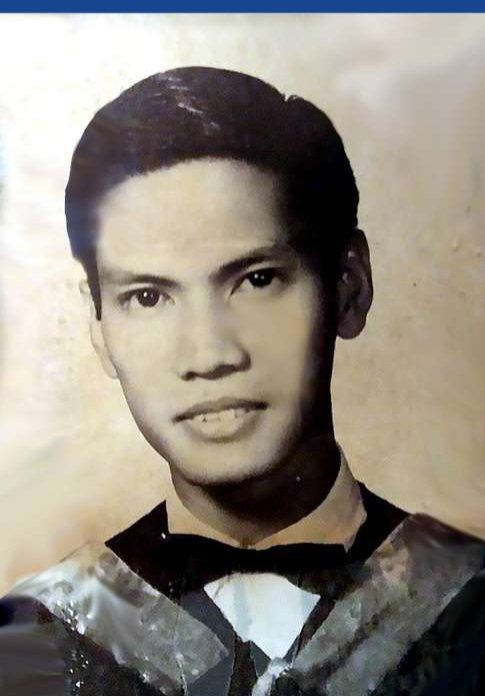
But while teaching others, Obet never stopped learning himself. His hunger for knowledge was insatiable. By day, he taught classes; by night, he was a student again. At De La Salle University, he pursued a Master’s Degree in Business Administration, equipping himself with tools of strategy, finance, and organizational leadership. Later, he returned to MLQU once more, this time to earn a Bachelor of Laws, convinced that an understanding of justice and governance was essential for any leader who hoped to serve meaningfully.
Years later, his alma mater in Bulacan, recognizing his lifelong devotion to education, conferred on him a Doctor of Education, Honoris Causa. It was more than ceremonial. By then, he had proven not only his intellectual rigor but also his belief that teaching was not a career but a vocation — and that learning was a lifelong pursuit.
For Obet, education was never about the accumulation of credentials. It was about transformation — first of the self, then of others, and ultimately of society. He often told his students: “The ultimate challenge and reward for a leader is to help mold the youth into better leaders and citizens.” It was a philosophy that turned every lecture into an act of nation-building.
His classes were not rigid monologues. They were dialogues, laboratories of ideas. He encouraged questions, rewarded curiosity, and insisted that problem-solving required more than memorization — it required critical thinking and imagination. Students remembered him not as a distant professor, but as a mentor who believed in their potential. Many would later trace their confidence to pursue ambitious careers back to his words of encouragement.
What distinguished Obet most was his ability to bridge theory and practice. He never allowed chemical equations to remain abstractions on a board. He tied them to lived realities — the chemistry of food, the economics of production, the challenges of industry. His own upbringing gave him empathy; he could explain industrial systems in terms that connected with the struggles of farmers and vendors. He carried real life into the classroom, and in turn, carried his students’ questions into his own reflections.
Outside the lecture halls, he continued to mentor young leaders. Having twice served as President of the MLQU Engineering and Architecture Student Council, and later as National President of the Philippine Institute of Chemical Engineering Students (PICES), he understood the importance of giving the youth space to practice leadership. He urged his students to form councils, run debates, and organize conferences. “You cannot become a leader overnight,” he told them. “You must practice leadership, even in small things, until it becomes habit.”
Teaching and learning became the twin engines of his twenties. Days filled with chalk and lectures, evenings consumed by study, weekends often spent tutoring for food or lodging. Where others might have grown weary, Obet found joy. “I loved teaching,” he would later reflect. “It gave me life.”

That joy, however, was not confined to classrooms. It was preparing him for the larger classroom of public service. For in every lecture, he honed clarity of thought; in every council, he sharpened skills of consensus; in every exam, he cultivated discipline. These would become the very tools he would carry into government, where the classroom became the province, and the students became the people themselves.
In Obet Pagdanganan, the professor and the perpetual student were inseparable. To teach was to learn; to learn was to serve. And in those years, long before the rallies of EDSA or the mandates of elections, he had already discovered his vocation: molding others into better leaders and citizens, so they in turn might shape the nation.
The Corporate Rise
Teaching had given Obet purpose, but he knew the world outside the university demanded different skills. To truly understand society, he felt he needed to enter the realm of industry, where decisions carried immediate consequences and results were measured not in grades but in livelihoods. It was this conviction that led him to the corporate world — first through Ajinomoto, then through what would become his most formative professional chapter: the Philippine Refining Company (PRC), the local arm of the global giant Unilever.
At PRC, Obet would spend 18 years, a stretch of time that shaped him as much as any classroom or council. It was a journey through the full machinery of a multinational: 14 different posts, each demanding reinvention, each sharpening new skills. He began in refinery operations, mastering the technical foundations of production. Later, he moved to research and development, adapting global innovations for Filipino consumers. From there, he shifted to industrial marketing and administration, encountering challenges that tested not formulas but human judgment — motivating workers, negotiating with clients, managing teams across diverse backgrounds.
What set him apart was not only competence but hunger. Many would have specialized in one area, climbing safely within familiar terrain. Obet sought breadth. He embraced transfers that others avoided, convinced that leadership required understanding an organization in its entirety, from factory floor to executive suite.
Unilever recognized his promise. He was sent to the Unilever Training Center, where managers from across Asia absorbed the ethos of efficiency and innovation. Later, he trained at Ashridge College of Management in England, one of Europe’s most prestigious institutions for business leadership. For a son of a farmer and market vendor, to walk the halls of Ashridge was surreal. Yet he carried himself with quiet confidence. “I realized then,” he recalled, “that a boy from Bulacan could stand equal to anyone, provided he worked hard and learned well.”

From Ashridge, he brought home lessons that would outlast his corporate career. He learned the art of systems thinking — how a flaw at the bottom could ripple to the top, how vision at the top must cascade clearly downward. He absorbed the discipline of strategic planning, setting goals not just for quarters but for years. And he internalized a philosophy that would later define his politics: leadership is not about control, but about empowerment.
Opportunities beckoned. Colleagues were assigned overseas — Singapore, Europe, Latin America — and Obet was repeatedly offered posts abroad. Each offer carried prestige and higher pay. But he declined them all. “I was offered many times,” he admitted, “but I wanted to stay here. I wanted to serve in the Philippines.” It was a choice that seemed puzzling to some, but in hindsight, it revealed his foresight: every role he embraced in the Philippines was preparing him for a different kind of service — one measured not by profit but by people’s welfare.
The corporate years also crystallized his distinctive mantra: “Less government in business, more business in government.” To Obet, this was not a slogan but a principle forged in experience. He saw how excessive interference stifled enterprise, and how inefficiency wasted resources. He believed government should step back from areas better served by private initiative, while adopting in its own systems the efficiency, transparency, and accountability of the corporate world. It was a philosophy he would later bring to the capitol of Bulacan — one that would set him apart from traditional politicians.
What his colleagues admired most, however, was his integrity. He dealt fairly with labor, respected colleagues, and refused shortcuts. He was known for his clarity in meetings, for grounding strategies in both data and human realities. He could speak the language of engineers and marketers, of administrators and workers. This ability to translate across worlds would later become one of his greatest assets in politics, where bridging sectors was essential.
Yet even as his corporate life flourished, another fire burned within him. Outside office hours, Obet became an activist in the streets. The early 1980s were turbulent: rising unrest, a nation shaken by the assassination of Benigno “Ninoy” Aquino Jr. In Manila and in Bulacan, rallies grew larger, the clamor louder. And there, among the placards and chants, one could sometimes find an executive from Unilever — sleeves rolled up, standing not as manager but as citizen.
Looking back, his 18 years at PRC–Unilever were not a detour but a foundation. They gave him the discipline of industry, the instincts of management, and the courage of decision-making. They confirmed what his parents had always taught him: that excellence is not determined by privilege, but by perseverance.
When history called in 1986, Obet Pagdanganan was ready. He carried into the tumult of politics not only the humility of a farmer’s son and the wisdom of a teacher, but also the sharpened instincts of a corporate leader. And with those three strands woven together, he was prepared to face the storm that would change both his life and the destiny of Bulacan.

Awakening to Politics
The early 1980s were years of unease. The Philippines, long under martial law, seemed trapped in twilight — the light of democracy dimmed, the weight of dictatorship pressing down. For many professionals, silence was safer. Jobs were secure, salaries steady, families protected. But for Roberto “Obet” Pagdanganan, conscience drowned out caution.
The assassination of Benigno “Ninoy” Aquino Jr. on August 21, 1983, struck him like a thunderclap. Watching the images of Ninoy’s body, lifeless on the airport tarmac, Obet felt both grief and fury. He had admired the senator’s courage from afar, his willingness to confront tyranny. If such a voice could be silenced so brutally, what hope was left for ordinary citizens? That question became a summons.
By day, Obet was still an executive at Unilever. By night and on weekends, he became an activist — standing in rallies, organizing forums, lending his voice to the growing opposition. The risk was real. Friends warned him to step back. His father, once aligned with the Kilusang Bagong Lipunan (KBL), the ruling party then, confronted him bluntly: “Akala ko ba matalino ka, Roberto? Why endanger everything?” Arrest was a real possibility; worse fates loomed in whispers. But Obet’s mind was set. “I was young, idealistic, unafraid,” he later recalled. “I had to act.”
He helped organize protests in Bulacan, sometimes under the cover of civic meetings, sometimes in open defiance. He rallied fellow professionals, teachers, and students, urging them to believe that change was possible. His presence in the streets surprised some who knew him only as professor or manager. But to Obet, it was a return to roots: the same boy who had been elected Boy Mayor in Grade 6, the same student leader at MLQU, was simply living out the conviction that leadership meant responsibility.
Then came February 1986. Manila trembled with rumor: Defense Minister Juan Ponce Enrile and General Fidel Ramos had broken from the Marcos regime. Tanks and troops were massing along Epifanio de los Santos Avenue (EDSA). The call went out: people must gather to protect the rebels, to shield democracy’s last chance.
Obet and his brother Monching went to EDSA. At first, they were among only a few thousand, standing uncertainly before armored columns. They prayed rosaries, sang hymns, and braced for violence. Helicopters thundered overhead. Tanks inched forward. “If they bombed us then,” Obet remembered, “history would have ended differently.” But history bent toward courage. Soldiers refused to fire. General Sotelo defected with his helicopters. And as millions poured into the streets, dictatorship crumbled.

When Corazon Aquino assumed the presidency, she faced the monumental task of rebuilding not only institutions but trust. Across the nation, governors and mayors who had served under Marcos were replaced by Officers-in-Charge. In Bulacan, names of seasoned politicians floated to the top — giants with long histories and powerful networks. Yet in the end, consensus settled on an unlikely figure: Roberto “Obet” Pagdanganan.
To the political class, it seemed absurd. He had no dynasty, no machine, no elective experience. He was, in their words, a “political nobody.” But to ordinary Bulakeños who had seen him at rallies, who knew his roots in Calumpit, who heard his unvarnished sincerity, Obet was not a nobody. He was one of them.
In March 1986, he was appointed OIC Governor of Bulacan. On his first day, he stood before provincial employees with humility but with resolve. “Let us prove them wrong,” he told them. And with that, he began to sketch a vision for the province, rooted in five priorities:
1. Youth Development – investing in education and leadership.
2. Peace and Order – stabilizing communities and restoring trust.
3. Cooperative Enterprise – empowering people to lift themselves through shared effort.
4. Bureaucracy Reform – fighting corruption and promoting efficiency.

5. Social Justice – ensuring that governance gave voice to the poor and marginalized.
It was a blueprint drawn not from textbooks, but from his life: from a father who farmed despite illness, from a mother who sold vegetables, from siblings who gave up schooling, from his own journey as student, teacher, and executive.
Skeptics scoffed. Bureaucracy resisted. But Obet met challenges with energy. He toured barangays, met with farmers and mothers, listened to teachers and vendors. He carried the discipline of Unilever, the patience of a professor, and the fire of an activist. Slowly, the province began to stir with new life.
When the first post-EDSA local elections came in January 1988, Obet faced the people’s judgment. The verdict was extraordinary: he was elected unopposed — a rare honor that revealed the depth of trust he had earned in just two years. The mandate only grew. In May 1992, he was reelected with a record-breaking margin of 114,700 votes. Three years later, in 1995, he shattered his own record with a margin of 190,000 votes, the highest in Bulacan’s history. What began as a political fluke had become a resounding testament: the “nobody” had become the people’s governor.
For Obet, it was vindication not of himself but of his philosophy. He had proven that politics could be service, that leadership could be empowerment, that humility could triumph over pedigree. And he had proven to himself what he had always believed: when conscience calls, no risk is too great, no criticism too sharp, no challenge too daunting.
The revolution of 1986 had toppled a dictatorship. The revolution he now led in Bulacan would be quieter, but just as profound: a revolution of cooperatives, culture, and people’s empowerment.
The Cooperative Province

When Obet assumed the governorship of Bulacan, he faced a question that haunts every leader: how to turn vision into transformation. Bulacan was a province of contrasts — proud in history, rich in culture, yet burdened by poverty and uneven development. Roads and bridges could be built, yes, but Obet knew concrete alone could not feed families or secure futures. Real progress, he believed, had to grow from the people themselves.
The answer, for him, was cooperation. It was not a new idea; he had lived it since childhood. He had seen it in his siblings who gave up their own education so he could finish his. He had seen it in his mother, who often relied on neighbors’ trust to keep her market stall afloat. He had seen it in student councils, where collective action outweighed individual ambition. Now, as governor, he sought to institutionalize that spirit at the scale of an entire province.
On August 19, 1986 — timed deliberately to honor the birthday of Manuel L. Quezon, namesake of his alma mater — Obet launched the Kaunlaran sa Pagkakaisa Program (KPP). Its aim was simple yet revolutionary: empower communities through cooperatives.
For Obet, cooperatives were more than financial structures. They were instruments of dignity. They gave farmers access to credit without bowing to usurers, allowed vendors to bargain collectively, and helped families save and invest in their own futures. In a political culture often dominated by dependency, cooperatives taught self-reliance.
To give the program backbone, he created the Provincial Cooperative and Enterprise Development Office (PCEDO), the first of its kind in the Philippines. Unlike typical government offices that dispensed aid, PCEDO educated and professionalized. It trained cooperative officers in accounting and governance, audited their books, and provided mentors to guide them. The goal was not to foster dependency but to equip communities to thrive on their own.
Funding, however, remained a hurdle. Poor communities had little capital to begin with. So, Obet devised an ingenious counterpart funding system: for every peso a cooperative saved, the provincial government matched it. If a group pooled ₱50,000, the province doubled it with another ₱50,000. This not only encouraged thrift but ensured that every cooperative had “skin in the game.” It was empowerment with accountability.
The results were astonishing. By 1996, Bulacan had become the undisputed “Cooperative Province of the Philippines.” There were 915 cooperatives across the province, with ₱1.7 billion in assets and nearly ₱900 million in savings. Families who once lived hand to mouth now had savings accounts. Farmers could afford new equipment. Vendors could expand their stalls. Teachers, tricycle drivers, even housewives had formed groups that blossomed into small enterprises.

The transformation was perhaps most dramatic in San Jose del Monte, once the poorest municipality of Bulacan. Embracing the cooperative model, it rose from poverty into prosperity. Its cooperatives grew into billion-peso enterprises, lifting entire communities and proving Obet’s conviction: kung kaya ng San Jose del Monte, kaya ng buong Bulacan.
Beyond economics, cooperatives reshaped civic culture. For the first time, ordinary citizens debated budgets in assemblies, voted on policies that affected their livelihoods, and learned to manage their own resources transparently. In effect, cooperatives became training grounds for democracy itself.
National recognition soon followed. Bulacan received the Gawad Galing Pook Award three years in a row — 1994, 1995, 1996 — for innovative governance. It consistently won the CROWN Award for Nutrition, proving that prosperity was reaching families’ tables. And in 1996, President Fidel V. Ramos conferred on Bulacan the Gawad Pamana ng Lahi, the “Mother of All Awards,” recognizing the province’s excellence in culture, cooperatives, and social services.
For Obet, these accolades were affirmations, not goals. “Awards are not the reason we serve,” he reminded his team. “They are signs that the sacrifices of our people are bearing fruit.”
Critics were not absent. Some politicians dismissed cooperatives as “small-scale economics,” arguing that grand infrastructure was more visible. Others feared they would weaken traditional patronage networks. But Obet held firm. He knew that while bridges connected towns, it was cooperatives that connected people to their own dignity. “Help them help themselves,” he would often say.
The inspiration remained deeply personal. He remembered his mother borrowing money just to buy vegetables to sell, her small profits swallowed by debt. “If only my mother had been part of a cooperative,” he mused, “life would have been so much easier.” That memory drove him to ensure that no Bulakeño family would face such burdens alone again.
By the end of his third term, Bulacan was transformed. It was wealthier in assets, healthier in nutrition, prouder in identity, and more confident in spirit. More than statistics, it was the posture of people that told the story: farmers walking taller, mothers opening savings passbooks, students daring to dream of college. The farmer’s son from Calumpit had led his province to prove a powerful truth: prosperity could be built from the ground up, and the poor, when trusted and equipped, could lift themselves higher than anyone imagined.

Bulacan’s cooperatives were not just economic engines. They were symbols — of unity, of empowerment, of a people reclaiming their future. And at the center of it was Obet Pagdanganan, the governor who believed that real leadership is measured not by how many depend on you, but by how many no longer need to.
Recognition and National Stage
By the mid-1990s, the story of Bulacan was being told far beyond the borders of Central Luzon. What had begun as a provincial experiment in cooperative empowerment had become a national benchmark. In Manila’s policy circles and in the provinces’ council halls, the name Governor Roberto Pagdanganan was spoken with admiration, sometimes with envy, but always with respect.
Bulacan was no longer known only for its storied history — the land of Marcelo H. del Pilar and the cradle of the First Philippine Republic. Under Obet, it was recognized as a laboratory of good governance, where people’s empowerment was more than rhetoric.
The awards made that reputation official. The province earned three consecutive Gawad Galing Pook Awards (1994, 1995, 1996), the highest recognition for innovative local governance. It consistently won the CROWN Award for Nutrition, a testament to how economic growth was feeding not just bank accounts but children. And in 1996, the crowning glory came: the Gawad Pamana ng Lahi, conferred personally by President Fidel V. Ramos. Dubbed the “Mother of All Awards,” it affirmed Bulacan as a model in cooperatives, cultural revival, and social services.
For Obet, the honors were not mere ornaments. They were validations of a philosophy: that progress built from the grassroots, anchored in empowerment, could hold its own against any top-down development scheme. “Awards are not the goal,” he told his staff. “They are confirmations that we are on the right path — that the sacrifices of our people are bearing fruit.”
His peers took notice. Fellow governors elected him President of the League of Provinces of the Philippines, not once but thrice. To earn such trust from colleagues — many of them seasoned political titans — was rare. It signaled that Obet was no longer just the quiet reformer of Bulacan but a voice on the national stage.

As League President, he championed the same principles that had guided him at home. He pushed for sustainable countryside development, arguing that the nation’s prosperity could not depend solely on Metro Manila. He called for local autonomy, insisting that mayors and governors, not distant bureaucrats, knew best how to serve their communities. He promoted GO–NGO–PO synergy — partnerships between government, non-government groups, and people’s organizations — as the formula for real progress.
And he brought to national discourse his now-familiar mantra: “Less government in business, more business in government.” In his view, the state should not suffocate enterprise with bureaucracy, but neither should it allow inefficiency and corruption within its own systems. Government, he argued, should embody the discipline, transparency, and accountability of the best corporations.
This vision resonated. In conferences and summits, his voice carried weight. Universities invited him to speak, students seeing in him a model of servant leadership. Civil society groups admired his openness to partnership. International observers pointed to Bulacan as an example of how grassroots cooperatives could power development, akin to success stories in Korea and Europe.
But Obet’s reach was not confined to policy. He carried his lifelong passion for youth into the Boy Scouts of the Philippines, where he became National President. Having once attended the 1959 World Jamboree as a young Scout, he now stood at the helm, shaping programs that trained new generations in leadership, discipline, and patriotism. “The youth are not just the future,” he told them. “They are the present. What they become; our nation becomes.”
Through these roles, Obet became not only Bulacan’s pride but also a national statesman. Yet he wore the stature lightly. To colleagues he was still approachable, to Rotarians a brother in service, to Scouts simply “Ka Obet.” He never forgot that power was not a privilege but a responsibility.
Critics sometimes dismissed him as “too idealistic.” Others suspected ambition beyond the province. But Obet remained steadfast: “Leadership is not about popularity. It is about doing what is right, even when it is difficult.”
By the close of the decade, he had risen from “political nobody” to one of the most respected local executives in the Philippines. The farmer’s son from Calumpit had proven that governance rooted in humility and empowerment could not only transform a province but also inspire a nation. From the cooperative halls of San Jose del Monte to the chambers of Malacañang, his message remained clear: prosperity must be shared, democracy must be deepened, and leadership must be service.

Trials and Sorrows
History often remembers the victories. But greatness is forged just as much in defeat, in sorrow, in the long nights of trial. For Roberto “Obet” Pagdanganan, the arc of leadership was not a straight ascent. It was broken by storms — political, personal, and spiritual — that could have destroyed him, yet instead revealed the steel beneath his humility.
The first storms were political. The Aquino administration, which Obet had so fervently supported, was besieged by coup attempts. Soldiers defected, jets flew menacingly over Manila, tanks rumbled through avenues once more. For provincial governors, the uncertainty was suffocating. Would the fragile democracy they had risked their lives for collapse overnight? Would the old order return with vengeance?
In Bulacan, Obet rallied his people to stand firm. He had walked the streets of EDSA; he had staked his life for democracy. He could not betray it now. His loyalty to President Cory Aquino never wavered, even when loyalty was dangerous. It was a test of courage not in the streets, but in the lonely calculus of conscience.
Later came the wounds of ambition. Having proven his philosophy in Bulacan, Obet sought to bring it to the national stage. He ran for the Senate, convinced that cooperative empowerment, local autonomy, and countryside development deserved a platform in national policy. Many expected him to win. His record was sterling, his reputation clean. Yet in the labyrinth of Philippine politics, integrity was no guarantee.
He lost. And when he tried again, he lost once more. Supporters cried foul, alleging cheating, manipulated tallies, the usual machinery of traditional politics. For Obet, the sting was not defeat itself but the suspicion that the people’s will had been denied. Still, he bore no malice. “It was painful,” he admitted, “but leadership is not about positions. You can serve with or without a title.” In saying so, he turned loss into lesson, reminding his followers that public office is not the sole avenue for service.
But the deepest sorrows came not from politics, but from family. The first was the loss of his younger brother, Monching, his closest ally during the heady days of People Power. Together they had faced tanks at EDSA, prayed through nights of tension, and dreamed of a freer nation. To lose him was like losing a limb. The pain was deep, though Obet bore it with quiet strength.

Then came the tragedy that cut to his core: the death of his son, Roberto Raymond, in a road accident. Bright, promising, loved — gone in an instant. For a father whose life revolved around faith, family, and service, the grief was indescribable. No award, no election, no speech could soften that blow. “Those were the saddest moments of my life,” he said softly.
Friends feared the grief might break him. Yet Obet drew once more from the wellspring that had never failed him: faith. He wept, yes, but he did not despair. He told himself he had no right to complain. God had blessed him with intellect, opportunities, and the chance to serve. Setbacks and losses, he believed, had purpose even if unseen. “By the grace of God,” he whispered again, clinging to gratitude even in sorrow.
And as always, his pain became empathy. When he visited families who had lost children, he no longer spoke as governor but as a father who knew their grief. When farmers bent under debt, he remembered the sting of betrayal in politics. His wounds gave him language to touch others’ wounds.
In time, he saw trials not as curses but as crucibles. “Leadership,” he reflected, “is not tested in easy times. It is tested in the storm. And if you come out of the storm with faith intact, you are stronger.”
The scars remained. The Senate losses dimmed what might have been a broader national career. The deaths of his brother and son left voids that nothing could fill. Yet Obet never let bitterness take root. He did not define himself by titles won or lost, nor by tragedies endured, but by faithfulness — to God, to family, to people. When asked how he endured, his answer was always the same, as steady as his life: “By the grace of God.”
And so, while the world saw the decorated governor, the model League President, the national leader, the fuller truth was this: behind every triumph was a man acquainted with grief. Behind every smile was a heart tempered by loss. And behind every setback was a faith that refused to break. It was this resilience — born of trials, sustained by faith — that made Obet Pagdanganan not only a leader of achievements, but a leader of depth.
Rotary, Scouts, and Service Above Self

For Roberto “Obet” Pagdanganan, leadership was never confined to titles or offices. Long after speeches ended and elections passed, his heartbeat for service continued in places where power was measured not by votes but by volunteerism — in Rotary International and the Boy Scouts of the Philippines. These were not sidelines. They were parallel callings, each reflecting his conviction that service is the essence of life.
A Scout for Life
Obet’s journey with Scouting began in childhood. As a boy, he donned the khaki uniform and scarf, recited the Scout Oath, and learned the values of preparedness and teamwork. In 1959, he joined the 10th World Jamboree, a gathering of Scouts from across the globe. For a young man from Calumpit, the experience was transformative. He traded badges with boys from Japan and Africa, sang songs with Scouts from Europe and America, and realized that even in youth, one could be part of something larger than nation or province.
Those lessons — of brotherhood, of service, of global citizenship — became woven into his character. They stayed with him when he studied late into the night, when he organized student councils, when he stood before tanks at EDSA. Scouting had instilled in him a readiness to act, a discipline to endure, and a joy in service.
Decades later, when he rose to become National President of the Boy Scouts of the Philippines, the circle closed. He now stood where his mentors once stood, guiding generations of youth through the same path that had shaped him. But Obet’s vision for Scouting went beyond campfires and jamborees. He believed it must also be a school of citizenship, a training ground for leaders, and a refuge where the young could grow in discipline and patriotism.
“The youth are not just the future,” he told one national assembly of Scouts. Under his stewardship, Scouting programs expanded to emphasize leadership, community service, and disaster preparedness — ensuring that the next generation of Filipinos were not only ready for emergencies but also ready to lead.
A Rotarian at Heart

If Scouting was his training ground for service, Rotary was its natural extension into adulthood. The motto Service Above Self resonated with Obet because it mirrored his own philosophy. In Rotary halls, he found not politics but fellowship: doctors, lawyers, teachers, entrepreneurs — all offering time, talent, and treasure to improve communities.
Obet’s journey into Rotary was not accidental — it was providential. He was first introduced to the movement in the late 1980s, at the height of his governorship in Bulacan. It was Past District Governor (PDG) and fellow Bulakeño, Frankie Roman, who personally invited him to join the Rotary Club of Manila, Asia’s first and most prestigious Rotary club.
At first, Obet hesitated. His schedule as Governor was punishing, and his obligations to Bulacan were immense. Yet the ideals of Rotary — Service Above Self — resonated deeply with his lifelong philosophy that leadership must always bend toward service. In the end, Obet said yes, because, in his own words, “service is not something you postpone; it is something you live every day.”
Thus began a new chapter of his public service journey, this time not in the halls of government, but in the fellowship of Rotarians. His induction into the Rotary Club of Manila came in 1990, and from that moment forward, he carried both his titles — Governor and Rotarian — as if they were one and the same.
In 2005, Obet Pagdanganan rose to the presidency of the Rotary Club of Manila. His term was remembered not only for strengthening the Club’s international ties but also for deepening its engagement with the grassroots. Under his leadership, the Club amplified its focus on education and cooperatives, echoing his long-standing advocacy for countryside development. He spearheaded literacy programs, supported scholarships, and pushed for more sustainable community projects. Club meetings during his presidency were not mere gatherings of Manila’s elite; they became platforms for mobilizing resources and imagination for the service of the underprivileged.
Three years later, in 2008, he assumed the mantle of District Governor of Rotary International District 3810, covering Manila, Pasay, Cavite, and Occidental Mindoro. As Governor, Obet became known for his hands-on style. He traveled extensively across the district, attending club meetings, inducting officers, and inspecting projects with the same diligence he once applied as Bulacan’s chief executive. His message was consistent: “Rotary must not be measured by the prestige of its members but by the depth of its compassion.”
That year, District 3810 flourished under his stewardship. Clubs were energized, membership grew, and service projects multiplied. His leadership earned recognition not only within the district but also in Rotary International circles, where he was often cited as a model of blending professional achievement, political experience, and civic devotion.

What stood out most was the way Obet carried Rotary in his heart, not as an external affiliation but as an inner compass. Whether as President of the Rotary Club of Manila or as District Governor of 3810, he infused his Rotary journey with the same convictions that defined his life: that service must be people-centered, that leadership must be inclusive, and that every position is ultimately temporary — but the legacy of service is eternal.
Obet embraced Rotary not as a hobby but as a vocation. He attended meetings faithfully, joined projects energetically, and mentored younger Rotarians with the same care he gave his students. He admired Rotary’s transparency and accountability — qualities he wished government would emulate. Financial reports were audited, projects were evaluated, leadership rotated annually. To him, Rotary was proof that organizations could thrive on integrity and renewal.
He saw parallels everywhere. In politics, one led with authority; in Rotary, one led with influence. Both demanded vision, both required integrity. But Rotary’s voluntarism made service even more powerful: there were no salaries, no coercion, only commitment. That purity, he believed, was what gave Rotary its moral authority.
For Obet, Rotary was also a wellspring of friendship. In its weekly gatherings, he found companionship across professions, laughter amid challenges, and fellowship that endured beyond projects. He valued these bonds not as networking but as community, a reminder that service was always richer when shared.
Anchored in Service
Friends and colleagues marveled at his stamina. He could spend the day in provincial meetings, the evening at a Rotary fellowship, and the weekend in a Scout jamboree. Where others might tire, Obet found energy. “If you love service,” he would say with a smile, “it doesn’t drain you. It gives you life.”
In many ways, these civic roles anchored him during his darkest seasons. After electoral defeats and family tragedies, it was in Scout camps — watching young boys pitch tents under the stars — and in Rotary projects — building classrooms, feeding children, healing the sick — that he rediscovered hope. Service, he often said, was the antidote to despair.

For Obet, the labels never mattered. Whether called Governor, Scout Chief, Rotarian, or simply “Kuya Obet,” he was the same man: humble, faithful, eager to help. The positions were temporary; the service was permanent.
One Seamless Vocation
Looking back, it was clear: his political career and civic commitments were not separate tracks but one seamless vocation. As governor, he built cooperatives to empower the poor. As Scout leader, he built character to empower the young. As Rotarian, he built projects to empower communities. The common thread was empowerment — always giving people the tools, confidence, and opportunity to lift themselves.
In Obet Pagdanganan, the politician and the civic servant were indistinguishable. He wore titles lightly, knowing they were not the essence of leadership. What mattered was the heart of service — the willingness to give, to listen, to build. And in that, he revealed the deepest secret of his life: that leadership is not power, but service.
A Man Called Obet
Strip away the awards, the speeches, the headlines, and what remains? A man — husband, father, brother, friend. For Roberto “Obet” Pagdanganan, life was never defined solely by the offices he held. At home and among loved ones, he was simply Obet: the boy from Calumpit who never forgot his roots, the man whose laughter was as genuine as his tears.
Husband and Partner

At the center of his private life was Susana Obleñas-Pagdanganan, herself a professor of chemical engineering at MLQU, where their paths first intertwined. Susana was more than spouse; she was confidante, equal, and partner in service. While Obet charted policy and programs, Susana mobilized women through the Rural Improvement Clubs of the Philippines, led initiatives at the Philippine National Red Cross, and served as Vice-President at Large of the National Council of Women of the Philippines.
Theirs was a marriage rooted not in glamour but in shared purpose. They were, as friends said, “two rivers flowing into one sea” — complementing, strengthening, inspiring each other. When Obet spoke of cooperatives, Susana spoke of women’s empowerment. When he spoke of governance, she spoke of community. Together, they embodied the conviction that leadership begins at home, in the partnership of husband and wife.
Father and Mentor
Obet was also a father — tender yet demanding, affectionate yet principled. To his children, Maria Rossana and Roberto Raymond, he gave not wealth but example. Rossana would later thrive as a department manager at Unilever, echoing her father’s path in corporate leadership. Raymond, bright and full of promise, would be taken too soon, his life cut short in a tragic accident. That loss left a hollow ache in Obet’s heart, but even in grief, he modeled resilience.
To his children, he passed on the values his own parents had instilled in him: faith, discipline, humility. He often reminded them, “Titles come and go, but character remains.” They saw in him a man who woke early, worked tirelessly, prayed faithfully, and treated janitors with the same respect as senators. In those quiet lessons, more than in public speeches, he shaped them.
Brother and Son
As the youngest in his family, Obet carried the sacrifices of his siblings like a badge of honor. He never forgot that they had given up their own schooling so he could continue his. The memory humbled him, even in moments of triumph. He carried their sacrifices into every diploma, every oath of office, every award he received.

The death of his brother Monching, his companion in EDSA, struck him deeply. Yet he honored his memory by continuing the fight for democracy they had begun together. To friends, his loyalty to family was legendary. “You can see in the way he speaks of his father and mother,” one colleague noted, “that he never ceased being the boy from Calumpit.”
Friend and Companion
Those who knew him closely discovered another side of Obet — warm, approachable, quick with humor. In gatherings, he loved to sing and was often coaxed into leading nostalgic ballads. He enjoyed telling stories, some self-deprecating, others filled with quiet wisdom. He was not the type to dominate a room with volume, but with presence. His authenticity drew people in.
Friends admired his steadiness. He did not change demeanor with audience or circumstance. Whether with presidents in Malacañang or farmers in a barangay, he remained the same Obet — humble, respectful, unassuming. His humility was not affected but instinctive, born from a life of remembering where he came from and who he served.
A Man of Faith
At the deepest level, what sustained Obet was faith. In victories, he gave thanks. In losses, he said quietly, “By the grace of God.” It was not a phrase of habit but of conviction. To him, all of life was grace: the parents who raised him, the siblings who sacrificed for him, the teachers who guided him, the people who trusted him, even the trials that wounded him.
In Masses and novenas, in whispered prayers before decisions, he grounded himself. His leadership was not ego-driven but grace-driven. This faith gave him peace in storms and humility in triumphs.
Simply Obet
And so, when stripped of honorifics — Governor, Chairman, President — what remains is a man simply called Obet. The boy who once studied by kerosene light. The student who promised never to waste his family’s sacrifices. The teacher who believed molding the youth was the greatest reward of leadership. The executive who refused lucrative foreign posts to serve his country. The governor who trusted farmers and vendors to lift themselves. The father who grieved but never lost hope. The Rotarian and Scout who never tired of giving.
This is the Obet his family loved, his friends cherished, and his people trusted. Titles may fade, but the man endures.
Legacy of Service
Legacies are not measured only in monuments or medals. They are measured in lives touched, in opportunities opened, in faith restored. For Roberto “Obet” Mamangon Pagdanganan, the boy from Calumpit who rose from humble beginnings, his legacy is written not on marble but in the everyday stories of people whose lives were changed by his service.
He was the son of a carpenter and market vendor, a child of poverty who became Valedictorian, Summa Cum Laude, professor, and eventually governor. His life was proof that education, discipline, and faith could overcome scarcity. He was a reminder to every struggling student that brilliance is not confined to privilege.
As a teacher, he shaped minds with chalk and conviction. As an executive, he learned discipline from the corporate world and carried it into governance. As an activist, he risked freedom to stand for democracy. As governor, he transformed Bulacan into the Cooperative Province of the Philippines, a model of grassroots empowerment. As League President, he gave local autonomy a national voice. As a Scout and Rotarian, he showed that service transcends politics, finding its purest form in voluntary acts of compassion.
His story was not without sorrows. He knew the sting of political defeat and the weight of personal loss — a brother taken too soon, a son whose bright promise ended in tragedy. Yet even in grief, he refused despair. He whispered the words that had carried him through every season: “By the grace of God.”
In the end, what endures is not the litany of awards or the margins of victory. What endures is the image of a governor who believed in farmers and vendors, who trusted cooperatives to empower the poor, who saw in the youth not problems but possibilities. What endures is the husband who stood by Susana in shared service, the father who taught his children character over comfort, the friend who remained approachable, the leader who stayed humble.
His life is a lesson to future leaders: that greatness is not measured by how high one climbs, but by how many are lifted along the way. That service is not a stepping stone to power but the destination itself. That leadership, at its purest, is love in action.
In Bulacan’s thriving cooperatives, in Scouts pitching tents under the stars, in Rotary projects feeding the hungry and healing the sick — there beats the spirit of Obet Pagdanganan. The boy who once studied by kerosene light became the man who lit lamps of hope across a province and a nation.
And so, his legacy is not only remembered. It is lived — in every Bulakeño who saves, in every youth who leads, in every citizen who dares to believe that with faith, humility, and courage, even the humblest beginnings can shape history.
This is the enduring story of Roberto “Obet” Pagdanganan. Not a tale of power, but a testament of service. Not a monument to one man, but a living inheritance for a people.

 Editorial
 President’s Message
 Lawyers and Injustice: The Rotary Club of Manila Confronts the Lawyer’s Role in Building Integrity